28 Royal Crowns and Tiaras With Remarkable Histories
A crown looks like the most stable object imaginable, gold and stone built to signal permanence. In practice, royal headpieces get melted, smuggled, pawned, stolen, bent, broken on wedding mornings and reset whenever a new owner wants a different look.
The pieces that survive tend to carry those adventures with them. Some are still worn, some sit behind glass, and at least one spent decades in a US gold vault.
St Edward’s Crown, Remade for Charles II
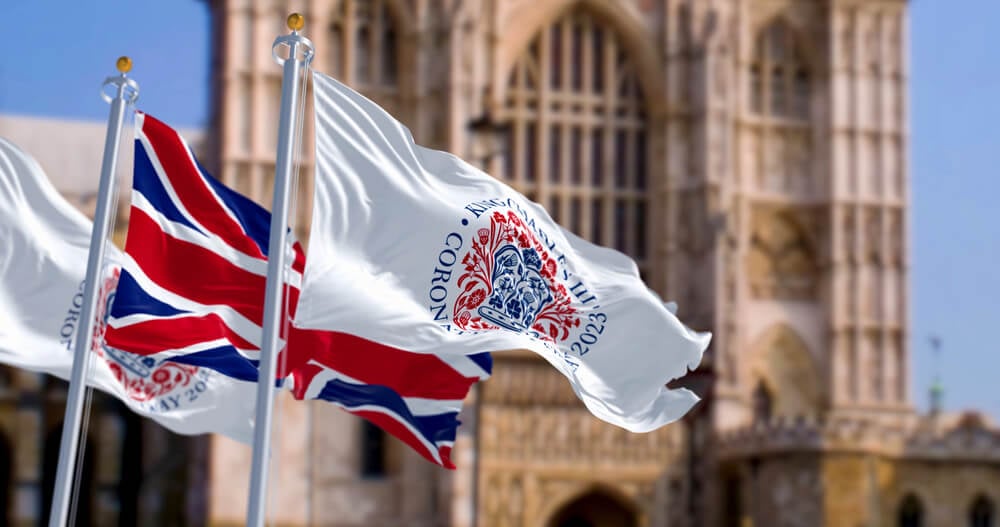
England’s medieval coronation crown, used for centuries, was melted down in 1649 after the execution of Charles I, when Parliament sold off or destroyed the royal regalia. When the monarchy returned, goldsmith Robert Viner made a replacement for the coronation of Charles II in 1661.
It weighs about 4.9 pounds, heavy enough that monarchs wear it only for the moment of crowning itself. Elizabeth II wore it once, in 1953, and Charles III wore it in 2023.
Historians still debate whether any gold from the destroyed original found its way into the new frame.
Imperial State Crown and Its Borrowed Legends
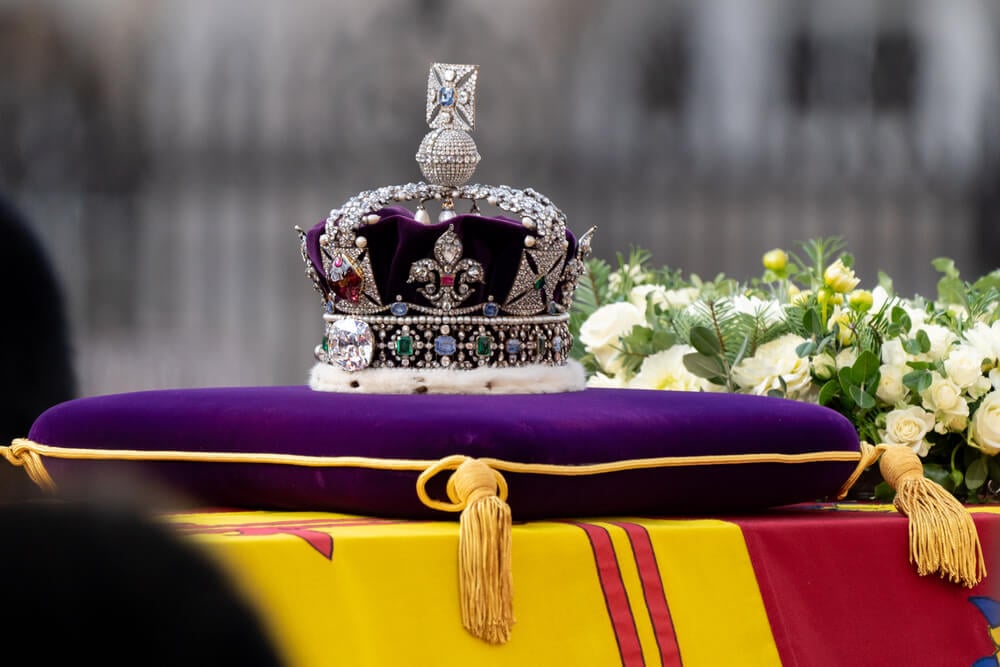
Built in 1937 for George VI and based on Queen Victoria’s crown of 1838, the Imperial State Crown carries 2,868 diamonds along with sapphires, emeralds and pearls. The large red stone at the front, known as the Black Prince’s Ruby, is actually a spinel, and legend says Henry V wore it at Agincourt.
The St Edward’s Sapphire on the cross is said to have come from a ring worn by Edward the Confessor. The monarch wears this crown when leaving a coronation and at the State Opening of Parliament.
It is a working crown, which is why it has been rebuilt several times.
Koh-i-Noor Crown of the Queen Mother
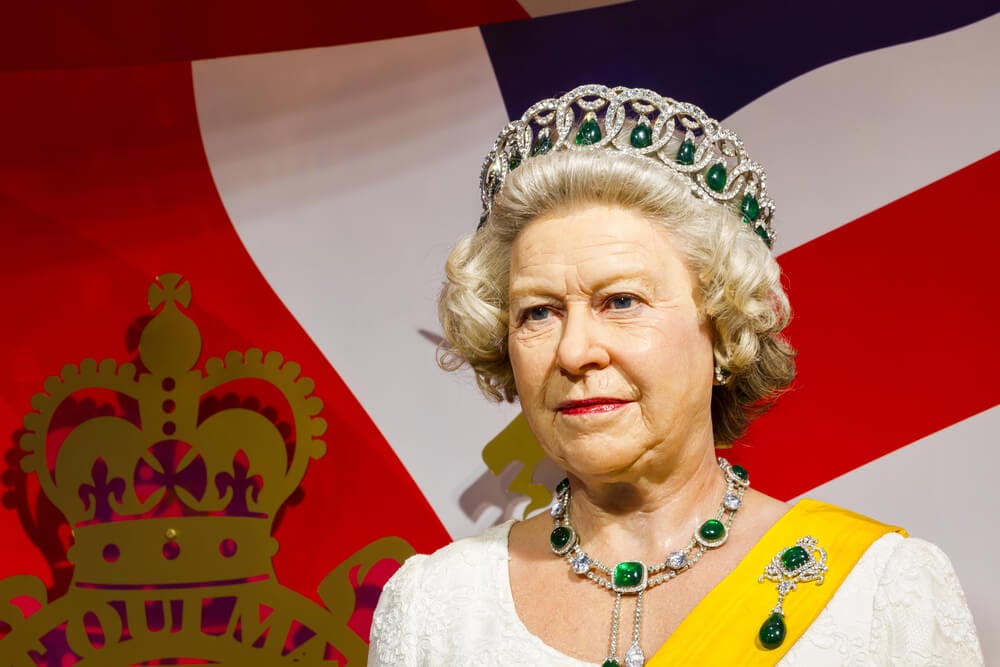
Garrard’s platinum crown for Queen Elizabeth, consort of George VI, made in 1937, holds the Koh-i-Noor diamond at the center of its front cross. That stone passed through Mughal, Persian, Afghan and Sikh hands before the East India Company took it in 1849 and presented it to Queen Victoria.
Its ownership is still contested, with the governments of India, Pakistan and Afghanistan among those that have claimed it. The crown rested on the Queen Mother’s coffin at her funeral in 2002.
Queen Camilla chose not to use it in 2023, a decision widely read as diplomatic.
Queen Mary’s Crown, Reused in 2023
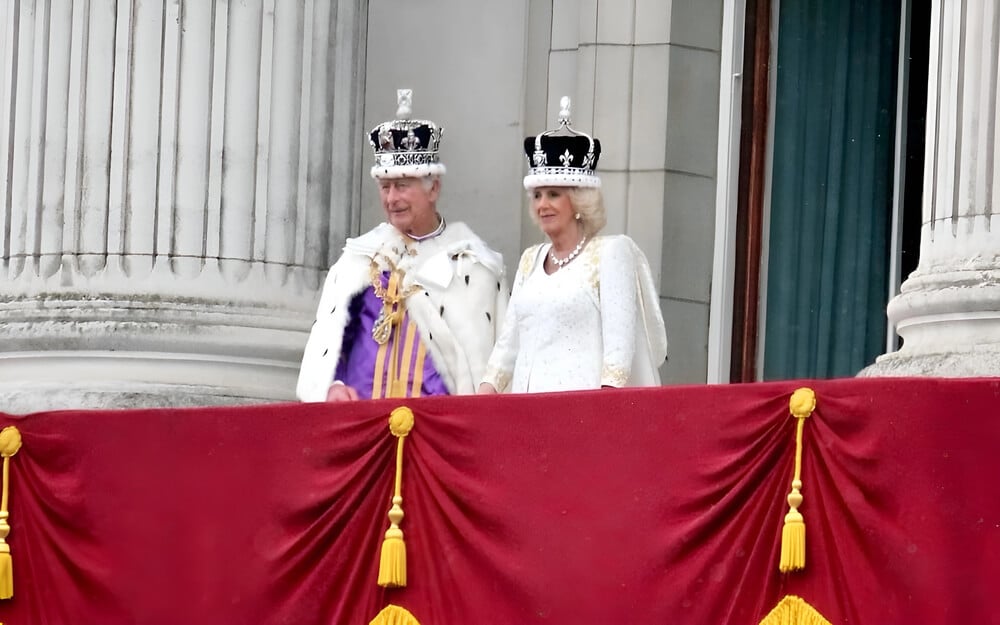
Garrard made this crown for Queen Mary for the 1911 coronation, and it sat largely unused for more than a century. For the 2023 coronation, Queen Camilla wore it, the first time in centuries that a consort had used an existing crown instead of commissioning a new one.
Jewelers removed four of its eight arches, reset it with the Cullinan III, IV and V diamonds as a tribute to Elizabeth II, and left out the Koh-i-Noor it once held. Reusing it was framed as a sustainability gesture.
It also sidestepped a new diplomatic argument over that famous diamond.
Holy Crown of Hungary and Its Bent Cross
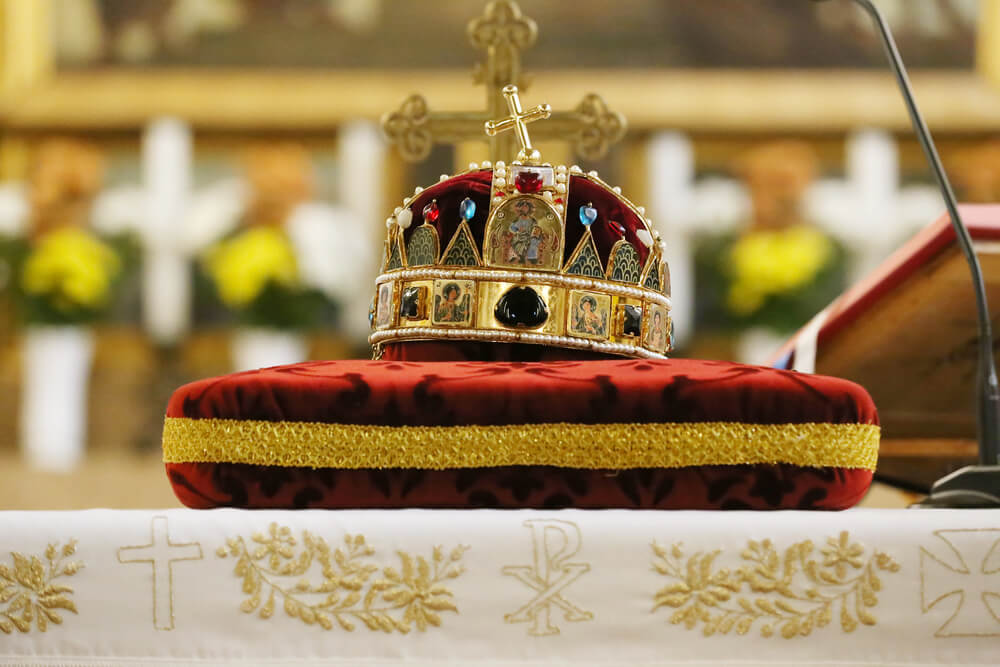
The Holy Crown of Hungary is instantly recognizable by the cross on top, which leans at an angle. The tilt most likely came from damage centuries ago, and nobody has straightened it since.
Its lower band includes Byzantine enamel plaques from the 1070s. At the end of World War II, Hungarian guards handed the crown to the US Army to keep it from Soviet forces, and it spent years stored at Fort Knox.
President Jimmy Carter returned it to Hungary in January 1978. Since 2000 it has been displayed in the Hungarian Parliament building in Budapest.
Iron Crown of Lombardy
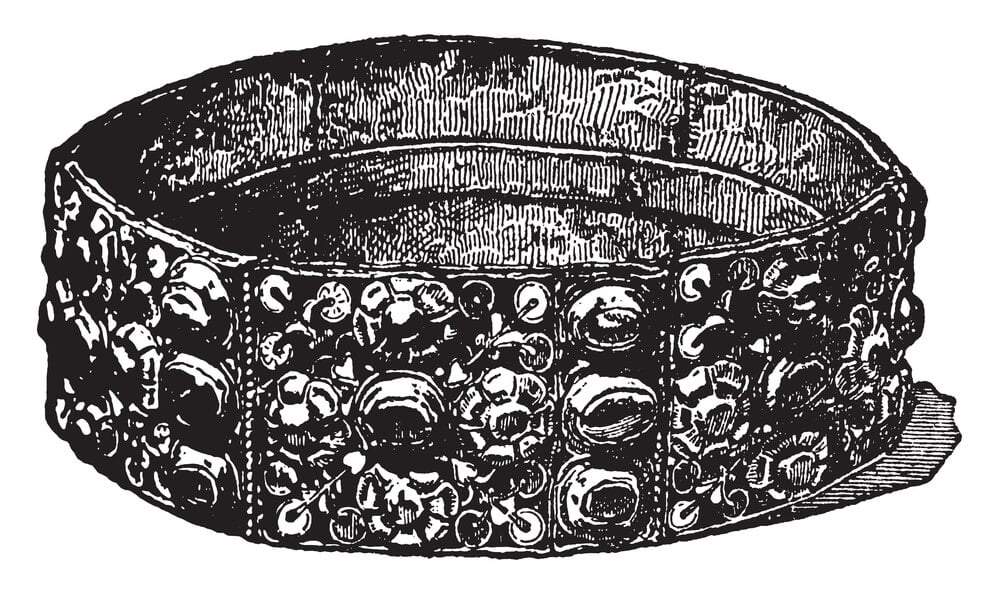
Kept in the cathedral at Monza, near Milan, the Iron Crown takes its name from a thin inner band traditionally said to be hammered from a nail used at the Crucifixion. Analysis in the 1990s found the band is actually silver, not iron.
The crown is unusually small, which has led scholars to suggest it was once larger or originally worn in a different way. Napoleon crowned himself King of Italy with it in Milan in 1805, placing it on his own head.
For a relic defined by its iron, it contains remarkably little of the metal.
Imperial Crown of the Holy Roman Empire
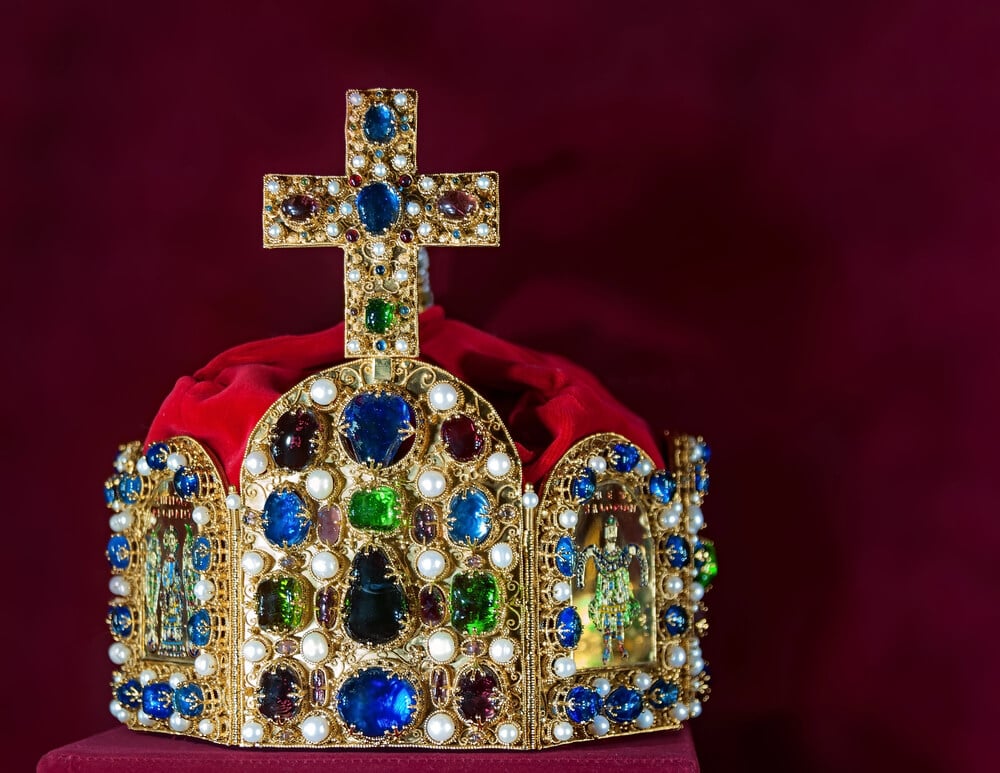
Goldsmiths working in the second half of the 10th century produced this octagonal gold crown with enamel plaques and uncut gemstones, and it was used to crown Holy Roman emperors for centuries. As French armies advanced in the 1790s, the imperial regalia were moved to Vienna for safekeeping.
In 1938, after the annexation of Austria, Hitler had the collection taken to Nuremberg. American troops recovered it after the war, and it went back to Vienna in 1946.
The crown is now in the Imperial Treasury at the Hofburg, where its eight hinged plates still show the shape of an early medieval idea of heaven.
Saint Wenceslas Crown Behind Seven Locks
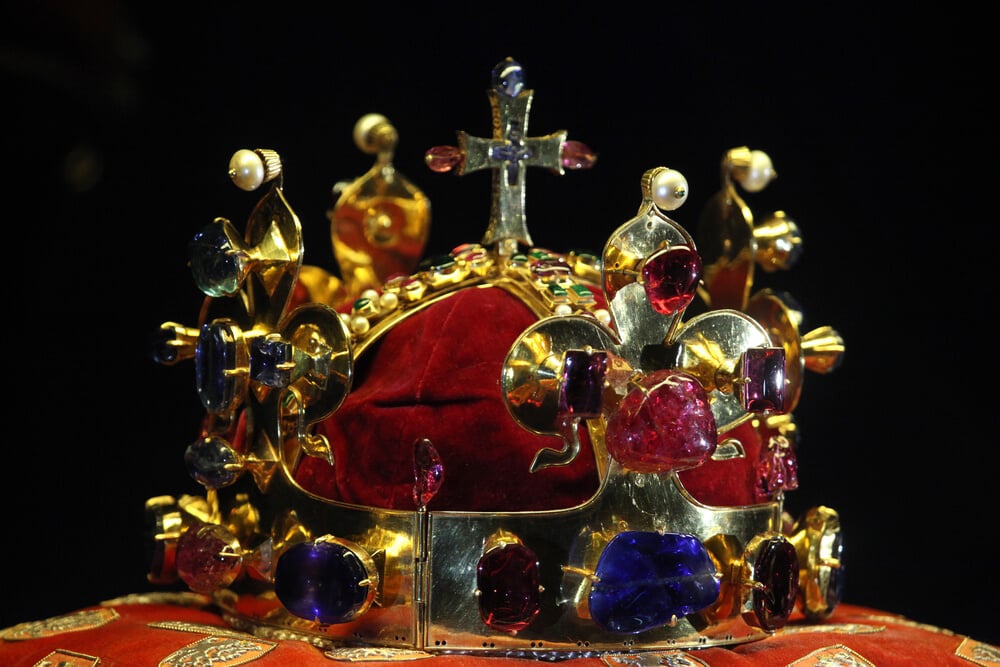
Charles IV commissioned this crown in 1347 and dedicated it to Saint Wenceslas, the patron saint of Bohemia. It is kept in a chamber in St Vitus Cathedral in Prague behind a door with seven locks.
The seven keys are held by seven different officials, including the president, the prime minister and the archbishop of Prague, so no single person can open it. The crown appears in public only on rare occasions.
A popular story claims anyone who wears it without right will die within a year, a legend often attached to the Nazi governor Reinhard Heydrich.
Great Imperial Crown of Russia
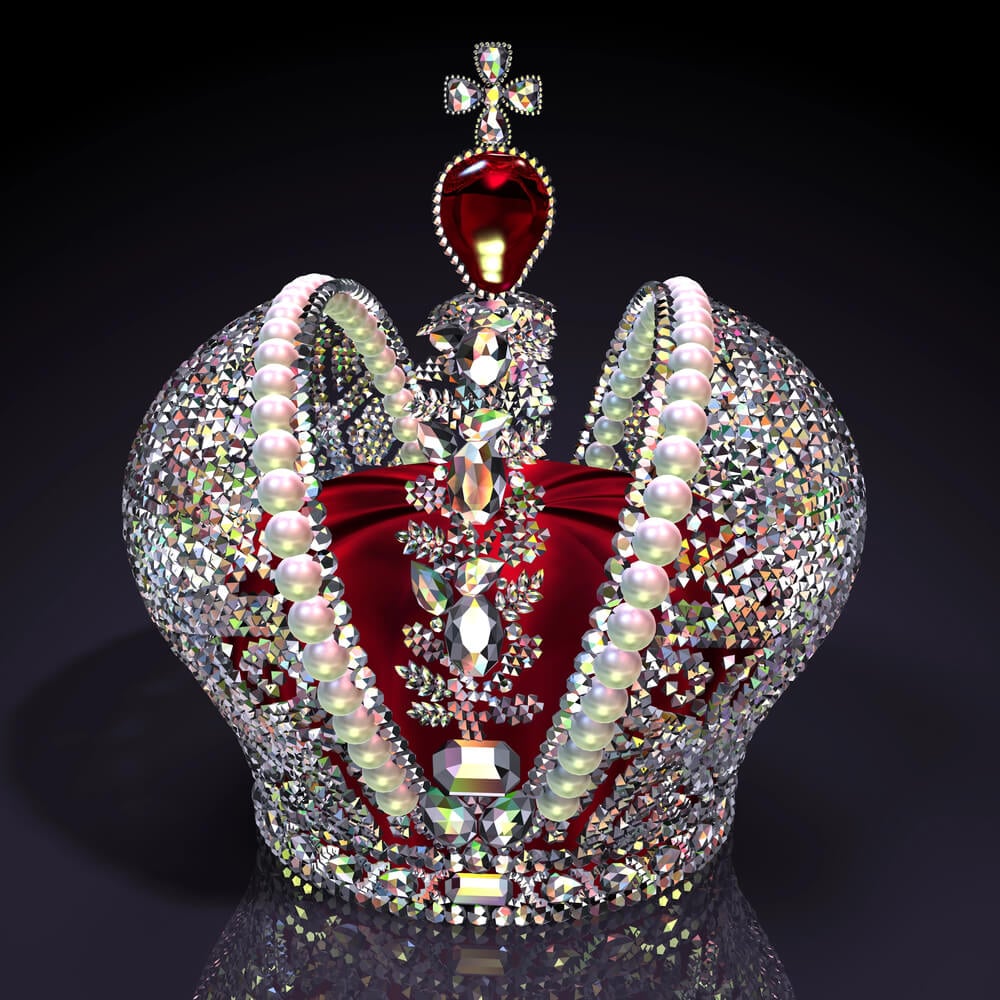
Court jewelers Jeremie Pauzie and Georg Friedrich Eckart made the Great Imperial Crown for the coronation of Catherine the Great in 1762, reportedly in about two months. It holds 4,936 diamonds and is topped by a red spinel of nearly 399 carats.
The crown was used at every Russian coronation after that, ending with Nicholas II in 1896. It survived the revolution because the Bolsheviks inventoried the imperial treasures instead of selling all of them.
Today it is part of the Diamond Fund in the Moscow Kremlin, still in almost perfect condition.
Monomakh’s Cap in the Kremlin
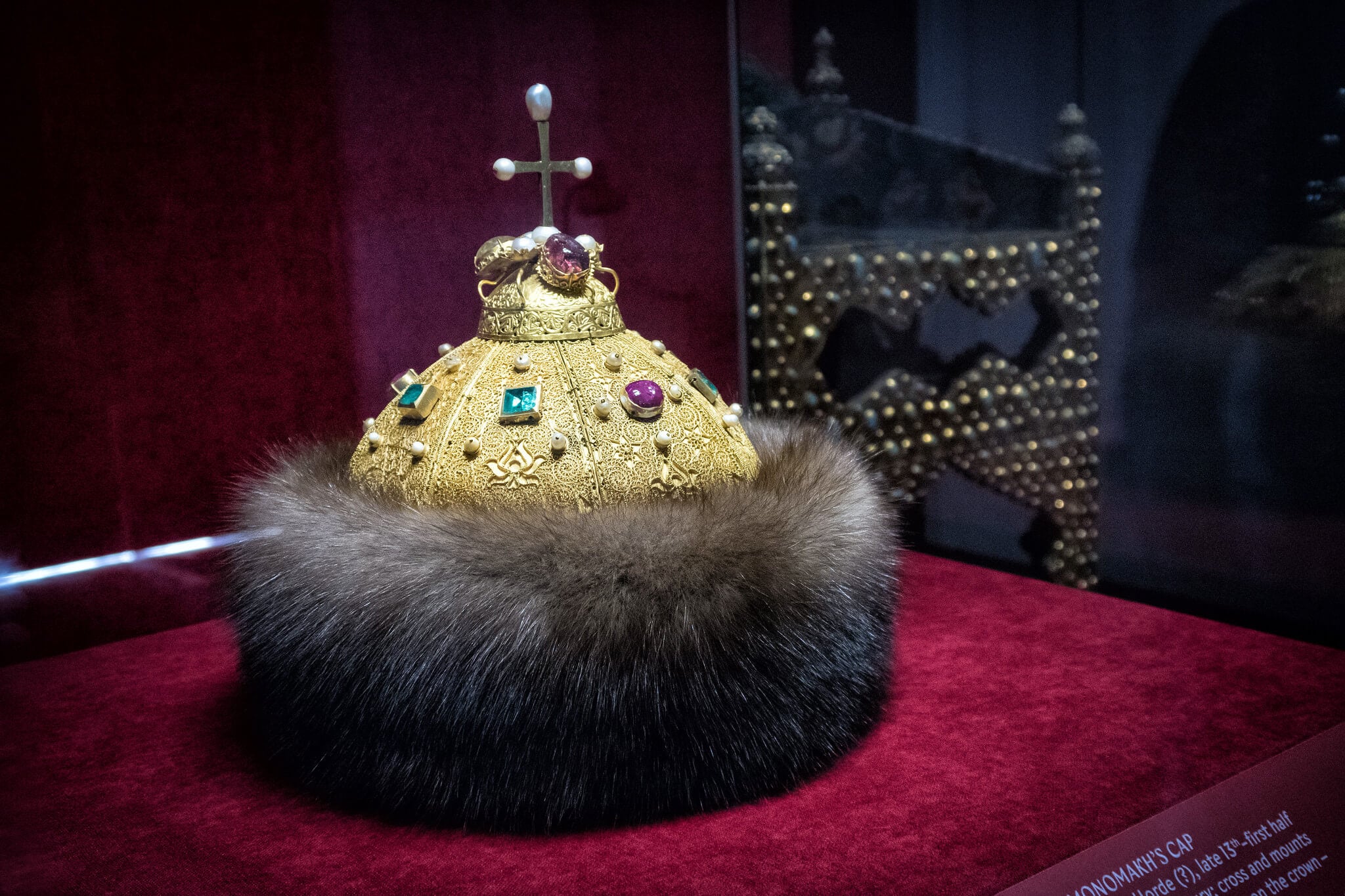
Monomakh’s Cap is a gold filigree skullcap trimmed with sable and topped by a cross, and it was used to crown Russian rulers until the time of Peter the Great. Tradition claimed a Byzantine emperor sent it to Vladimir Monomakh, the grand prince of Kyiv, in the 12th century.
Historians now believe it was probably made in Central Asia in the 13th or 14th century, possibly as a gift from the Golden Horde. That origin story reverses the legend entirely.
It sits in the Kremlin Armory as a symbol of power that may have come from the very rulers Moscow later overthrew.
Crown of the Andes
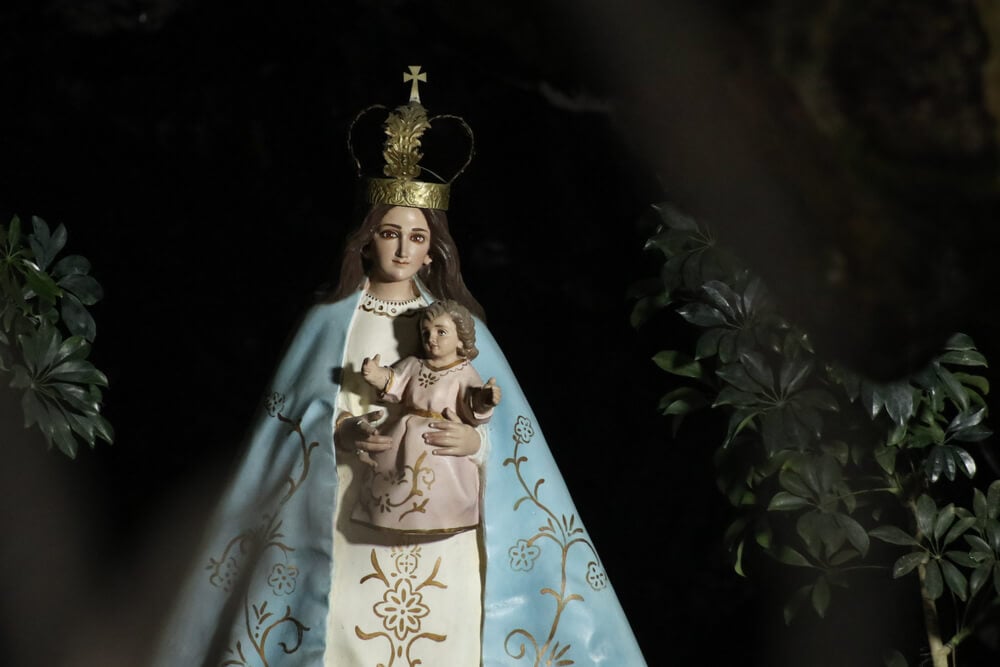
Residents of Popayan in present-day Colombia commissioned this gold crown for a statue of the Virgin Mary, reportedly in thanks for surviving a smallpox epidemic in the late 16th century. Craftsmen worked on it over many decades, and the arches were added in the 1770s.
It is set with hundreds of Colombian emeralds, and a persistent legend claims one came from the ransom of the Inca ruler Atahualpa. An American syndicate bought it in 1936.
The Metropolitan Museum of Art acquired it in 2015, returning it to public view after decades in private hands.
Louis XV’s Coronation Crown
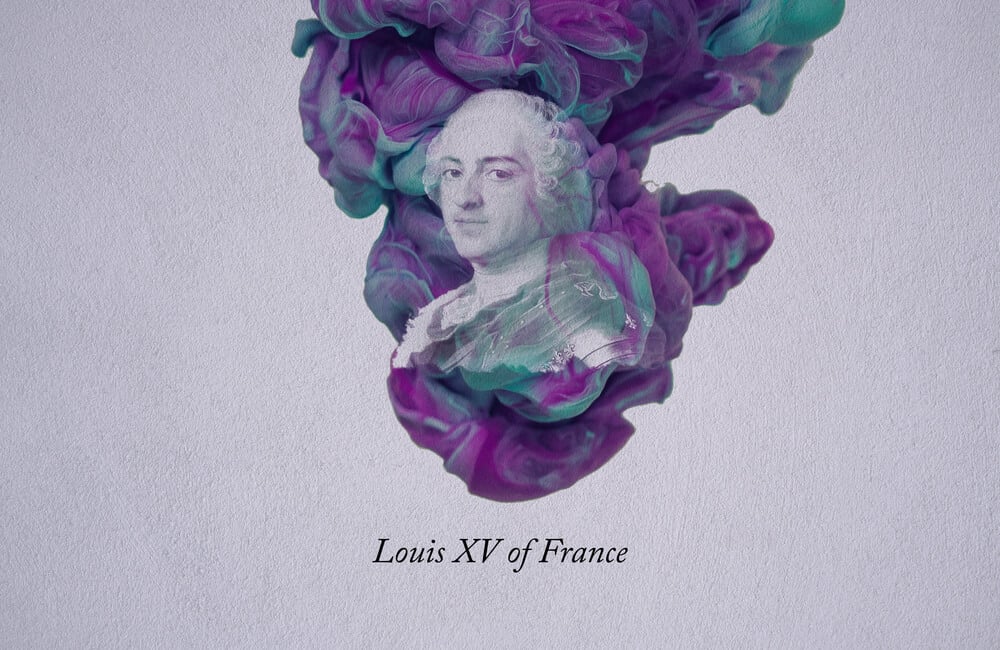
Made for the coronation of Louis XV in 1722, this is the only crown of the French kings from before the Revolution to survive. It was originally set with some of the most famous diamonds in Europe, including the Regent and the Sancy.
After the ceremony, the real stones were removed and replaced with copies, which was standard practice at the time. That is why it survived when most French regalia were melted or sold.
The crown is kept at the Louvre, still carrying glass and crystal where royal diamonds once sat.
Empress Eugenie’s Crown and the Louvre Heist
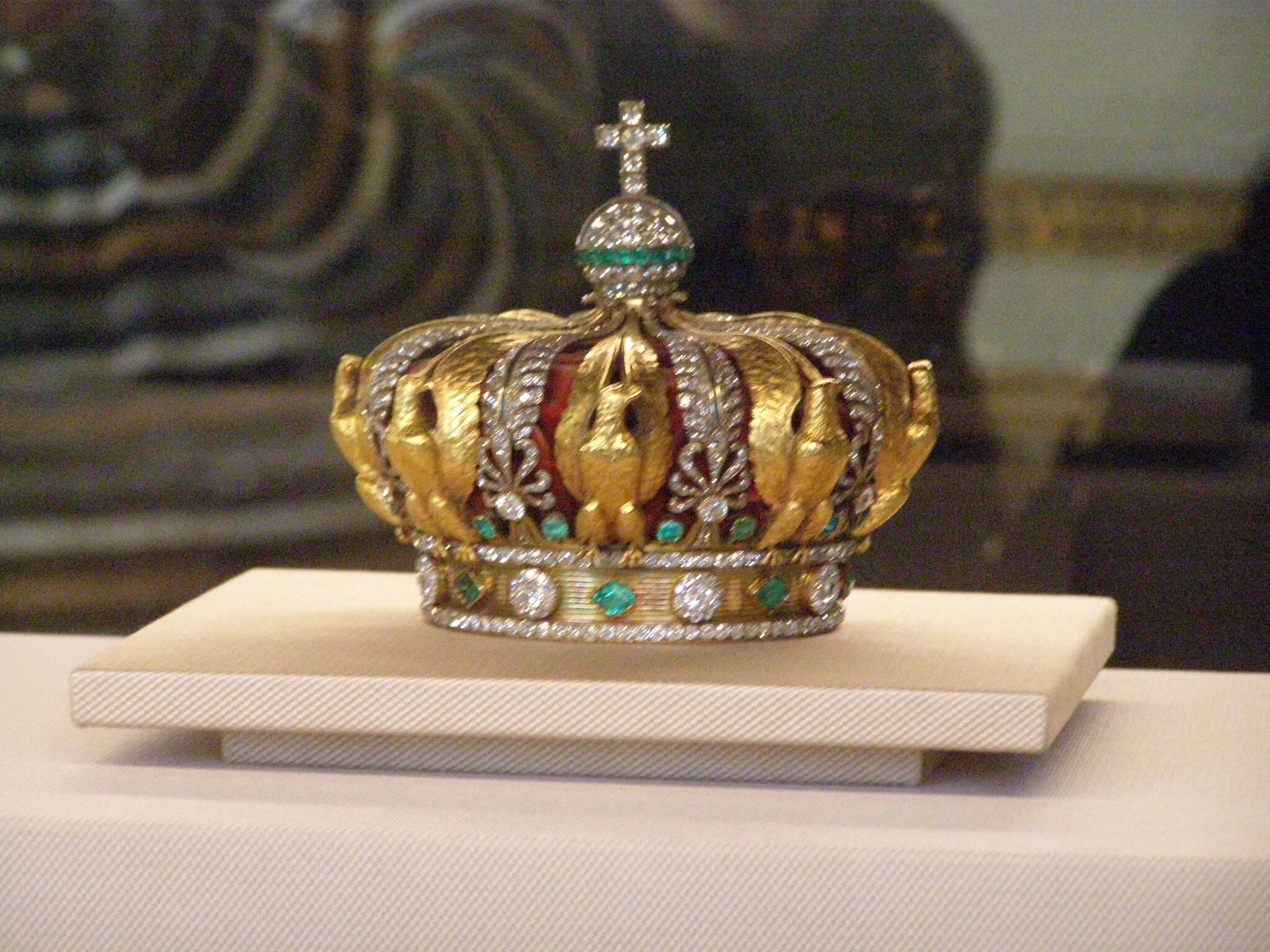
Jeweler Alexandre-Gabriel Lemonnier made this crown for Empress Eugenie, wife of Napoleon III, for the Universal Exhibition in Paris in 1855. It holds 56 emeralds and 1,354 diamonds, with eight gold eagles around the frame.
On October 19, 2025, thieves broke into the Louvre’s Apollo Gallery and took eight pieces of jewelry. They dropped the Eugenie crown during their escape, and it was found outside, crushed and deformed.
The Louvre said in February 2026 that it retained all its emeralds and all but 10 of its diamonds, missing only one eagle, and would be fully restored.
Cambridge Lover’s Knot Tiara
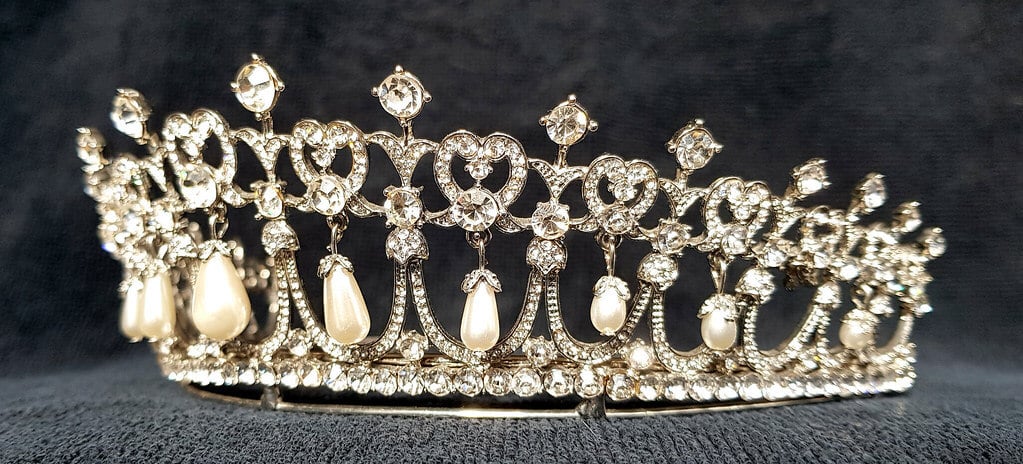
Queen Mary had Garrard make this tiara in 1913 and 1914, modeling it on one owned by her grandmother, Princess Augusta of Hesse-Kassel. Its 19 pearl drops hang from diamond lovers’ knot bows.
Elizabeth II gave it to Diana as a wedding present, and Diana wore it often, though she reportedly complained the swinging pearls gave her headaches. After her divorce it went back to the royal collection.
Catherine, Princess of Wales, now wears it regularly, making it one of the most photographed tiaras in the world.
Spencer Tiara at a Royal Wedding
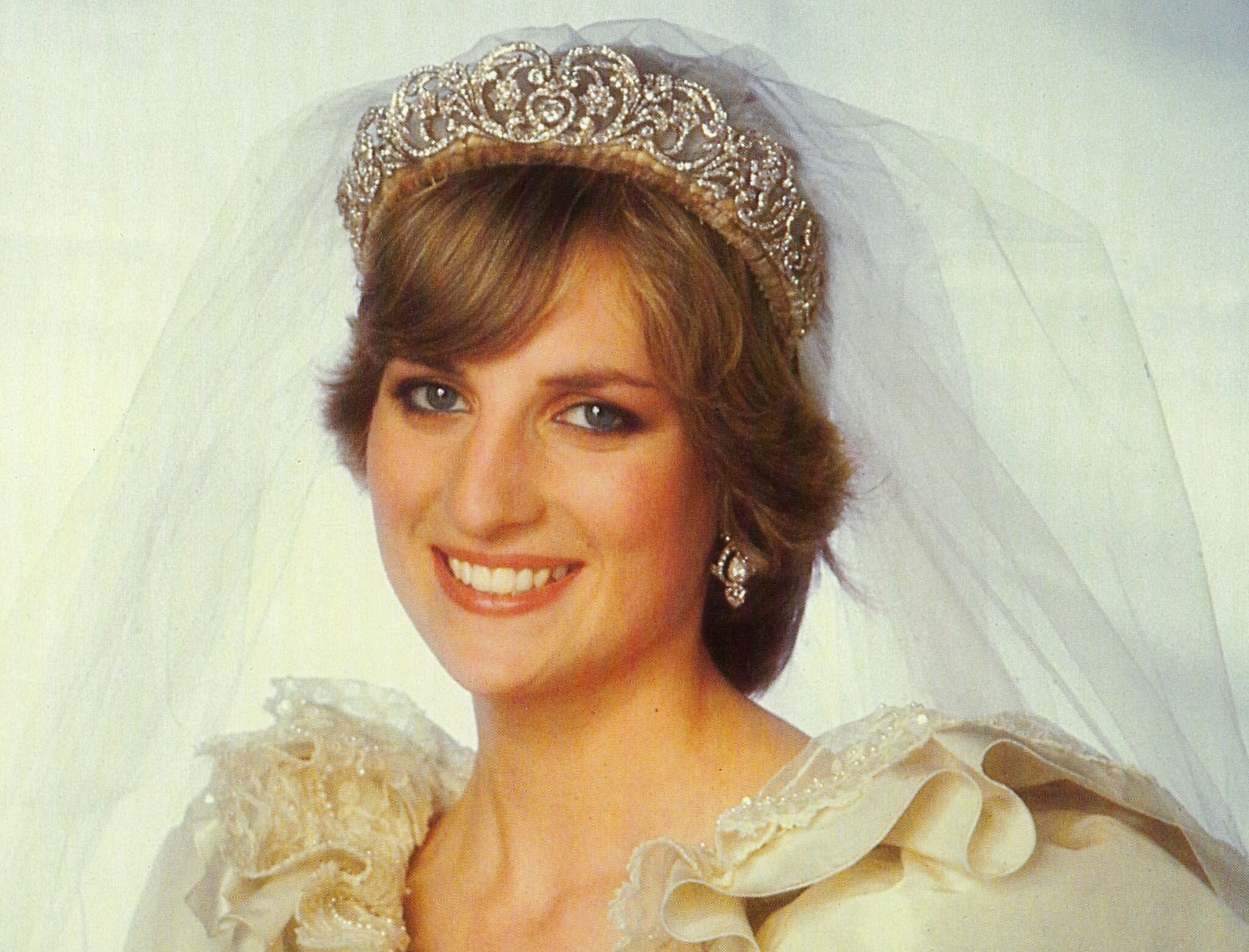
Diana Spencer did not wear a royal tiara when she married Prince Charles on July 29, 1981. She wore her own family’s, a diamond piece assembled from elements of different ages, with a central section tied to a 1919 wedding gift within the Spencer family.
Her sisters had worn it at their weddings before her. The choice quietly signaled that the bride came from an old family with heirlooms of its own.
Diana’s niece Lady Kitty Spencer wore it again at her wedding in 2021.
Queen Mary’s Fringe Tiara
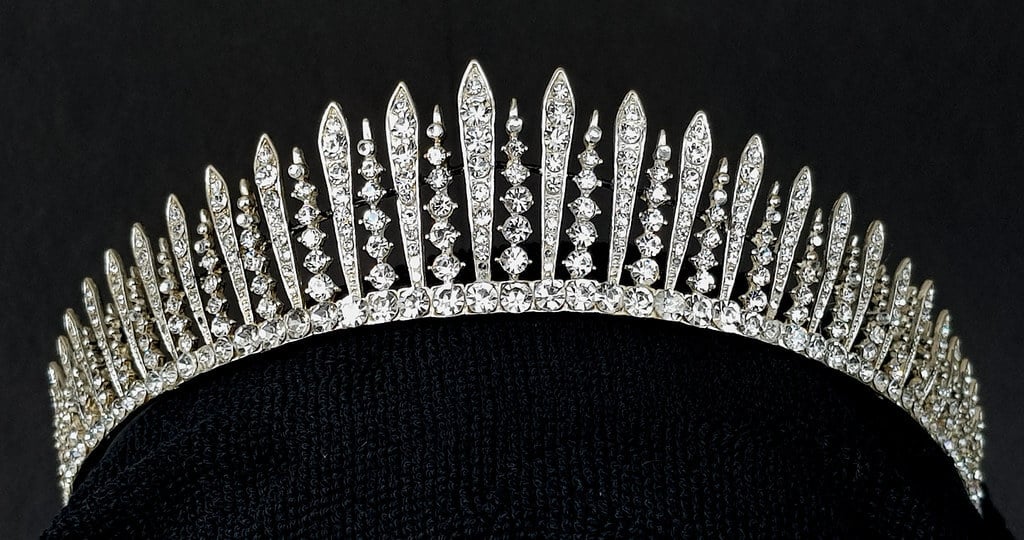
Garrard made this tiara in 1919 using diamonds from a necklace Queen Victoria had given Queen Mary as a wedding present. It can also be worn as a necklace.
On the morning of November 20, 1947, as Princess Elizabeth was dressing for her wedding, the frame snapped. A court jeweler was rushed to his workroom under police escort to repair it, and a small gap in the fringe is visible in the wedding photographs.
Princess Anne wore it at her wedding in 1973, and Princess Beatrice wore it in 2020.
Diamond Bandeau of 1932
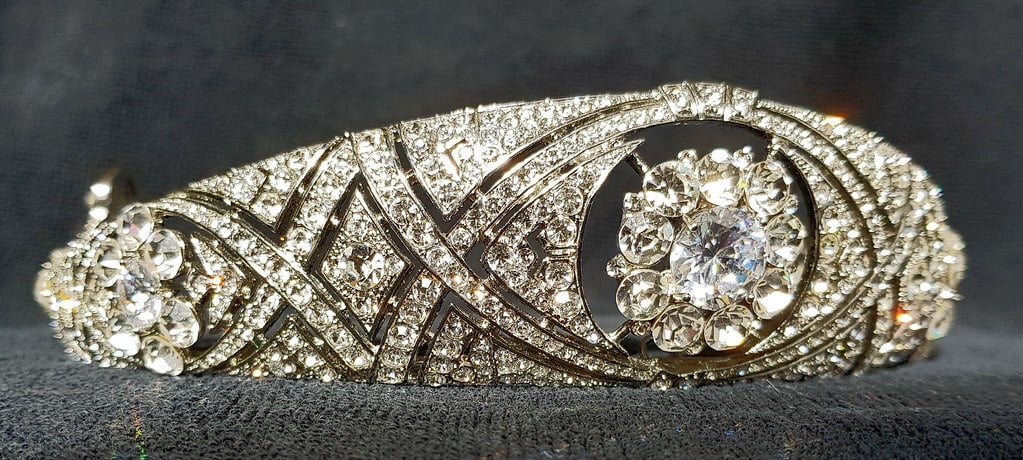
Queen Mary’s diamond bandeau was made in 1932 with a detachable central brooch that had been a wedding gift to her from the County of Lincoln in 1893. It is built from interlaced ovals set with large and small diamonds.
The piece was rarely seen in public for decades. That changed on May 19, 2018, when Meghan Markle wore it for her wedding to Prince Harry at St George’s Chapel, Windsor.
A tiara that had spent most of its life in storage became famous in a single afternoon.
Greville Emerald Kokoshnik
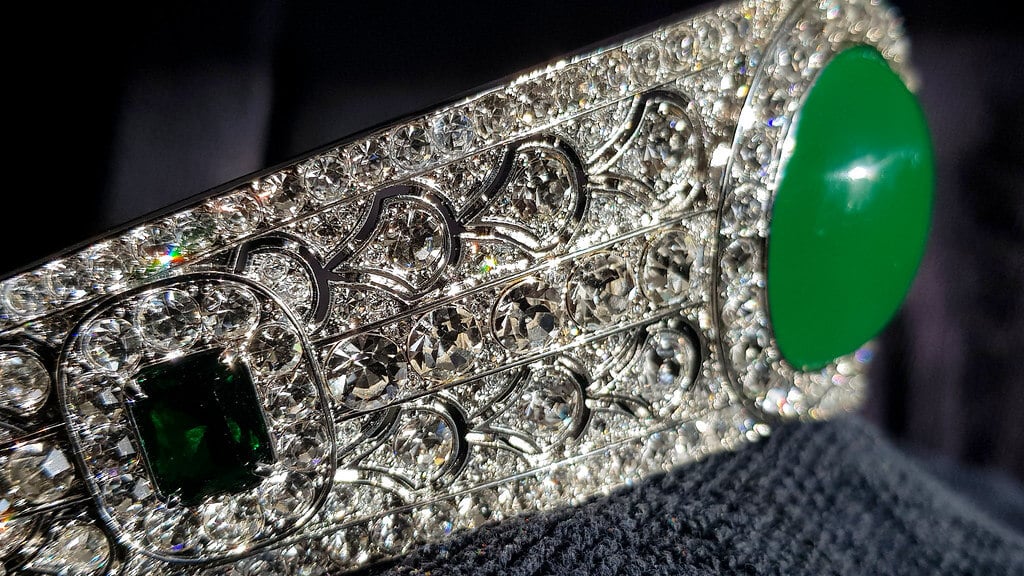
Boucheron made this Russian-style tiara in 1919 for Margaret Greville, a wealthy society hostess with a huge jewelry collection. When she died in 1942, she left her jewels to Queen Elizabeth, the future Queen Mother.
The tiara, with a large emerald at its center, was almost never seen in public afterward. Princess Eugenie wore it at her wedding in October 2018, which surprised royal watchers who had never seen it worn.
Its kokoshnik shape copies a traditional Russian headdress, a fashion that swept European jewelry in the early 20th century.
Grand Duchess Vladimir Tiara
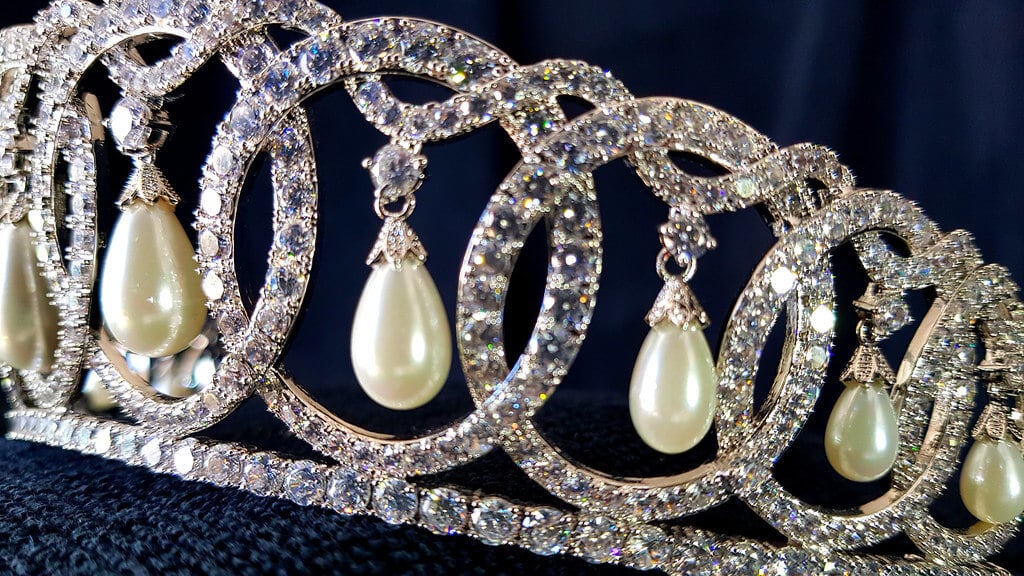
This tiara belonged to Grand Duchess Maria Pavlovna of Russia, whose palace in Petrograd was abandoned during the revolution. A British friend of the family, Albert Stopford, reportedly retrieved her jewels from a hidden safe and smuggled them out of Russia.
After her death, her daughter sold the tiara to Queen Mary in 1921. Mary had it adapted so that its 15 interlaced diamond circles could hold either pearl drops or the Cambridge emeralds.
Elizabeth II wore it often, which gave a piece rescued from revolution a long second career in Britain.
Girls of Great Britain and Ireland Tiara
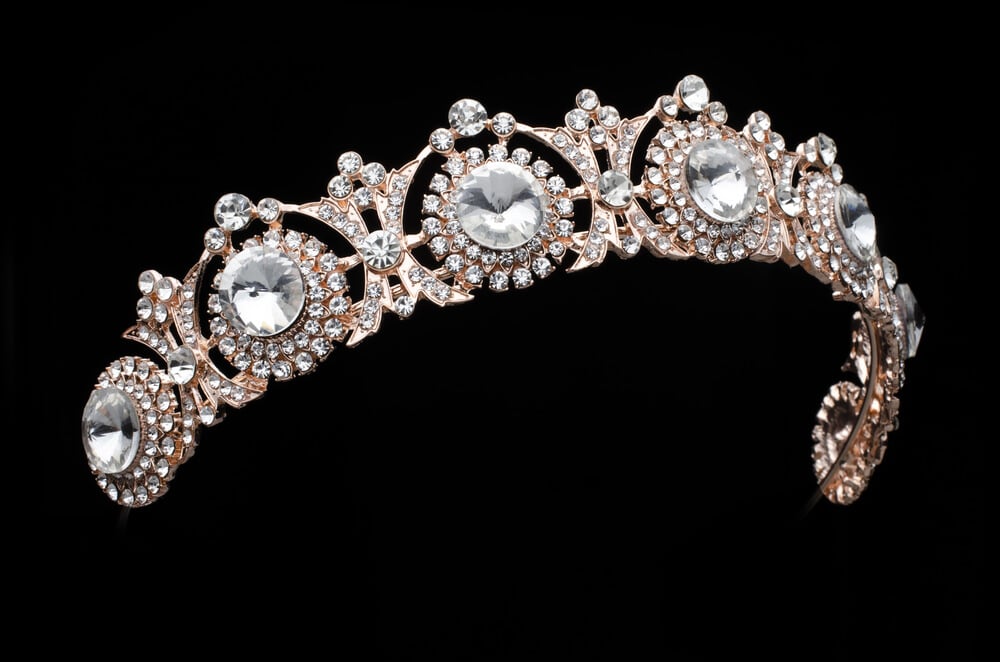
A committee of young women raised money to buy this tiara as a wedding gift for Princess Mary of Teck in 1893, and the name stuck. The committee was organized by Lady Eve Greville.
Mary later passed it to her granddaughter Princess Elizabeth as a wedding present in 1947. Elizabeth II wore it so often that it appeared on British banknotes and coins throughout much of her reign.
The diamond festoons and scrolls were originally topped by pearls, which Mary later replaced with diamonds. For millions of people, this was the tiara they saw every time they paid for something.
Swedish Cameo Tiara
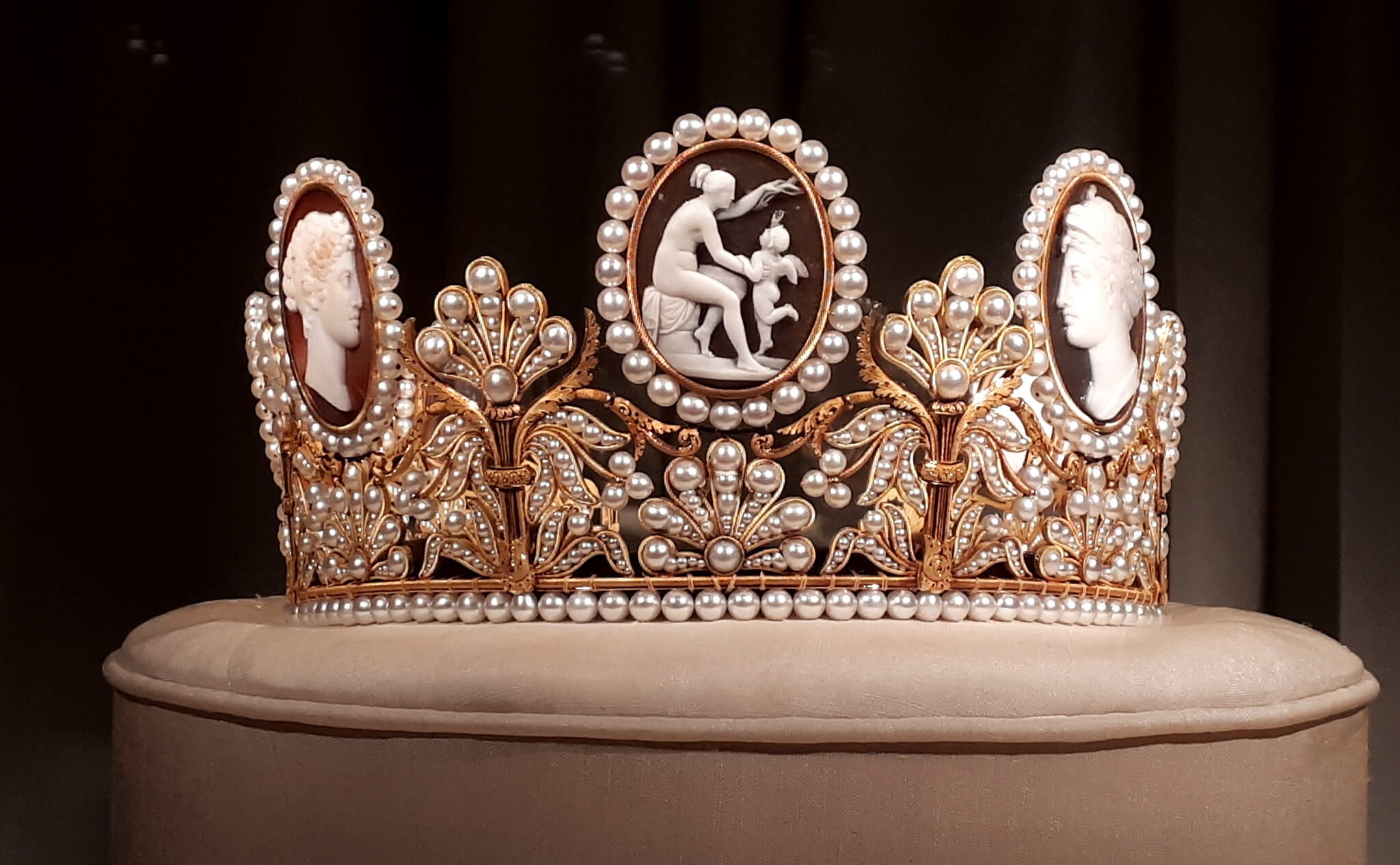
Sweden’s royal family owns a cameo tiara traditionally believed to have belonged to Empress Josephine, first wife of Napoleon Bonaparte. Its carved shell cameos with classical scenes are set in gold and pearls.
It is thought to have come to Sweden with Josephine’s granddaughter, Josephine of Leuchtenberg, when she married the future King Oscar. Queen Silvia wore it at her wedding in 1976, and Crown Princess Victoria and Princess Madeleine wore it at theirs.
A piece possibly given in Paris more than two centuries ago now marks the most important day of Swedish royal brides.
Poltimore Tiara
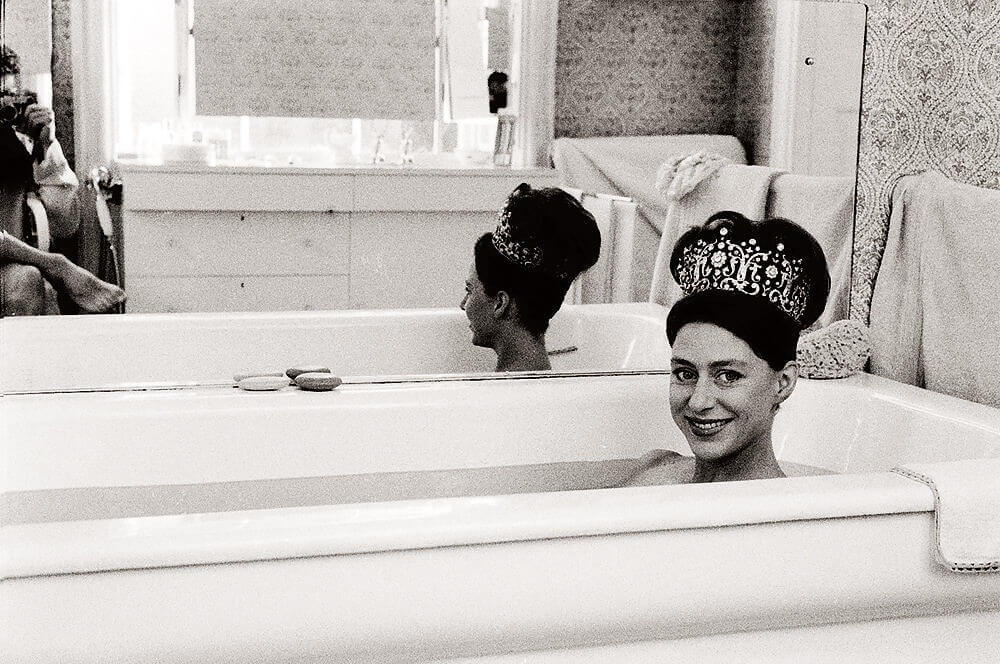
Garrard made this diamond tiara around 1870 for Lady Poltimore, and it could be broken apart into brooches and a necklace. Princess Margaret bought it at auction in 1959 and wore it at her wedding to Antony Armstrong-Jones in 1960.
She also wore it for a famous portrait taken by her husband in the bath. After her death, her family sold it at Christie’s in 2006 for just over 926,000 pounds.
The sale surprised royal watchers, since tiaras connected to such famous moments rarely leave royal families.
Crown of Princess Blanche
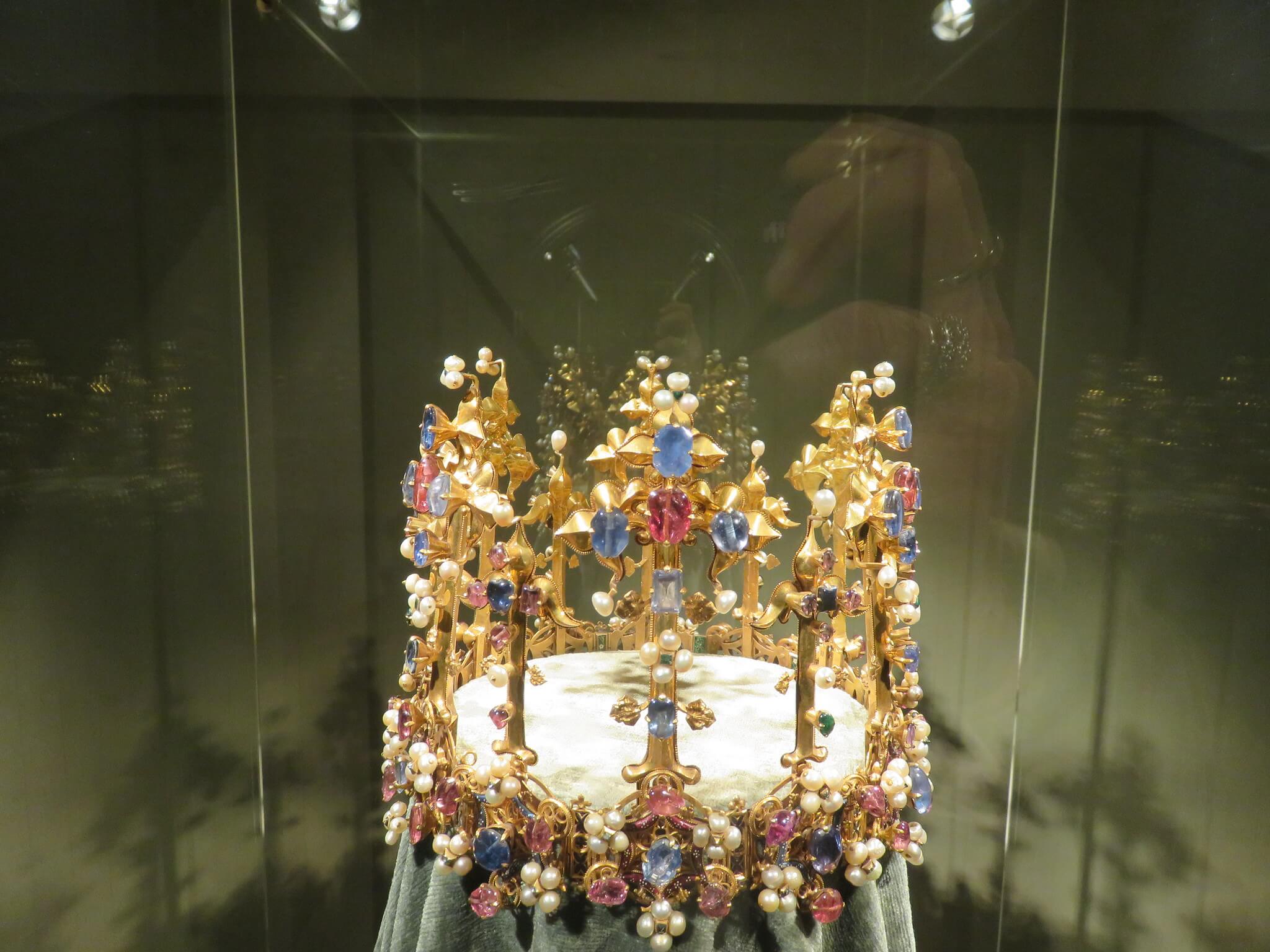
Goldsmiths made this crown around 1370 to 1380, setting it with sapphires, rubies, emeralds, diamonds and pearls, and it is often described as the oldest surviving crown from England. Its first owner is uncertain, though some historians link it to Anne of Bohemia, queen of Richard the Second.
It traveled to Germany in 1402 as part of the dowry of Princess Blanche, daughter of Henry IV, when she married Louis III, Elector Palatine. That trip is the reason it still exists.
Most English crowns of the period were later broken up or melted during wars and financial emergencies. It now sits in the Treasury of the Munich Residenz, an English royal object preserved by a German court.
Christian IV’s Pelican Crown
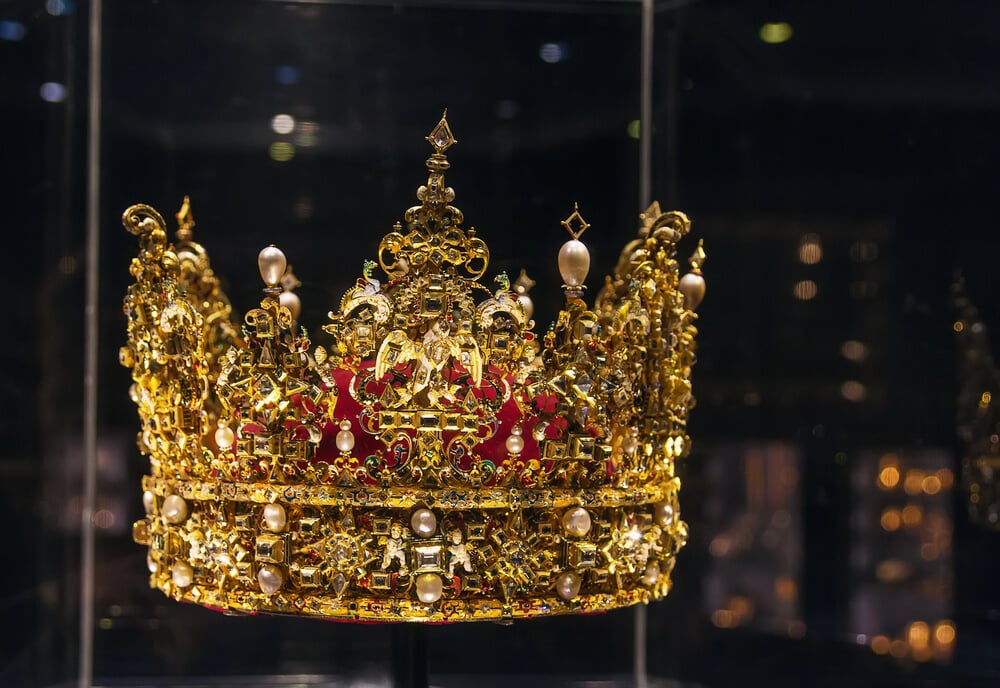
Dirich Fyrenn made this crown for the coronation of Christian IV of Denmark in 1596. Its gold is enameled and set with gems and pearls, and it features a pelican feeding its young with blood from its own breast, a symbol of a king who gives everything for his people.
The crown includes images of virtues and figures meant to show the ideal ruler. It is kept at Rosenborg Castle in Copenhagen with the rest of the Danish crown jewels.
Few crowns carry such a direct message about what a king owes his subjects.
Imperial Crown of India
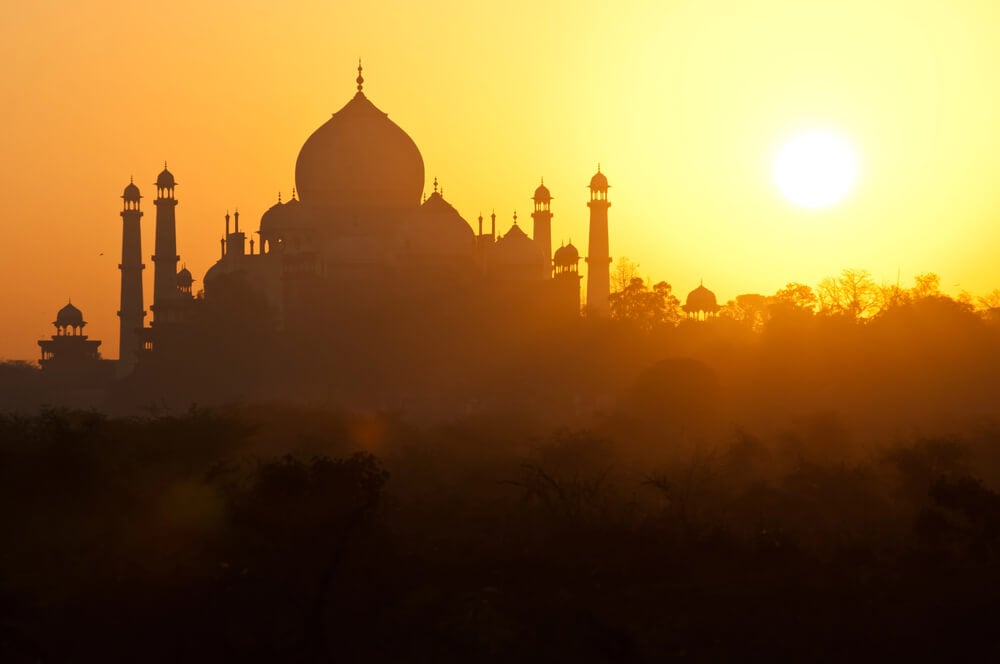
British law does not allow the crown jewels to leave the country, which created a problem when George V planned to be proclaimed Emperor of India at the Delhi Durbar in 1911. The solution was a new crown, made by Garrard and set with more than 6,000 diamonds along with emeralds, sapphires and rubies.
The cost was paid by India. George V wore it for that single ceremony, and no monarch has worn it since.
It stays in the Tower of London, one of the most expensive single-use hats ever made.
Crown of Scotland
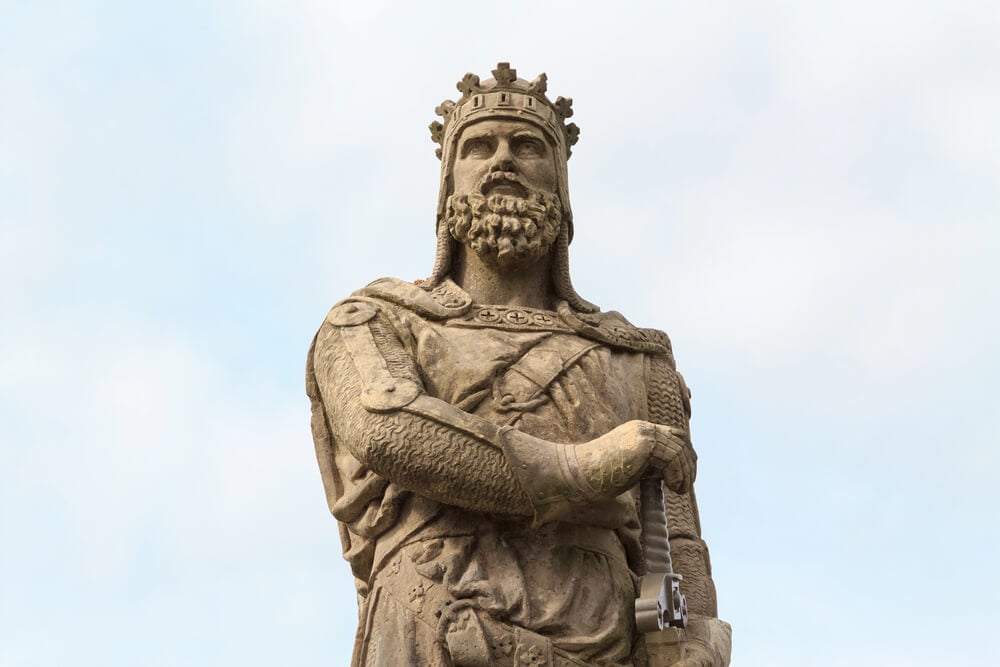
The Crown of Scotland was refashioned in 1540 for James V by goldsmith John Mosman, who used Scottish gold. During Oliver Cromwell’s invasion in the 1650s, the Scottish regalia were smuggled out of Dunnottar Castle and hidden under the floor of a nearby church.
After the 1707 union with England, the regalia were locked in a chest in Edinburgh Castle and largely forgotten. In 1818 a team including Walter Scott opened the chest and found them intact.
Scott’s search turned a lost national symbol back into a public one, and the crown, scepter and sword are displayed there today in the Crown Room.
Pahlavi Crown of Iran
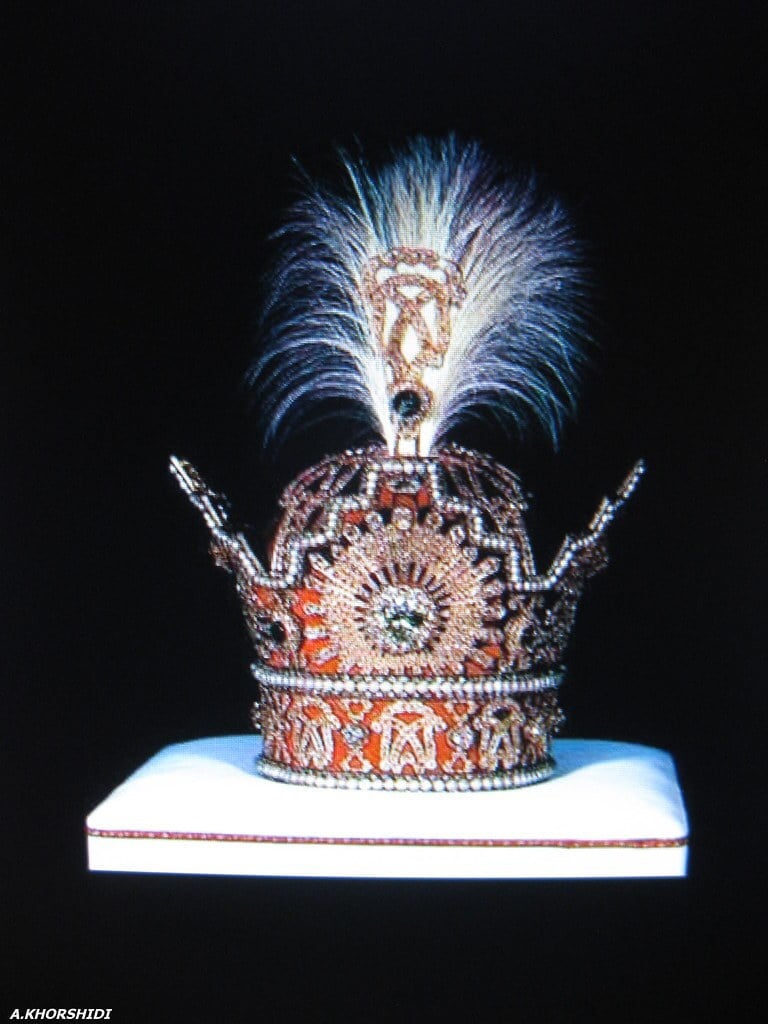
Reza Shah Pahlavi commissioned this crown for his coronation in 1926, and Iranian jewelers built it using stones already in the Persian treasury. It contains 3,380 diamonds, along with emeralds, sapphires and pearls.
His son, Mohammad Reza Shah, wore it at his own coronation in 1967. After the 1979 revolution, the crown stayed in Tehran with the rest of the national jewels.
It is kept in the Treasury of National Jewels at the Central Bank of Iran, where the gems still back the country’s currency as a financial reserve.
Pedro II’s Crown of Brazil
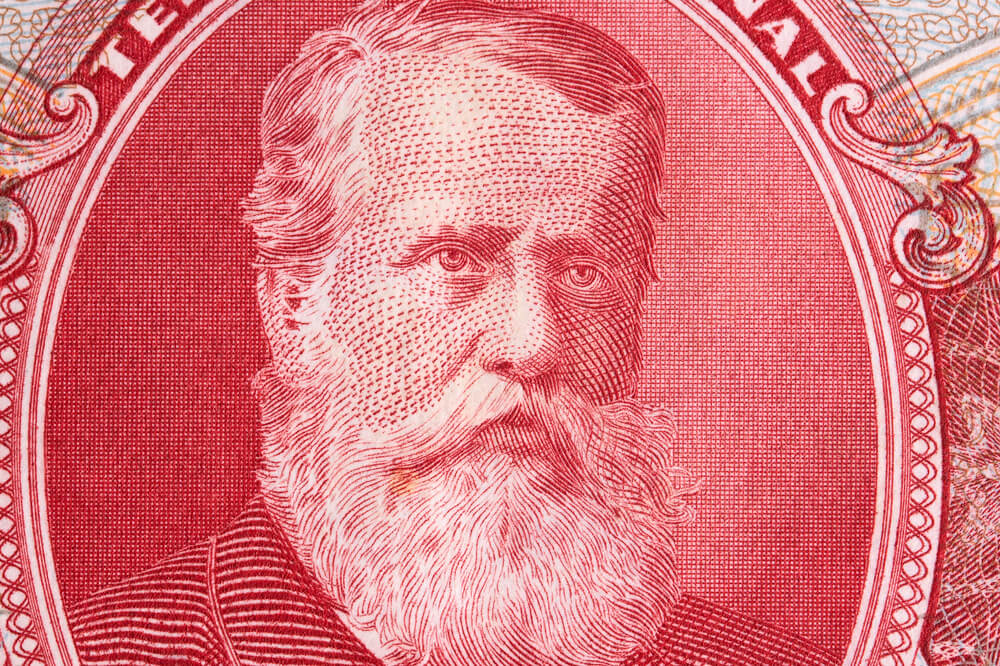
Carlos Marin made this crown for the coronation of Pedro II in 1841, when the emperor was just 15. It uses Brazilian gold and is set with 639 diamonds and 77 pearls.
Pedro reigned for almost half a century before he was overthrown in 1889. The crown stayed in Brazil when he went into exile.
It is now displayed at the Imperial Museum in Petropolis, the mountain city where the emperor spent his summers, and it remains one of the few crowns made in the Americas for a monarch who ruled there.
Jewels Carry Their Arguments
Nearly every piece here has been damaged, altered, hidden or fought over at some point. Crowns get rebuilt for new heads, tiaras get split into brooches, and stones move from one setting to another as fashions and politics change.
The gold is often the least important part of the story. Ownership is almost always more complicated than the display case suggests.
That complexity is why these objects still draw crowds. A tiara snapped on a wedding morning and a crown crushed by fleeing thieves are reminders that royal symbols are physical things, vulnerable to accidents and bad luck.
Their power comes from the people who agree to believe in them. When that agreement ends, a crown becomes a museum piece.
More from Go2Tutors!

- The Romanov Crown Jewels and Their Tragic Fate
- 13 Historical Mysteries That Science Still Can’t Solve
- Famous Hoaxes That Fooled the World for Years
- 15 Child Stars with Tragic Adult Lives
- 16 Famous Jewelry Pieces in History
Like Go2Tutors’s content? Follow us on MSN.