26 Superhero Comics Worth Real Money Today
Generations of parents tossed out stacks of comic books when their kids left for college or the army. Most of those flimsy magazines cost a dime and were read until the covers fell off.
A few of them now sell for more than a house.
The issues below are the ones dealers hope to find in an estate box or a forgotten closet. Grading, restoration and pressing all shape the numbers, and a single tear can move a price by thousands of dollars.
Action Comics #1 and the Birth of Superman
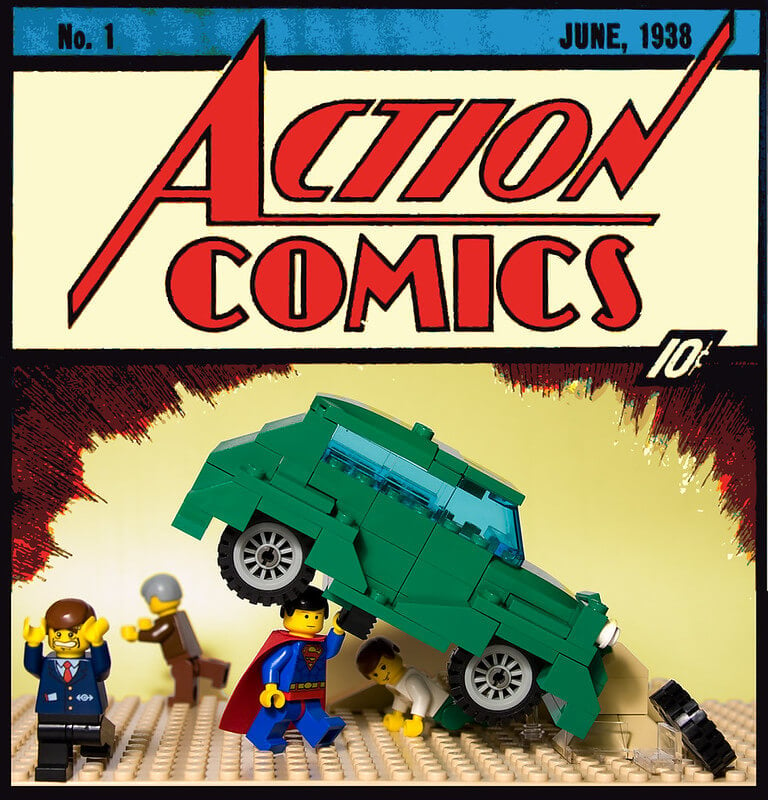
Action Comics #1 hit newsstands with a June 1938 cover date and a 10-cent price, and its cover showed Superman hoisting a green car over his head. Siegel and Shuster had shopped the character around for years before DC finally ran it.
Only a small number of copies are believed to survive, with estimates often ranging from a few dozen to around 100. A copy graded CGC 8.5 sold for 6 million dollars at Heritage Auctions in 2024.
Even badly worn examples with missing pieces or amateur repairs bring life-changing sums, though restoration and grade make an enormous difference to the final figure.
Detective Comics #27 and the Dark Knight’s Debut
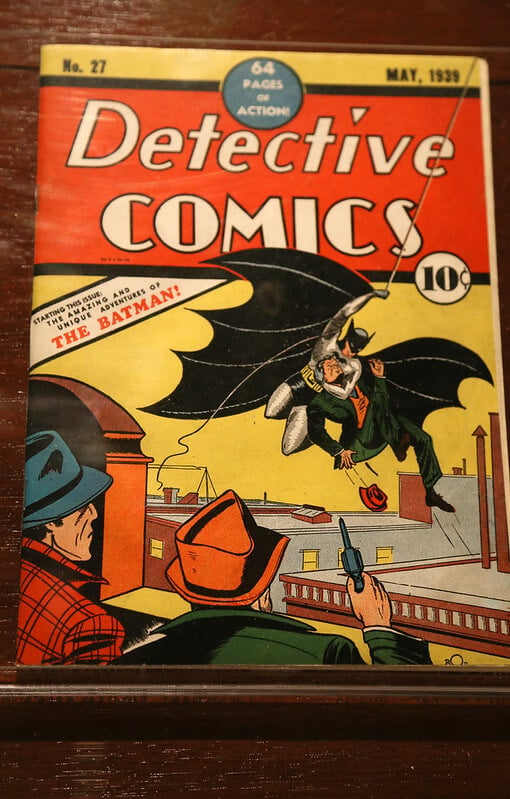
Batman made his first appearance in Detective Comics #27, cover dated May 1939, in a six-page story called The Case of the Chemical Syndicate. For decades the credit read Bob Kane alone, even though writer Bill Finger shaped much of the character, from the cowl to the Bruce Wayne name.
DC formally added a credit for Finger in 2015, long after his death. Surviving copies are scarce and high-grade ones scarcer.
Prices for even low-grade examples typically reach well into six figures, and a clean copy without color touch-ups or trimmed edges sits in a far higher bracket.
Superman #1, the First Solo Superhero Title
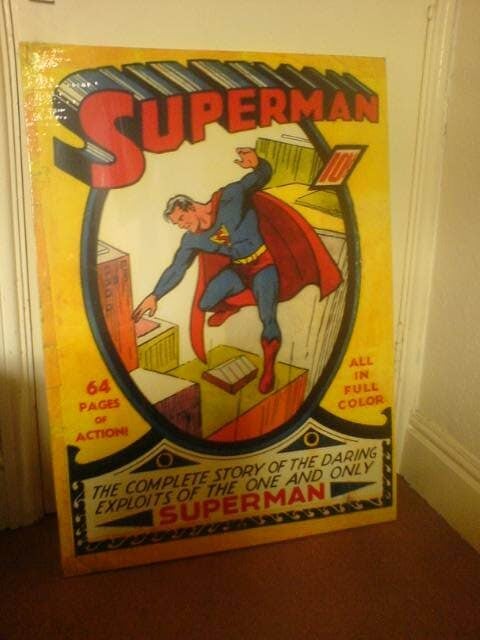
Superman #1 arrived in the summer of 1939 and is often described as the first comic book devoted entirely to a single superhero. Much of the issue reprinted earlier Action Comics stories, but it expanded the origin with new pages about the infant from Krypton and the farm couple who raised him.
Demand for the book has always been fierce because it is the first issue of the character’s own series. Copies change hands for seven-figure sums in the better grades, while worn or restored examples sell for less, though rarely for anything a casual buyer would call modest.
Batman #1 Introduces the Joker and Catwoman
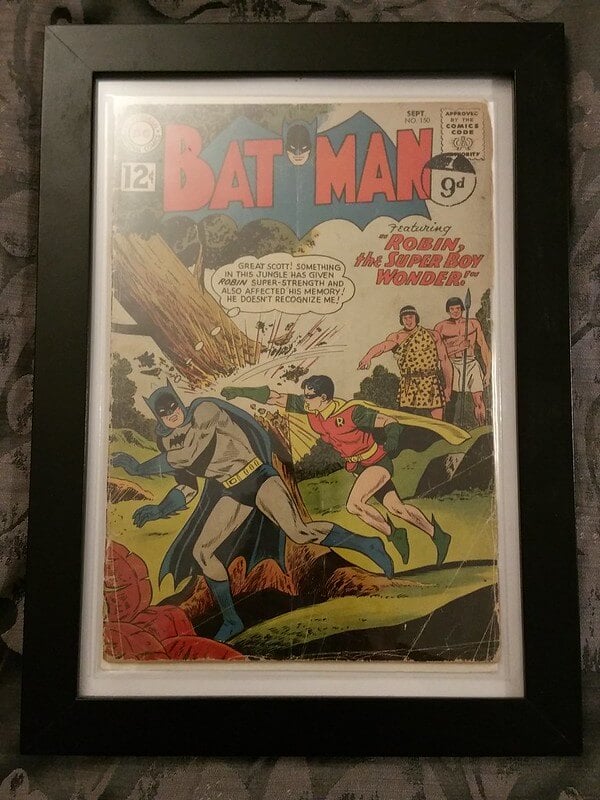
Batman #1, released in the spring of 1940, gave the Dark Knight his own series and introduced two villains who never left. The Joker appeared in two stories, and a jewel thief simply called the Cat became the character later known as Catwoman.
According to long-told accounts, the Joker was supposed to die at the end of the issue before an editor had the ending changed. That small rewrite kept the character alive for more than 80 years.
Prices sit firmly in six figures and climb into seven for sharp copies, with spine wear and page quality weighing heavily on value.
Marvel Comics #1 From Timely Publications
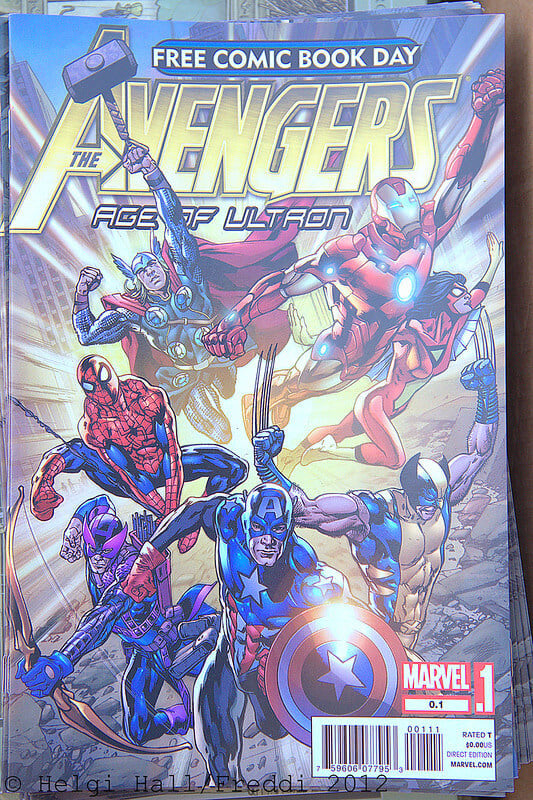
]Photo by Helgi Halldórsson, via Flickr, Licensed CC BY-SA 2.0
Long before the name Marvel meant anything to moviegoers, Timely Publications released Marvel Comics #1 in 1939 with the Human Torch and the Sub-Mariner. Carl Burgos created the Torch, and Bill Everett created the Sub-Mariner.
One celebrated copy, known as the pay copy, carries pencil notes recording what the publisher paid the artists and writers for each feature. That copy sold for about 1.26 million dollars in 2019.
Ordinary examples without such provenance still sell for very large sums, and collectors weigh color, gloss, restoration and grade carefully before bidding on any of them.
Whiz Comics #2 and Captain Marvel’s Rise

Fawcett Publications introduced Captain Marvel in Whiz Comics #2, cover dated February 1940, with art by C.C. Beck and a script by Bill Parker. A boy named Billy Batson shouted the word Shazam and became the superhero, a hook that young readers loved.
The character outsold Superman for a stretch in the 1940s, and DC sued over the similarity. Fawcett eventually stopped publishing the character in 1953.
Today the debut issue brings six-figure prices in solid shape, and copies with brittle pages or detached covers trade for far less than clean, supple ones.
Captain America Comics #1 Lands a Punch on Hitler
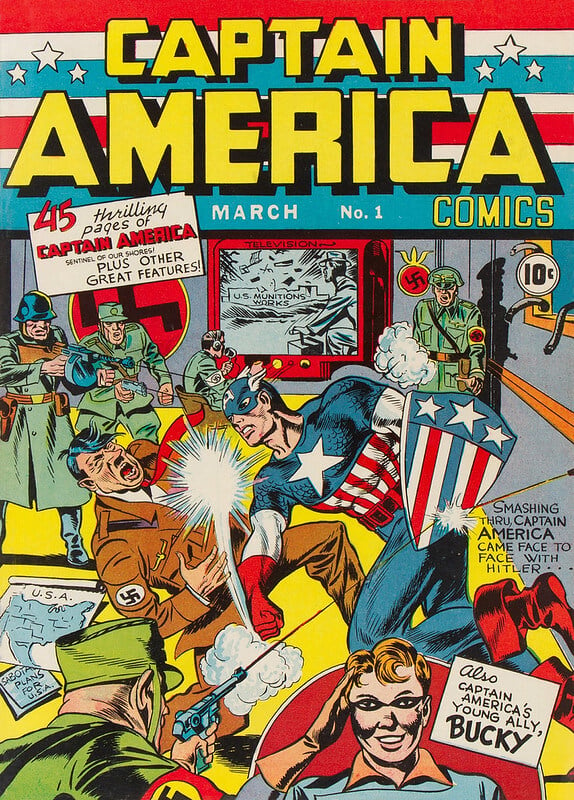
Captain America Comics #1 carries a March 1941 cover date, but it reached newsstands in late 1940, roughly a year before the attack on Pearl Harbor. Joe Simon and Jack Kirby put their new hero on the cover delivering a punch to Adolf Hitler while the United States was still officially neutral.
The image drew angry letters and threats aimed at the publisher’s offices. Readers who mailed in a dime could join the Sentinels of Liberty fan club.
The comic routinely sells for six or seven figures, with grade, page color and any signs of restoration dictating where a given copy lands.
All Star Comics #8 and Wonder Woman’s Arrival
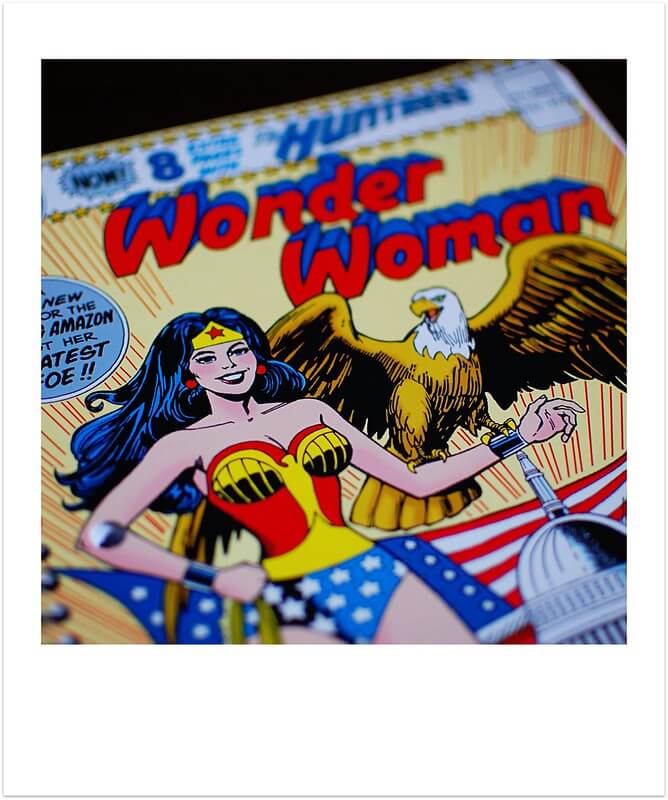
Wonder Woman first appeared in All Star Comics #8, cover dated December 1941 to January 1942, in a short backup story. Her creator, psychologist William Moulton Marston, had worked on systolic blood pressure research tied to early lie detection, and that interest found its way into her magic lasso that compels the truth.
Artist Harry G. Peter gave her the distinctive look. The issue is far scarcer than many realize.
Values are firmly in six figures for presentable copies, and collectors scrutinize whether the cover has been color touched, since restored copies sell at a steep discount.
Showcase #4 Launches the Silver Age
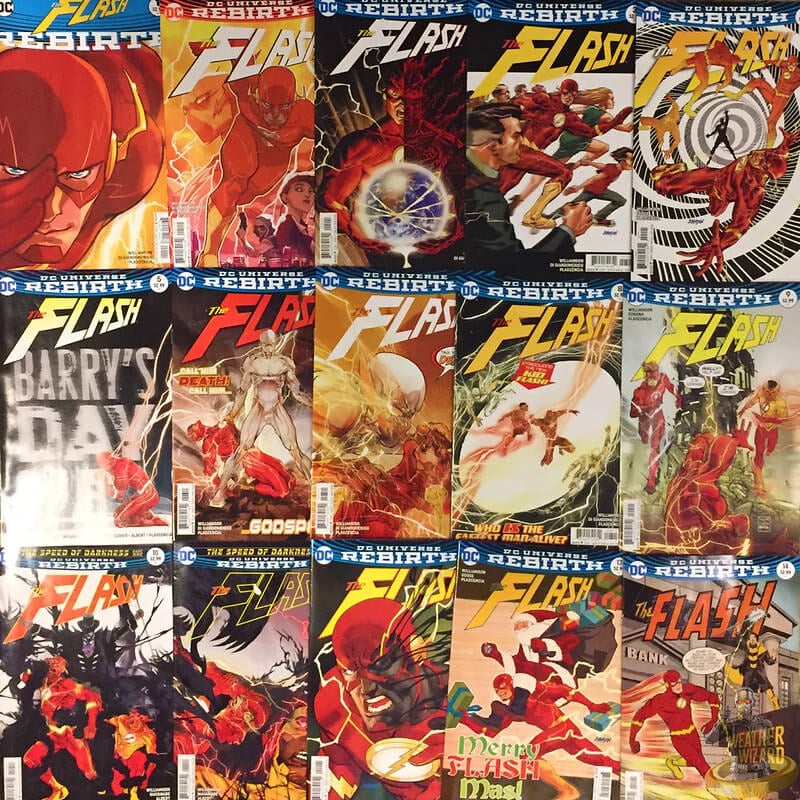
Showcase #4, cover dated October 1956, introduced Barry Allen as a new version of the Flash and is widely credited with kicking off the Silver Age of comics. Editor Julius Schwartz assigned the story to writer Robert Kanigher and artist Carmine Infantino.
In a neat bit of self-reference, Barry is shown reading an old Flash comic before lightning strikes a shelf of chemicals in his lab. The revival worked so well that DC rebooted other Golden Age heroes.
Prices run into five and six figures depending on centering, gloss and how much the spine has rolled over the years.
Showcase #22 and Green Lantern Hal Jordan

Green Lantern returned in a new form in Showcase #22, cover dated October 1959. Writer John Broome and artist Gil Kane reimagined the hero as Hal Jordan, a test pilot who receives a power ring from a dying alien named Abin Sur.
The science fiction framing replaced the magic lantern of the 1940s version, part of Schwartz’s push to modernize DC’s heroes. Hal Jordan earned his own title the following year.
Copies in mid grades usually sell in five figures, and pristine ones go far higher, with tight corners and white pages making the biggest difference.
Justice League Debut in Brave and the Bold #28
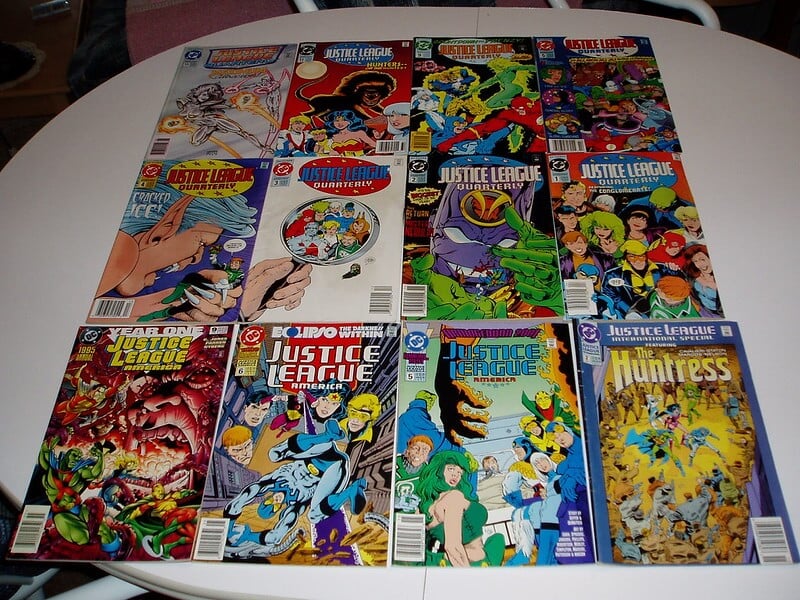
DC’s Justice League of America first assembled in The Brave and the Bold #28, cover dated March 1960, battling a giant alien starfish called Starro the Conqueror. Gardner Fox wrote the story, and Mike Sekowsky drew it.
A widely repeated industry tale holds that strong sales of the team book prompted Marvel publisher Martin Goodman to ask for a superhero team of his own, which became the Fantastic Four. The issue regularly brings five figures in respectable shape.
Collectors look closely at the cover’s dark areas, where creases and color breaks show up quickly and drag down the grade.
Fantastic Four #1 Without Costumes
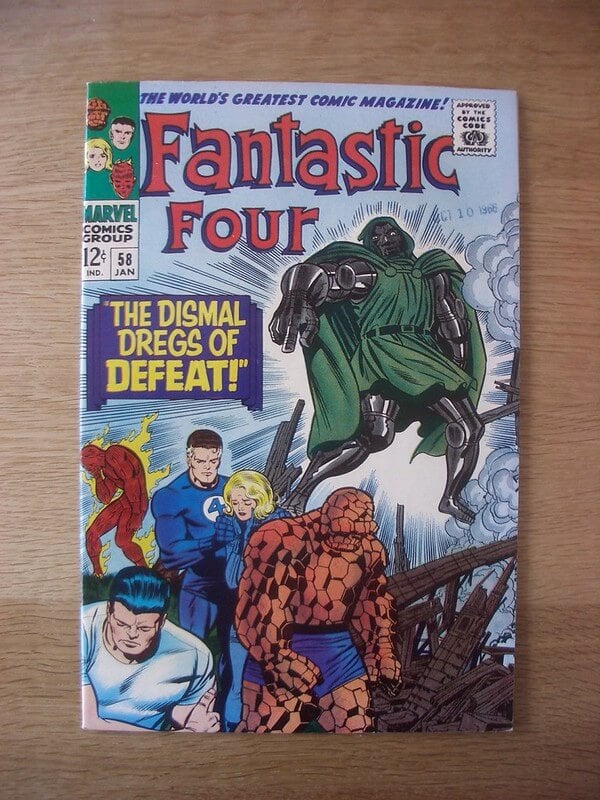
Fantastic Four #1, cover dated November 1961, is the comic that launched what fans now call the Marvel Age. Stan Lee and Jack Kirby introduced Reed Richards, Sue Storm, Johnny Storm and Ben Grimm, a family of bickering heroes who fought the Mole Man.
Surprisingly, the team wore ordinary street clothes for the entire first issue, and the blue uniforms did not appear until the third. That rough-edged debut still carries enormous weight with collectors.
Prices span from five figures for worn copies into seven for the finest, and evidence of trimming or cleaning can sink a promising book.
Amazing Fantasy #15 and Spider-Man’s First Swing
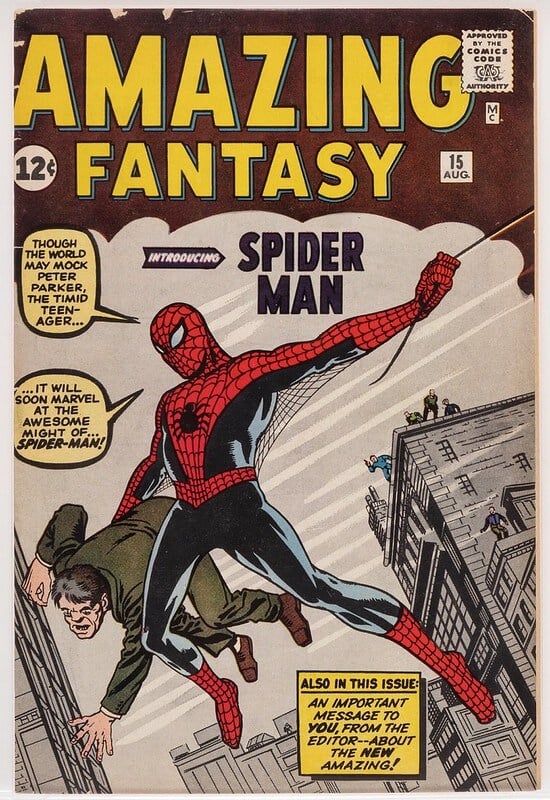
Amazing Fantasy #15, cover dated August 1962, was the final issue of a struggling anthology, which is one reason Marvel let Stan Lee try an unusual teenage hero in it. Steve Ditko drew the interior story of Peter Parker, Uncle Ben and the famous lesson about power and responsibility.
A copy graded CGC 9.6 sold for 3.6 million dollars in 2021. Lower-grade copies are far more common, but they still sell for serious money.
Collectors pay special attention to the cover’s white border, where small chips, stains and handling marks show immediately and cut into value.
Incredible Hulk #1 in Gray
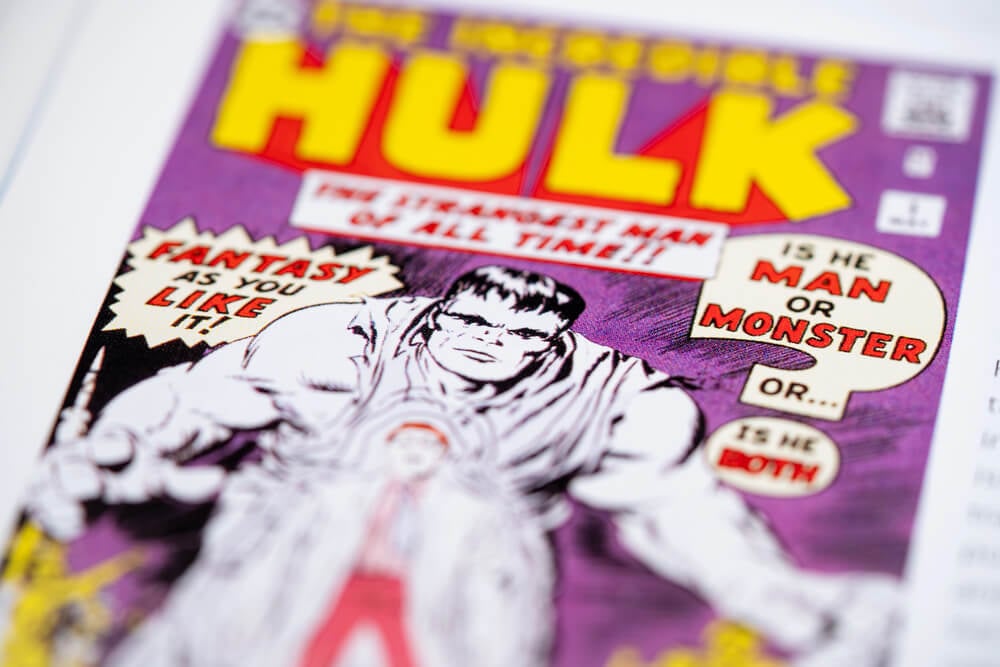
The Incredible Hulk #1, cover dated May 1962, introduced Bruce Banner’s alter ego with gray skin rather than the familiar green. The color proved hard to print consistently, and the Hulk turned green in the second issue.
The original series lasted only six issues before cancellation, and the character survived by guest starring in other titles. That short run helps explain why high-grade first issues are tough to find.
Copies in nice shape sell in the six figures, while those with cover detachment, water staining or heavy wear sell for a small fraction of that.
Thor’s First Thunder in a 1962 Anthology Issue
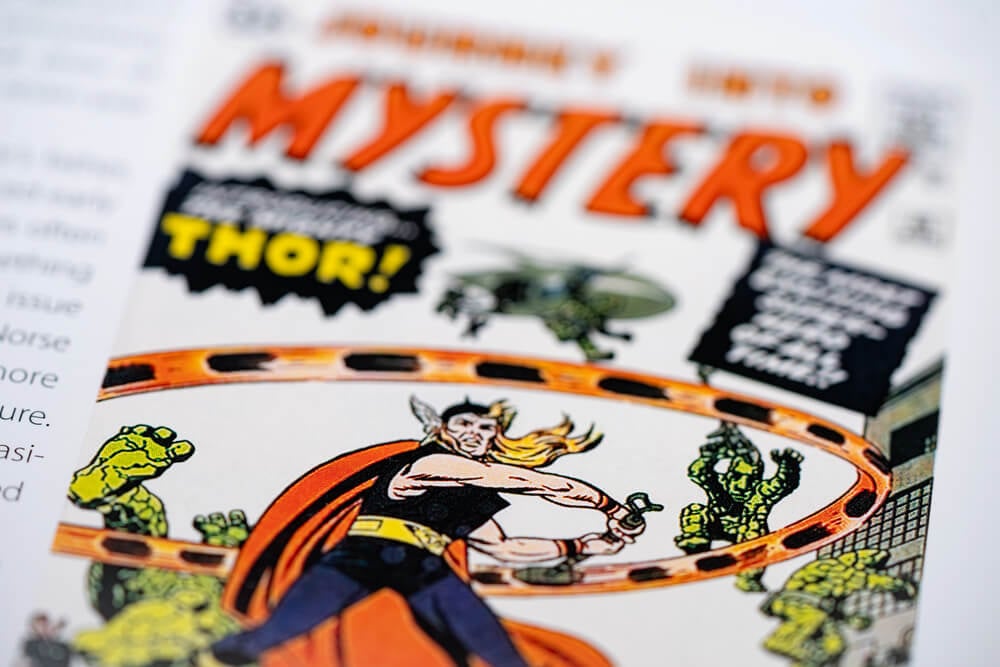
Thor debuted in an anthology issue cover dated August 1962, numbered 83 in a monster and mystery series that later took the thunder god’s name. Stan Lee plotted, Larry Lieber scripted and Jack Kirby drew the story of Dr. Donald Blake, who finds a walking stick in a cave in Norway that transforms into the hammer Mjolnir.
The anthology was renamed for Thor in 1966, keeping the same numbering. The debut issue sells in the five and six figures, and condition questions such as spine stress, foxing and faded cover inks all factor into what a buyer will pay.
Tales of Suspense #39 and the Gray Iron Man Suit
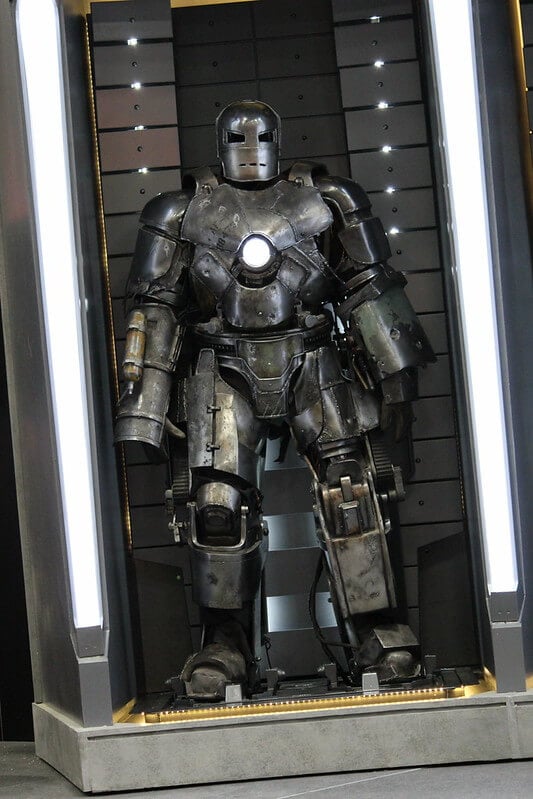
Iron Man first appeared in Tales of Suspense #39, cover dated March 1963, with interior art by Don Heck and a cover by Jack Kirby. Tony Stark builds his first armor while held captive, and that original suit was a bulky gray design.
It was painted gold in the very next issue and refined into the sleeker red and gold look within a year. The debut now ranks among the most valuable Marvel keys of the decade.
Prices often reach five or six figures, with page quality and any professional restoration noted on the grading label shaping value.
X-Men #1 and Magneto’s Opening Move
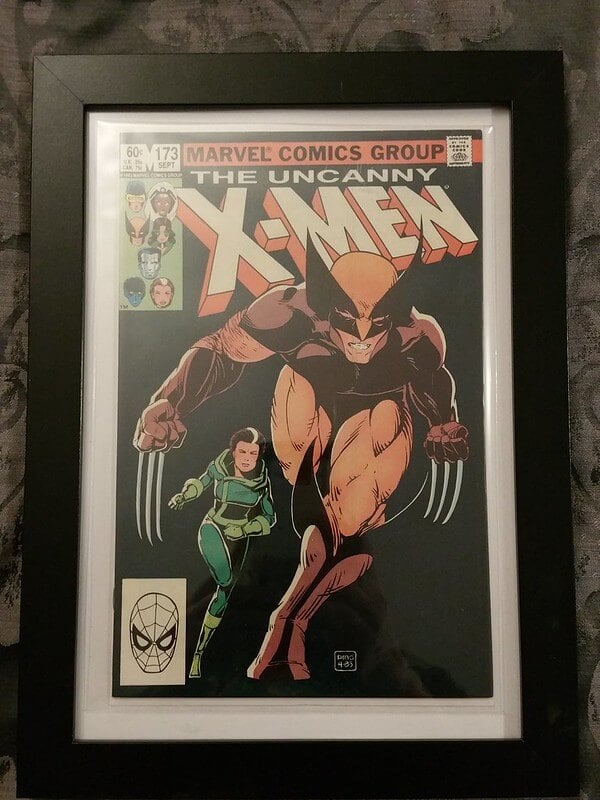
X-Men #1, cover dated September 1963, introduced Professor X and his original five students alongside the villain Magneto. Stan Lee and Jack Kirby created the team, but the series never sold especially well in its first run.
By the 1970s Marvel had turned the title into a reprint book for several years, a fate few would have predicted for the franchise that followed. The first issue now sells for five to six figures in decent shape.
A copy with sharp corners and minimal spine stress commands a significant premium over one with creases and fading.
Avengers #1 Brings the Heroes Together
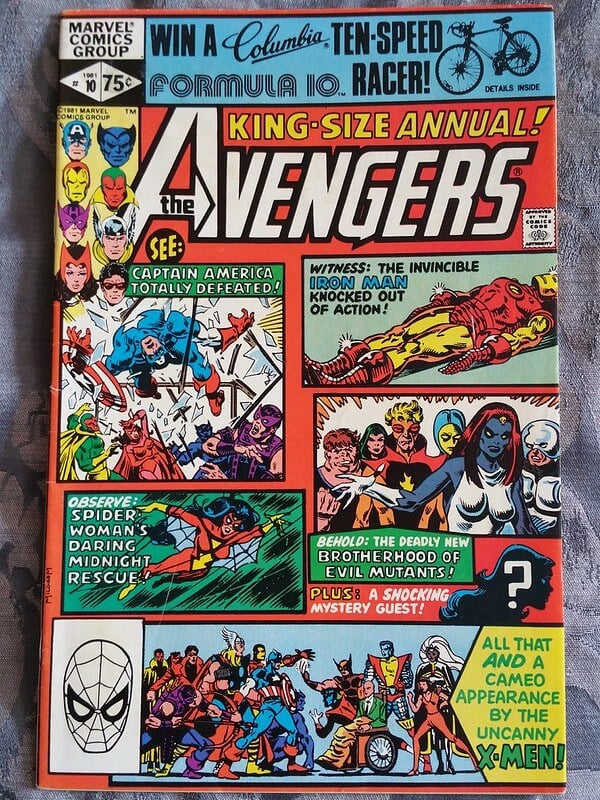
Avengers #1, also cover dated September 1963, gathered Iron Man, Thor, the Hulk, Ant-Man and the Wasp to stop a scheme by Loki. In the story it is the Wasp who suggests the team name.
Captain America was absent and would not join until the fourth issue, when he was found frozen in ice. The book was Marvel’s answer to DC’s Justice League, and it became one of the company’s most important titles decades later.
Prices run into five and six figures, with high-grade copies scarce due to the dark cover’s tendency to show wear.
Amazing Spider-Man #1 Gets a Solo Series
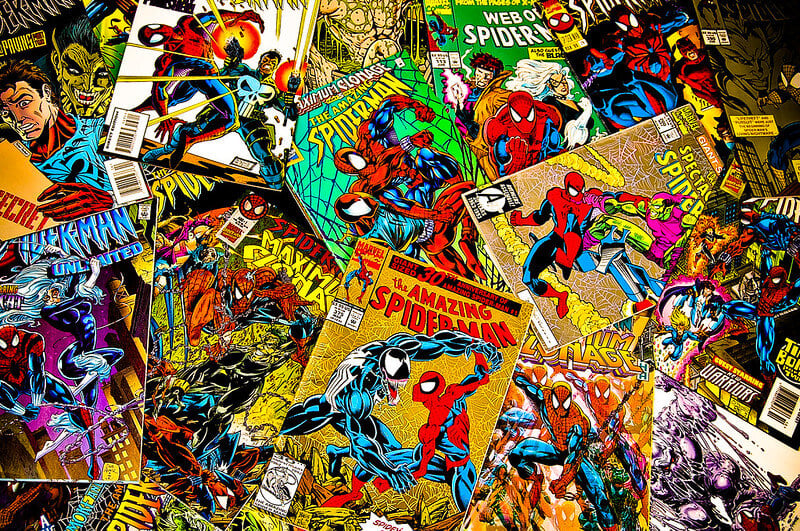
After his debut proved popular, Spider-Man received his own series with The Amazing Spider-Man #1, cover dated March 1963. Stan Lee and Steve Ditko brought in the Chameleon as the first villain of the new run and arranged a crossover with the Fantastic Four, whom Peter Parker tries to join for a paycheck.
The joke that the young hero mainly needed rent money set the tone for the series. The issue sells in five and six figures depending on grade, and copies with clean, unrestored covers sell for well above those with color touch-ups or tape.
Strange Tales #110 and Doctor Strange
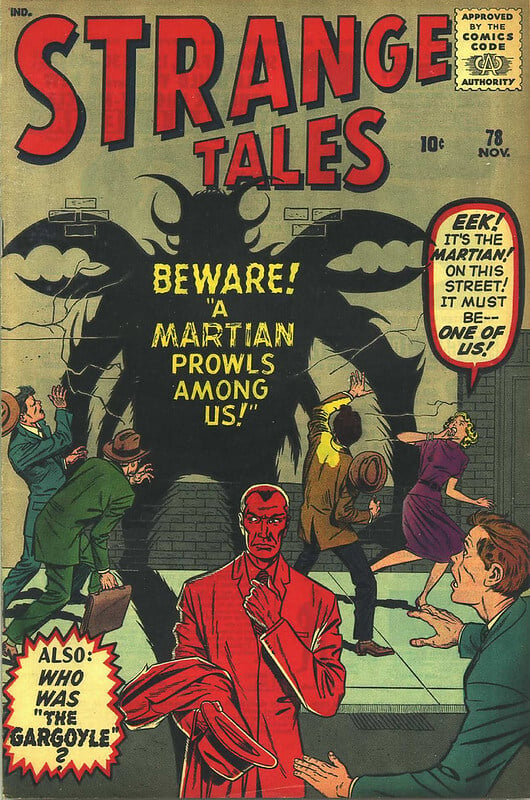
Doctor Strange slipped into the world in a short five-page backup story in Strange Tales #110, cover dated July 1963. Steve Ditko drew the sorcerer’s first adventure, which also introduced his servant Wong, his mentor the Ancient One and the villain Nightmare.
The character’s full origin did not appear until a few issues later. The book was once overshadowed by flashier debuts, but film adaptations have pushed demand much higher.
Copies now sell in the five figures and up for strong grades, and buyers check carefully for creases, spine ticks and any signs of past repairs.
Daredevil #1 in the Yellow Suit
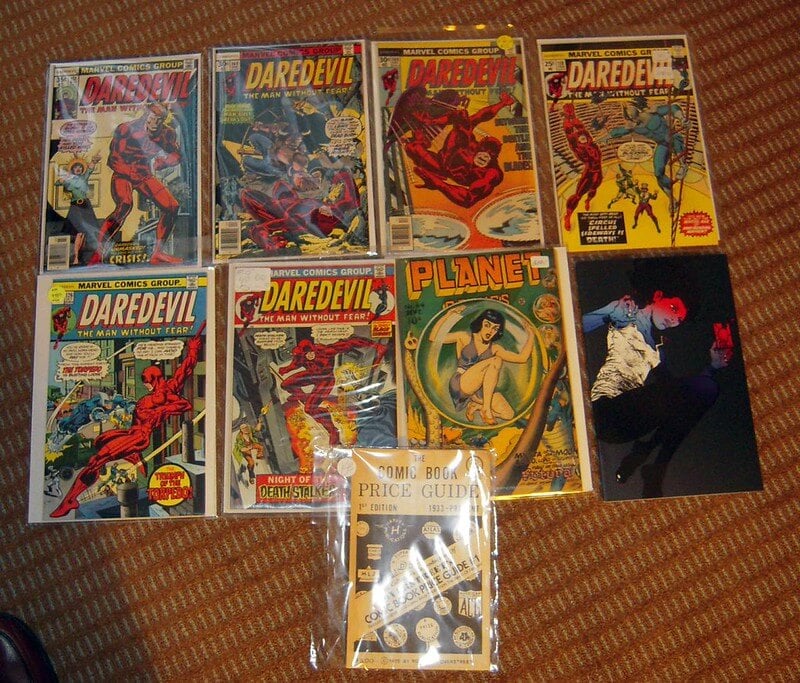
Daredevil #1, cover dated April 1964, introduced Matt Murdock, a lawyer blinded by a radioactive canister that heightened his other senses. Bill Everett, the creator of the Sub-Mariner decades earlier, drew the first issue.
The hero originally wore a yellow, black and dark red costume, and the familiar all-red outfit arrived later with artist Wally Wood. The yellow suit gives the debut a distinctive look on any dealer table.
Prices reach five figures for nice examples, and the light-colored cover reveals stains, soiling and fingerprints more readily than most comics of the era.
Punisher and Jackal Debut in Amazing Spider-Man #129
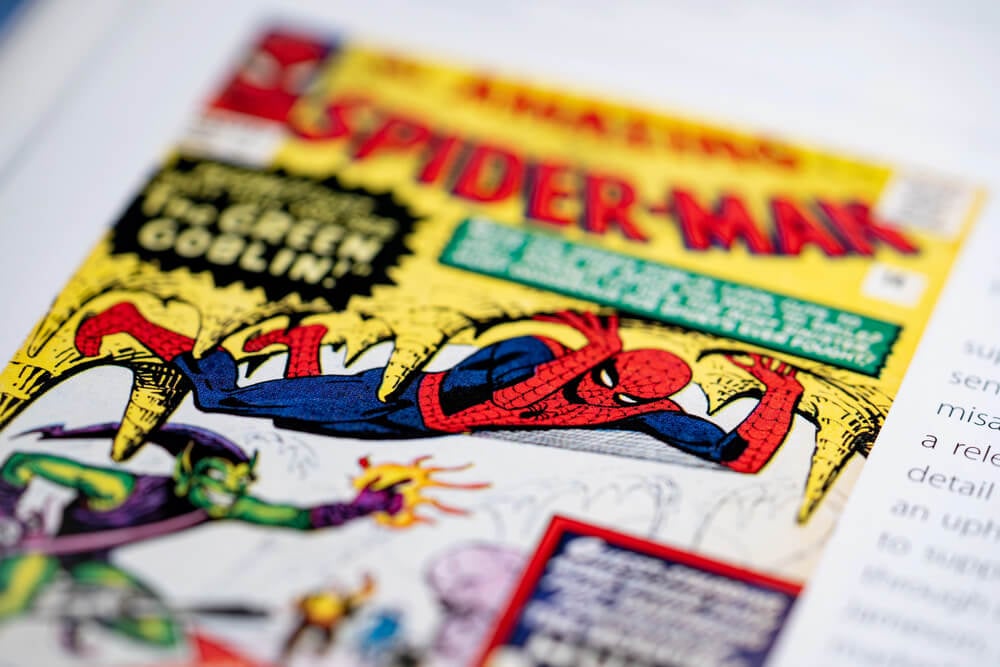
The Amazing Spider-Man #129, cover dated February 1974, introduced the Punisher and the Jackal in a single issue. Writer Gerry Conway created the Punisher as an antagonist, and John Romita Sr. designed the skull costume, while Ross Andru drew the story.
Frank Castle went on to become one of Marvel’s most recognizable antiheroes. The issue saw much larger print runs than 1960s keys, so many copies survive.
Prices span from hundreds of dollars for readable copies to the thousands for gem grades, and well-centered, glossy examples sell at a clear premium.
Wolverine’s First Full Appearance in Hulk #181
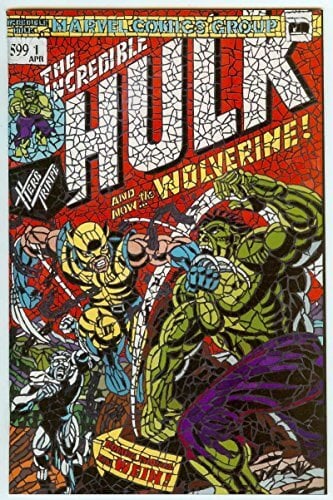
The Incredible Hulk #181, cover dated November 1974, gave Wolverine his first full appearance after a brief final-panel cameo the month before. Len Wein wrote the story, Herb Trimpe drew it, and John Romita Sr. designed the costume.
The character was conceived as a Canadian government agent sent to stop the Hulk and the Wendigo. He was not expected to become a major star.
Today the issue sells for several thousand dollars in mid grades and far more in near-perfect shape, with color breaks along the spine and cover wear the usual reasons for lower grades.
Giant-Size X-Men #1 and the New Team
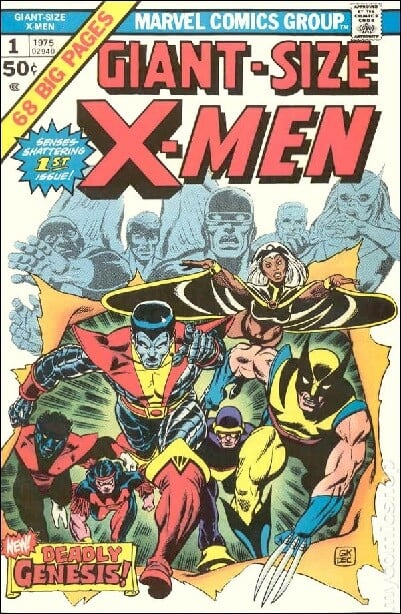
Giant-Size X-Men #1, cover dated summer 1975, revived a series that had been surviving on reprints. Len Wein and Dave Cockrum introduced Storm, Colossus, Nightcrawler and Thunderbird and brought Wolverine into the team.
Thunderbird was killed off only a few issues into the relaunched monthly series, an unusual move for a new character. The book’s success paved the way for decades of X-Men stories.
Prices sit in the thousands for mid-grade copies and higher for sharper ones, and the oversize format makes spine and corner damage a common concern.
New Mutants #98 and Deadpool
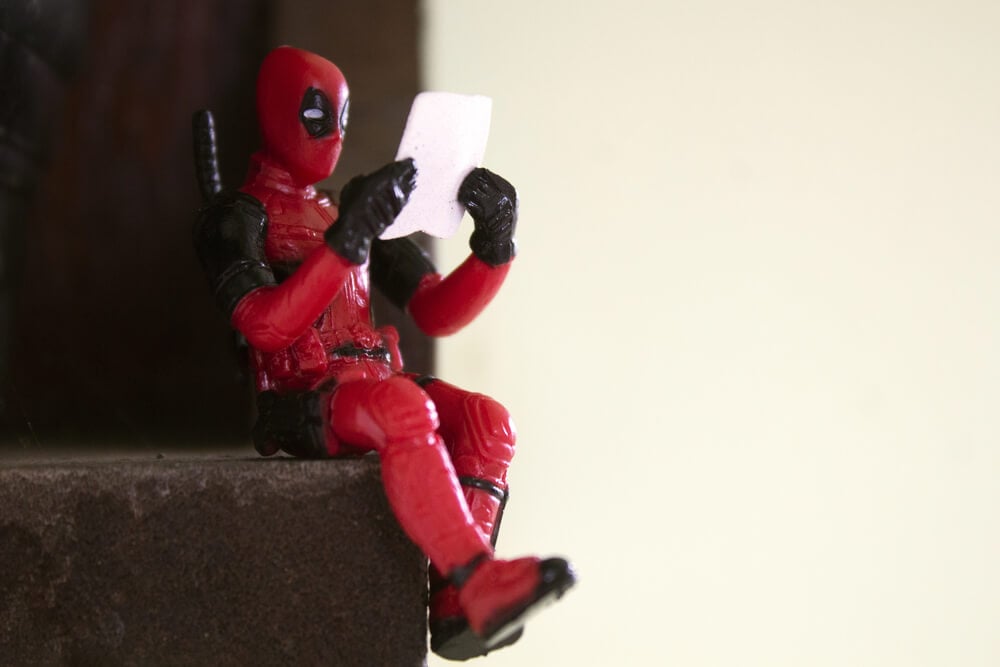
New Mutants #98, cover dated February 1991, introduced Deadpool, created by artist Rob Liefeld and writer Fabian Nicieza. The character’s real name, Wade Wilson, has long been read as a wink at DC’s mercenary Deathstroke, whose civilian name is Slade Wilson.
The comic was printed in large quantities during the speculator boom of the early 1990s, so raw copies are fairly common. Values climbed sharply after the Deadpool films, and the gap between a raw copy and a high-grade slabbed example can be striking, with grade 9.8 copies selling for several times more.
Harley Quinn Crosses Into Comics in Batman Adventures #12
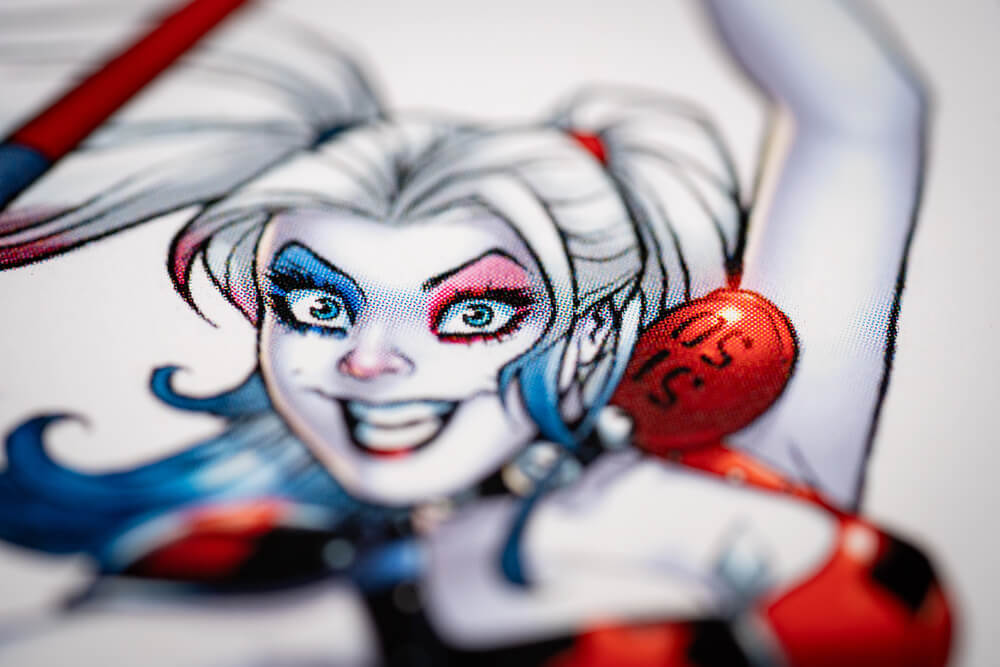
Harley Quinn was created for Batman: The Animated Series and first appeared in the episode Joker’s Favor in 1992. Her comic book debut came in The Batman Adventures #12, cover dated September 1993, written by Paul Dini with a cover by Bruce Timm.
The tie-in series was aimed at younger readers, and relatively few copies were saved in top shape. As the character’s popularity exploded, so did demand for the issue.
Prices typically run from hundreds of dollars to the thousands, with certified high grades pulling the highest prices and creased copies trailing far behind.
Newsprint Was Never Meant to Last
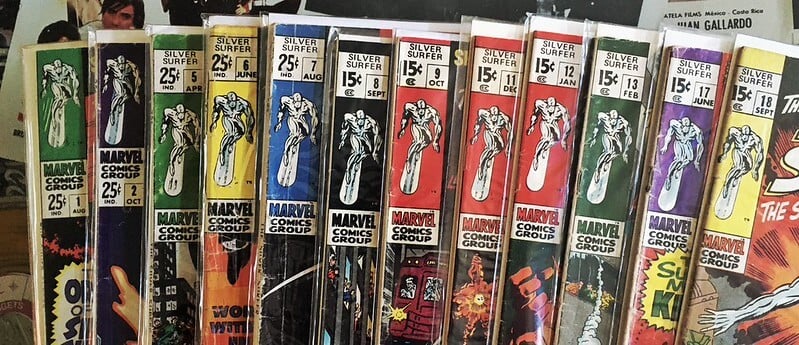
Comic books were printed on cheap paper meant to be read and discarded within a month. Publishers did not imagine anyone would care about them decades later, and most kids treated them accordingly.
That disposability is exactly what makes surviving copies valuable. Scarcity was created by recycling bins, paper drives and spring cleaning, not by design.
The comics on this list share a pattern of surprise. Several were last-chance anthology issues, rushed debuts or tie-ins that nobody took seriously.
Characters that seemed minor became franchises, and the ten-cent books that introduced them became investments.
More from Go2Tutors!

- The Romanov Crown Jewels and Their Tragic Fate
- 13 Historical Mysteries That Science Still Can’t Solve
- Famous Hoaxes That Fooled the World for Years
- 15 Child Stars with Tragic Adult Lives
- 16 Famous Jewelry Pieces in History
Like Go2Tutors’s content? Follow us on MSN.