28 Board Games From the ’80s Worth Money
Somewhere in a closet there is a box with a crushed corner, a rubber band around it, and a rules sheet folded into quarters. For decades that box was just clutter.
Now the same game, if every token and card is still inside, draws bids from collectors who grew up playing it on a basement floor.
The catch is completeness. A missing die or a lost plastic tower can cut the price of a game by more than half, which is why sellers count pieces twice before listing.
Dark Tower and Its Electronic Keep
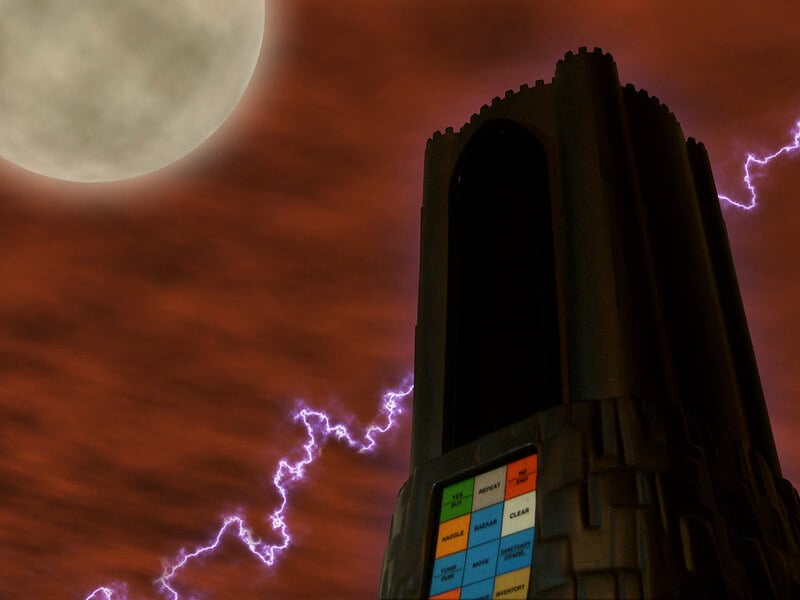
Milton Bradley released Dark Tower in 1981 with a battery-powered tower that sat in the center of the board, tracking gold, warriors and food while beeping out battles. The television commercial featured Orson Welles, which gave a family game the gravity of a horror film.
Production did not last long, because two inventors sued, claiming the company had used their idea, and the court sided with them. Complete copies with a tower that still lights and responds typically sell for several hundred dollars, while a dead keypad or corroded battery contacts drag that figure down sharply.
Buyers almost always ask for a video.
HeroQuest From Milton Bradley and Games Workshop
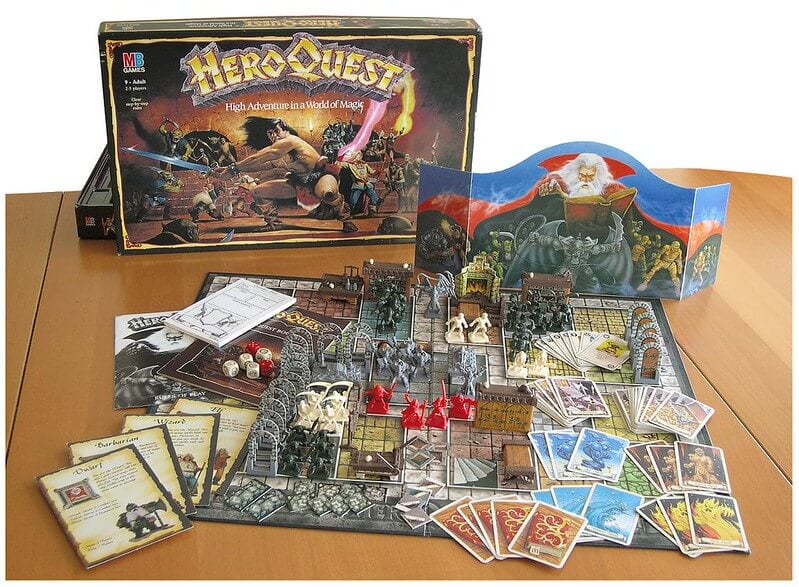
HeroQuest arrived in 1989 as a joint effort between Milton Bradley and the British miniatures company Games Workshop, designed by Stephen Baker. The box held dozens of plastic monsters, tiny furniture pieces and cardboard doors, letting a parent act as Zargon the evil sorcerer while children played barbarian, dwarf, elf and wizard.
Hasbro brought it back in 2021 through crowdfunding, yet originals still sell steadily to players who want the first printing. Complete sets often bring 150 to 400 dollars.
Missing chairs, a lost bookcase or a cracked chest lid are the usual problems, and expansion boxes add more on top.
Crossbows and Catapults From Lakeside
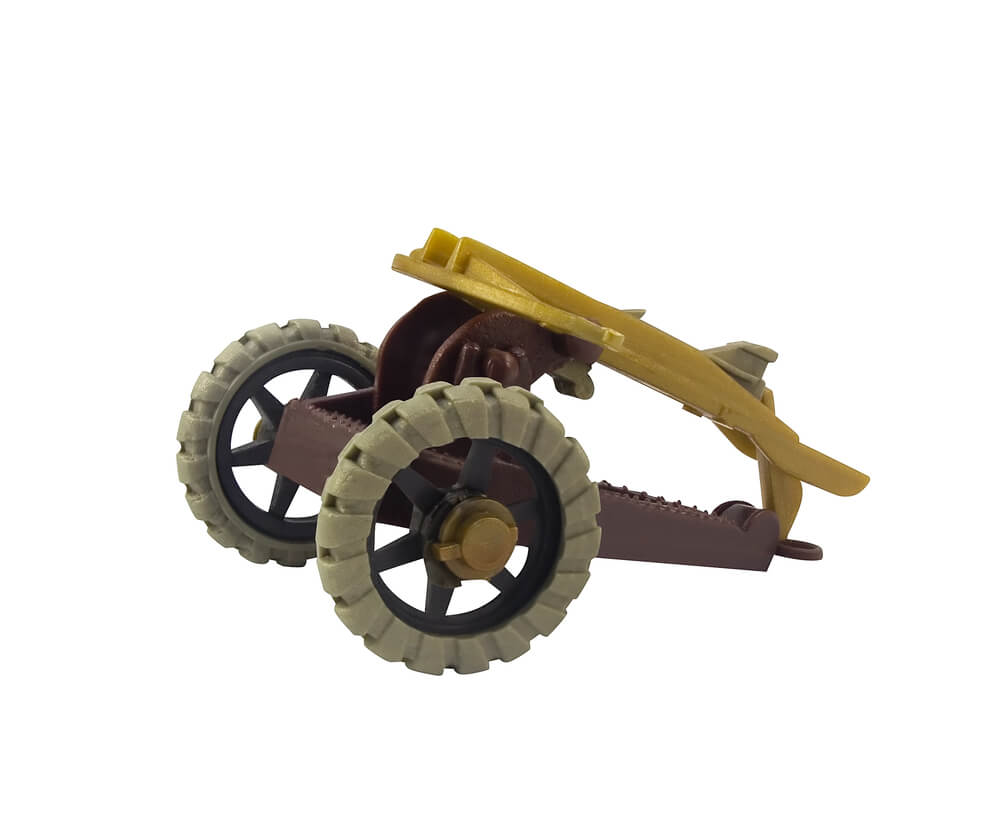
Lakeside published Crossbows and Catapults in 1983, a game that was mostly an excuse to knock down plastic walls. Players stacked interlocking bricks into fortifications and then fired discs at the opposing side using rubber-band crossbows and spring-loaded catapults.
It turned bedrooms into battlefields and lost pieces under radiators across the country. Collectors now look for sets with the launchers still snapping properly, since old rubber bands crack and plastic triggers fatigue.
Boxed copies with most of the bricks and both armies usually sell for roughly 60 to 200 dollars, depending on how much of the original contents survived.
Axis and Allies in the Gamemaster Series
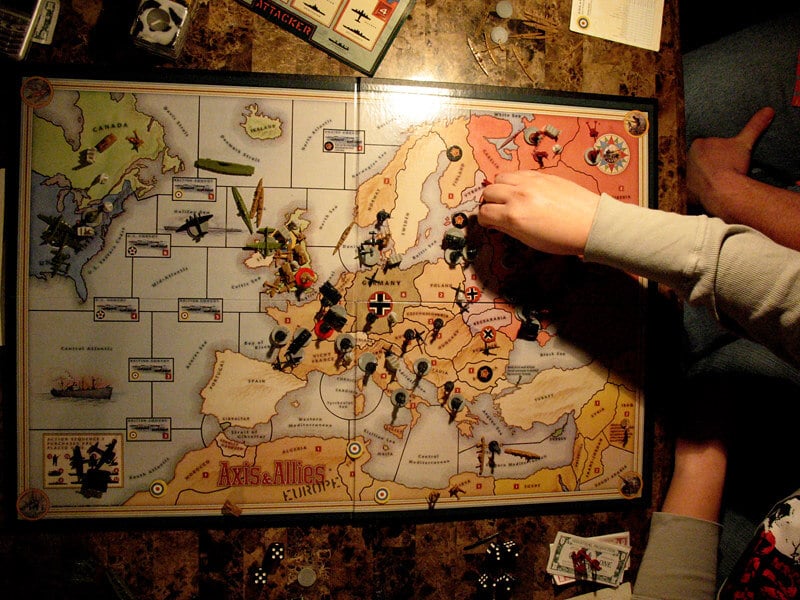
Larry Harris designed Axis and Allies, which first appeared through a small publisher before Milton Bradley put it into its Gamemaster Series in 1984. The game let up to five players replay World War II at the scale of entire nations, moving hundreds of plastic tanks, ships, planes and infantry across a world map.
It proved so durable that new editions are still being published four decades later. The 1984 box sells to players who prefer the original rules, often for 50 to 150 dollars.
Sealed bags of pieces push the number higher, and short counts of a single unit type push it lower.
Conquest of the Empire Among the Legions
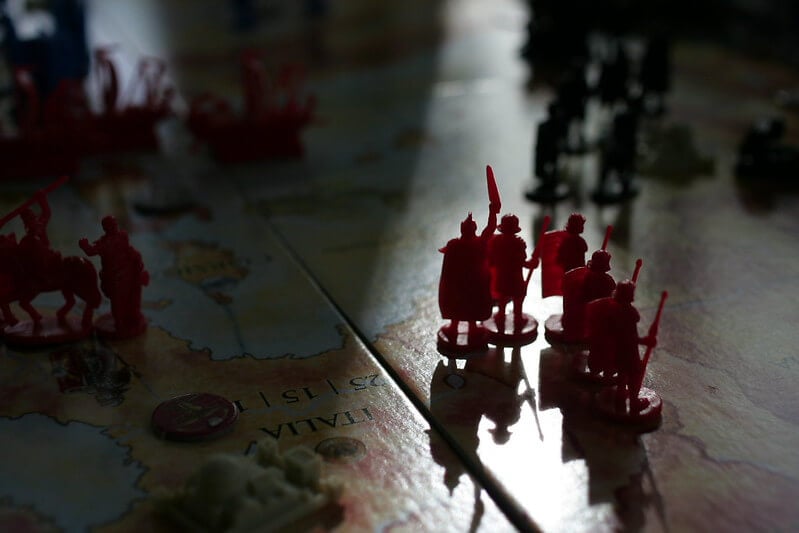
Conquest of the Empire joined the Gamemaster line in 1984 and put players in charge of rival Roman generals fighting over the empire after the fall of Caesar. The plastic pieces included legions, cavalry, catapults and galleys, all molded in distinct player colors.
It never matched Axis and Allies in sales, which is part of why intact copies are harder to find today. Collectors examine the galleys and catapults for snapped oars and arms before committing.
A complete set in a sturdy box typically sells for 100 to 250 dollars, and Eagle Games reissued an updated version in 2005.
Shogun and the Ninja in the Box
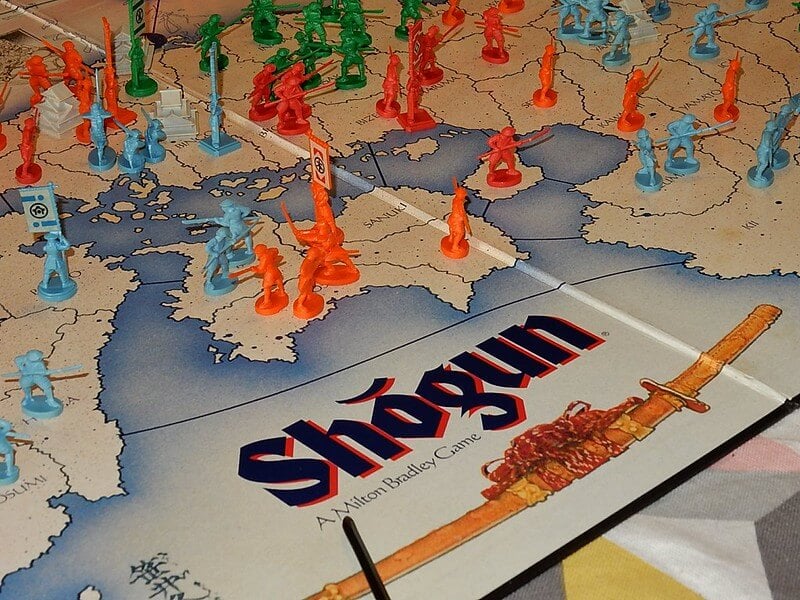
Shogun came out in 1986 as part of the Gamemaster Series, setting rival warlords loose on feudal Japan. Players bid secretly for turn order and could hire a ninja to assassinate an opposing general, a twist that ended friendships at the table.
Later printings changed the name to Samurai Swords, and a still later edition was called Ikusa. That makes the original Shogun box the version collectors specifically hunt.
Copies with all the samurai, ronin and castle pieces often go for 150 to 300 dollars, though a dented box or water stain on the board trims that quickly.
Fortress America and Its Laser Towers
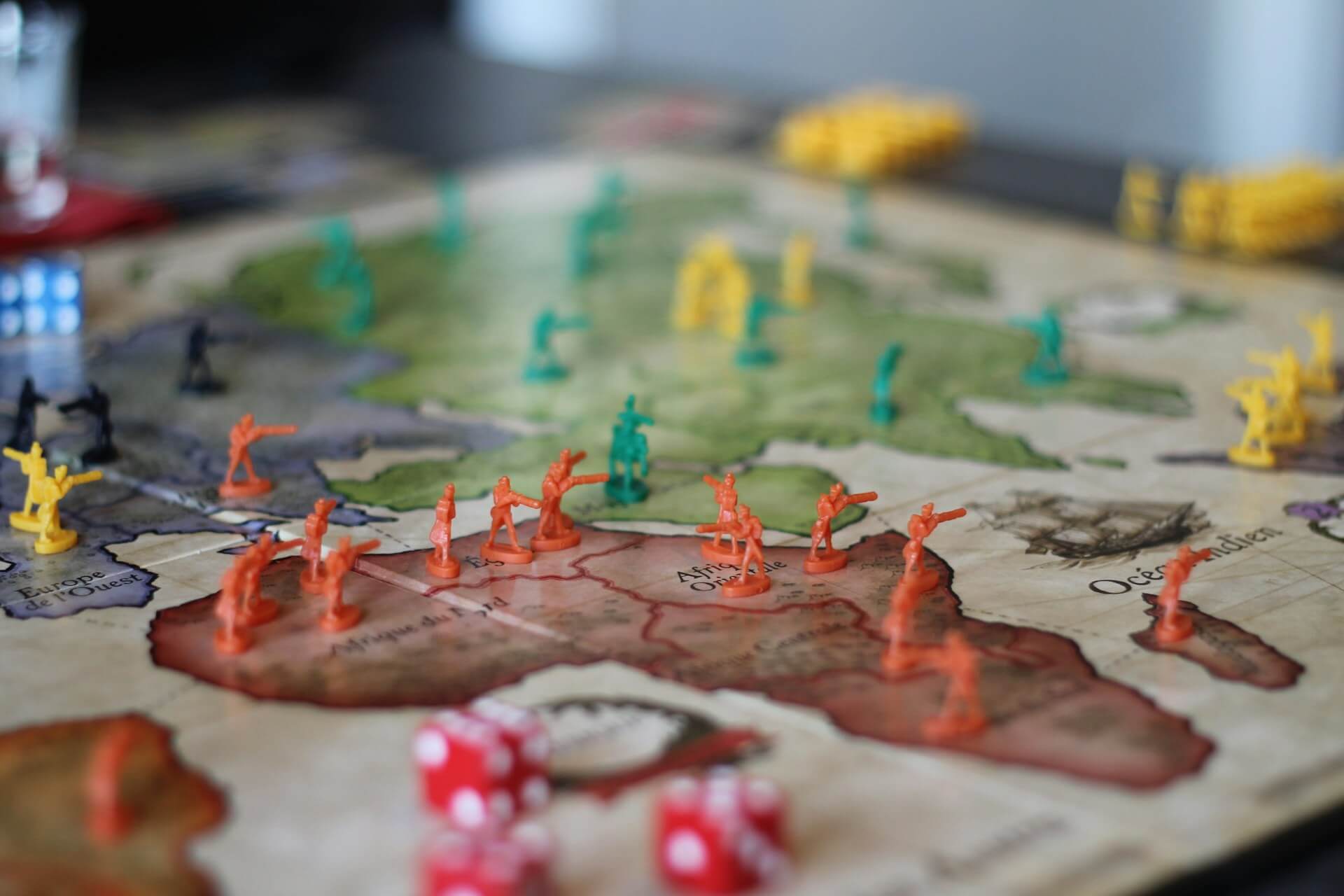
Michael Gray designed Fortress America, released in 1986 in the Gamemaster line, which imagined the United States invaded from three sides at once. One player defended the country with partisans, bombers and laser defense towers, while the others pushed in from the Atlantic, the Pacific and the southern border.
The Cold War premise dates it immediately, and that is much of its charm now. Complete examples usually sell for 100 to 250 dollars.
The flimsy plastic towers and helicopters are what break first, so sets with all of them intact carry a premium.
Broadsides and Boarding Parties at Sea
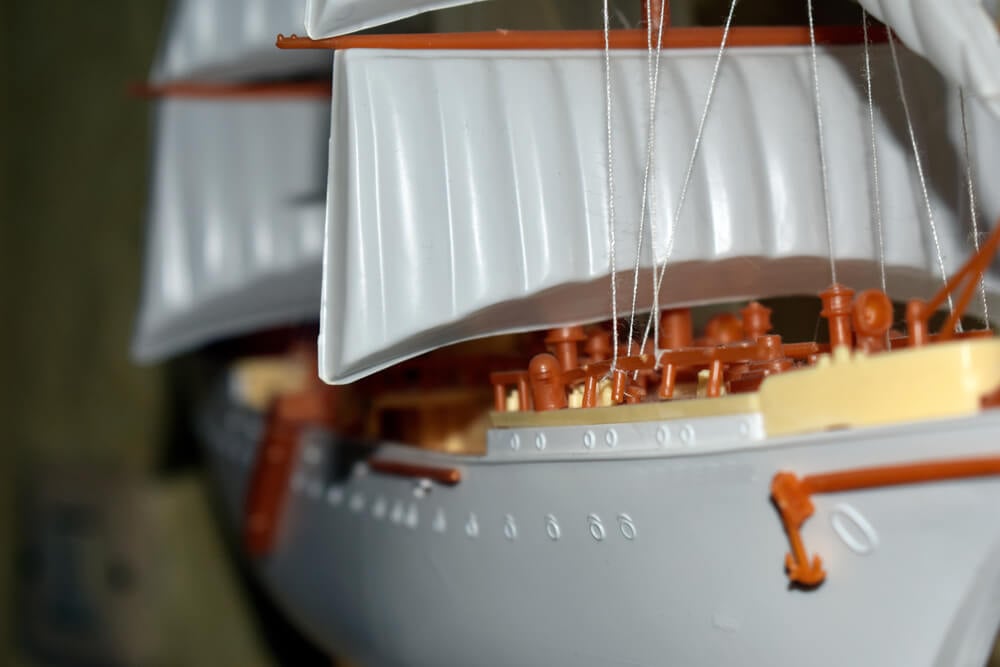
Broadsides and Boarding Parties launched the Gamemaster Series in 1982, pitting two large plastic sailing ships against each other on an open sea board. Each ship needed to be assembled with masts and sails, and the crews fought cannon duels before swarming across for hand-to-hand combat.
Those masts are the weak point, because decades of storage tend to snap or warp them. Collectors pay more for ships that are still unassembled on their original sprues.
Built copies in decent shape often sell for 100 to 250 dollars, with missing cannons and crew counting heavily against them.
Mall Madness and the Talking Mall
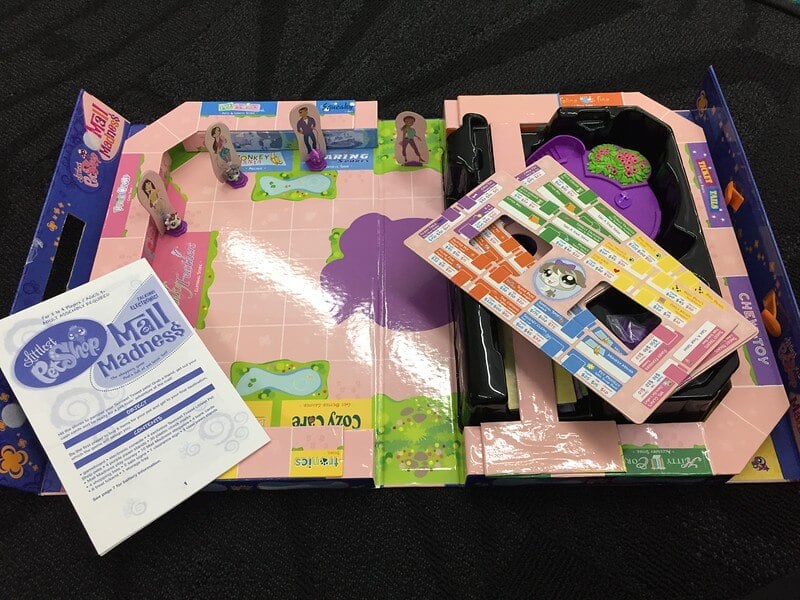
Milton Bradley’s Mall Madness hit stores in 1988 with an electronic voice that announced sales, clearances and which store had a bargain. Players raced through a two-level plastic mall with a shopping list and a credit card, trying to buy their items and get back to the parking lot first.
The concept is pure late-’80s consumer culture, and nostalgia has turned that into appeal. Working copies typically sell for 50 to 150 dollars.
Corroded battery compartments silence the voice, which kills the value faster than a few missing paper bills ever could.
Hotels and Its Three-Dimensional Skyline

Hotels, from Milton Bradley in 1986, worked like a more elaborate property game in which players bought land and built resorts piece by piece. The board filled with tall plastic and cardboard hotel buildings, complete with wings and recreation areas, creating a small skyline by the end of play.
Because those buildings were bulky and fragile, many sets lost a tower or two to the trash over the years. Collectors look for every structure plus the entrances and the money.
Complete boxes usually sell for 100 to 250 dollars, though copies missing a single hotel drop off steeply.
Thunder Road and Its Plastic Helicopters
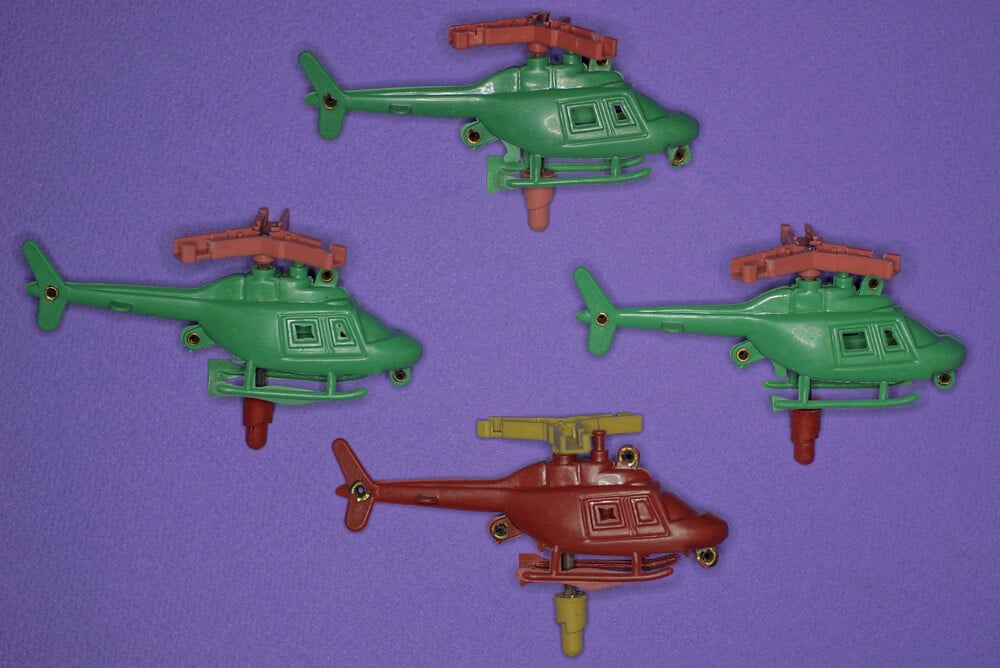
Thunder Road came from Milton Bradley in 1986, a post-apocalyptic racing game in which players drove armed plastic cars down a stretch of highway and fired at each other. Each player also had a small attack helicopter, and the road boards leapfrogged forward as the cars advanced.
It played in about half an hour and ended with wreckage everywhere. Restoration Games later revived it as Thunder Road: Vendetta, which renewed interest in the original.
Complete 1986 sets often sell for 100 to 300 dollars, with the helicopter rotors and tiny cars as the pieces most often lost.
Clue VCR Mystery Game on Videotape
Parker Brothers released the Clue VCR Mystery Game in 1985, one of the earliest attempts to pair a board game with a VHS tape. Players watched short filmed scenes with costumed characters and then hunted for clues, with the cards dealt at the outset changing how each game unfolded.
The production values are charmingly modest, and few households still own a working VCR. Copies with the tape, cards and character pieces usually sell for 40 to 100 dollars.
A demagnetized or warped tape ruins the experience, so buyers ask whether it still plays cleanly before paying.
Talisman and Its First Edition
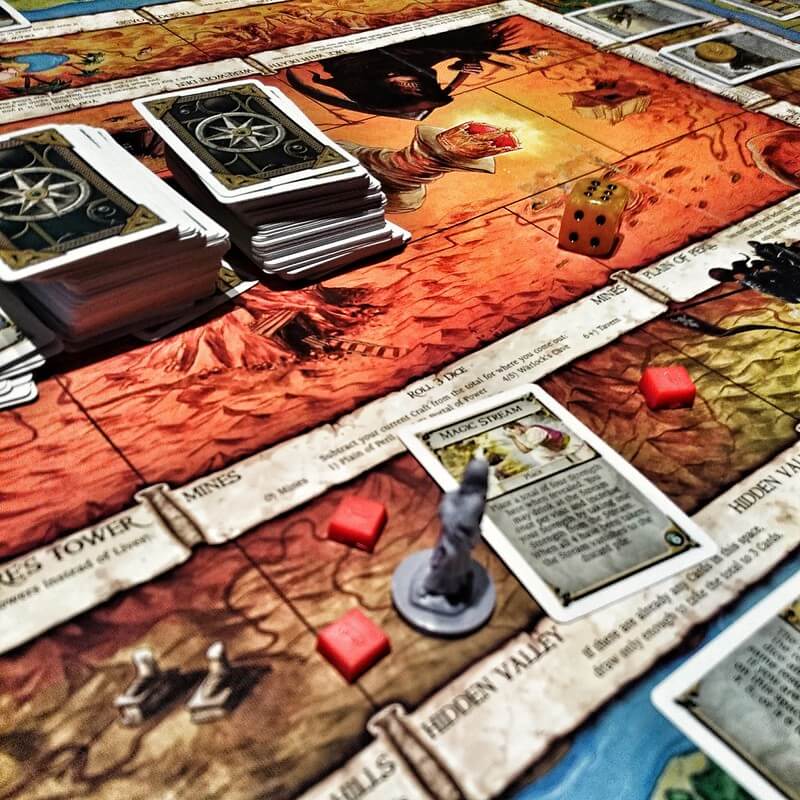
Games Workshop published Talisman in 1983, designed by Robert Harris, and it grew into one of the firm’s longest-running board games. Players chose a character and wandered a fantasy board collecting gold, followers and magic items before trying to reach the Crown of Command at the center.
Later editions added expansions and fancier components, but the first printing has a following of its own. First edition copies often sell for 75 to 200 dollars.
Faded cards, bent character sheets and missing counters reduce that, and an unpunched sheet of tokens adds considerably to the price.
Space Hulk in the Derelict Corridors
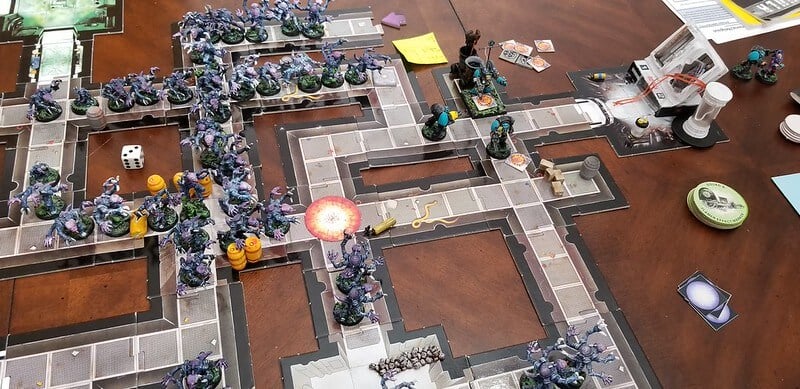
Space Hulk came out from Games Workshop in 1989, sending Space Marines in heavy armor through the tight corridors of a derelict starship. One player controlled the Marines and the other the alien Genestealers, and a sand timer forced the Marine player to make decisions under pressure.
The claustrophobic design made it a cult favorite among wargamers. First edition sets with all the plastic miniatures and corridor tiles often sell for 100 to 250 dollars.
Painted figures split collectors, since a careful paint job can help but sloppy brushwork usually hurts.
Blood Bowl and Its Fantasy Gridiron
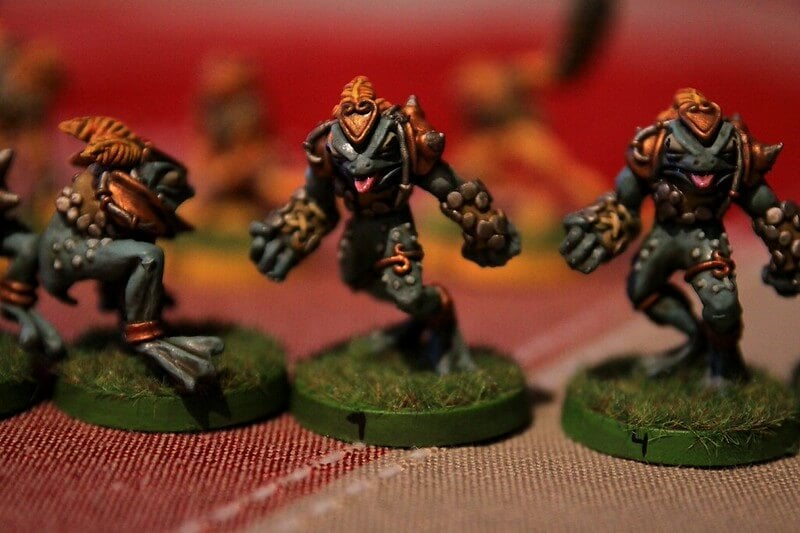
Blood Bowl first appeared from Games Workshop in 1986, a fantasy take on American gridiron in which orcs, elves, dwarfs and humans played a sport where injuring the other side was part of the plan. Designer Jervis Johnson kept refining the rules through later editions, and the game developed a tournament scene that is still active.
Early boxes are prized by longtime players who want the original version. Prices for first edition copies often fall between 75 and 200 dollars.
Collectors scrutinize the pitch for creases and the team pieces for completeness before buying.
Fury of Dracula Across Europe
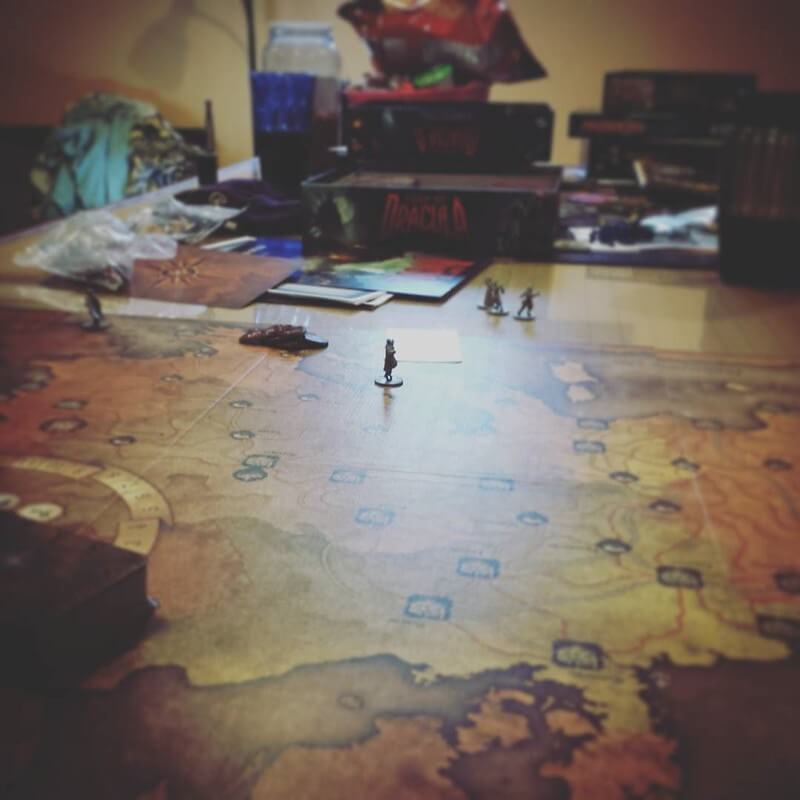
Games Workshop released Fury of Dracula in 1987, designed by Stephen Hand. One player controlled the vampire, moving secretly across a map of Europe, while the others played hunters trying to track him down before he gained too much strength.
The hidden movement made it tense and replayable, and later editions from Fantasy Flight Games and Wizkids kept it in print. The first edition still has a loyal following.
Complete copies often sell for 100 to 200 dollars, though worn location cards and a missing Dracula figure reduce that significantly.
Chainsaw Warrior and the Sixty Minutes
Chainsaw Warrior, also designed by Stephen Hand and published by Games Workshop in 1987, was a solo game in which one hero had a single hour of game time to fight through a mutant-infested Manhattan. The player drew cards from a large deck of encounters and usually lost, which became part of its legend.
Auroch Digital adapted it as a video game in 2015, introducing it to a new audience. Original boxes often sell for 75 to 200 dollars.
Sets with the deck counted and the character sheet unmarked fetch the best prices.
Battledroids Before the Name Change
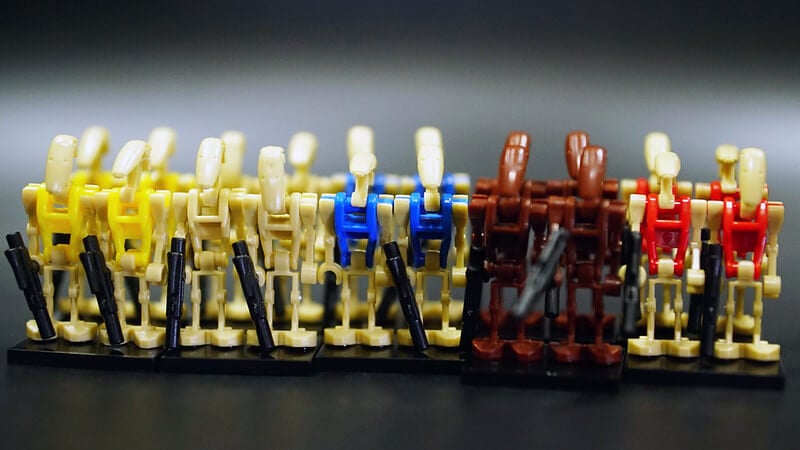
FASA published Battledroids in 1984, a game of giant piloted war machines fighting on hex maps. The following year it was renamed BattleTech for its second edition, because the word droid was a trademark held by Lucasfilm.
BattleTech grew into a long-running franchise with novels, video games and an animated series. Because Battledroids carried the original name for only one printing, it is a sought-after piece of gaming history.
Complete copies often sell for 100 to 300 dollars, and sets with intact cardboard standees and unmarked record sheets do best.
Merchant of Venus Among the Stars
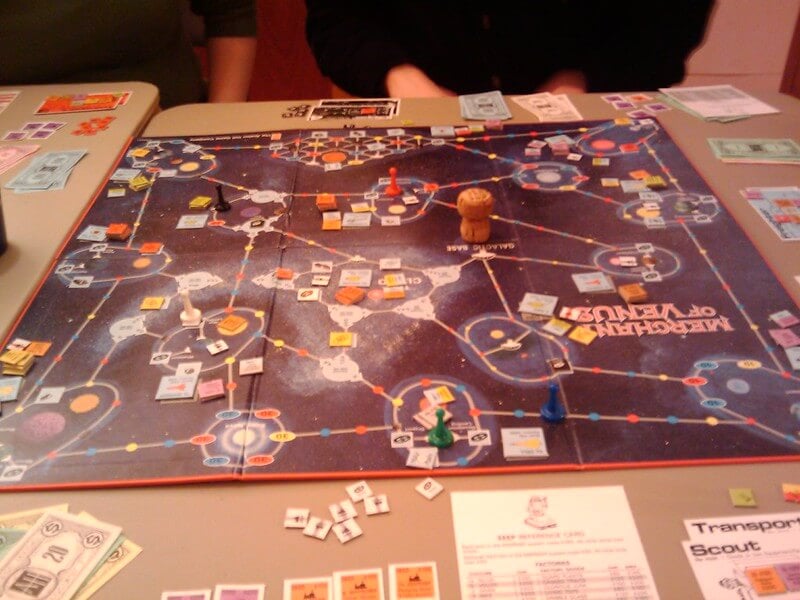
Avalon Hill released Merchant of Venus in 1988, designed by Richard Hamblen. Players flew spaceships around a galaxy of alien cultures, discovering trade goods and hauling them to buyers for profit.
It rewarded exploration as much as tactics, and the design has aged well enough that Fantasy Flight Games published a new edition in 2012. Original Avalon Hill copies often sell for 75 to 200 dollars.
Unpunched counter sheets are worth significantly more than ones that have been played, and sets missing even a few cultural tokens are noticeably less desirable.
Civilization by Francis Tresham
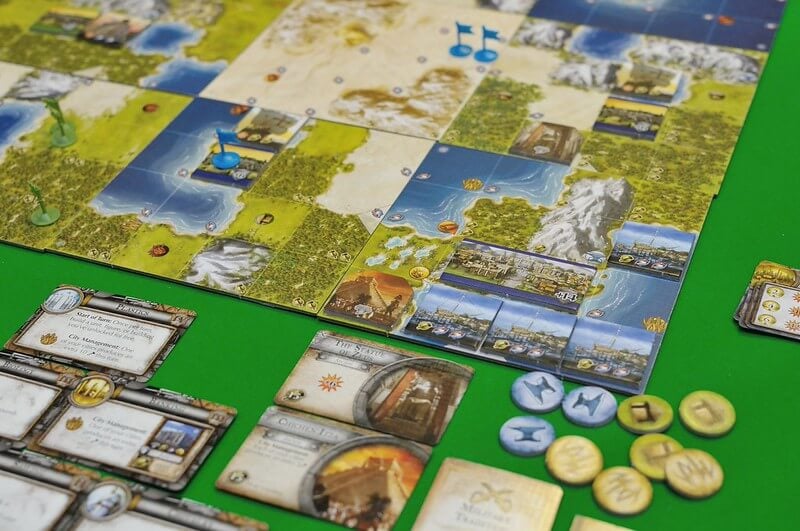
Francis Tresham’s Civilization appeared in the United Kingdom from Hartland Trefoil in 1980 and from Avalon Hill in the United States in 1981. Players guided ancient peoples from the Stone Age toward the classical era, acquiring advances like pottery, writing and philosophy.
The game is credited with popularizing the technology tree in board gaming, and the 1991 Sid Meier computer game shares its name. Avalon Hill copies often sell for 50 to 150 dollars.
Collectors check the advance cards and the population tokens, since short counts are common in played sets.
Titan and Its Monster Legions
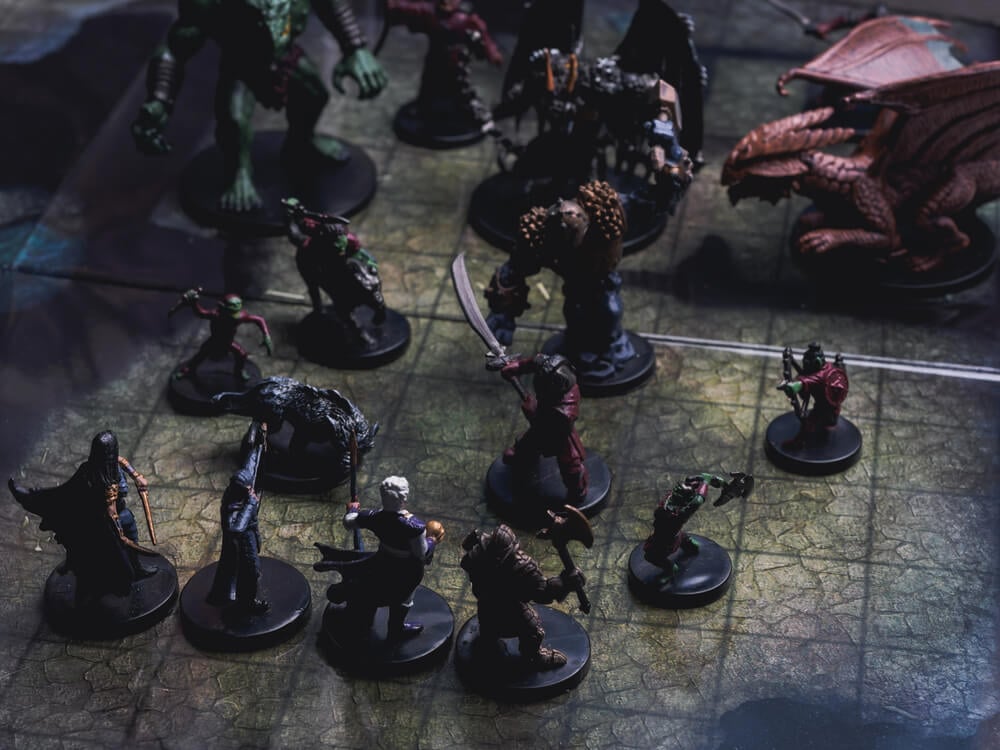
Titan was first published by Gorgonstar in 1980 and then by Avalon Hill in 1982, designed by Jason McAllister and David Trampier. Players commanded legions of mythic creatures, from ogres to dragons, and recruited stronger monsters as they won battles, all to protect their Titan.
Trampier was also known for his early Dungeons and Dragons artwork, which adds to its appeal. Complete copies typically sell for 75 to 200 dollars.
Collectors look for unpunched counters and a board without wear along the folds, since heavy play shows quickly.
Supremacy and Its Mushroom Clouds

Supremacy Games released Supremacy in 1984, a global conflict game in which players controlled superpowers and competed for resources. The twist was that nuclear weapons were part of the game, represented by small mushroom cloud pieces, and if too many were used the game could end in nuclear winter for everyone.
It captured the anxiety of the Cold War in a box. Complete copies often sell for 75 to 150 dollars.
Missing plastic armies and fleets are common, and collectors pay more for sets with the full count.
Warrior Knights and Its Feudal Barons
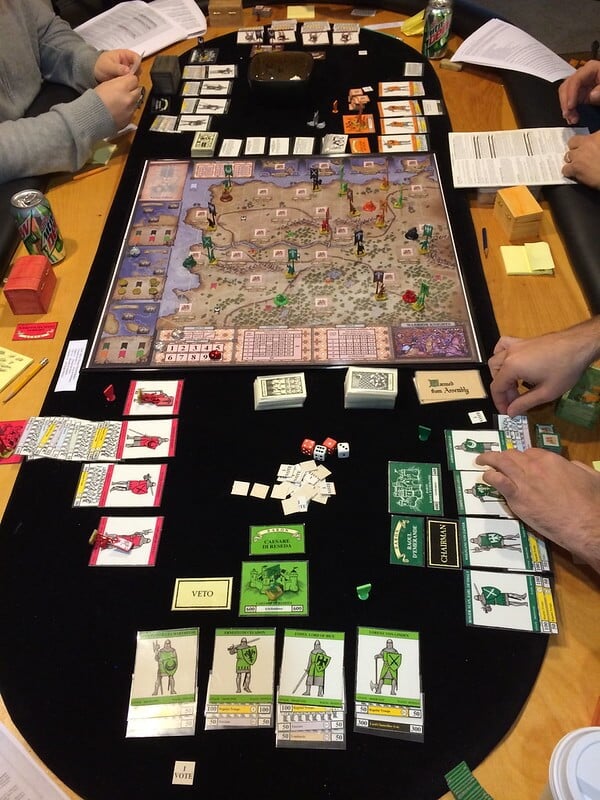
Derek Carver designed Warrior Knights, which Games Workshop published in 1985 as a heavier strategy game than its usual fantasy fare. Players acted as feudal barons competing for power, hiring mercenaries and influencing the Assembly to gain control of cities.
The game’s political maneuvering made it a cult favorite, and Fantasy Flight Games published a new edition in 2006. Original copies often sell for 75 to 200 dollars.
The cardboard castles and city tokens are what collectors check first, since the thin stock tends to separate after years of play.
Dungeons and Dragons Computer Labyrinth Game
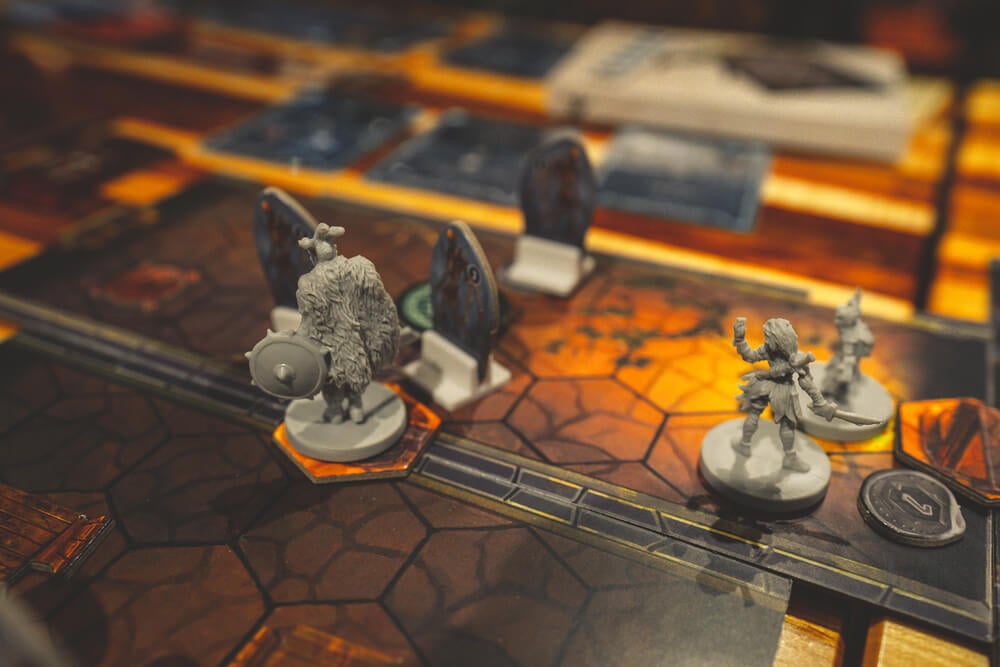
Mattel released the Dungeons and Dragons Computer Labyrinth Game in 1980, an electronic board game that hid a maze inside its computer. Players moved warrior figures across the board, and the machine beeped when they bumped into an invisible wall, which they then marked with small plastic pieces.
A dragon guarded the treasure and woke up as players drew near. Working copies often sell for 75 to 200 dollars.
Corroded battery contacts and missing wall pieces are the usual problems, and collectors pay more for sets that still respond to every press.
Up Front and Its Squad of Cards
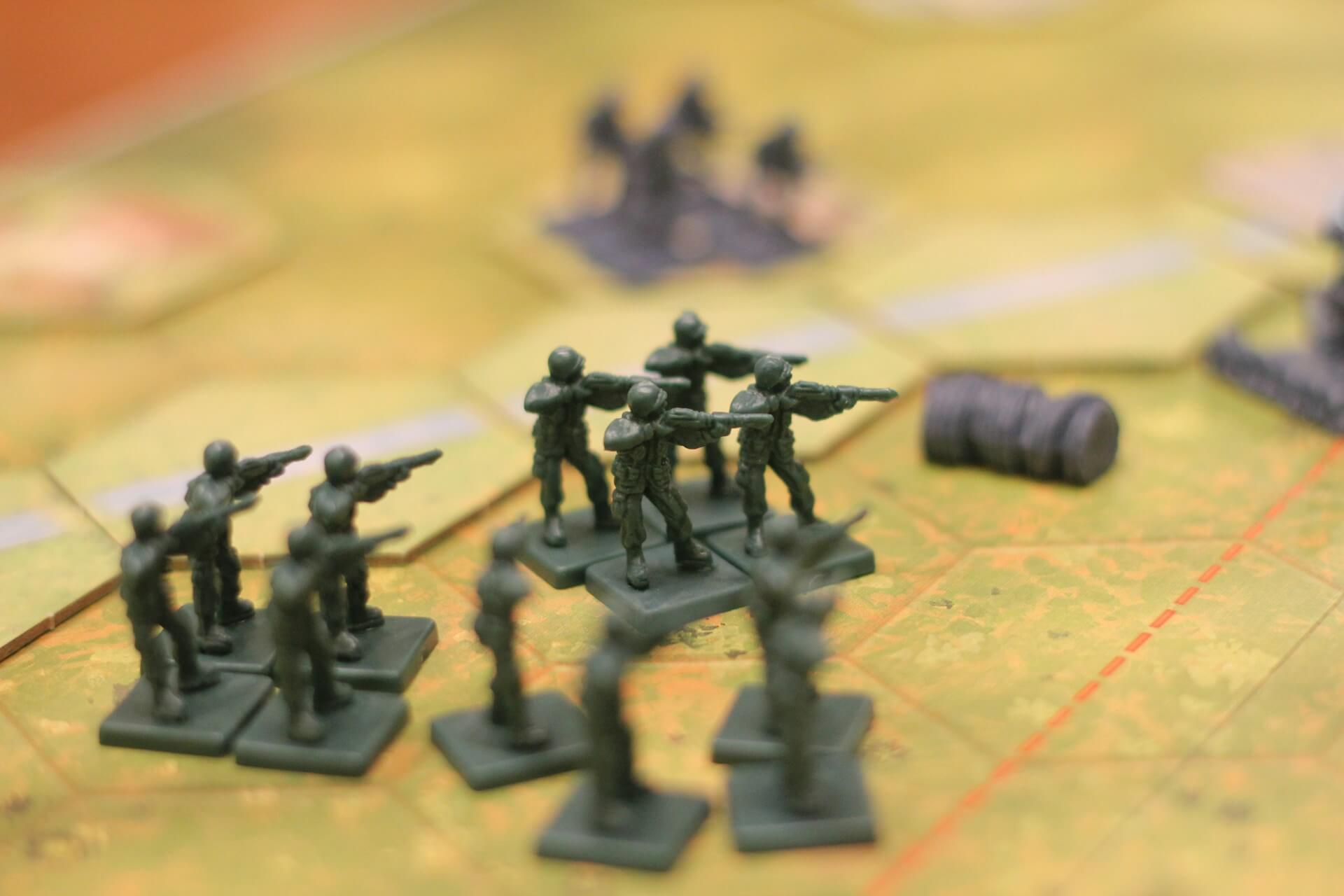
Avalon Hill published Up Front in 1983, a card game designed by Courtney Allen. Players commanded squads of World War II soldiers, using cards for terrain, movement and fire rather than a map board.
The design was unusual for a wargame, packing an entire firefight into a single deck, and earned a dedicated following that still runs tournaments. Original copies often sell for 50 to 150 dollars, with expansions adding more.
Collectors look for decks without heavy edge wear and a complete set of personality cards, since those were easy to lose.
Ambush and Its Paragraph Booklet
Victory Games released Ambush in 1983, a solitaire wargame in which the player led an American squad through the French countryside in 1944. The game used a paragraph booklet and a plastic sleeve to reveal hidden events, so the German forces appeared only when the player stumbled into them.
It was an early example of a board game behaving like a scripted adventure, and wargamers still praise how well the surprises hold up. Copies often sell for 50 to 150 dollars.
Unmarked mission cards and an unused sleeve add to the value.
Dungeonquest From Sweden
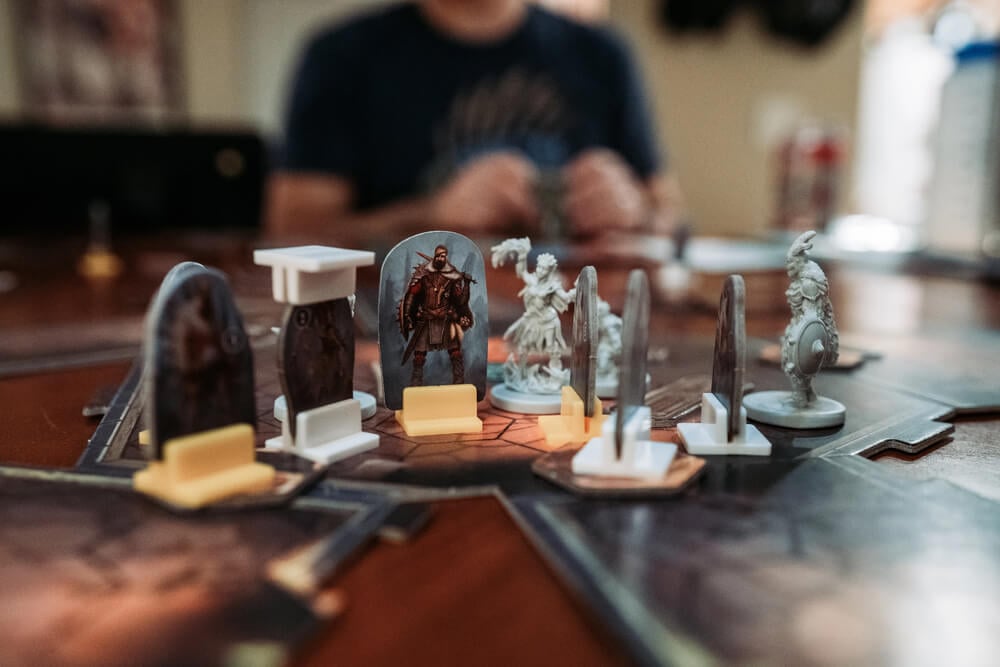
Dungeonquest reached English-speaking players in 1987 when Games Workshop translated the Swedish game Drakborgen, first published in 1985. Players ventured into a dragon’s castle to grab treasure and escape before the sun set, and most characters died along the way.
The brutal difficulty became part of the game’s appeal, and Fantasy Flight Games reissued it in 2010. Original copies often sell for 75 to 200 dollars, with the Games Workshop box drawing more interest than later reprints.
Missing room tiles and treasure cards are common, and complete sets with all the character cards are worth more.
Scotland Yard and Mister X
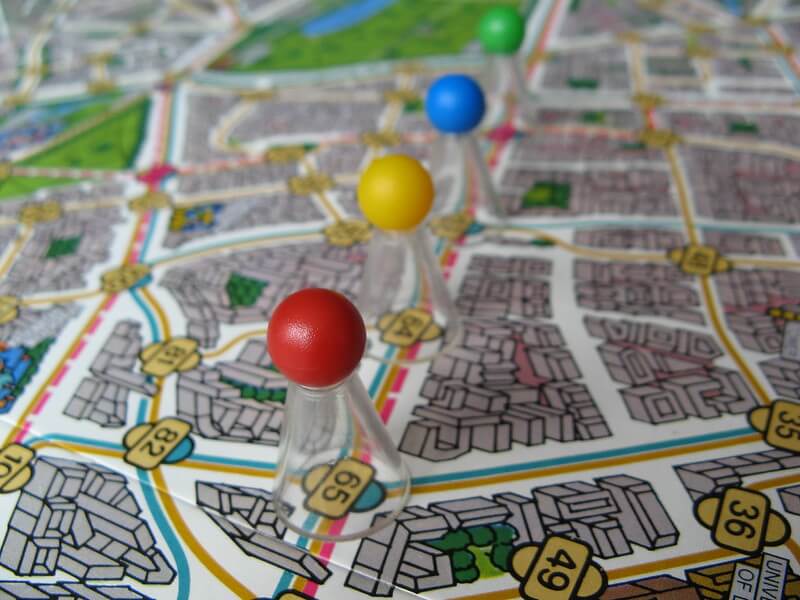
Ravensburger released Scotland Yard in 1983, and it won the Spiel des Jahres award that year. One player played Mister X, moving secretly around London by taxi, bus and underground, while the detectives tried to corner him.
The game has stayed in print in many versions and languages, so ordinary later copies are inexpensive and easy to find. Early printings with the original visor cap for Mister X and complete ticket stacks, however, appeal to collectors.
Those often sell for 30 to 80 dollars, depending on the box, the board folds and how many of the small transport tickets survived.
Dice, Cardboard and the Price of Patience
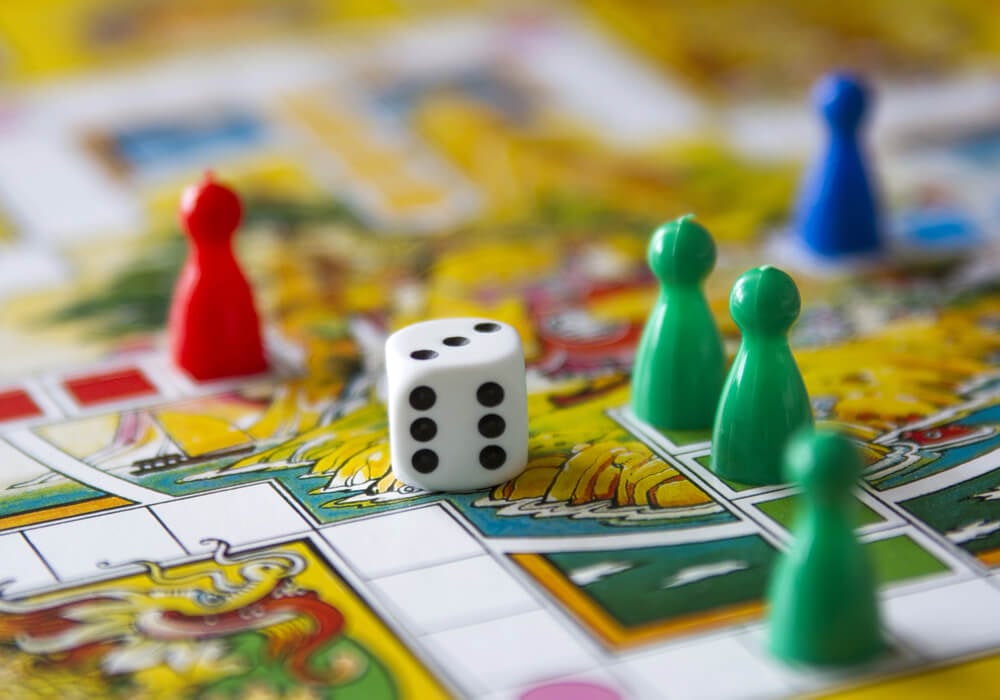
Nearly every game on this list was sold as an inexpensive family purchase, and most copies were played until they fell apart. The ones that survived intact did so because someone kept the pieces in bags, put the lid back on, and stored the box somewhere dry.
That ordinary carefulness is now what collectors are paying for.
The games themselves also capture something about the decade. Cold War nuclear anxiety, shopping malls, videotapes and blinking electronics all show up on the boards.
Each box is a small time capsule of what families thought was fun, and the market has decided some of those capsules are worth opening carefully.
More from Go2Tutors!

- The Romanov Crown Jewels and Their Tragic Fate
- 13 Historical Mysteries That Science Still Can’t Solve
- Famous Hoaxes That Fooled the World for Years
- 15 Child Stars with Tragic Adult Lives
- 16 Famous Jewelry Pieces in History
Like Go2Tutors’s content? Follow us on MSN.