Atari and Sega Games Still Fetching Big Money
Plenty of attics still hold a shoebox of plastic cartridges, most of them worth about as much as the shoebox. A few are another matter.
Mail-order oddities, promotional giveaways and late releases with tiny print runs now trade among collectors for sums that would have bought a new car when the games were on store shelves.
The difference usually comes down to scarcity, a sticker, a manual or a box that somebody did not throw away. Labels, serial numbers and regional variants matter far more than how much fun the game was to play.
Air Raid on the Atari 2600
Men-A-Vision, a small company with ties to Taiwan, released Air Raid in 1982, and very few copies seem to have reached buyers. The cartridge itself is unusual, a light blue shell with a T-shaped handle on top, which makes a genuine example easy to spot in a pile of black Atari carts.
A complete boxed copy reportedly sold for more than 30,000 dollars in 2012, and a loose cartridge donated to a Goodwill in North Texas later went for over 10,000 dollars at auction. Loose copies today typically trade in the four- to five-figure range, with label tears, missing handles and the absence of the box pulling prices down sharply.
Red Sea Crossing and Its Mail-Order Ministry

Inspirational Video Concepts published Red Sea Crossing in 1983, a Bible-themed Atari 2600 game in which Moses leads the Israelites across the parted sea. Its creator, Steve Stack, sold it largely by mail, with advertising placed in Christian periodicals rather than toy store catalogs.
For decades collectors were not sure it existed at all until a cartridge surfaced in 2007. Known copies remain extremely scarce, and reported sales have reached five figures.
Label legibility, the presence of any paperwork and a credible history of where the cartridge came from weigh heavily on what a buyer will pay.
Gamma-Attack, a Single Known Copy
Gamma-Attack was released by a company called Gammation in 1983, and only one copy is known to survive. That copy belongs to collector Anthony DeNardo, and Guinness World Records has listed it as the rarest video game.
DeNardo once put it on eBay with an asking price of 500,000 dollars, though no sale went through at that figure. The game itself is a fairly simple shooter with a plain white label, which only adds to the oddity.
Any second copy would need careful authentication before anyone treated it as genuine, since a bare cartridge and a home-printed label are easy to fake.
Birthday Mania, Personalized by Mail
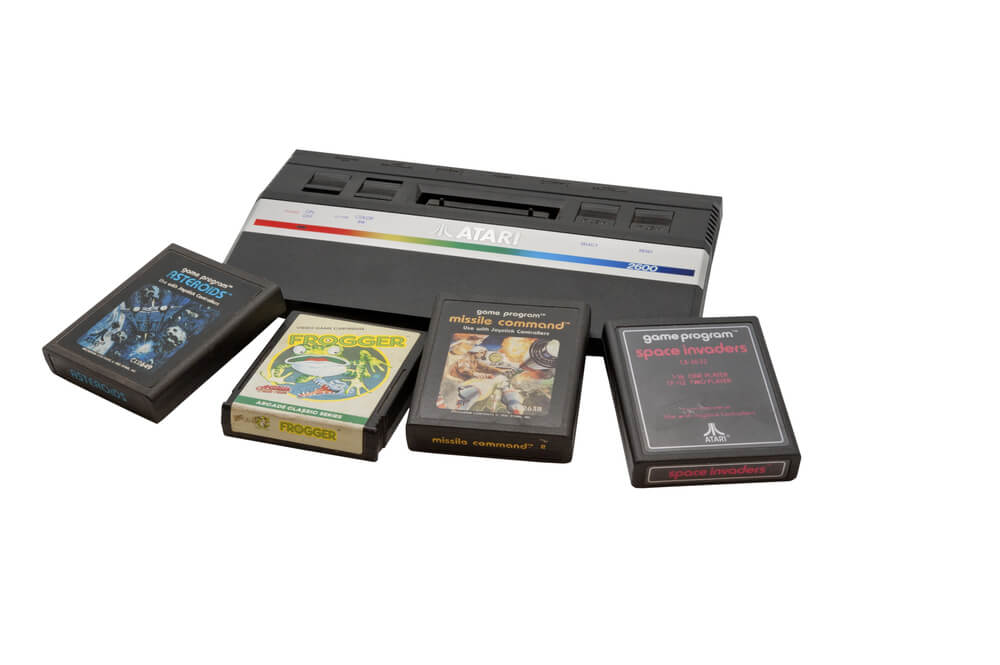
Personal Games Company sold Birthday Mania around 1984 as a custom gift, programming the recipient’s name into the game before shipping it out. The concept was charming but the market was tiny, arriving just as the North American game crash hollowed out retail.
Only a handful of copies have surfaced, and each is technically unique because of the name embedded in its code. Collectors often pay several thousand dollars or more when one appears, with the original box, instructions and clean label art making a large difference.
A cartridge bearing a well-documented name and family history tends to sell more easily than one with no story attached.
Extra Terrestrials From Canada
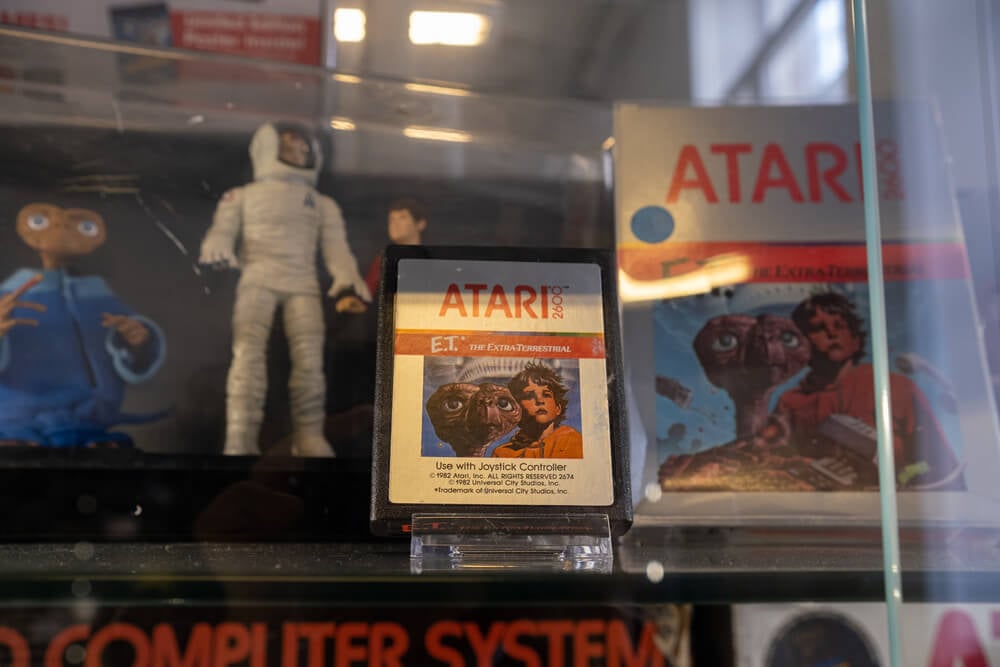
Skill Screen Games, a small company in Ontario, produced Extra Terrestrials in 1984 for the Atari 2600, borrowing heavily from the look and premise of the famous alien film. Very few copies were made and fewer survive, which turned a forgotten Canadian knockoff into a serious collectible.
One copy appeared on eBay in 2019 with an asking price of roughly 90,000 dollars, a listing that drew coverage from Canadian news outlets. Asking prices and actual sales are not the same thing, of course.
Box condition, label wear and a clear chain of ownership all shape what a real buyer offers.
Chase the Chuck Wagon and Its Dog Food Origins
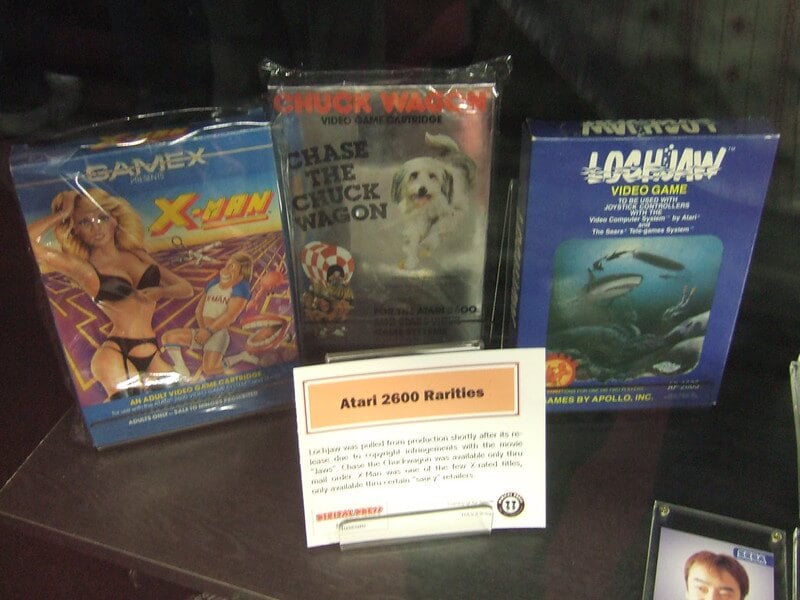
Ralston Purina commissioned Chase the Chuck Wagon in 1983 to promote its Chuck Wagon dog food, and Spectravision handled the programming. The cartridge was available by mail with proofs of purchase rather than on store shelves, so far fewer copies circulated than for standard releases.
Gameplay follows a hungry dog navigating a maze toward a wagon of kibble, which is about as promotional as an Atari game gets. Loose cartridges typically sell for a few hundred dollars, while boxed copies with the mail-in paperwork go for considerably more.
Faded or peeling labels cut into that figure quickly.
Pepsi Invaders, a Coca-Cola Inside Joke
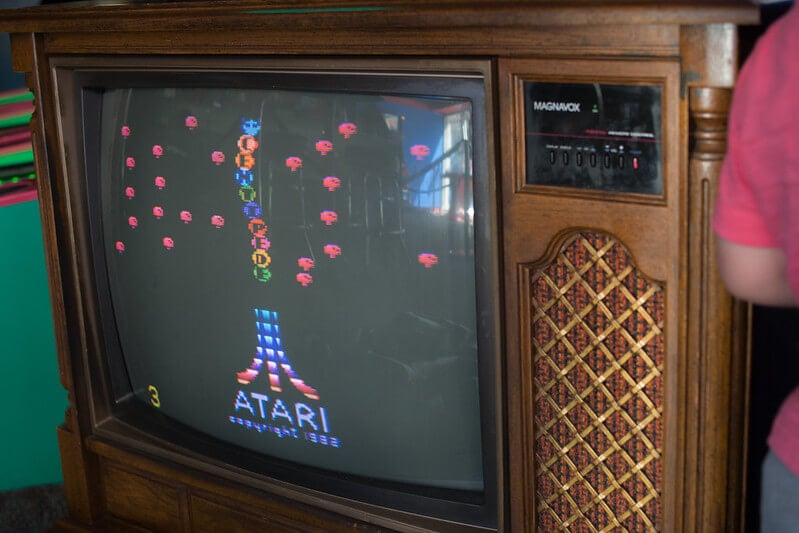
Coca-Cola commissioned this Atari 2600 reworking of Space Invaders in 1983, swapping the alien rows for letters spelling out its main rival’s name. Christopher Omarzu wrote the game, and only about 125 copies were made as gifts for attendees of a company sales convention.
The cartridges have plain labels and no box, so collectors rely on known provenance and close inspection to separate originals from homemade copies. A copy sold for about 1,825 dollars in 2005, and examples today often bring several thousand.
Label scuffs and doubts about authenticity weigh heavily on the final number.
Swordquest Waterworld and the Lost Contest
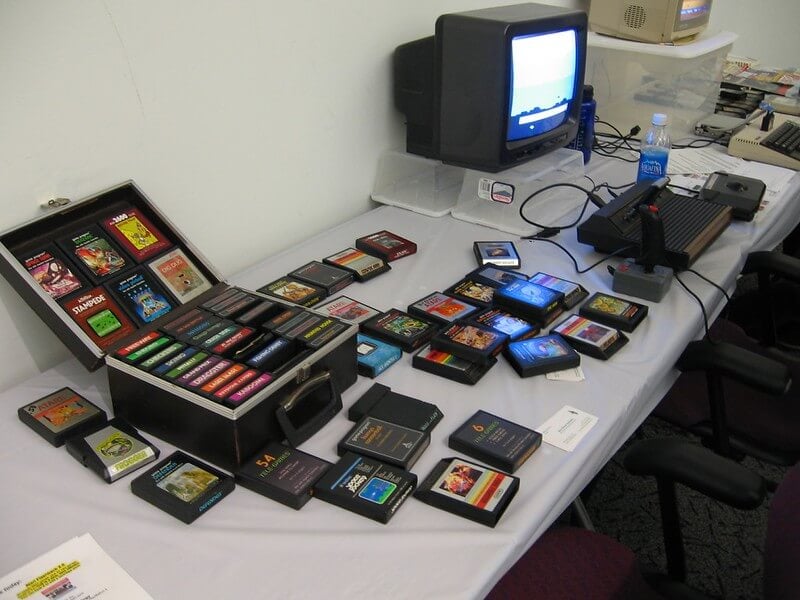
Atari planned Swordquest as a four-game series in the early 1980s, each tied to a contest offering prizes such as a jeweled talisman and a gold chalice made by the Franklin Mint. Earthworld and Fireworld ran as intended, but the market collapse derailed the rest, and Waterworld ended up available mainly through the Atari Club mail-order program.
The fourth game, Airworld, was never finished at the time. Waterworld cartridges are scarce enough that loose copies typically sell for a few hundred dollars.
Copies with the comic book and box bring more, depending on creases, tears and fading.
Atlantis II, the Contest Cartridge in Disguise
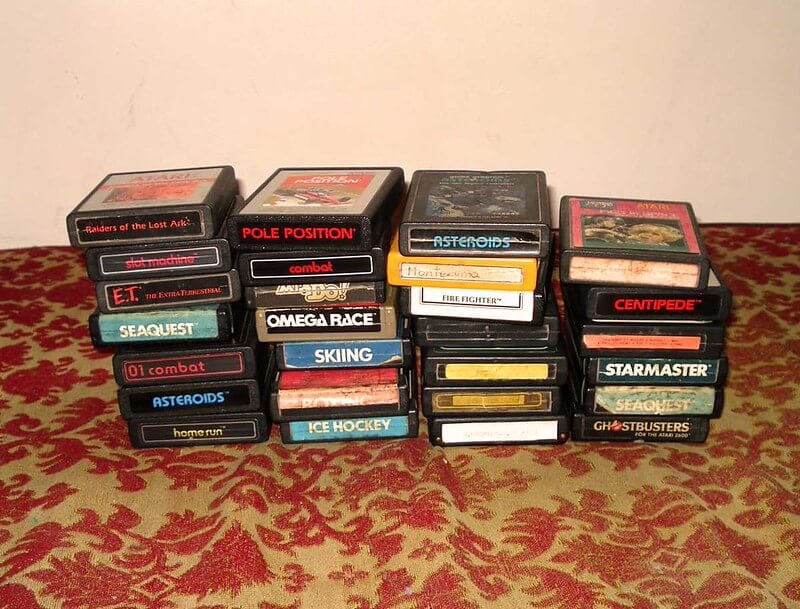
Imagic ran a high-score contest for its 1982 hit Atlantis, and qualifying players received a special cartridge called Atlantis II to compete for prizes. The tricky part for collectors is that Atlantis II typically carries the same label as the regular game, so the only reliable way to identify one is to play it.
Enemy ships move faster and score fewer points in the contest version, and the difficulty climbs quickly. Confirmed copies often sell for several hundred to a couple of thousand dollars.
Sellers who cannot demonstrate the gameplay difference usually get regular Atlantis money instead.
BattleSphere Gold for the Atari Jaguar
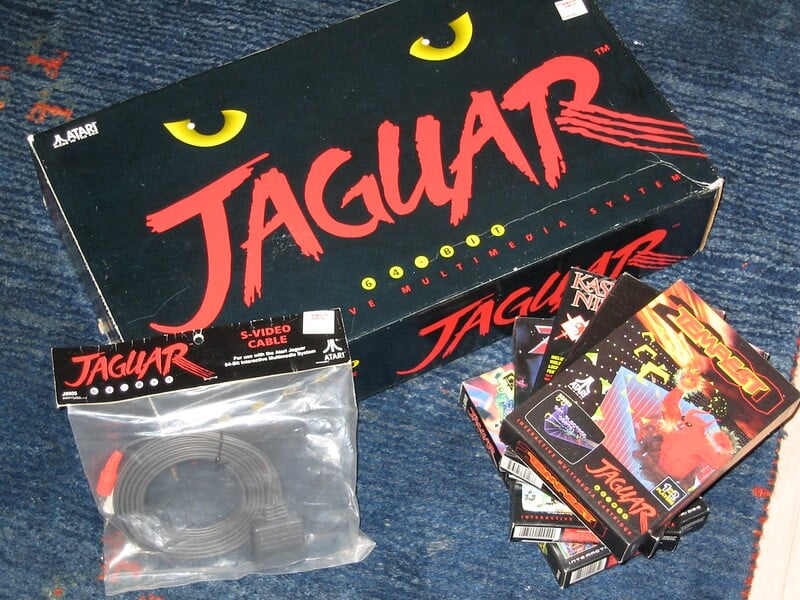
Independent developer 4Play released BattleSphere for the Atari Jaguar in 2000, years after Atari itself had abandoned the console. A later BattleSphere Gold edition was produced in a small run and sold directly to fans, making it one of the scarcest titles in an already thin Jaguar library.
The space combat game supported networked play across multiple consoles, an ambitious feature for hardware that had been written off commercially. Gold editions often sell for well over 1,000 dollars complete.
A cracked case, missing manual or worn cartridge label can shave a meaningful share off that figure.
Skyhammer, Rescued From Cancellation
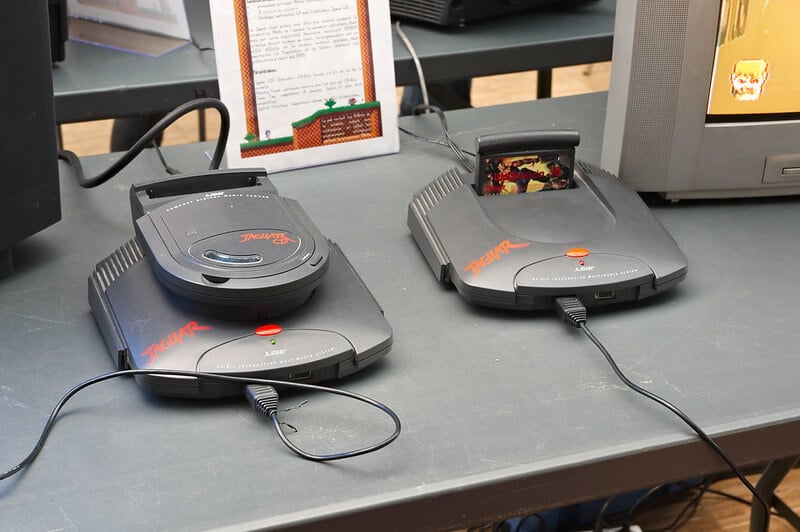
Rebellion developed Skyhammer for the Atari Jaguar in the mid-1990s, but the game was shelved when Atari wound down the platform. Songbird Productions, a small publisher dedicated to unreleased Jaguar software, finally issued it on cartridge in 2000.
Production was limited and sales went mostly to existing enthusiasts, so copies rarely surface on the secondhand market. Complete examples typically sell for several hundred dollars and sometimes more.
Buyers look for the original box and manual and a cartridge without scuffs, since the small print run left few spares.
Tetris on the Sega Mega Drive
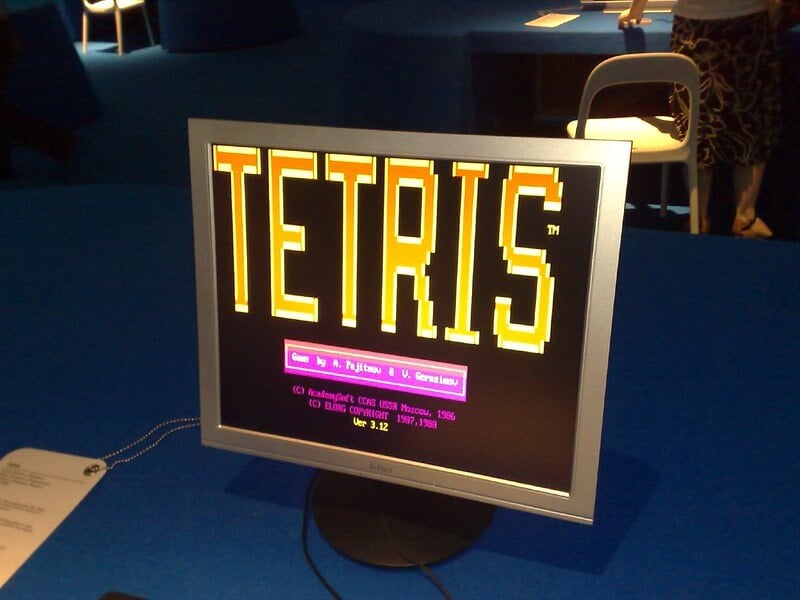
Sega produced a Mega Drive version of Tetris in 1989, but a legal fight over the game’s console rights ended with Nintendo holding them, and Sega’s release was pulled. Only a small number of copies are thought to have escaped, with estimates commonly placed at fewer than ten.
A copy signed by Tetris creator Alexey Pajitnov was offered for sale in 2011 with an asking price of 1 million dollars. Verified copies are almost never offered publicly, and reproductions are common.
Authenticity is everything here, more than wear or box condition.
Panzer Dragoon Saga on the Sega Saturn
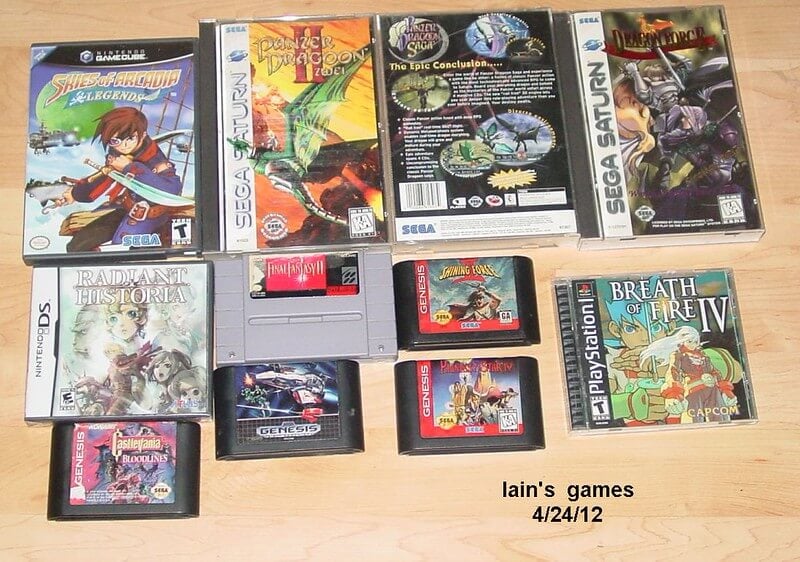
Team Andromeda’s role-playing game arrived in North America in 1998, late in the Saturn’s life, and Sega shipped it in modest numbers as the company was already looking toward the Dreamcast. The game spans four discs and has never been rereleased on a modern platform, which keeps demand strong among players as well as collectors.
Complete North American copies often trade for roughly 800 to 1,500 dollars. Scratched discs, a cracked case or a missing manual can lower that substantially, and sealed copies sit in a different price tier altogether.
Radiant Silvergun, Treasure’s Saturn Shooter
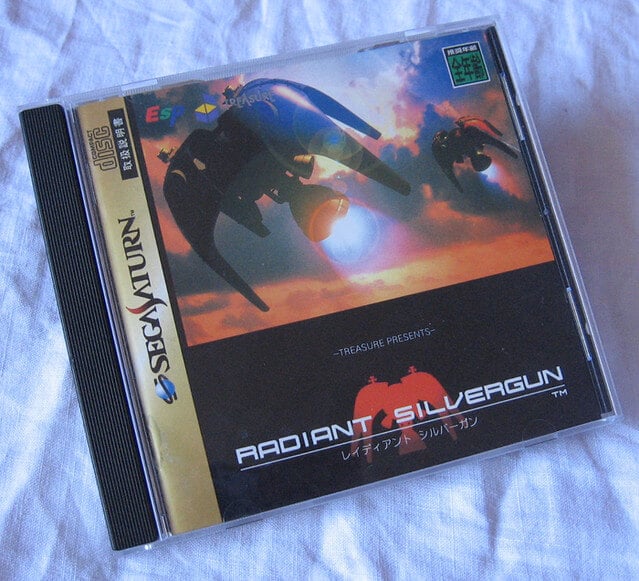
Treasure released Radiant Silvergun for the Sega Saturn in Japan in 1998, and it never received a Western Saturn release. The vertical shooter gives the player access to multiple weapon types at once and is widely considered among the finest games in its genre.
Saturn copies typically sell for a few hundred dollars, even though an Xbox 360 version later made the game easier to play. The Saturn spine card, the paper strip that runs down the side of Japanese cases, matters to collectors, and copies missing it sell for noticeably less.
Burning Rangers From Sonic Team
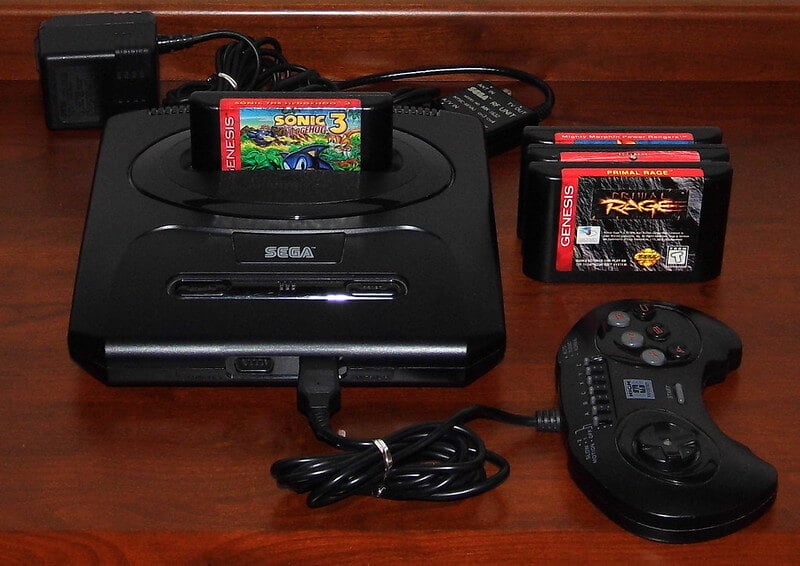
Sonic Team’s firefighting action game reached North America in 1998, near the end of the Saturn’s commercial run in the region. Players control futuristic rescuers moving through burning space stations, guided by voice navigation instead of a conventional map.
Its European and Japanese versions are easier to find. Print runs were limited, and complete copies often sell for roughly 300 to 600 dollars.
Saturn cases are notoriously fragile, so a clean case with intact hinges and an unmarked disc carries a premium over copies with cracked plastic or a scuffed manual.
Snatcher on the Sega CD
Hideo Kojima wrote and directed Snatcher, which first appeared on Japanese computers in 1988 before Konami brought an English version to the Sega CD in 1994. The cyberpunk adventure about android hunters in a futuristic Neo Kobe City sold poorly in the West, and copies are now scarce.
Complete copies typically sell for several hundred dollars, sometimes approaching 1,000. Kojima’s later fame with the Metal Gear series has kept demand high.
Buyers check that the long Sega CD case is intact and the disc is free of deep scratches.
Keio Flying Squadron on the Sega CD
JVC brought this side-scrolling shooter to the Sega CD in North America in 1994, with a heroine riding a small dragon through a cartoonish version of Japanese history. The North American release was small and is now one of the scarcer games on the platform.
Its goofy humor and polished animation keep collectors interested. Complete North American copies often sell for a few hundred dollars, with the manual and an uncracked case doing much of the work on value.
European and Japanese copies are easier to find and generally cost less.
Crusader of Centy on the Sega Genesis
Atlus published Crusader of Centy in North America in 1994, an action role-playing game in which a young hero gains the ability to talk to animals. The game arrived late in the Genesis era and in limited quantities.
Collectors often compare it favorably with the top-down adventures Nintendo was producing at the time. Complete copies typically sell for several hundred dollars, while loose cartridges cost considerably less.
Original boxes from this period are cardboard rather than plastic, so crushed corners and water damage affect value.
Contra Hard Corps on the Sega Genesis
Konami’s 1994 run-and-gun game gave the Contra series its only appearance on a Sega home console, adding branching paths and a cast of four selectable characters. The North American version is notably harder than the Japanese release, a fact that fans still debate.
Players in Japan got a health bar, while American players died in a single hit. Complete copies often sell for roughly 300 to 500 dollars, with loose cartridges well below that.
Sun fading on the label, writing on the cartridge and a missing manual are the most common problems sellers face.
Castlevania Bloodlines on the Sega Genesis
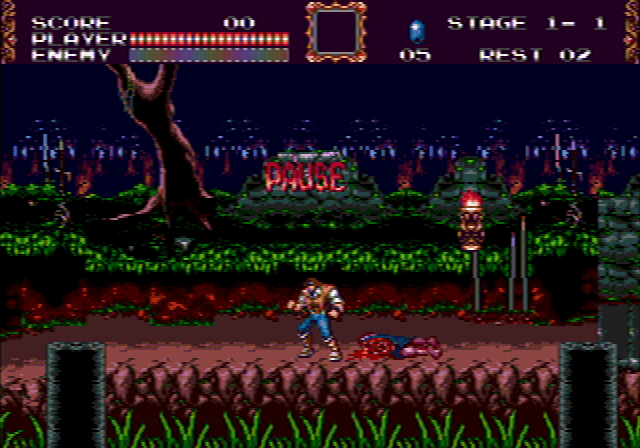
Konami released Castlevania Bloodlines in 1994 as the series’ only entry on a Sega console, with two playable vampire hunters and stages set across Europe. Its European release was retitled The New Generation, and some content was altered there.
Composer Michiru Yamane, later central to the series’ music, worked on its soundtrack. Complete North American copies typically sell for several hundred dollars, while loose cartridges trade for less.
The cardboard boxes used for this release rarely survived without creases or tears, so a crisp box can add a substantial premium.
Mega Man The Wily Wars
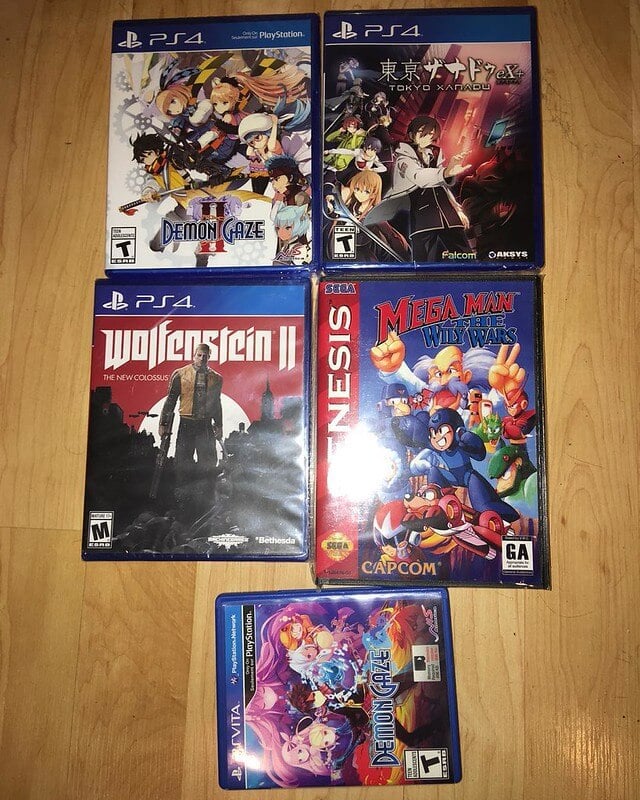
Capcom’s Mega Man The Wily Wars collected remakes of the first three Mega Man games on a single Mega Drive cartridge in 1994, along with a bonus stage set. The game was released on cartridge in Europe and Japan, but in North America it was available only through the Sega Channel subscription service.
That gap makes original cartridges harder to find for American collectors. Complete European copies often sell for a few hundred dollars.
Reproduction cartridges are common online, so buyers examine the circuit board, label printing and case before paying.
Marvel vs. Capcom 2 on the Dreamcast
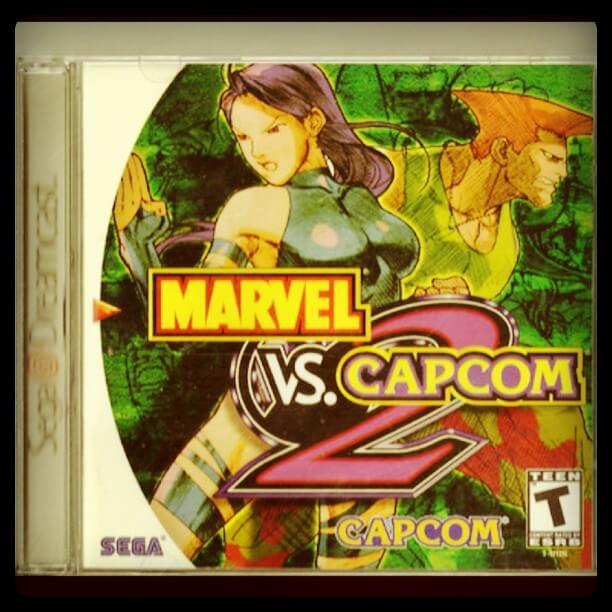
Capcom released this fighting game for the Dreamcast in North America in 2000, featuring a roster of 56 characters drawn from both companies’ catalogs. It was later ported to the PlayStation 2 and Xbox, but the Dreamcast version remains a favorite among players and collectors.
Tournament players long preferred the Dreamcast release for its responsiveness, which helped keep demand steady. Complete copies typically sell for roughly 150 to 300 dollars.
Disc resurfacing, cracked jewel cases and reproduction manuals are common issues, and copies with original documentation in good shape bring the highest prices.
Power Strike II on the Sega Master System
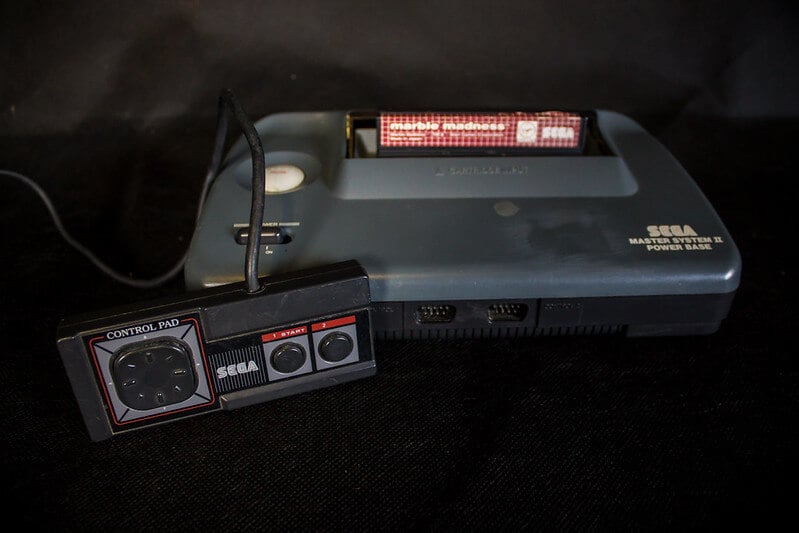
Compile developed Power Strike II, a vertical shooter released for the Master System in Europe in 1993. The Master System was already fading in most markets, so print runs were small, and the game never came out in North America.
It follows Power Strike, the Western title for Compile’s earlier Aleste. Complete copies often sell for several hundred dollars, while loose cartridges cost less.
The clamshell plastic cases from this era tend to crack at the hinges, and collectors also watch for faded cover art and missing manuals.
Phantasy Star IV on the Sega Genesis
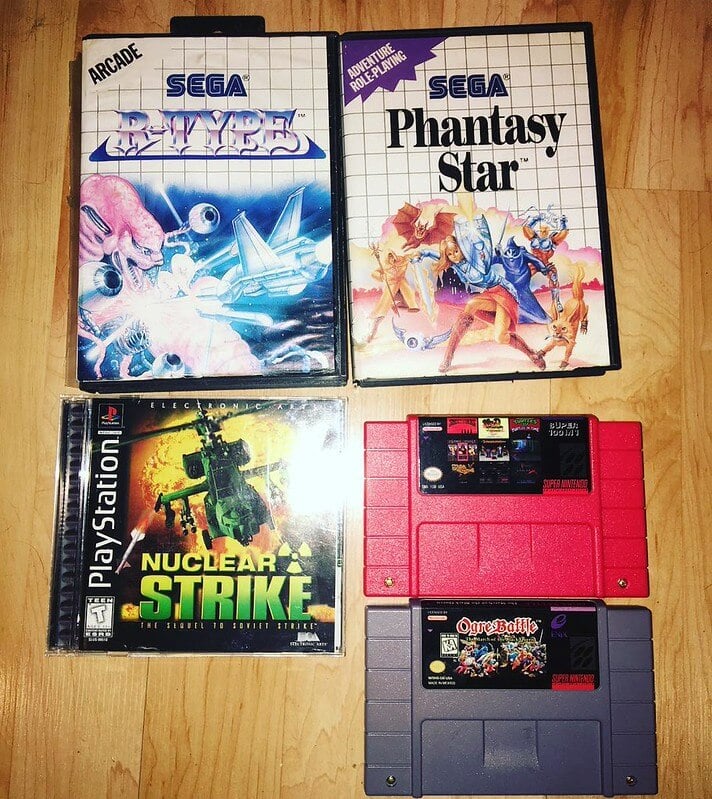
Sega’s Phantasy Star IV reached North American players in 1995 on a 24-megabit cartridge, a large size for the time, and closed out the original Phantasy Star series. The role-playing game is still widely praised for its story, its comic-panel cutscenes and a combo system that rewards combining certain spells and skills.
It wraps up plot threads stretching back to the 1987 Master System original. Complete copies typically sell for roughly 150 to 300 dollars, while loose cartridges cost considerably less.
The box and manual add significant value, and collectors also look closely at label condition.
Cartridges as Small Records of Their Era
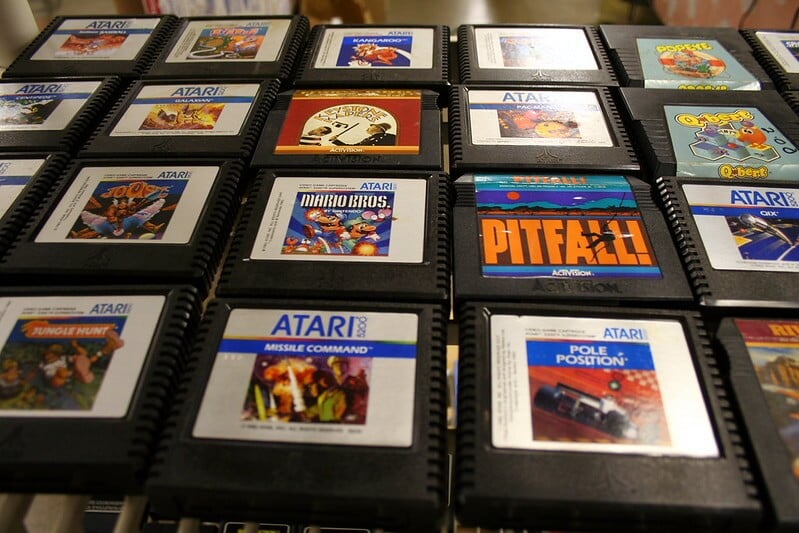
Cartridges were built to be played, swapped and eventually forgotten in a basement. The ones that now command serious money tend to share one thing: they were made in small numbers for a reason that had little to do with the games themselves.
A company dispute, a contest, a dog food promotion or a convention giveaway did more to set these prices than any review score.
Collectors are paying for that history as much as the code. Boxes, manuals and labels matter because they prove where an item came from and how it was treated.
As reproductions get better, provenance and condition will keep separating the genuine rarities from the rest.
More from Go2Tutors!

- The Romanov Crown Jewels and Their Tragic Fate
- 13 Historical Mysteries That Science Still Can’t Solve
- Famous Hoaxes That Fooled the World for Years
- 15 Child Stars with Tragic Adult Lives
- 16 Famous Jewelry Pieces in History
Like Go2Tutors’s content? Follow us on MSN.