28 Treasures Found In Ancient Egyptian Tombs And Burial Sites
Egyptian tombs were built to be sealed forever, but many were entered by robbers within a generation or two. The handful that survived intact, or nearly so, handed modern excavators objects that had not been touched since the day the door was bricked up.
Some of these finds are famous enough to have their own museum galleries. Others are small, strange, or oddly personal, and those tend to say more about the people who made them than any amount of gold does.
Gold Mask of Tutankhamun
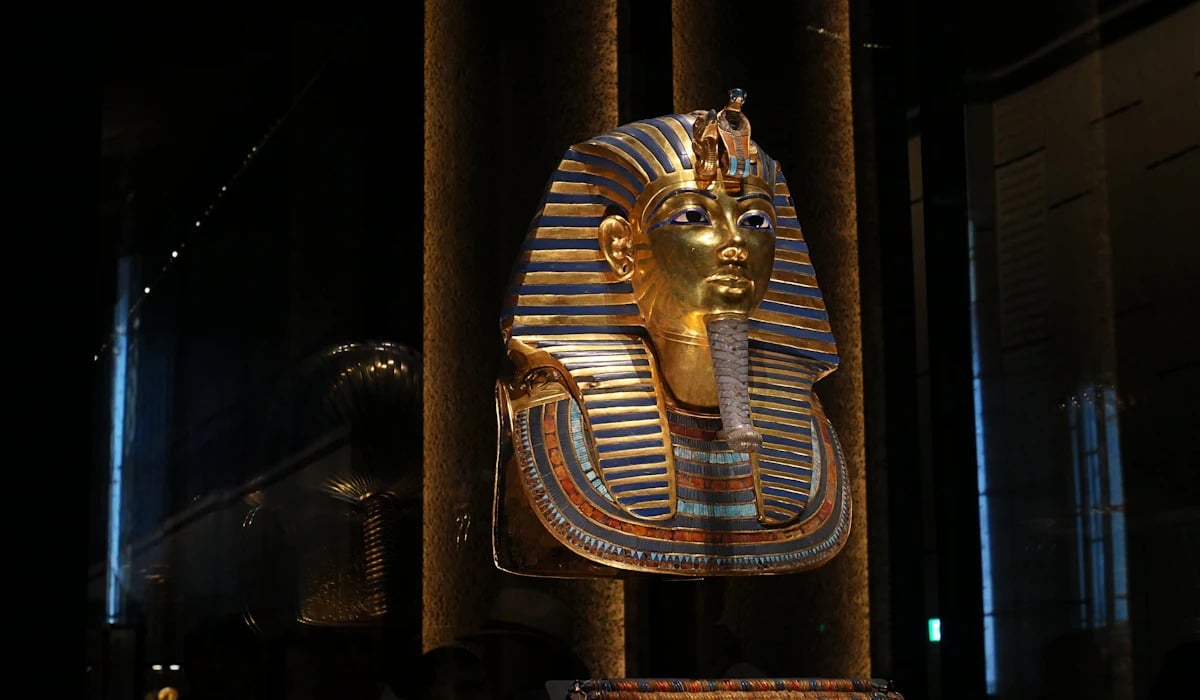
Howard Carter examined the innermost coffin in October 1925 and found the mask resting over the head and shoulders of the king’s mummy. It is made of two layers of high-karat gold weighing about 10 kilograms, with inlays of lapis lazuli, quartz, obsidian, carnelian and colored glass.
The striped nemes headcloth carries a vulture and a cobra side by side on the brow, the protective goddesses of Upper and Lower Egypt. A spell from the Book of the Dead runs across the shoulders and back.
In 2014, the braided beard was knocked off during cleaning and glued back on with epoxy, which caused an international uproar and a careful second repair the following year.
Solid Gold Inner Coffin
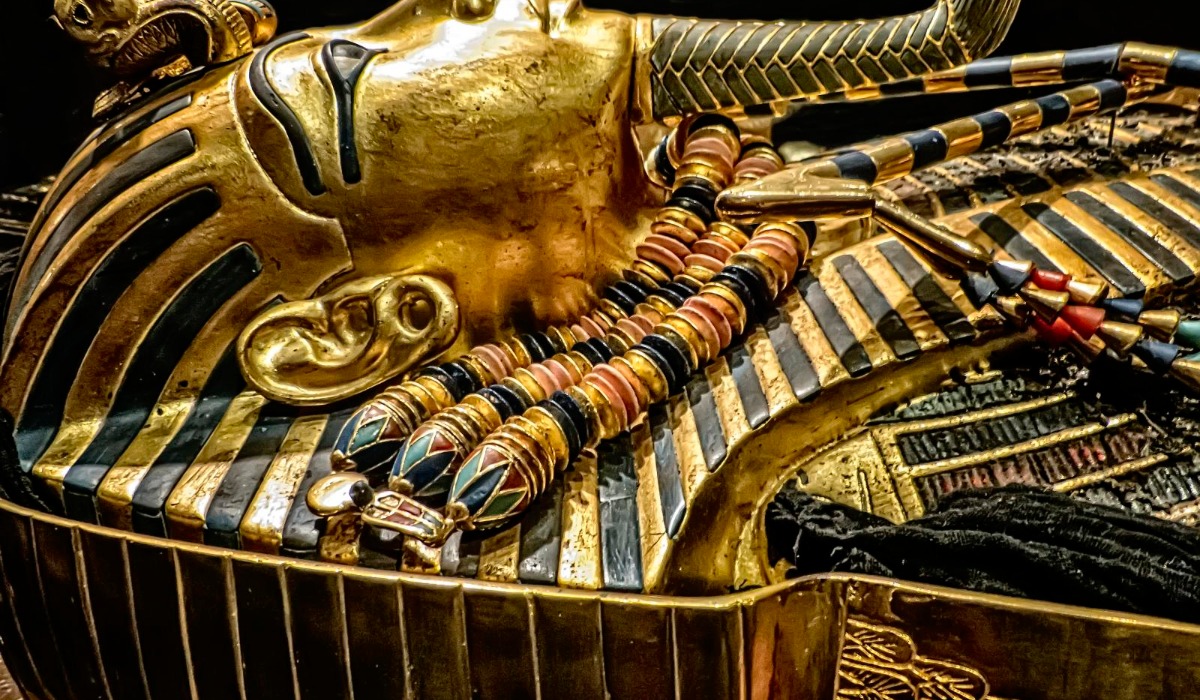
Three nested coffins held the body of Tutankhamun, and the innermost one is made of solid gold rather than gilded wood. It weighs around 110 kilograms, which is why Carter’s team struggled to lift the stack out of the stone sarcophagus and initially assumed the entire weight was wood.
The surface is chased with feathered wings of the goddesses Isis and Nephthys wrapped around the king’s body. Dark resin poured over it at the funeral had set hard, and Carter had to heat the coffins with paraffin lamps to separate them.
The coffin is one of the most remarkable gold objects recovered from an ancient burial.
Meteoritic Iron Dagger
Two daggers lay on the mummy of Tutankhamun, one with a gold blade and one with an iron blade that should not have existed in Egypt around 1323 BCE, since iron smelting was not yet practiced there. In 2016, a team of Italian and Egyptian researchers used portable X-ray fluorescence on the blade and found nickel and cobalt levels that match iron meteorites.
The handle is gold decorated with granulation and cloisonné, and the pommel is rock crystal. The gold sheath carries a pattern of feathers and a jackal head.
The dagger may have been a diplomatic gift, since letters from the period mention iron objects sent to Egypt by the kings of Mitanni.
Golden Throne of Tutankhamun
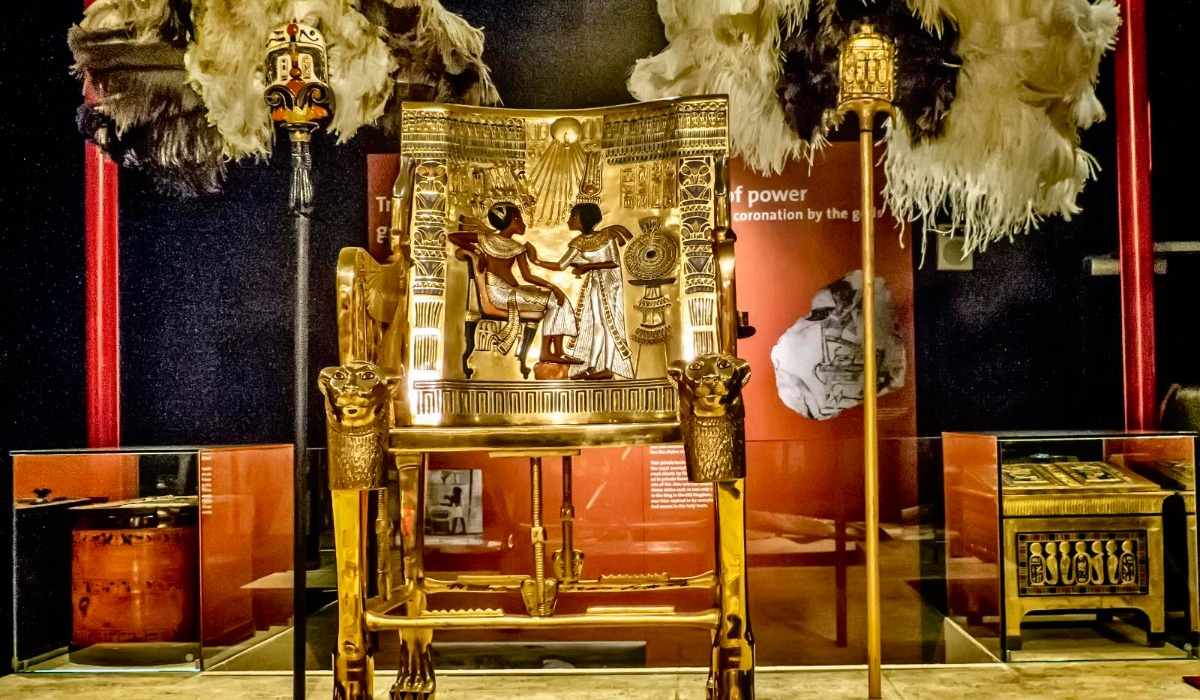
Carter found this wooden chair in the antechamber, sheathed in gold and silver and inlaid with faience, glass and semiprecious stones. The back panel shows the king slumped on a chair while his wife Ankhesenamun touches his shoulder with a jar of ointment, under the rays of the sun disk Aten.
That image belongs to the art of Akhenaten’s reign, and the names on the throne were partly changed from the Aten form to the Amun form, which makes the object a record of the religious reversal that followed Akhenaten’s death. Lion heads form the front of the seat, and the legs end in lion paws.
It remains one of the most photographed pieces in Egypt’s collection of Tutankhamun artifacts.
Canopic Shrine and Alabaster Chest
In the treasury room beyond the burial chamber stood a gilded wooden shrine nearly two meters high, guarded on each side by a slender gilded statue of a goddess with her arms spread out. Isis, Nephthys, Neith and Selket each protected one side.
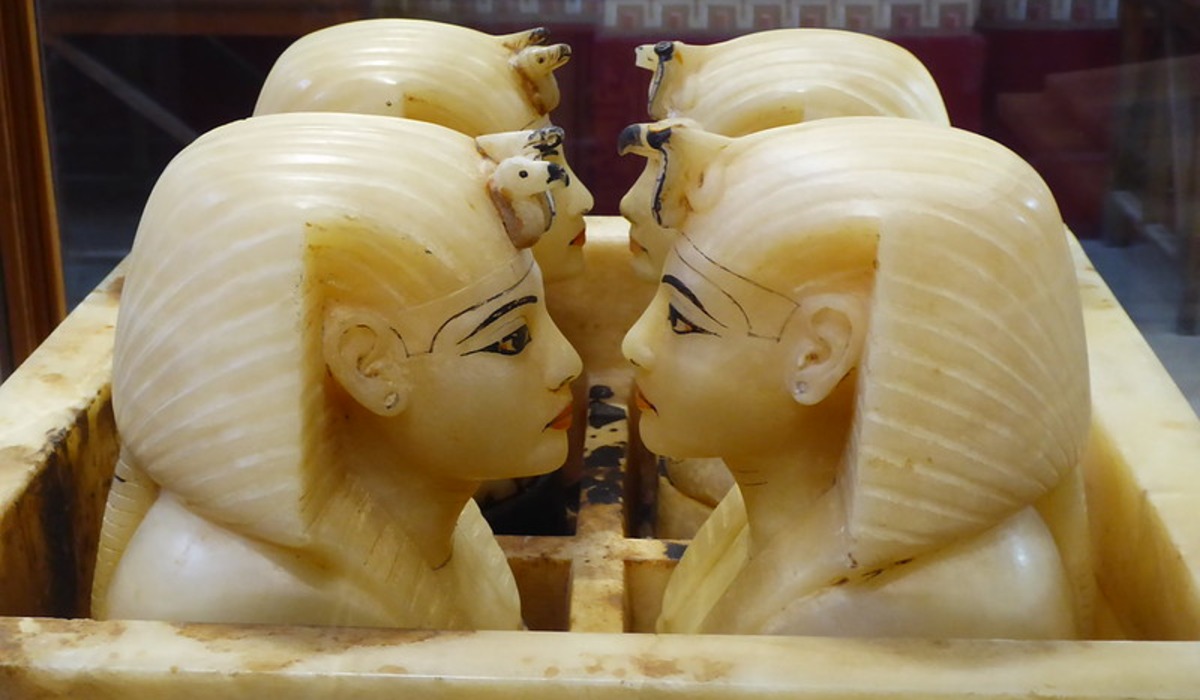
Inside was a chest carved from a single block of calcite, often called Egyptian alabaster, with four cylindrical hollows closed by carved heads of the king. Each hollow held a miniature gold coffin, decorated like the full-size ones, containing a wrapped internal organ.
Carter noted that the goddess figures were posed with their heads turned slightly, as if watching the entrance, an arrangement he found unsettling by lamplight.
Chariots of Tutankhamun
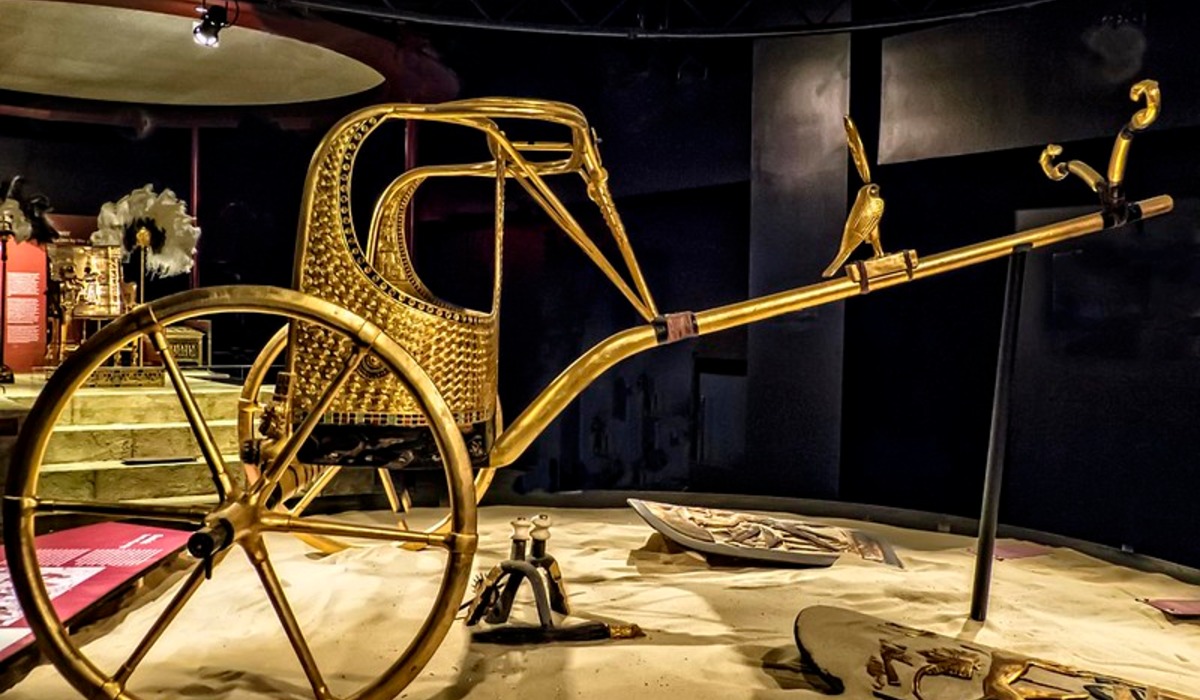
Six chariots were packed into the tomb, dismantled so they would fit through the narrow doorway, with wheels and bodies stacked against the wall of the antechamber and the treasury. Two were ceremonial, covered in gold foil over gesso and decorated with inlaid glass, and the others were lighter vehicles that may have been used for hunting or practice.
The bodies are built from bent wood, with leather and linen floors to absorb shocks. Egyptian chariots had spoked wheels and were pulled by a pair of horses.
Conservators have since reassembled them, and the chariots form part of the collection of Tutankhamun artifacts being displayed at Egypt’s museums.
Trumpets of Tutankhamun
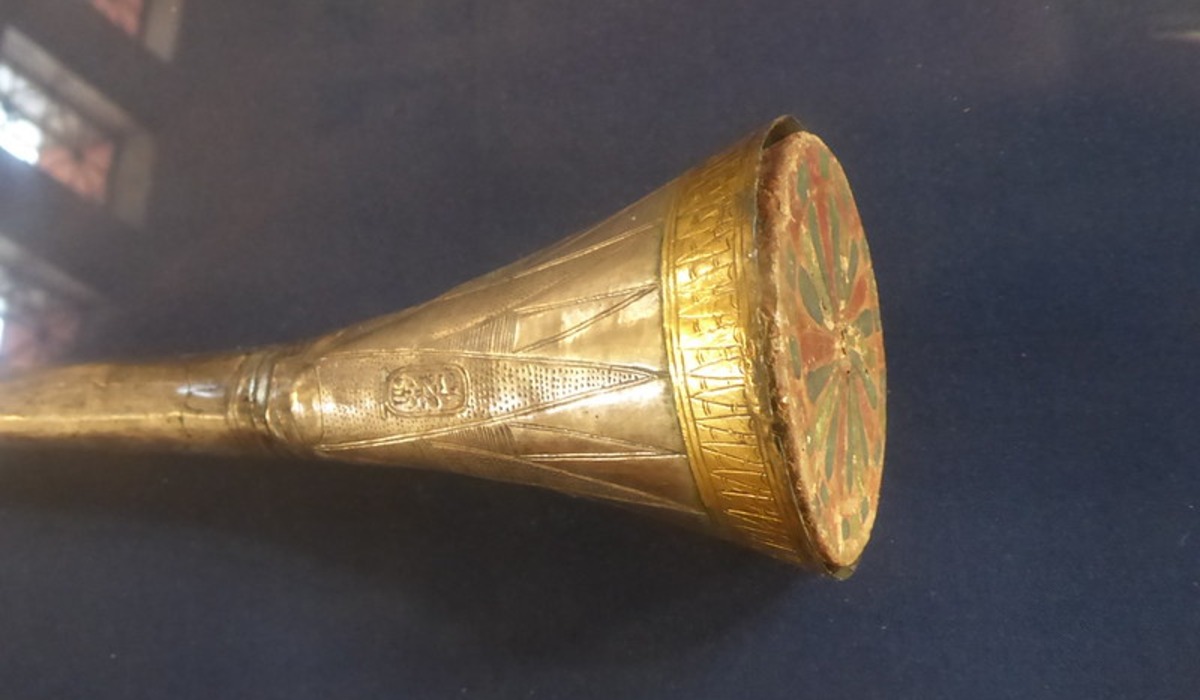
Two trumpets came out of the tomb, one of silver and one of bronze or copper, each with a wooden core that fit inside to protect the thin metal from being crushed. Both are decorated with figures of the gods Ra-Horakhty, Amun and Ptah, who were linked to the army divisions of the New Kingdom.
In April 1939, the BBC broadcast a performance on them by a British bandsman named James Tappern, one of the earliest known recordings of an ancient instrument from the tomb being played. According to accounts of the broadcast, the silver trumpet shattered during a rehearsal and had to be repaired first.
They are among the oldest surviving trumpets known, though museum staff no longer allow anyone to blow them.
Sandals With Enemies on the Soles
More than 80 pieces of footwear were recovered from the tomb of Tutankhamun, from simple reed sandals to elaborate leather and gold examples, most of them in poor condition. One pair of leather and gold sandals has bound captives worked into the soles, a Nubian on one and an Asiatic on the other, with bows flanking them.
Every step the king took would have trodden on his enemies, a familiar motif in Egyptian royal imagery. The mummy itself wore a pair of plain gold sandals, too thin to walk in, placed on the feet for the afterlife only.
Dutch researcher André Veldmeijer has cataloged the footwear in detail and found that some sandals show real wear.
Senet Boards From the Tomb
Four game boxes were found among the king’s belongings, each with a senet board on one face and a board for the game of twenty squares on the other, with a small drawer at the end for the playing pieces and knucklebones or throwsticks. The finest is made of ebony with ivory squares and rests on a sledge with lion feet.
Senet was a race game played on 30 squares, and by the New Kingdom it had become a religious metaphor for the passage of the soul through the underworld. The boards came from the annexe, a cramped storeroom that ancient thieves had ransacked before the tomb was resealed.
The pieces were mostly missing.
Gilded Mummy Masks of Yuya and Thuya
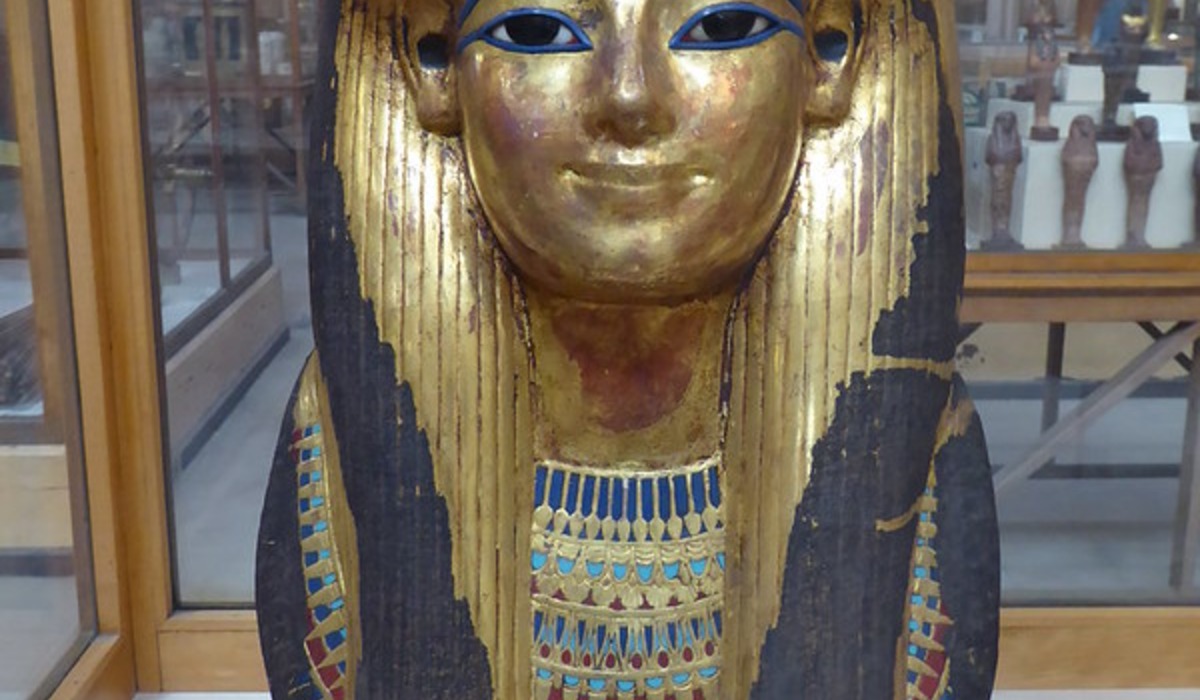
A team funded by Theodore Davis opened tomb KV46 in February 1905 in the Valley of the Kings and found the nearly intact burial of Yuya and Thuya, the parents of Queen Tiye and the great-grandparents of Tutankhamun. Thieves had entered in antiquity and taken small valuables, but the gilded cartonnage masks were left on the mummies.
Thuya’s mask is gilded over linen and plaster with inlaid glass eyes and a heavy wig, and her face was so well preserved that early visitors remarked on it. Yuya’s coffins were nested three deep inside a sledge-mounted shrine.
Until the discovery of Tutankhamun in 1922, this was the richest burial ever found in the valley.
Chariot of Yuya
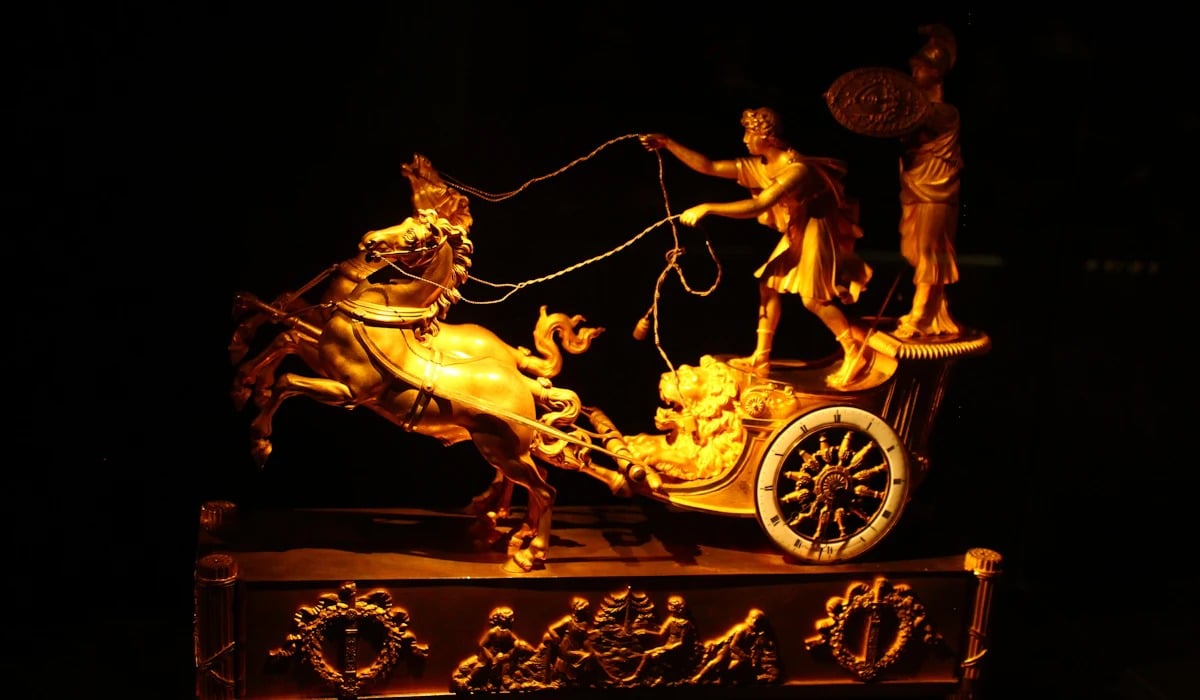
Yuya held the title of Master of the Horse under Amenhotep III, and the tomb contained a light chariot that is among the best-preserved examples from the ancient world. It is made of bent wood with a leather-covered floor and a body decorated with gilded gesso in spiral and rosette patterns.
The wheels have six spokes, the New Kingdom standard, and the axle sits at the rear of the floor for stability at speed. Unlike the royal chariots of Tutankhamun, this one appears to have been a working vehicle that was buried because its owner valued it.
It is now in the Egyptian Museum in Cairo.
Furniture of Queen Hetepheres
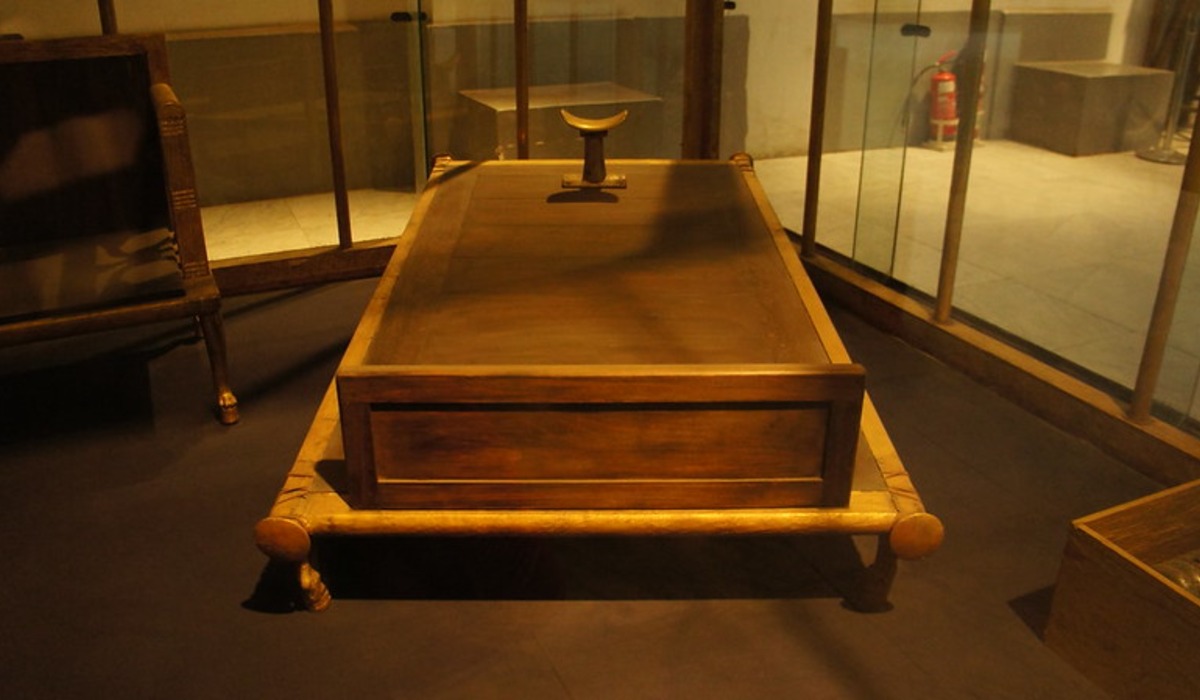
A photographer working for George Reisner’s Harvard and Boston expedition at Giza in 1925 noticed plaster where a tripod leg had slipped, which led to a sealed shaft near the Great Pyramid. At the bottom, about 27 meters down, lay the burial equipment of Hetepheres, mother of Khufu.
The wood had rotted to powder, but the gold sheeting kept its shape, and Reisner’s team spent years recording every fragment in place and rebuilding the pieces. The set includes a gilded carrying chair, an armchair, a bed with a headrest and a canopy frame of gold-cased poles that could be taken apart.
The sarcophagus, when opened, was empty.
Khufu Solar Boat
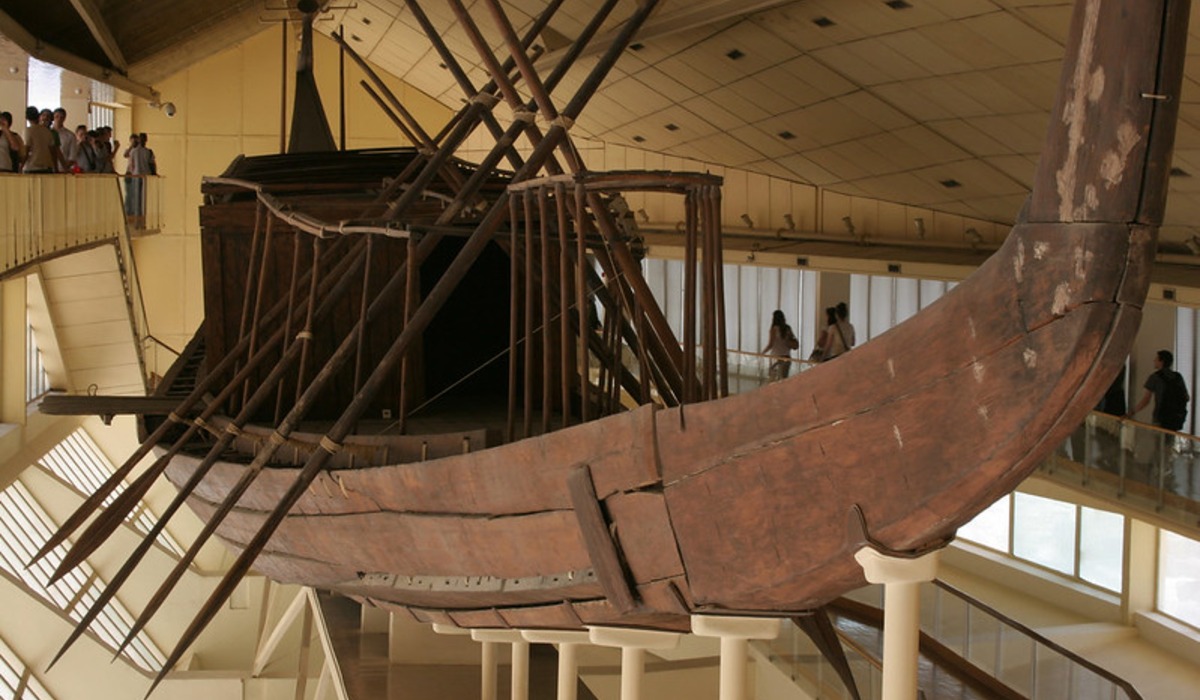
Egyptian archaeologist Kamal el-Mallakh uncovered, in May 1954, a pit sealed with limestone blocks on the south side of the Great Pyramid. Inside were 1,224 pieces of Lebanese cedar, stacked in order, making up a dismantled ship about 43 meters long.
The restorer Hag Ahmed Youssef spent more than a decade working out how the planks were sewn together with rope through slots rather than nailed. The vessel may have carried the king’s body to Giza or may have been meant for his use in the sky with the sun god.
In 2021, it was moved in a single piece to the Grand Egyptian Museum. Work to extract the pieces of the second boat began in 2014.
Silver Coffin of Psusennes I
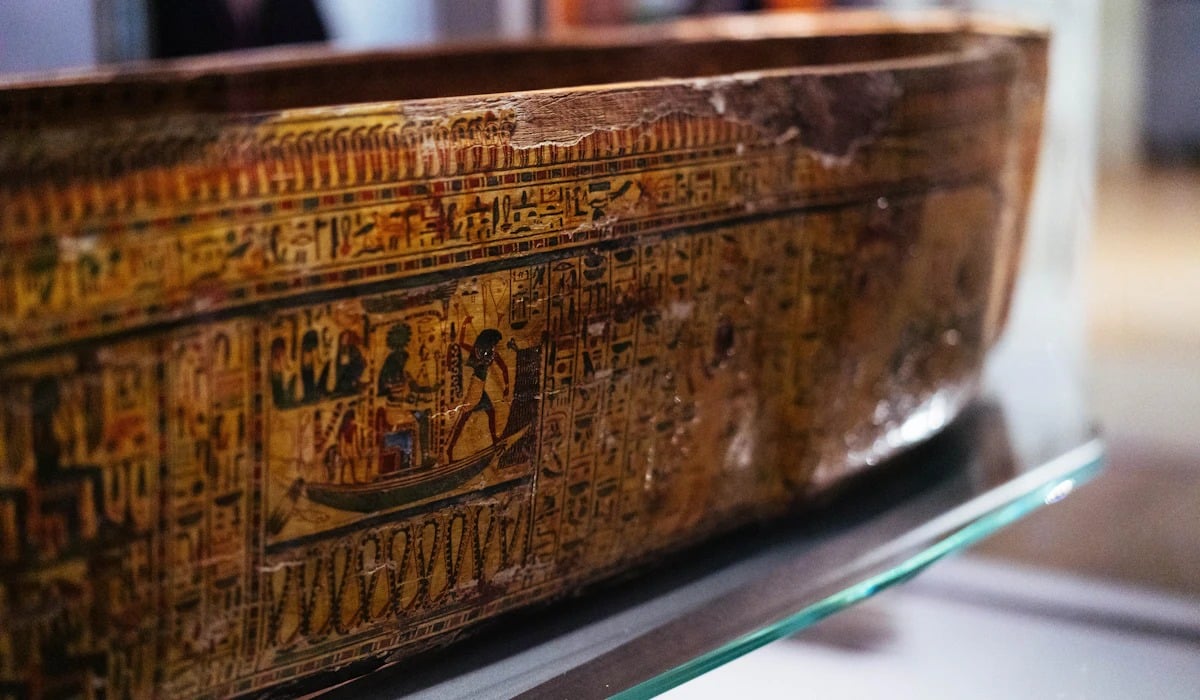
Pierre Montet found the tombs of the Twenty-first and Twenty-second Dynasty kings at Tanis in the Nile Delta in 1939 and 1940, and the Second World War swallowed the news. The burial of Psusennes I was intact.
His mummy lay inside a coffin of solid silver with a gold face, placed inside a black granite coffin that had been taken from a Nineteenth Dynasty burial and recut. Silver was rarer than gold in Egypt because it had to be imported, so a silver coffin signaled wealth of a different kind.
The gold mummy mask found on the king is thinner and less heavily inlaid than Tutankhamun’s, but its face is more individual.
Gold Mask and Silver Vessels of Wendjebauendjed
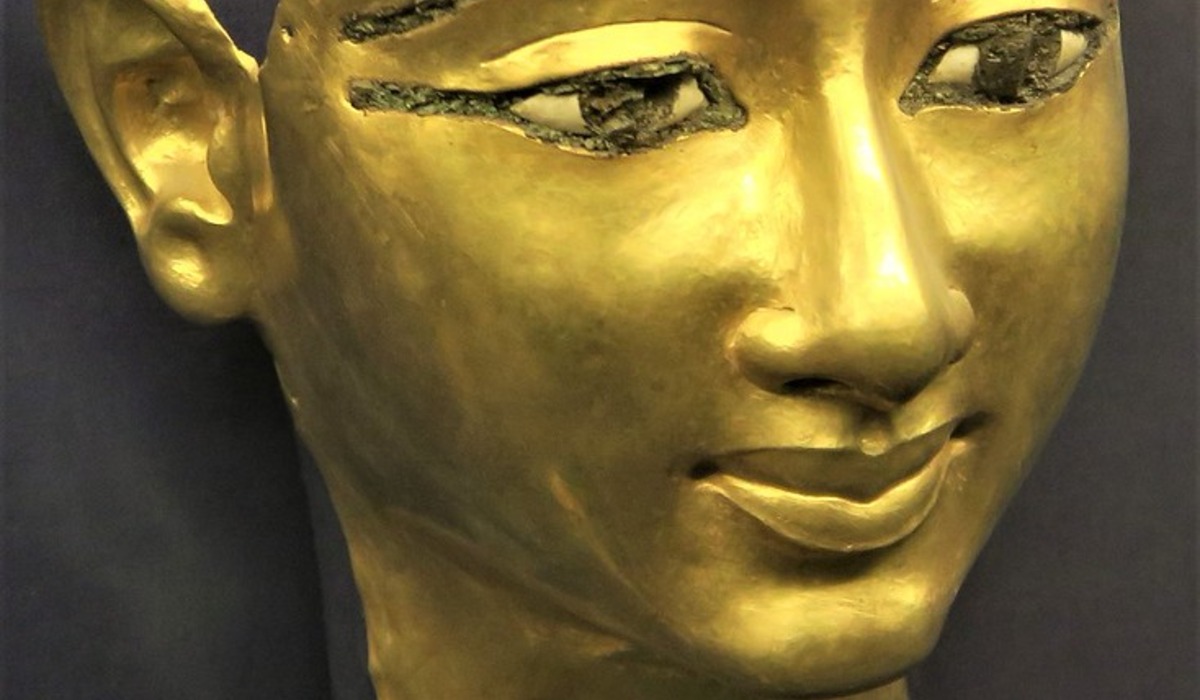
A general and high priest named Wendjebauendjed was buried in a side chamber of the tomb of Psusennes I, an unusual honor for a man who was not royal. Montet’s team found his mummy covered with a gold mask and a set of gold finger and toe covers, and the burial included silver and gold bowls, a gold cup decorated with a pattern of flower petals, and several shabti figures.
Several of the vessels carry the name of Psusennes, suggesting that they may have been gifts from the king to his officer. The objects are displayed in the Tanis rooms of the Egyptian Museum in Cairo.
Golden Flies of Ahhotep
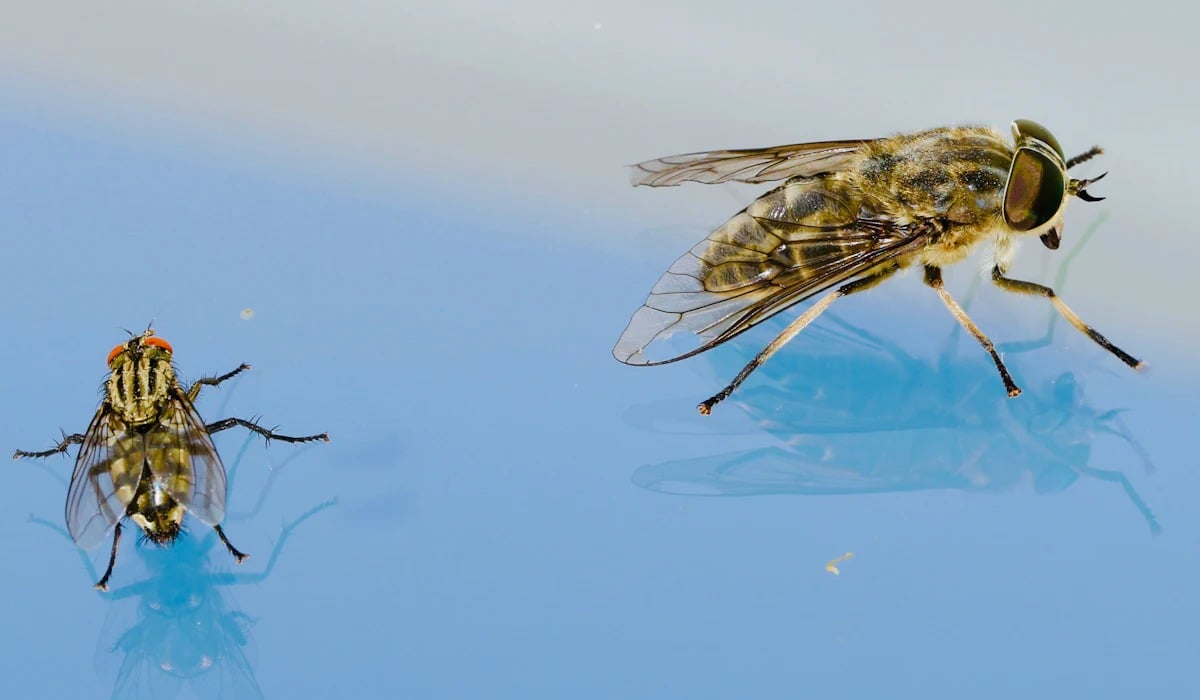
In 1859, workmen employed by Auguste Mariette at Dra Abu el-Naga on the west bank at Thebes found the coffin of Queen Ahhotep, the mother of Ahmose, with a cache of jewelry and weapons inside. Among them was a chain carrying three large gold flies, each about nine centimeters long, with stylized wings and bulging eyes.
Golden flies have often been interpreted as military decorations associated with persistence or valor, although scholars debate whether they served that role in ancient Egypt. Finding them in a queen’s burial, alongside weapons, has contributed to speculation about her role in the struggle that drove the Hyksos out of Egypt.
The flies are now in the Luxor Museum. The cache also held a ceremonial axe and a gold dagger.
Crown of Princess Sithathoriunet
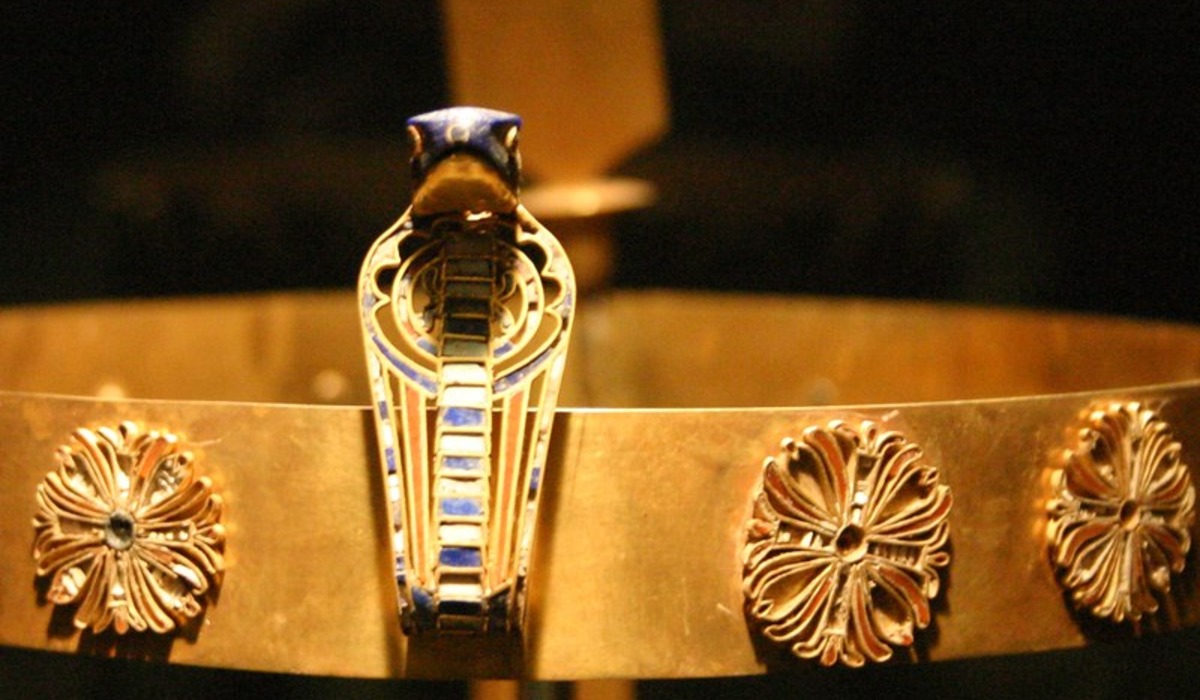
At Lahun in 1914, Guy Brunton, working for Flinders Petrie, cleared a mud-filled recess in a robbed Twelfth Dynasty tomb and found the jewelry box of a princess the robbers had missed. Sithathoriunet was a daughter of Senusret II, and her jewelry included a gold crown or circlet decorated with precious materials.
The box also held a mirror, razors, cosmetic jars and bracelets. Under the partage system of the day, the finds were divided, so some of her jewelry is in Cairo while other pieces are held by the Metropolitan Museum of Art in New York.
Dahshur Princess Jewelry
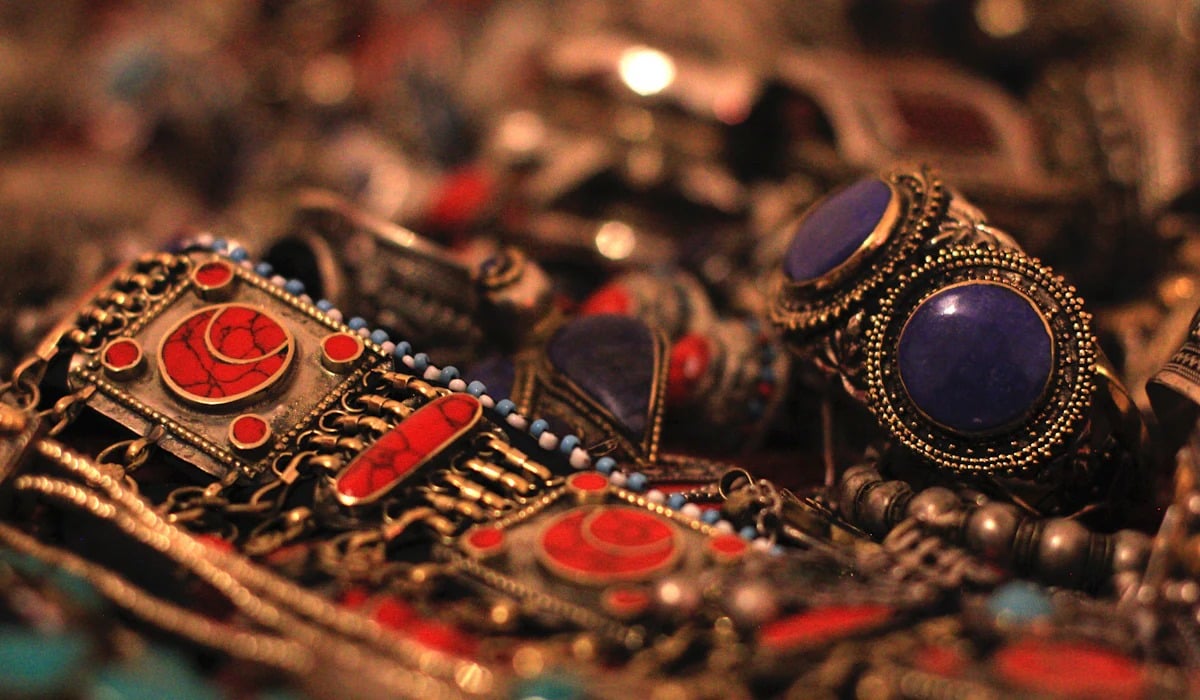
Jacques de Morgan dug at Dahshur in 1894 and 1895 and opened the galleries beneath the pyramids of Senusret III and Amenemhat II, where several princesses had been buried. Tomb robbers had emptied the main chambers, but small hidden pits held jewelry belonging to women named Sithathor, Mereret, Khnumet and Ita.
The pieces include pectorals in gold and inlaid stone with the names of kings in cartouches, and a pair of circlets for Khnumet, one of them woven from fine gold wire with tiny flowers. The openwork technique and the inlay of lapis, carnelian and turquoise are considered among the finest goldsmithing of the Middle Kingdom.
Many of these objects are held in Cairo collections.
Models From the Tomb of Meketre
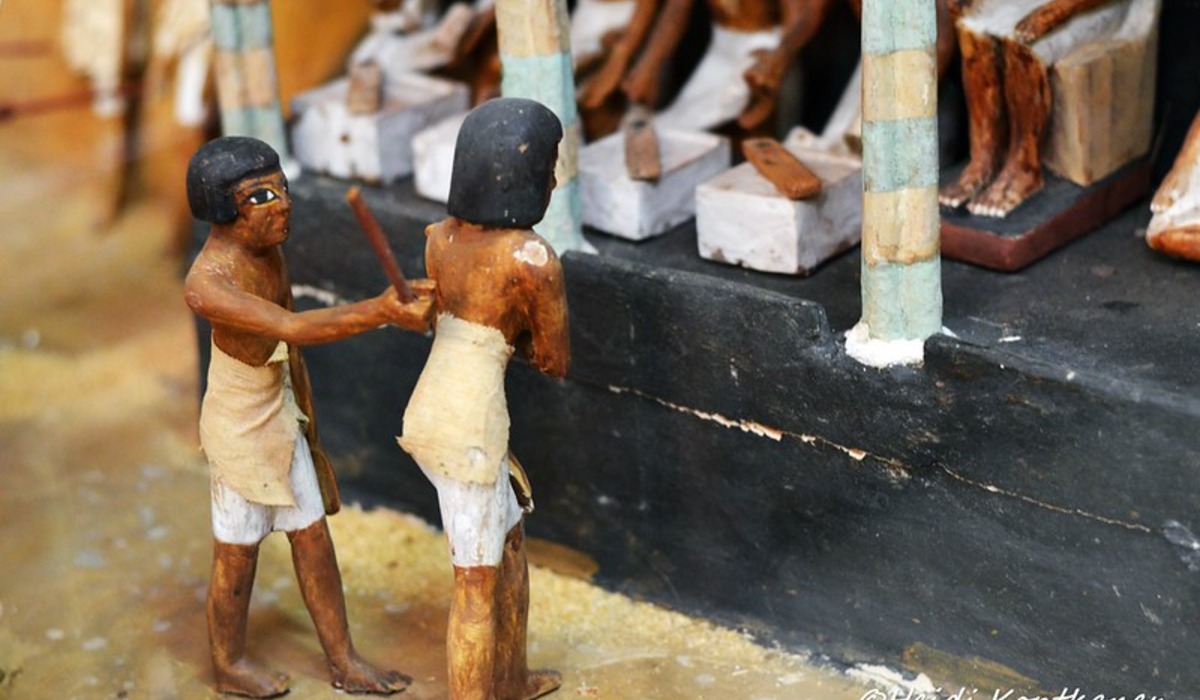
Herbert Winlock of the Metropolitan Museum was clearing the robbed tomb of Meketre at Deir el-Bahari in March 1920 when a workman noticed stones falling into a gap. Behind it was a small chamber that no one had entered since about 1980 BCE, packed with painted wooden models of daily life on the estate of a high official.
There is a cattle count with scribes recording the herd, a brewery and bakery, a granary, a weaving shop, a slaughterhouse, and a garden with a pool shaded by sycamore figs. Model boats carry the owner on the river.
Roughly half the models went to Cairo and half to New York under the division rules of the time.
Tomb of Kha and Merit
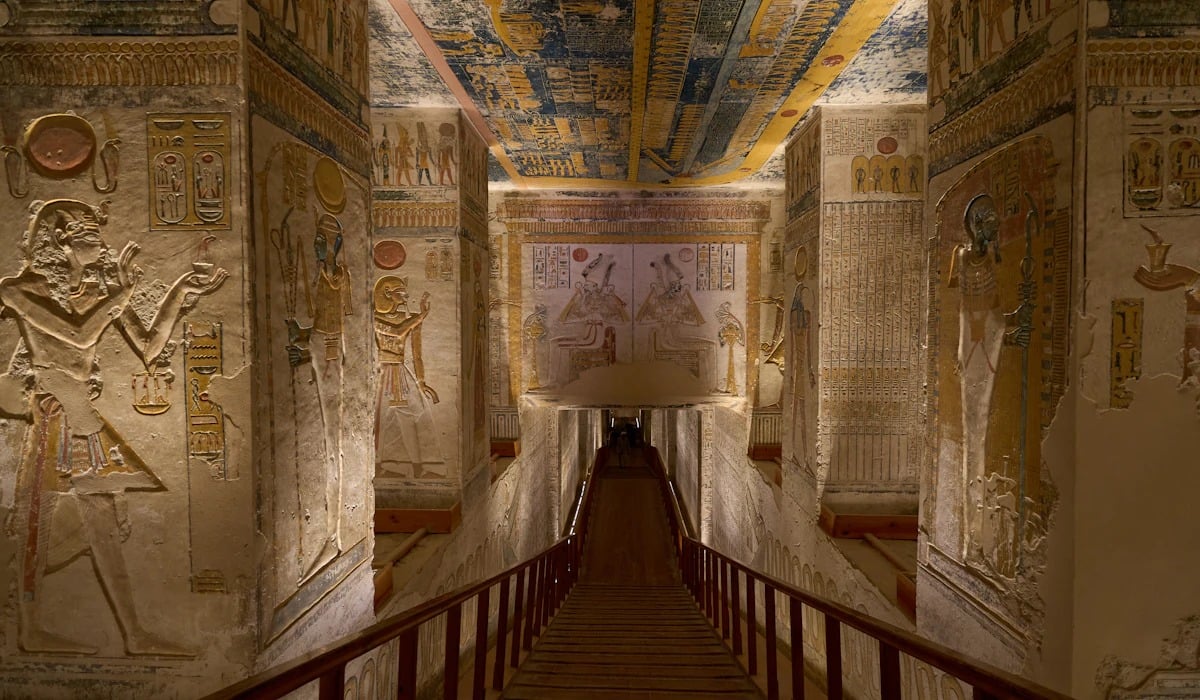
The Italian Egyptologist Ernesto Schiaparelli found the tomb of the architect Kha and his wife Merit at Deir el-Medina in 1906, and it had never been robbed. Kha served under three Eighteenth Dynasty kings, and the tomb held his gilded cubit rod, a royal gift, along with a folding stool, beds, linen, furniture, a board game and sealed jars of food.
Merit’s coffin was too short for her, which has led to speculation that she died unexpectedly and was placed in a coffin meant for her husband. The entire contents went to the Museo Egizio in Turin, where they are displayed as a single assemblage.
Scans show both mummies still wear jewelry under the wrappings.
Wooden Panels of Hesire
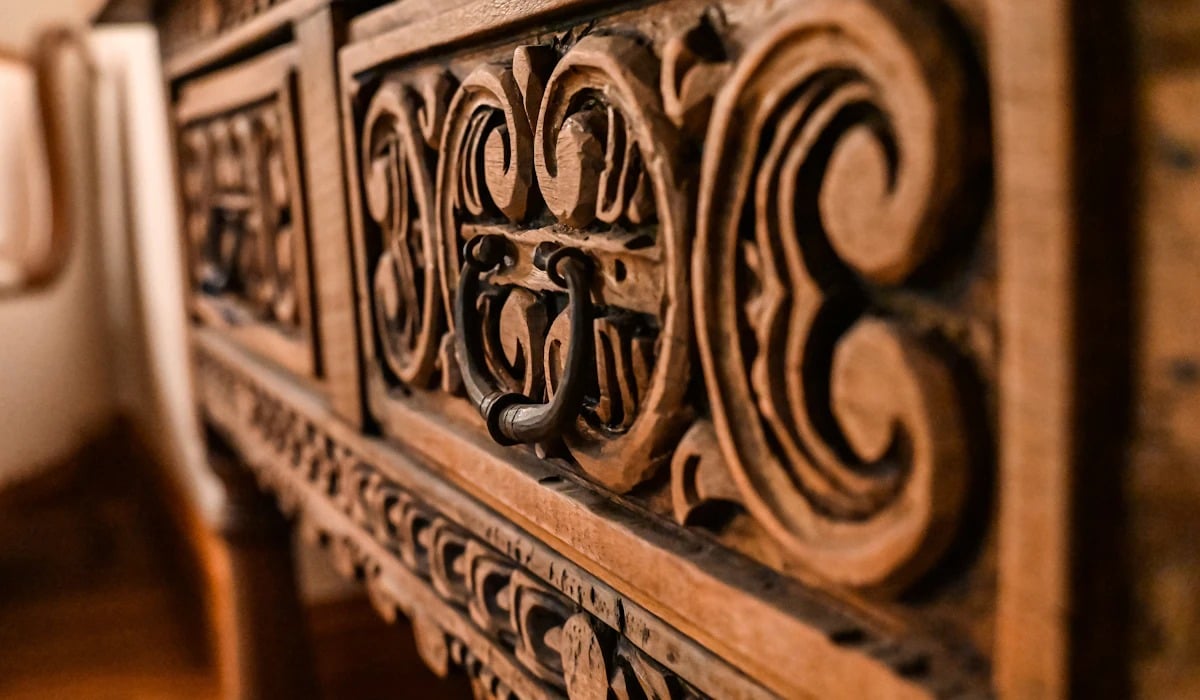
Hesire’s mastaba at Saqqara, built in the Third Dynasty during the reign of Djoser, had its long corridor lined with 11 niches, each originally holding a carved panel of acacia wood. Auguste Mariette’s men found them in the 1860s, and six survive in reasonable condition in the Egyptian Museum in Cairo.
The finest shows Hesire standing with a staff and a scribe’s kit over his shoulder, carved in low relief with a precision that later Egyptian art rarely matched. His titles include overseer of royal scribes and chief of dentists, the earliest recorded dental title known.
The panels are about 115 centimeters tall and were probably painted.
Rahotep and Nofret Statues
Mariette’s excavators opened a mastaba at Meidum in 1871 and found a pair of painted limestone statues of Prince Rahotep and his wife Nofret, seated side by side and nearly life-size. Rahotep is painted reddish brown with a thin mustache, and Nofret is pale, wearing a heavy wig, a floral headband and a white cloak over her shoulders.
The eyes are inlaid with rock crystal set in copper rims, and the story that the workmen fled in terror when their lamps caught the gaze has been repeated ever since. The statues date to the Fourth Dynasty, around 2600 BCE, and their original paint remains remarkably well preserved.
They are in the Egyptian Museum in Cairo.
Ka Statue of King Hor
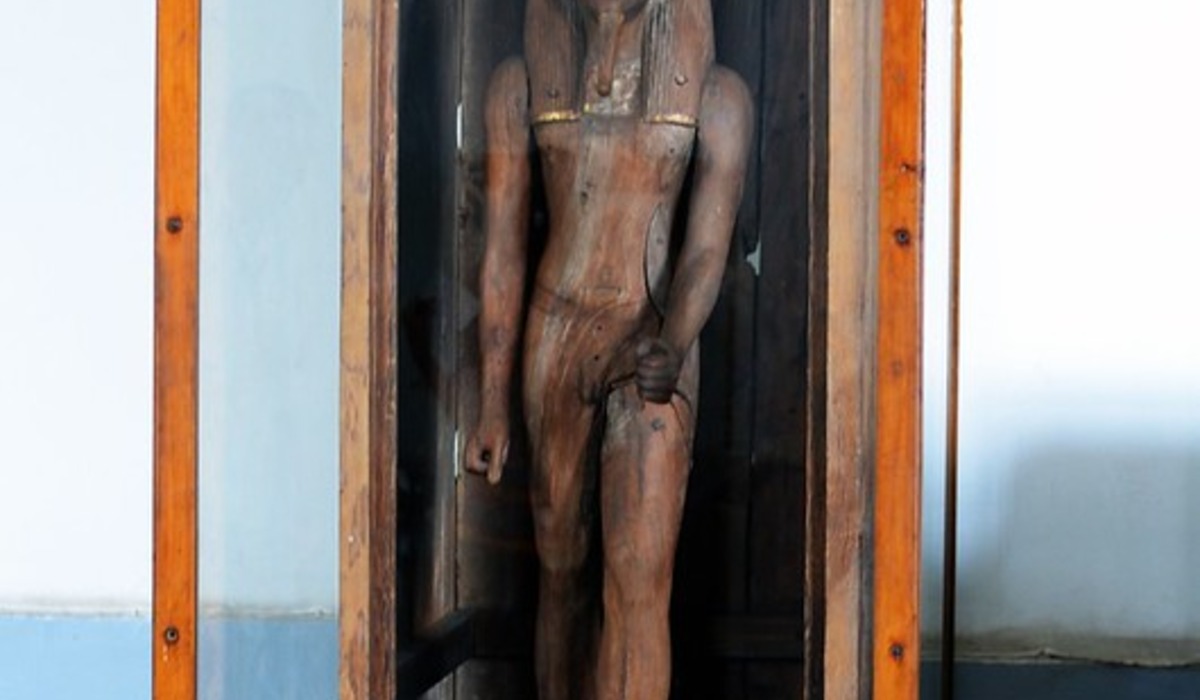
De Morgan found this life-size wooden statue at Dahshur in 1894, standing inside its original wooden shrine beside the pyramid of Amenemhat III. It represents the ka, or life force, of a short-reigning Thirteenth Dynasty king named Hor, and a pair of upraised arms on the head is the hieroglyph for ka itself.
The figure was carved from wood, once wrapped in a kilt that has rotted away, with inlaid eyes of rock crystal and copper that give it an alert, slightly surprised face. It is among the few surviving wooden royal statues of the Middle Kingdom.
The figure and its naos stand together in the Egyptian Museum in Cairo.
Papyrus of Ani
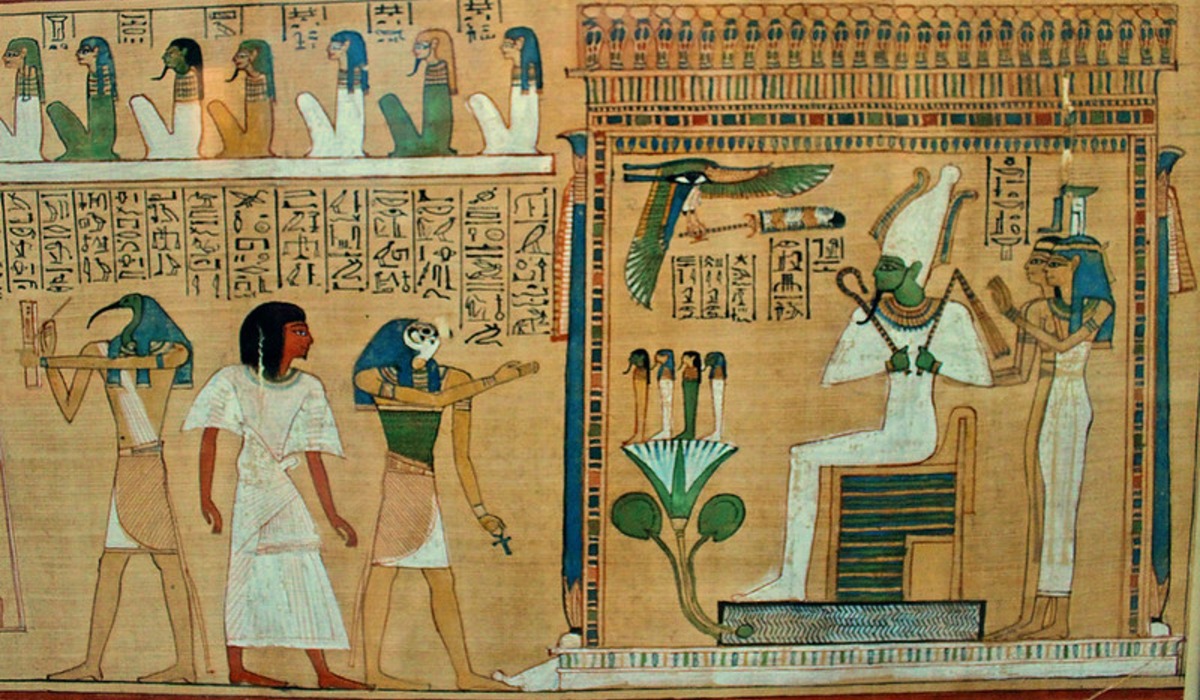
E. A.
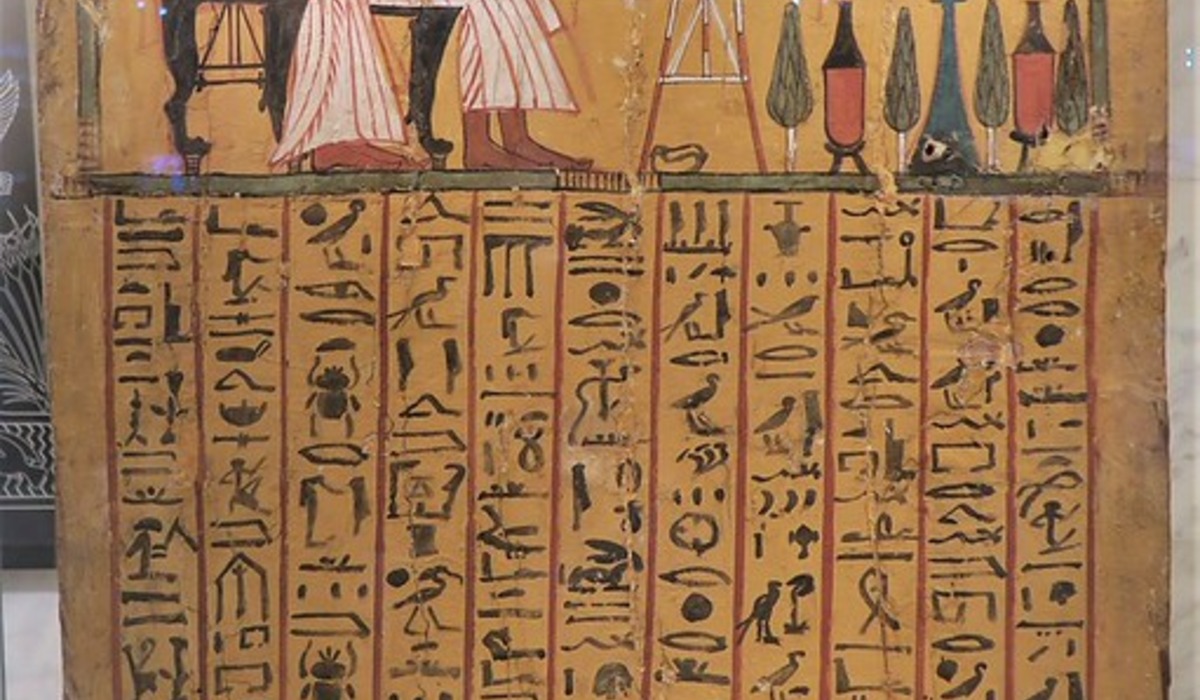
Wallis Budge of the British Museum acquired the Papyrus of Ani at Luxor in 1888 and shipped it to London, where it was cut into sections for mounting. It is about 24 meters long and was made for a scribe named Ani around 1250 BCE, and it is the best-known illustrated copy of the Book of the Dead.
The vignettes show Ani and his wife Tutu adoring the gods, the weighing of Ani’s heart against the feather of Maat, and the fields of reeds where the dead were expected to farm. Budge’s 1895 translation helped introduce the papyrus to a wide Victorian readership.
The papyrus had been found in a Theban tomb before it reached the market.
Papyrus of Hunefer
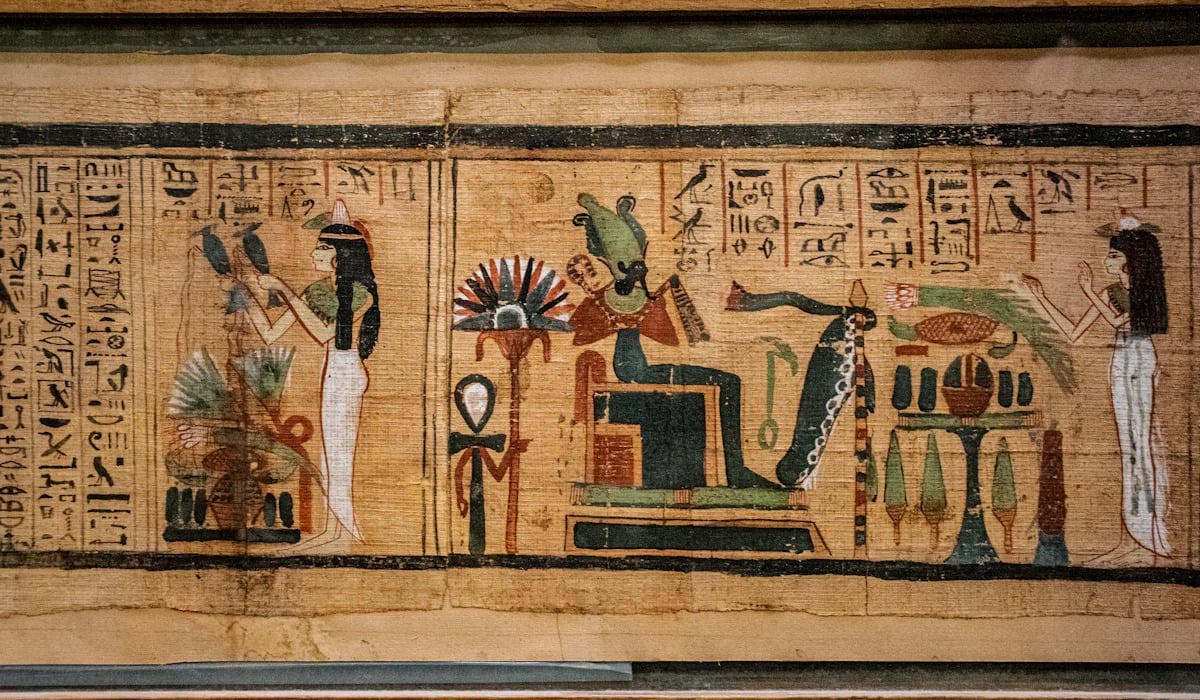
Hunefer was a royal scribe in the reign of Seti I, around 1275 BCE, and his Book of the Dead is in the British Museum. Its judgment scene is one of the most widely reproduced in textbooks.
The jackal-headed Anubis leads Hunefer by the hand, then weighs his heart against a feather while the ibis-headed Thoth records the result and the composite monster Ammit waits to devour a heart that fails. Hunefer passes and is presented by Horus to Osiris, who sits in a shrine with Isis and Nephthys behind him.
The painting is unusually crisp because the papyrus was produced by a skilled workshop for a man with court connections.
Nebamun Wall Paintings
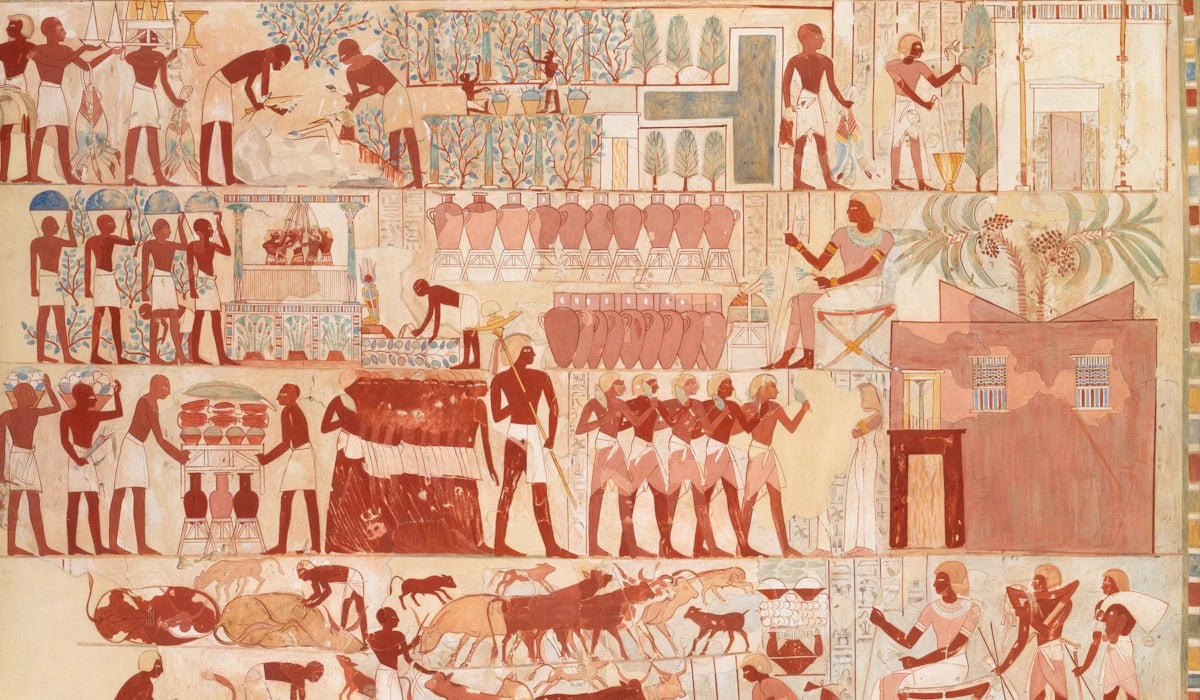
In the early 1820s, Giovanni d’Athanasi, working for the British consul Henry Salt, cut fragments of painted plaster from a tomb chapel on the west bank at Thebes and sold them to the British Museum. Nebamun was a grain accountant in the temple of Amun around 1350 BCE.
The best-known fragment shows him hunting birds in the marshes with a throwstick, with his wife and daughter in the boat and a cat seizing three birds at once, its eye gilded. Another shows musicians and dancers at a banquet, two of them facing the viewer directly, which is rare in Egyptian art.
The exact location of Nebamun’s tomb has not been securely identified, leaving the surviving fragments as the principal remains of its decoration.
Door From the Tomb of Sennedjem
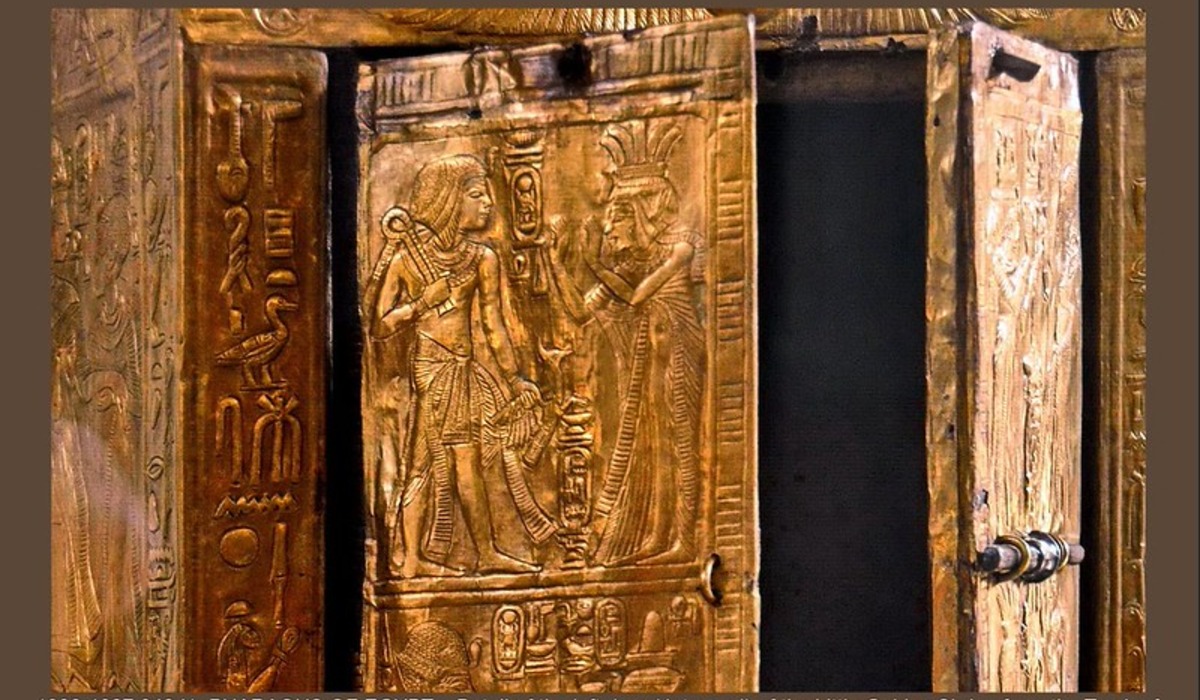
The tomb of Sennedjem, a workman of Deir el-Medina under Seti I and Ramesses II, was found intact in 1886 by a local man named Salam Abu Duhi and cleared by Gaston Maspero’s service. It held 20 mummies, furniture, tools and the famous painted burial chamber.
The wooden door that sealed the chamber survived with its paint fresh, showing Sennedjem and his wife Iyneferti playing senet on one side and adoring Osiris on the other. The door is now in the Egyptian Museum in Cairo.
The tomb was numbered TT1, the first in the Theban register, and its ceiling scenes of the couple harvesting in the fields of the afterlife are still visited.
Gebelein Predynastic Man
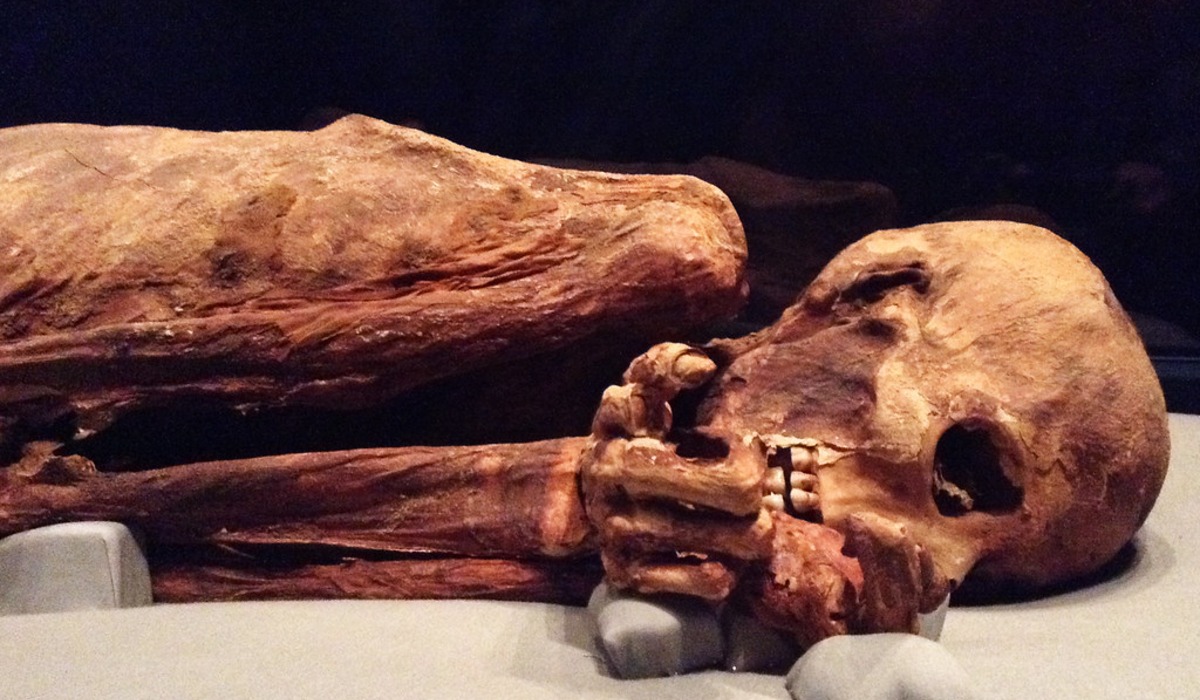
Nobody embalmed the British Museum’s best-known mummy. He was buried in a shallow grave at Gebelein around 3500 BCE, and the hot sand dried his body naturally.
Wallis Budge acquired him in 1900, and generations of visitors have called him Ginger because of the surviving red hair. In 2012, the museum put him through a CT scanner at a London hospital and found a stab wound in the back below the shoulder blade, probably from a copper blade, that would have killed him quickly.
He was a young adult, probably in his twenties. The scan was done without disturbing the body, which lies in a reconstruction of the sand grave.
Gold Keeps Its Shape When Wood Turns to Dust
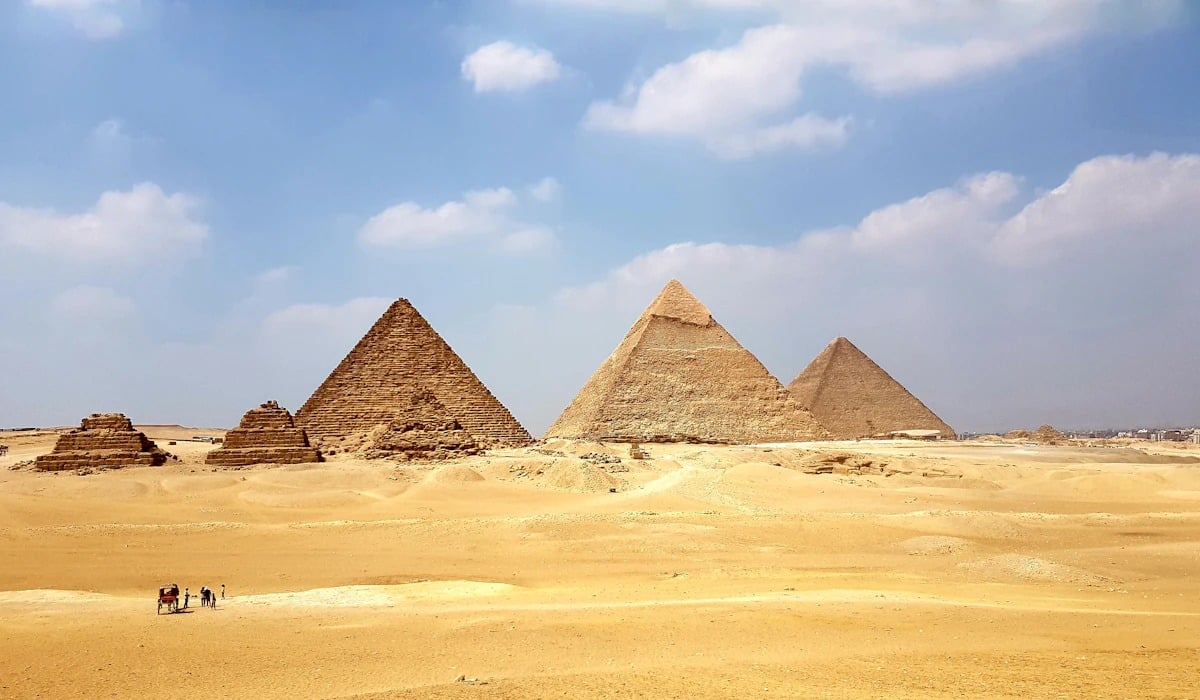
Nearly every object on this list survived by accident. A tripod leg slipped at Giza, a workman heard stones fall at Deir el-Bahari, a war distracted the press from Tanis, and the entrance to one tomb in the Valley of the Kings was buried under the spoil from another.
Robbers in antiquity were thorough, and the intact burials are the ones they missed or gave up on.
What the objects share is not their value but their purpose. Each was placed underground so that someone could keep eating, playing, riding, reading and being looked at after death.
The gold held its form while the wood beneath it went to powder, and the museum cases now hold the shapes of wishes rather than the wishes themselves.
More from Go2Tutors!

- The Romanov Crown Jewels and Their Tragic Fate
- 13 Historical Mysteries That Science Still Can’t Solve
- Famous Hoaxes That Fooled the World for Years
- 15 Child Stars with Tragic Adult Lives
- 16 Famous Jewelry Pieces in History
Like Go2Tutors’s content? Follow us on MSN.