15 Bizarre Experiments People Tried Just to See What Would Happen
Discovery is fueled by human curiosity, yet occasionally that inquiry takes strange twists. Experiments ranging from the humorously strange to the downright perplexing have been carried out throughout history by both researchers and regular people, frequently with no intention other than to answer the question “what if?”
Here is a list of 15 strange experiments where someone’s curiosity led them down particularly unusual paths, yielding surprising results and occasionally changing our understanding of the world.
The Minnesota Starvation Experiment

During World War II, researcher Ancel Keys recruited 36 conscientious objectors for what sounds like torture – deliberate semi-starvation for six months just to document what happens to the human body and mind during famine. Participants lost approximately 25% of their body weight and experienced psychological changes including depression and bizarre food rituals.
This seemingly cruel experiment actually provided invaluable information that helped humanitarian workers rehabilitate concentration camp survivors and famine victims, creating protocols still used in treating eating disorders today.
The Pitch Drop Experiment

In 1927, Professor Thomas Parnell at the University of Queensland set up what would become the world’s longest-running laboratory experiment – placing tar pitch in a funnel to see how long it would take to drop. The pitch appears solid but actually flows extremely slowly, with a drop falling roughly once per decade.
Remarkably, despite the experiment running for over 90 years – nobody has ever actually witnessed a drop fall, despite multiple attempts at continuous monitoring with cameras. The ninth drop fell in April 2014 while the webcam was offline due to a power outage.
Stanford Prison Experiment

Psychology professor Philip Zimbardo randomly assigned college students as ‘prisoners’ or ‘guards’ in a simulated prison environment – simply to see how they’d behave. The experiment spiraled out of control within days as ‘guards’ became increasingly sadistic while ‘prisoners’ showed signs of extreme stress and breakdown.
Originally planned for two weeks, Zimbardo terminated the experiment after just six days when he realized how quickly ordinary students transformed into their roles. The controversial study raised profound questions about human nature and situational influences on behavior.
Project Acoustic Kitty

During the Cold War, the CIA spent millions attempting to turn cats into living spy devices by surgically implanting batteries, microphones and antennas into the unfortunate felines. The idea was to use the modified cats to eavesdrop on Soviet conversations by releasing them near foreign embassies.
The project collapsed during the first field test when the pioneering spy cat was immediately hit by a taxi after being released. The bizarre program was abandoned after five years of development and countless taxpayer dollars.
The Two-Headed Dog Experiment

Soviet scientist Vladimir Demikhov shocked the world in the 1950s by creating two-headed dogs through surgical transplantation. He grafted the head, shoulders, and front legs of a puppy onto a fully grown dog, creating a bizarre two-headed canine that lived for several days.
Demikhov performed this disturbing procedure nearly 20 times, with one creation surviving for 29 days. While ethically troubling, these experiments pioneered organ transplant techniques that later saved countless human lives.
Elephant on LSD
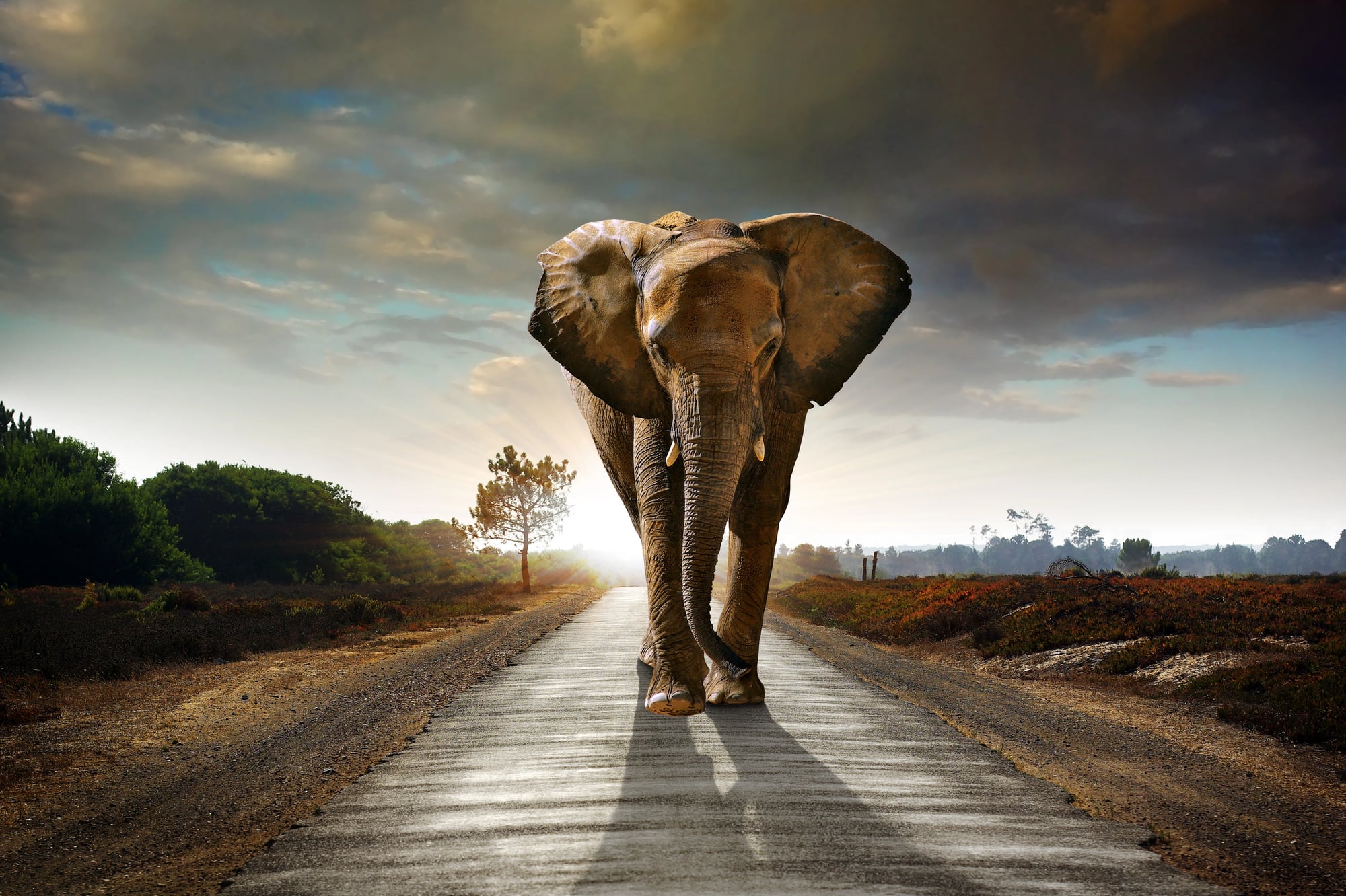
In 1962, researchers at the Lincoln Park Zoo in Oklahoma injected an elephant named Tusko with LSD to see if it would trigger temporary madness similar to what male elephants experience during mating season. The researchers drastically miscalculated the appropriate dosage, giving Tusko 3,000 times what a human might take.
The elephant collapsed within minutes and died shortly after, demonstrating the dangers of scaling up drug doses based solely on body weight differences and leaving behind one of the strangest footnotes in pharmaceutical research.
The Lazarus Project

In the 1930s, Soviet scientist Sergei Brukhonenko developed an apparatus that could keep a severed dog’s head alive by pumping oxygenated blood through it. During public demonstrations, the disembodied heads would respond to stimuli – blinking when exposed to light and licking their lips when citric acid was applied.
Though ethically disturbing, Brukhonenko’s work laid crucial groundwork for the cardiopulmonary bypass machines now routinely used in heart surgery, demonstrating how even macabre curiosity sometimes yields lifesaving innovations.
The Kentucky Meat Shower

On March 3, 1876, chunks of meat rained from a clear sky in Bath County, Kentucky – prompting confused locals to gather samples for scientific analysis. Some brave souls even tasted the mysterious sky meat, describing it as resembling venison or mutton.
Later analysis suggested the substance was likely lung tissue, with the leading theory being that a flock of vultures had vomited in mid-flight after consuming diseased meat. This bizarre incident remains one of meteorology’s strangest footnotes, demonstrating how natural phenomena can sometimes mimic biblical plagues.
The Baby Cage

In the 1930s, some apartment-dwelling parents in cities like New York experimented with ‘baby cages’ – wire contraptions mounted on window ledges where infants could get ‘fresh air’ while living in crowded urban buildings. Eleanor Roosevelt even purchased one for her daughter.
These precarious perches suspended children several stories above city sidewalks, trusting their safety to rudimentary construction methods. The bizarre practice gradually disappeared as attitudes toward child safety evolved, though not before countless babies had their outdoor time while dangling from skyscrapers.
The Vomit Comet

NASA researchers wanted to understand how humans function in zero gravity without the expense of actual space flight, leading to the creation of the ‘Vomit Comet’ – an aircraft that flies in parabolic arcs creating brief periods of weightlessness. The plane climbs sharply and then enters a controlled freefall, generating about 25 seconds of weightlessness per dive.
During hundreds of consecutive parabolas, scientists observed everything from how cats orient themselves in zero-G to how astronauts might perform basic functions. The aptly nicknamed plane earned its moniker from the motion sickness experienced by many participants.
The Great Stink Bug Taste Test

Entomologist Samuel Ramsey conducted a peculiar self-experiment to assess which stink bug species tasted worst by deliberately placing them in his mouth and biting down. He methodically ranked different species on a personalized scale of disgustingness, noting that the brown marmorated stink bug tasted like ‘cilantro mixed with burning tires and sulfur.’
This bizarre taste test, while not strictly necessary for scientific progress, provided firsthand sensory data few researchers would volunteer to collect, earning Ramsey the dubious distinction of being the world’s foremost authority on stink bug flavor profiles.
The Monster Study

In 1939, University of Iowa researcher Wendell Johnson conducted an experiment on orphan children to test if stuttering could be induced through psychological means. Researchers told one group of children who spoke normally that they showed signs of stuttering and criticized their speech patterns repeatedly.
Many of these children developed lasting speech problems and psychological issues, despite having no previous stuttering behavior. The deeply unethical study remained hidden for decades until a newspaper investigation in 2001 exposed what became known as ‘The Monster Study,’ leading to legal settlements with surviving participants.
The Wow! Signal Experiment

In 1977, astronomer Jerry Ehman detected a strong narrowband radio signal while working with Ohio State University’s Big Ear radio telescope during a SETI project. The 72-second burst was so remarkable that Ehman circled the data on the printout and wrote “Wow!” next to it – giving the potential alien transmission its enduring name.
Despite repeated attempts over decades to relocate the signal or find its source, the Wow! Signal has never reappeared, remaining one of astronomy’s most tantalizing mysteries and demonstrating how experiments in deep listening sometimes yield one-time wonders that evade explanation.
The Royal Raymond Rife Frequency Machine

A ‘beam ray device’ was built in the 1930s by inventor Royal Raymond Rife, who claimed that it could use particular frequencies to eradicate viruses. Rife maintained that he could use his “universal microscope” to view viruses and then break them with particular notes, much way opera singers break glass.
Despite the lack of reliable proof or peer review, he asserted that he could use these frequencies to cure patients with terminal cancer. Despite being refuted by mainstream science, Rife’s experiments gave rise to a persistent alternative medicine subculture, with followers continuing to construct and market “Rife machines” to this day. This shows that even discredited experiments may garner committed fan bases.
The World’s Longest Echo

In 2014, acoustic scientists Miriam Kolar and Jonathan Abel wanted to find the environment with the longest echo on Earth, leading them to an abandoned oil storage tank in Scotland with peculiar acoustics. Inside the Inchindown tunnels, they recorded a gunshot that produced an echo lasting an astonishing 112 seconds – smashing the previous 15-second record.
This curiosity-driven experiment revealed an acoustic anomaly allowing sound waves to bounce continuously with minimal degradation, creating what might be the closest thing to acoustic immortality and demonstrating how even simple questions like ‘what would happen if we fired a gun here?’ occasionally yield world records.
When Curiosity Leads Elsewhere

These unusual experiments remind us that human curiosity follows unpredictable paths. While some bizarre inquiries led to medical breakthroughs or scientific insights, others served primarily as cautionary tales about ethical boundaries or simple reminders of our strange collective history.
Perhaps these odd experimental journeys teach us something valuable about the scientific process itself – that asking ‘what would happen if…?’ sometimes leads exactly where expected, but other times opens doors to entirely unforeseen discoveries, proving that even the strangest questions occasionally deserve serious investigation.
More from Go2Tutors!

- The Romanov Crown Jewels and Their Tragic Fate
- 13 Historical Mysteries That Science Still Can’t Solve
- Famous Hoaxes That Fooled the World for Years
- 15 Child Stars with Tragic Adult Lives
- 16 Famous Jewelry Pieces in History
Like Go2Tutors’s content? Follow us on MSN.