29 Ancient Rulers Who Built Massive Monuments
A ruler who wanted to be remembered had one reliable option: pile up more stone than anyone before. Armies lose, treasuries empty, and dynasties collapse, but a limestone pyramid or a granite colossus keeps making its argument for thousands of years.
The builders on this list came from Egypt, Mesopotamia, Persia, India, China, Rome, the Maya lowlands and the Khmer heartland. Some of them left inscriptions bragging about the labor involved.
Others left only the structure, which turned out to be enough.
Djoser and the Step Pyramid at Saqqara
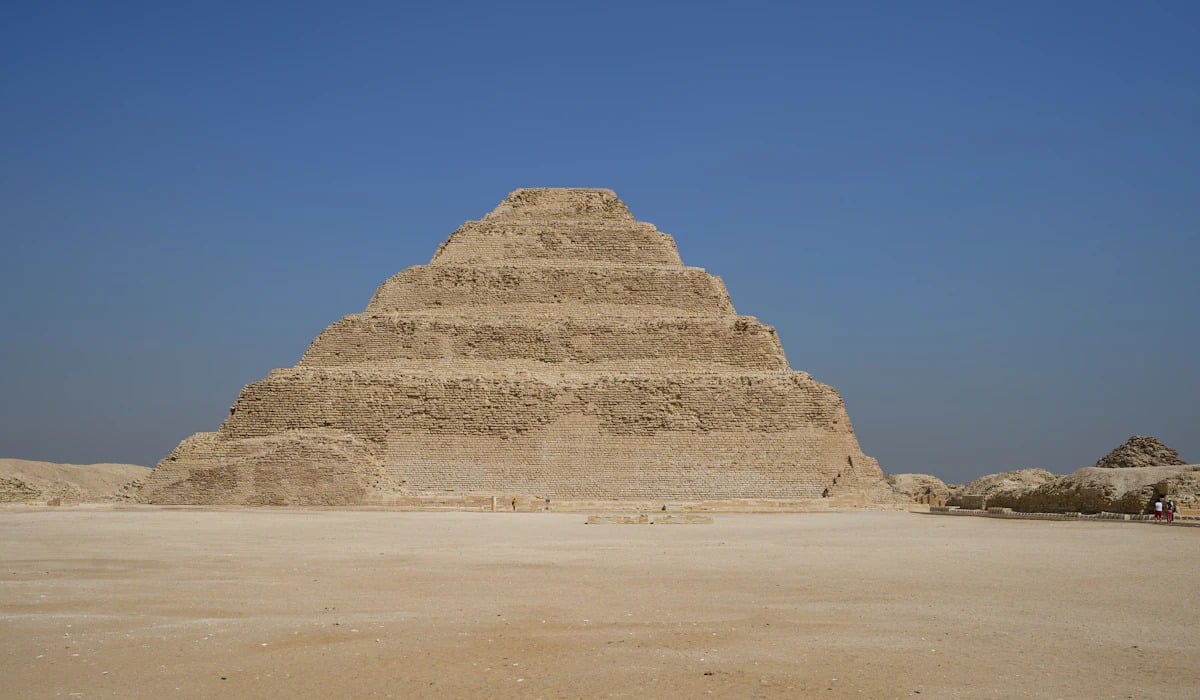
Around 2650 BCE, the Third Dynasty king Djoser commissioned a tomb unlike any royal burial before it. His architect Imhotep stacked six mastaba-shaped tiers of limestone into a stepped structure roughly 60 meters high, set inside a walled enclosure that covered about 15 hectares.
Earlier royal tombs had often used mud brick, making the shift to dressed stone on this scale a genuine break with tradition. Beneath the pyramid runs a maze of shafts and galleries lined with blue faience tiles.
Imhotep was later deified for his trouble, which says something about how the project was remembered.
Sneferu and the Pyramids of Dahshur and Meidum
Sneferu, the founder of the Fourth Dynasty, is associated with three major pyramids, and the combined volume of stone exceeds that of his son’s Great Pyramid. The pyramid at Meidum was begun as a stepped structure and later encased to form smooth sides.
The Bent Pyramid at Dahshur changes angle partway up, from about 54 degrees to 43, after the steep lower section showed signs of instability. The Red Pyramid, also at Dahshur, finally got the geometry right and became the earliest true smooth-sided pyramid completed.
Sneferu’s reign was effectively a long engineering experiment carried out at full scale.
Khufu and the Great Pyramid of Giza
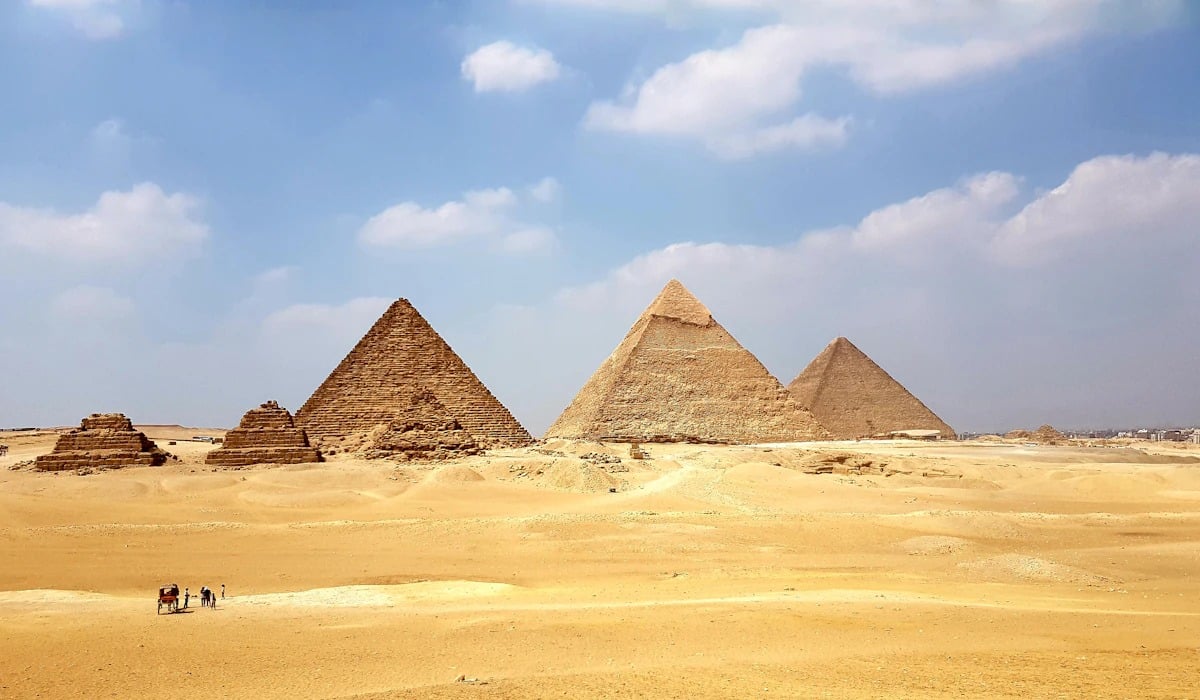
Khufu’s pyramid rose to about 146 meters when its casing was intact, and nothing taller built by human hands existed until the Middle Ages. Estimates put the block count at roughly 2.3 million, with an average weight of more than two tons apiece.
Excavations of the workers’ town south of the plateau by Mark Lehner and Zahi Hawass found evidence that the labor force was housed and provisioned near the site, rather than supporting the popular image of a workforce made up entirely of enslaved people. Bakeries, breweries and cattle bones tell the story.
The pyramid’s base is level to within a few centimeters across more than 230 meters per side.
Khafre and the Pyramid With the Sphinx
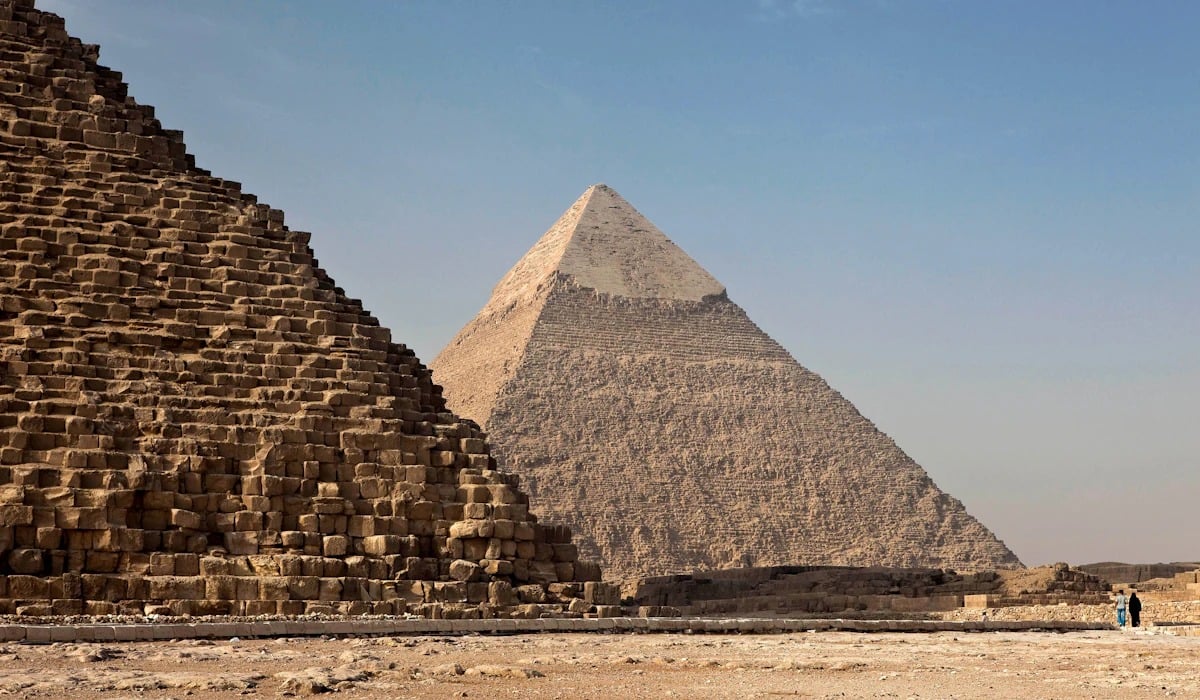
Khafre’s pyramid at Giza is slightly shorter than his father’s but sits on higher ground, which makes it appear taller from most angles. Its upper courses still carry original Tura limestone casing, one of the clearest surviving examples of that smooth outer surface on the plateau.
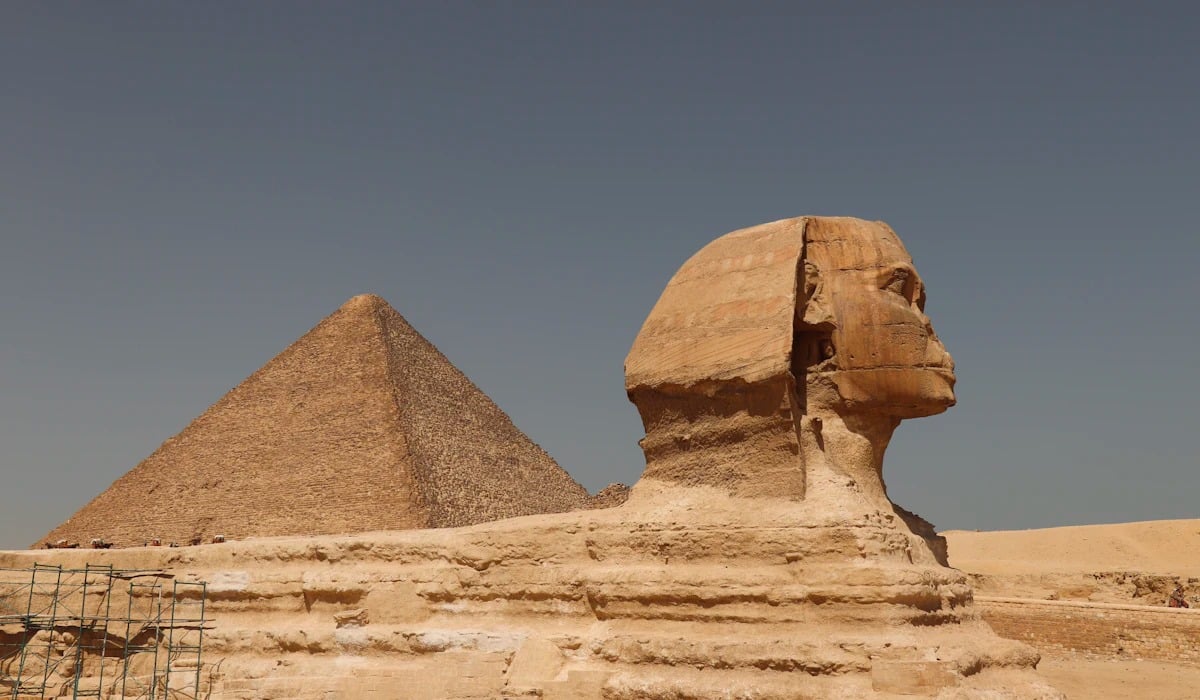
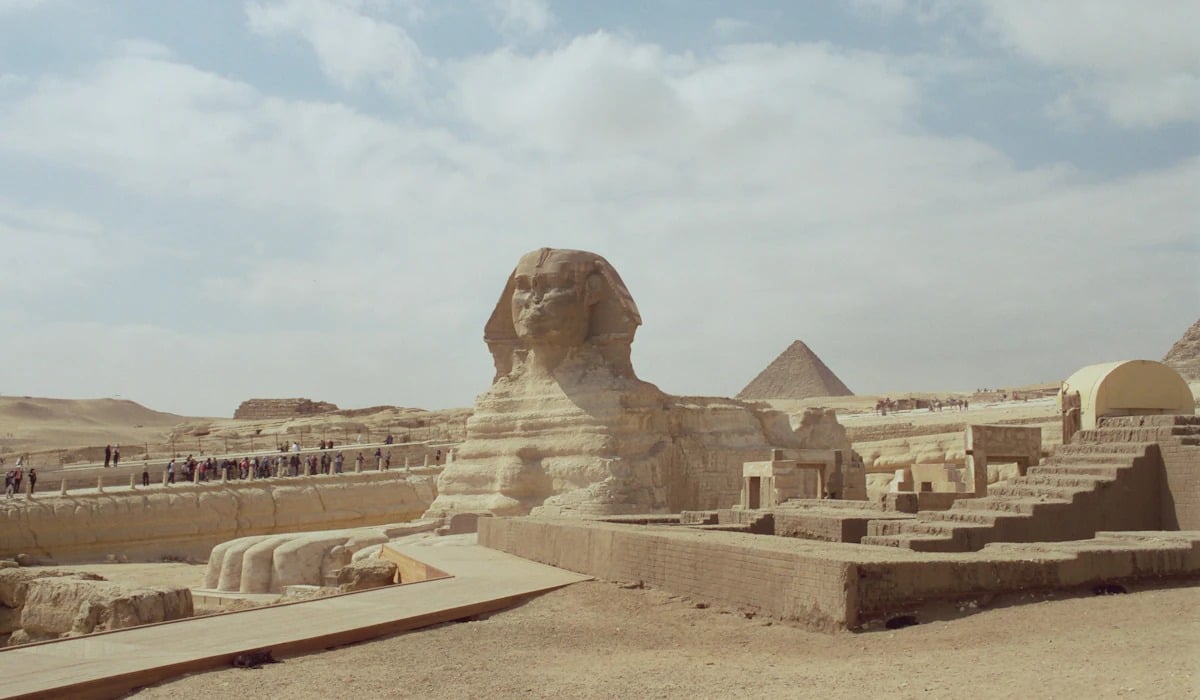
The Great Sphinx was carved from a limestone outcrop beside Khafre’s causeway, and many Egyptologists attribute its construction to his reign, although its precise origin remains debated. His valley temple, built from granite blocks weighing dozens of tons each, once held a series of seated diorite statues of the king.
One of them, found by Auguste Mariette in 1860, is now in the Egyptian Museum in Cairo.
Menkaure and the Smallest Giza Pyramid
Menkaure’s pyramid stands around 65 meters tall, less than half the height of Khufu’s, but its lower courses were clad in red granite shipped from Aswan, more than 800 kilometers upriver. Dressing granite by hand with dolerite pounders was slow work, and much of the casing was never fully smoothed.
The king died before the complex was finished, and his successor completed the temples in mud brick. A twelfth-century attempt to dismantle the pyramid left a deep vertical gash in its north face that is still visible.
Statues from the valley temple, including the famous triads showing Menkaure with goddesses, were found by George Reisner.
Hatshepsut and the Terraced Temple at Deir el-Bahari
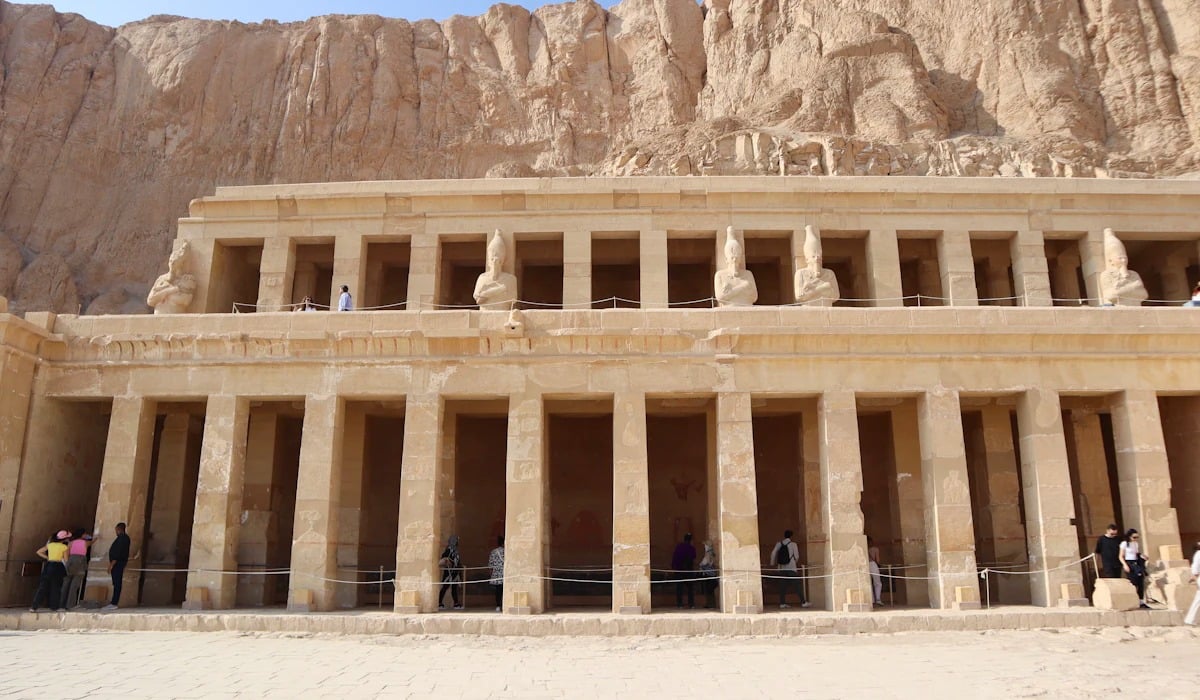
Hatshepsut ruled as pharaoh in her own right in the fifteenth century BCE and built a mortuary temple that still looks modern. Her architect Senenmut laid out three colonnaded terraces against the cliffs on the west bank at Luxor, connected by long ramps and aligned toward Karnak across the river.
The reliefs record an expedition to the land of Punt that brought back incense trees, which were planted in the temple garden. At Karnak she raised a pair of granite obelisks, one of which still stands at nearly 30 meters.
During Thutmose III’s reign, a systematic campaign erased or altered many of her names and images, though the timing and motives behind the effort remain debated.
Thutmose III and the Festival Hall at Karnak
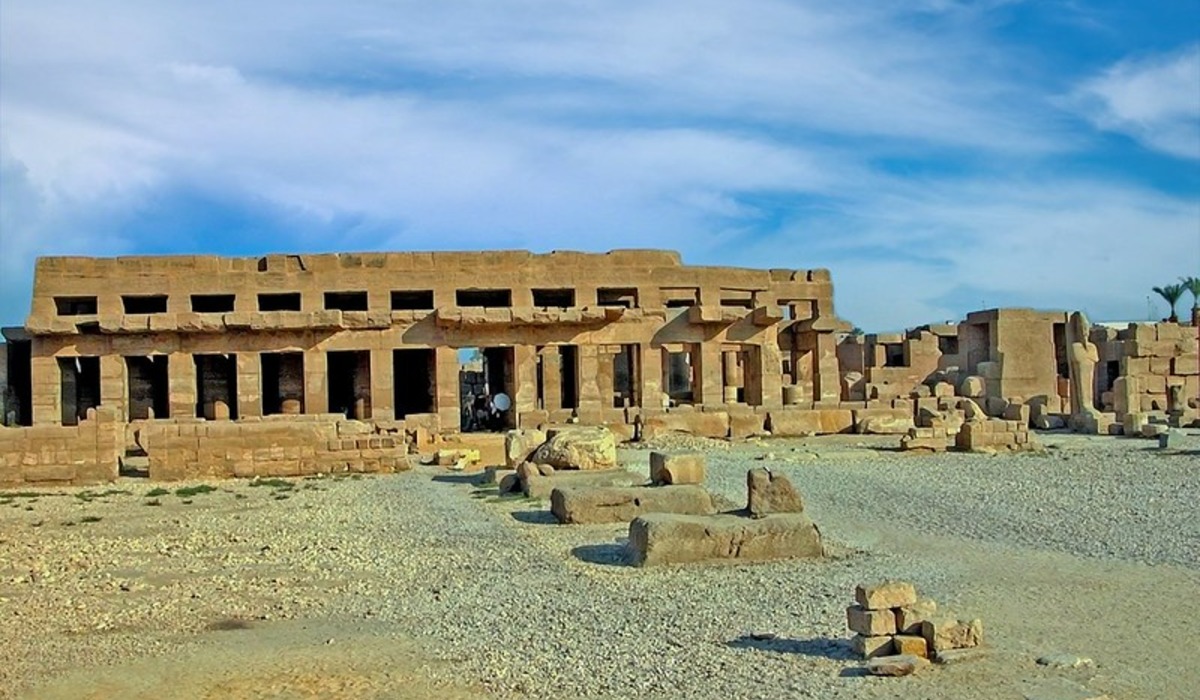
Thutmose III spent much of his reign campaigning in Syria and the Levant, and he spent the proceeds at Karnak. His Akh-menu, or Festival Hall, sits at the eastern end of the temple complex, with columns shaped like tent poles that may have recalled the military camps he knew well.
A side room known as the Botanical Garden is carved with plants and animals that reflect the natural world encountered during his campaigns. He also commissioned work on the obelisk that now stands in Rome outside St.
John Lateran, the tallest surviving ancient Egyptian obelisk at about 32 meters. His annals, carved on Karnak’s walls, list the tribute that paid for his campaigns and building projects.
Amenhotep III and the Colossi of Memnon
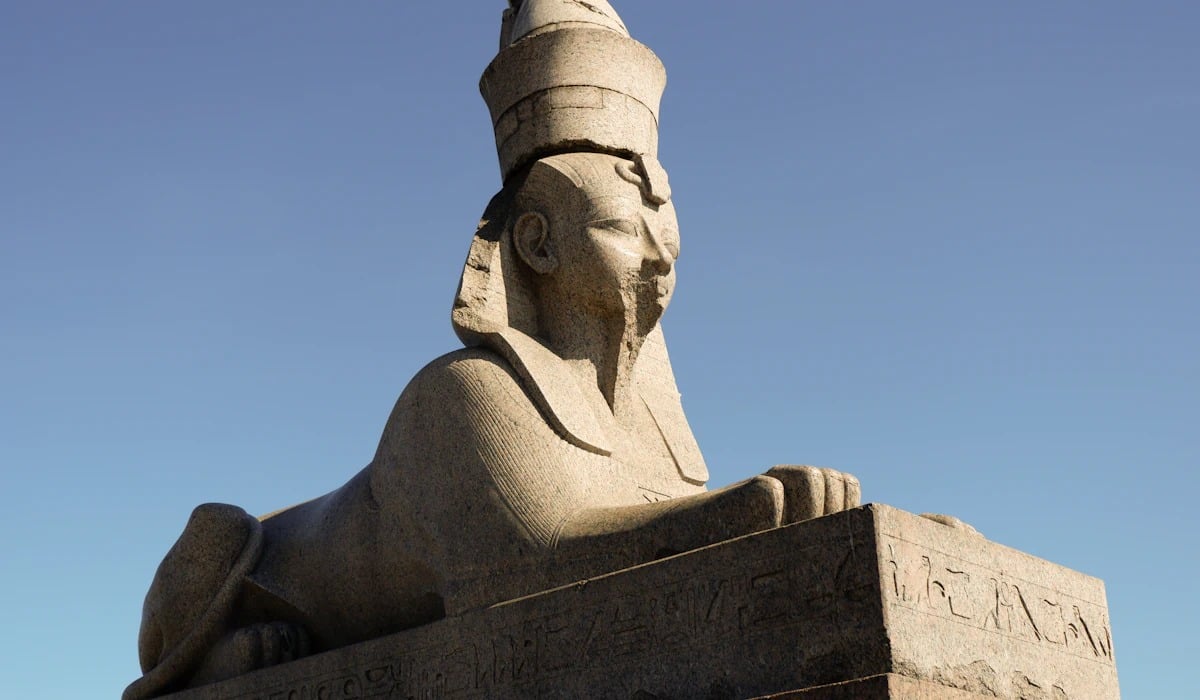
Amenhotep III built the largest mortuary temple in Egypt at Kom el-Hettan on the west bank at Luxor, and the two seated statues that guarded its entrance are nearly all that remain standing. Each figure of the king is about 18 meters tall and carved from quartzite quarried near Cairo, then floated hundreds of kilometers upstream.
The northern colossus cracked in an earthquake in 27 BCE and began producing a sound at dawn, which drew Greek and Roman tourists who carved their names on its legs. The temple itself was built on the floodplain, and annual inundations gradually ate its foundations away.
Excavators continue to pull fallen statues from the mud.
Akhenaten and the City of Akhetaten
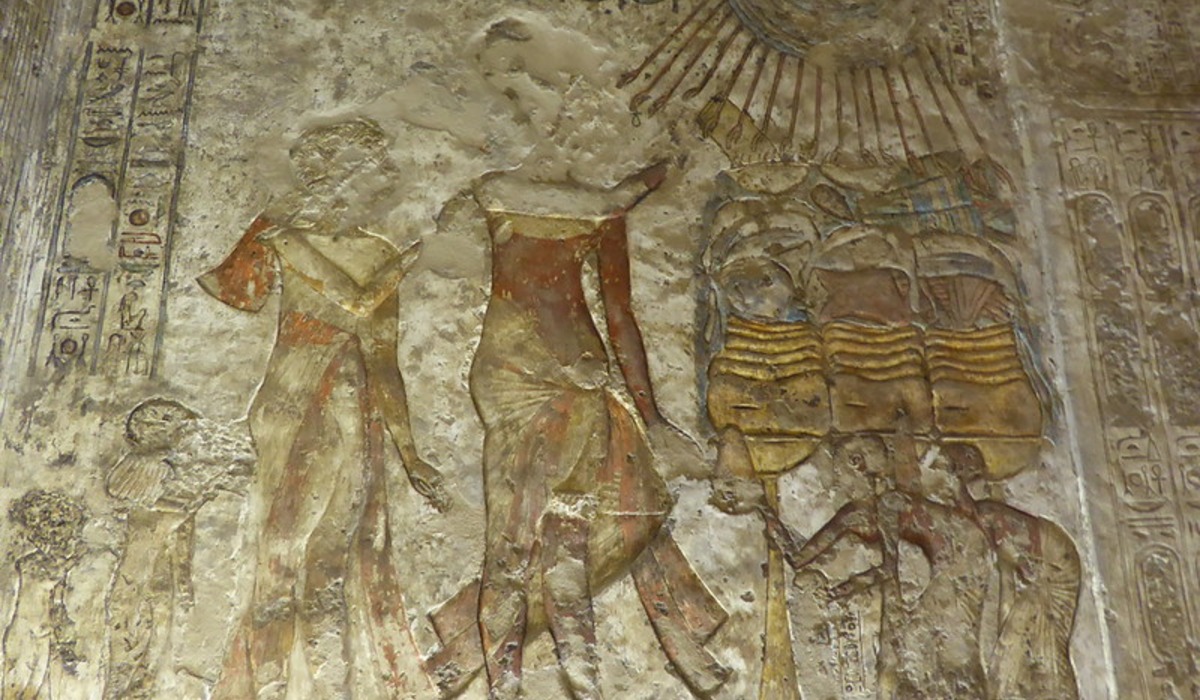
Akhenaten abandoned Thebes around 1346 BCE and built an entirely new capital on virgin ground at the site now called Amarna, dedicated to the sun disk Aten. Boundary stelae carved into the cliffs mark the city’s limits and record his oath never to extend it beyond them.
To build fast, his masons used small standardized blocks called talatat, each about the length of a forearm, which a single worker could carry. Temples to the Aten were open to the sky rather than roofed.
The city was deserted within a generation of his death, and later kings dismantled its temples and reused the talatat as fill inside Karnak’s pylons.
Ramesses II and Abu Simbel
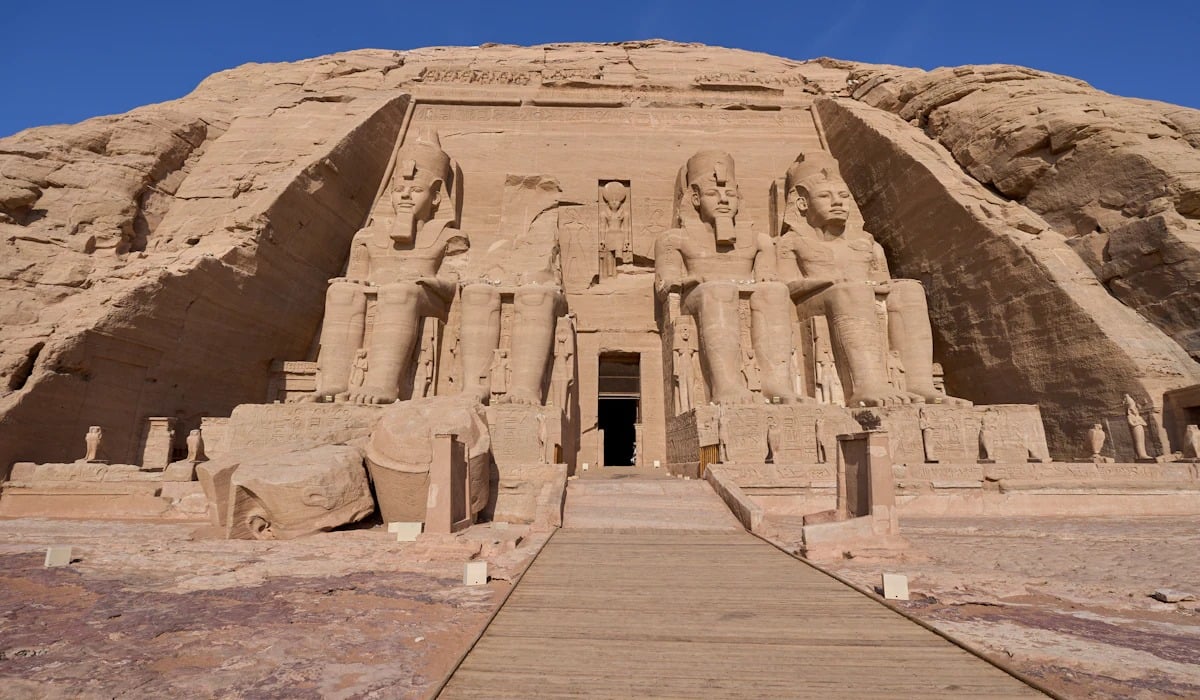
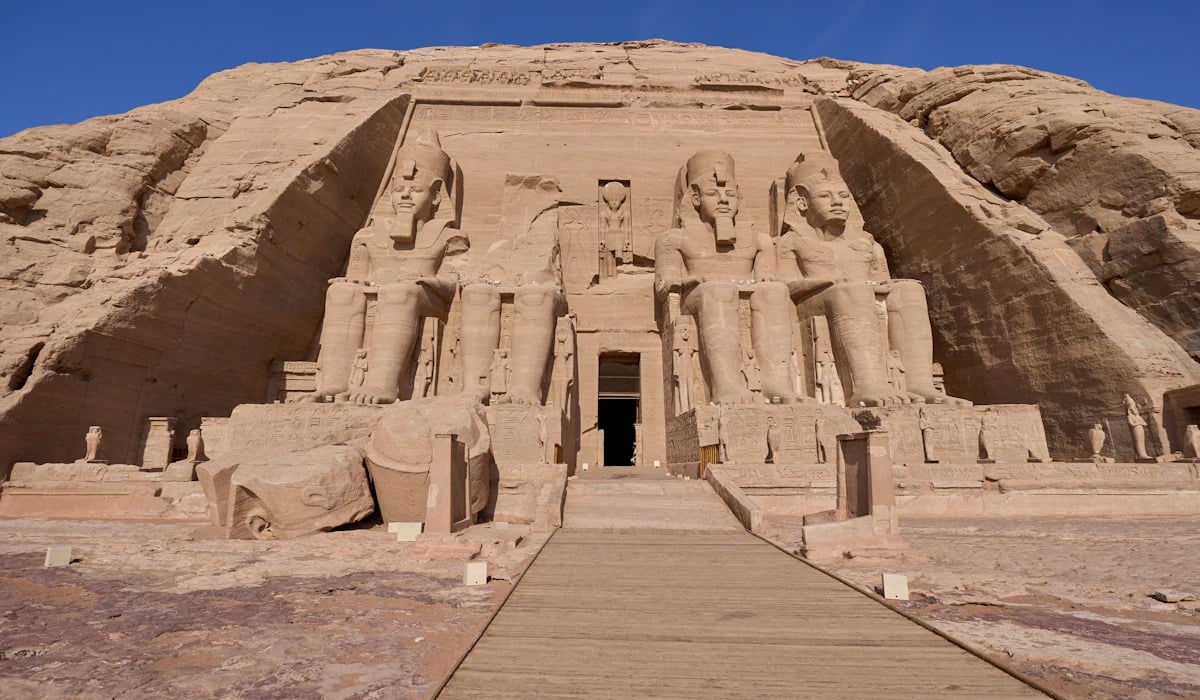
Ramesses II reigned for 66 years and built so widely that his cartouche appears on monuments from the Nile Delta to Nubia, some of them usurped from earlier kings. His great temple at Abu Simbel was cut directly into a sandstone cliff, with four seated figures of the king on the facade, each about 20 meters high.
The interior runs some 60 meters into the rock to a sanctuary where the sun illuminates three of the four seated statues twice a year. At Thebes, his Ramesseum held a seated granite colossus estimated at around 1,000 tons, now shattered, which inspired Shelley’s poem Ozymandias.
He also completed the Great Hypostyle Hall at Karnak, begun by his father, Seti I.
Ramesses III and Medinet Habu
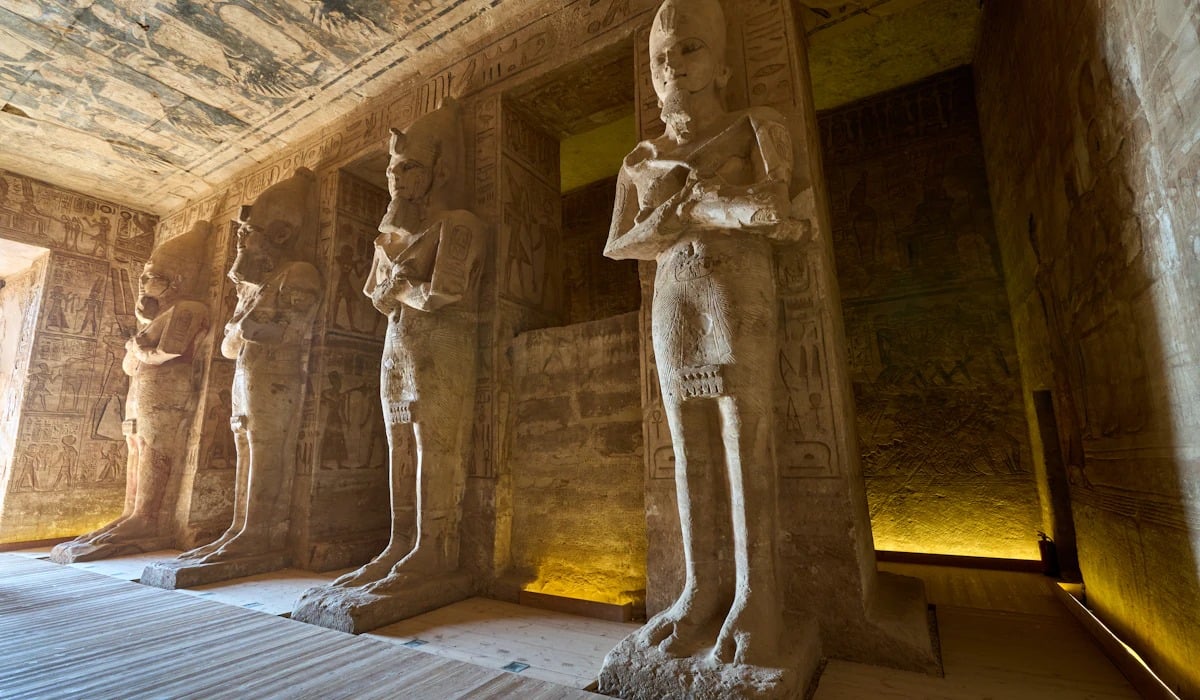
Ramesses III, who ruled in the twelfth century BCE, built the mortuary temple at Medinet Habu, one of the best-preserved of the great Theban temples. Its entrance is a fortified gatehouse modeled on a Syrian migdol, a design unusual in Egyptian temple architecture.
The walls carry some of the most detailed battle scenes in Egypt, including the naval fight against the Sea Peoples, with ships shown capsizing and captives counted by severed hands. The enclosure covered about 7 hectares, including a palace and storerooms.
Centuries later, when the royal tombs were being robbed, the entire workforce of Deir el-Medina took refuge inside its walls.
Ur-Nammu and the Ziggurat of Ur
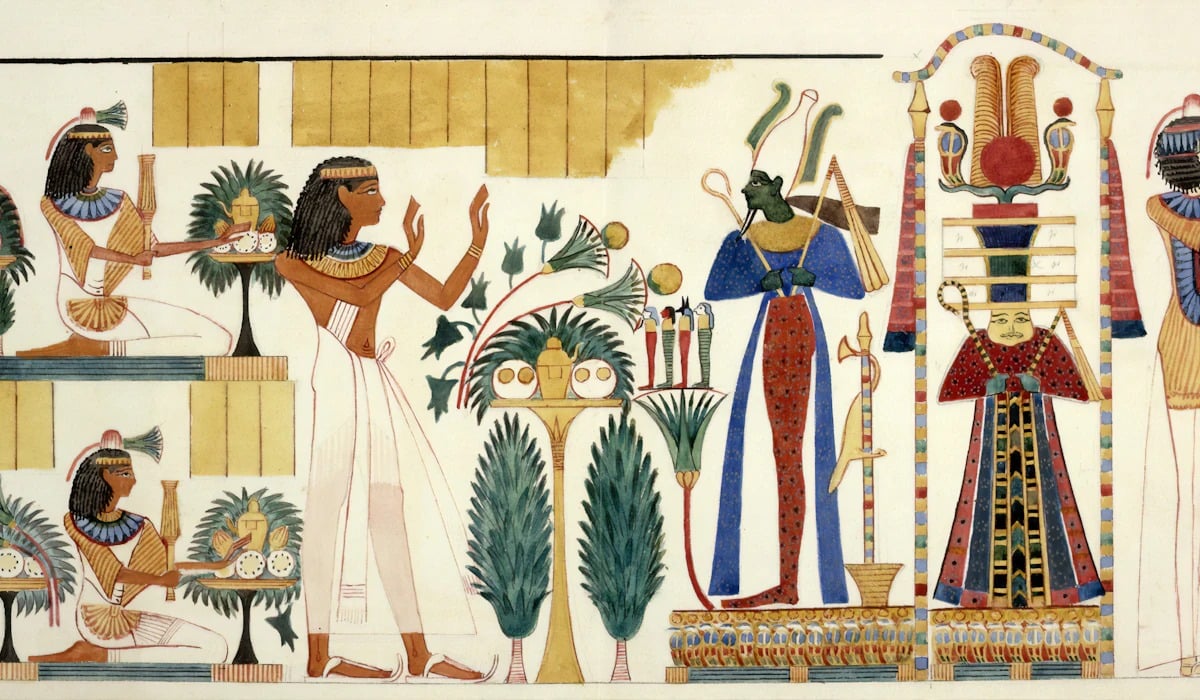
Ur-Nammu founded the Third Dynasty of Ur around 2100 BCE and began building the ziggurat that still dominates the site in southern Iraq. The lowest stage measured roughly 64 by 46 meters at its base, built with a core of mud brick and a skin of fired brick set in bitumen.
His name is stamped on bricks throughout the structure. The ziggurat was dedicated to the moon god Nanna and served as the platform for a temple that has not survived.
Leonard Woolley excavated the monument in the 1920s and 1930s, and Saddam Hussein’s government rebuilt the lower facade in the 1980s.
Ashurnasirpal II and the Palace at Nimrud
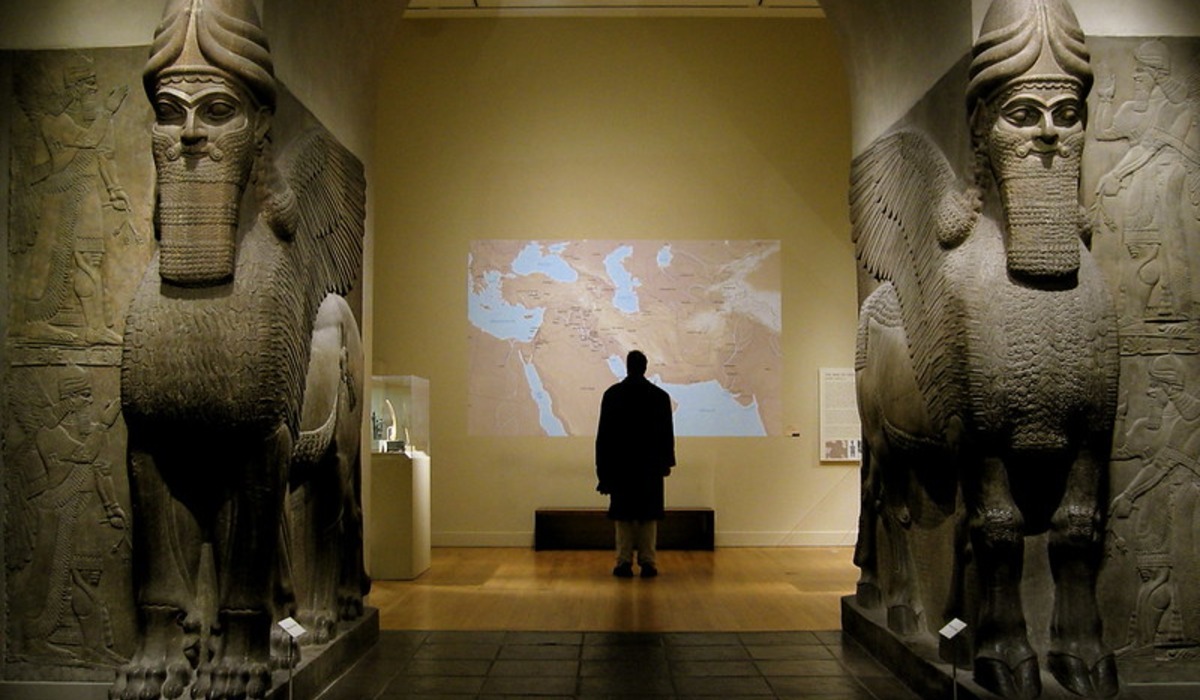
Ashurnasirpal II moved the Assyrian capital to Kalhu, modern Nimrud, and built a palace there in the ninth century BCE that set the pattern for Assyrian royal architecture. Its walls were lined with carved alabaster slabs showing the king hunting lions and receiving tribute, and the doorways were guarded by winged human-headed bulls.
A stone inscription found at the site records the inauguration banquet, which the king claimed fed 69,574 guests over ten days. Austen Henry Layard dug the palace in the 1840s and shipped many of its reliefs to the British Museum.
Much of what remained was destroyed in 2015.
Sargon II and the City of Dur-Sharrukin
Sargon II ordered a new Assyrian capital built in 717 BCE at Khorsabad, north of Nineveh. The city walls enclosed nearly three square kilometers, and the palace sat on a raised terrace at the northern edge.
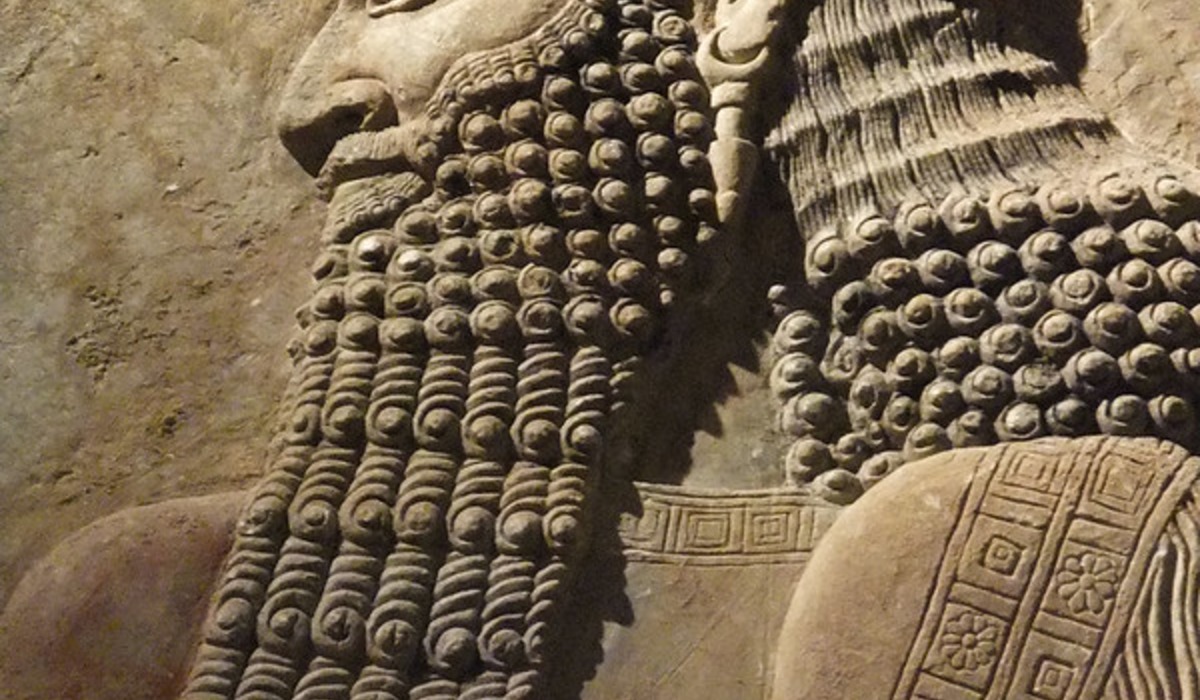
Colossal lamassu figures weighing up to 40 tons flanked its gates, and French excavators in the 1840s shipped several of them to the Louvre. Sargon was killed on campaign in 705 BCE, and his son Sennacherib promptly abandoned the city for Nineveh.
Dur-Sharrukin had been occupied for less than a decade.
Sennacherib and the Rebuilding of Nineveh
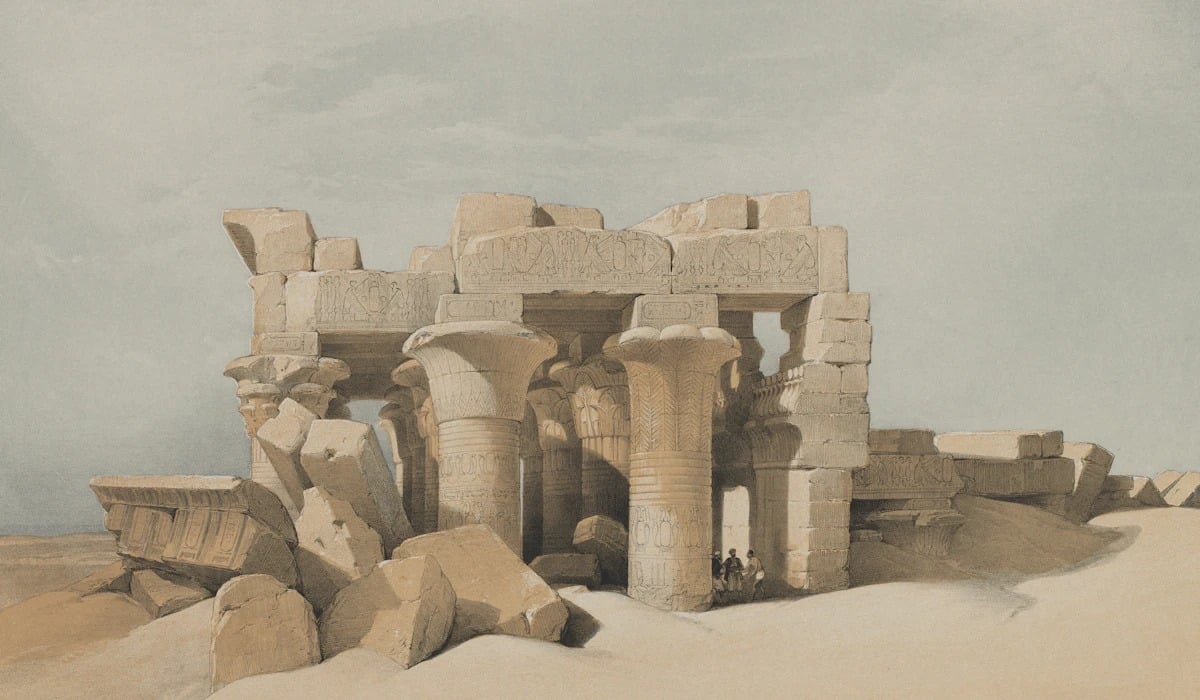
Sennacherib turned Nineveh into the largest city of its age, enclosing it with 12 kilometers of walls pierced by at least 15 gates. His palace, which he called the Palace Without Rival, covered an area of roughly 500 by 240 meters, with reliefs showing the siege of Lachish in Judah.
To water the city’s gardens and fields, he built a canal system stretching about 50 kilometers into the hills, including the stone aqueduct at Jerwan, which carried water across a valley on arches. An inscription on the aqueduct claims it was laid in a year and a quarter.
In his own inscriptions, Sennacherib also described the quarrying and transport of the massive stone bulls installed at his palace gates.
Nebuchadnezzar II and the Walls of Babylon
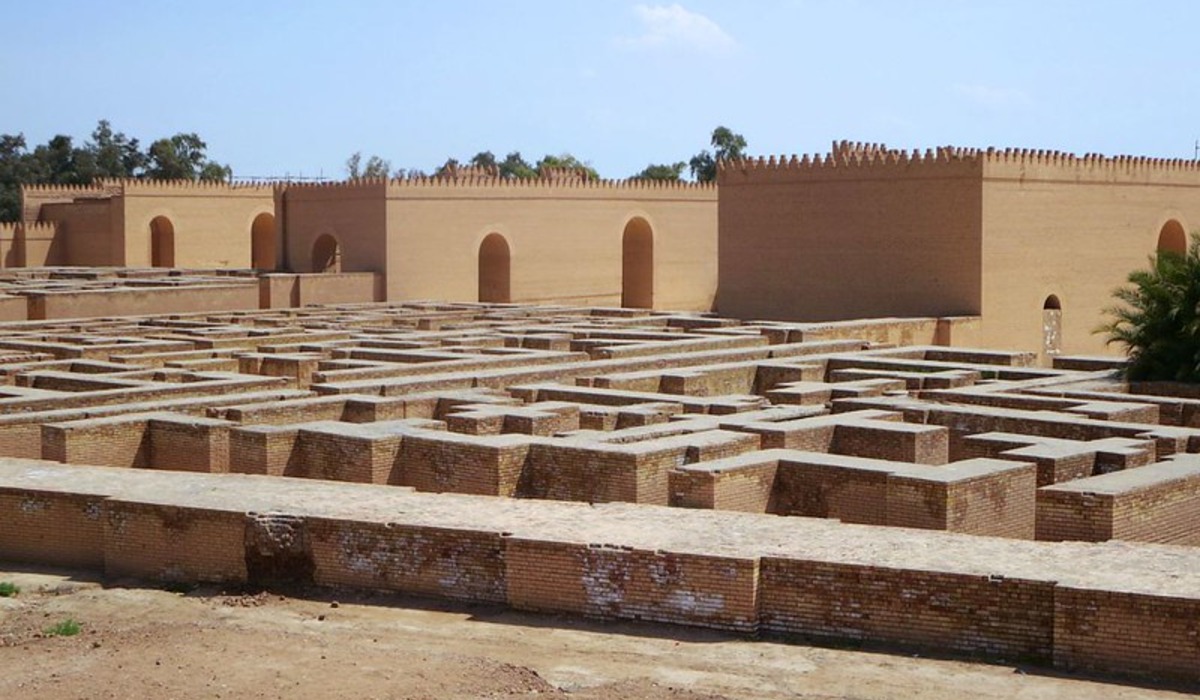
Nebuchadnezzar II rebuilt Babylon on a scale that impressed Greek visitors for centuries afterward. The Ishtar Gate, faced with glazed bricks in deep blue and decorated with molded lions, bulls and dragons, opened onto a processional way lined with more lions.
Robert Koldewey excavated the gate between 1899 and 1917, and its reconstruction now fills a hall in Berlin’s Pergamon Museum. The king also rebuilt the Etemenanki ziggurat and enlarged the city walls, parts of which were wide enough for a chariot to drive along the top.
Bricks across the site are stamped with his name and titles.
Cyrus the Great and Pasargadae
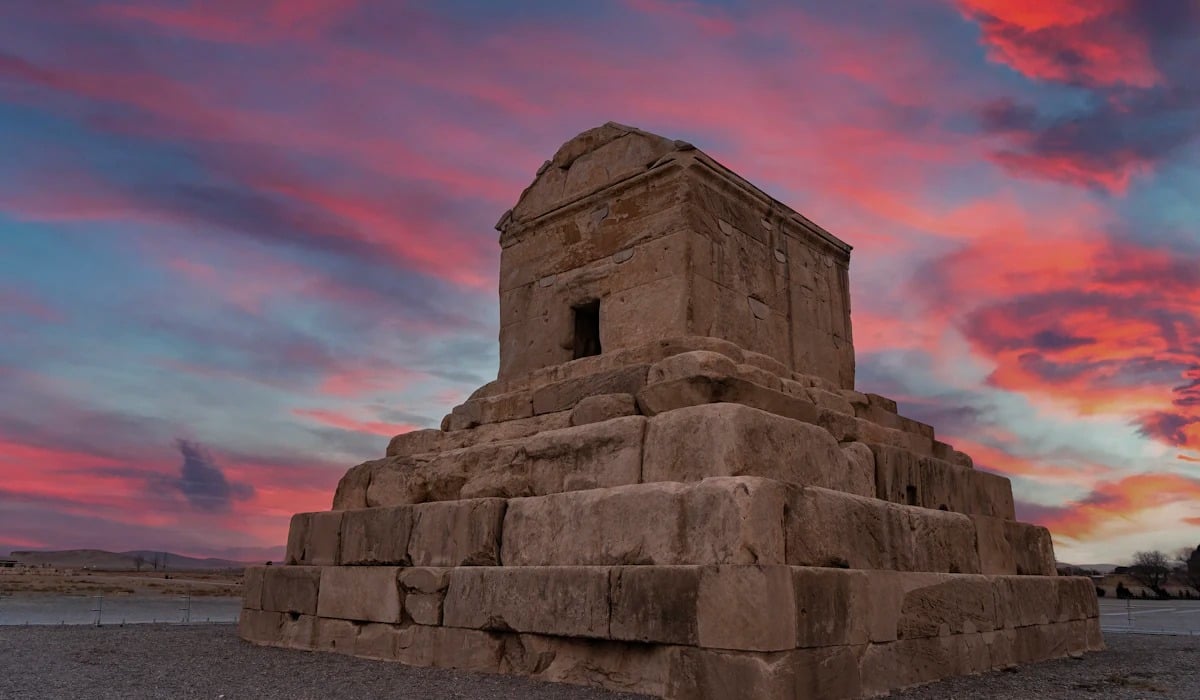
Cyrus founded the Persian Empire in the sixth century BCE and built his capital at Pasargadae, in the highlands of what is now Fars province in Iran. The site combined gardens watered by stone channels, audience halls with slender columns, and a fortified platform called the Tall-e Takht.
His tomb, a gabled stone chamber on a six-stepped base about 11 meters high, still stands on the plain. Alexander the Great visited it in 324 BCE, found it robbed, and ordered its restoration.
Masons from Ionia and Lydia worked on the buildings, which is why the stonework looks Greek in places.
Darius I and Persepolis
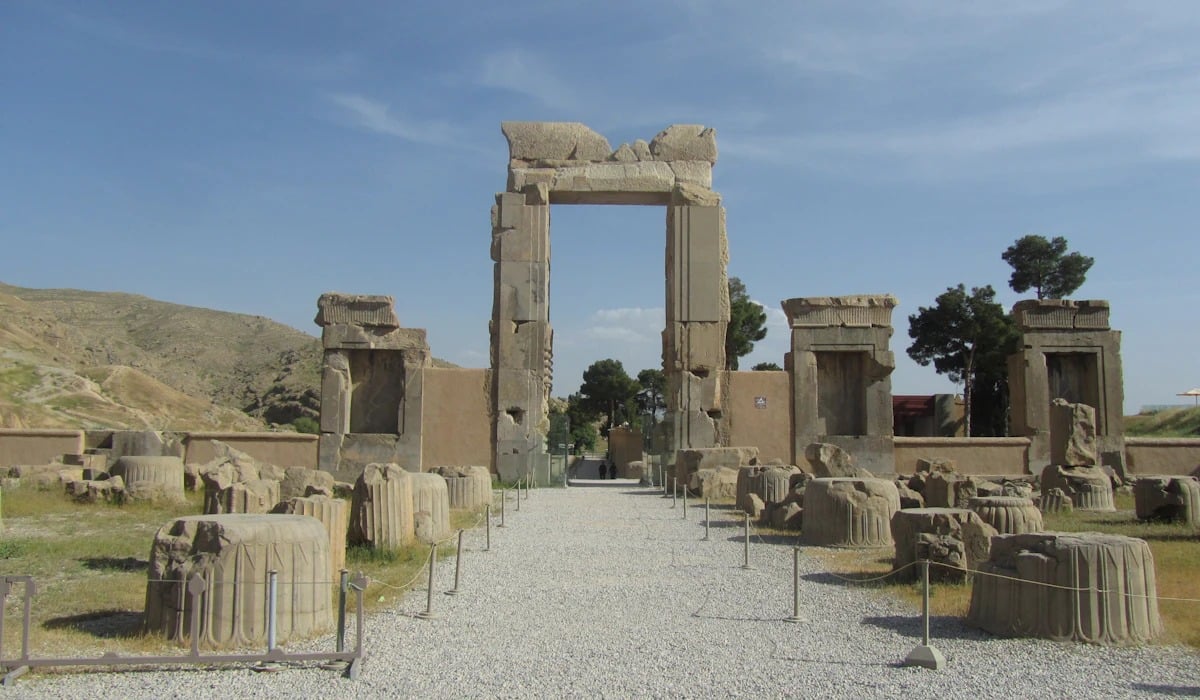
Darius I began Persepolis around 518 BCE on a terrace cut from the mountainside and built up with massive retaining walls. The centerpiece was the Apadana, an audience hall with 72 columns nearly 20 meters tall, approached by stairways carved with delegations from every corner of the empire bringing gifts.
A foundation inscription from Darius’s palace at Susa—not Persepolis—lists materials and the peoples who contributed to that building, including cedar from Lebanon and craftsmen from several regions. Clay tablets found in the fortification walls at Persepolis record the distribution of rations to workers, including grain and wine, as part of the site’s administrative records.
Alexander burned the complex in 330 BCE.
Mausolus and the Tomb at Halicarnassus
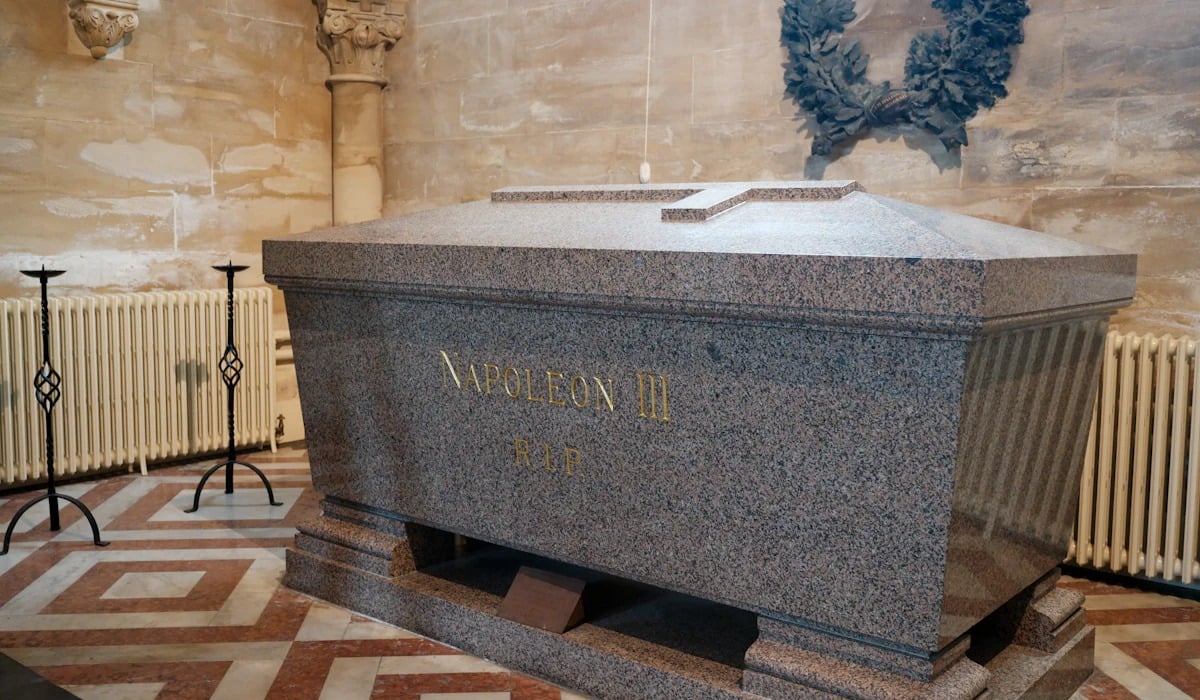
Mausolus governed Caria for the Persian king but built like a monarch, and his tomb at Halicarnassus gave the word mausoleum to several languages. Completed after he died in 353 BCE under his wife Artemisia, it rose about 45 meters and combined a high podium, a colonnade of 36 columns and a stepped pyramid roof topped by a four-horse chariot.
Four leading Greek sculptors, including Scopas, each took a side. It was listed among the seven wonders of the ancient world and stood until earthquakes brought it down in the Middle Ages.
Fragments of its friezes are in the British Museum.
Qin Shi Huang and His Mausoleum
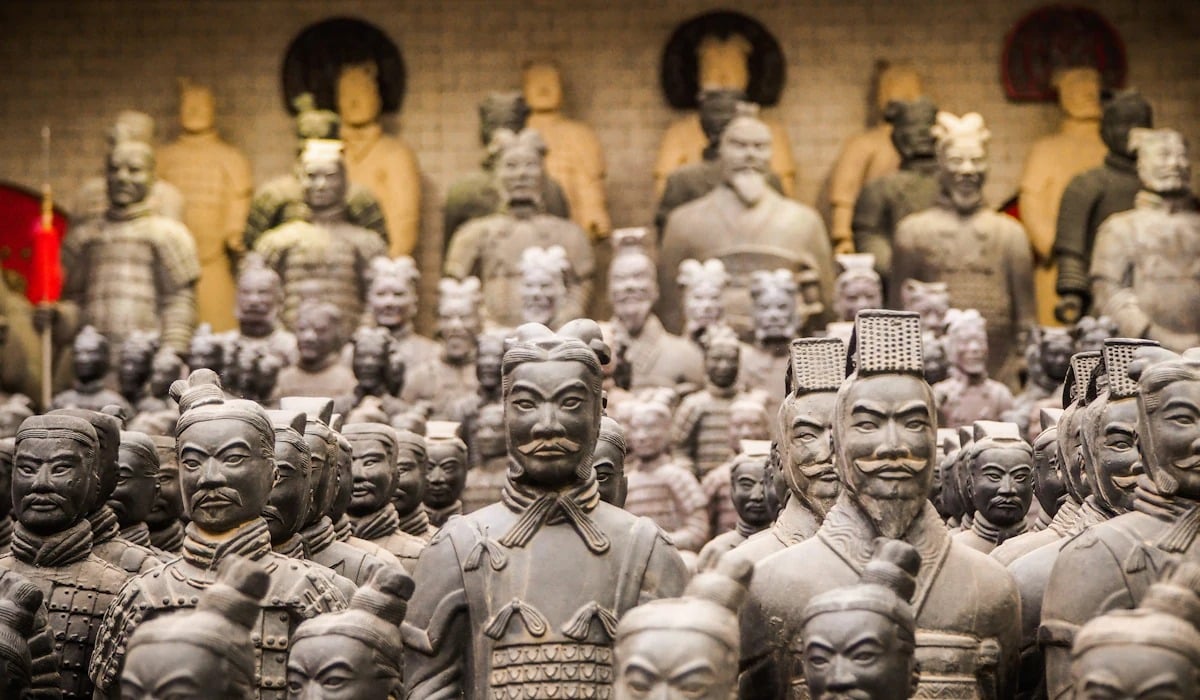
Qin Shi Huang united China in 221 BCE and had already been working on his tomb for years. The historian Sima Qian wrote that 700,000 conscripts labored on the mausoleum near Xi’an, which was topped with a mound originally more than 100 meters high.
Farmers digging a well in 1974 found the first of the terracotta soldiers, and excavations have since uncovered an estimated 8,000 figures in battle formation, each with an individual face. The burial chamber itself remains unopened, and elevated mercury levels detected in the area are consistent with, though do not prove, Sima Qian’s description of rivers of quicksilver inside.
Ashoka and the Pillars of the Mauryan Empire
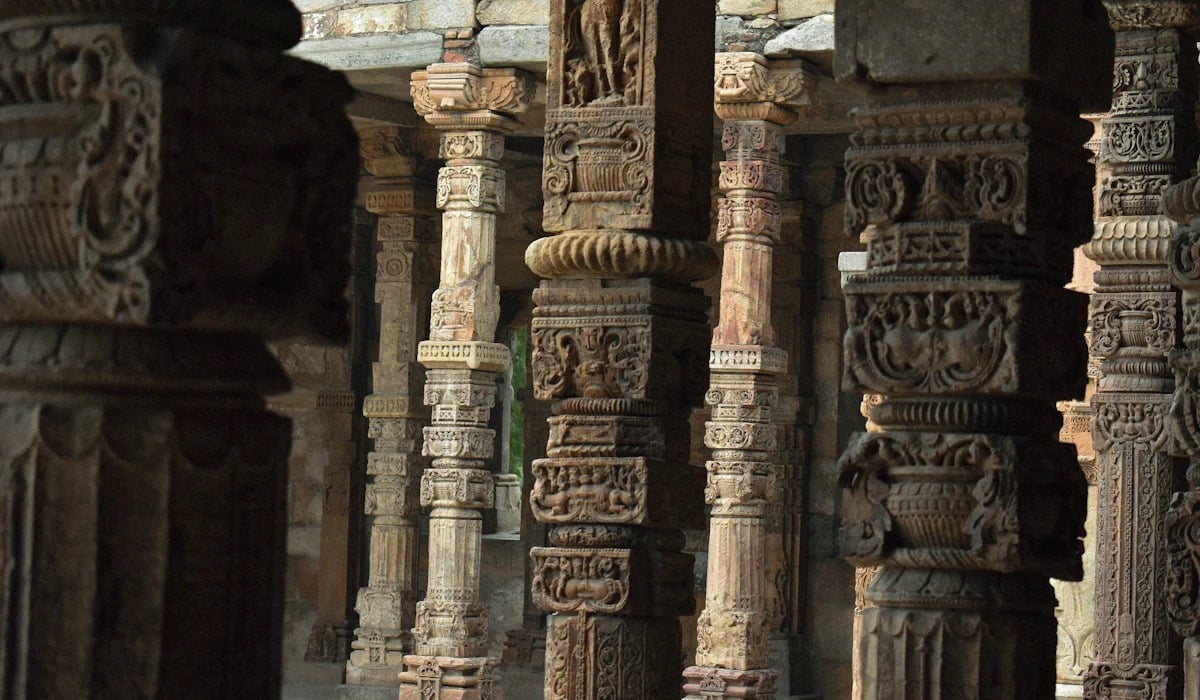
Ashoka ruled the Mauryan Empire from about 268 to 232 BCE, and after the bloody conquest of Kalinga he turned to Buddhism and to building. He raised polished sandstone pillars across northern India, some more than 12 meters tall and weighing around 50 tons, carved with his edicts and topped with animal capitals.
The lion capital from Sarnath became the state emblem of modern India. He is credited with founding or enlarging thousands of stupas, and the Great Stupa at Sanchi began under his patronage.
The pillars were quarried at Chunar near Varanasi and dragged or floated to sites hundreds of kilometers away.
Herod the Great and the Temple Mount
Herod ruled Judea for Rome from 37 BCE and built as if to compensate for his unpopularity. His largest project greatly expanded the Temple Mount platform in Jerusalem by raising retaining walls on fill, with ashlars cut so precisely that no mortar was needed.
One stone in the western wall measures about 13 meters long and is estimated to weigh more than 500 tons. He also built the port of Caesarea with breakwaters of hydraulic concrete poured underwater, the fortress of Masada on its clifftop, and the Herodium, an artificial hill with a palace inside it, where his tomb was identified in 2007.
Augustus and the Marble City
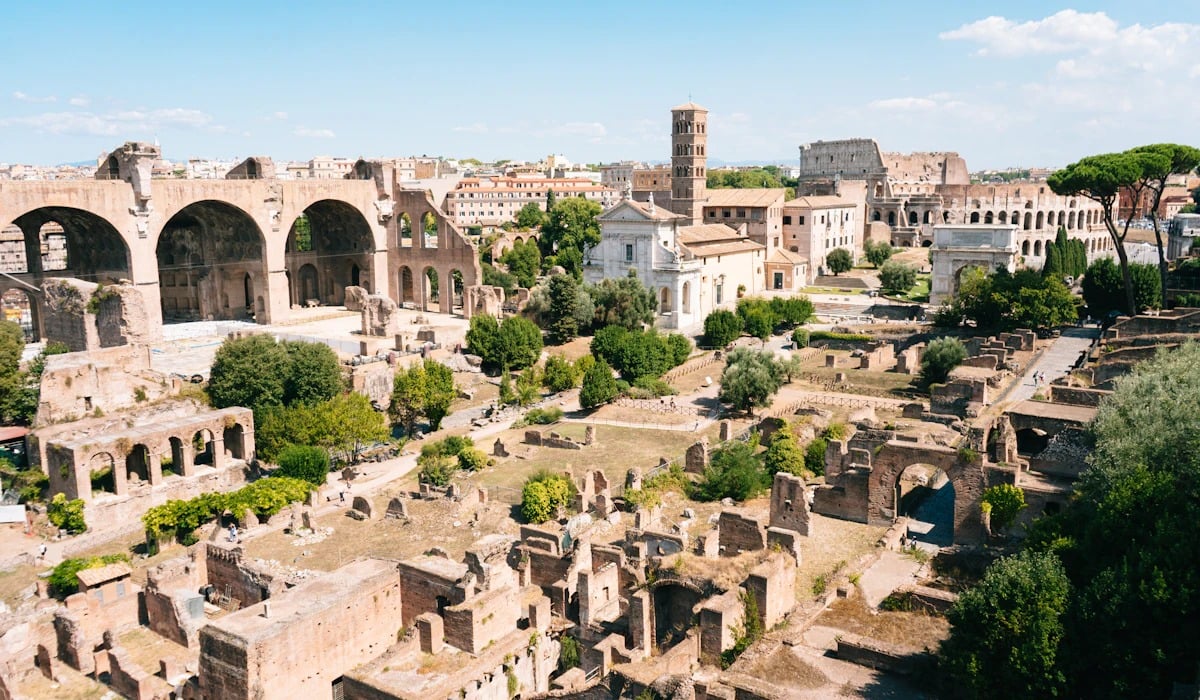
Augustus claimed that he found Rome a city of brick and left it a city of marble, and the boast was close to true. His building program included the Forum of Augustus with its Temple of Mars Ultor, the Ara Pacis, the Theater of Marcellus and a vast circular mausoleum on the Campus Martius about 90 meters across.
His lieutenant Agrippa built the original Pantheon and the city’s first great public baths. The Res Gestae, his own account of his reign, lists 82 temples he restored in a single year.
Under Augustus, Rome increasingly used Carrara marble, supplying the white stone for his building program.
Vespasian and the Colosseum
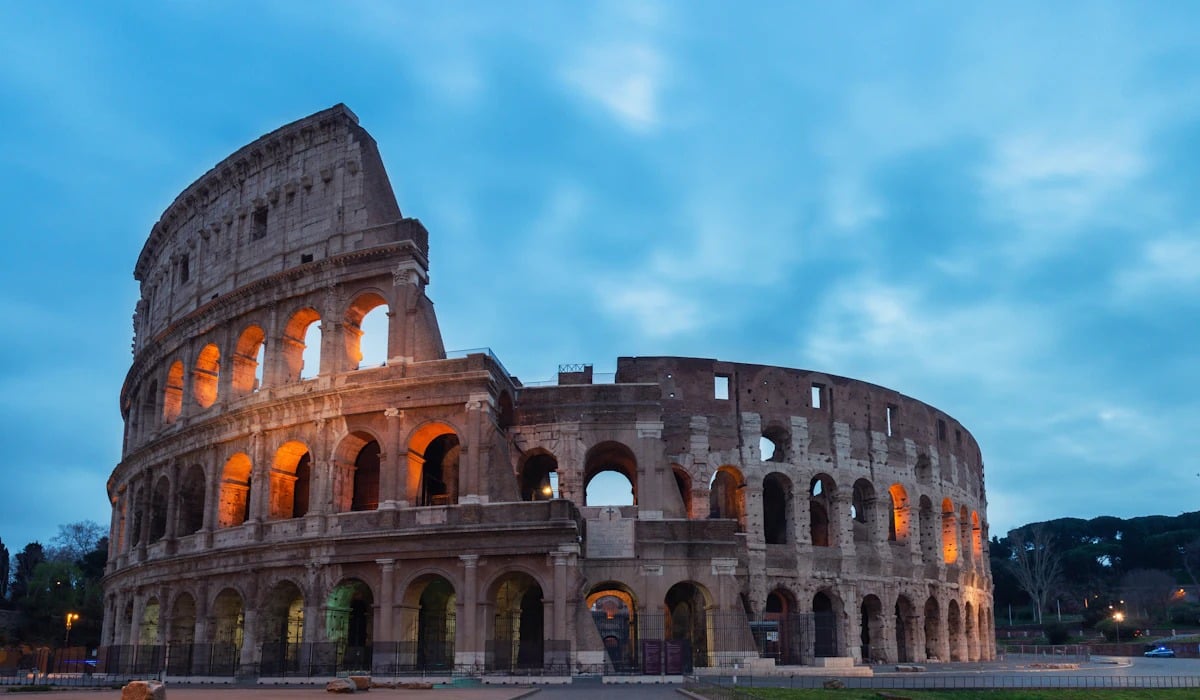
Vespasian came to power in 69 CE after a civil war and chose to build Rome’s largest amphitheater on the site of Nero’s private lake. The Flavian Amphitheater, later called the Colosseum, measured about 189 by 156 meters, stood roughly 48 meters high, and held somewhere around 50,000 spectators.
Its travertine blocks were held together with iron clamps, and the spoils of the Jewish War helped finance the work. Vespasian died in 79 CE before the building was finished, and his son Titus opened it with 100 days of games.
The underground chambers that housed animals and machinery were added later.
Trajan and the Column in His Forum
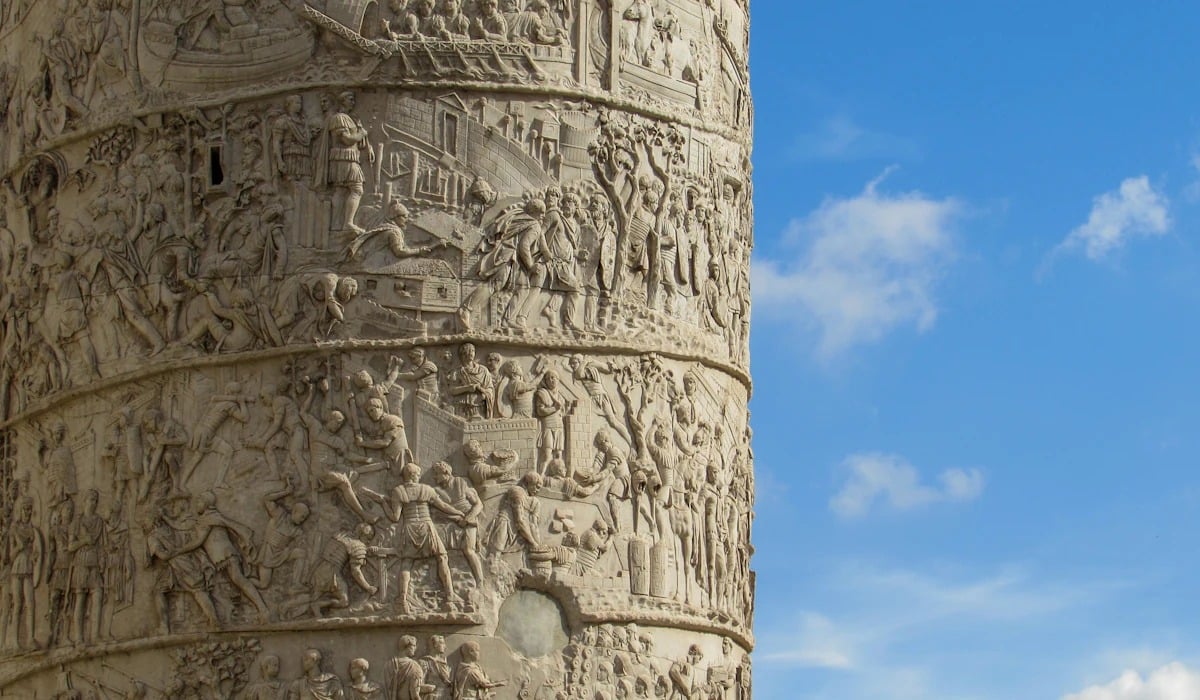
Trajan’s conquest of Dacia filled the treasury, and he spent it on the largest of the imperial forums in Rome, dedicated in 112 CE. Building it required cutting away a spur of the Quirinal Hill.
The column that marks the spot stands about 30 meters tall, and a spiral frieze winding up its shaft depicts the Dacian wars in more than 2,500 figures carved in marble. Inside, a staircase climbs to the top.
The emperor’s ashes were placed in its base. His architect, Apollodorus of Damascus, designed the adjoining markets, a multi-story complex of shops and offices in brick-faced concrete.
Hadrian and the Wall Across Britain
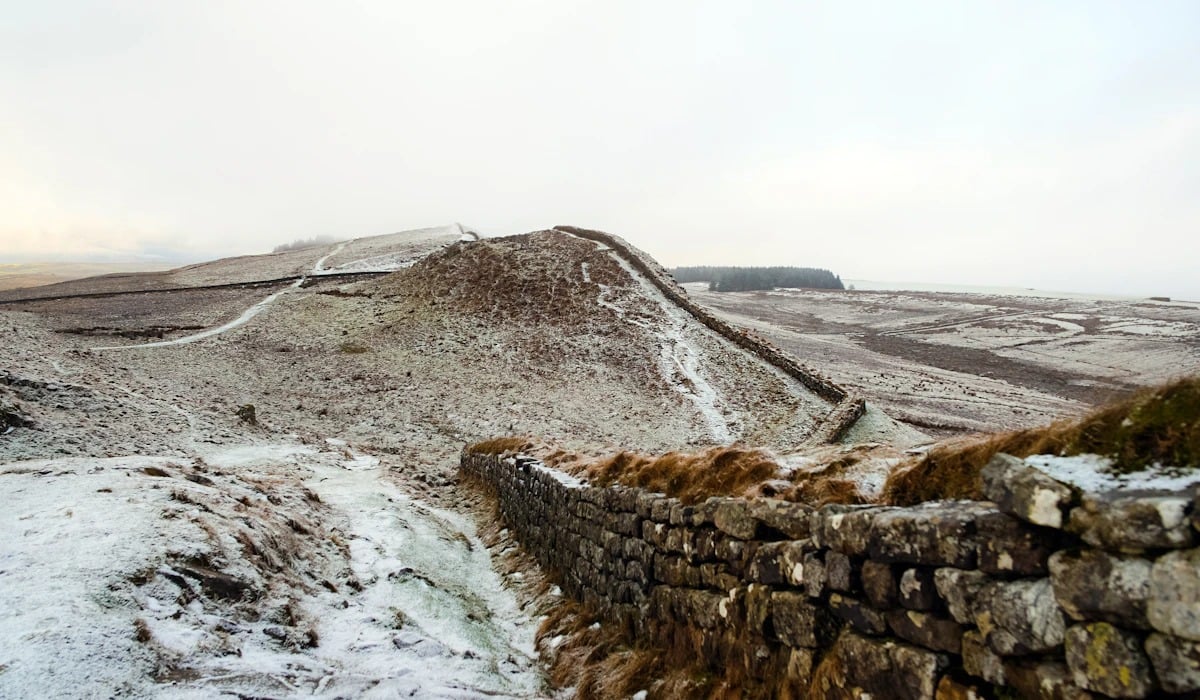
Hadrian preferred consolidating the empire to expanding it, and his wall across northern Britain, begun in 122 CE, made the policy visible. It ran about 117 kilometers from the Tyne to the Solway, with a fort roughly every Roman mile, turrets between them and a ditch along the northern face.
Three legions built it, and inscribed stones record which century of soldiers finished which stretch. Back in Rome, he rebuilt the Pantheon with a concrete dome 43 meters across, still the largest unreinforced concrete dome in the world.
His villa at Tivoli sprawled over more than 100 hectares with pools, theaters and libraries.
Justinian I and Hagia Sophia
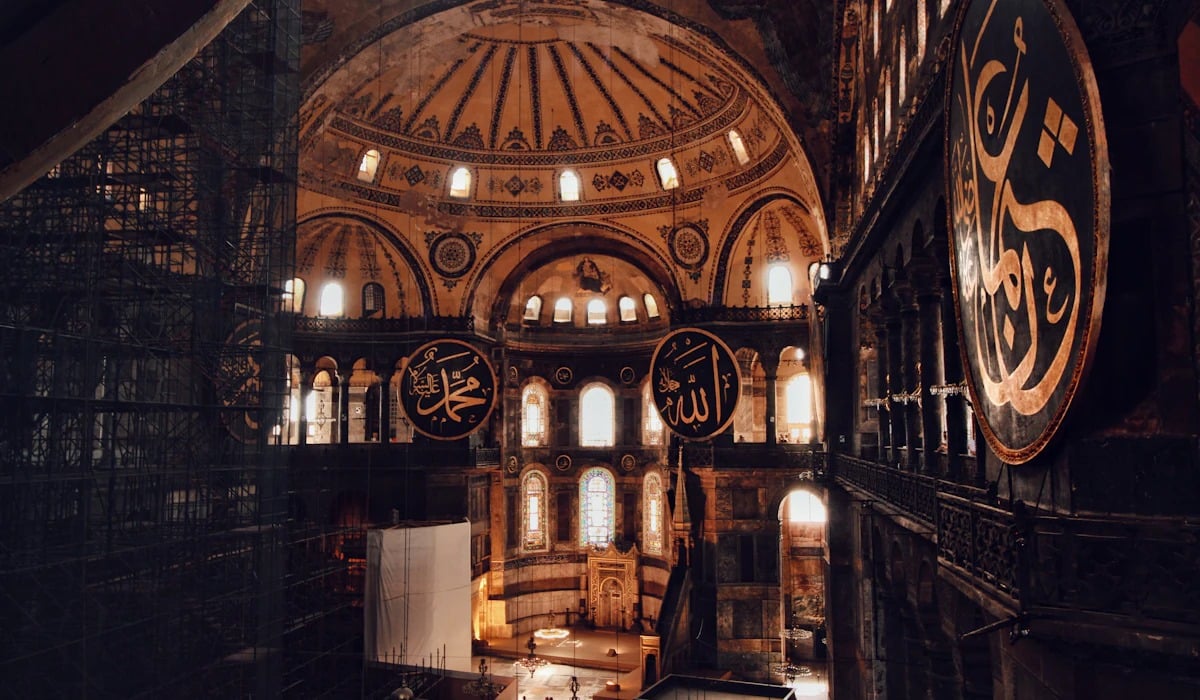
After riots in 532 CE burned down the cathedral of Constantinople, Justinian commissioned a replacement from two mathematicians, Anthemius of Tralles and Isidore of Miletus. Hagia Sophia was finished in less than six years, with a central dome about 31 meters across rising above a nave roughly 55 meters high.
According to a later account, Justinian walked in at the dedication and declared that he had surpassed Solomon. The dome collapsed in an earthquake in 558 and was rebuilt higher.
Columns and marble were brought from across the empire, including porphyry from Egypt and green marble from Thessaly.
Pakal of Palenque and the Temple of the Inscriptions
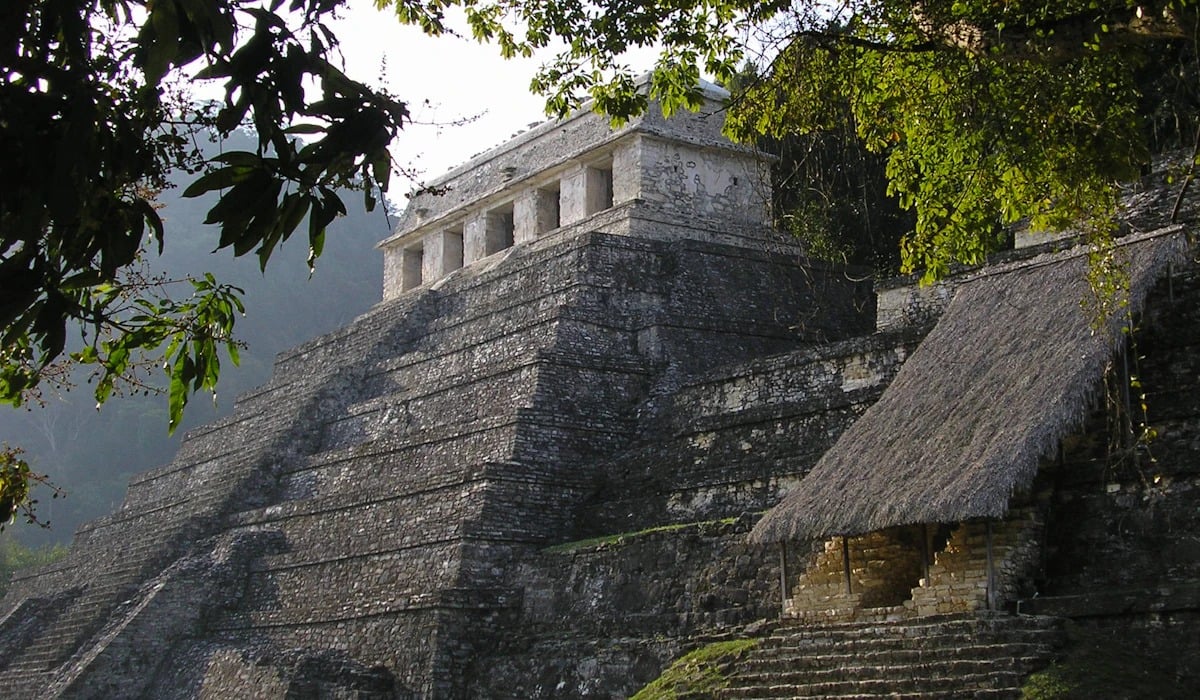
K’inich Janaab’ Pakal ruled the Maya city of Palenque for 68 years, from 615 to 683 CE, and spent his final decades building his own tomb. The Temple of the Inscriptions is a stepped pyramid about 20 meters high, named for the hieroglyphic panels inside its summit shrine.
In 1952 the Mexican archaeologist Alberto Ruz Lhuillier cleared a rubble-filled stairway descending through the pyramid and found Pakal’s crypt, with a carved limestone sarcophagus lid depicting the king within a complex scene often interpreted in relation to Maya ideas about death, rebirth and the cosmos. The pyramid was built around the tomb rather than the other way around.
Pakal’s jade mosaic mask is in Mexico City.
Suryavarman II and Angkor Wat
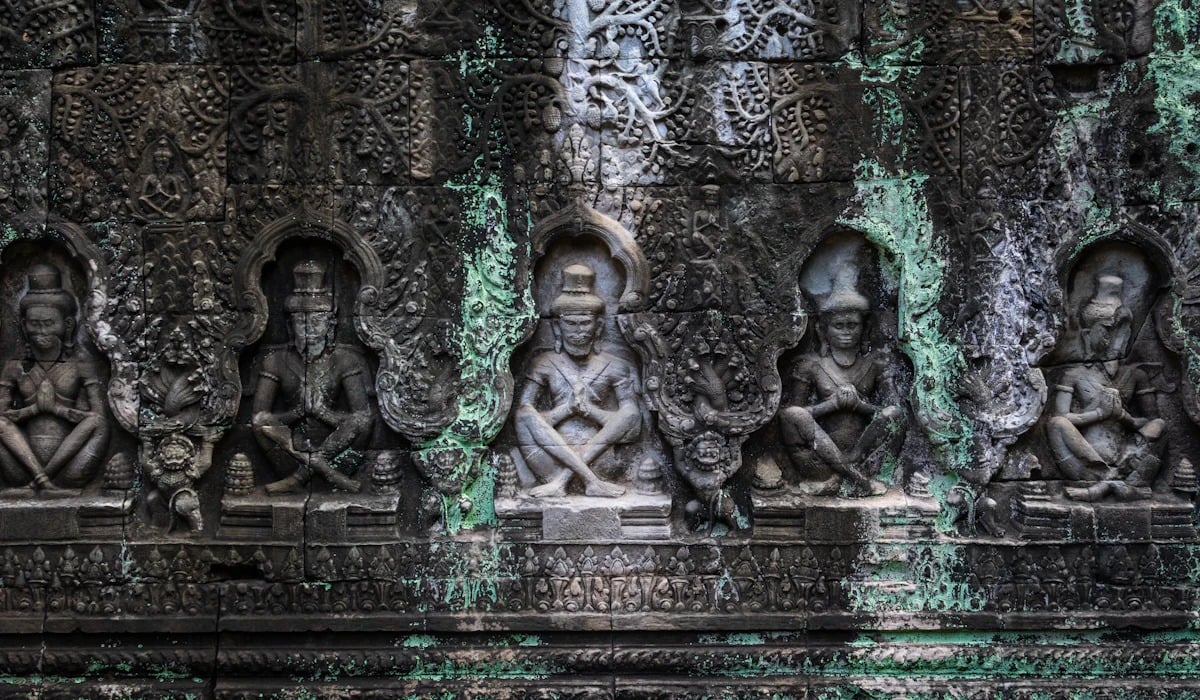
Suryavarman II, who came to the Khmer throne in 1113 CE, built Angkor Wat as a state temple dedicated to Vishnu and probably as his own mausoleum. The complex covers about 162 hectares inside a moat nearly 200 meters wide, and its five towers represent the peaks of Mount Meru.
Sandstone for the structure was quarried at Phnom Kulen, some 40 kilometers away, and transported to the site, likely using the area’s waterways and canals. Nearly a kilometer of bas-reliefs run along the galleries, including the Churning of the Sea of Milk and a procession in which the king himself appears.
Unusually for a Khmer temple, it faces west.
Stone Keeps Its Promises
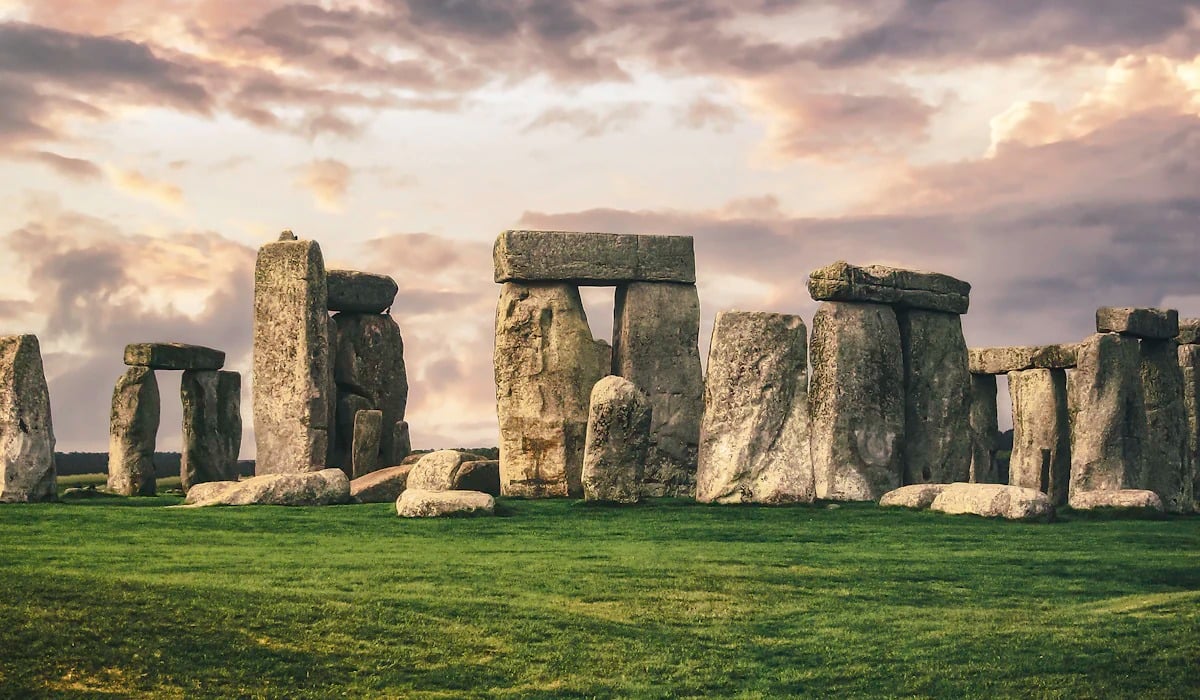
Every ruler here was solving the same problem. Power is temporary, memory is unreliable, and a reputation left to historians can be rewritten by the next regime.
A monument heavy enough to resist quarrying and tall enough to be seen from a day’s march away does not need a sympathetic chronicler.
The strategy worked, though rarely in the way intended. Khufu is remembered for a pyramid and almost nothing else, Sargon’s new city lasted a decade, and Hatshepsut’s temple survived the king who tried to erase her.
The stone kept its side of the bargain. The reputations attached to it took whatever shape later generations gave them.
More from Go2Tutors!

- The Romanov Crown Jewels and Their Tragic Fate
- 13 Historical Mysteries That Science Still Can’t Solve
- Famous Hoaxes That Fooled the World for Years
- 15 Child Stars with Tragic Adult Lives
- 16 Famous Jewelry Pieces in History
Like Go2Tutors’s content? Follow us on MSN.