28 Old Teen Magazines Buyers Pay Up For
Bedroom walls used to be papered with magazine pinups, and the magazines themselves were treated as disposable. That habit makes surviving copies harder to find than their cover prices ever suggested.
Pages were cut out, covers were taped up, and entire stacks went out with the trash when a teenager moved away.
Collectors now chase specific issues from the 1940s through the 2000s, across American glossies, British weeklies, and one long-running German favorite. A clean copy with its poster still folded inside can change hands for far more than a battered one.
Tiger Beat’s Debut Issues From 1965

Tiger Beat arrived on newsstands in 1965 from Charles Laufer’s Los Angeles publishing company and quickly became the template for every teen idol magazine that followed. Early issues leaned on the British Invasion, with big portraits and breezy captions that treated pop singers as the boys next door.
Copies from that first year are scarce because most were cut up for bedroom walls. Complete issues with intact pinups often sell for about 20 to 60 dollars, while examples with trimmed covers or missing pages usually bring only a fraction of that.
Tiger Beat During the Monkees Craze

NBC premiered The Monkees in September 1966, and Tiger Beat covered the group almost nonstop for the next two years. Covers showing Davy Jones, Micky Dolenz, Michael Nesmith, and Peter Tork remain among the most sought-after of the era because the show built a fan base that kept buying.
The magazine’s wide-eyed profiles and puzzle pages made each issue feel like a club bulletin. Prices run from about 15 to 50 dollars for solid copies, and creased spines or torn corners push the number down quickly.
Gloria Stavers and the Pages of 16 Magazine

The magazine called 16 appeared in 1956 and hit its stride under editor Gloria Stavers, who also took many of the portraits that filled its pages. Her photographs of Jim Morrison from 1967 are among the best-known pictures of her career, which gave a fan magazine an unexpected link to rock history.
Issues from the 1960s with Beatles and Monkees covers draw the most attention. Asking prices tend to land around 15 to 75 dollars, though yellowed paper and a missing poster insert weigh heavily on the final figure.
Seventeen’s First Issue From September 1944

Seventeen debuted in September 1944 under editor Helen Valentine, who pitched it as a magazine for girls rather than for grown women. Early covers were illustrated instead of photographed, and the pages mixed fashion, etiquette, and short fiction.
The premiere issue is the one serious buyers want, and it has been listed for roughly 100 to 400 dollars depending on how it has aged. Wartime paper tends to brown and flake, so a copy with a tight spine and no loose pages sits at the top of that range.
Seventeen and Sylvia Plath in 1950
Sylvia Plath was still a teenager when Seventeen published her short story “And Summer Will Not Come Again” in 1950, her first fiction to reach a national audience. Literary collectors treat the issue as a small piece of her biography, and some buy it alongside her later books and poetry collections.
Listings often run from about 40 to 150 dollars depending on the seller. A complete copy with an unstained cover and no detached pages draws more interest than one with water damage or a loose binding.
Sassy’s Early Issues From 1988

Sassy debuted in the United States in 1988 with Jane Pratt, then in her twenties, as editor, and its chatty, skeptical voice set it apart from every other girls’ title on the rack. Coverage of indie bands and blunt advice columns earned a loyal following that still trades issues online, long after the magazine disappeared from newsstands.
Copies from the first year typically sell for about 10 to 40 dollars. Sticker residue, wrinkled covers, and cut-out quizzes are the usual flaws that separate a bargain from a premium copy.
Sassy’s Kurt Cobain and Courtney Love Cover

A 1992 Sassy cover pairing Kurt Cobain with Courtney Love is probably the best-known single issue the magazine ever produced. Rock fans and magazine collectors compete for it, which explains why it sells above most other copies of the title.
Prices of about 40 to 150 dollars are common for a clean example, and sellers sometimes ask more for sealed-looking copies. Because the cover photograph is the draw, scuffing, fading, or a shipping crease across the faces can cut the value sharply.
Early buyers wanted the issue for the couple, and later buyers want it for the era.
Datebook and the Lennon Quote of 1966

John Lennon’s remark that the Beatles were more popular than Jesus first ran in the London Evening Standard in March 1966, in an interview by Maureen Cleave. When Datebook reprinted the line on a cover that summer, it reached American teenagers and set off public record burnings across the South.
The issue is prized as a document of a media storm as much as for the band itself. Copies often change hands for roughly 50 to 200 dollars, and a cover without tears or writing is the version buyers seek.
Teen Magazine From the Petersen Company

Teen launched in 1957 from Petersen Publishing in Los Angeles, the same company that produced Hot Rod and Motor Trend. It aimed at girls with fashion spreads, advice pages, and celebrity profiles, and it kept publishing into the late 2000s.
Issues from the late 1950s and 1960s are the ones that sell best, typically for about 8 to 25 dollars. Completeness matters because pattern pages and pullout sections were often cut out, and a copy with those sections missing is worth noticeably less.
Subscription copies mailed folded also tend to show more wear than newsstand ones.
YM and Its Calling All Girls Roots

YM traces back to Calling All Girls, a 1941 magazine from the company behind Parents magazine. It later became Young Miss and eventually YM under the German publisher Gruner and Jahr.
The earliest issues carried paper dolls, short stories, and comic features, which makes them appealing to ephemera buyers as well as magazine collectors, who prize the cut-and-play pages that children rarely left alone. A 1940s copy might sell for about 15 to 60 dollars, but pages with the paper dolls snipped out are worth far less than intact ones.
Dynamite and Its Classroom Order Forms

Scholastic launched Dynamite in 1974 and sold it largely through the order forms passed out in elementary school classrooms. The magazine ran until 1992 and mixed jokes, puzzles, television star profiles, and fold-out posters aimed at kids on the edge of their teens.
A single issue usually sells for around 5 to 25 dollars, with the 1970s runs drawing the most nostalgia. Taped posters, scribbled puzzle pages, and torn corners are common, so a fully clean copy stands out in the listings.
School-order delivery meant many copies were handled by an entire class before landing at home.
Right On and the Soul Teen Audience
Right On debuted in the early 1970s as a magazine for Black teenagers, filled with soul, R and B, and later hip-hop coverage that mainstream teen titles often skipped. Jackson 5 covers from that decade are the pieces collectors mention first, since the group was a staple of the pages.
Issues commonly sell for about 15 to 60 dollars. Because the poster pages were meant to be pulled out and pinned up, an issue with every page still in place is the harder find.
Sellers who describe the poster pages as unfolded and uncut can ask for a noticeable premium.
Black Beat’s Michael Jackson Covers

Black Beat covered R and B, soul, and hip-hop for a young readership, and Michael Jackson appeared on its covers repeatedly in the 1980s. An April 1987 issue with Jackson on the front circulates in resale listings, along with other issues from the same years.
Prices of about 10 to 40 dollars are typical for a decent copy. Gloss wear on the cover and creased corners are the usual flaws, and buyers focused on the Jackson issues care most about an unmarked front.
Clean covers from the Thriller years are the easiest to sell.
Bop and the 1983 Teen Idol Revival

Bop debuted in 1983 as a sister title to Tiger Beat, built on the same mix of heartthrob profiles, quizzes, and poster pages. It documented a long line of pop and television stars through the 1980s and 1990s, which makes the back catalog a handy time capsule.
Early issues usually sell for about 5 to 20 dollars. Collectors who buy for a specific idol look for copies where the poster inserts are still attached, since a loose or missing insert takes away most of the appeal.
Jackie, the British Weekly From Dundee

Jackie launched in January 1964 from D.C. Thomson in Dundee, Scotland, and ran for nearly three decades before closing in 1993. Photo stories, pop star pinups, and a problem page called Cathy and Claire made it a weekly ritual for British girls.
Surviving 1960s and 1970s copies often sell for about 8 to 30 dollars. Stapled weekly issues bend and tear easily, so a copy with a clean poster spread and no staple rust is worth noticeably more.
Annuals and special editions from the same publisher exist, but the weekly issues are the core of the collecting market.
Boyfriend and the Early 1960s Pop Scene

Boyfriend arrived in 1959 from City Magazines in London and, despite the name, was written for girls who wanted a look at the pop world. It carried photo stories, fashion pages, and coverage of the Beatles as they rose to fame.
Copies from the early 1960s are the ones collectors keep an eye out for, typically at about 10 to 35 dollars. Foxing along the edges and brittle spines are common, and buyers sometimes pay extra for an issue that looks barely handled.
The magazine closed in the late 1960s, so the supply of early copies is fixed and slowly shrinking.
Bravo Magazine, Germany’s Longest Teen Habit

Bravo debuted in Munich in 1956 as a weekly aimed at German teenagers. The German weekly covered film stars first and then moved into pop music, becoming the main teen title in the country for decades.
Collectors focus on 1960s and 1970s issues, which commonly sell for about 8 to 40 dollars. Completeness is a recurring problem because posters and attached extras were pulled out so often, and an issue with every page intact tends to cost more.
German sellers on resale sites often list issues by date, which makes the 1960s runs easier to track down.
Bravo Starschnitt Poster Series

Bravo’s Starschnitt feature printed a life-size poster of a star in numbered pieces spread over several issues, so readers had to buy each installment to assemble the full figure. The format kept sales high week after week, and the 1960s and 1970s runs are the ones collectors prize.
Complete sets of parts have been listed for roughly 20 to 100 dollars. A set missing one piece loses most of its appeal, and creased or taped sections reduce the price further.
Collectors of pop memorabilia also like the unusual format, which turned a magazine into a life-size paper cutout.
Smash Hits From 1978

Smash Hits launched in 1978 from founder Nick Logan, who had already edited the New Musical Express, and Emap later became its publisher. It built its reputation on printing the lyrics to current hits and on a mocking, playful tone toward the stars it covered.
Early issues from the late 1970s and early 1980s sell for about 10 to 40 dollars. Tears along the fold, torn-out lyrics pages, and fading on the cover are the usual signs of a lower-grade copy.
The playful captions and the nicknames given to the stars are a large part of why readers kept their copies.
Smash Hits and the End of Print

Smash Hits ended its print edition in 2006 after nearly three decades, closing one of Britain’s longest-running pop magazines. Final-year issues tend to be inexpensive, usually about 4 to 15 dollars, because they were printed in large numbers.
Buyers pay more for the 1980s runs, when covers featured Duran Duran, Madonna, and Wham. Condition still sets the price, since the glossy covers pick up scuffs easily, and a copy with its free gift still attached can sell for more.
The issues from that final year are often easy to find in bundles from sellers clearing out attics.
Just Seventeen in the Pop Years

Just Seventeen ran in Britain from 1983 until 2004 under Emap, filling its pages with pinups, quizzes, fashion tips, and personal advice. It captured the pop and television stars of the 1980s and 1990s in a lively voice that readers remember well, which keeps demand steady on resale sites.
Back issues usually sell for about 4 to 20 dollars. A copy with a poster still in place is the one worth owning, and ripped quiz pages and water stains rarely help the price.
The title also had a long-running advice section that readers remember with some affection.
Star Hits and the American Smash Hits Cousin

Star Hits appeared in the United States in the 1980s, drawing on material from Britain’s Smash Hits and adapting it for American readers. It printed song lyrics, pop star interviews, and posters in a format that felt different from the usual glossy domestic titles.
Copies generally sell for about 8 to 30 dollars, and the popular covers from the mid-1980s lead the pack. Loose pages, folded poster inserts, and spine wear all affect what a buyer will pay in the end.
Buyers who want one issue usually look for a cover that matches a favorite act.
Teen People From 1998

Teen People debuted in 1998 from Time Inc. as a younger spinoff of People, covering pop singers, actors, and athletes in a bright format. Time ended the print edition in 2006 and kept the website for a time.
Issues from the late 1990s with boy bands and teen stars on the cover are the ones that move, typically at about 3 to 15 dollars. Prices climb only when a copy comes with its poster insert, and ripped covers are close to worthless.
Sellers who bundle several issues in a lot often price them below the single-copy range.
The American Girl From 1917

The Girl Scouts of the USA launched The American Girl in 1917 as an official magazine for members, with short fiction, crafts, and illustrated covers. The title was discontinued in 1979, which gives the run a long and varied span.
Copies from the 1920s and 1930s with strong cover art can sell for roughly 10 to 40 dollars. Condition matters more than usual because many were folded, mailed, or saved in scout troop files, and brittle pages are common.
Interest comes from historians of girlhood as much as from magazine buyers.
The Beatles Monthly Book From 1963

Beatles Monthly Book launched in August 1963 under Sean O’Mahony, who wrote under the name Johnny Dean, and it ran until December 1969. It served as the official fan club magazine and was known for photographs by Leslie Bryce.
Original 1960s issues often sell for about 15 to 60 dollars, especially the earliest ones. Reprints produced from 1976 onward are far cheaper, so buyers check the paper and printing details carefully before paying original prices.
The magazine’s pages of photos were an important source of Beatles images from the period.
Elvis Monthly, the Fan Club Standby
Elvis Monthly was a British fan magazine launched in the 1950s and kept in print for decades by devoted readers. It collected news, photographs, and fan letters in an issue-by-issue record of the singer’s career, which suits collectors who like to build a run.
Copies from the 1960s sell for around 8 to 30 dollars. Fan club mailing labels, handwritten notes, and rusted staples reduce the value, while a pristine copy with its original mailing wrapper attracts more interest.
The magazine was collected by devoted fans, which means well-kept runs are easier to find than most.
CosmoGirl and the Early 2000s

CosmoGirl launched in 1999 from Hearst as a younger sibling of Cosmopolitan, aimed at girls in high school with a focus on self-confidence and celebrity covers. Its print run ended in 2008, which has turned the early 2000s issues into a modest nostalgia market.
Copies with pop stars on the cover sell for about 3 to 15 dollars. Smudged glossy covers and cut-out pages are the common flaws, so a clean copy with the subscription cards intact stands out from the pile.
Anything with a stained or heavily creased cover usually sells for the low end or less.
Teen Vogue’s 2003 Debut
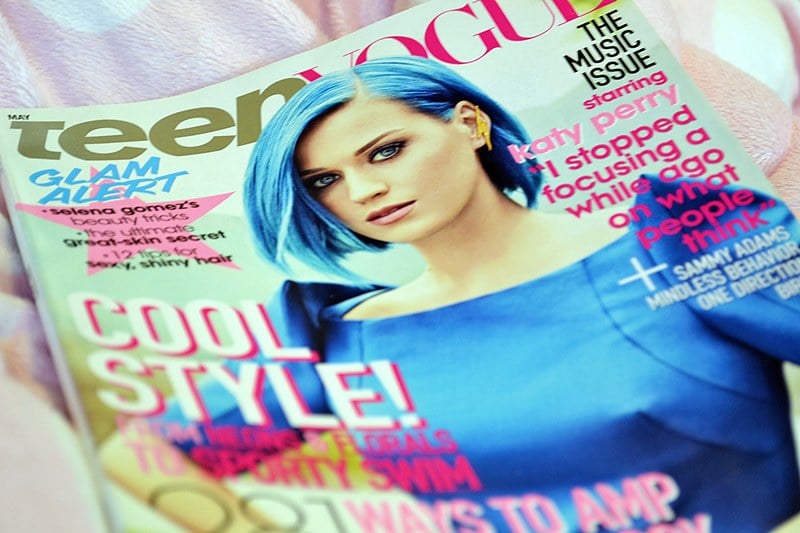
Teen Vogue debuted in 2003 from Conde Nast with Amy Astley as editor, offering a fashion-forward alternative to the established teen titles on the newsstand. The early issues have a growing following among collectors of magazine design, since the layouts differed sharply from the pinup-heavy rivals.
Premiere copies often sell for about 10 to 40 dollars. Sticker residue, bent corners, and perfume sample strips left in place can change what a copy is worth to a careful buyer. Collectors of fashion magazines often add the premiere issue to a broader run of editions.
Glossy Pages and the Memory They Hold

Teen magazines were built to be consumed quickly. Each issue chased the next hit single, the next television show, and the next heartthrob, and then it was replaced a week or a month later.
The ones that survive did so because somebody kept them under a bed or in a box, usually for reasons that had nothing to do with future resale.
That accidental preservation is what gives the hobby its pull. A single copy records what a generation was told to care about, in the voice and typography of its moment.
Buyers who pay for these issues are mostly paying for that snapshot, and the price tends to follow how well it came through intact.
More from Go2Tutors!

- The Romanov Crown Jewels and Their Tragic Fate
- 13 Historical Mysteries That Science Still Can’t Solve
- Famous Hoaxes That Fooled the World for Years
- 15 Child Stars with Tragic Adult Lives
- 16 Famous Jewelry Pieces in History
Like Go2Tutors’s content? Follow us on MSN.