Most Colorful Bird Species in the World
Birds come in colors that seem impossible. Feathers reflect light in ways that create iridescence, brilliant blues, shocking pinks, and combinations that look like someone spilled a paint set.
These species stand out not just for survival or mating but because evolution created living kaleidoscopes. The most colorful birds make you stop and question whether nature really needs to show off this much.
Scarlet Macaw

The scarlet macaw hits you with pure intensity. Bright red covers most of the body, with blue and yellow wing feathers creating a primary color palette that looks almost too simple to be real.
These large parrots live in Central and South American rainforests, and their colors serve multiple purposes—attracting mates, identifying flock members, and possibly warning predators. The birds pair for life and can live 50 years in the wild.
Their vibrant plumage stays consistent throughout their lives, unlike some species that lose color with age. You can spot scarlet macaws from far distances because those reds and blues don’t blend into the forest canopy.
They’re loud, social, and unapologetically bright.
Mandarin Duck

Male mandarin ducks look like they were designed by a committee that couldn’t agree on anything, so they used everything. Orange “sails” stand up from the back, purple chest, green head with bronze sides, white stripes, and blue wing patches all combine in a pattern that shouldn’t work but does.
Native to East Asia, these ducks have become symbols of love and fidelity in Chinese and Japanese culture. The females, by contrast, wear muted browns and grays—a common pattern where males advertise and females blend in.
During the molting season, males lose their spectacular breeding plumage and temporarily resemble females. Showing that all those colors serve a specific reproductive purpose.
Rainbow Lorikeet

Rainbow lorikeets earned their name honestly. Blue head, green wings, orange chest, yellow collar—they cycle through the entire visible spectrum.
Native to Australia and surrounding regions, these parrots travel in noisy flocks that create moving clouds of color through the trees. Their diet consists mainly of nectar and pollen, which requires specialized brush-tipped tongues.
The constant sugar intake fuels their high-energy lifestyle. Unlike many colorful birds that live in remote areas, rainbow lorikeets have adapted to urban environments, bringing their colors to city parks and gardens.
They’re common enough that Australians sometimes take them for granted. But visitors consistently rank them among the most visually striking birds they’ve seen.
Gouldian Finch

Gouldian finches pack maximum color into a tiny package. These small Australian birds come in combinations of purple, yellow, red, green, blue, and black.
The color variations occur naturally within the species, creating what looks like different birds but are actually genetic morphs of the same species. They nearly went extinct in the wild due to habitat loss and disease.
But captive breeding programs kept the species alive. Now they’re popular in aviculture, where breeders work to maintain the natural color variations.
In the wild, the remaining populations face ongoing challenges. But their extreme coloration continues to fascinate scientists studying the genetics of bird plumage.
Resplendent Quetzal
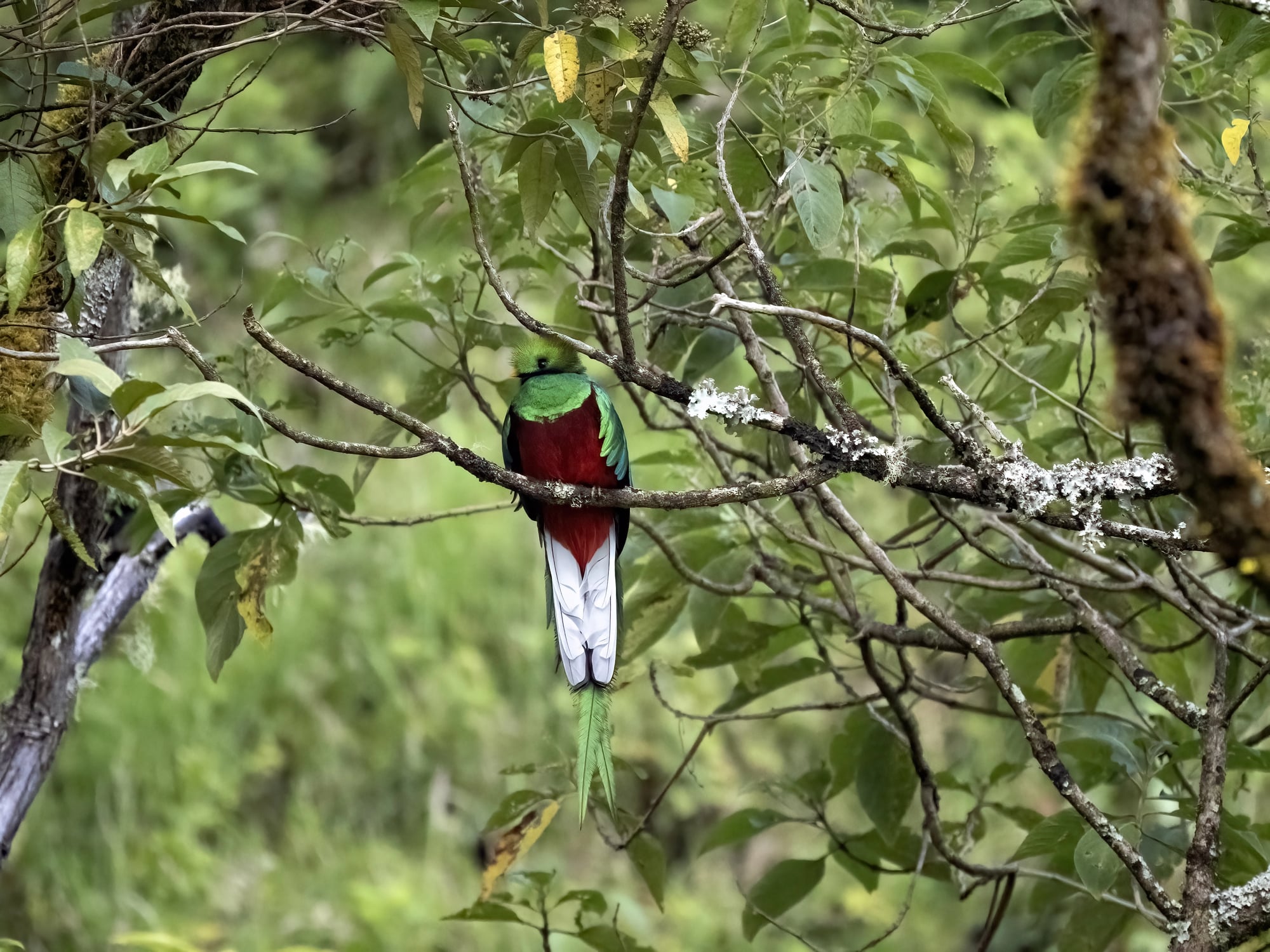
The resplendent quetzal carries cultural weight that matches its visual impact. Ancient Mayan and Aztec civilizations considered these birds sacred, and Guatemala made them the national bird.
The metallic green and blue iridescence covering the body shifts in different light. While bright red covers the chest.
Male quetzals grow long tail feathers during breeding season that can reach three feet in length. These streaming plumes make flight more difficult but signal health and genetic fitness to potential mates.
The birds live in cloud forests of Central America. Areas facing significant deforestation pressure.
Seeing a quetzal requires patience, luck, and usually a knowledgeable guide who knows their territories.
Keel-Billed Toucan
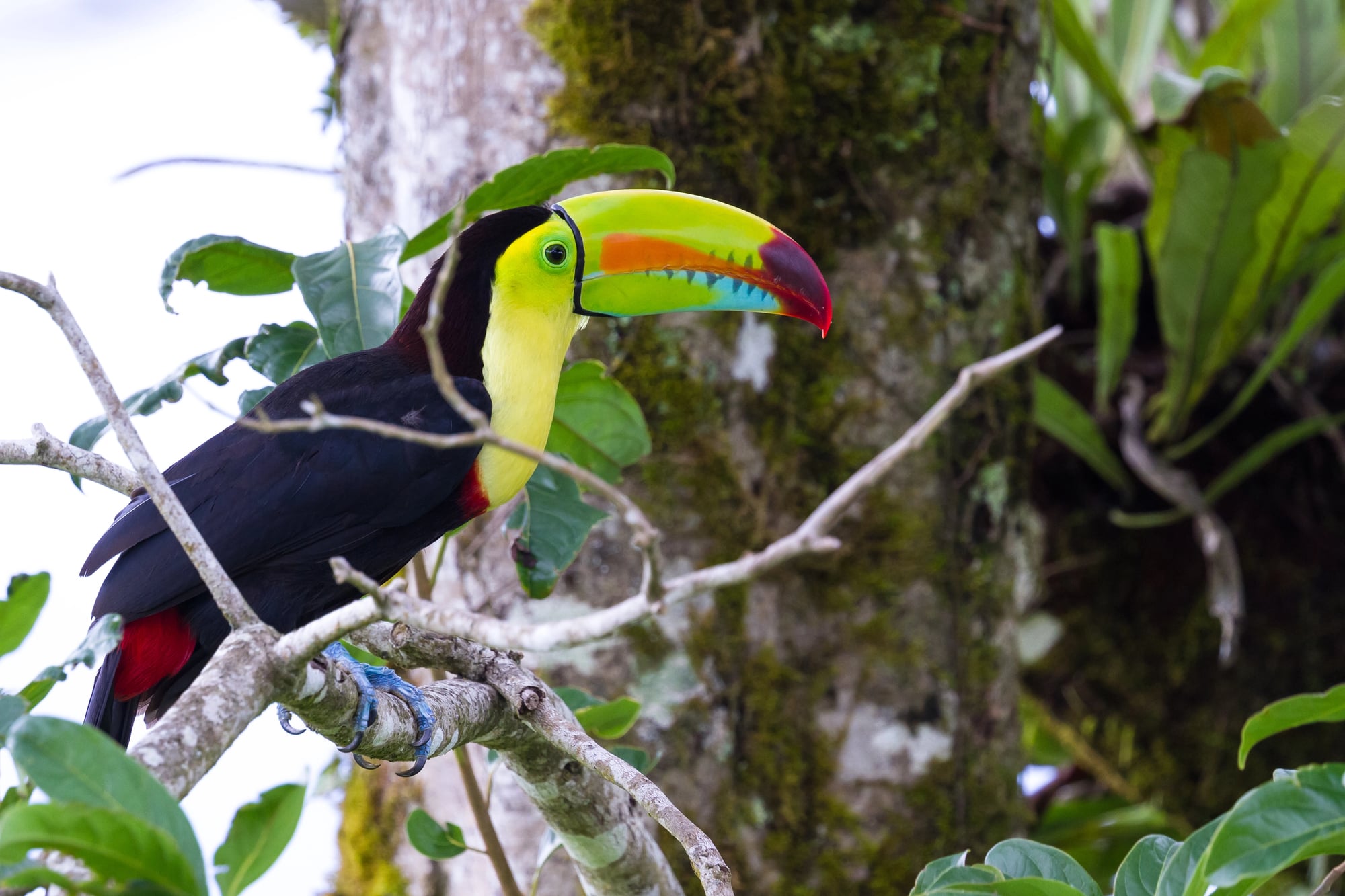
The keel-billed toucan’s massive multicolored beak demands attention. Yellow, orange, red, green, and blue sections create a rainbow effect that seems disproportionate to the bird’s black body.
The beak, despite its size, weighs very little due to a honeycomb internal structure. Scientists debate the beak’s function.
Theories include thermoregulation, fruit reaching, mate attraction, and intimidation. The birds use their beaks in fencing matches with other toucans, suggesting a social display function.
Native to Central and South American forests, keel-billed toucans live in small flocks and nest in tree cavities. The combination of jet black plumage and that ridiculous rainbow beak creates one of nature’s most recognizable silhouettes.
Lilac-Breasted Roller

Lilac-breasted rollers showcase colors that seem digitally enhanced even in person. Lilac chest, blue belly, green back, turquoise wings, and touches of rust and white create a gradient effect.
The birds get their name from aerial displays during courtship. Where males perform rolling dives while calling loudly.
Found across sub-Saharan Africa, these rollers perch conspicuously on high branches or poles, scanning for insects and small prey. Unlike many colorful species that hide in dense foliage, lilac-breasted rollers sit in the open, apparently unconcerned about being visible.
The birds frequently appear on wildlife photography tours in African savannas. Where they provide reliable color against the golden grasslands.
Nicobar Pigeon

Nicobar pigeons break the “pigeons are dull” stereotype completely. Their feathers display metallic greens, coppers, and bronzes that shimmer with iridescence.
Long hackle feathers around the neck create a mane-like effect. The knob on top of the beak adds to their prehistoric appearance—they’re actually the closest living relative to the extinct dodo.
These pigeons live on small islands in the Indo-Pacific region, from the Nicobar Islands through Indonesia and the Philippines. Island isolation allowed them to develop their distinctive appearance without the predation pressures that keep mainland birds more camouflaged.
They spend most of their time on the ground but roost in trees at night. Flying between islands to find food.
Painted Bunting
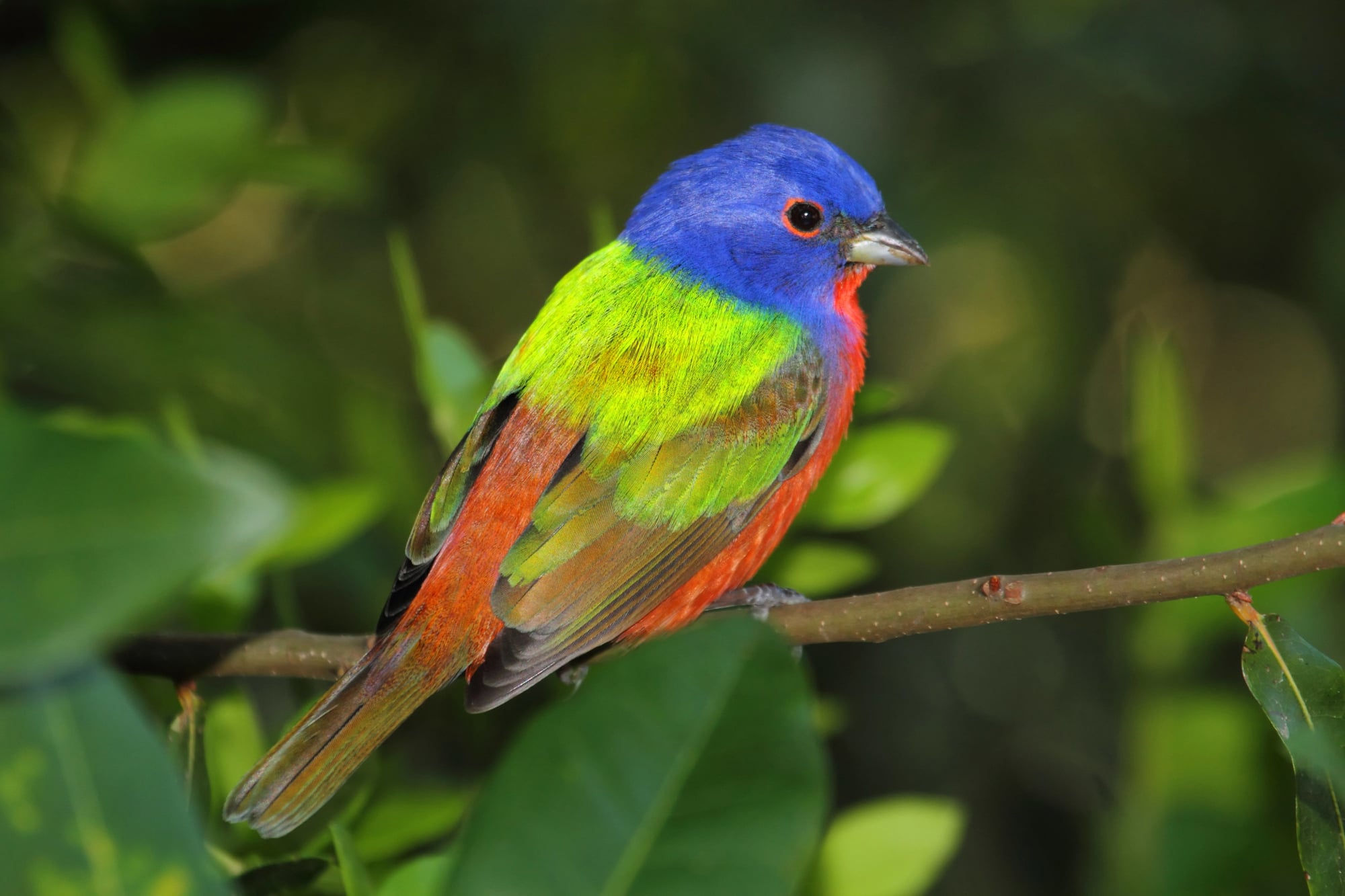
Male painted buntings wear colors that look hand-applied. Blue head, red underside, yellow-green back—primary colors that shouldn’t blend but somehow create a cohesive whole.
These small songbirds migrate between the southern United States and Central America. With western and eastern populations that don’t overlap.
The males are fiercely territorial despite their small size. Fighting other males aggressively during breeding season.
Females and juveniles wear green plumage that provides camouflage. The stark difference between male and female appearance illustrates how evolutionary pressures differ based on reproductive roles.
Birdwatchers specifically seek out painted buntings during migration periods. Considering them prize sightings.
Victoria Crowned Pigeon

Victoria crowned pigeons combine size, color, and an elaborate crest that looks styled. These New Guinea natives are the largest pigeons in the world, reaching sizes comparable to turkeys.
Deep blue-gray plumage with maroon chest panels creates a regal base. But the crown steals attention—lacy blue feathers tipped with white form a circular crest that looks like intricate lacework.
The birds walk along the forest floor, picking up fallen fruit and seeds. Their size and limited flight ability make them vulnerable to hunting and habitat loss.
Conservation efforts focus on protecting remaining forest habitat and establishing protected populations. In their native range, they’ve been hunted for both meat and feathers, putting pressure on wild populations.
Hyacinth Macaw

The hyacinth macaw takes a single color and maximizes it. Cobalt blue covers almost the entire bird, with small yellow patches around the eyes and beak providing the only contrast.
These massive parrots, the largest flying parrots in the world, live in central South America where they specialize in eating hard palm nuts. Their powerful beaks can crack nuts that other animals can’t access, filling an ecological niche.
The striking blue coloration comes from light scattering in feather structures rather than blue pigment—there’s no actual blue pigment in bird feathers, only structural colors that reflect blue wavelengths. Hyacinth macaws face threats from habitat loss and the pet trade, though increased protection has helped stabilize some populations.
Peacock
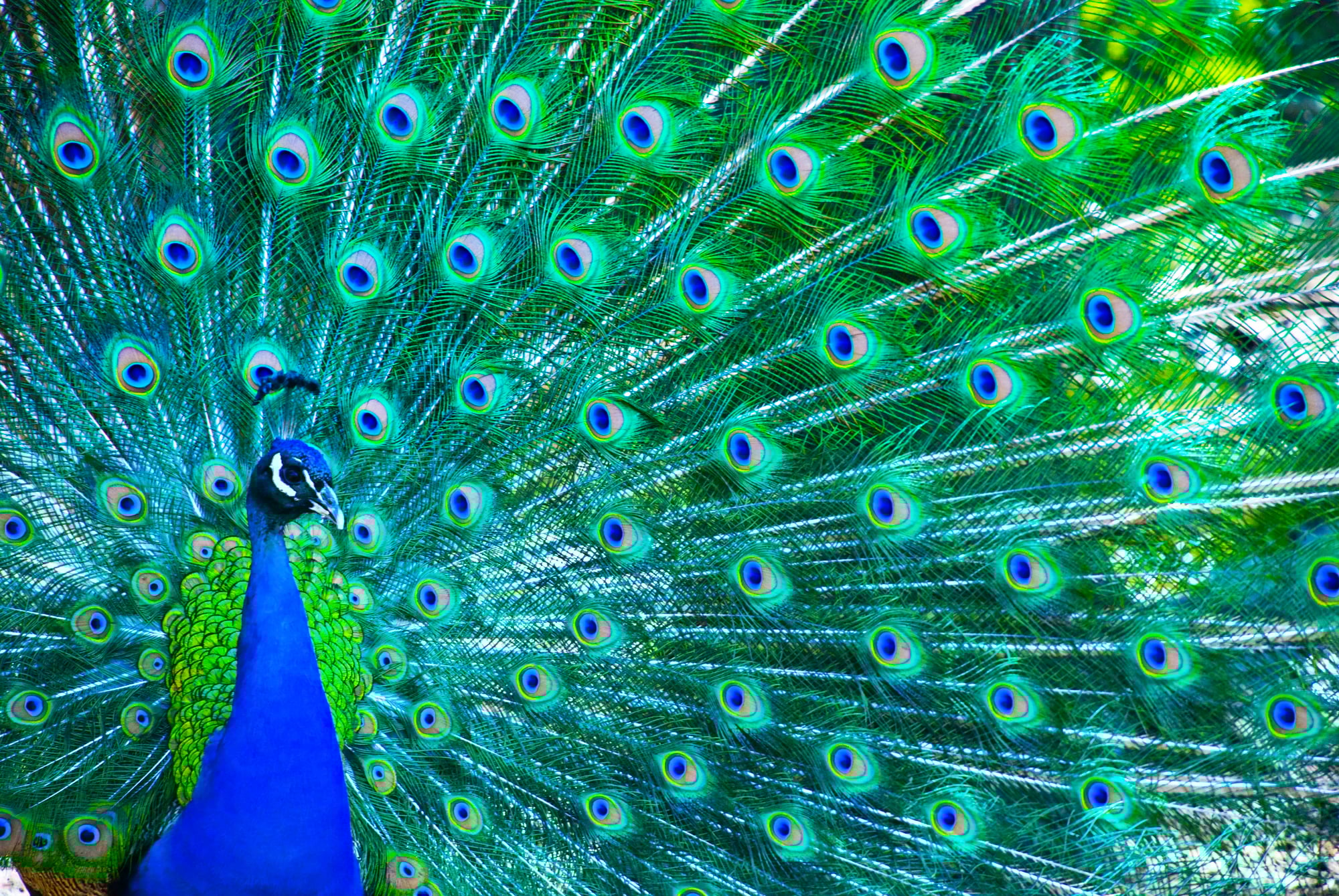
Peacocks turned their tail feathers into art installations. Males display over 200 iridescent feathers in a fan that can span over five feet.
The eye spots, or ocelli, contain microscopic crystal-like structures that refract light into brilliant blues and greens. The display serves purely to attract peahens, who watch carefully and choose mates based partly on tail quality.
Originally from India and Sri Lanka, peafowl have been introduced worldwide as ornamental birds. The males perform elaborate dances, shaking their feathers to create sound and visual effects.
The entire display represents a significant energy investment—those tail feathers make flight more difficult and attract predators. The fact that the trait persists shows how powerful reproductive selection can be.
Living Rainbows

These birds prove that nature doesn’t do anything halfway. When color provides advantage—whether for mating, species recognition, or warning signals—evolution creates combinations and intensities that rival anything humans design.
The variety of approaches, from the toucan’s oversized rainbow beak to the peacock’s massive fan to the lorikeet’s full-spectrum body coverage, shows that multiple solutions can work. What they share is an ability to stop people mid-step and force a second look at something that seems too deliberately beautiful to be accidental.
More from Go2Tutors!

- The Romanov Crown Jewels and Their Tragic Fate
- 13 Historical Mysteries That Science Still Can’t Solve
- Famous Hoaxes That Fooled the World for Years
- 15 Child Stars with Tragic Adult Lives
- 16 Famous Jewelry Pieces in History
Like Go2Tutors’s content? Follow us on MSN.