26 Troll Dolls and Kewpies Collectors Want
Two of the most recognizable faces in toy history were drawn by people who never expected a business out of them. Rose O’Neill sketched a cherub for a magazine comic strip in 1909, and Thomas Dam carved a troll for his daughter in 1959 because he could not afford a birthday present.
Both became industries within a few years.
Half a century of imitators followed, which is why collectors spend so much time looking at feet, arms, and the backs of heads for marks. The pieces below are the ones that reward that attention, with the usual warning that condition dependency applies to every price mentioned.
The Original Wooden Dam Troll
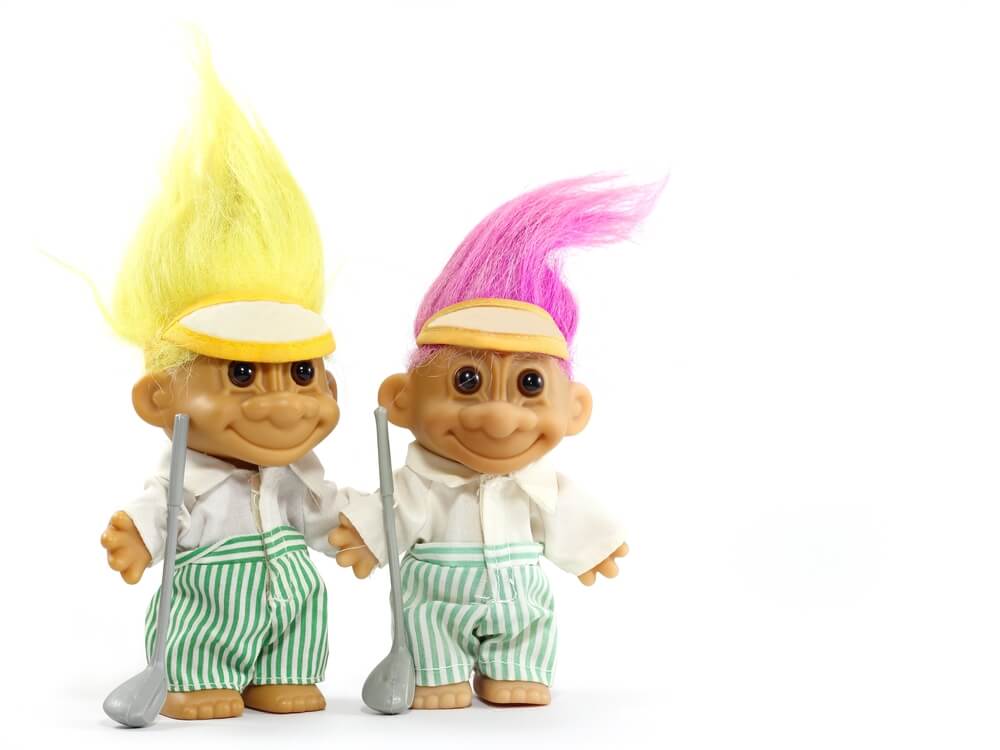
The very first troll, carved in Lajla in 1957–1958 for Dam’s daughter Lila, had glass eyes and wool hair. Dam carved a small number of these wooden figures to order before moving to molded production, and surviving examples are museum pieces rather than market items.
Any wooden troll offered as an original Dam carving should come with a documented family or Danish provenance.
Early Dam Things Vinyl Trolls
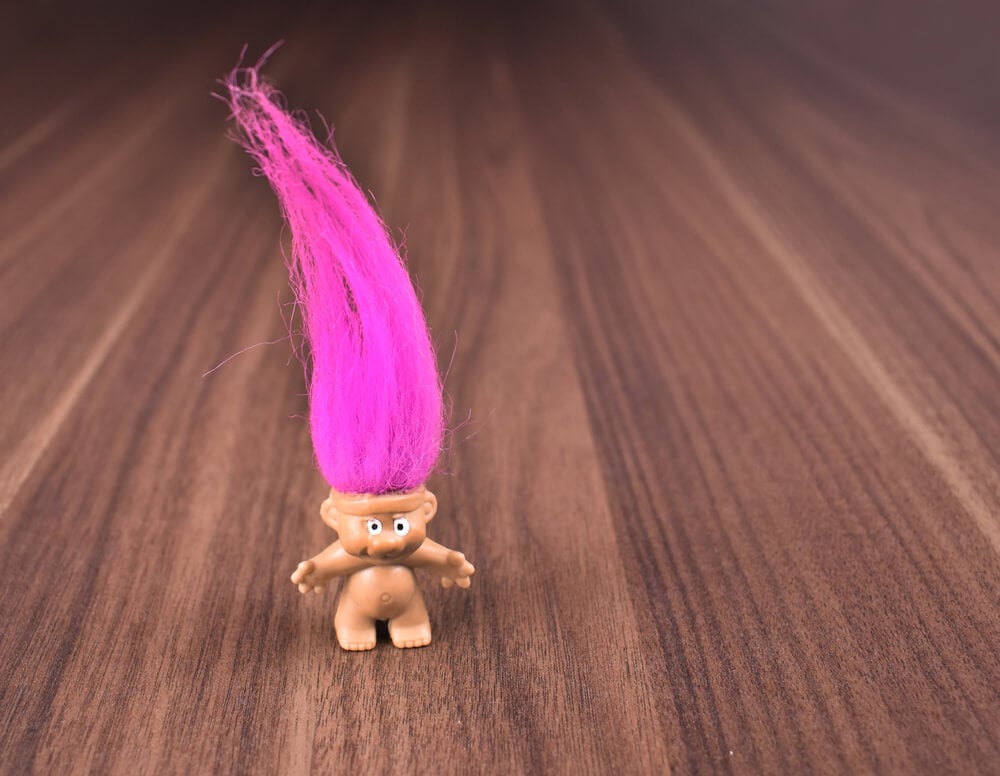
The first mass-produced Dam trolls of the early 1960s were made in Denmark, with sheepskin hair, glass eyes, and a copyright line molded into the foot that reads “© 1961 190918 Denmark.” That notice is famous for a reason: it failed to name Dam’s company, which left the design open to American copies.
Original Danish-made examples with glass eyes and intact hair bring far more than the copies they inspired.
Large Dam Good Luck Trolls
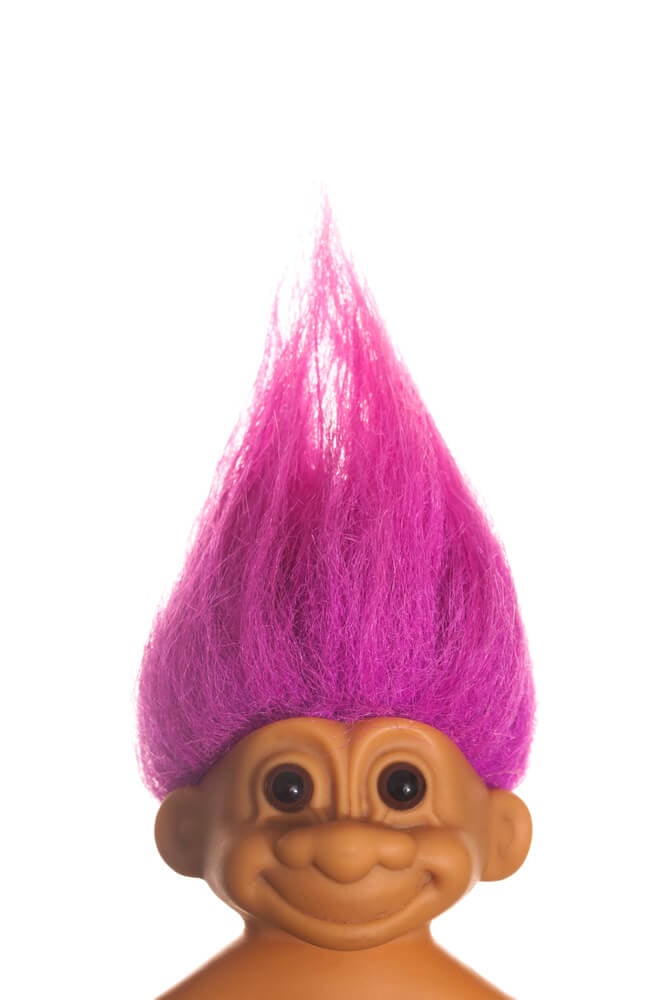
Dam made trolls in sizes up to roughly 18 inches, and the large early examples with sheepskin hair are scarce because most were store displays or special gifts. A big early Dam troll in its original felt outfit is a strong four-figure piece.
Hair condition matters enormously, since replaced synthetic hair cuts the value sharply.
Dam Animal Trolls
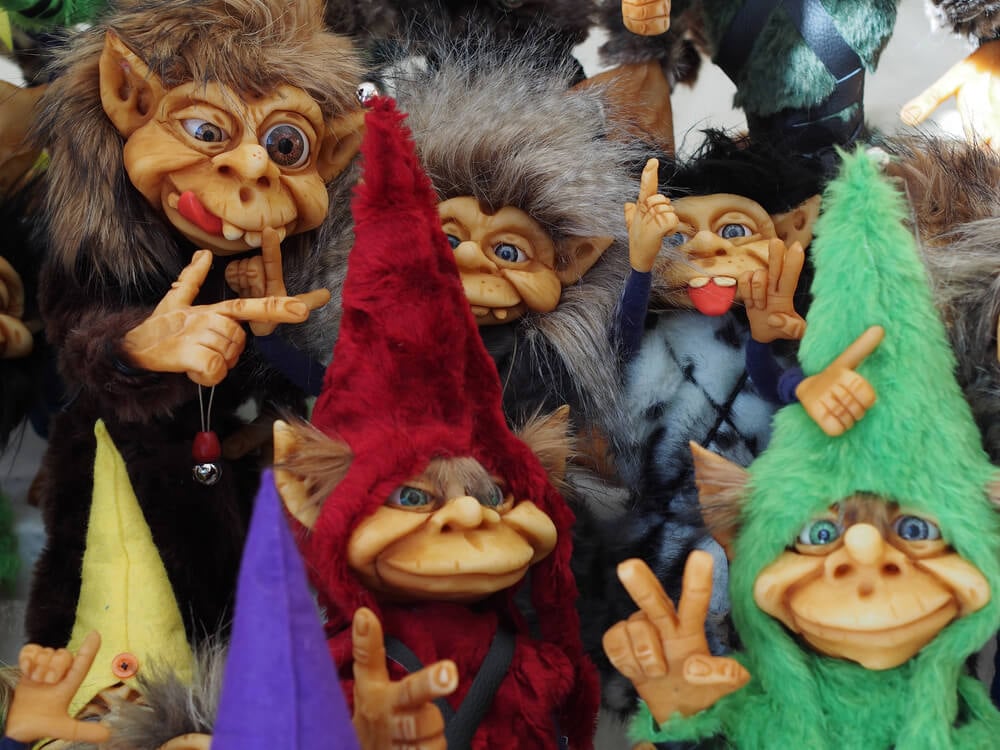
Beyond the standard troll, Dam produced a menagerie of animal trolls in the 1960s, including a giraffe, a cow, a horse, a lion, an elephant, and a turtle. The animals were made in smaller numbers than the people, and complete examples with their original hair and tags are the ones collectors prize most.
The giraffe and the elephant are generally the hardest to find.
Dam Tailed Trolls
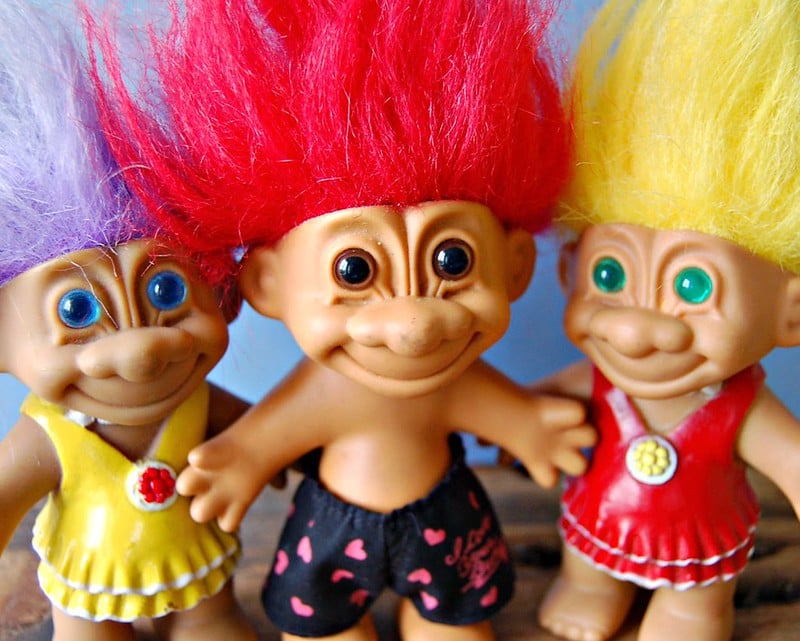
A line of Dam trolls was molded with a tail, which later production dropped. The tailed figures are early and were produced only for a short time, which makes them an easy marker of age for collectors.
A tailed troll with glass eyes and Danish foot markings sits near the top of the Dam hierarchy.
Uneeda Wishniks
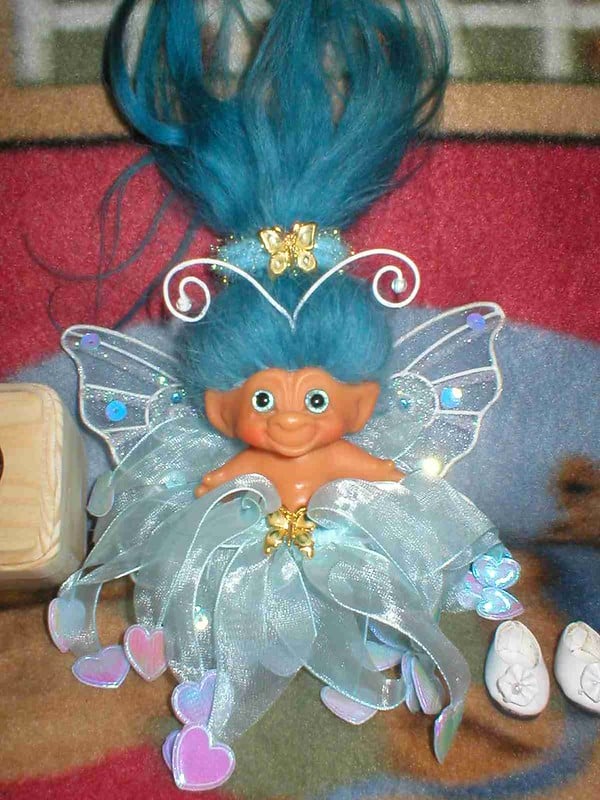
Because Dam’s US copyright was invalid, the Uneeda Doll Company launched its own trolls in 1964 and called them Wishniks. Wishniks are the most common American trolls of the decade, so most are inexpensive, but early examples with a double horseshoe mark and original clothing are collected in their own right.
Unusual hair colors and complete boxed sets bring the premiums.
Scandia House Trolls
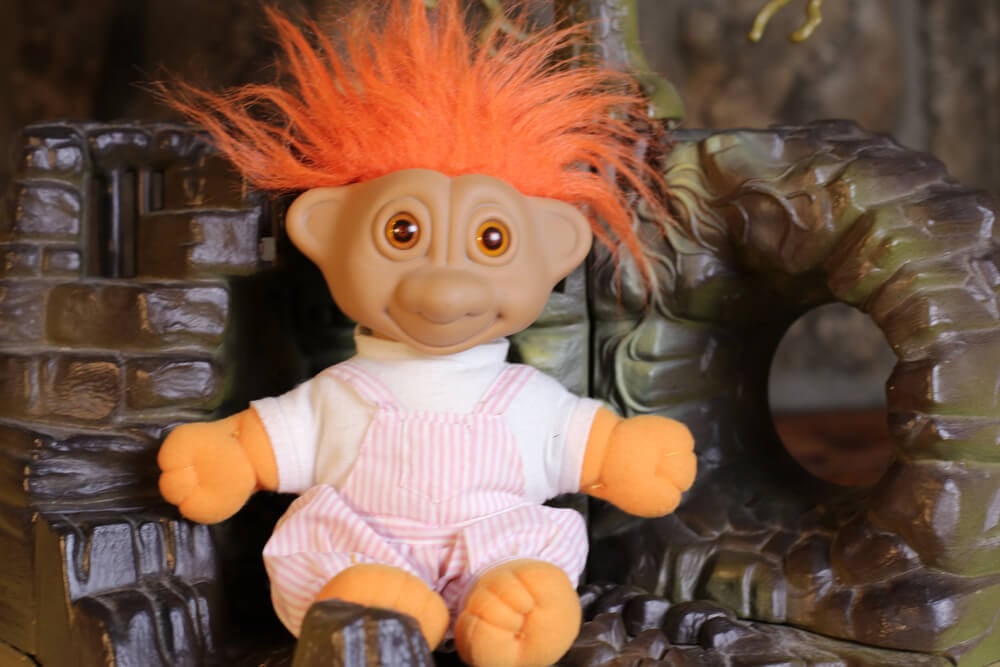
Scandia House, later Royalty Designs, was one of the few licensed importers of genuine Dam trolls into the United States in the 1960s. Trolls bearing a Scandia House tag or box are therefore Danish-made originals, not copies, and the tag alone can add meaningfully to the price.
Boxed Scandia House trolls with the hang tag still attached are the examples to look for.
Two-Headed Trolls
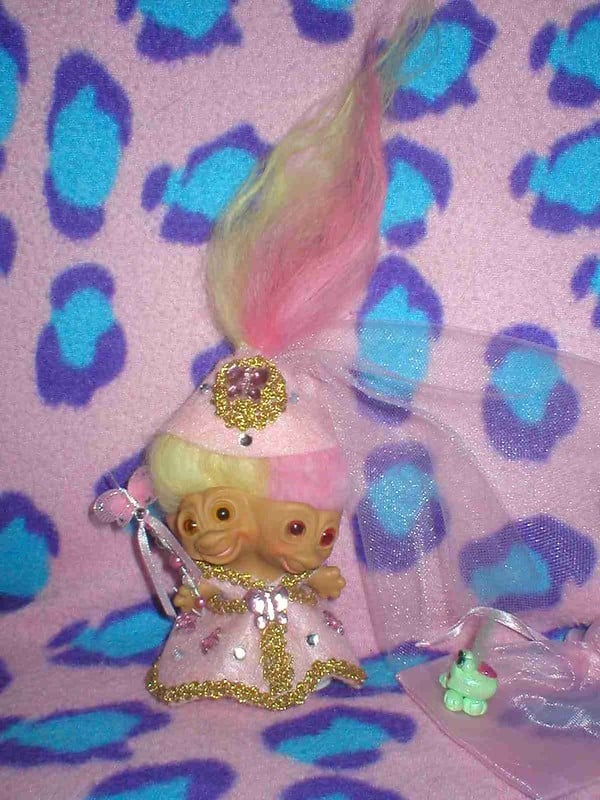
Several makers produced two-headed trolls in the 1960s, a novelty that children tended to wear out quickly. The two-headed figures are scarce in good condition because the hair on both heads had to survive.
Examples with both original tufts intact and no cracking at the shared neck are uncommon enough to command real interest.
Trolls in Original Felt Outfits
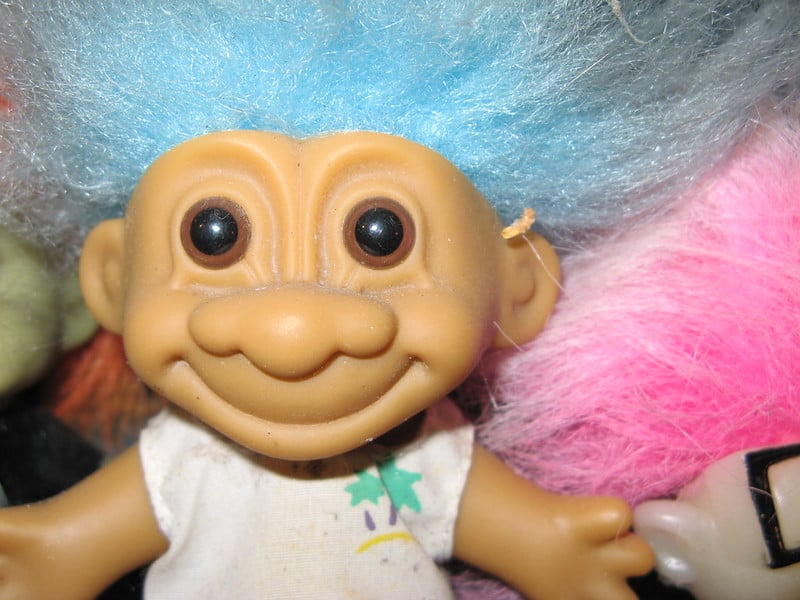
Early Dam trolls were dressed in simple felt clothing, often a tunic or a dress with a bit of trim, and the felt was usually the first thing to disappear. A troll still wearing its factory outfit is worth considerably more than the same troll stripped of its clothes, and tags sewn into the garment are the best evidence of originality.
Replacement felt is common and easy to spot once seen.
Norfin Trolls
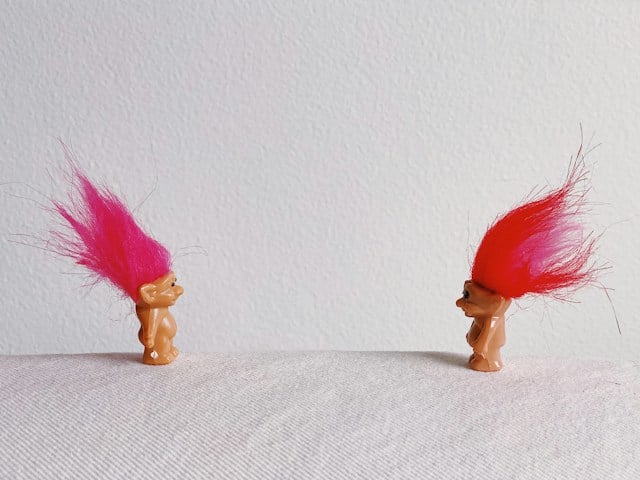
In the 1980s Dam trolls were sold in the United States under the Norfin name after Steven Stark spotted one in a Copenhagen airport in 1982 and licensed the rights. Norfin trolls carry Dam markings and have become collectible in their own right, especially the larger figures and the themed sets.
They are the entry point for many collectors because prices are still modest.
Treasure Trolls
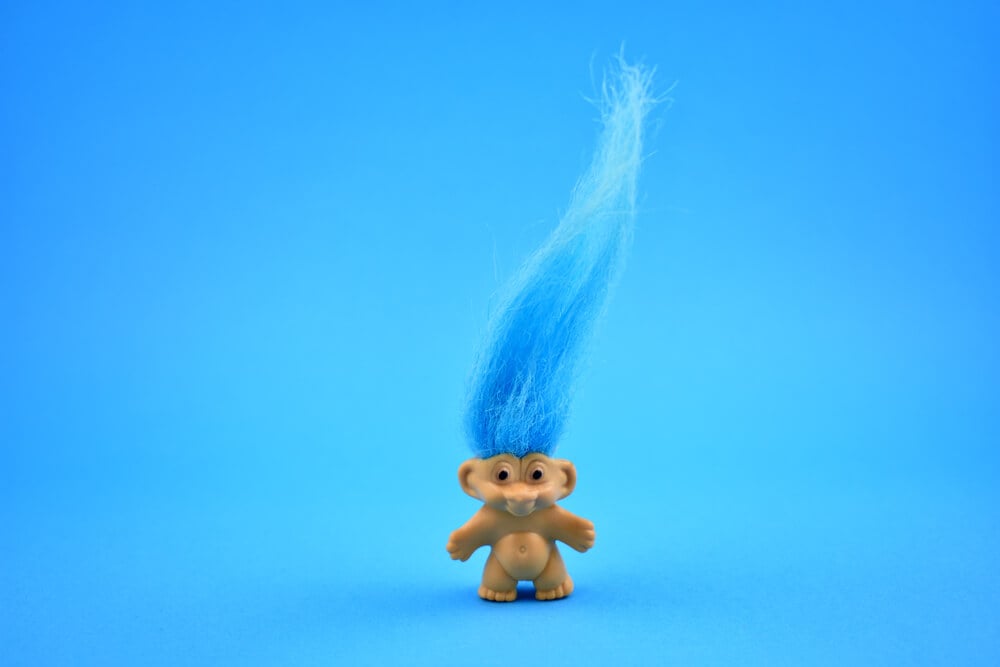
Ace Novelty’s Treasure Trolls, with a gem set into the belly, were the biggest trolls of the early 1990s revival. They were made in enormous quantities, so loose examples are cheap, but complete boxed sets, store displays, and the larger figures are starting to climb.
The gem color and the hair color are what sort the common from the scarce.
Russ Berrie Trolls
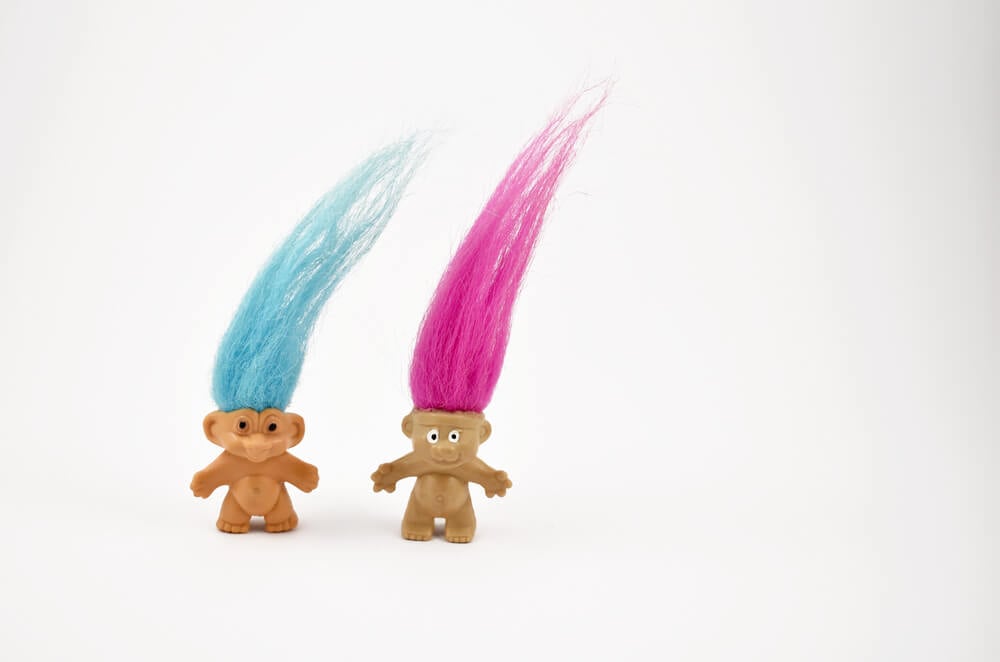
Russ Berrie trolls dominated the 1990s with themed figures such as wizards, brides, and sports players. Most are common, but the large plush-bodied versions, the limited-edition figures, and the holiday-themed sets are the ones that hold value.
A Russ troll is typically marked on the back of the neck, which makes identification quick.
Dam Trolls with Glass Eyes
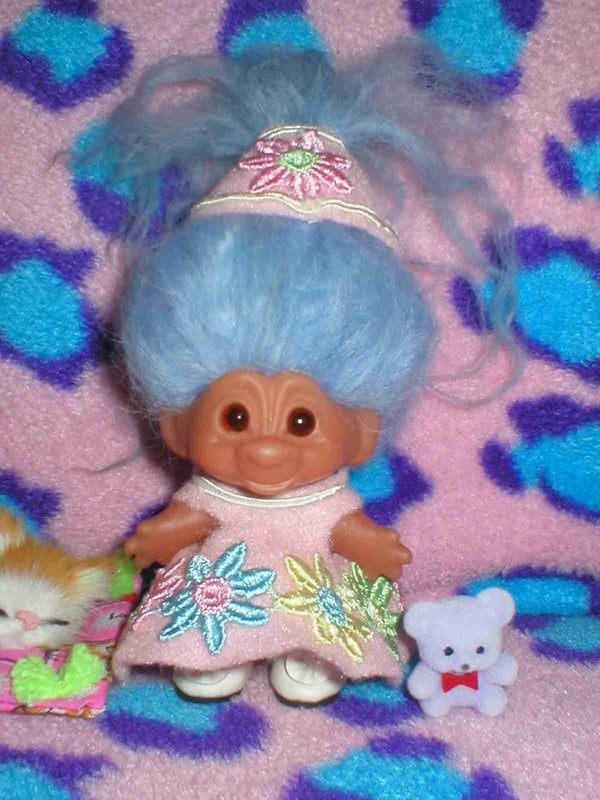
Across every Dam line, glass eyes are the single most reliable signal of an early example, since later production switched to plastic. Glass eyes have depth and often a slight amber tone, while plastic eyes look flat.
Collectors pay a clear premium for glass-eyed trolls regardless of size, and many price guides sort Dam trolls by this feature before anything else.
Troll Pencil Toppers and Miniatures
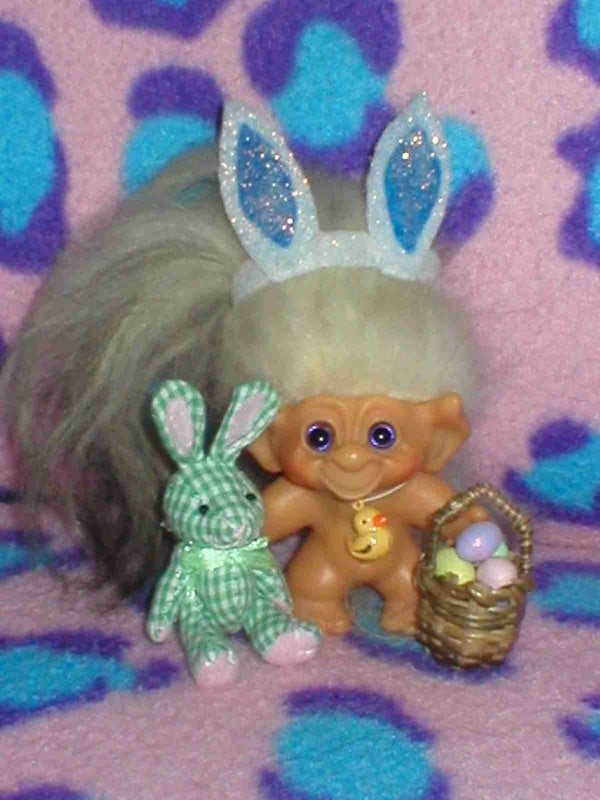
Tiny trolls molded onto pencil tops, keychains, and rings were sold by the millions, and most are worth almost nothing. The exceptions are complete carded sets and early Danish-made miniatures with real hair rather than molded hair.
These small pieces are collected mainly to fill out a shelf, but a full rack display from the 1960s is a different matter.
Signed Bisque Kewpies
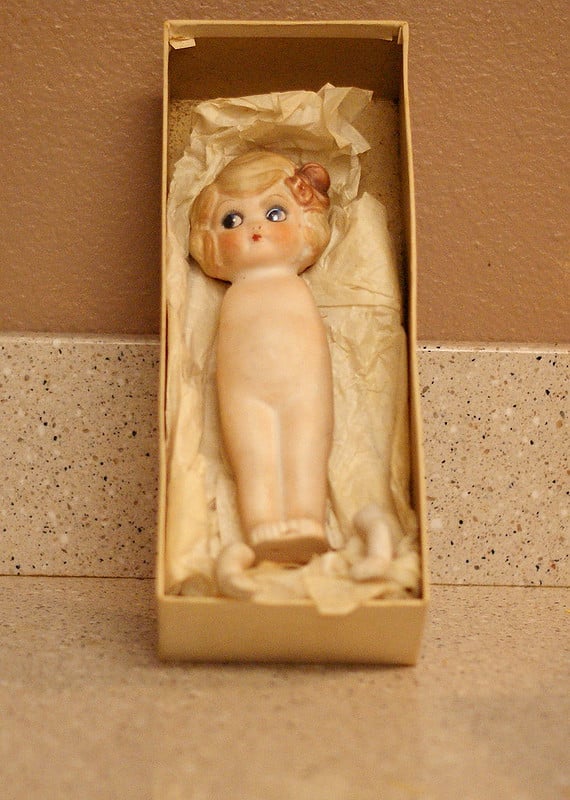
Rose O’Neill’s Kewpie was first produced as a bisque doll in 1912 by the Kestner factory in Waltershausen, Germany, and O’Neill signed some of the early examples on the foot or arm. A signed bisque Kewpie is the top of the Kewpie market, and larger sizes multiply the price.
Unsigned bisque Kewpies with the paper heart label on the chest are the next tier down.
Kewpie Action Figures
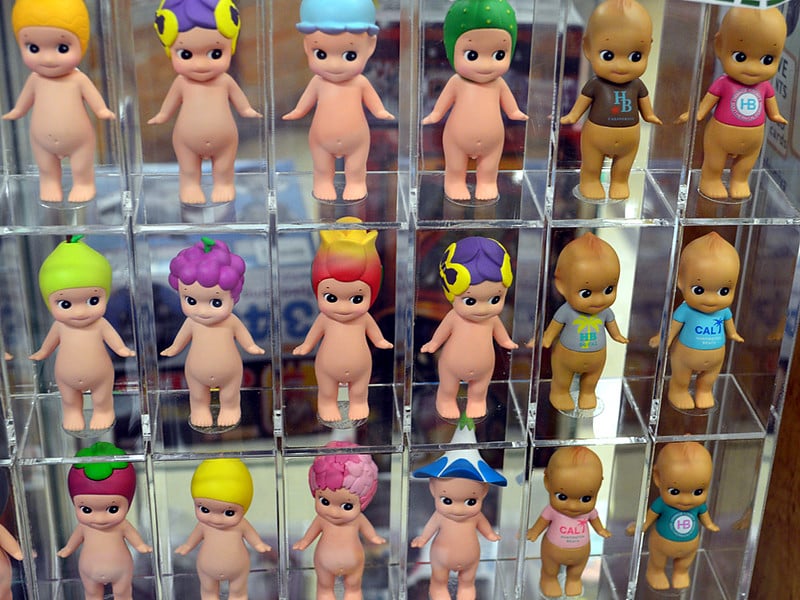
Beyond the standing Kewpie, German factories produced bisque figures in dozens of poses collectively called action Kewpies: a Kewpie reading, a Kewpie with a mandolin, a pair of Kewpies hugging, a Kewpie with a dog. The rarer poses are worth many times the standing figure, and the Huggers pair is one of the most recognized.
Chips to the fragile fingers and wings are what to check.
The Kewpie Thinker
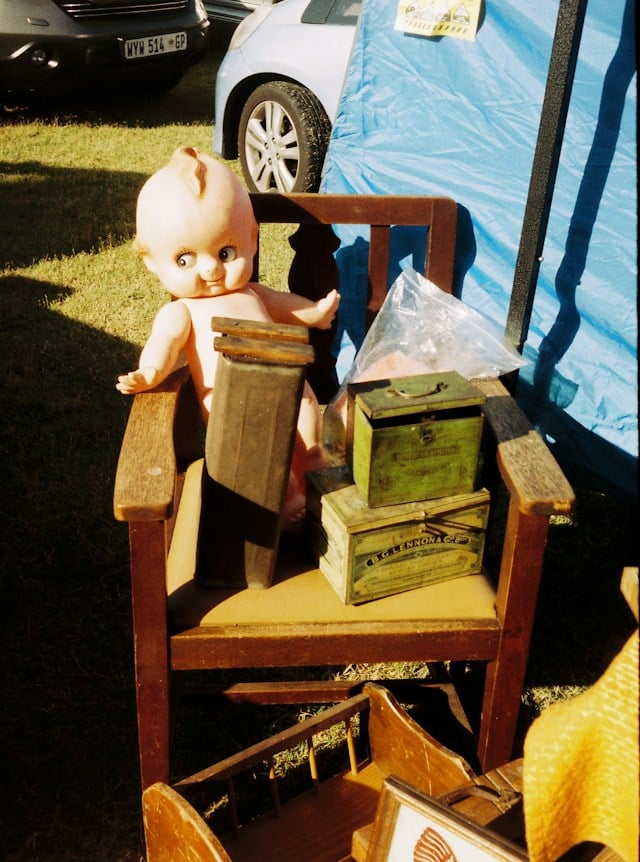
The Thinker is a seated bisque Kewpie with its chin resting on a hand, a direct joke on the Rodin sculpture. It was produced in several sizes and remains one of the most sought-after action figures because the pose is so easily recognized.
Larger Thinkers in clean, unrepaired bisque are scarce and priced accordingly.
Kewpie Soldiers
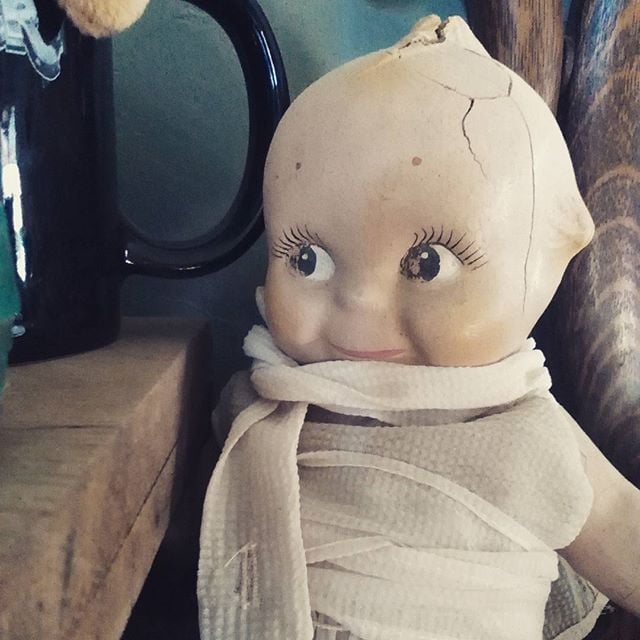
During the First World War era Kewpies were produced in bisque wearing a helmet and carrying a rifle, a slightly odd image for a character whose stated purpose was to make people merry. The soldier Kewpies are uncommon and attract both doll collectors and military memorabilia collectors.
Intact helmets and rifles are essential, since both break easily.
Kewpie Kutouts
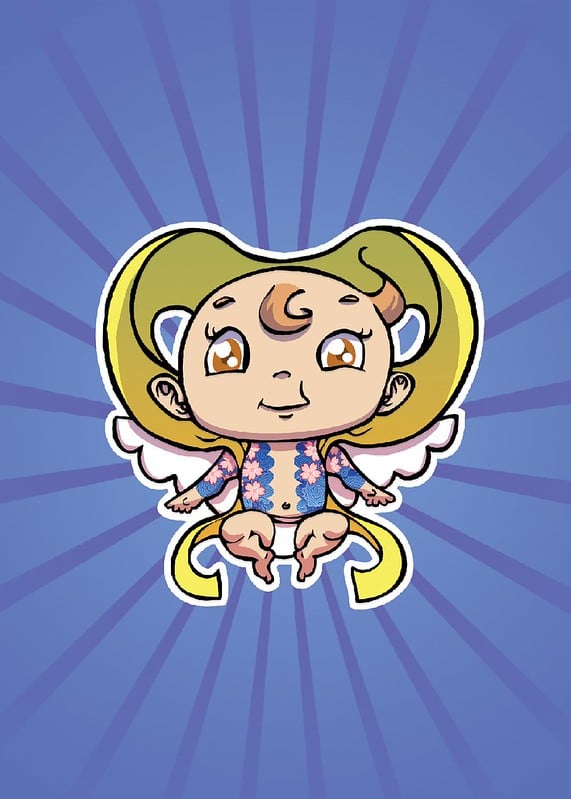
O’Neill drew paper doll versions of her characters, called Kewpie Kutouts, for Woman’s Home Companion in the 1910s. Uncut pages are the collectible form, since most were clipped by children the week they arrived.
A complete run of uncut Kutouts is difficult to assemble and valued accordingly.
Cameo Doll Company Composition Kewpies
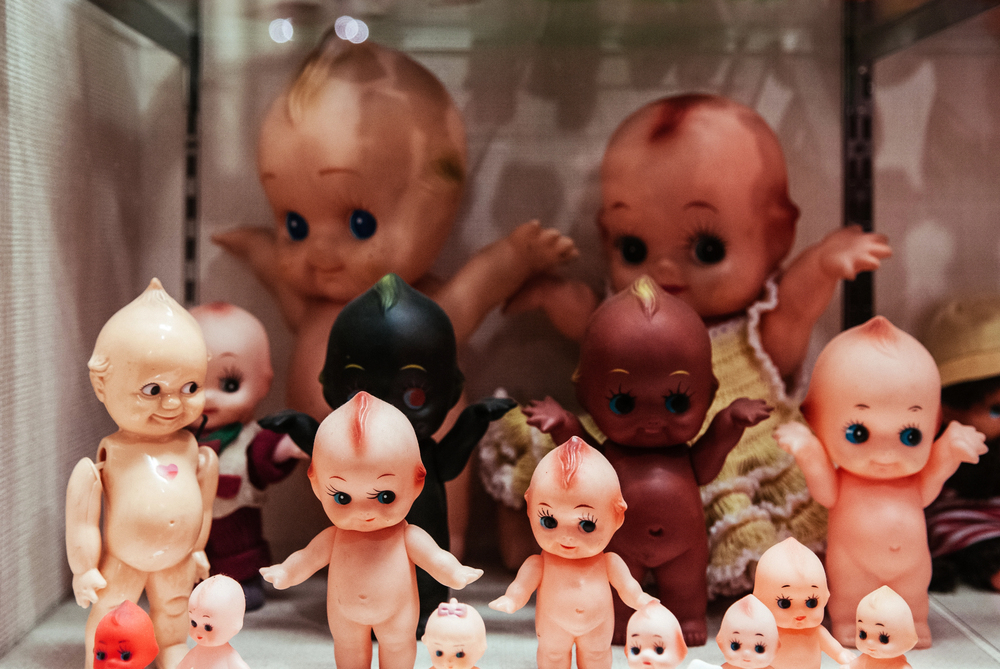
Joseph Kallus, who had worked with O’Neill on the original dolls, founded the Cameo Doll Company and produced composition Kewpies from 1922. These are marked on the back and often carry the O’Neill copyright line.
Composition crazes and flakes with age, so an example with smooth, uncrazed paint is the exception rather than the rule.
Celluloid Carnival Kewpies
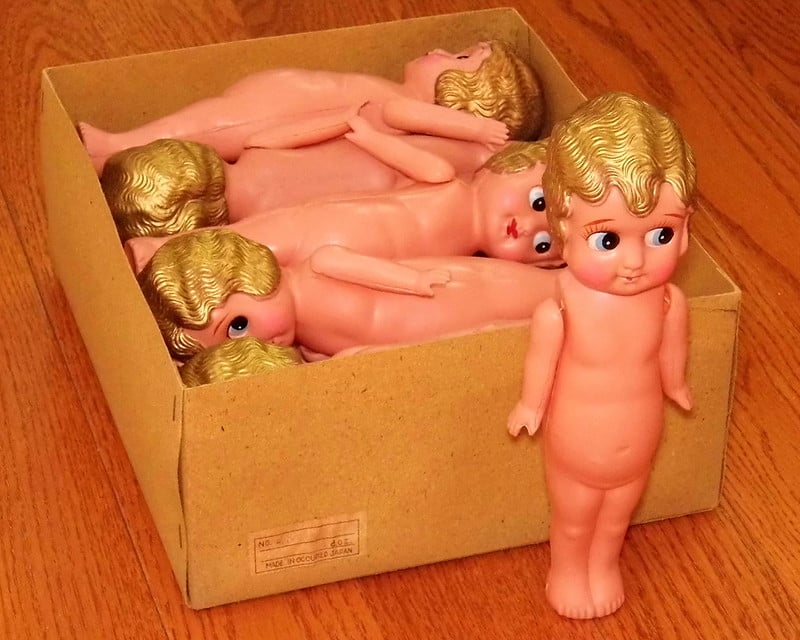
In the 1920s and 1930s cheap celluloid Kewpies, mostly made in Japan, were given away as carnival prizes, often dressed in feathers and glitter. They are not Rose O’Neill originals, but they are the Kewpies most Americans actually owned, and the folk-art quality of the costumes has made them collectible.
Celluloid is flammable and brittle, so undented examples are increasingly scarce.
Scootles
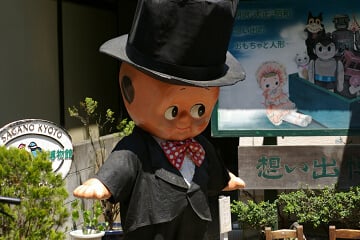
O’Neill designed a second doll, Scootles, a sturdy toddler with molded hair that Cameo produced from the 1920s. Scootles never matched Kewpie’s fame, which is exactly why collectors chase it now.
Composition and later vinyl versions exist, and the early composition dolls in original clothing are the ones with real value.
Ho-Ho
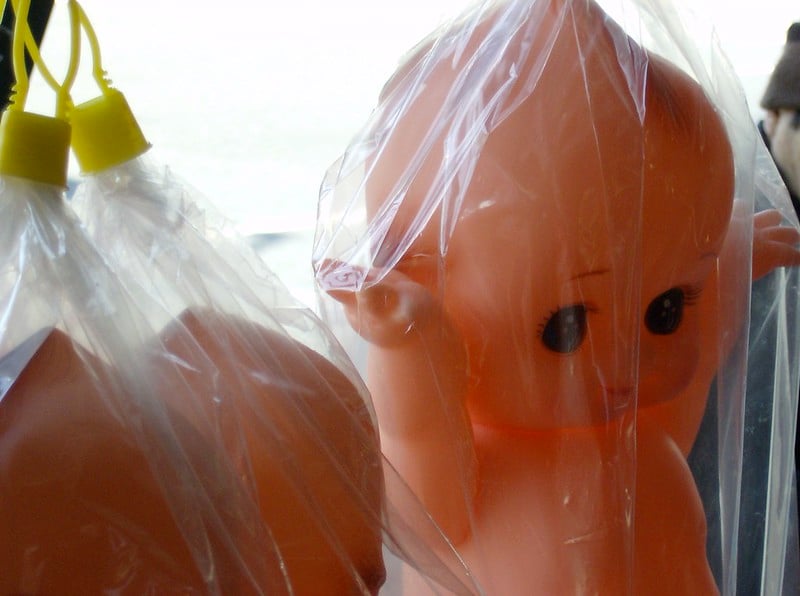
Ho-Ho was O’Neill’s laughing figure, produced by Cameo around 1940 as a small seated character with an open-mouthed grin. It is one of the least known O’Neill designs and sits at the collector’s end of the market rather than the nostalgia end.
Examples with the original paper label are rare.
Kewpie Postcards
O’Neill’s Kewpie illustrations were printed on postcards by the Gibson Art Company and others, and the Kewpies often carried political messages, including support for women’s suffrage. The suffrage cards are the most valuable, because they are collected by both doll enthusiasts and political memorabilia collectors.
Postally used cards with clear O’Neill signatures remain affordable, which makes them a good entry point.
Kewpie Advertising Pieces
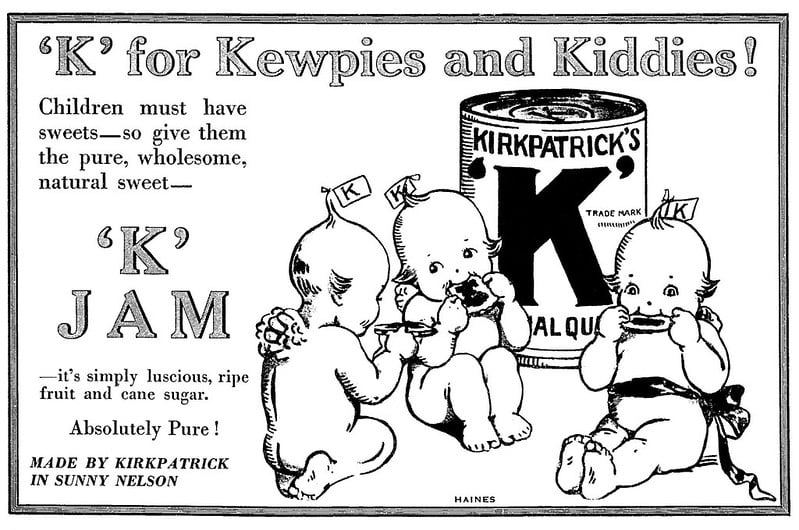
Kewpies sold Jell-O, among other products, and O’Neill drew advertising art featuring the characters for years. Original advertising pieces, including store displays and magazine inserts with Kewpies, are collected alongside the dolls.
The Jell-O booklets illustrated by O’Neill are the most commonly found and the easiest to verify.
Jesco Vinyl Kewpies
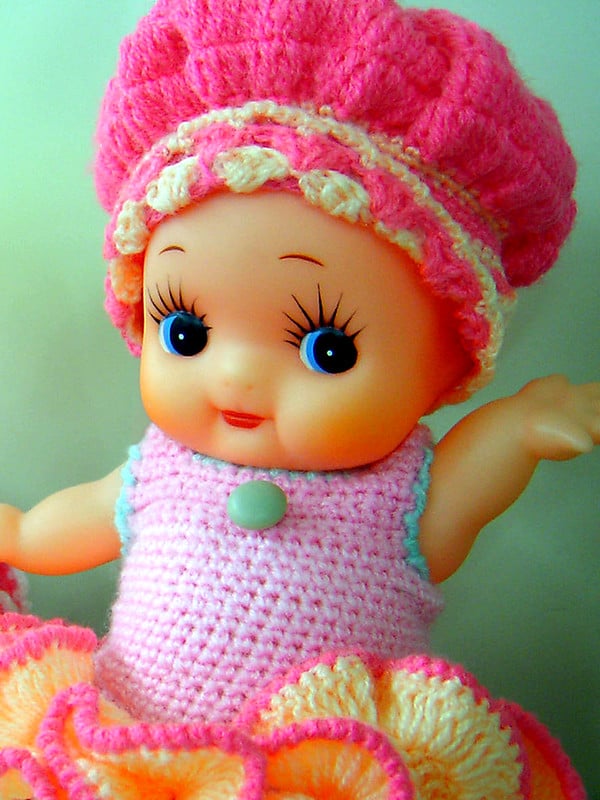
In the 1980s Jesco produced licensed vinyl Kewpies in several sizes, marked on the back of the head. They are the Kewpies most people under sixty actually remember, and while common, the larger sizes and the boxed examples hold steady value.
They are also the safest Kewpie purchase for a new collector, since reproductions of this era are rare.
The Economics of a Smile
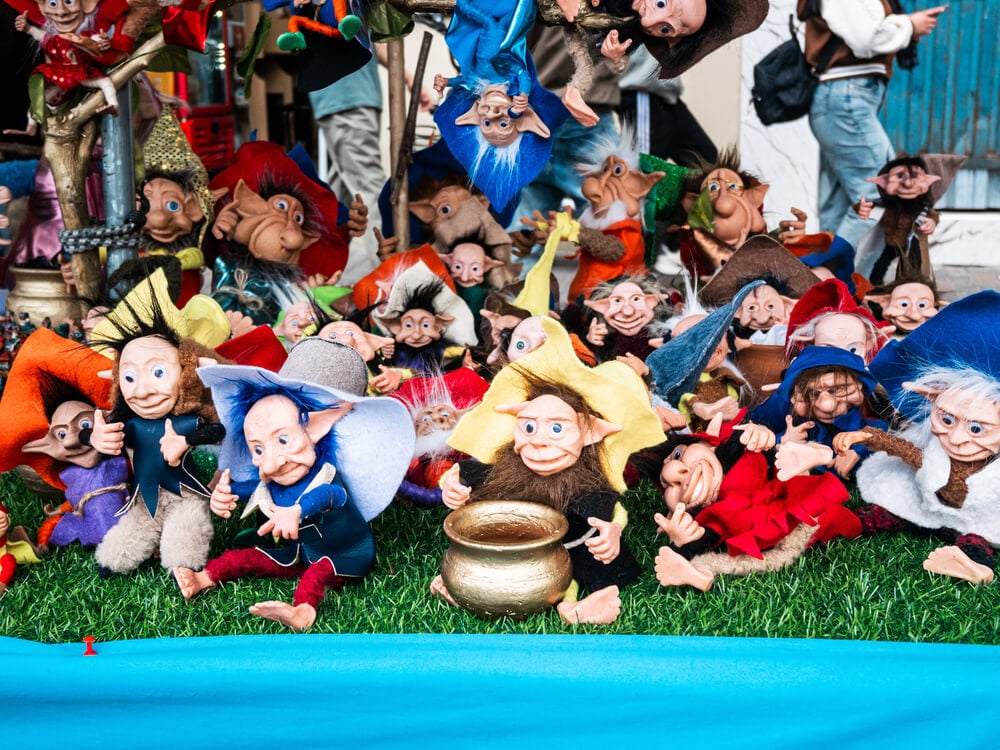
Both of these characters were created by people who lost control of them. O’Neill spent the rest of her life trying to keep the Kewpie’s look intact against knockoffs, and Dam watched his trolls copied across America because of one missing company name on a foot.
The collectors who pay most today are, in effect, paying for the originals the inventors could not defend.
That is why marks matter more than appearance in this field. A troll with glass eyes and a Danish foot, or a Kewpie with a signature etched into bisque, carries a direct line back to one person’s hands.
Everything else is an echo, and the market has learned to price the difference.
More from Go2Tutors!

- The Romanov Crown Jewels and Their Tragic Fate
- 13 Historical Mysteries That Science Still Can’t Solve
- Famous Hoaxes That Fooled the World for Years
- 15 Child Stars with Tragic Adult Lives
- 16 Famous Jewelry Pieces in History
Like Go2Tutors’s content? Follow us on MSN.