18 Photos Of Women Who Built Wartime America
The famous images of American women at war work tend to show a smile and a rolled sleeve. The full record is larger and stranger, spread across federal photo units, museum archives, and the lens of a Manhattan Project staff photographer.
Each frame below captures a real worker in a real place, from aircraft plants to railroad yards to a shipyard in Marin County.
Some of these women were named, many were not, and one was identified as a possible inspiration for a famous wartime image only after decades of debate. Together, the photographs show how much of the wartime economy was built by hands that had never been asked to build it before.
Naomi Parker at the Lathe, Alameda Naval Air Station

A 1942 photograph taken at the Alameda Naval Air Station shows Naomi Parker bent over a lathe, her hair wrapped in a polka-dot bandana. For decades, the identity of the woman associated with the famous “We Can Do It!”
poster was disputed, and Parker later became widely recognized as a possible inspiration for the image. She died at age 96, long after the debate over her connection to the poster had attracted widespread attention.
The image remains one of the few wartime pictures where the worker finally got her name back.
A Hand Drill and a Dive Bomber at Vultee-Nashville
In a 1943 Office of War Information photograph, a woman at Vultee-Nashville works with a tool described in the original caption as a hand drill on the horizontal stabilizer of a Vengeance dive bomber. The A-31 Vengeance was originally designed for the French, then adopted by the Royal Air Force, and later by the U.S.
Army Air Forces. It was a single-engine, low-wing plane that carried a crew of two and was armed with machine guns.
The photographer, Alfred T. Palmer, captured her in tight concentration, with the bomber’s skeleton framing her work.
Lunch Hour Under Sandbags at Douglas Aircraft
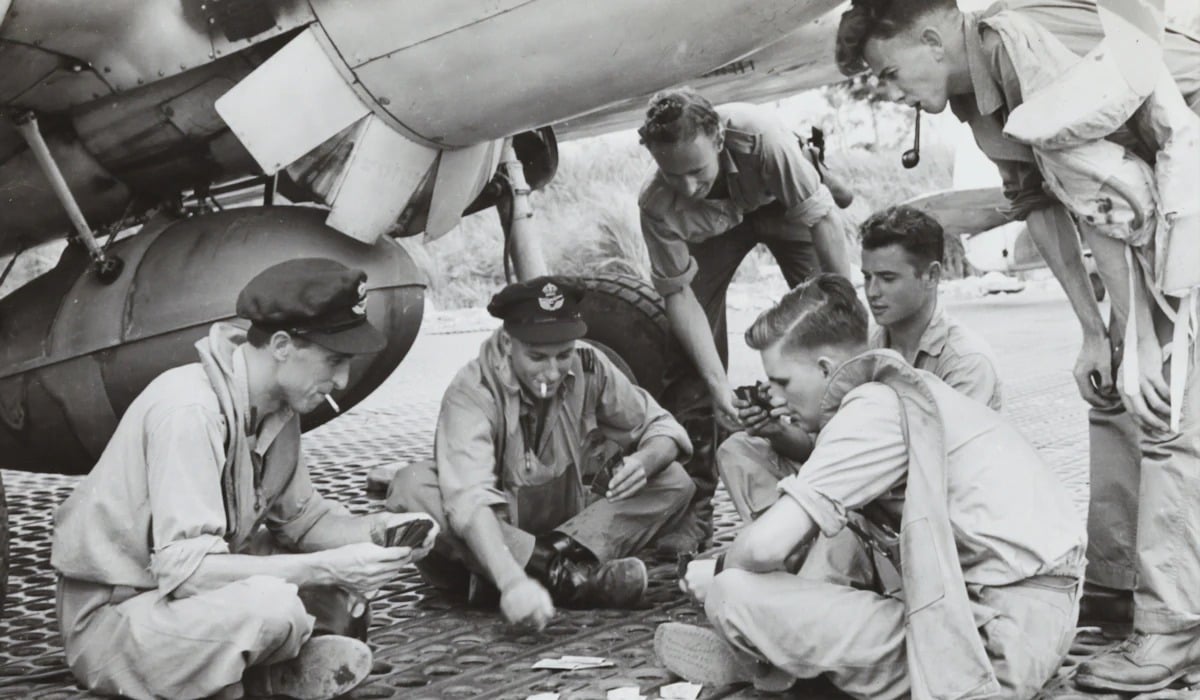
At the Douglas Aircraft Company plant in Long Beach, California, a group of assembly line women grabbed a few minutes of rest at lunchtime in 1942. Sandbags stacked behind them suggested precautions against possible air raids, a reminder that wartime industries on the West Coast faced concerns about potential attacks.
The plant turned out the B-17F Flying Fortress, the A-20 Havoc bomber, and the C-47 transport. The photograph pairs ordinary lunch-break fatigue with the tension of a country that expected bombs.
Riveting an A-20 Havoc in Long Beach

Another Alfred Palmer frame from the Douglas Aircraft plant in Long Beach shows a woman riveting an A-20 bomber. The A-20 was one of three major aircraft the plant built, alongside the B-17F and the C-47.
Palmer shot the Long Beach plant in October 1942, when women were taking on an increasingly visible role in aircraft production. The photograph treats the rivet gun as a skilled tool rather than a novelty.
Tail Fuselage of a B-17 Takes Shape
Women workers at the Douglas plant in Long Beach installed fixtures and assemblies in the tail fuselage section of a B-17 bomber, as shown in a Library of Congress photograph. The B-17F, better known as the Flying Fortress, was a later model of a bomber that earned a reputation for taking punishment and getting home.
The work required reaching into tight sections of the airframe where precision mattered more than strength. The image shows women performing specialized aircraft assembly work during the war.
The Calutron Girls of Y-12

Ed Westcott photographed the young women who operated calutrons at the Y-12 plant in Oak Ridge, Tennessee, and the group became known as the Calutron Girls. Seated at their control panels in 1944, they monitored the machines used in the secret work of enriching uranium.
The plant employed thousands of women to operate the equipment that separated uranium isotopes. The women of Y-12 helped produce material for the atomic bomb without being told what it was for.
A Shipyard Worker in Richmond, 1942
Dorothea Lange photographed a shipyard worker in Richmond, California, in 1942, and the print now sits in the collection of the Museum of Modern Art. Richmond was home to Kaiser shipyards that built large numbers of vessels for the war effort, drawing workers from across the country.
Lange’s camera, trained earlier on Dust Bowl migrants, turned to the people building ships for wartime service. The Oakland Museum’s Lange archive groups her Richmond work under the title “Capturing Unity: Building Warships in Richmond.”
An African American Shipyard Worker Outside a Store
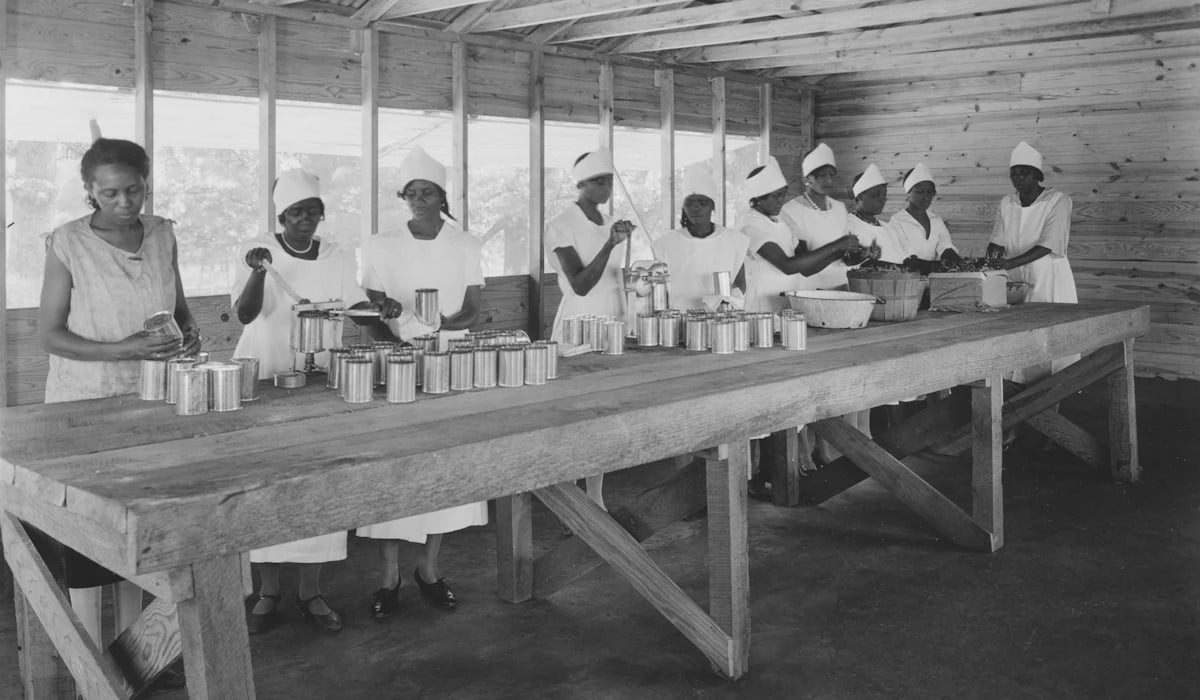
Lange also photographed a Black woman shipyard worker standing in front of a store in Richmond, California, a print held in the Oakland Museum’s collection. The image places the worker not on the slipway but on a commercial street, a reminder that wartime labor extended beyond the gates.
Richmond’s shipyards brought together a workforce that included people from a wider range of backgrounds than before the war. Lange framed the woman with the quiet dignity she brought to every subject.
Women Washing Up at the Clinton Roundhouse

Jack Delano photographed Chicago and North Western Railway roundhouse workers in Clinton, Iowa, washing up at the end of a day’s work in 1943. A related Delano image shows female employees of the railway cleaning a locomotive.
Railroads had long been male-dominated workplaces, and the war pulled women into the yards. Delano’s color work on the line has since become an important visual record of wartime railroad labor.
Ella Watson and the American Gothic of Washington

Gordon Parks photographed Ella Watson in Washington, D.C., in 1942, while she worked as a cleaner at the Department of Agriculture. His portrait, titled “American Gothic, Washington, D.C.,” borrowed its name from Grant Wood’s famous painting.
Watson’s home at 1433 11th Street NW has since been the subject of its own local history research. The photograph shows that wartime Washington ran on the unseen labor of women whose names rarely appeared in the files they cleaned around.
Sunday Mass After the Night Shift in Buffalo

Marjory Collins photographed women factory workers attending Sunday Mass after an overnight shift in Buffalo, New York, in May 1943. The image was part of her Office of War Information series on women war workers in the city.
With factories operating on demanding schedules, some workers attended church after overnight shifts. The photograph captures faith and fatigue sharing a single pew.
Leaving Republic Steel Under the Open Hearth Furnaces
Marjory Collins also photographed women workers leaving the Republic Steel plant in Buffalo, New York, with open hearth furnaces rising in the background. Steel mills had been among the most male-dominated workplaces in American industry.
The furnaces behind the women give the scene a scale that a factory-floor portrait could not. Collins captured the shift change as a procession of workers walking toward home.
Inside the Bell Aircraft Corporation in Western New York
In May 1943, Marjory Collins documented women war workers in the Bell Aircraft Corporation plant in the Buffalo–Niagara Falls region of western New York. The Library of Congress catalogs the image as part of a broader Buffalo series on women’s wartime employment.
Bell’s presence made the region a center of aircraft production. Collins pointed her camera at the people on the shop floor rather than the planes.
Learning an Axle Lathe at the New York Car Wheel Company
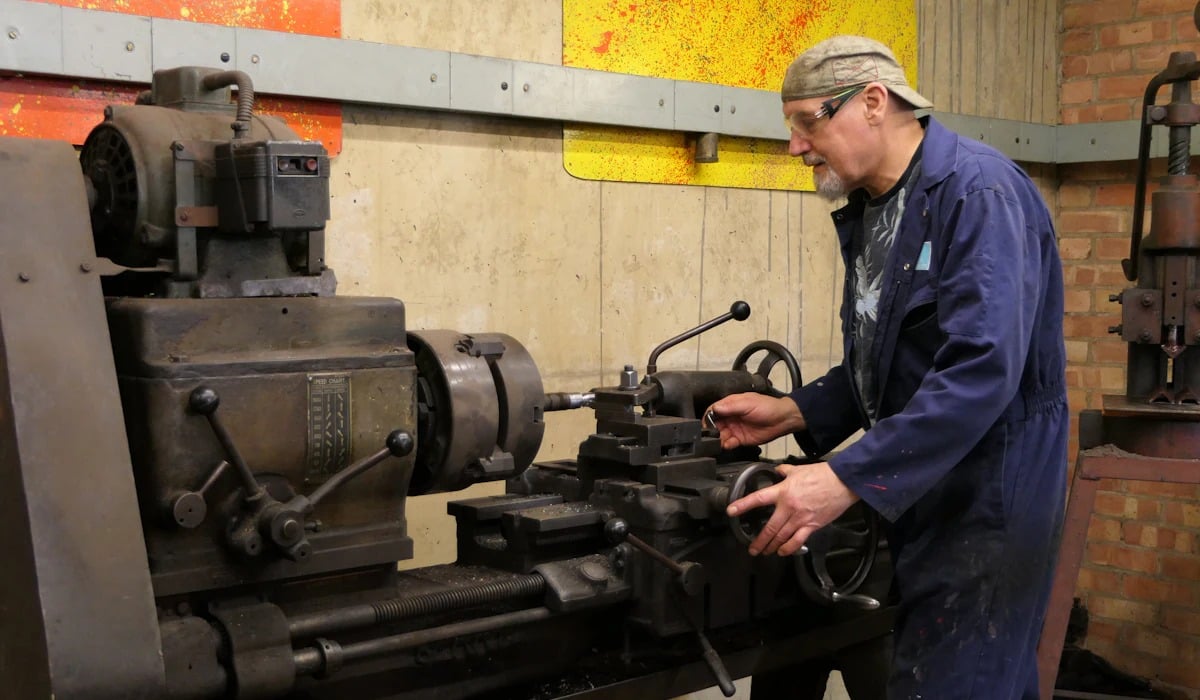
A 1943 Marjory Collins photograph shows a woman learning to operate an axle lathe at the New York Car Wheel Company. A second frame from the same shop shows the woman operating the lathe.
Railroad wheel and axle work had been a heavy-metal trade largely dominated by men. The paired images follow a worker from instruction to competence in a single plant.
Asparagus Canners of Rochelle, Illinois

Ann Rosener photographed women near Rochelle, Illinois, working in asparagus canning factories during the summer months for the Office of War Information. Some workers were schoolteachers and students who took seasonal jobs during their summer breaks.
The caption presents the canning line under the banner “Food to make America strong.” The scene shows people whose usual work or studies took them into factory jobs during the summer.
Picking Asparagus in the Fields Around Rochelle

Rosener also photographed women harvest hands near Rochelle, Illinois, picking the summer asparagus crop. With the nation’s manpower swelling the ranks of the armed forces, the Office of War Information noted that women were stepping into new occupations in both urban and rural life.
The harvest was the first link in a chain that ended in the canning plants. Rosener documented both ends of that chain.
Women Airforce Service Pilots at Avenger Field
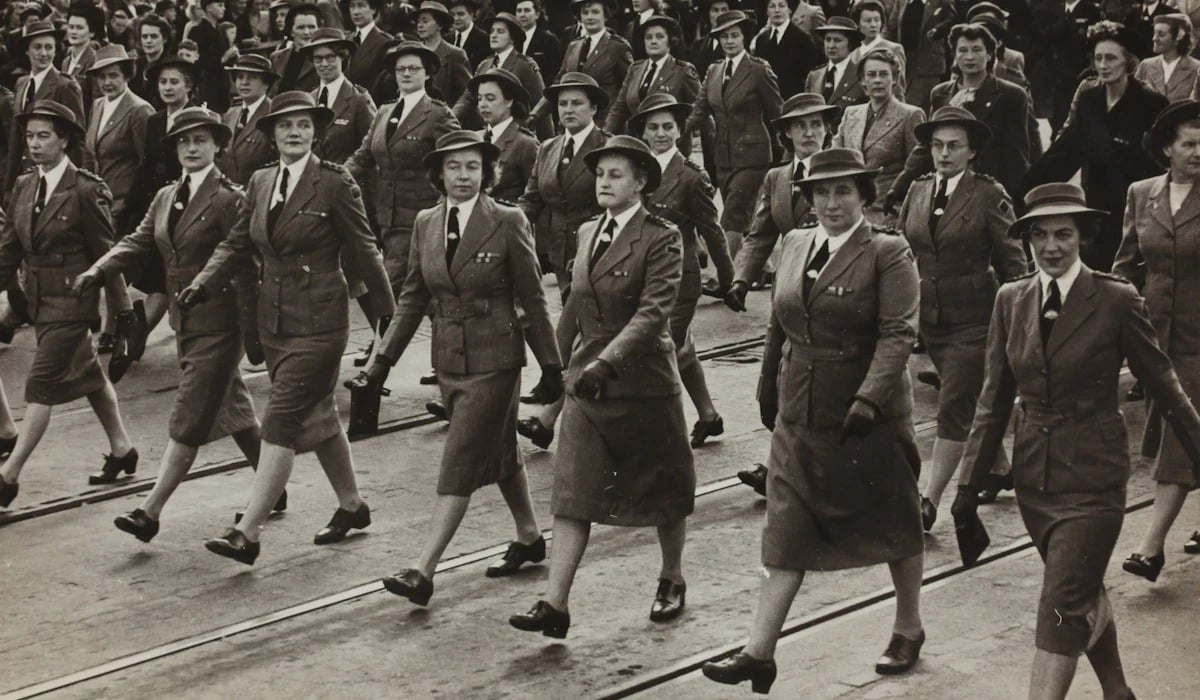
A photograph held by the University of Texas at Arlington shows a group of Women Airforce Service Pilots at Avenger Field in Sweetwater, Texas. Sweetwater was a major training base where the women learned to fly military aircraft.
Texas Woman’s University now houses the official WASP archive, preserving the records of a program that was long overlooked. The image shows the group together on the field, a snapshot of a corps that many Americans knew little about during the war.
War Workers of the Marinship Corporation
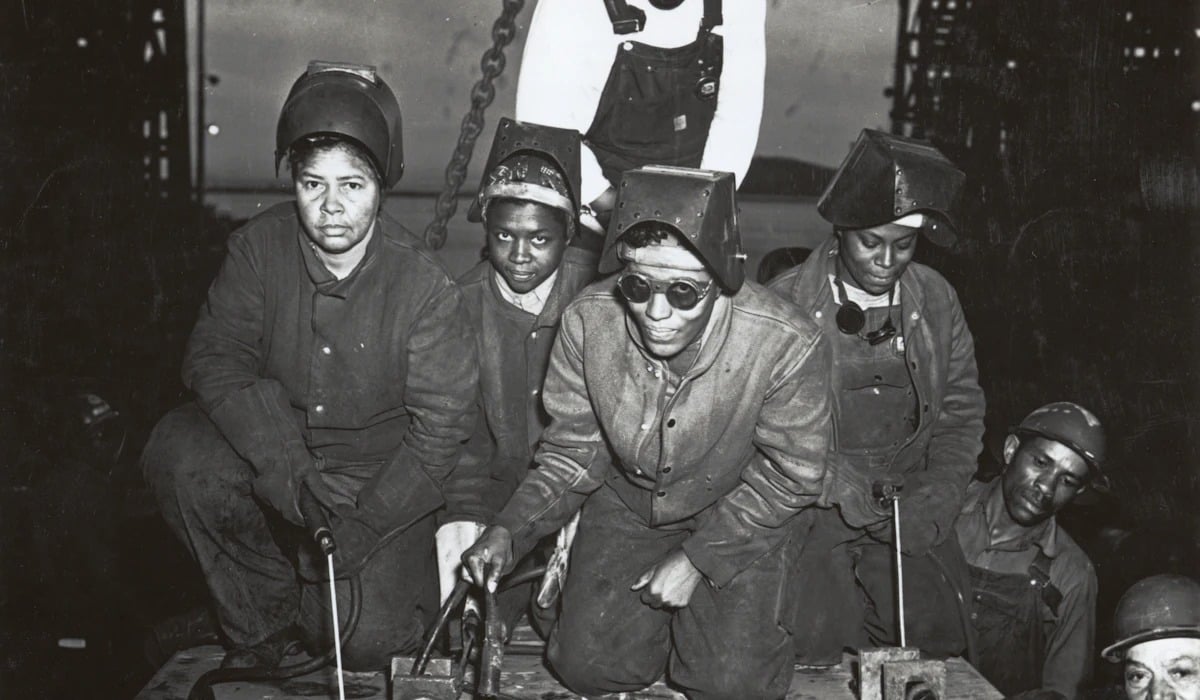
A Calisphere photograph shows war workers of the Marinship Corporation in Marin County, California, circa 1943. Marinship built Liberty ships and tankers at Sausalito, drawing a workforce that included women and Black workers.
A San Francisco Chronicle retrospective described the yard as welcoming to both groups, though racial discrimination remained a reality beyond the workplace. The photograph preserves the faces of people who built ships by day and returned to a still-divided community at night.
The Faces Behind the Slogan
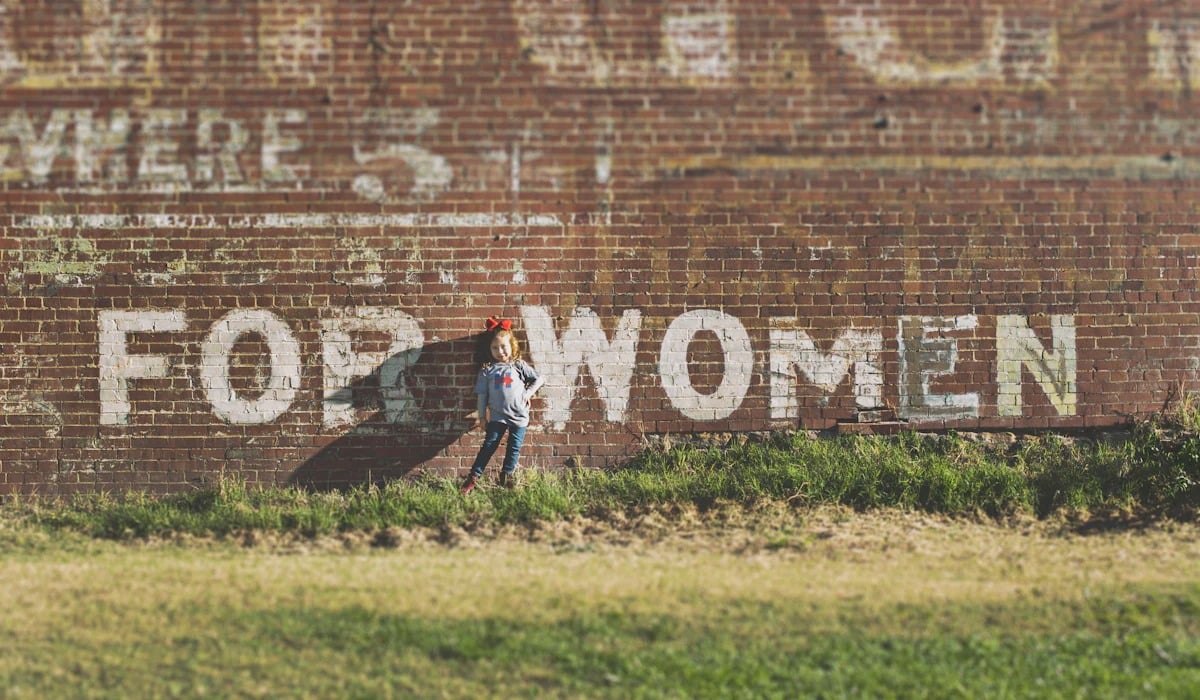
The best-known image of wartime women is a poster. The photographs here are the real record, shot by federal photographers, museum archivists, and Ed Westcott, the photographer who documented the Manhattan Project’s Oak Ridge operations.
Some women were famous only after death, and others never were.
A single frame can be misleading, but the photographs together reveal a broader pattern. Women riveted bombers, welded ships, ran lathes, and canned asparagus, and the work was often unglamorous and tiring.
They built wartime America one shift at a time.
MORE FROM GO2TUTORS!

- The Romanov Crown Jewels and Their Tragic Fate
- 13 Historical Mysteries That Science Still Can’t Solve
- Famous Hoaxes That Fooled the World for Years
- 15 Child Stars with Tragic Adult Lives
- 16 Famous Jewelry Pieces in History
Like Go2Tutors’s content? Follow us on MSN.