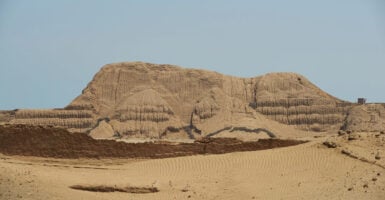
28 Pyramids Found Outside of Egypt
Egypt did not invent the idea of piling stone into a point and calling it a monument. Across several continents, cultures that never met each other arrived at the same shape for tombs, temples, and shows of power.
Some stand in deserts, some sit buried under jungle, and a few were built within living memory.
The sites below range from royal graves in Sudan to temple platforms in Mexico, from a Roman tomb in the middle of a modern city to an arena beside the Mississippi. Several would surprise anyone who thinks the pyramid belongs to one country.
Meroë, Where Sudan’s Steep Pyramids Crowd the Desert
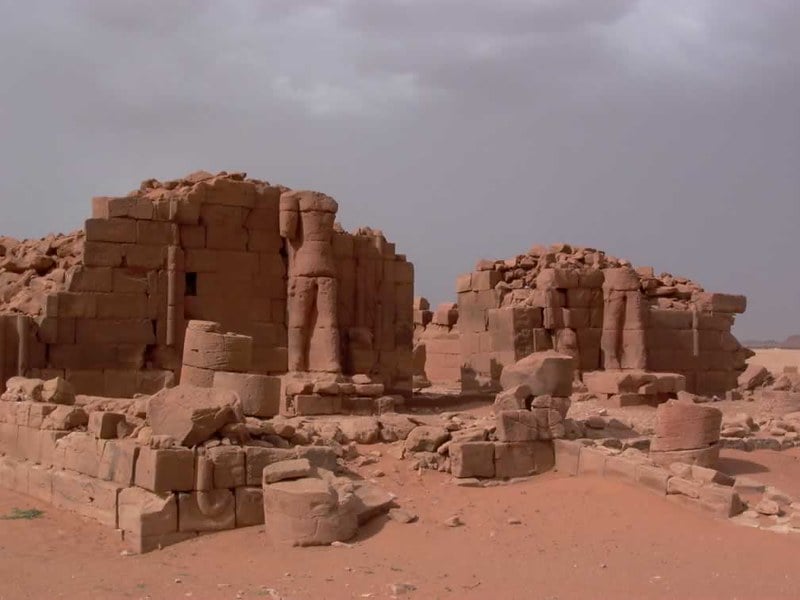
Meroë in Sudan holds one of the largest clusters of Nubian pyramids, built for the rulers and elites of the Kingdom of Kush. They are far smaller and much steeper than the Giza giants, with sharp slopes and a small chapel attached to the eastern face.
In the 1830s, an Italian treasure hunter named Giuseppe Ferlini knocked the tops off many of them in search of gold. The damage is still visible, and the ragged stumps give the skyline a toothy look.
Nuri, the Royal Cemetery With Flooded Tombs
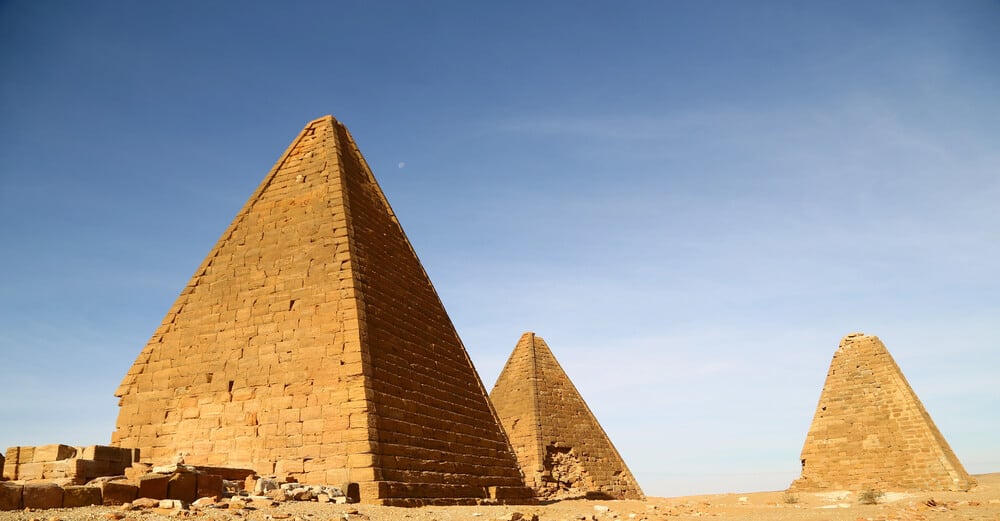
Across the Nile from Jebel Barkal, Nuri holds the pyramids of many Kushite kings. The largest belongs to Taharqa, a ruler of the 25th Dynasty who governed both Kush and Egypt.
His burial chamber was cut deep into the rock beneath the pyramid, and groundwater has since filled parts of the underground tombs. Archaeologists have had to dive into them to study the burials.
El-Kurru, Where Kush Revived the Pyramid
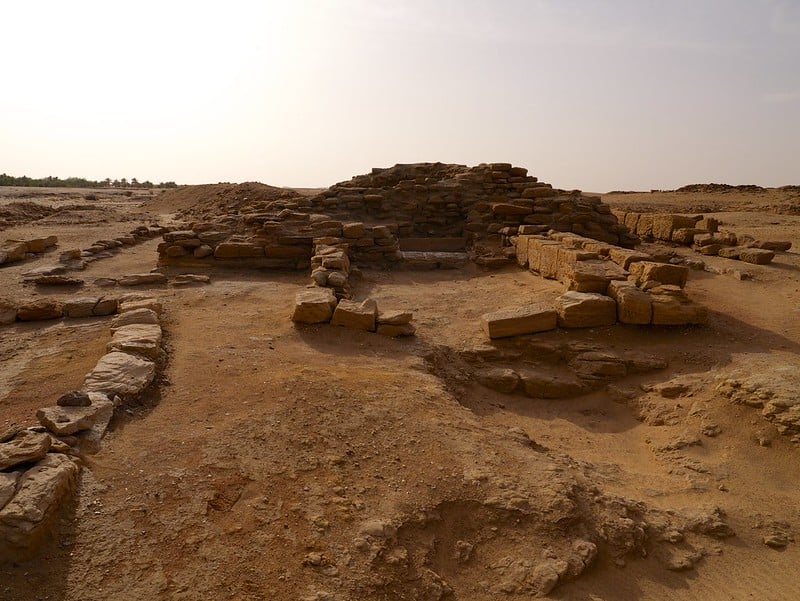
El-Kurru was the early burial ground of the kings who would eventually conquer Egypt. Piye, the Kushite ruler who founded Egypt’s 25th Dynasty, was laid to rest here beneath a pyramid.
Earlier royal graves at the site were covered by mounds, so the pyramid marked a deliberate borrowing from Egyptian tradition. Some of the underground chambers still carry painted walls.
Sedeinga, the Cluster of Tiny Tombs
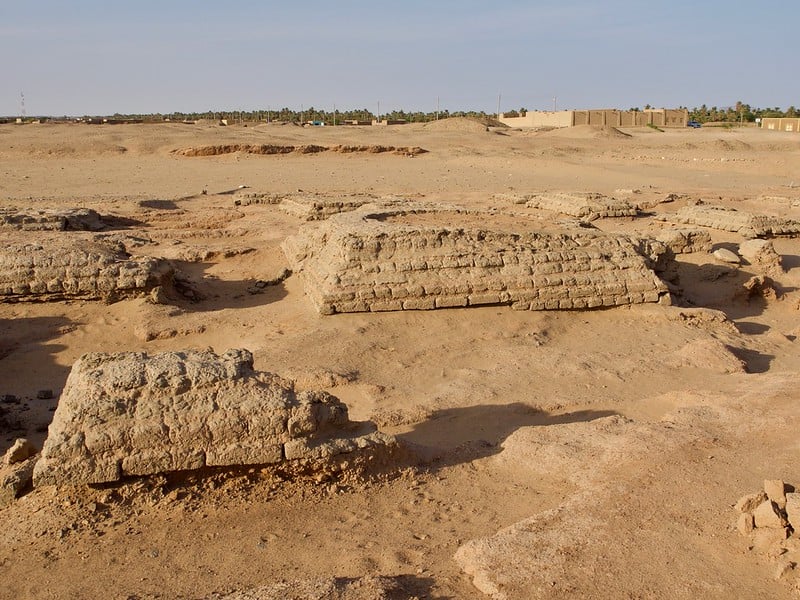
At Sedeinga in northern Sudan, a French team reported finding 35 additional small pyramids packed shoulder to shoulder. Most stand only a few meters tall, and many were crammed into spaces between older tombs.
The site also holds the ruins of a temple built by the Egyptian pharaoh Amenhotep III for his wife, Queen Tiye. The result is a cemetery where Egyptian royal ambition and local burial practice ended up sharing a hillside.
Jebel Barkal, the Pyramids Beneath a Holy Rock
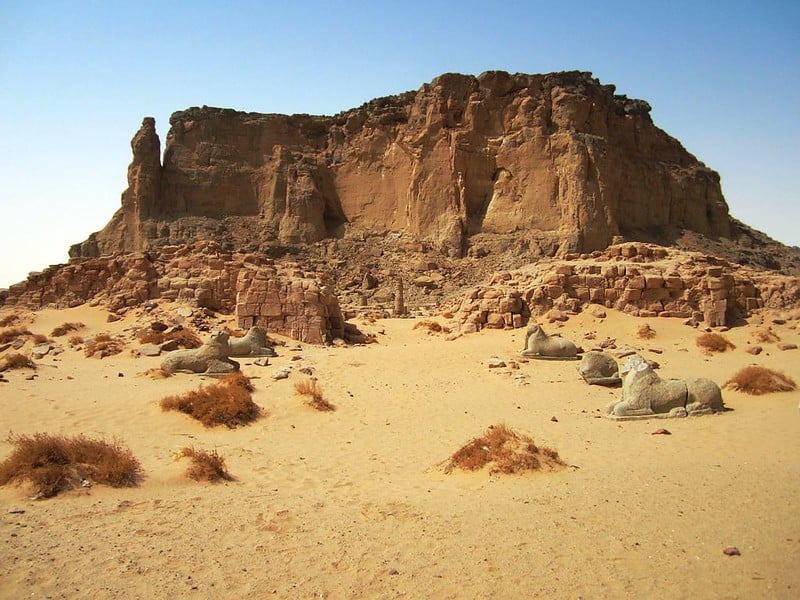
Jebel Barkal is a flat-topped sandstone outcrop that rises abruptly from the flat desert near Karima, Sudan. Egyptians and Kushites both treated it as the home of the god Amun, and temples were built at its foot.
Several pyramids stand beside the hill, built for rulers and royal family members of the later Meroitic period. The cluster of sites around it is now a UNESCO World Heritage Site.
The Great Pyramid of Cholula, a Mountain With a Church on Top
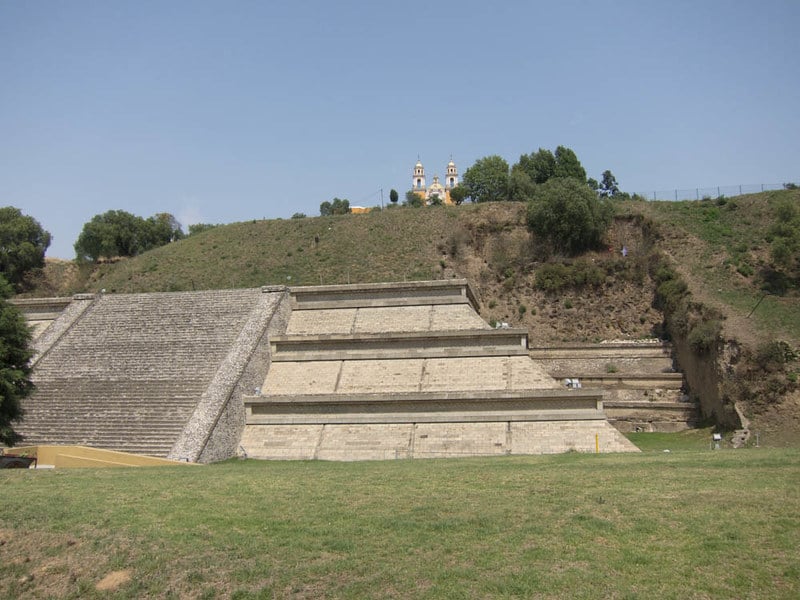
The Great Pyramid of Cholula in Puebla, Mexico, is widely described as the largest pyramid in the world by volume. Visitors often miss it because centuries of growth covered it in soil and plants, and it looks like a natural hill.
A church built by the Spanish sits on the summit. Archaeologists have dug an extensive network of tunnels through the interior to study the layers of construction.
The Pyramid of the Sun, Teotihuacan’s Giant Staircase
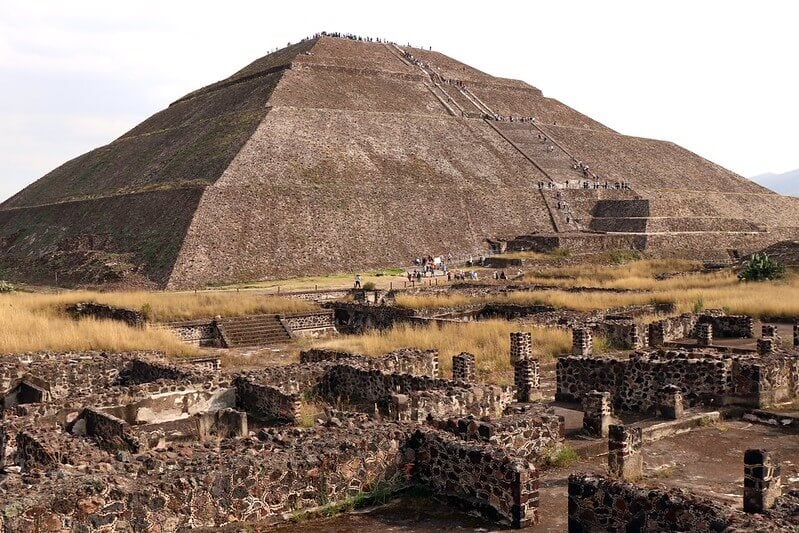
Rising above the Avenue of the Dead near Mexico City, the Pyramid of the Sun is one of the largest structures of the ancient Americas. The Aztecs found the abandoned city centuries after its fall and gave it the name Teotihuacan, which is often translated as the place where the gods were created.
The original builders left no known name for the city or its pyramids. A tunnel discovered beneath the pyramid leads to a cave that may have held ritual importance.
The Pyramid of the Moon, Where the Victims Were Buried
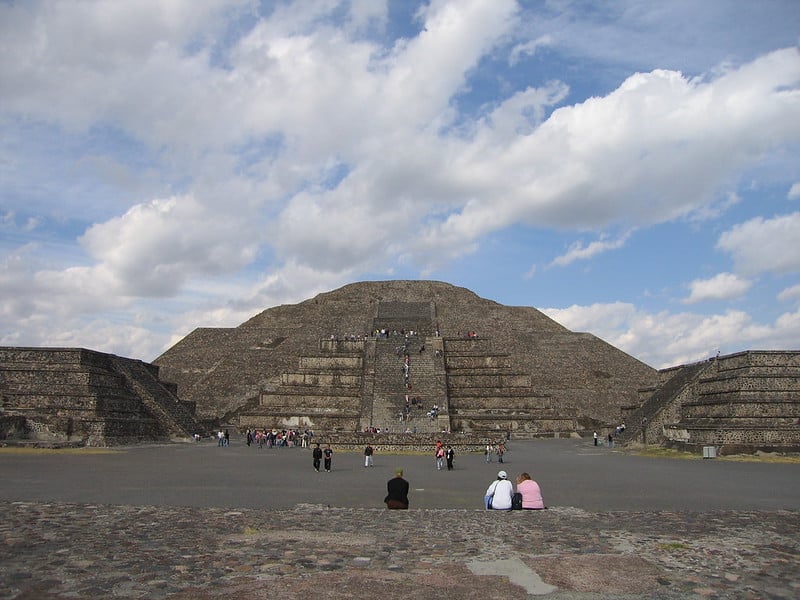
Standing at the north end of the Avenue of the Dead, the Pyramid of the Moon is smaller than its neighbor but sits on higher ground, so the two look nearly equal from the avenue. Excavations inside the structure uncovered burials of sacrificed people, along with offerings such as obsidian objects and animal remains.
The pyramid was enlarged several times, and each new layer covered the one before it. The building is less a single monument than a stack of them.
El Castillo at Chichén Itzá, the Calendar in Stone
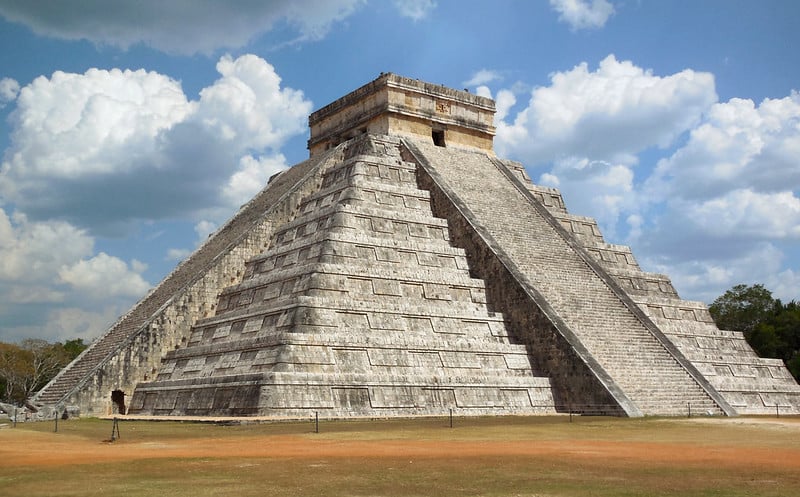
Each of the four sides of El Castillo has a stairway of 91 steps, and the top platform makes the total 365, one for each day of the solar year. Around the spring and autumn equinoxes, shadows cast by the terraces form what looks like a serpent sliding down the northern staircase.
An earlier, smaller temple is hidden inside the pyramid, a common Maya habit of building over old structures. Clapping at the base of the stairs produces an echo said to resemble the call of the quetzal bird.
The Pyramid of the Niches at El Tajín
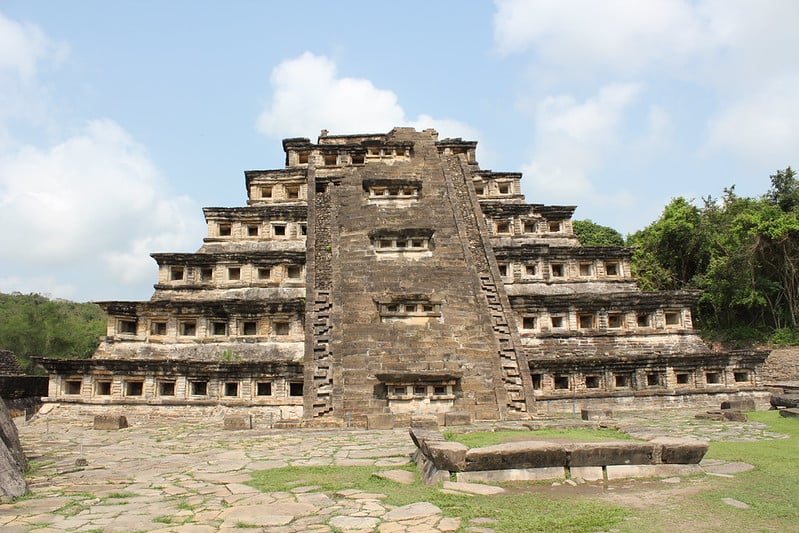
The Pyramid of the Niches at El Tajín in Veracruz, Mexico, rises in tiers, and its walls are lined with small square recesses. The niches are generally counted at 365, a number that has led many visitors to read the structure as a calendar.
The site was a major city of the Totonac region and is a UNESCO World Heritage Site. Nearby, in the town of Papantla, performers still carry out the traditional flying pole ritual.
The Temple of the Inscriptions at Palenque, a Tomb at the Bottom of the Stairs
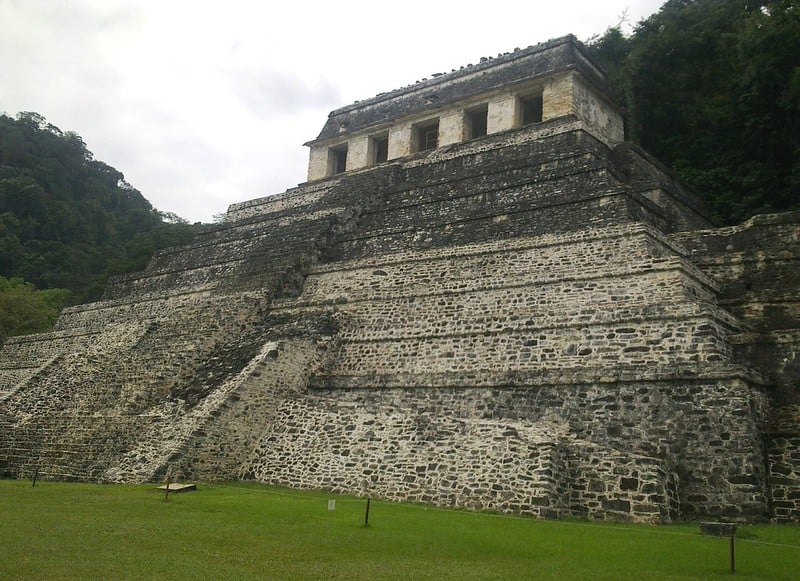
For years, nobody knew that the Temple of the Inscriptions at Palenque in Chiapas hid a tomb. In 1952, the archaeologist Alberto Ruz Lhuillier reached a sealed chamber at the bottom of a staircase buried in rubble.
Inside lay the remains of K’inich Janaab’ Pakal, a Maya ruler who reigned for decades. His sarcophagus lid, carved with an elaborate scene, is one of the most studied pieces of Maya art.
The Pyramid of the Magician at Uxmal
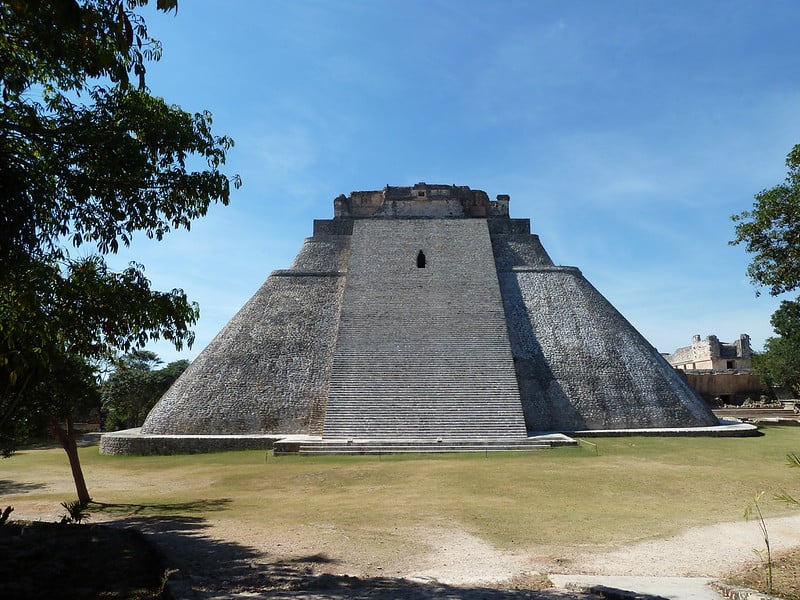
Unlike most Maya pyramids, the Pyramid of the Magician at Uxmal, in Yucatán, has an oval base and rounded sides. Excavations showed that it was rebuilt over several phases, with each temple buried inside the next.
A local legend says a dwarf magician built it in a single night. The truth is more mundane: generations of builders kept adding to it.
Templo Mayor, the Aztec Temple Under Mexico City
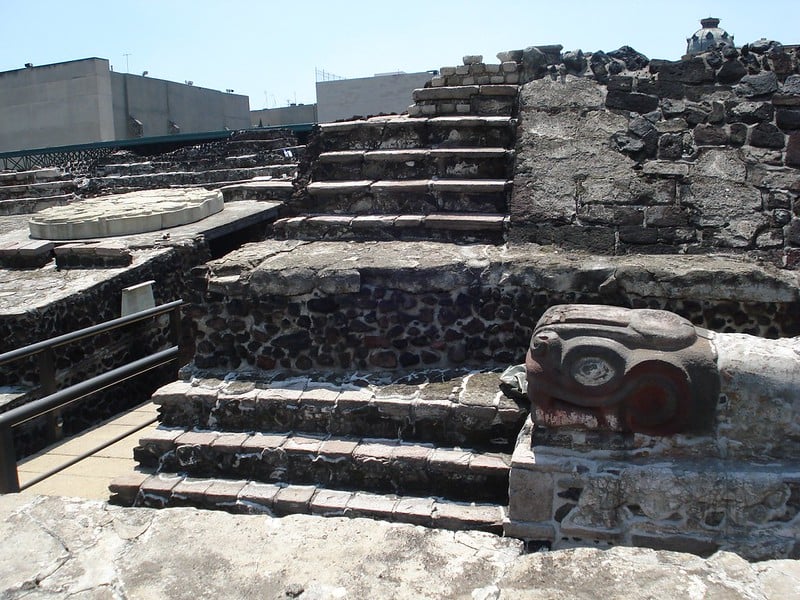
The Templo Mayor was the main temple of the Aztec capital Tenochtitlan, and its twin shrines honored the rain god Tlaloc and the war god Huitzilopochtli. After the Spanish conquest, the ruins were buried beneath the colonial city.
In 1978, electrical workers digging in Mexico City struck a huge carved stone disc showing the dismembered goddess Coyolxauhqui. That discovery led to the excavation of the temple in the heart of the modern capital.
Tikal’s Temple IV, the Jungle Skyscraper
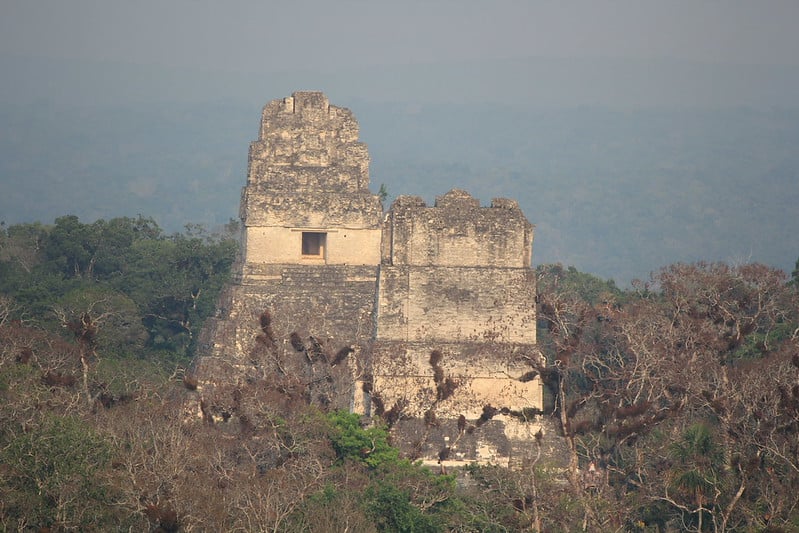
Temple IV at Tikal, in Guatemala, towers over the rainforest floor, which makes it one of the tallest pre-Columbian structures in the Americas. Climbing it today means a wooden staircase and a platform above the canopy, with the tops of other temples poking through the trees.
The view was used in the 1977 film Star Wars as the rebel base on the moon Yavin 4. Few pyramids have a movie cameo that famous.
La Danta, the Giant Hidden in El Mirador
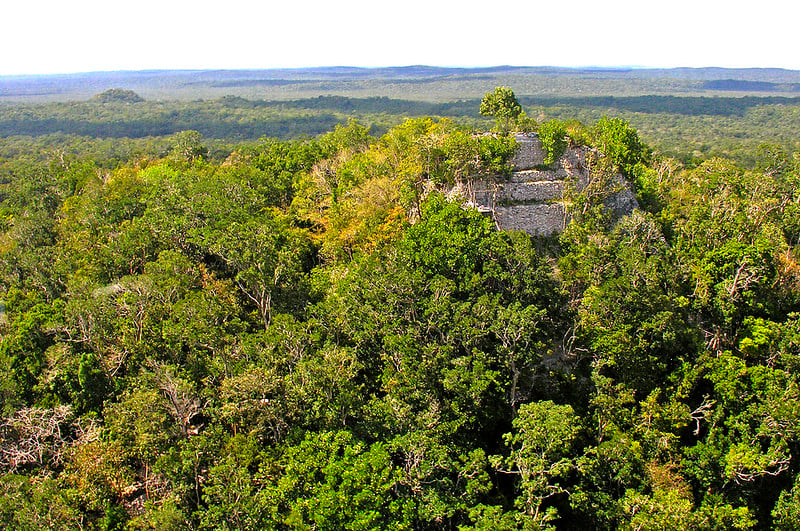
La Danta, part of the ancient Maya city of El Mirador in northern Guatemala, dates to the Preclassic period, centuries before Tikal reached its peak. Guinness World Records lists it as the largest Maya pyramid.
The site is deep in the rainforest and remains difficult to reach, usually requiring a multi-day trek. Much of it is still covered in vegetation, which gives it the look of a natural hill.
Caana at Caracol, Belize’s Sky Palace
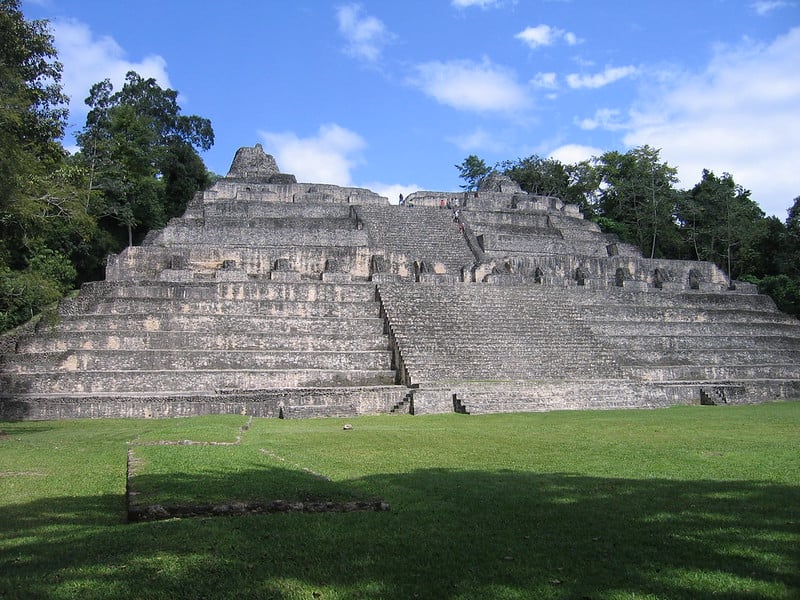
Caana, whose name means Sky Place in Maya, is the central pyramid-palace complex at Caracol in the Cayo District of Belize. It is among the tallest ancient structures in the country.
Caracol defeated its powerful neighbor Tikal in warfare in the sixth century, according to the glyphic record. The victory helped the city grow into a major regional power.
The High Temple at Lamanai, a Pyramid That Survived Centuries of Change
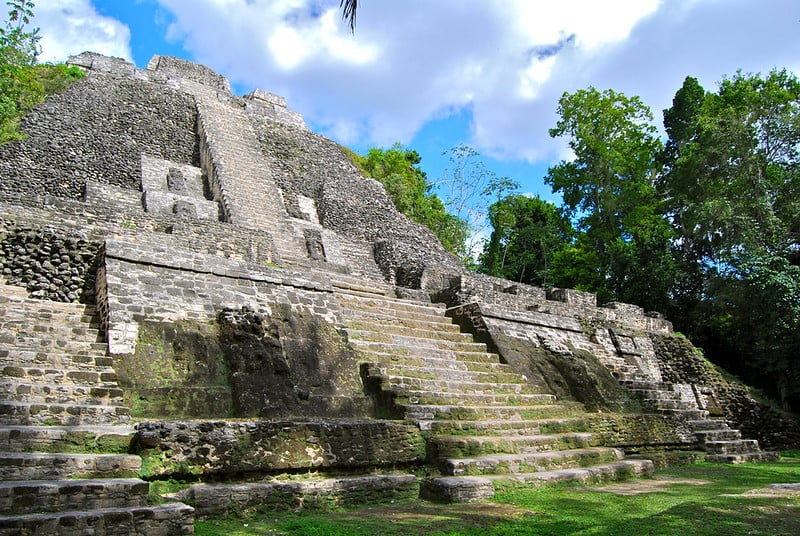
Lamanai, on the New River Lagoon in northern Belize, was occupied for far longer than most Maya cities. Its name is often translated as submerged crocodile, and crocodile imagery appears across the site.
The High Temple is one of its tallest structures, and the nearby Mask Temple has large stone faces on its sides. Spanish colonists later built churches at Lamanai, showing the settlement lasted well past the classic Maya collapse.
Monks Mound, the American Midwest’s Earthen Pyramid
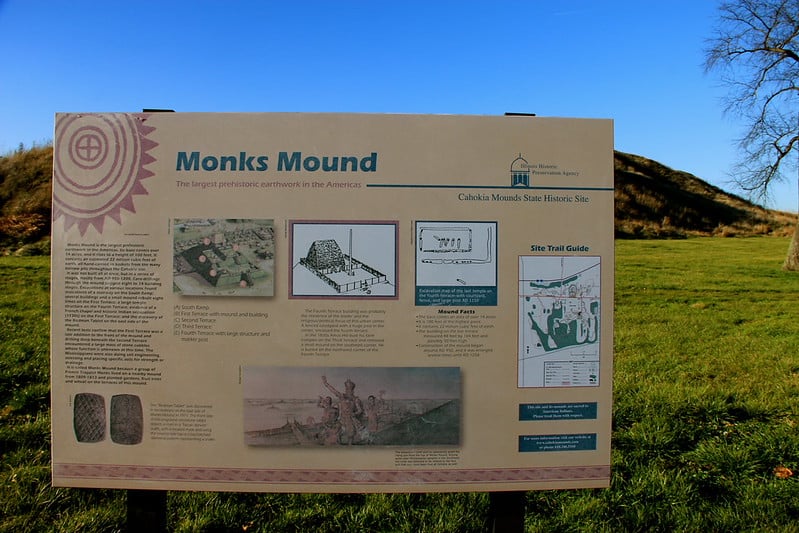
Monks Mound at Cahokia, near St. Louis in Illinois, is a flat-topped earthen pyramid built in stages over centuries. The name comes from French Trappist monks who farmed nearby long after the mound was abandoned.
The monks had nothing to do with its construction, which came centuries before they arrived. Cahokia was once the center of a large Mississippian city, and the mound stood at its heart.
Huaca del Sol, a Peruvian Pyramid Built From Mud Bricks
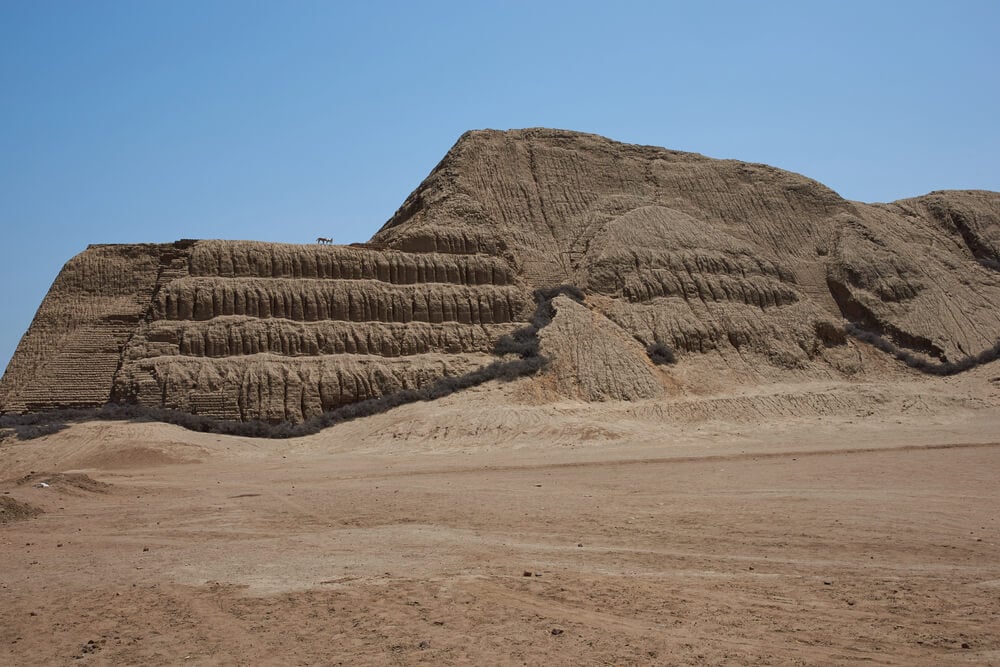
Huaca del Sol, built by the Moche people on Peru’s north coast, was made of millions of adobe bricks. Individual bricks carry marks that archaeologists believe identified the work crews that made them.
Much of the structure was destroyed after the Spanish conquest, when colonists diverted a river to wash away the adobe in search of gold. What remains is a fraction of the original, and it is still enormous.
Caral, the Pyramids That Came Before Pottery
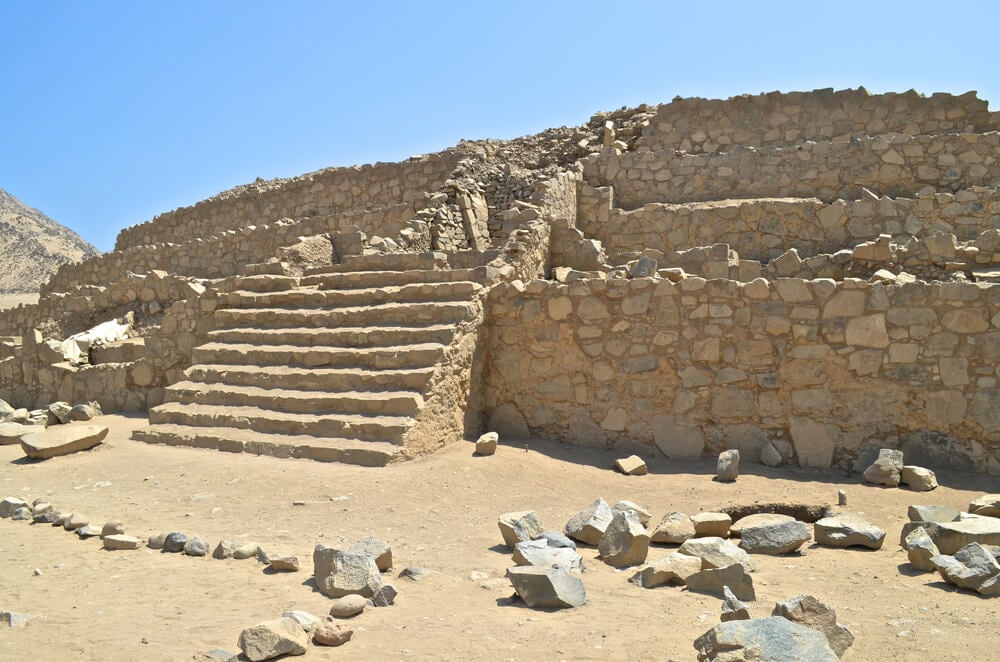
Caral, in Peru’s Supe Valley, was a city of stepped pyramids built thousands of years ago. Its people had not yet developed pottery, which makes the scale of the architecture even harder to explain.
Archaeologists found flutes carved from bird bones among the ruins. The site is a UNESCO World Heritage Site and is often described as one of the oldest urban centers in the Americas.
The Pyramid of Cestius, Rome’s Own Egyptian Tomb
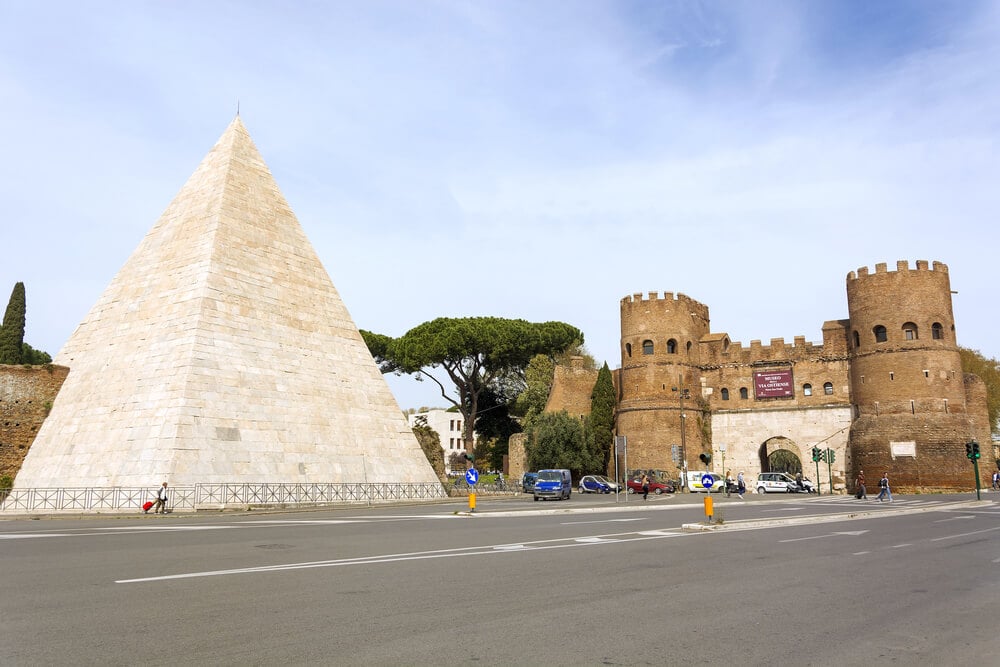
The Pyramid of Cestius stands beside the Aurelian Wall in Rome, built as the tomb of the magistrate Gaius Cestius. Its steep sides are faced in white marble, a deliberate echo of the pyramids that Romans had seen in Egypt.
The Romans later built the city wall right into it, which helped preserve it for two thousand years. Few ancient tombs in the city have survived so intact.
The Pyramids of Güímar, a Canary Islands Puzzle
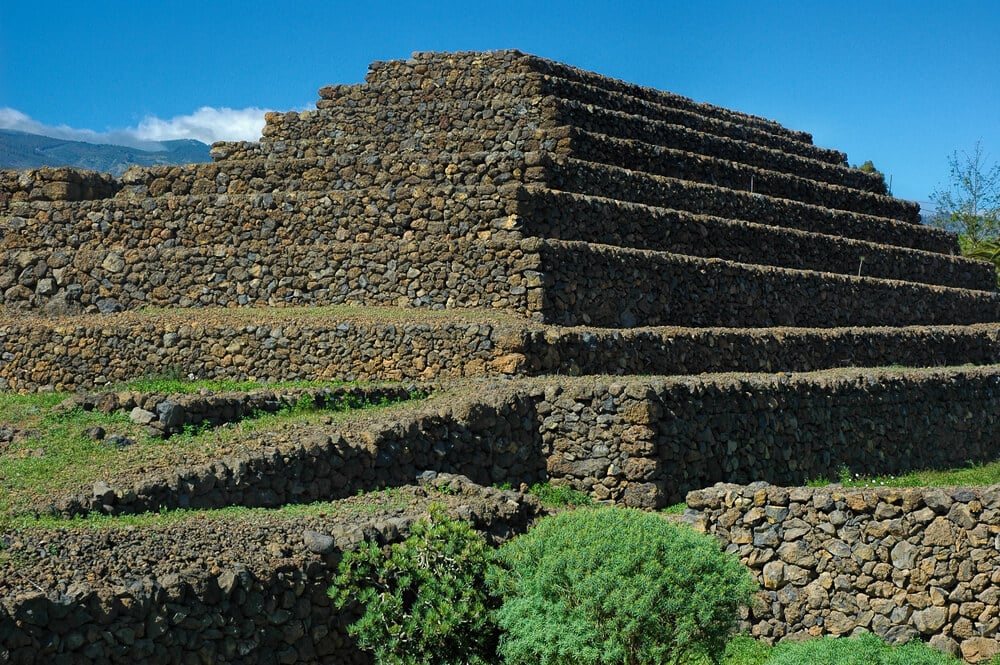
On the island of Tenerife, a group of stepped stone structures at Güímar draw visitors who suspect a connection to Egypt or Mexico. The explorer Thor Heyerdahl took an interest in them and argued they might be linked to ancient cultures across the ocean.
Many archaeologists see them differently, as piles of stone cleared from farm fields in the 19th century and arranged into terraces. The debate makes them the least settled entry among the world’s pyramids.
The Louvre Pyramid, a Glass Entrance in Paris
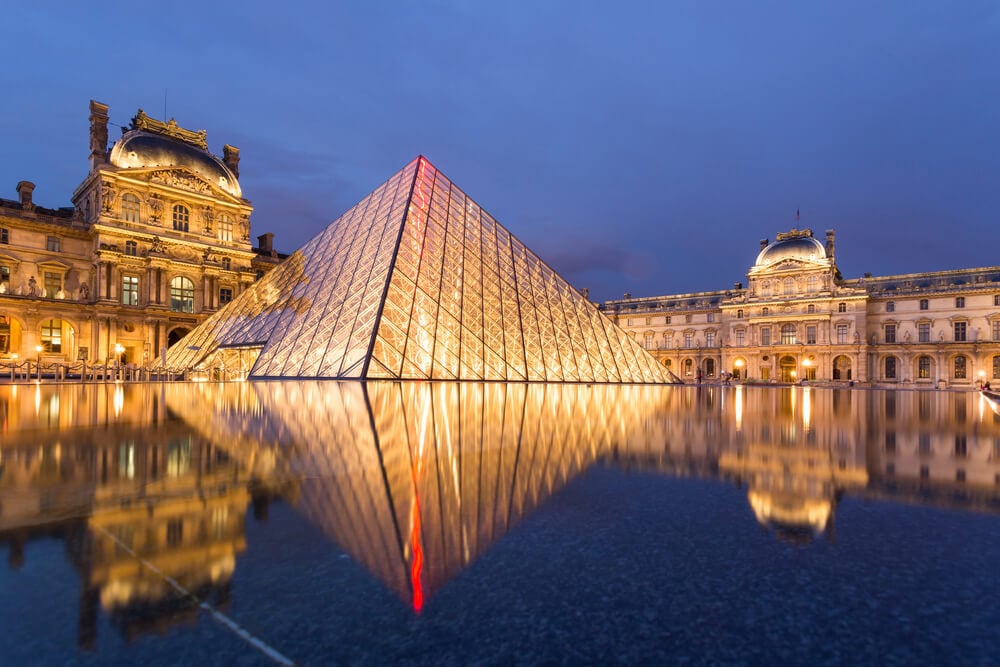
The Louvre Pyramid, designed by the architect I. M. Pei, opened in 1989 as the main entrance to the museum. It is made of glass panes held in a slender metal frame, which lets daylight reach the lobby below.
Many Parisians objected loudly to a glass pyramid in front of a palace that dates back centuries. It has since become one of the most photographed spots in the city.
The Luxor Las Vegas, a Pyramid With a Beam of Light
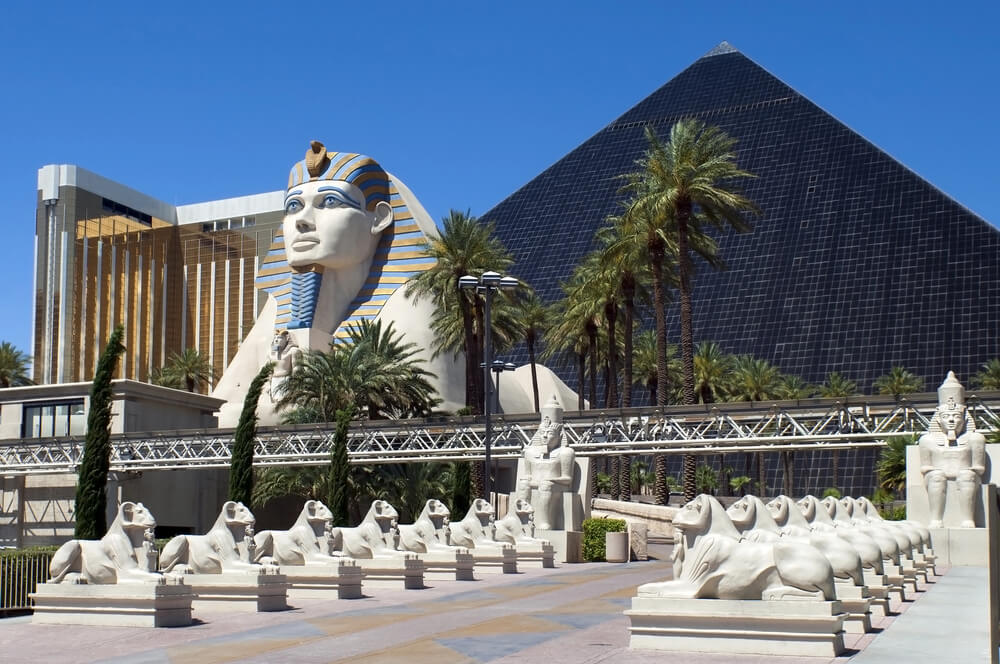
Opened in 1993 on the Las Vegas Strip, the Luxor is a hotel built in the shape of a pyramid. A powerful light shines from its peak into the night sky.
Guests reach their rooms in elevators called inclinators, which travel up the sloping sides at an angle instead of straight up. Few pyramids anywhere require a room key.
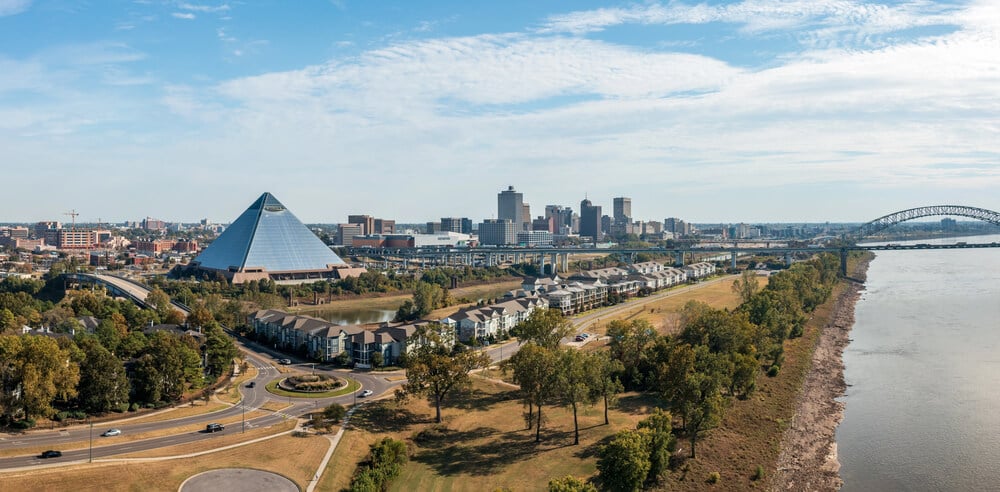
The Memphis Pyramid, an Arena Turned Giant Store
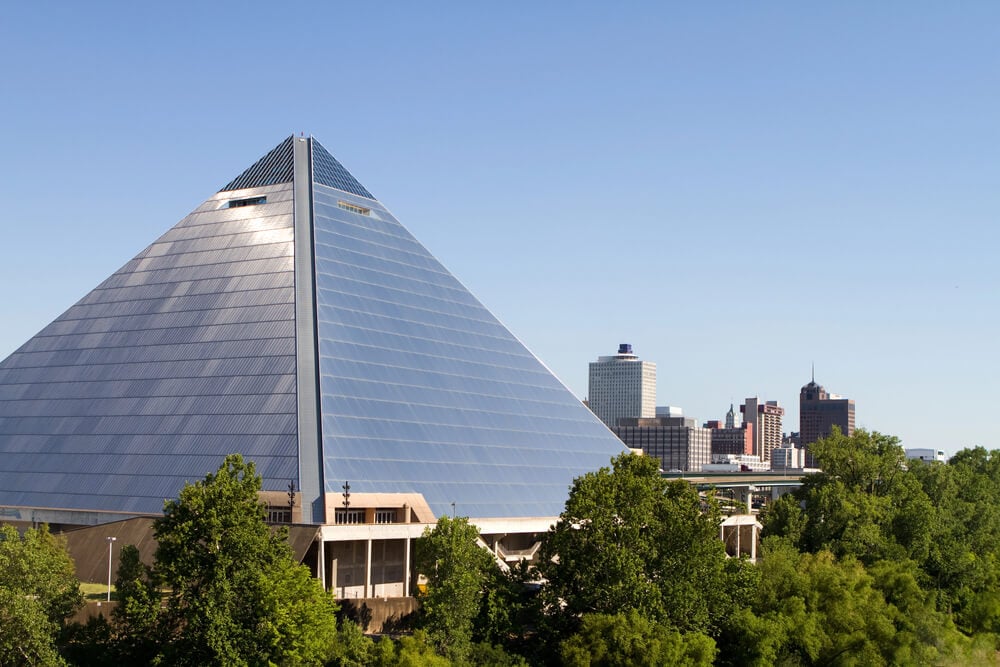
The Pyramid Arena in Memphis, Tennessee, opened in 1991 beside the Mississippi River. It hosted college and professional basketball, including the NBA’s Memphis Grizzlies in the early 2000s.
After sitting empty for years, it reopened in 2015 as a Bass Pro Shops store. The interior now holds a cypress swamp, a hotel, and an elevator that rises to an observation deck.
The Tomb of the General, China’s Stepped Pyramid in Ji’an
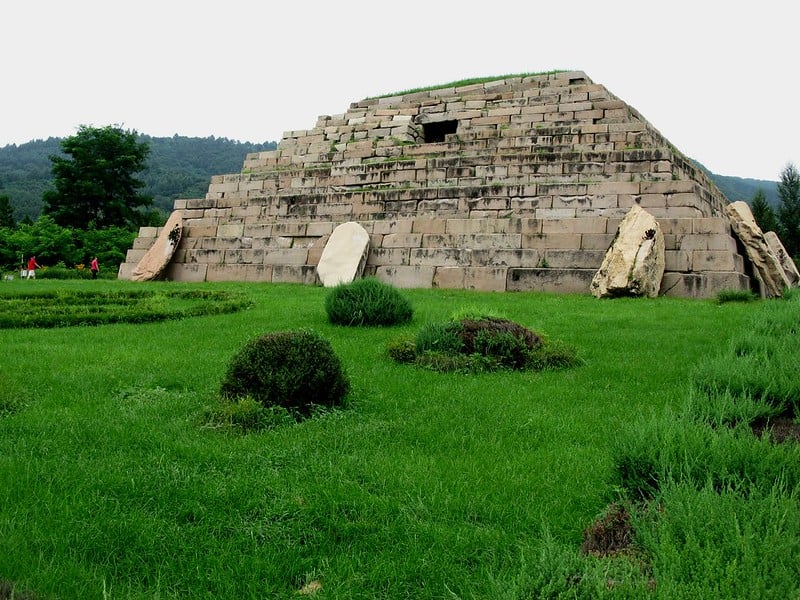
Near the border between China and North Korea, the Tomb of the General is a stepped pyramid built of granite blocks. It dates to the Goguryeo kingdom and is believed to be the burial place of a king, possibly Gwanggaeto or his son Jangsu.
It is part of a group of Goguryeo sites that UNESCO has inscribed as a World Heritage Site. Its shape has earned it the nickname of the Pyramid of the East.
Prasat Thom at Koh Ker, Cambodia’s Stepped Giant
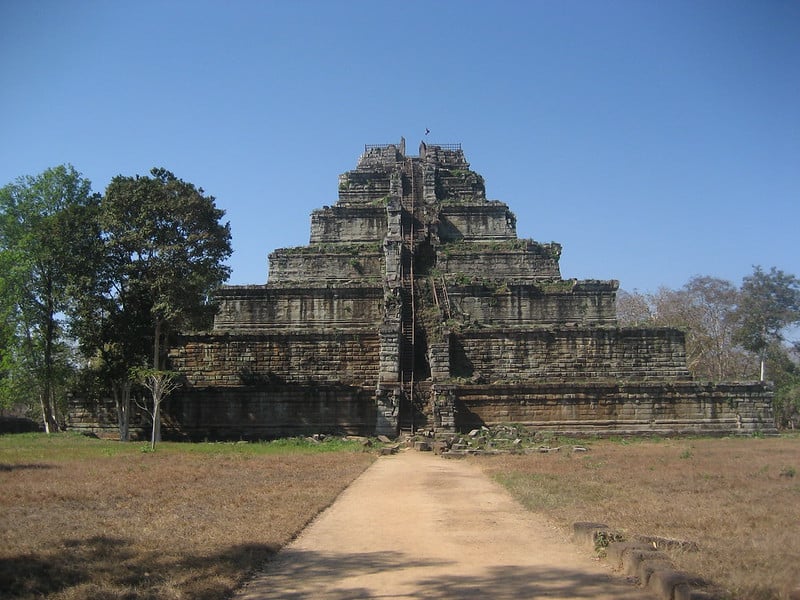
Prasat Thom at Koh Ker in northern Cambodia is a stepped pyramid that towers over the surrounding forest. It was built in the 10th century, when King Jayavarman IV moved the Khmer capital away from Angkor.
The capital remained at Koh Ker only briefly before returning to the old center. The temple sits deep in the forest, far from the crowds at Angkor Wat.
The Shape That Keeps Coming Back
The pyramid appears in so many places because the geometry is simple and the engineering is forgiving. A wide base is stable, a narrowing top uses less material, and a tall summit can be seen for miles.
Builders in Sudan, Mexico, Peru, Cambodia, and Illinois each solved the same problem of how to build something enormous and make it last.
The list also shows how the meaning of the pyramid has changed. For the Maya and the Kushites, it was a tomb or a stairway to the gods.
For Paris and Las Vegas, it is an entrance or a hotel. The form has outlived the beliefs of the people who first built it, and it still reads as a statement that someone wanted to be noticed.
More from Go2Tutors!

- The Romanov Crown Jewels and Their Tragic Fate
- 13 Historical Mysteries That Science Still Can’t Solve
- Famous Hoaxes That Fooled the World for Years
- 15 Child Stars with Tragic Adult Lives
- 16 Famous Jewelry Pieces in History
Like Go2Tutors’s content? Follow us on MSN.