Photos of Christmas Shopping in the 1950s
The photographs from the 1950s hold plenty of coats, hats, and gloves, and almost no one looks at a phone. Shoppers jam sidewalks, press against glass, and wait in lines that would make a modern retailer faint.
Every frame comes with a store, a street, and a season that belonged to a particular place.
These scenes come from department store floors, parade routes, rooftop rides, and brand-new suburban malls. Each one is a real piece of the decade when Christmas buying became a national event.
Macy’s Herald Square and the Santa Who Won an Oscar
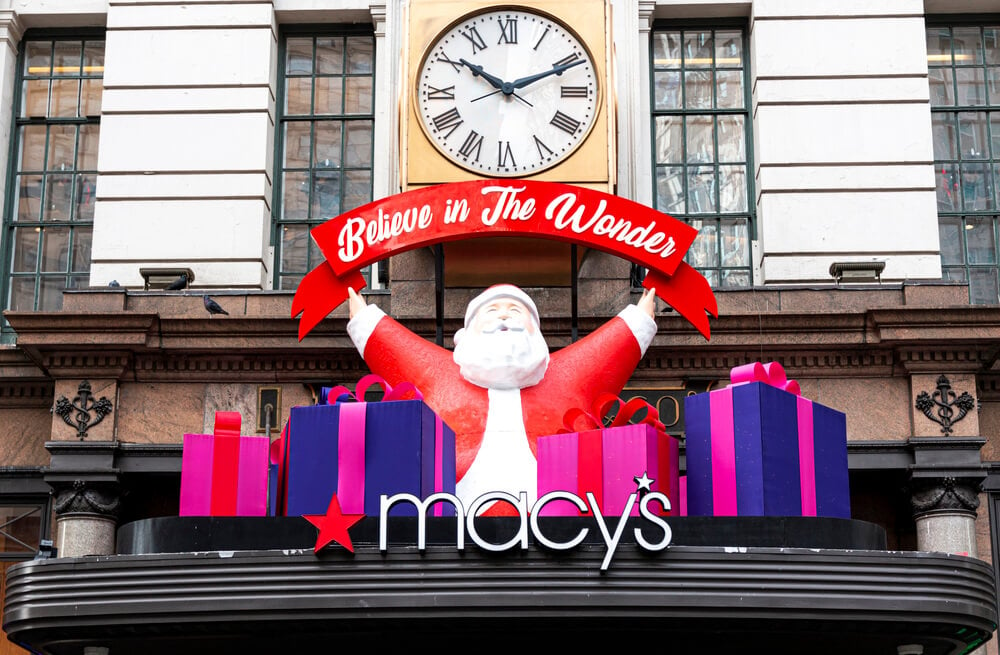
Macy’s on 34th Street was the postwar picture of Christmas retail, helped along by the 1947 film Miracle on 34th Street. Edmund Gwenn played the store Santa in that movie and won an Academy Award for it, which gave the real Herald Square Santa a Hollywood pedigree.
Photographs from the 1950s show children lined up under holiday decorations to meet him, while mothers hold packages and check the clock. Few stores have ever had their Santa certified by the Academy.
The Macy’s Thanksgiving Day Parade Finale
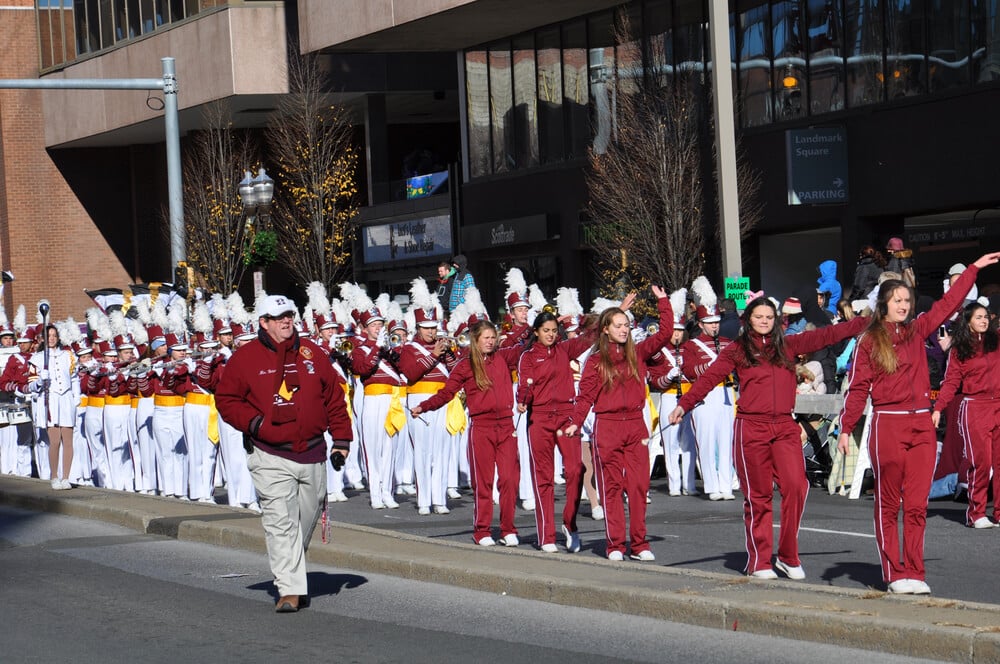
The Macy’s Thanksgiving Day Parade was first held in 1924, and its early marchers included live animals borrowed from the Central Park Zoo. By the 1950s, the parade had become television material, and its closing float carried Santa Claus to Herald Square.
His arrival officially opened the Christmas shopping season, which made the parade less a holiday tradition than a well-timed advertisement. Photographs show crowds lining the curbs several rows deep, all of them waiting for the man in red.
The Walnut Room Tree at Marshall Field’s
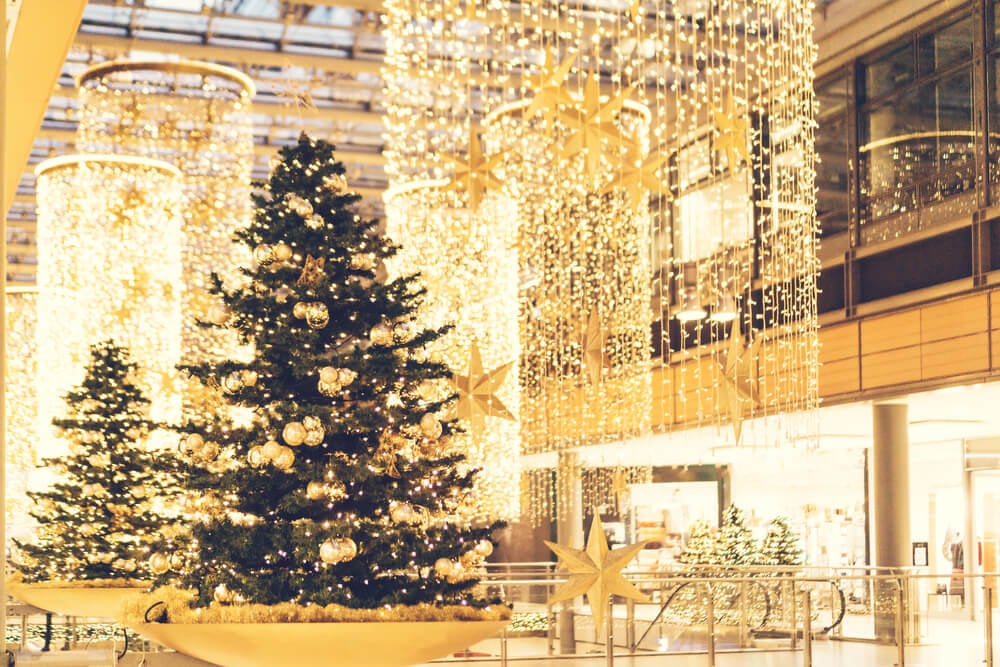
Marshall Field’s flagship on State Street in Chicago is remembered for the Great Tree in the Walnut Room, a tradition dating to 1907. Shoppers in the 1950s ate lunch under it between rounds of gift buying.
The store’s famous Frango mints trace back to Frederick and Nelson in Seattle, and Field’s acquired the brand in 1929 and made it a Chicago icon. A box of those mints was a standard Christmas gift for decades, even though the recipe began on the other side of the country.
The Sears Christmas Book Hits the Mailbox
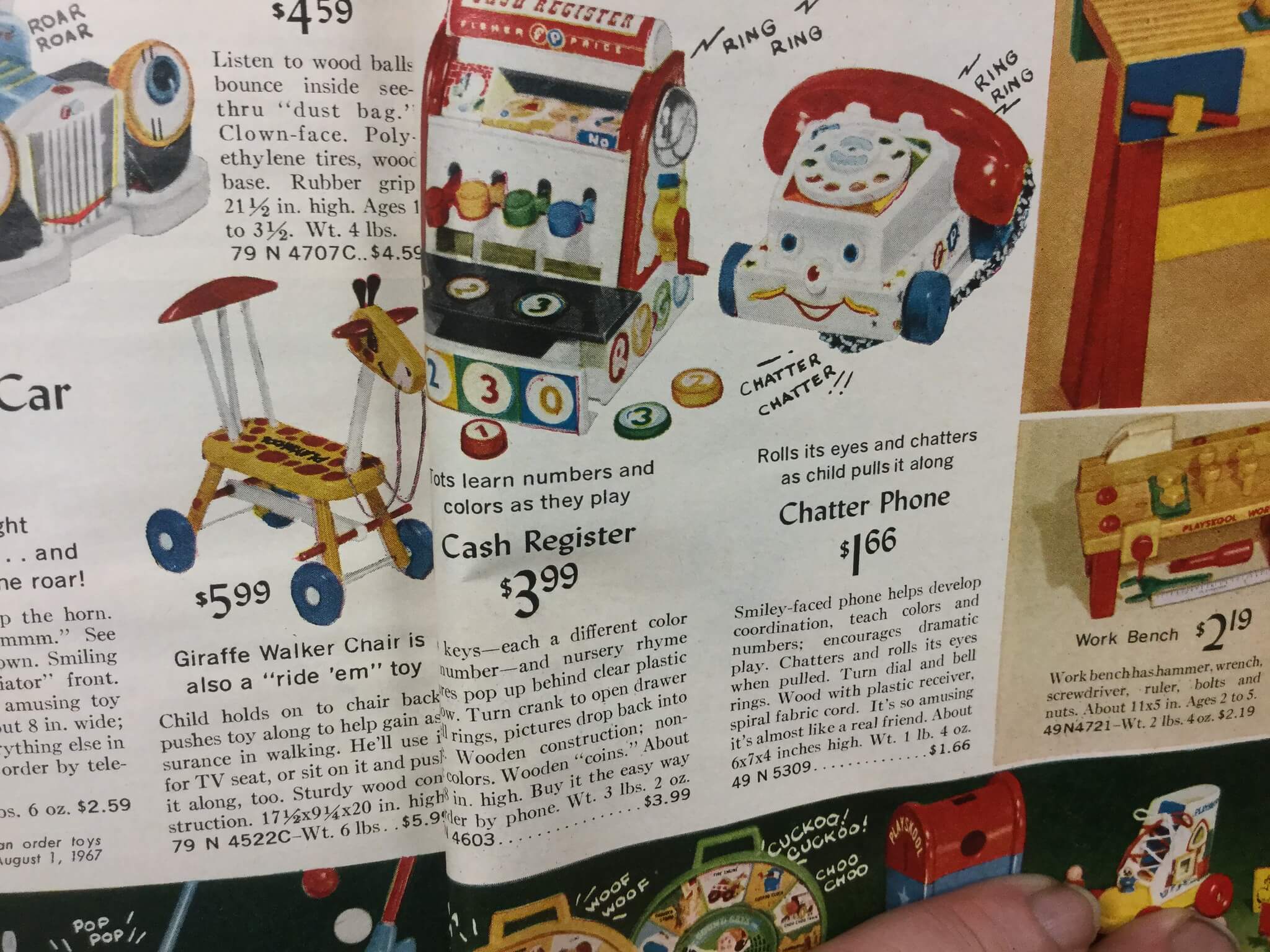
Sears published its first Christmas catalog in 1933 under the name Christmas Book, and the title Wish Book came later. Photographs of 1950s children show them sprawled on living room floors with the pages open, circling toys with pencils and folding down corners.
Parents used the same catalog to order gifts without leaving home, which saved them a trip through the crowds. For many rural families, the mail-order Christmas book was the only toy store within a hundred miles.
Rudolph and the Montgomery Ward Giveaway

Rudolph the Red-Nosed Reindeer began in 1939 as a promotional booklet written by Montgomery Ward copywriter Robert L. May for the store to hand out to holiday shoppers. Gene Autry recorded the song in 1949, and by the 1950s Rudolph was a fixture of store displays, toy shelves, and window scenes.
The character was created to bring customers into the store, and it worked well enough to outlive the booklet by generations. Photographs of Christmas displays in this period often show a red-nosed reindeer standing next to Santa as if he had always been part of the team.
The Pink Pig on the Roof of Rich’s

Rich’s department store in downtown Atlanta introduced the Pink Pig in 1953, a small monorail that carried children on a track around the store’s rooftop. Families lined up to ride it after seeing Santa, and the pig became a rite of passage for Atlanta children.
The ride outlasted the downtown store, and later versions of it moved to other locations. Pictures from the 1950s show kids in winter coats seated in a pink car, gripping the sides as it rounds the track.
The Great Tree on the Crystal Bridge
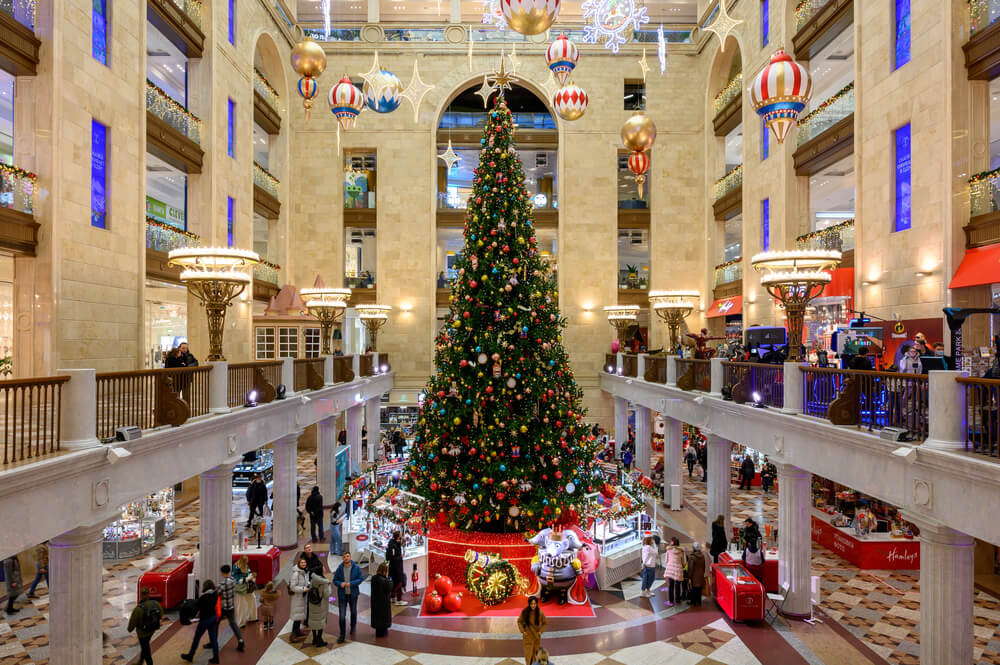
In 1948, Rich’s in Atlanta placed a Great Tree atop the Crystal Bridge, a pedestrian bridge that connected two of its downtown buildings. The tree lighting drew crowds to the street each year, and shoppers gathered below to watch it come on.
The tradition survived the store itself and later moved under the Macy’s name. Photographs from the 1950s show well-dressed families on the sidewalk with their faces turned up toward the lights.
Meeting at the Eagle in Wanamaker’s Grand Court
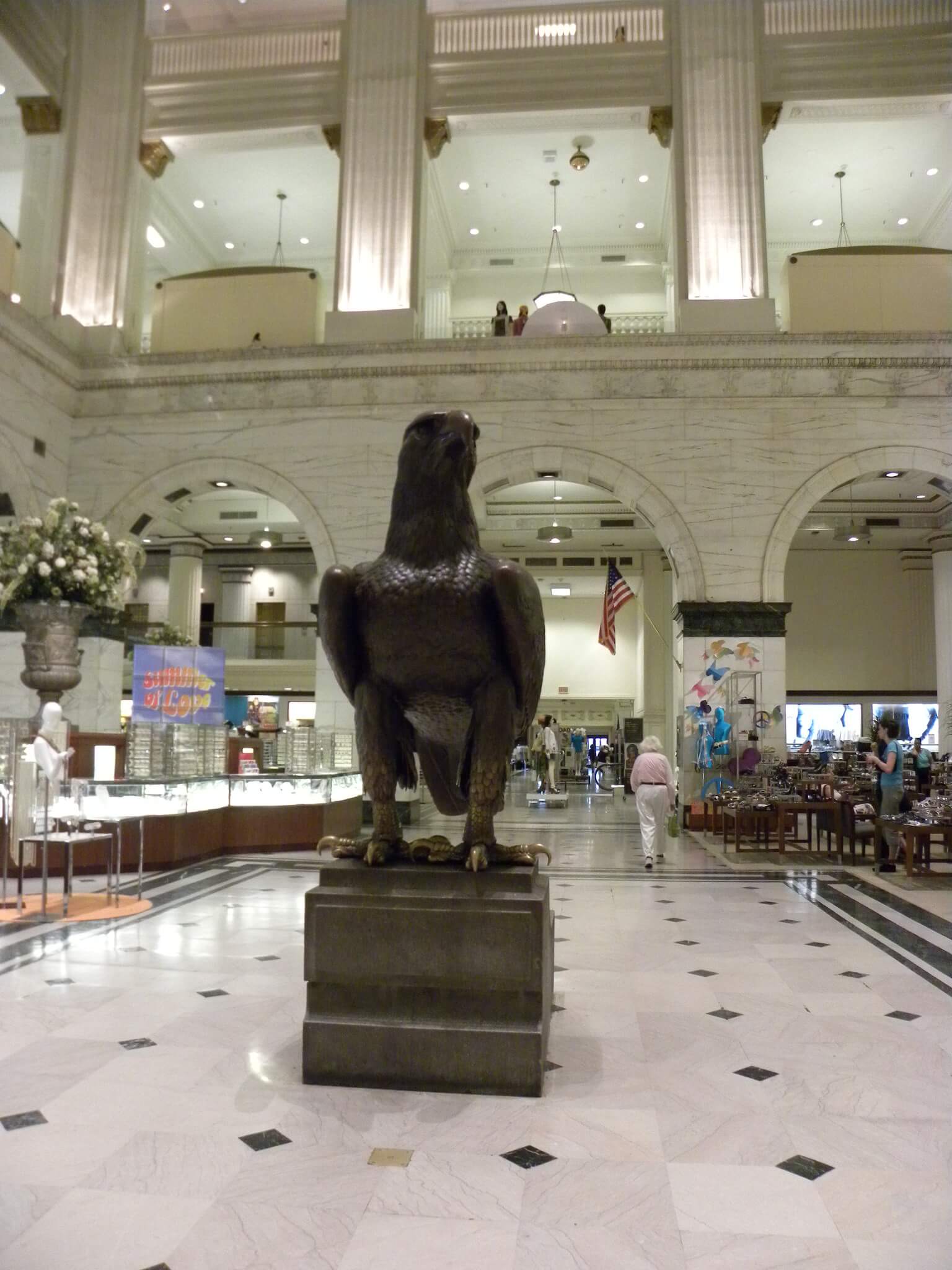
John Wanamaker’s store in Philadelphia centered on the Grand Court, where a bronze eagle bought at the 1904 St. Louis World’s Fair served as the favorite meeting spot in town. Philadelphians said they would meet someone at the Eagle, and thousands did, especially at Christmas.
The same court held the Wanamaker Organ, which was also brought from the St. Louis fair, and its Christmas concerts filled the building with sound. Photographs show shoppers standing three deep around the eagle with bags in hand, checking for friends.
The Rockefeller Center Tree Above the Crowds
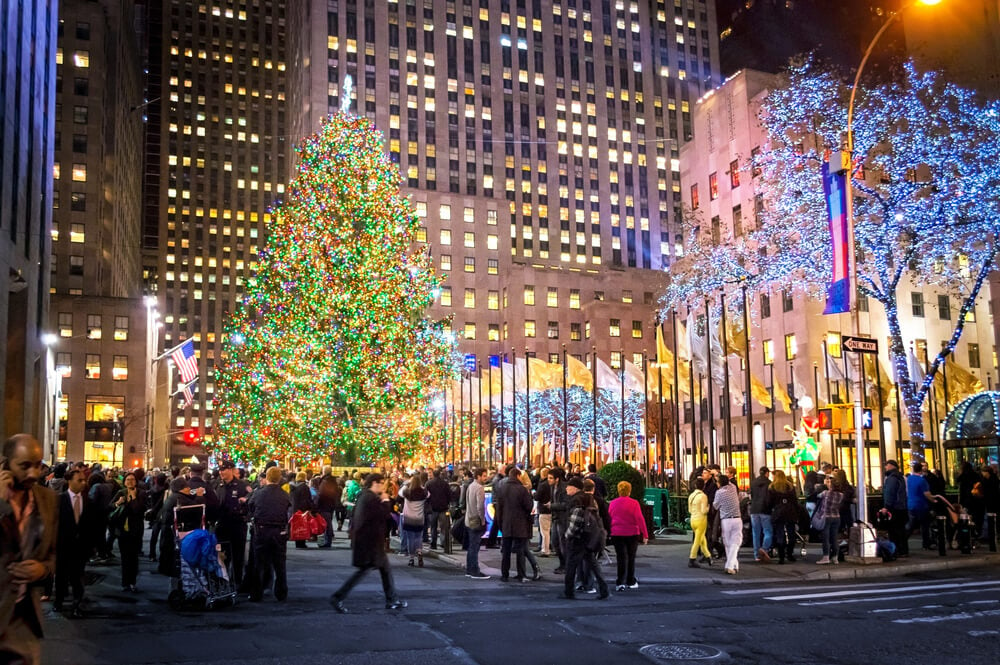
The Rockefeller Center Christmas tree dates to 1931, when construction workers put up a small tree and decorated it with tin cans and paper garlands. It became a formal lighting ceremony in 1933, and by the 1950s it was a fixture of New York Christmas shopping.
Visitors came to see the tree after browsing the nearby stores on Fifth Avenue. Photographs show the tree towering over a crowd of people in heavy coats, many of them holding shopping bags from the stores they had just left.
Lord & Taylor’s Fifth Avenue Windows
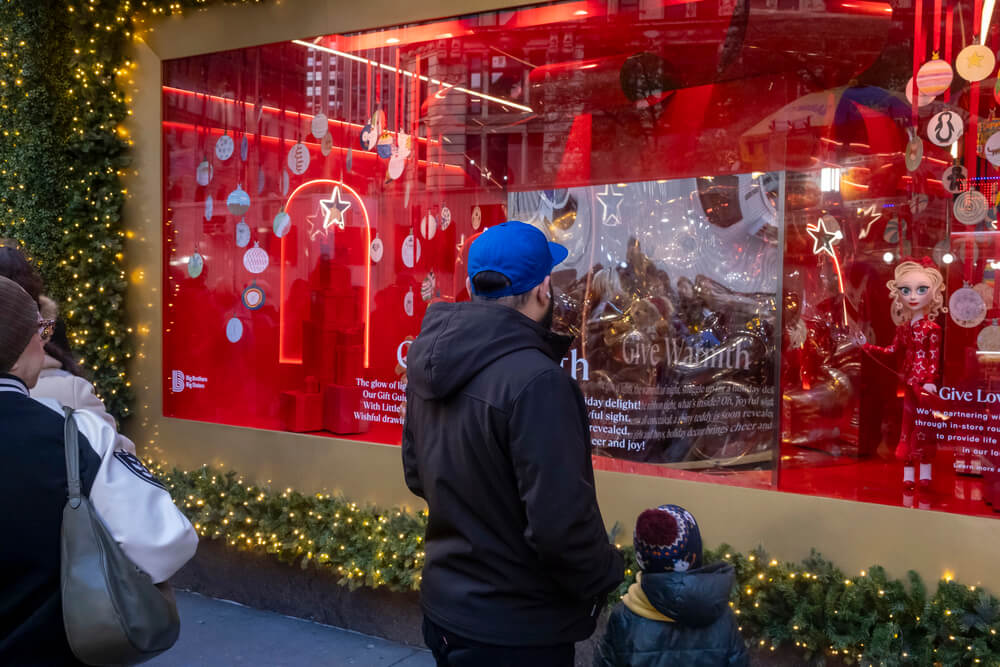
Lord & Taylor’s flagship on Fifth Avenue drew crowds to its Christmas windows, and Dorothy Shaver, who became president of the company in 1945, was known for pushing the store toward creative displays. In the 1950s, pedestrians stopped on the sidewalk to view each window as if it were a miniature stage.
Photographs of the displays show scenes of children, toys, and winter settings arranged behind the glass. Window shopping had a literal meaning that year, because many people came for the windows and left without buying anything.
The Five-and-Dime Ornament Counter at Woolworth’s
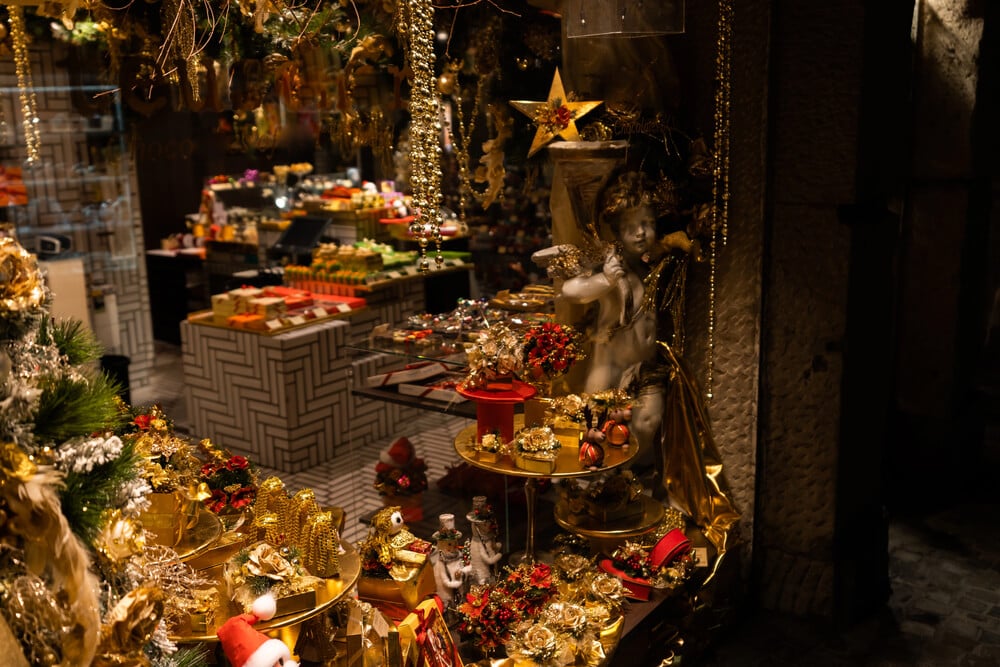
F. W. Woolworth began stocking imported glass ornaments in the 1880s, and by the 1950s its stores were a basic stop for anyone decorating a tree on a budget. Boxes of colored glass, tinsel, and strings of lights were sold from long counters, often next to candy and greeting cards.
Photographs from the period show women leaning over the counters and sorting through ornaments by the dozen. The ornaments cost pennies, but a tree could be dressed in an afternoon.
Window Shopping at Selfridges, Christmas 1951
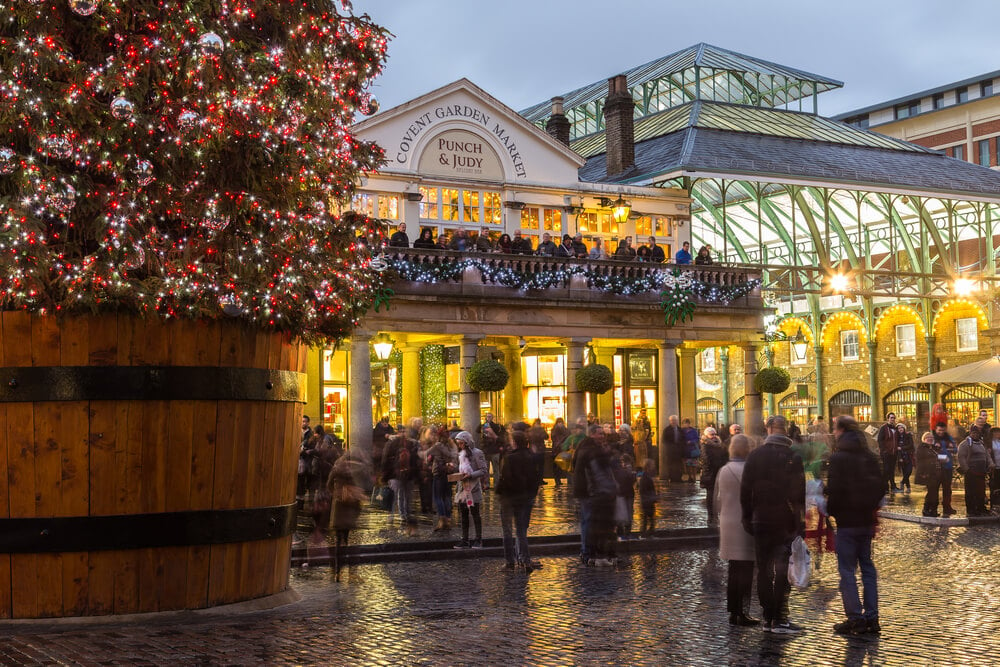
Selfridges on Oxford Street in London drew crowds of window shoppers in the winter of 1951, one of the lean years of postwar Britain. Rationing was still in place for many goods, and sweet rationing did not end until 1953.
Photographs from that Christmas show people in hats and long coats standing in front of lit windows, looking at things they could not always buy. The display was part of the pleasure, and the street was busy even when wallets were thin.
Hamleys on Regent Street
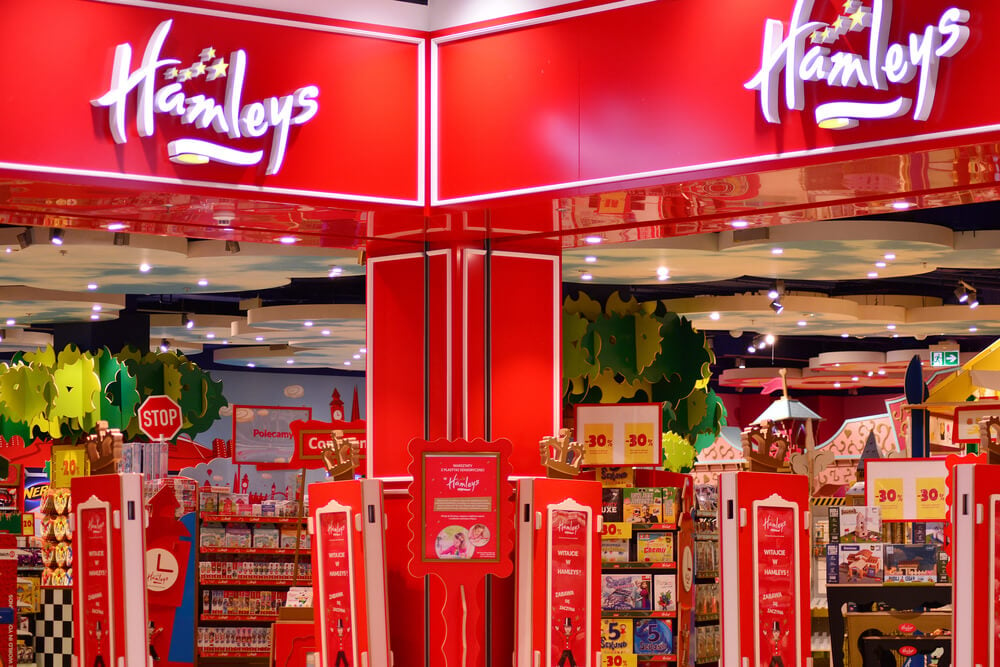
Hamleys was founded in 1760 by William Hamley and moved to Regent Street in 1881, where it grew into one of the best known toy stores in London. At Christmas, children pressed against its windows and crowded its aisles to look at trains, dolls, and games.
Photographs from the 1950s show families stepping through the doors with the same expressions that children wear today. The store has stood for more than two centuries, which makes it older than most of the toys it sells.
Eaton’s and the Toronto Santa Claus Parade
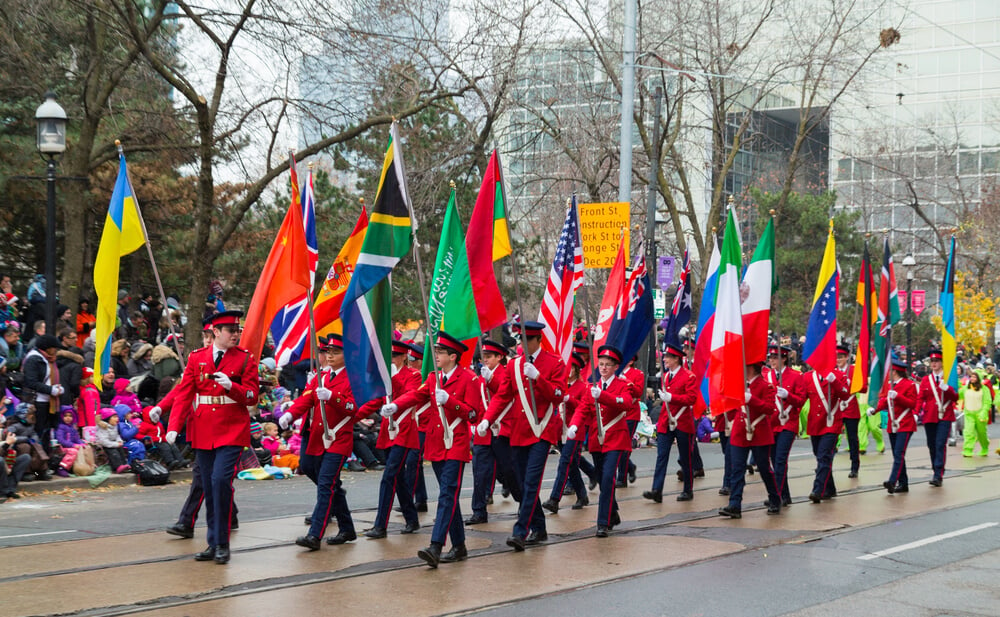
The Toronto Santa Claus Parade began in 1905, when the Eaton’s department store brought Santa into the city from Union Station and marched him to its store. By the 1950s, the parade included floats, bands, and costumed characters, and it ended at Eaton’s with Santa in his place of honor.
Crowds filled Yonge Street for the event. Photographs show children on their fathers’ shoulders waving at the floats, and a big store behind them waiting for their business.
Hudson’s and the Detroit Thanksgiving Parade
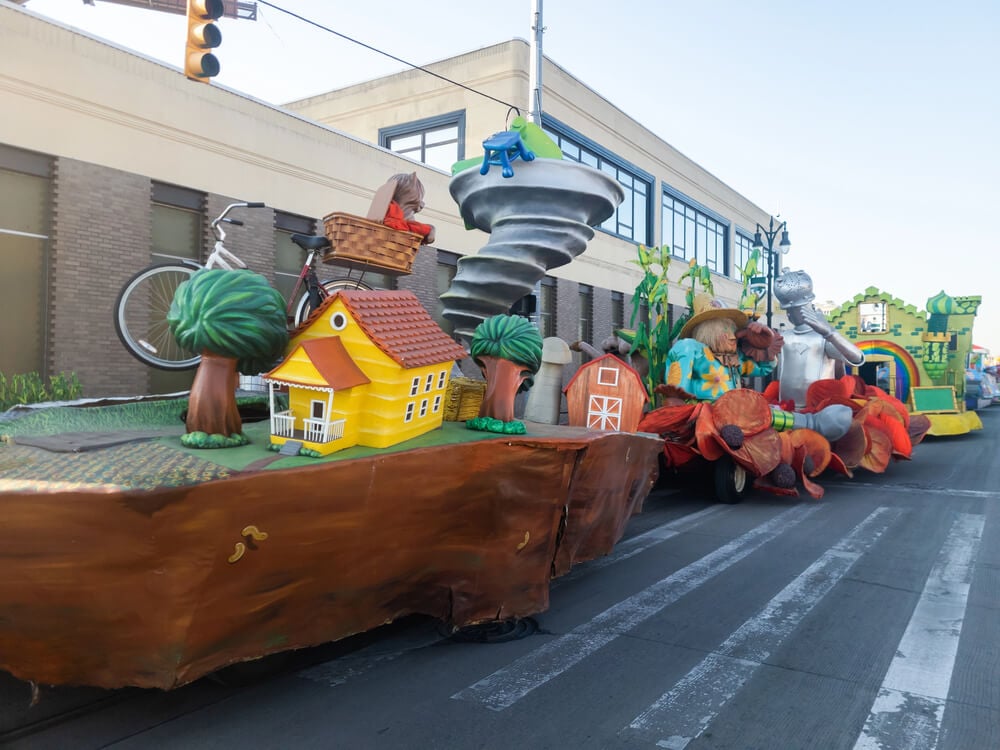
Detroit’s Thanksgiving parade was first held in 1924, and J. L. Hudson’s department store was closely tied to it for decades. The event ended at the big Woodward Avenue store, where Santa took his seat and the Christmas season began in earnest.
Photographs show floats rolling past the store in November, with crowds on the sidewalk and shoppers heading inside as the procession ended. Detroit’s biggest retailer had found a way to turn a parade into a front door.
Meeting Under the Clock at Kaufmann’s
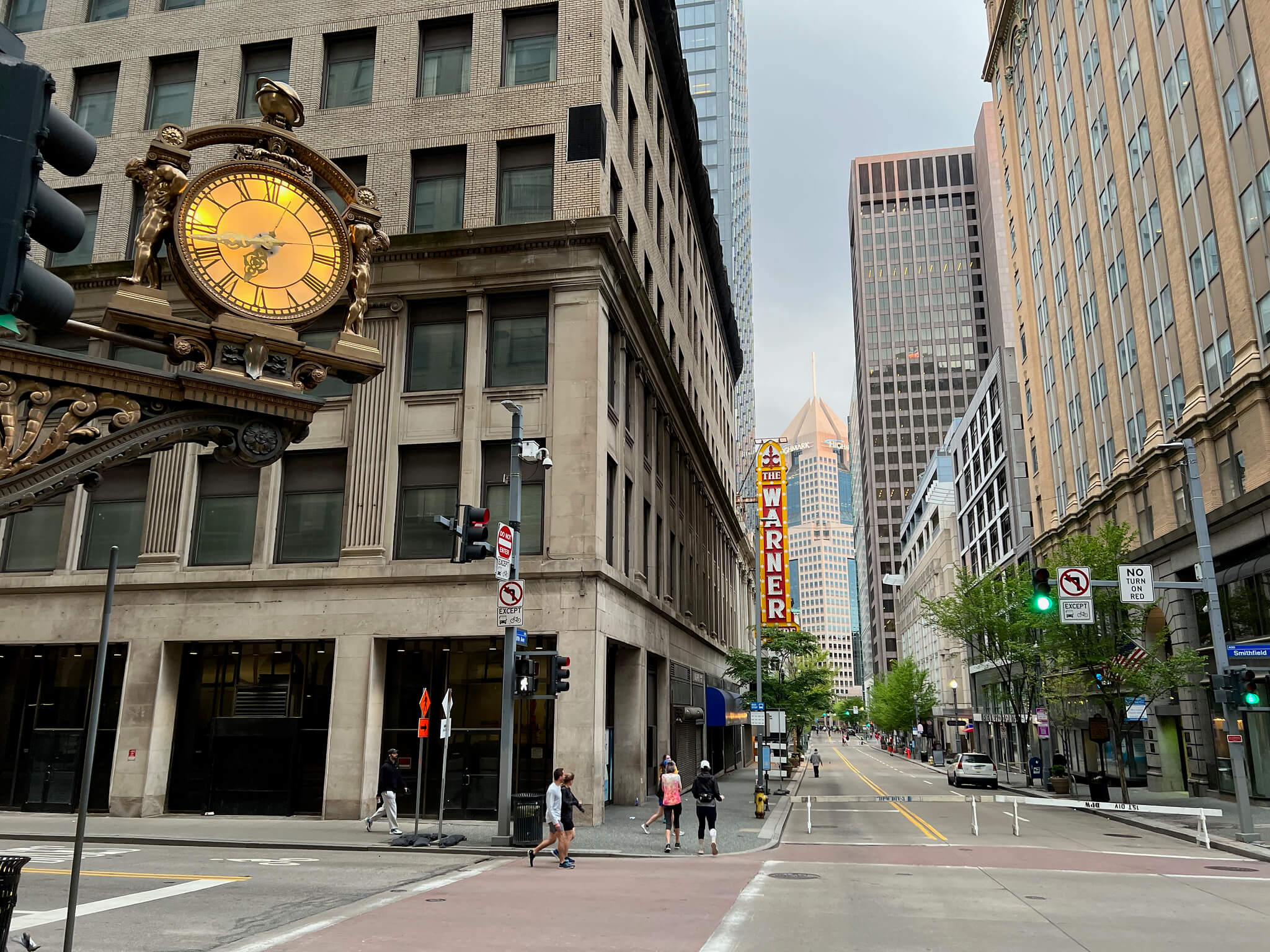
Kaufmann’s department store in Pittsburgh, at Fifth Avenue and Smithfield Street, was known for its big clock on the corner, and the phrase meet me under the Kaufmann’s clock was a familiar one. At Christmas, the sidewalk beneath it filled with friends and family planning shopping trips together.
Photographs show people in overcoats waiting by the corner with shopping lists and umbrellas. The clock worked as the city’s informal appointment book.
Northgate and the Suburban Shopping Center

Northgate opened in 1950 north of downtown Seattle and offered something downtown stores could not, which was parking in front of the doors. Christmas shoppers drove there in the family car and moved between shops on foot, with no need to fight for a meter.
Photographs from the opening years show parked cars filling lots around low buildings. The center helped prove that Americans were willing to leave Main Street behind if the parking was good.
Southdale and the First Indoor Christmas
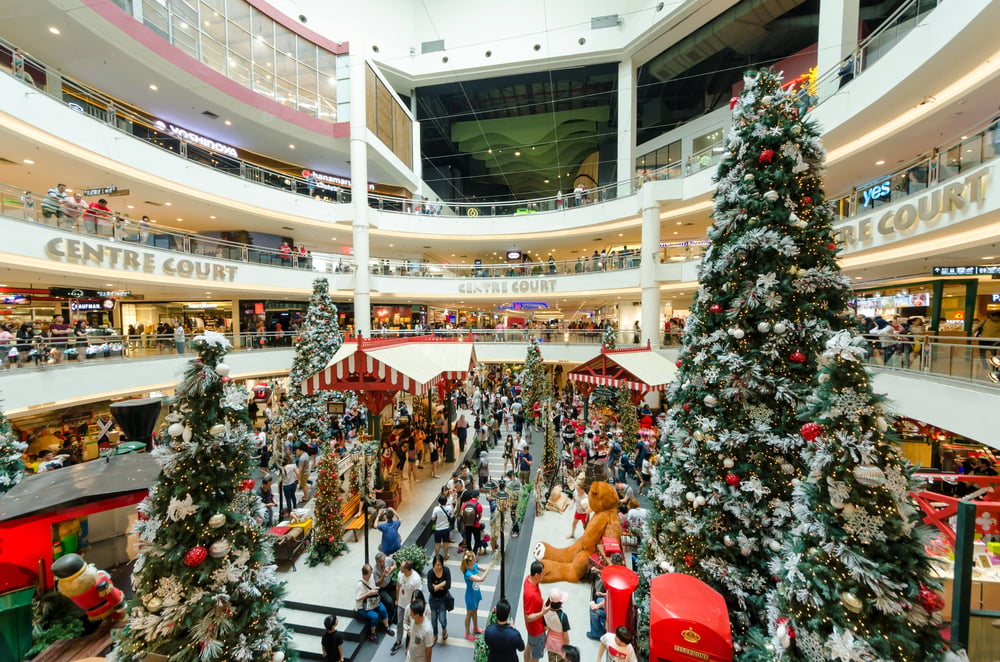
Southdale Center in Edina, Minnesota opened in October 1956 as the first fully enclosed, two-story shopping mall, and its Christmas debut came a few weeks later. Architect Victor Gruen designed it with a climate-controlled interior, with a garden court, a goldfish pond, and an aviary.
Shoppers could carry their packages from store to store without putting on a coat. Photographs from that first season show crowds of people walking indoors in the middle of a Minnesota winter.
Toys “R” Us and the Toy Supermarket
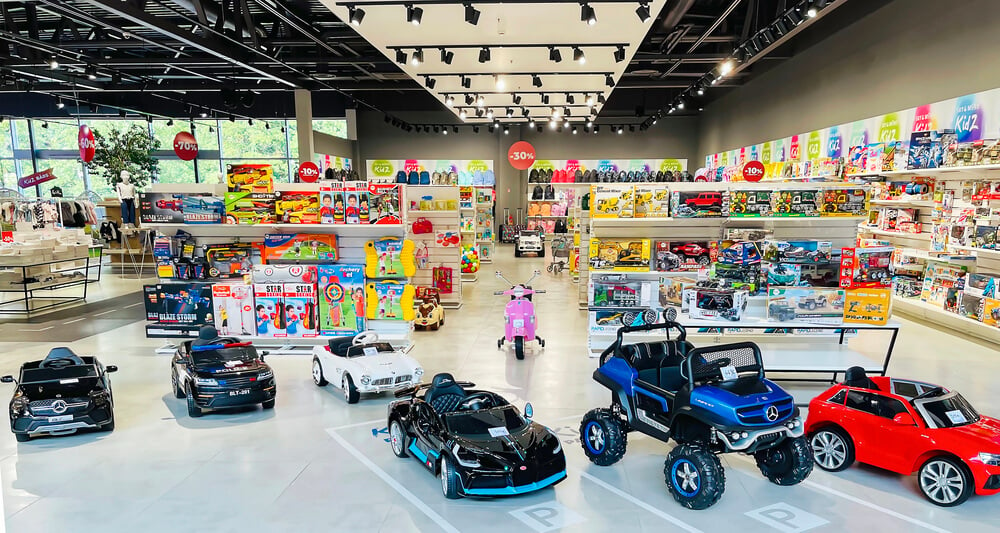
Charles Lazarus opened a baby furniture store in Washington, D.C. in 1948, and he noticed that customers kept asking for toys. In 1957, he opened the first store under the Toys “R” Us name, built around a supermarket model with carts and shelves.
Christmas shoppers could roll through aisles of dolls and games instead of waiting for a clerk. The idea that a toy store could look like a grocery store seems obvious now, but it was new at the time.
Davy Crockett Caps in the Toy Aisle
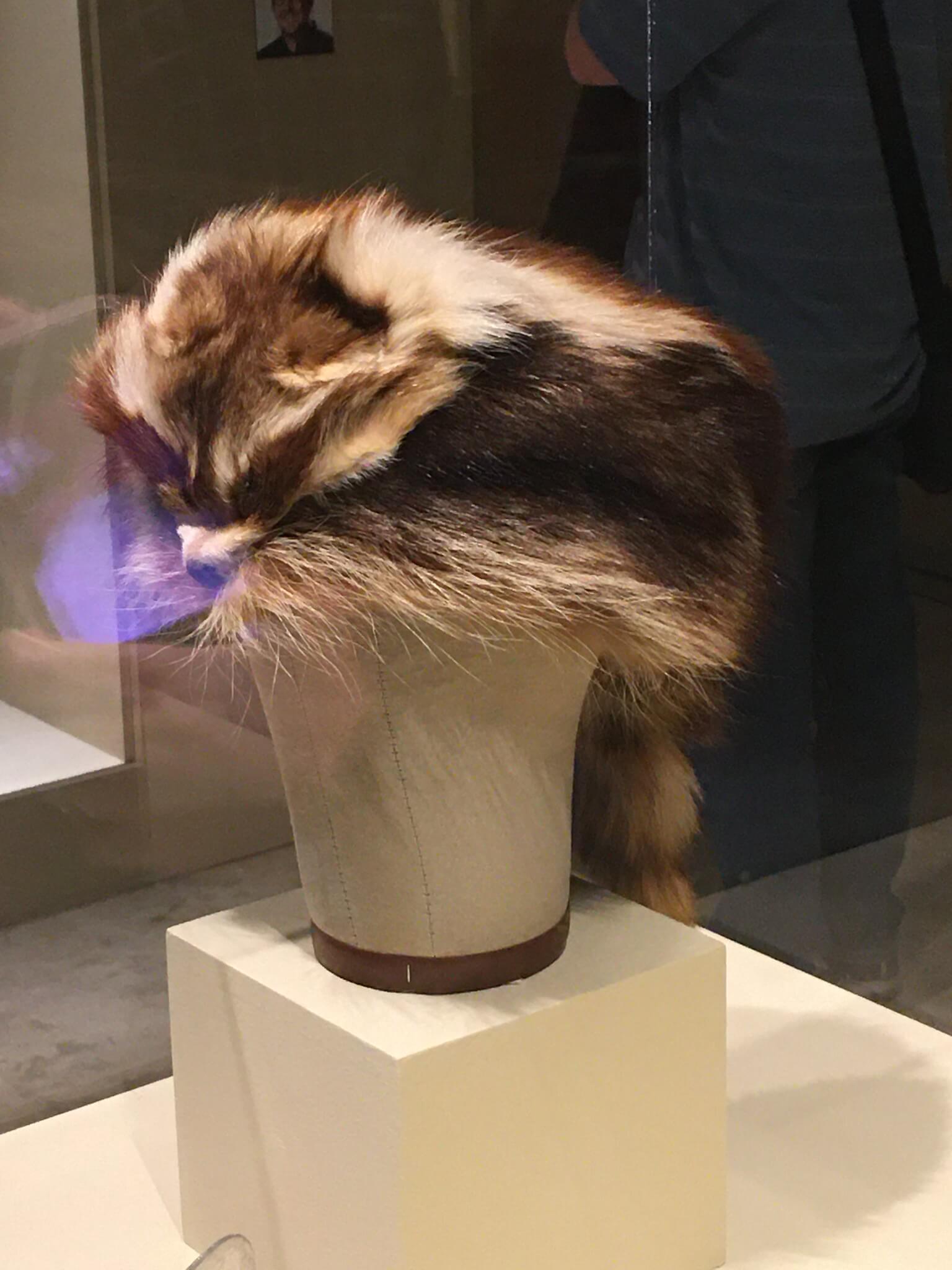
Disney’s Davy Crockett television series, starring Fess Parker, aired in 1954 and 1955 and set off a merchandise craze that crowded the toy aisles by Christmas 1955. Coonskin caps were the signature item, and boys wore them in the street and at the dinner table.
The Henry Ford museum holds a child’s coonskin cap from this era, a preserved piece of the fad. Photographs show boys in fur hats clutching toy rifles beside the department store Santa.
Mr. Potato Head Goes on Sale

Mr. Potato Head went on sale in 1952 and became the first toy advertised on television. The original kit contained plastic eyes, ears, noses, and mouths that children pushed into a real potato from the kitchen.
Parents who bought it at Christmas had to supply the vegetable, which made for an odd shopping list. Photographs of the toy show a lopsided potato with a plastic grin sitting on a family table.
The Hula Hoop Arrives from Wham-O

Wham-O, founded by Richard Knerr and Arthur Melin, introduced the Hula Hoop in 1958, inspired by bamboo exercise rings used in Australia. The plastic hoops sold in toy stores and department stores, and children spun them around their waists on sidewalks and in living rooms.
By the holiday season, stores could hardly keep them on the shelves. Photographs of the period show lines of kids in coats swinging them in the street.
Barbie Makes Her Debut
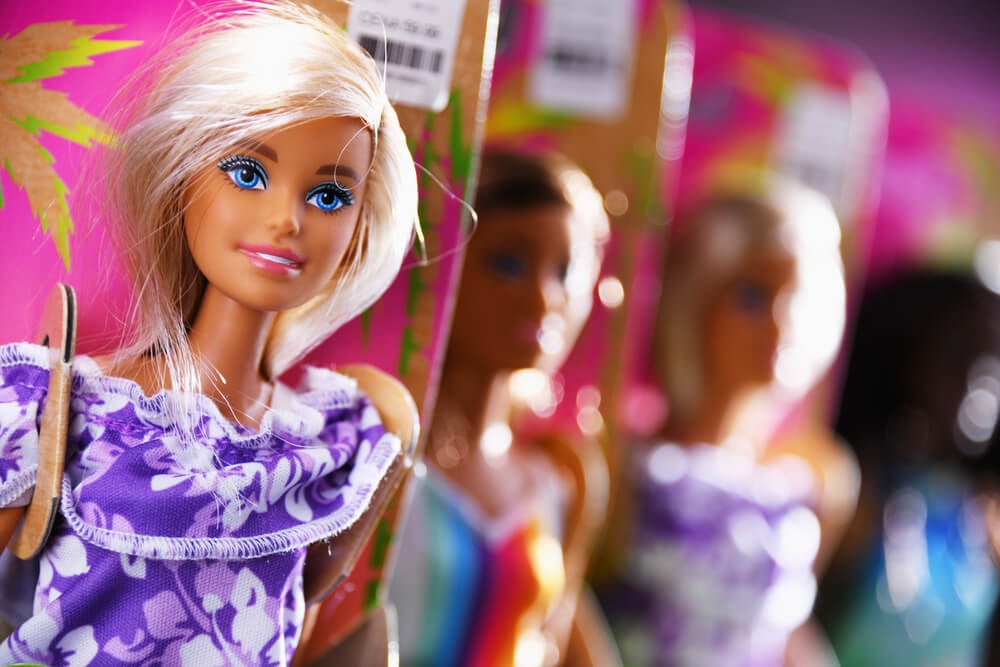
Mattel introduced Barbie at the American Toy Fair in New York in March 1959, and the doll reached holiday shoppers later that year. Ruth Handler created her after noticing that her daughter preferred paper dolls of grown women, and the design was inspired by a German doll named Bild Lilli.
The first Barbie sold for $3. Photographs from late 1959 show girls holding the doll in a black-and-white swimsuit, with parents standing close behind them.
When the Season Learned to Sell Itself

Taken together, the 1950s photographs show Christmas turning into a season built around buying. Parades opened the shopping period, windows drew crowds, and Santa waited at the end of a line that wound past the toy department.
Catalogs arrived in the mail, and new malls gave families a warm, covered way to spend their money. The images also record a time when shopping was a social event.
People met under clocks, ate lunch beneath trees, and rode rooftop rides as part of the day out. The goods were different from today, but the pattern was recognizable, and the cameras caught it before it became ordinary.
More from Go2Tutors!

- 27 Silver Dollars and Half Dollars Worth Keeping
- 28 Restaurant Menu Items Nobody Orders Anymore
- 17 Places Built in Seemingly Impossible Spots
- 27 Vintage Rings Worth More Than They Look
- 25 Restricted Sites Tourists Can’t Enter
Like Go2Tutors’s content? Follow us on MSN.