Architecture of Famous Historical Castles
Castles were more than just strongholds.
They were unmistakable declarations that, centuries later, continue to captivate us by fusing architectural aspirations with military brilliance.
These buildings, which served as residences for nobles, status symbols, and fortifications against invaders, dominated landscapes throughout Europe, Asia, and beyond.
In addition to their formidable appearance, they were notable for their clever design, which included thick siege-resistant walls, towers oriented for optimal visibility, and layouts that made every hallway a possible enemy trap.
Famous historical castles’ architectural designs illustrate how societies have responded to dangers while preserving their sense of self.
Every castle represented the values and aesthetics of its time, from the simple, functional Norman keeps of England to the graceful spires of German Romanticism.
Let’s examine the construction processes of some of the most famous castles in the world and what can be learned about the individuals who commissioned them from their architecture.
Windsor Castle
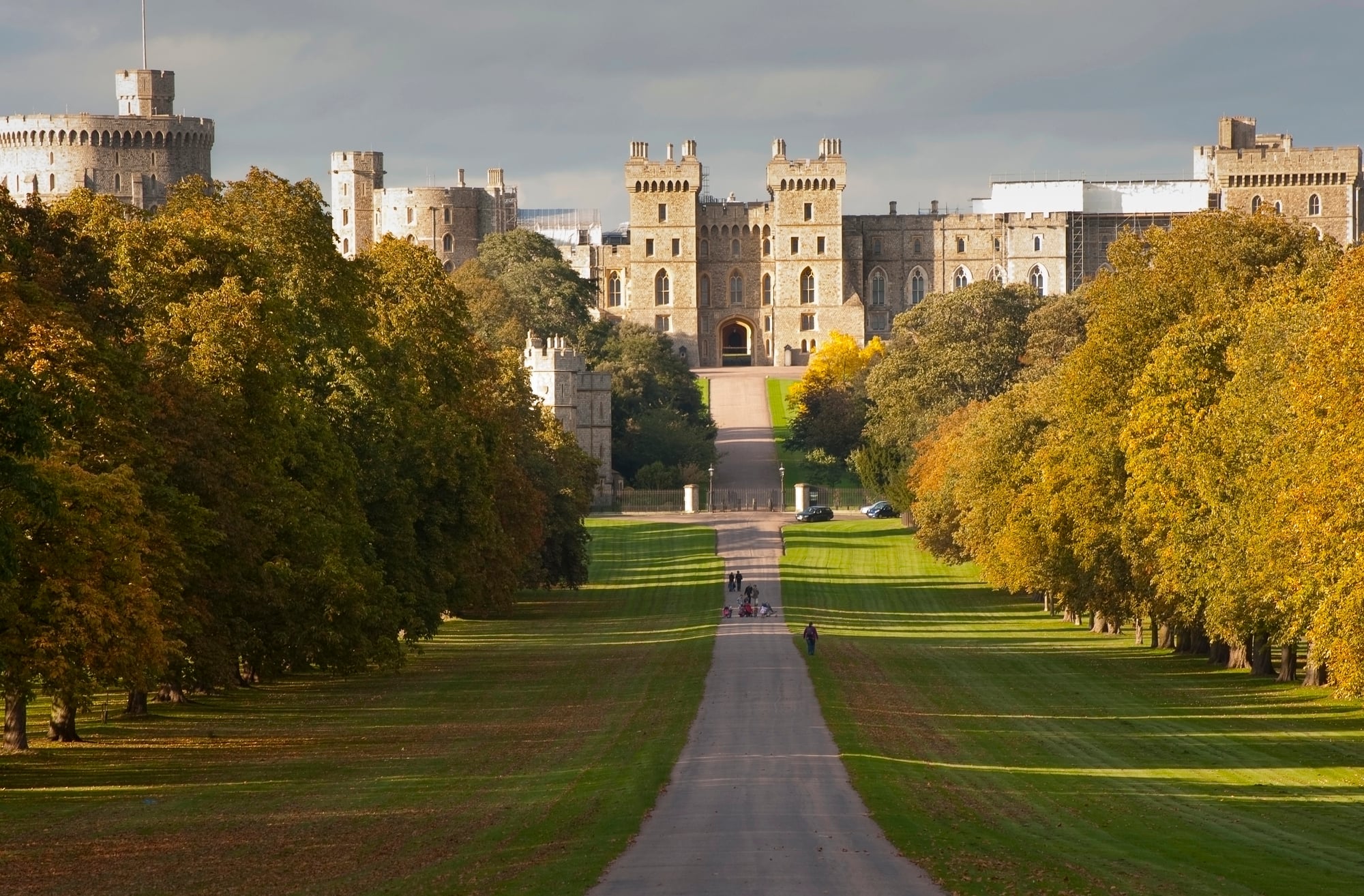
Windsor Castle stands as the oldest and largest occupied castle in the world, and its architecture represents nearly a thousand years of continuous evolution.
William the Conqueror chose the site around 1070 to 1075 for its strategic position overlooking the Thames, initially constructing a motte-and-bailey design with a wooden keep atop an artificial hill.
The stone fortifications came later, transforming it into the formidable stronghold that would house monarchs for generations.
The Round Tower, perched on that original motte, became the castle’s visual anchor, visible for miles across the English countryside.
What makes Windsor architecturally fascinating is how it adapted without losing its defensive character.
The Upper Ward contains the State Apartments, built and rebuilt over centuries in styles ranging from Gothic to Baroque, yet the castle never stopped being a fortress.
St. George’s Chapel, added in the 15th century, showcases perpendicular Gothic architecture at its finest—soaring fan vaults and intricate stone tracery that seem impossibly delicate for a building within castle walls.
The thick curtain walls and imposing gatehouses remain, reminders that beauty and brutality often shared the same blueprint in medieval architecture.
Neuschwanstein Castle

Neuschwanstein looks like it escaped from a fairy tale, and that’s precisely what King Ludwig II of Bavaria intended when he commissioned it in 1869.
This isn’t a medieval fortress but a 19th-century fantasy built to romanticize the Middle Ages, though its architecture draws heavily from historical castle design.
Perched on a rugged hill in the Bavarian Alps, the castle features soaring towers, pointed arches, and ornate turrets that evoke the Gothic and Romanesque styles Ludwig admired.
The throne room was designed with Byzantine influences, complete with an apse and columns that would have supported a grand dome, though notably no throne was ever installed—the castle remained incomplete when Ludwig died in 1886.
The interior reveals Ludwig’s obsession with Wagner and medieval legend.
The Singers’ Hall mimics the great halls of Wartburg Castle, with elaborate frescoes depicting scenes from Germanic mythology.
Despite its backward-looking aesthetic, Neuschwanstein employed cutting-edge technology for its time—central heating, running water on multiple floors, and even an electric bell system for summoning servants.
It’s a curious blend of medieval romanticism and modern convenience, proof that castle architecture could be as much about nostalgia as necessity by the late 1800s.
Himeji Castle

Japan’s approach to castle architecture differed dramatically from European models, and Himeji Castle represents the pinnacle of that tradition.
Built in its current form in the early 17th century, the castle rises in a complex of interconnected buildings crowned by an elegant white keep that earned it the nickname ‘White Heron Castle’.
The architecture emphasizes verticality and grace, with curved roofs layered like wings and white plaster walls that contrast sharply with the dark wooden frameworks.
Unlike the squat, massive keeps of European castles, Himeji’s main tower reaches six stories externally while containing seven floors inside, designed to confuse attackers navigating its deliberately maze-like interior.
The defensive strategy embedded in Himeji’s design is brilliant in its subtlety.
The approach to the keep winds through multiple gates and courtyards, each protected by strategically placed guardhouses and loopholes for firing arrows or dropping stones.
Walls angle inward at their bases—a technique called ‘musha-gaeshi’—making them nearly impossible to scale.
The castle survived centuries of warfare, earthquakes, and even World War II bombing raids that destroyed much of the surrounding city.
Its architectural resilience, combined with aesthetic refinement, demonstrates that castle builders across cultures solved similar problems in remarkably different ways.
Alhambra
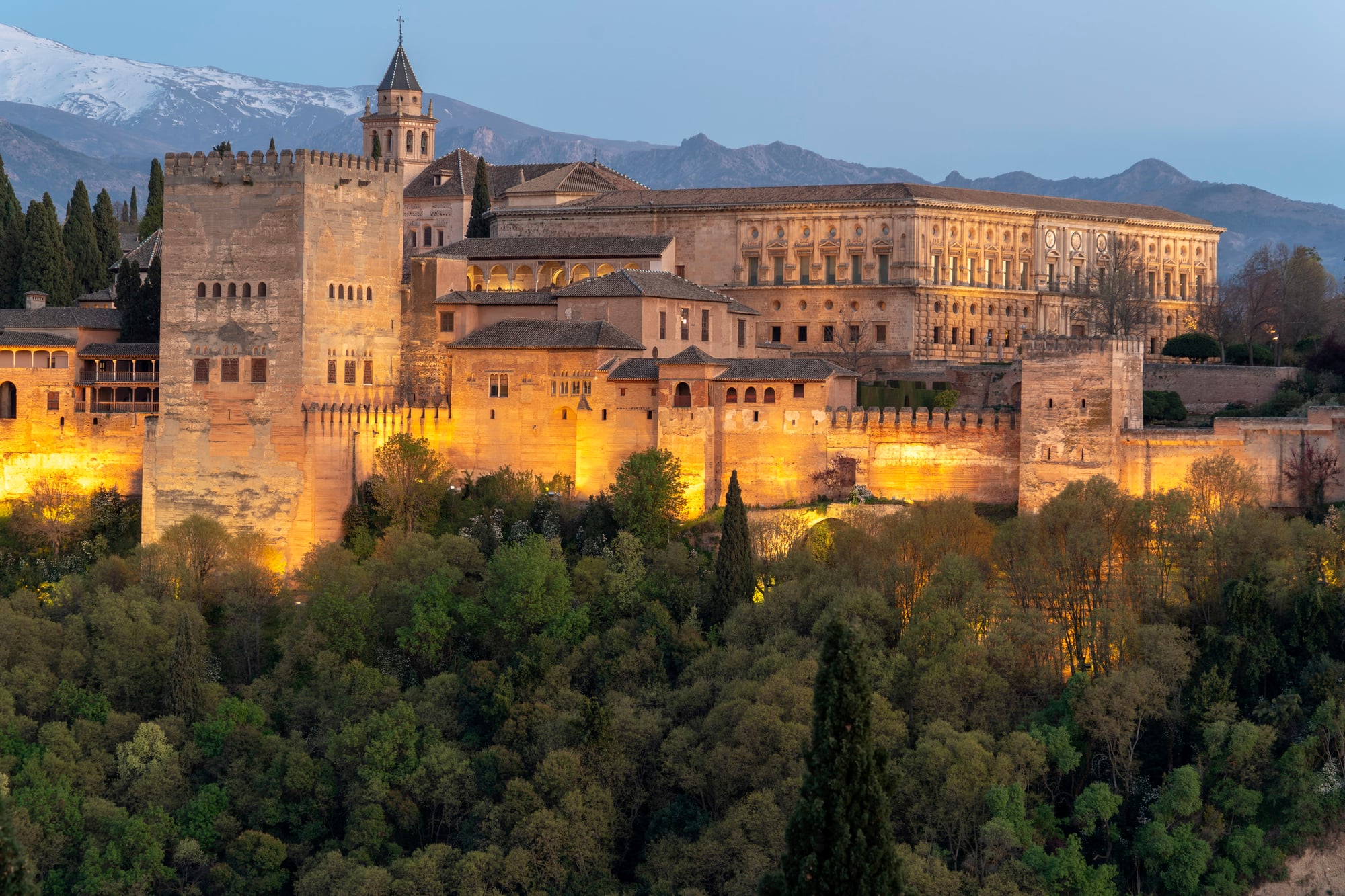
The Alhambra breaks every European convention of what a castle should be.
Built by Moorish rulers in Granada, Spain, during the 13th and 14th centuries, it’s a palace-fortress that prioritizes beauty and contemplation as much as defense.
The architecture blends military necessity with Islamic artistic traditions—massive outer walls and towers protect courtyards filled with reflecting pools, intricate tile work, and carved stucco that transforms walls into lace-like patterns.
The Court of the Lions, with its central fountain supported by twelve marble lions, feels worlds away from the cold stone halls of northern European castles, yet the Alhambra’s position atop a plateau made it nearly impregnable.
Islamic geometric patterns dominate the interior spaces, with Arabic calligraphy woven into the decoration as both art and devotion.
The architects designed the palace to interact with water and light in ways that changed throughout the day—fountains create ambient sound, pools mirror the sky and surrounding arcades, and carefully positioned windows cast moving shadows across ornamental surfaces.
The Nasrid Palaces within the complex demonstrate how castle architecture could create intimate, human-scaled spaces within a fortified structure.
Even after Granada fell to Christian forces in 1492, the Alhambra’s architecture influenced Spanish design for centuries, proving that walls built for war could also house transcendent beauty.
Château de Chambord

French Renaissance castles took architectural experimentation to new heights, and Chambord stands as the most ambitious example.
Commissioned by King Francis I in 1519, it combines medieval defensive elements with classical Renaissance proportions and decorative flourishes that had no military purpose whatsoever.
The central keep features four massive towers at its corners and a famous double-helix staircase, possibly designed by Leonardo da Vinci, that allows two people to ascend or descend simultaneously without meeting.
The roofline is a forest of chimneys, cupolas, and spires—more decorative than functional—creating a skyline that announces wealth and power rather than defensive readiness.
Chambord was never truly meant to be lived in for extended periods.
It served as a hunting lodge and a symbol of royal prestige, which explains why the architecture prioritizes spectacle over comfort.
The château contains over 400 rooms and 80 staircases, yet many spaces remained unheated and sparsely furnished even during royal visits.
The blend of French medieval traditions with Italian Renaissance ideals—symmetrical facades, classical columns, and carefully proportioned windows—marked a shift in castle architecture toward palatial elegance.
Defensive moats and walls still surrounded the structure, but they’d become architectural gestures rather than serious military features by the time Chambord was completed.
Edinburgh Castle

Few castles dominate their surroundings as thoroughly as Edinburgh Castle, built atop an extinct volcanic plug that rises 430 feet above the city.
The rock itself provided natural defense on three sides, leaving only the eastern approach vulnerable to attack.
Builders exploited this geography ruthlessly, constructing walls that seem to grow directly from the cliffs and creating a fortress that withstood countless sieges throughout Scottish history.
The oldest surviving structure, St. Margaret’s Chapel, dates to the early 12th century and represents simple Romanesque architecture—thick walls, rounded arches, and minimal ornamentation suited to both worship and defense.
The castle’s architecture evolved dramatically over the centuries as military technology changed.
The Half Moon Battery, added in the late 16th century, was designed to mount cannons and represents the transition from medieval curtain walls to artillery fortifications.
The Great Hall, built for James IV, showcases late Gothic architecture with its hammerbeam roof—an engineering feat that spans the width of the hall without central support columns.
Edinburgh Castle never stopped being militarily relevant, housing garrisons and arsenals well into the 20th century, which means its architecture reflects every major shift in warfare from medieval sieges to modern conflicts.
Krak des Chevaliers

The Crusader castles of the Middle East pushed defensive architecture to its logical extreme, and Krak des Chevaliers in Syria represents the apex of that development.
Built and expanded by the Knights Hospitaller during the 12th and 13th centuries, it features concentric walls—an inner and outer ring of fortifications separated by a defensive space that trapped attackers between two lines of fire.
The outer walls, up to 30 feet thick in places, could absorb the impact of siege engines and early cannons.
Towers positioned along the walls provided overlapping fields of fire, eliminating blind spots where attackers could mass safely.
What’s remarkable about Krak des Chevaliers is how it balanced military efficiency with the needs of a permanent garrison.
The castle housed up to 2,000 troops and contained everything necessary for withstanding extended sieges—vast storage chambers for food and weapons, a chapel, meeting halls, and even a functioning aqueduct that supplied fresh water.
The architecture incorporates elements from both European and Middle Eastern traditions, including pointed arches and vaulted ceilings that helped distribute weight and withstand earthquakes common in the region.
The castle’s design influenced European military architecture for centuries after the Crusades ended, proving that the lessons learned in desert warfare had universal application.
More Than Walls and Towers

Castles in the past were more than just permanent military fortifications.
They were living architectural experiments that were always changing to meet new social norms, technological advancements, and threats.
When gunpowder rendered traditional fortifications obsolete, the thick walls that once prevented arrows and siege engines were transformed into canvases for decoration.
Protective moats were converted into decorative water features.
Keeps constructed for last-ditch protection evolved into ceremonial areas for showing off one’s wealth and style.
The castles that persisted into our time did so in part because they continued to change and adapt to new uses as their military functions grew outdated.
They evolved into prisons, administrative hubs, royal homes, and ultimately popular tourist destinations.
Through their rose-tinted battlements, 19th-century romantics reimagined the past, Renaissance patrons imposed classical order on Gothic forms, and medieval engineers solved tactical problems—all of these stories are told through their architecture.
Every well-known castle is a reflection of the time period in which it was constructed as well as the generations that have chosen to maintain, alter, or just admire the past.
More from Go2Tutors!

- The Romanov Crown Jewels and Their Tragic Fate
- 17 Halloween Costumes Once Considered Taboo
- Famous Hoaxes That Fooled the World for Years
- 15 Child Stars with Tragic Adult Lives
- 16 Famous Jewelry Pieces in History
Like Go2Tutors’s content? Follow us on MSN.