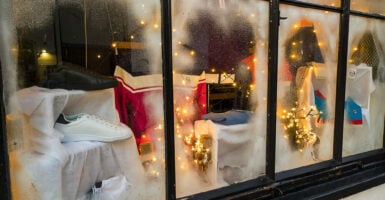
28 Photos of Department Store Windows at Christmas
Every December, sidewalks in dozens of cities slow to the pace of the person in front of the glass. For well over a century, department stores have understood that a window can sell an entire season without displaying a single price tag.
The pictures that survive from these windows, in archives and family albums alike, capture something the stores never quite intended: a crowd of strangers pressed against a pane, all looking at the same small, lit-up scene. Here are 28 places where that tradition took hold.
Macy’s Herald Square and the Dolls in the Window
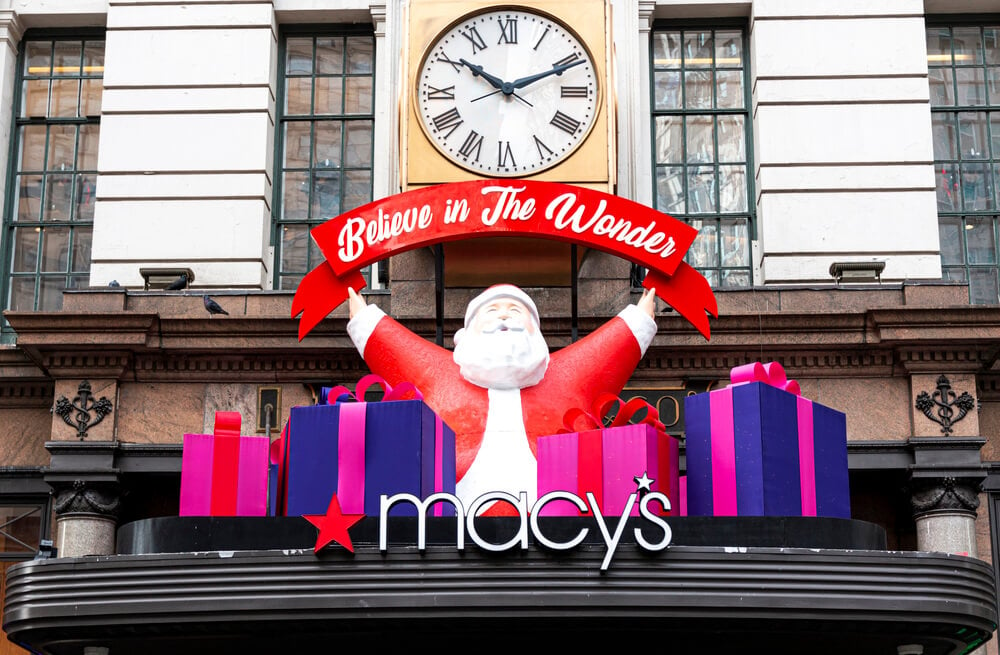
Macy’s has long treated its Christmas windows as a New York ritual, a habit that began with dolls and fancy goods shown to passersby in lower Manhattan. The company’s red star logo is said to trace back to a tattoo that founder Rowland Hussey Macy acquired during his days as a whaling sailor.
The Herald Square flagship opened in 1902, and the tradition of unveiling new holiday windows every year has followed it ever since, long outlasting the earlier locations.
Lord & Taylor and the Fifth Avenue Windows
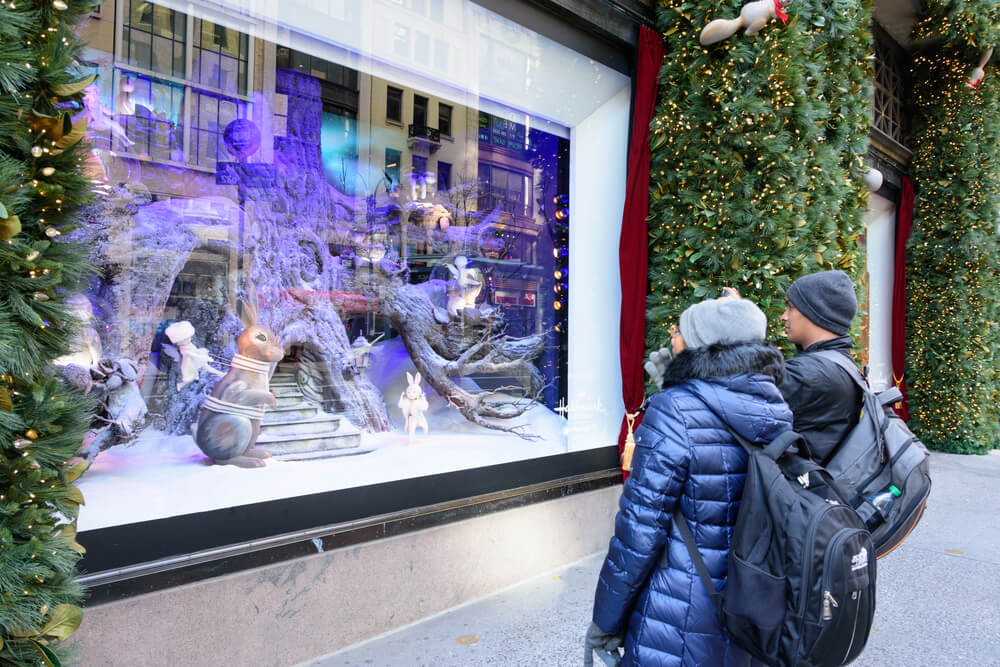
Lord & Taylor’s flagship at 424 Fifth Avenue made its windows a destination in the mid-twentieth century, a period when the store championed the “American Look” and featured homegrown designers. Crowds lined the sidewalk each December to see what the display staff had built.
The store’s holiday windows fit that same showman’s instinct, treating the sidewalk as a stage rather than a showroom.
Lord & Taylor Says Goodbye to Fifth Avenue
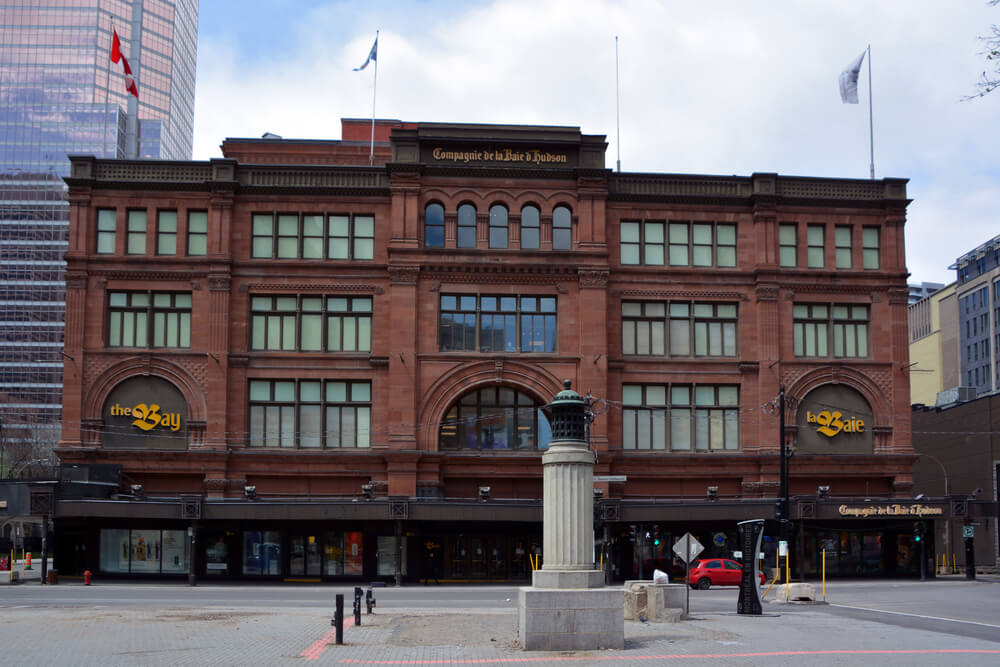
Lord & Taylor was founded in 1826 by Samuel Lord and his wife’s cousin George Washington Taylor, which made it one of the oldest names in American retail by the time its flagship was sold. The Fifth Avenue building went to WeWork in 2017, and the store closed its doors there in early 2019.
The final holiday windows in November and December 2018 drew crowds who knew they were looking at the last of a very long run.
Marshall Field’s State Street and the Great Tree
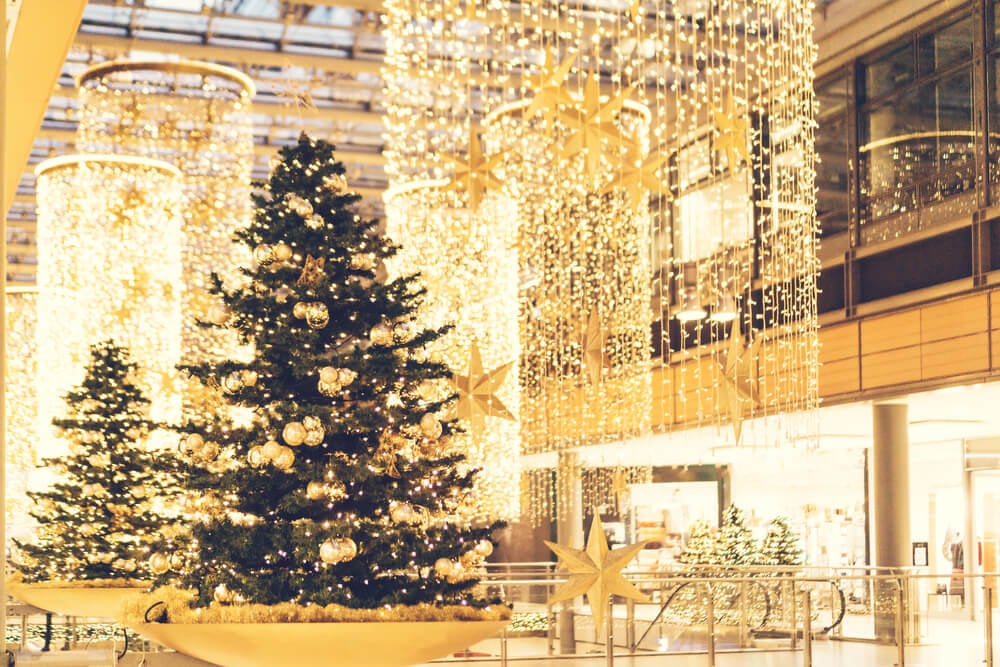
Marshall Field’s on State Street in Chicago turned its holiday windows into storybook scenes that families lined up to see, a habit documented in an archive photograph of a 1943 window display preserved by WTTW. Inside, the Walnut Room’s towering Christmas tree has been a fixture since 1907, so shoppers could stage an entire day of tradition without leaving the building.
Macy’s took over the store in 2006, and the nameplate on State Street changed, but the Field’s windows remain the version many Chicagoans still call the real thing.
Selfridges and the American Who Rewrote Oxford Street
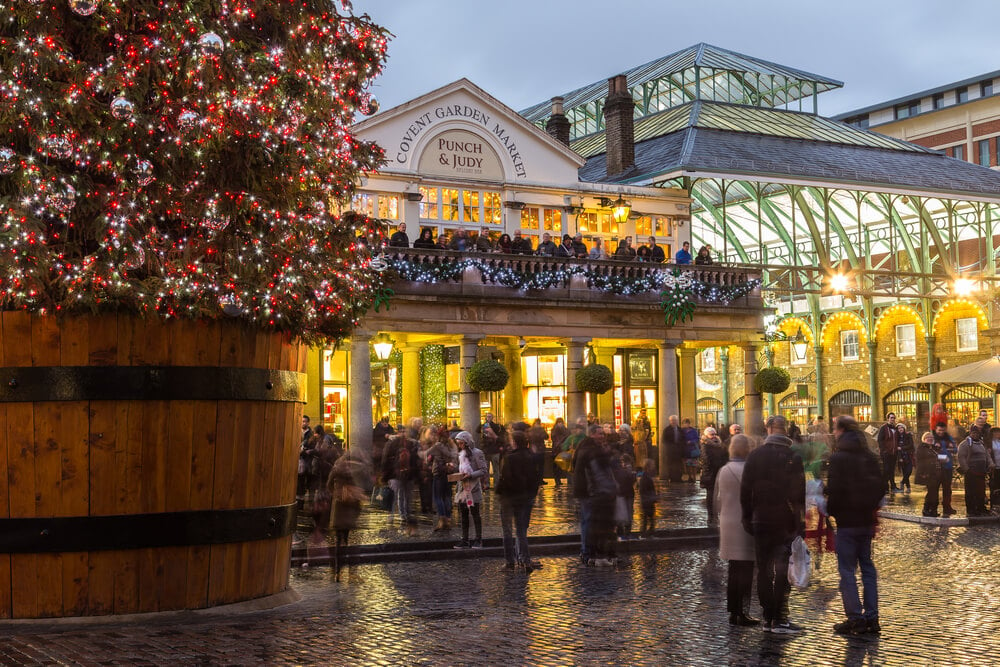
Selfridges opened on Oxford Street in March 1909, founded by Harry Gordon Selfridge, an American who had risen through the ranks at Marshall Field’s in Chicago. He brought a showman’s approach to London retail, and the shop displayed the monoplane in which Louis Blériot crossed the English Channel in 1909.
Selfridges windows have since grown into one of London’s best-known annual spectacles, with every year’s theme revealed to a crowd waiting on the sidewalk.
Harrods and the Knightsbridge Terra-Cotta Facade
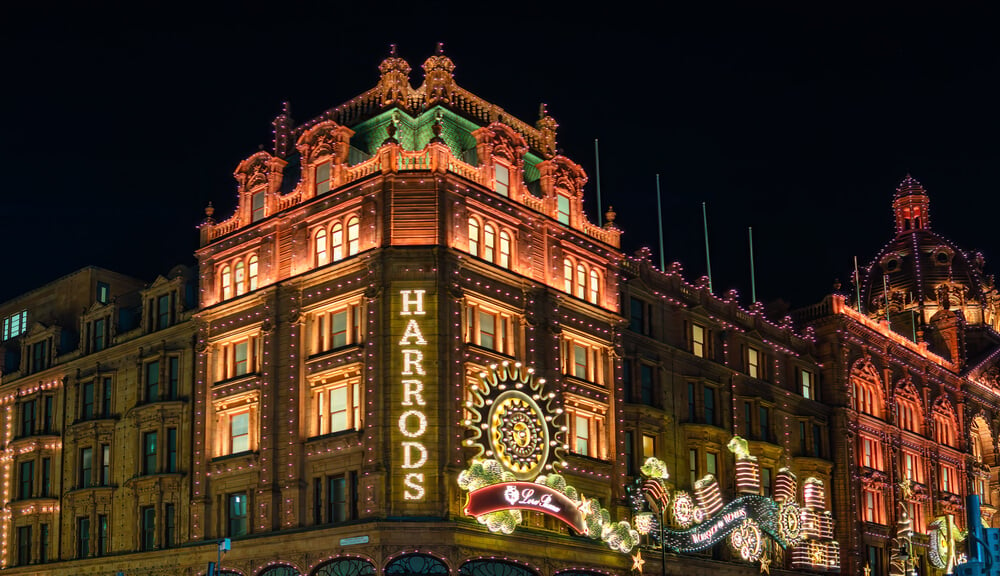
Harrods began in 1834 as a small shop run by Charles Henry Harrod and moved to Knightsbridge in 1849. The terra-cotta building that now holds the store was completed in 1905, giving the Christmas windows a grand frame that few retailers can match.
Each year the street-level panes along Brompton Road become the first thing visitors photograph, long before they reach the Food Halls.
Liberty and the Warships Behind the Windows
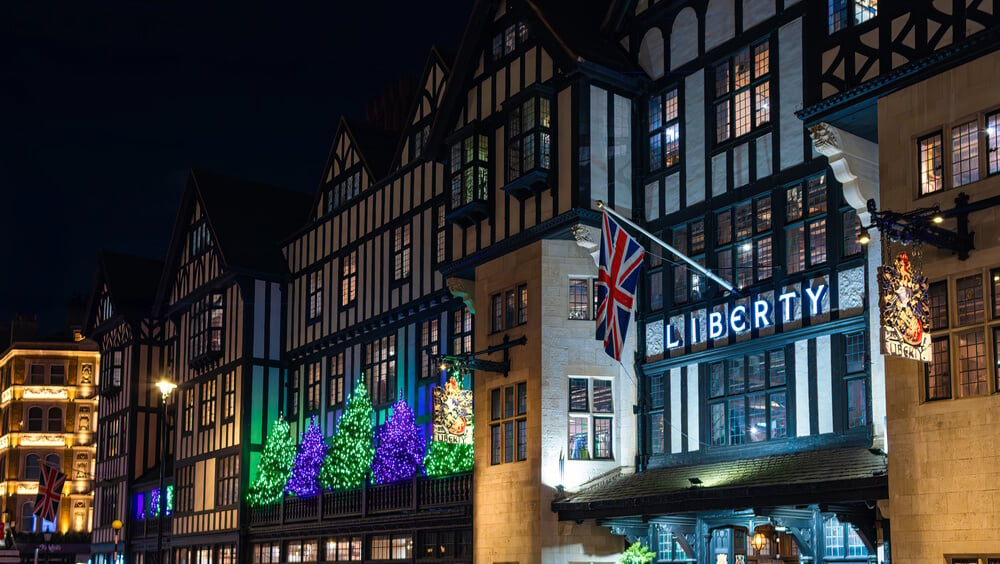
The Tudor-style Liberty building on Great Marlborough Street, finished in 1924, was constructed using timber from two decommissioned Royal Navy ships, HMS Impregnable and HMS Hindustan. Arthur Lasenby Liberty founded the business in 1875, and its fabrics and Arts and Crafts sensibility shaped the look of the shop.
Christmas turns the half-timbered facade into a showcase of its own, with window displays that photograph especially well against the dark oak.
Fortnum & Mason and the Clock That Bows
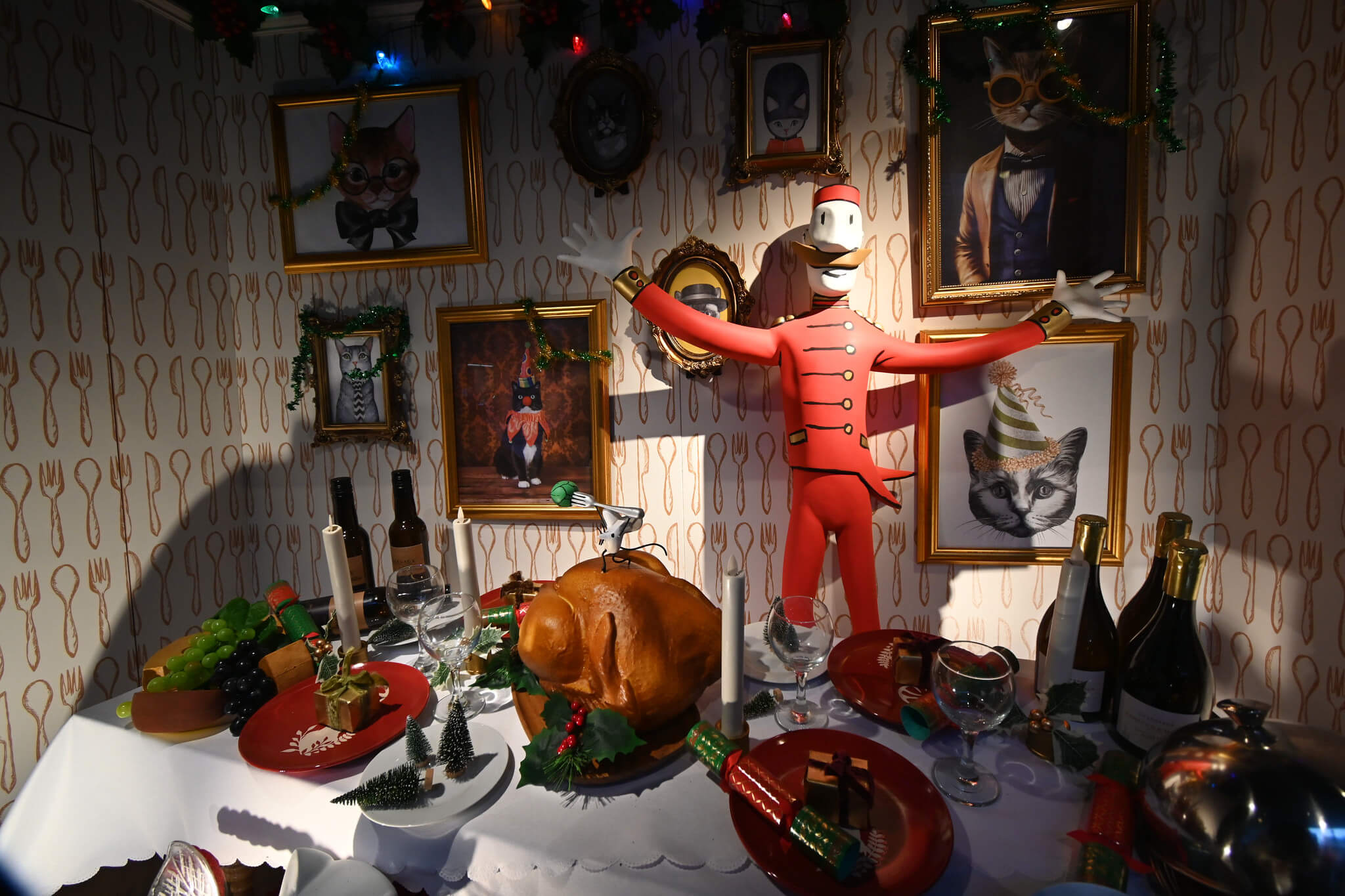
Fortnum & Mason was founded in 1707 by William Fortnum and Hugh Mason, and its Piccadilly home has been dressing windows for the festive season for generations. A clock installed on the facade in 1964 features figures of Mr. Fortnum and Mr. Mason, who emerge and bow on the hour.
Crowds gather beneath the clock at the same time they study the latest window scenes, which tend toward the whimsical and detailed.
Galeries Lafayette and the Dome on Boulevard Haussmann
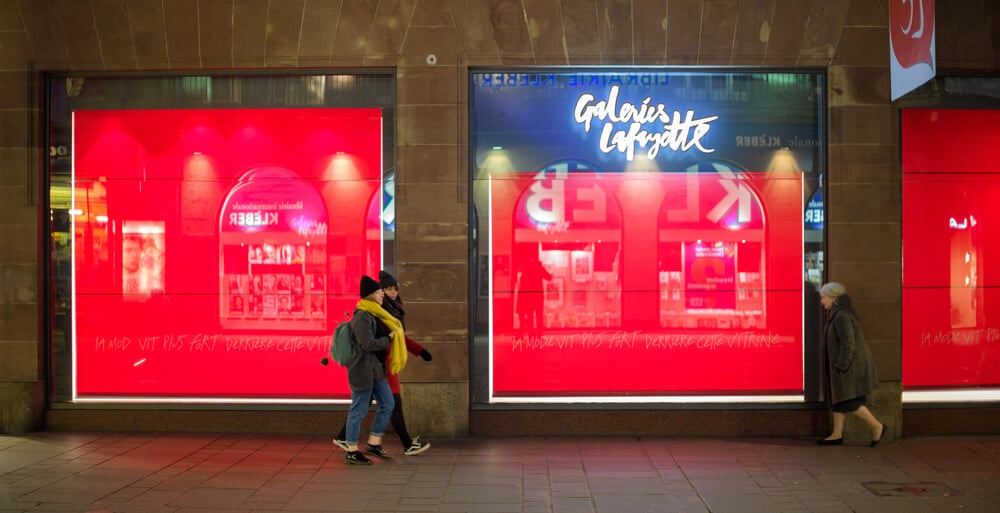
Galeries Lafayette began as a small fashion shop on Rue La Fayette in 1893, launched by cousins Theophile Bader and Alphonse Kahn. The Art Nouveau glass dome of its Boulevard Haussmann store was completed in 1912, and a giant Christmas tree has long been hung beneath it every winter.
The animated windows along the boulevard draw the lines of children that Paris has come to expect each December.
Printemps and the Fire That Changed Its Look
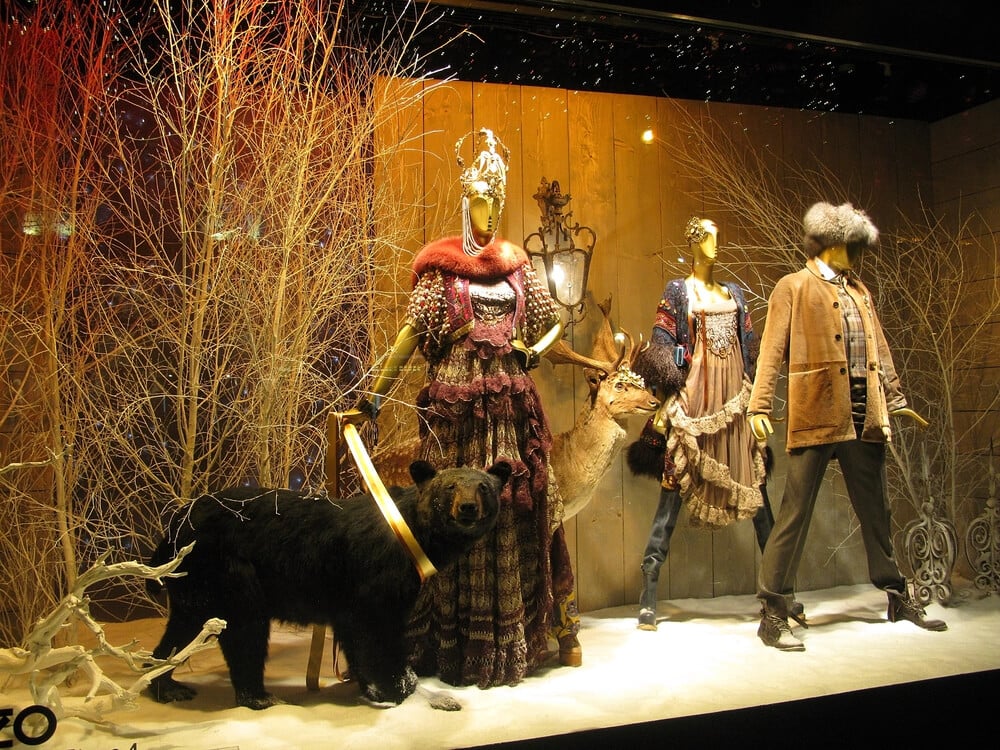
Printemps opened in 1865, founded by Jules Jaluzot, who had previously worked at Le Bon Marche. A fire in 1881 destroyed the original building, and the store was rebuilt, setting the stage for the grand Haussmann Boulevard presence it holds today.
Its Christmas windows are a fixture of the annual circuit of Paris department store displays, which draws crowds along Boulevard Haussmann every December.
Le Bon Marche and the Novel It Inspired
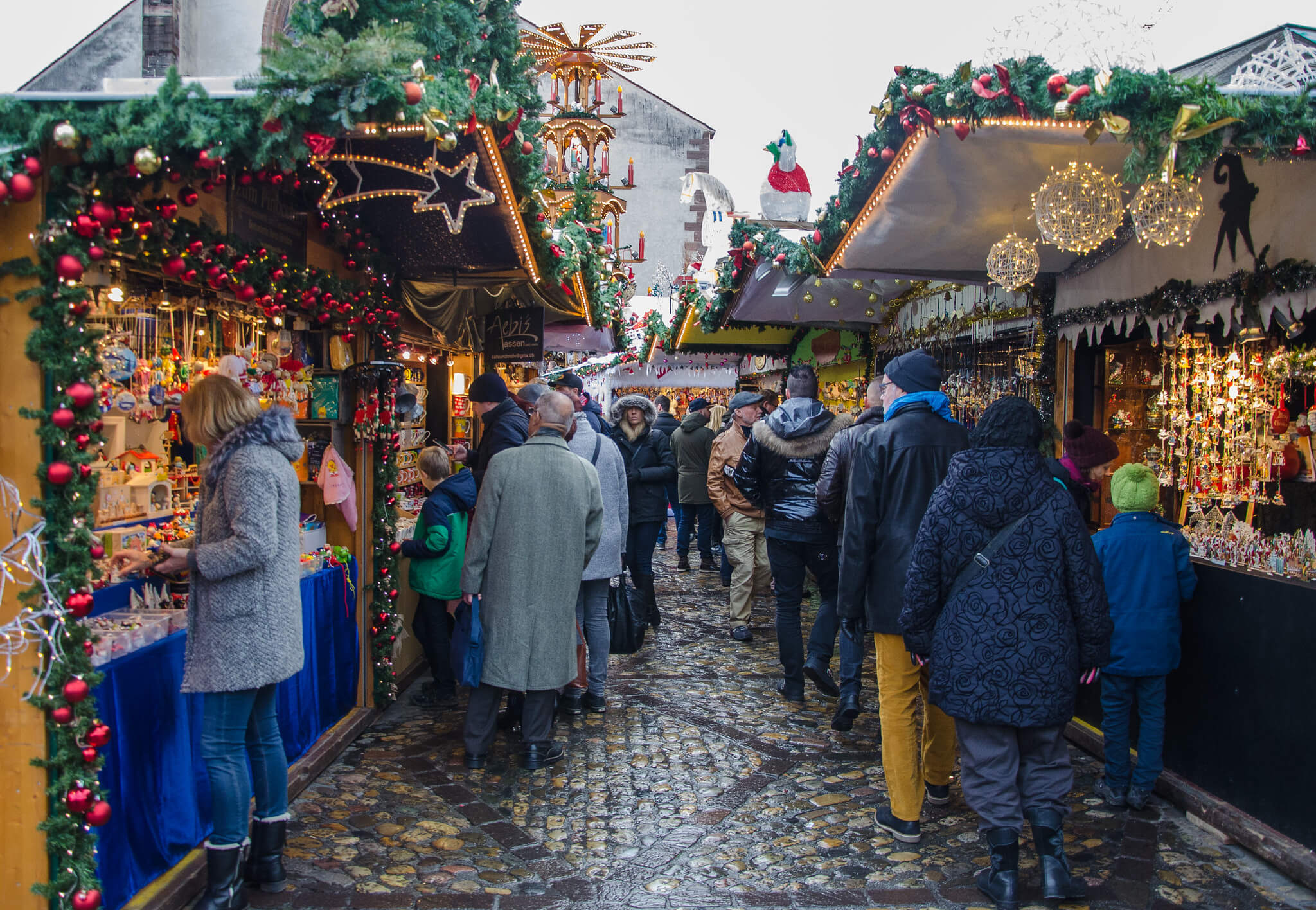
Le Bon Marche, on Paris’s Left Bank, was built up by Aristide Boucicaut and is often described as one of the first modern department stores. Gustave Eiffel contributed to the iron structure that rose in the late nineteenth century, long before his name was attached to a tower.
Emile Zola drew on this world for his 1883 novel Au Bonheur des Dames, and the shop’s festive windows continue to be a draw for visitors to the Rue de Sevres.
KaDeWe and the Tiffany Windows of Berlin
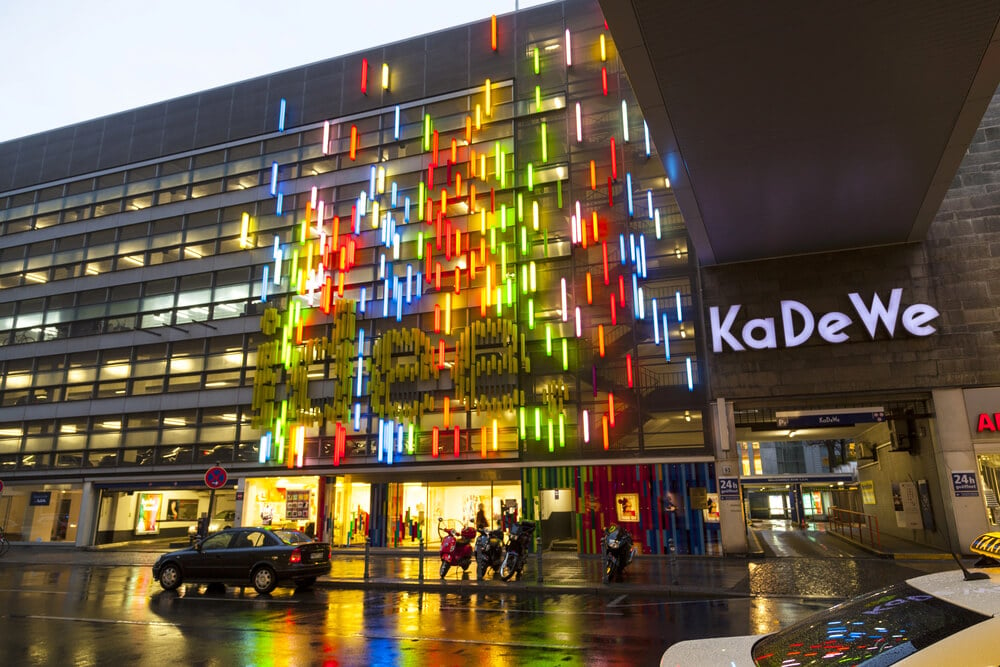
KaDeWe, short for Kaufhaus des Westens, opened on Tauentzienstrasse in 1907 under founder Adolf Jandorf. Its Christmas windows have become a Berlin ritual, and in 2021 the KaDeWe Group staged a set of holiday windows built around a collaboration with Tiffany.
The store marked its 115th anniversary in 2022 by unveiling another round of Christmas windows to coincide with the birthday.
Myer on Bourke Street and the Windows That Began in 1956
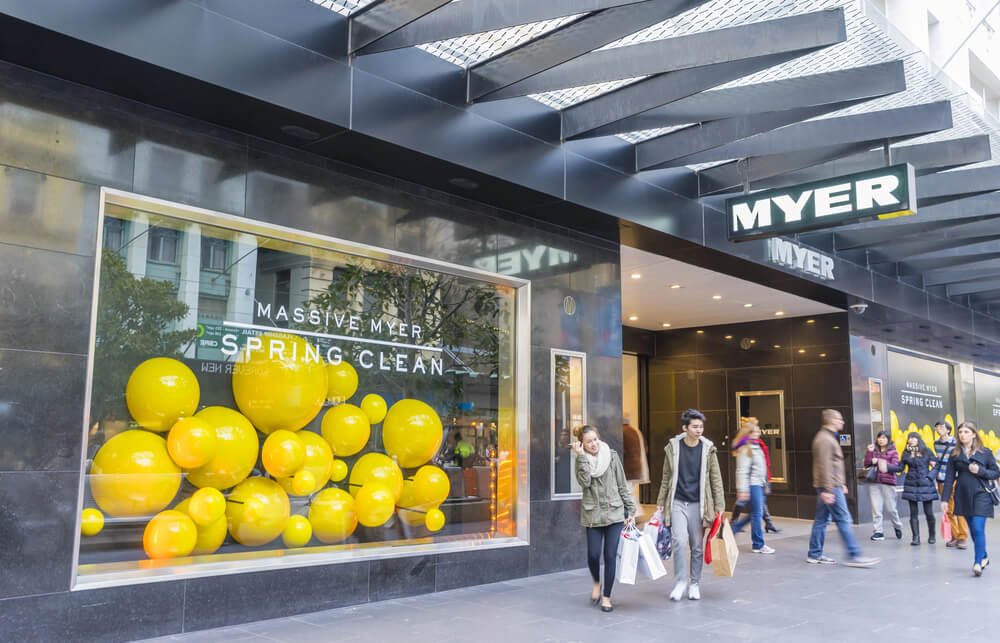
The Myer Christmas Windows in Melbourne began in 1956 and became a pillar of the Australian summer holiday, since December falls in warm weather there. Myer was founded by Sidney Myer, an immigrant who arrived in Australia in 1899 and opened a shop in Bendigo the following year with his brother Elcon.
The Bourke Street Mall flagship has hosted the display ever since, with generations of children lining up to see each year’s story unfold.
Myer and the Irwin Family Christmas Story
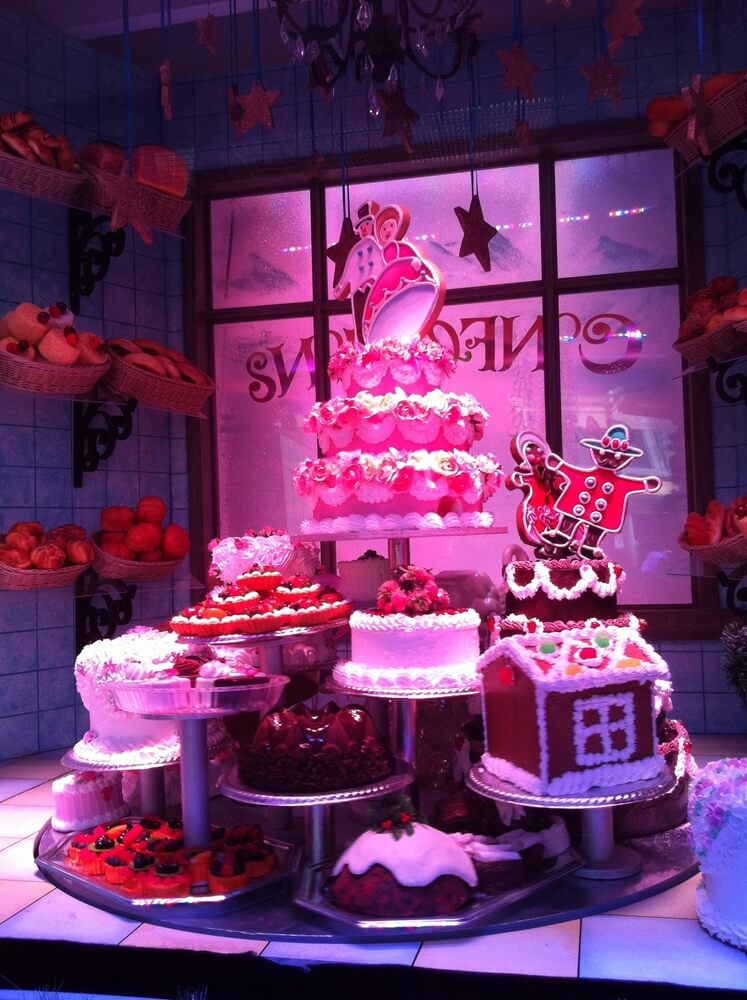
For 2024, Myer’s windows in Melbourne told a story built around the Irwin family of Australia Zoo. The display drew visitors to Bourke Street who wanted to see the Irwins translated into animated scenes.
The choice also showed how the store has long leaned on well-known Australian faces and animals to keep its annual tradition feeling local.
David Jones and Sydney’s Elizabeth Street Windows
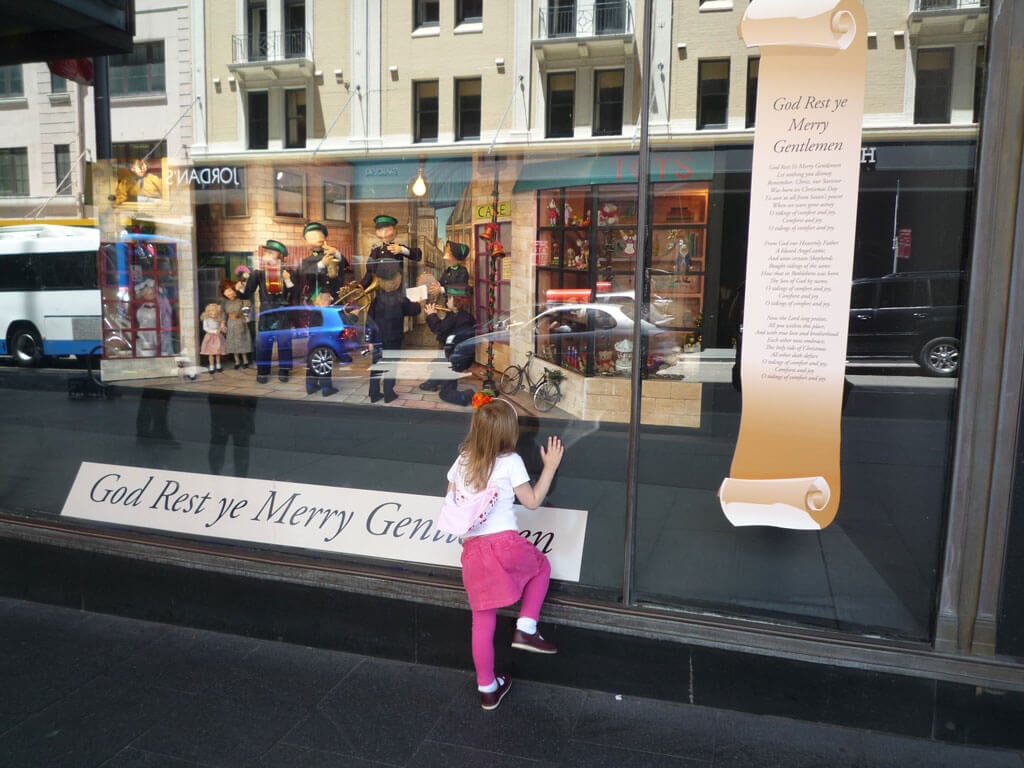
David Jones was founded in Sydney in 1838 by Welsh immigrant David Jones, which makes the store a long-standing presence in the city’s retail life. The Elizabeth Street windows have been a seasonal fixture, and the company has called itself the Home of Christmas in its own history pages.
A glance at the archive shows window displays going back many decades, a reminder that the Sydney tradition predates most of the retailers that now compete with it.
Saks Fifth Avenue and the Light Show That Ended
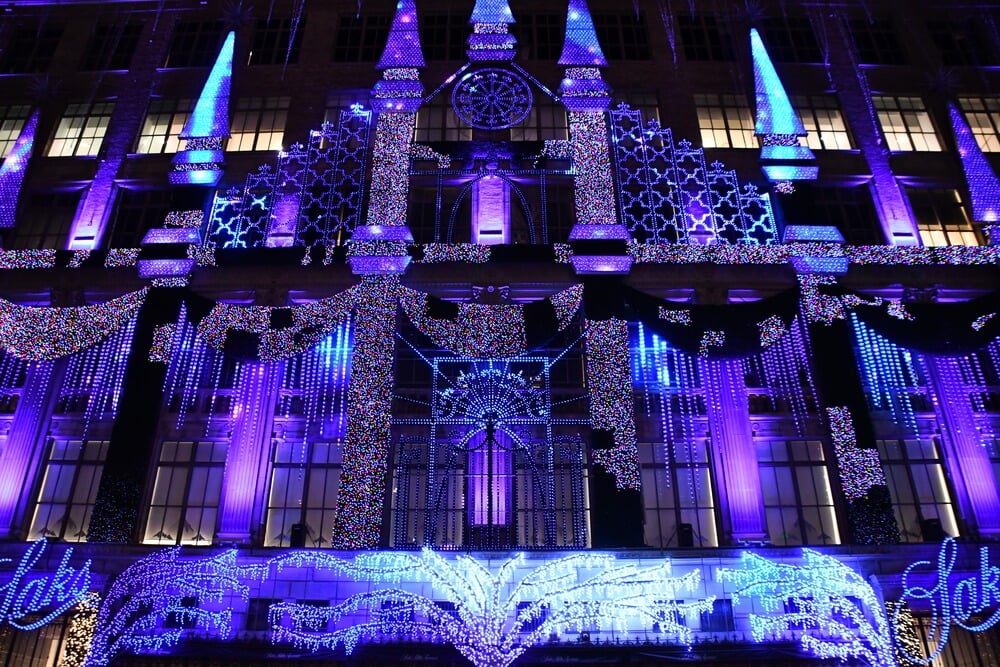
Saks Fifth Avenue’s flagship at 611 Fifth Avenue opened in 1924 and became a Manhattan holiday destination partly because of its facade, which hosted an annual light show for roughly two decades. In 2024 the company announced that the flagship would not host the show that year, ending a ritual that thousands of visitors had lined up in the cold to watch.
The windows below the facade continue to tell their own stories, but the end of the lights marked a turning point for a block that had built a reputation on spectacle.
Bergdorf Goodman and the Vanderbilt Mansion Site
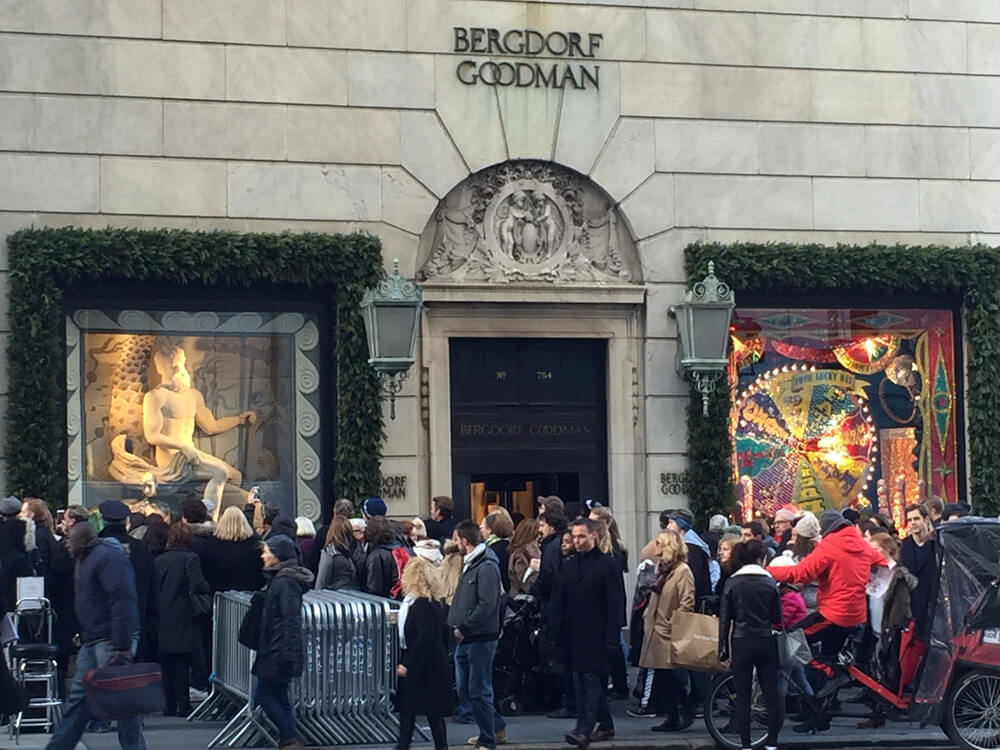
Bergdorf Goodman, founded in 1899 by Herman Bergdorf and Edwin Goodman, opened its current building at 754 Fifth Avenue in 1928, on the site of the former Cornelius Vanderbilt II mansion. The store’s holiday windows are overseen by Linda Fargo, whose fashion-office role extends to the theatrical sets that line the sidewalk.
A book published by Assouline collects photographs of the store’s windows, a sign that they are treated as art rather than ephemera.
Barneys New York and the Irreverent Windows of Simon Doonan
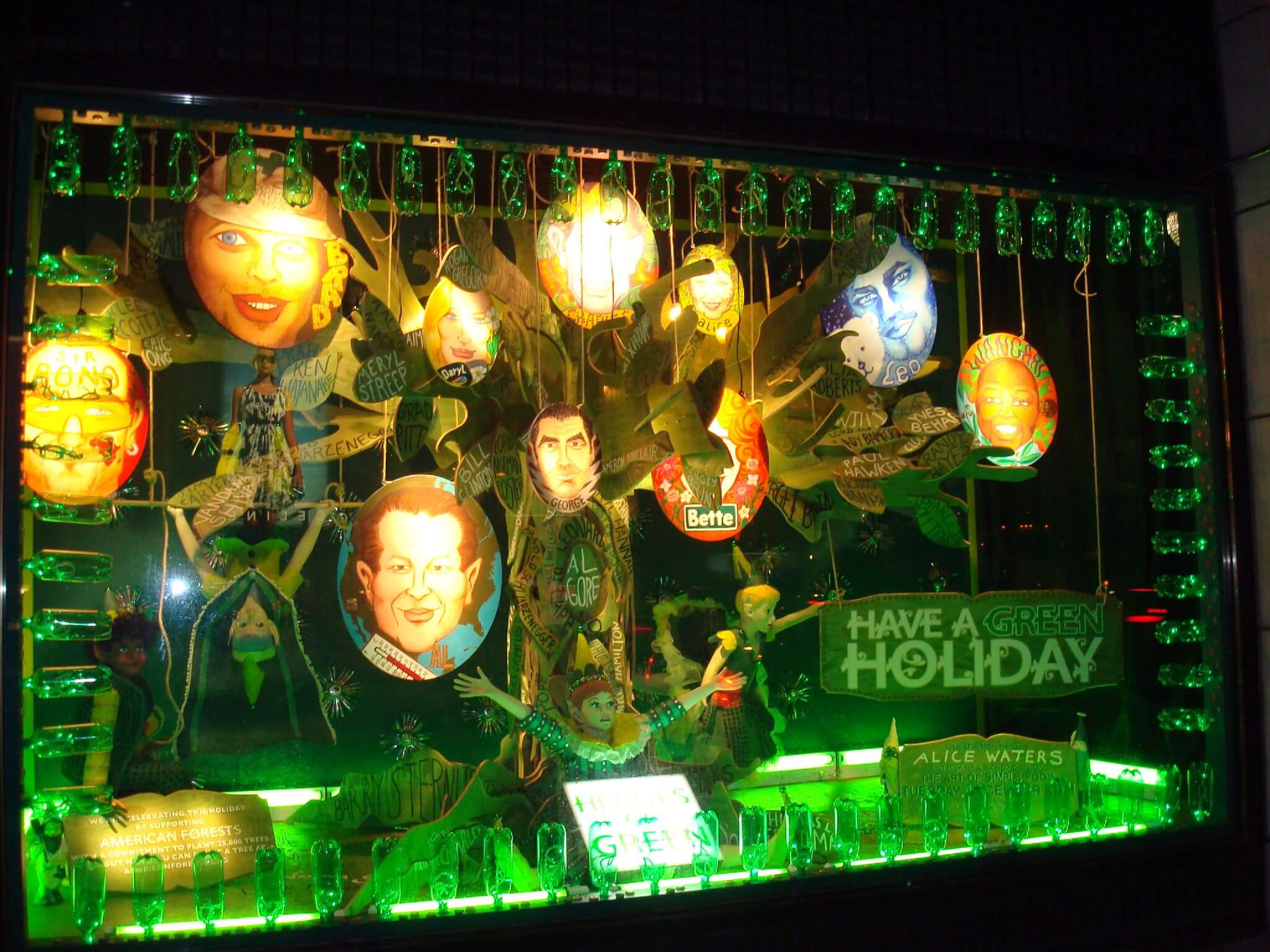
Barneys New York earned a place on the holiday window circuit with a sense of humor that the grander Fifth Avenue stores rarely allowed themselves. Simon Doonan, a British-born window designer, made the Madison Avenue flagship at 660 Madison Avenue famous for satirical scenes that mocked celebrity and fashion in equal measure.
Barneys filed for bankruptcy in 2019, but its windows remain a reference point for retailers who want shoppers to laugh before they buy.
Kaufmann’s in Pittsburgh and the Fallingwater Connection
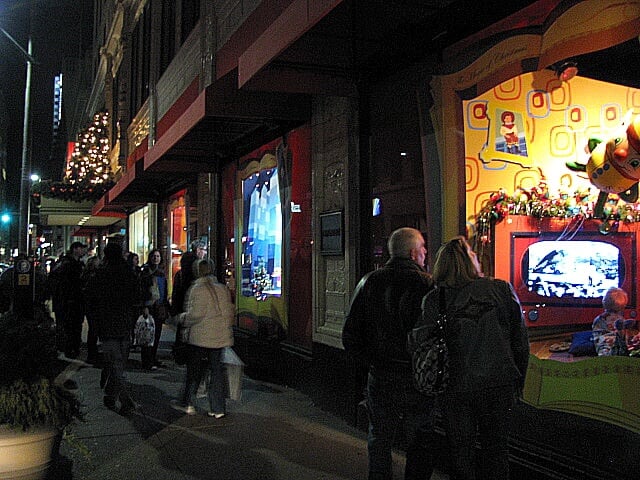
Kaufmann’s in downtown Pittsburgh was run by Edgar J. Kaufmann, the businessman who commissioned Frank Lloyd Wright to build Fallingwater in the mid-1930s. The store’s clock at Fifth Avenue and Smithfield Street gave the city its most famous meeting place, and its Christmas windows were part of a downtown holiday ritual documented by the Heinz History Center.
Macy’s took over the Kaufmann’s name in 2006, but the story of the windows remains a point of local pride.
Hudson’s in Detroit and the Thanksgiving Parade of 1924
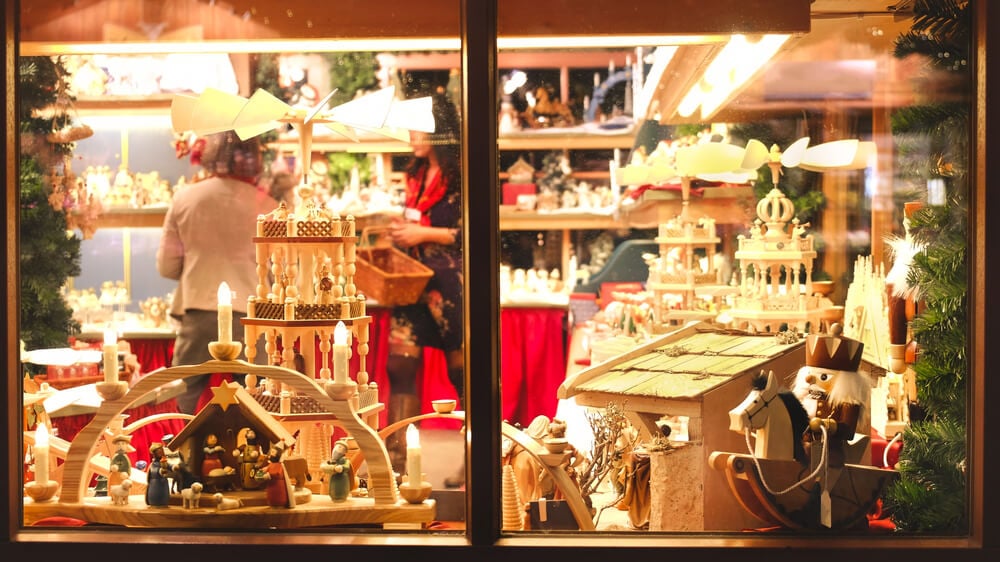
The J.L. Hudson Company in Detroit launched a Thanksgiving parade in 1924, tying the arrival of Santa Claus to the department store and its windows. The downtown flagship on Woodward Avenue closed in 1983 and was imploded in 1998, but photographs of its holiday display windows are preserved in the Detroit Public Library digital collection.
Bedrock has revived the memory with a Hudson’s for the Holidays event on Nick Gilbert Way, a nod to the store that taught the city to dress up its sidewalks.
Eaton’s in Toronto and the Santa Claus Parade
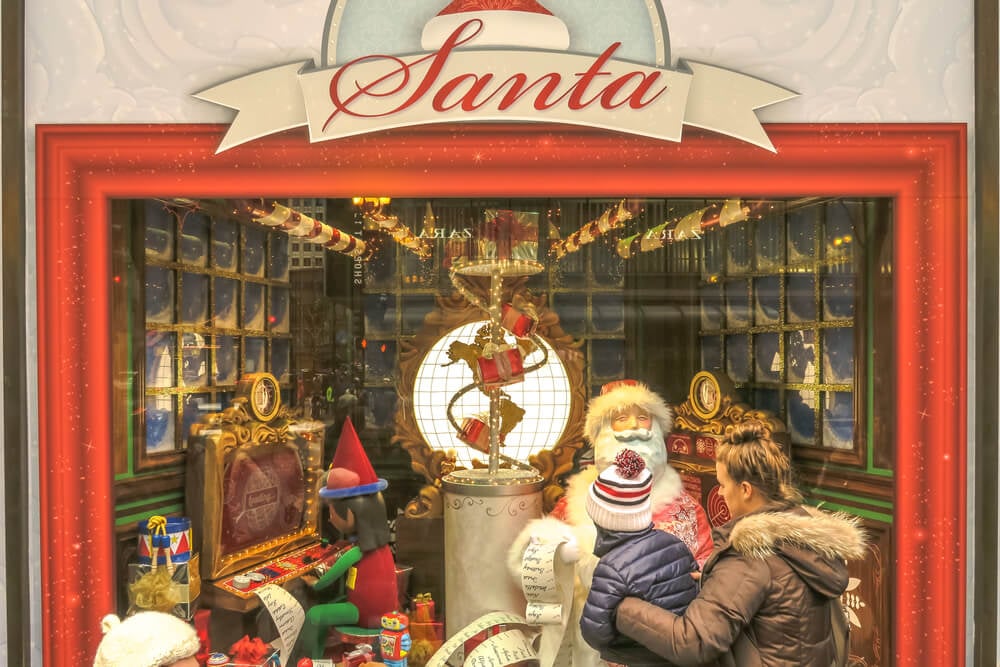
Eaton’s was founded by Irish immigrant Timothy Eaton in Toronto in 1869 and grew into a national retail name. In 1905 the company launched its Santa Claus Parade, and the store’s Queen Street windows became a seasonal destination for families who came to see Santa and stayed for the displays.
Eaton’s closed in 1999, but the parade it launched continues as a Toronto institution, a reminder of how much of the city’s Christmas was built by one store.
The Bay on Queen Street and the Windows of 2012
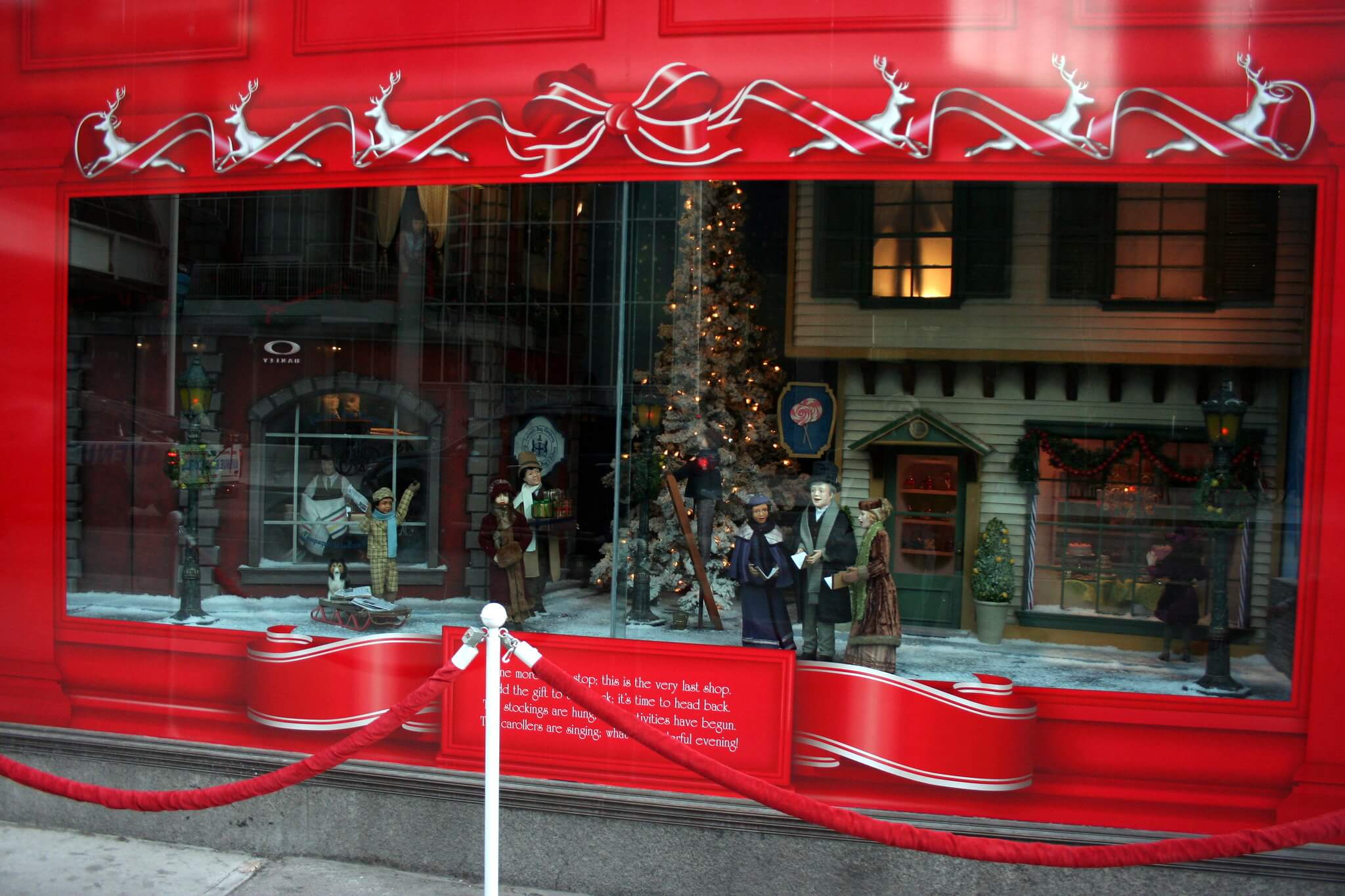
The Hudson’s Bay Company was chartered in 1670, making it one of the oldest corporations in North America. Its Queen Street flagship in Toronto occupies the former Simpson’s building, which the Bay acquired in 1978, and the 2012 Christmas windows there were documented by the blog Taylor on History.
The company closed all of its stores in 2025, and those photographs now serve as a record of a tradition that ran until the very end.
Dayton’s in Minneapolis and the Eighth Floor Holiday Show
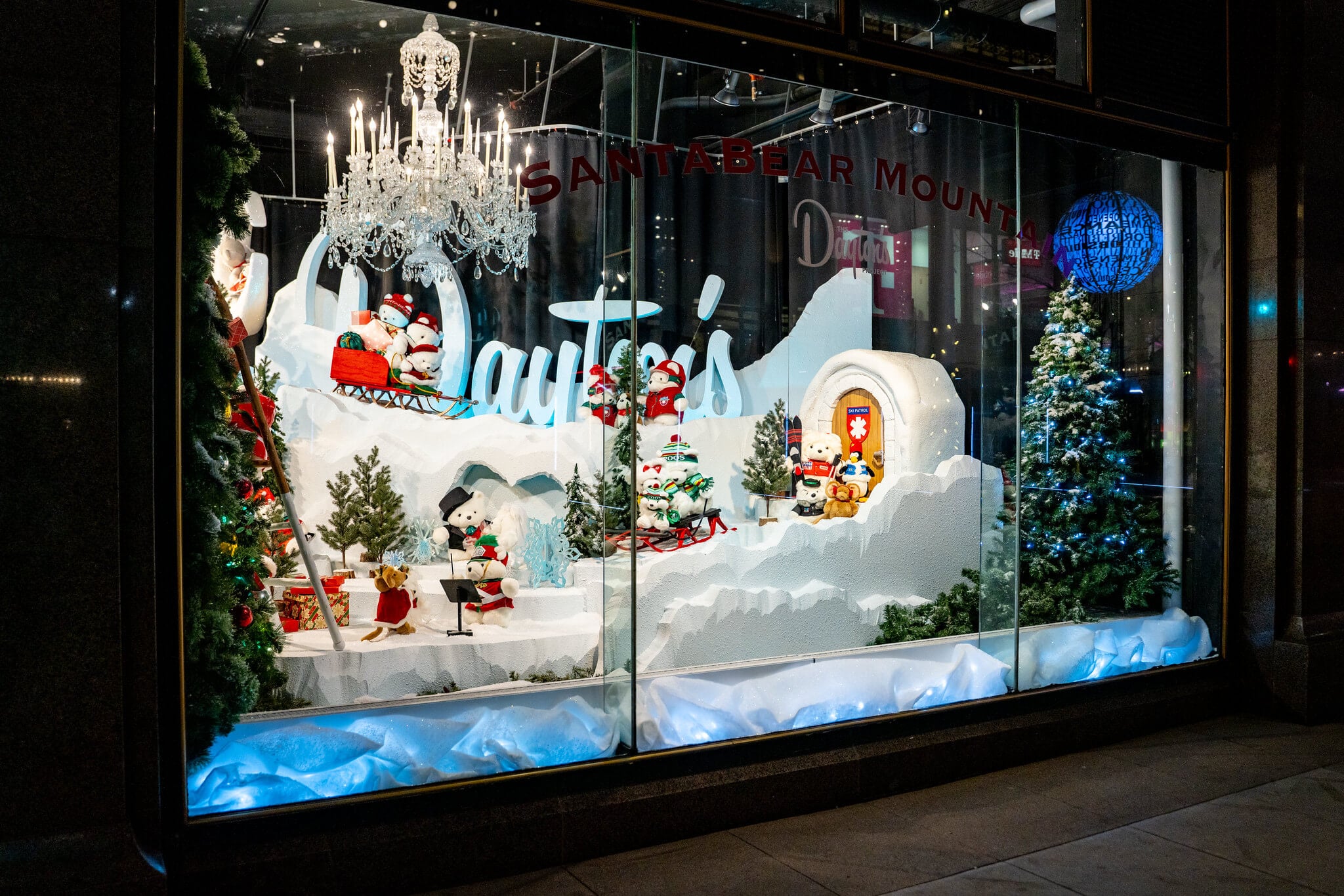
Dayton’s was founded in Minneapolis in 1902 by George Draper Dayton, and the store’s eighth-floor auditorium became home to a holiday show that families returned to year after year. Costume designer Jack Edwards, whose work is honored by the University of Minnesota Libraries, created the look of many of those displays.
A St. Paul man has even recreated Dayton’s holiday window scenes at his own home, proof that the magic did not fade when the store did.
Jordan Marsh and the Enchanted Village of Boston
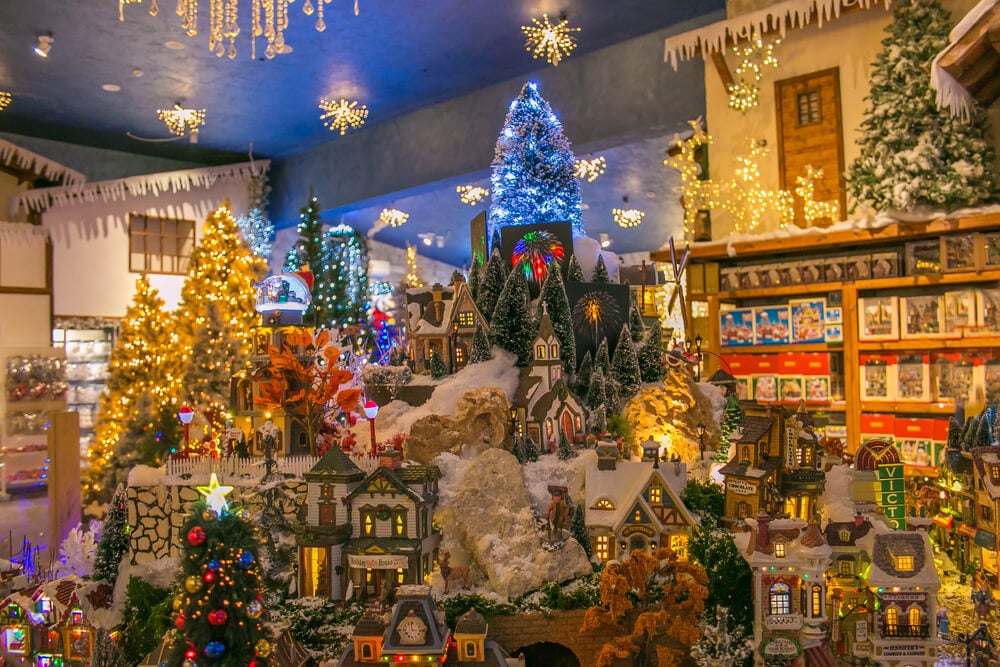
Jordan Marsh, founded in Boston in 1851 by Eben Jordan and Benjamin Marsh, was famous for its blueberry muffins as well as its Christmas displays. The Enchanted Village, a mechanical miniature town that brought children to the downtown store, became a New England holiday ritual.
When Jordan Marsh disappeared into Macy’s in the 1990s, the village survived as a local legend, passed down through the families who had stood in line to see it.
Neiman Marcus and a Dallas Holiday Tradition
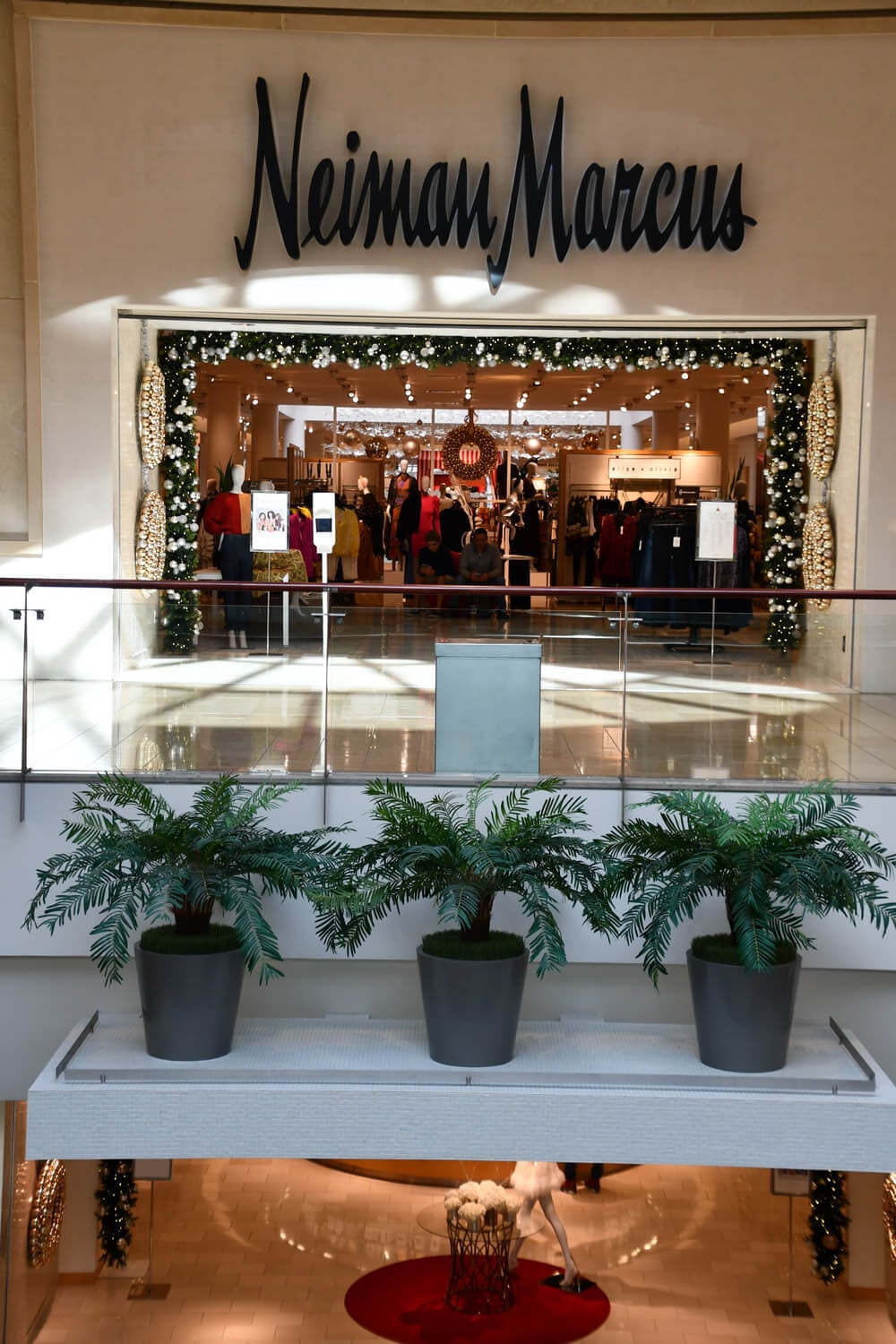
Neiman Marcus opened in Dallas in 1907, founded by Herbert Marcus, his sister Carrie Marcus Neiman, and her husband A.L. Neiman. The store began issuing its Christmas Book in 1926, and the fantasy gifts in recent editions have topped one million dollars.
Its downtown windows at the Main Street flagship served as the public preview of that glamour, a place where Texans could look at what they could not afford.
Woodward & Lothrop and the Santa of Washington
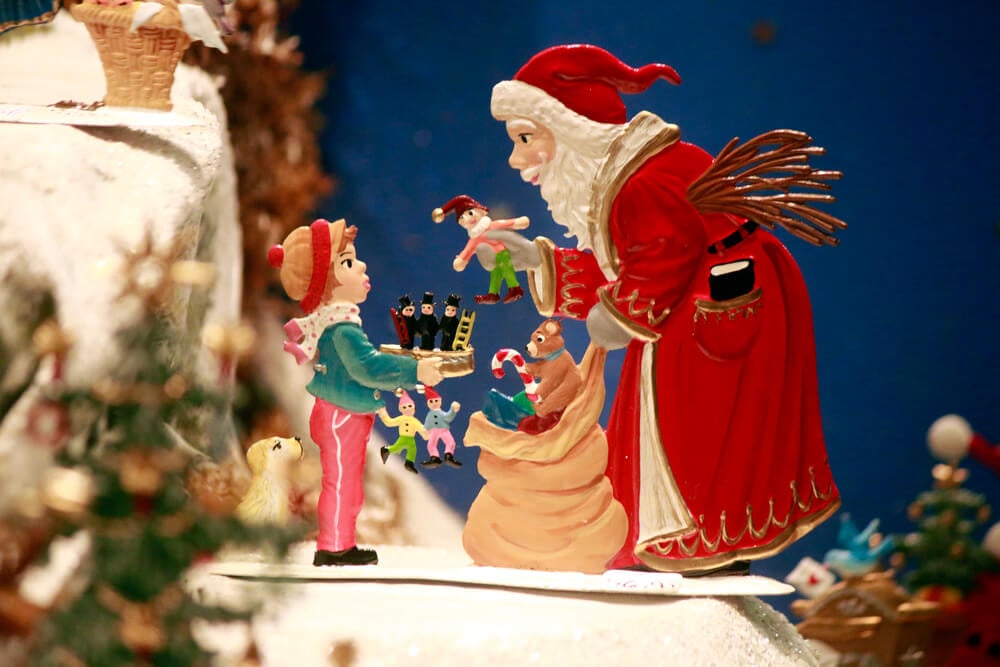
Woodward & Lothrop, known to Washingtonians as Woodies, was founded in 1880 by Samuel Walter Woodward and Alvin Mason Lothrop. Its flagship at Eleventh and F Streets Northwest anchored the capital’s downtown shopping district, and its holiday windows were an annual outing for families.
The company closed in 1995, but the store’s tea room and its Santa remain fixtures in the memory of the people who grew up with them.
Wanamaker’s and the Grand Court of Philadelphia
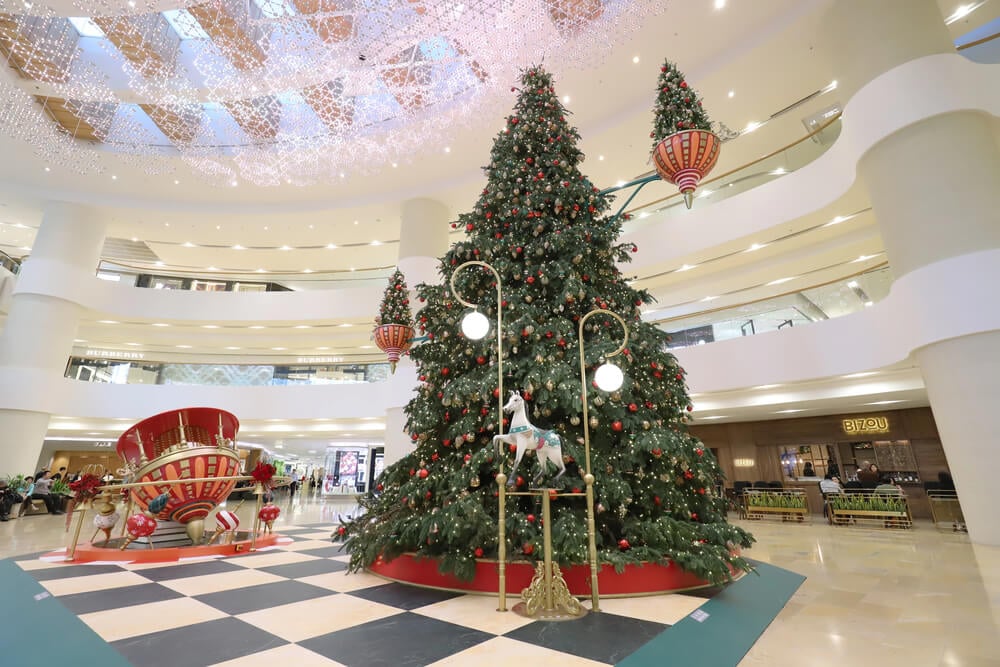
John Wanamaker opened his first Philadelphia clothing business in 1861, and the grand store designed by Daniel Burnham was completed in 1911. Inside, the Wanamaker Organ was originally built for the 1904 St. Louis World’s Fair, and it became the centerpiece of the store’s Christmas music and light shows.
Decades of photographs show families gathered in the Grand Court, which made the building as much a holiday destination as any street-level window.
Rich’s in Atlanta and the Great Tree
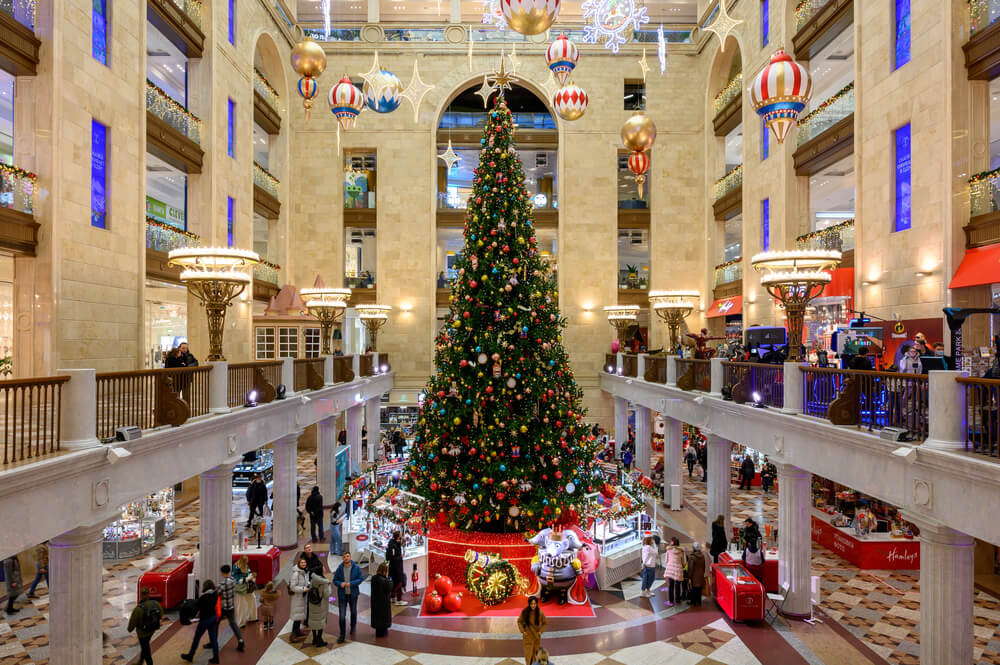
Rich’s was founded in 1867 by Morris Rich and became the dominant department store of the American South. Its Great Tree, lit after Thanksgiving, anchored a holiday ritual that drew Atlantans downtown.
The Pink Pig, a children’s monorail that began running in 1953, added a ride to the tradition, and both are preserved in the archives of the Atlanta History Center.
The Same Crowd on Every Sidewalk
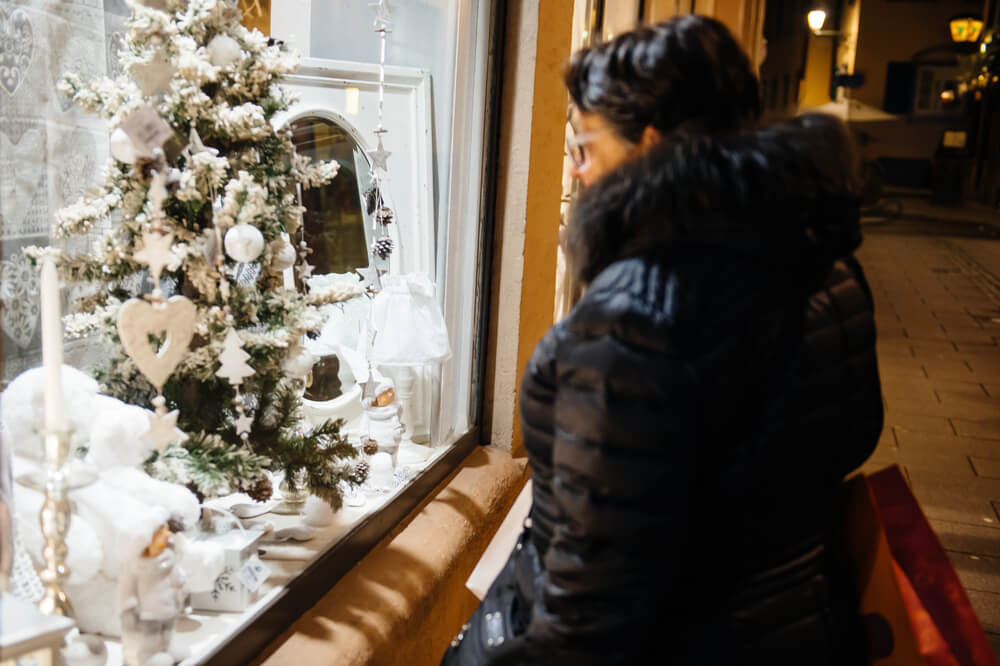
Looking across 28 stores, the pattern is hard to miss: the windows changed with fashion and technology, but the crowd stayed the same. Parents hoisted toddlers, couples stopped mid-stroll, and strangers traded observations about which scene was best.
A window that held a few dolls long ago and an animated family story today was doing the same job, which was giving a city a reason to gather. Many of the stores in these photographs are gone, absorbed by Macy’s or closed outright, and the buildings now hold offices, hotels, or nothing at all.
What remains is the archive, a trail of pictures that show where people stood and what they stopped to see. The glass may be gone, but the habit of looking up at something lit and made by hand is still very much around.
More from Go2Tutors!

- 27 Silver Dollars and Half Dollars Worth Keeping
- 28 Restaurant Menu Items Nobody Orders Anymore
- 17 Places Built in Seemingly Impossible Spots
- 27 Vintage Rings Worth More Than They Look
- 25 Restricted Sites Tourists Can’t Enter
Like Go2Tutors’s content? Follow us on MSN.