28 Shopping Mall Arcades and Food Courts Remembered
The mall of 1985 ran on two currencies: pocket change and appetite. A pocket of quarters could buy twenty minutes of glory in the arcade, and a few dollars bought lunch from a vendor who handed over samples on a toothpick.
Much of that world has been boarded up, rebranded, or reduced to a single surviving storefront. These are the machines, chains, and counters that defined the sound and smell of the American mall.
Aladdin’s Castle
For many kids, the mall arcade meant one name. Aladdin’s Castle rooms were a staple of enclosed malls across the country, stocked with the newest cabinets of each season.
Patrons paid in house tokens stamped with the Aladdin’s Castle name, and those tokens still circulate among collectors today. Any value depends heavily on condition, with clean, unworn examples drawing the most interest.
Namco Cyberstation
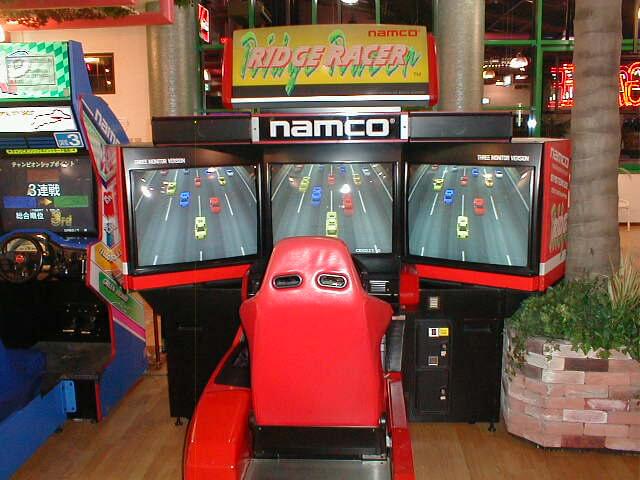
Namco, the Japanese company behind Pac-Man, was founded in 1955 by Masaya Nakamura as Nakamura Manufacturing, and its first business was mechanical rides on department store rooftops. By the 1990s the company ran its own arcades in American malls under the Namco Cyberstation name.
The rooms were brighter and more polished than the dim parlors of the previous decade, and they leaned heavily on Namco’s own driving and shooting cabinets.
Dragon’s Lair
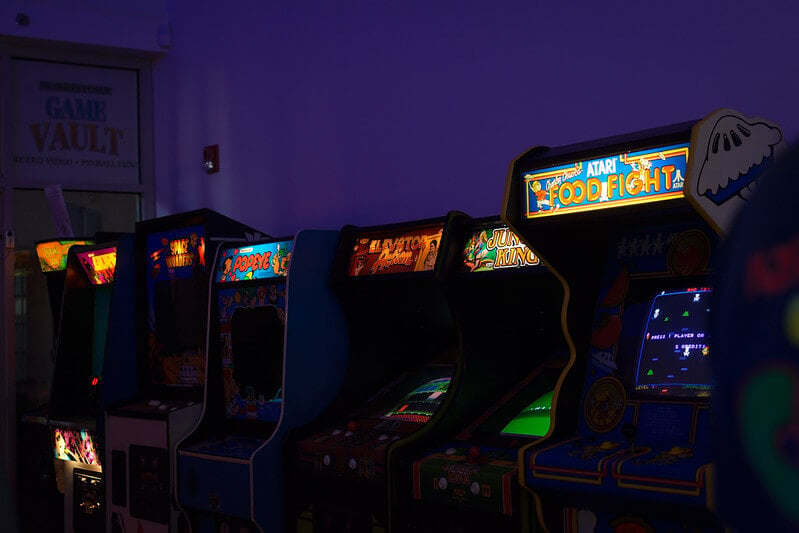
Released by Cinematronics in 1983, Dragon’s Lair looked like a Saturday morning cartoon because it was one, animated by former Disney artist Don Bluth and played back from a laserdisc. The game cost fifty cents per play at a time when most cabinets charged a quarter, and kids paid it anyway.
Players only needed to press the right direction at the right instant, yet the animation was so far ahead of its rivals that crowds gathered behind the player just to watch.
Q*bert
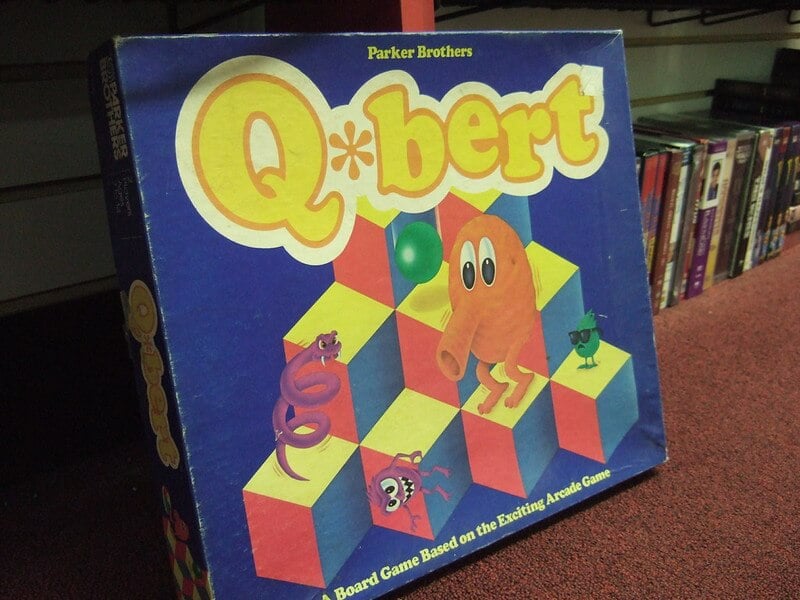
Gottlieb released Qbert in 1982, and its orange, long-snouted hero hopped across a pyramid of cubes, changing each one’s color. The game was designed by Jeff Lee and programmed by Warren Davis, and it was originally planned as a different, more conventional concept before the pyramid took over.
Qbert also spoke in a garbled stream of symbols and sound effects instead of words, which made it one of the few cabinets whose hero seemed to be complaining about the player.
Donkey Kong
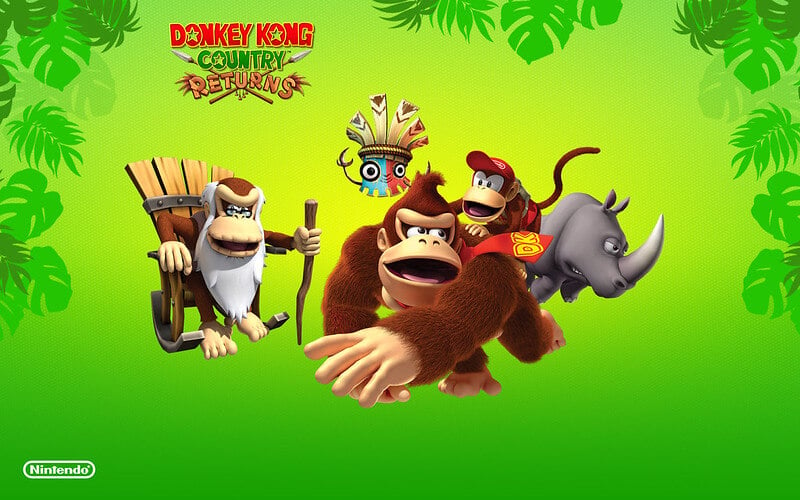
Nintendo released Donkey Kong in 1981, and it was designed by Shigeru Miyamoto, then a young staff artist. The game introduced a carpenter called Jumpman, who would soon be renamed Mario and become the most recognizable mascot in games.
In a mall arcade, the cabinet was a reliable test of nerve, since the rolling barrels on the second girder punished anyone who panicked.
Galaga
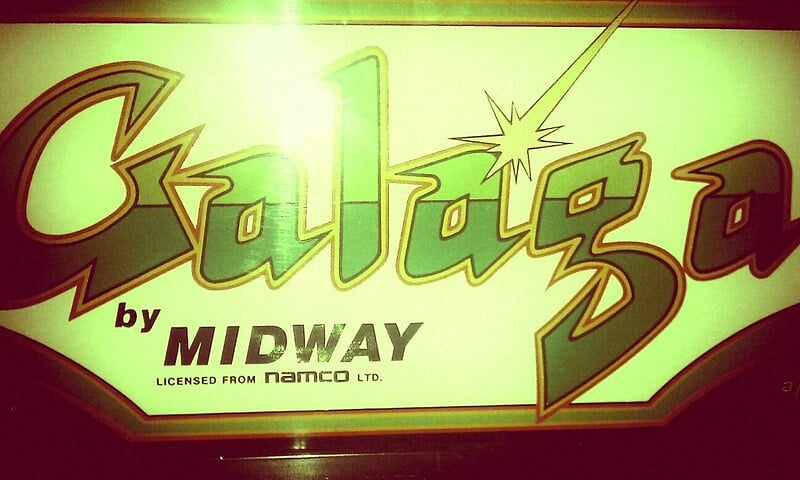
Namco’s Galaga arrived in 1981 as a follow-up to Galaxian, and American distribution went through Midway. Its signature trick was a tractor beam: an enemy could capture the player’s ship, but rescuing it gave a double-ship formation with twice the firepower.
Some players deliberately let a ship get captured for exactly that reason, which turned a defeat into a strategy.
Pac-Man
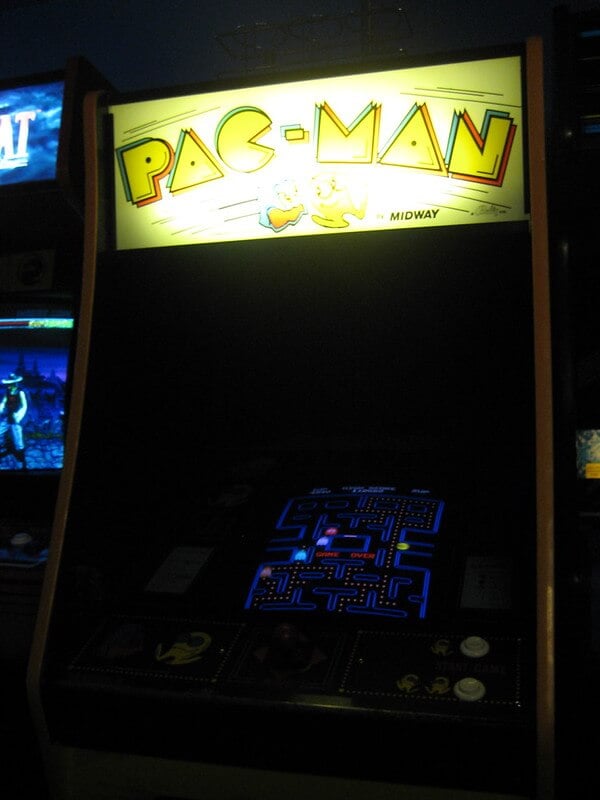
Toru Iwatani designed Pac-Man for Namco in 1980, and he has said the shape of the hero came from a pizza with a slice removed. Midway brought the cabinet to American arcades, where it became a fixture beside the food court entrance.
A skilled player who cleared the 255th level hit a corrupted 256th screen that made the game unplayable, a quirk that took years of dedicated play to reach.
Ms. Pac-Man
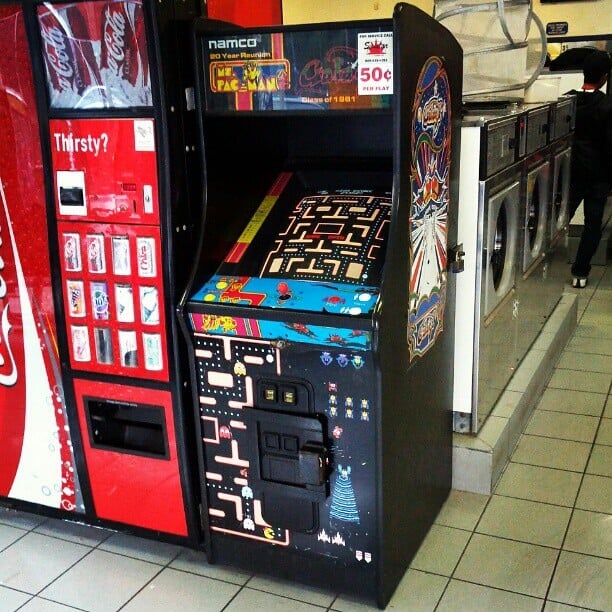
Ms. Pac-Man began as an unauthorized enhancement kit created by students at General Computer Corporation, a company founded by MIT students, and was first called Crazy Otto. Midway took it over in 1981 and reworked it as a sequel, adding a bow and new mazes.
The cabinet outearned many of its contemporaries, and the maze layouts and moving fruit made it less predictable than the original.
Space Invaders
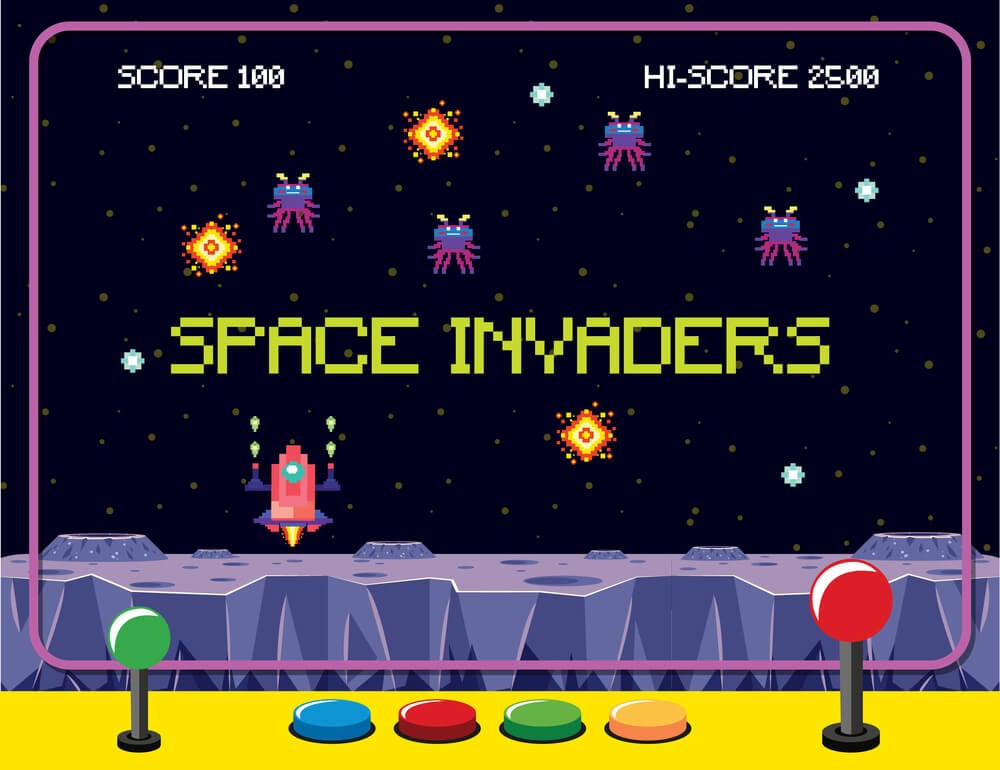
Tomohiro Nishikado designed Space Invaders for Taito in 1978, and it was one of the first cabinets that mall operators gave a prime floor spot. The alien formation sped up as the player destroyed ships, a result of the hardware having less to process with each kill.
The faster pace was an accident that Nishikado chose to keep, and it gave the game its signature rising tension.
Street Fighter II
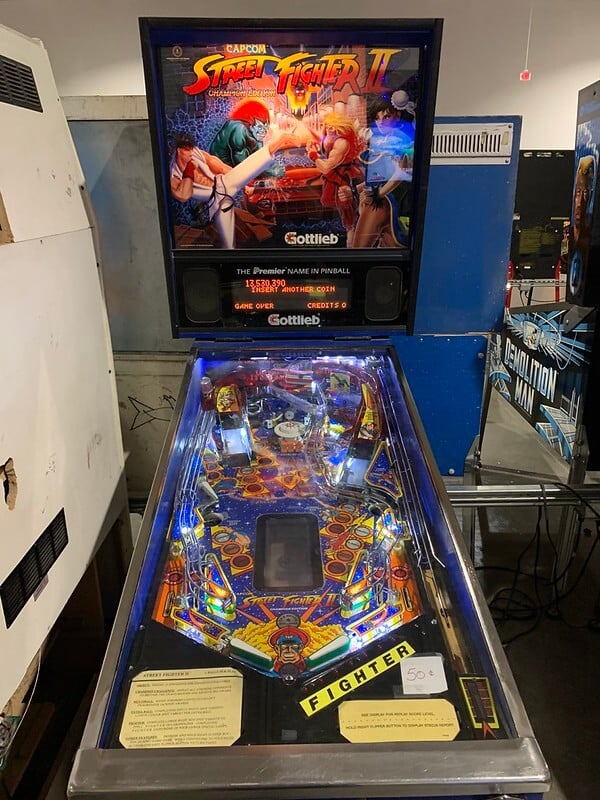
Capcom released Street Fighter II in 1991, and it was a cabinet that changed how arcades made money. Each machine had six attack buttons and a roster of distinct fighters, and two players could challenge each other head to head.
Lines formed at mall arcades because the loser walked away and the winner stayed, which kept a single quarter in play for far longer than most machines.
Mortal Kombat
Midway released Mortal Kombat in 1992, built by Ed Boon and John Tobias with digitized photographs of real actors instead of hand-drawn characters. Its gore and finishing moves drew a fierce public backlash that contributed to congressional hearings in 1993 and the creation of the Entertainment Software Rating Board in 1994.
Parents steered kids away, which of course only made the cabinet harder to resist.
NBA Jam
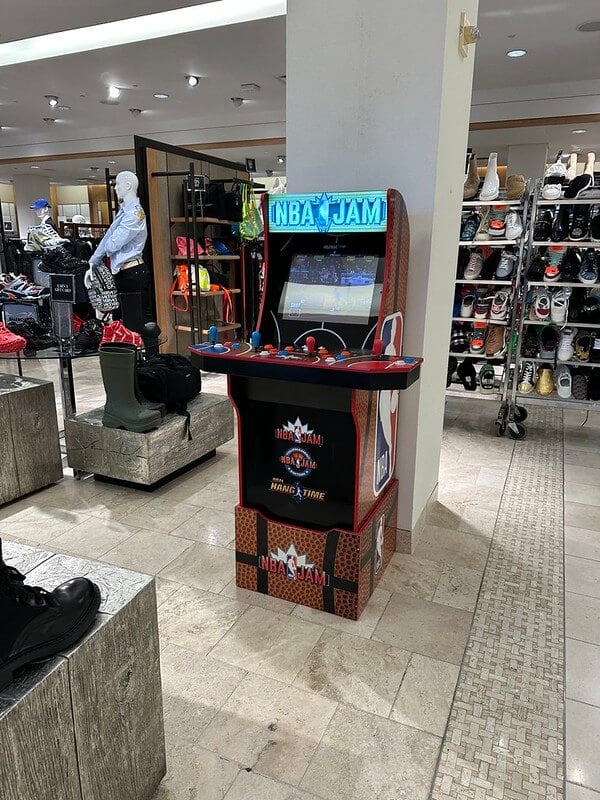
Midway released NBA Jam in 1993, and it was designed by Mark Turmell as a two-on-two arcade game with exaggerated dunks and a commentator who announced each play. The cabinet used licensed NBA players of the era, and it supported four players at once with two sets of controls per side.
At a mall arcade, a crowd of teenagers could fill the space around the machine and settle rivalries with joysticks.
Time Crisis
Namco launched Time Crisis in 1995, and its signature feature was a foot pedal that let the player duck behind cover while reloading. Instead of firing nonstop, players had to manage when to hide and when to emerge.
The pedal gave the light gun cabinet a tactical rhythm that few shooting games had, and it turned a mall arcade corner into a small tense theater.
Orange Julius
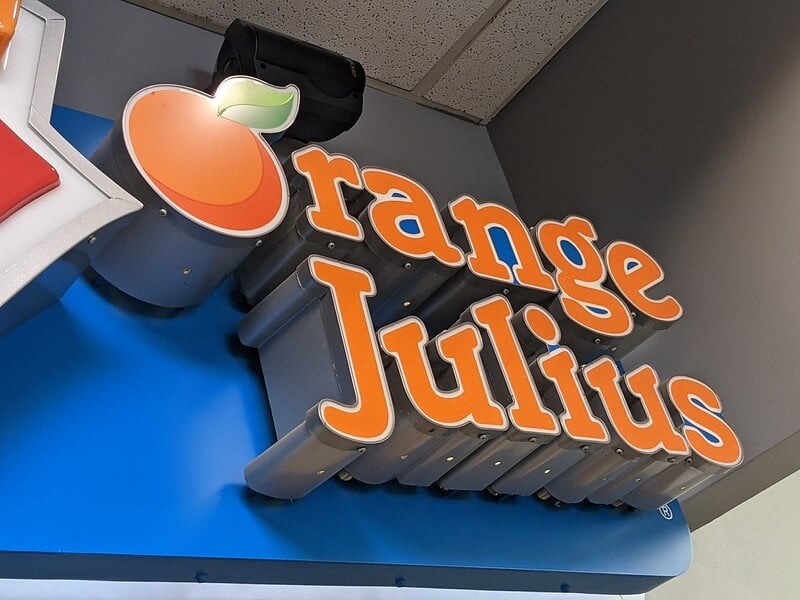
Julius Freed opened his orange drink stand in Los Angeles in 1926, and the frothy blend of juice, milk, and a secret powder became the signature of mall food courts. The company grew into hundreds of locations and was acquired by International Dairy Queen in 1987, which is why so many Orange Julius counters ended up sharing space with Dairy Queen.
The recipe has been imitated for decades by home cooks, but the foam is what customers remember.
Hot Dog on a Stick
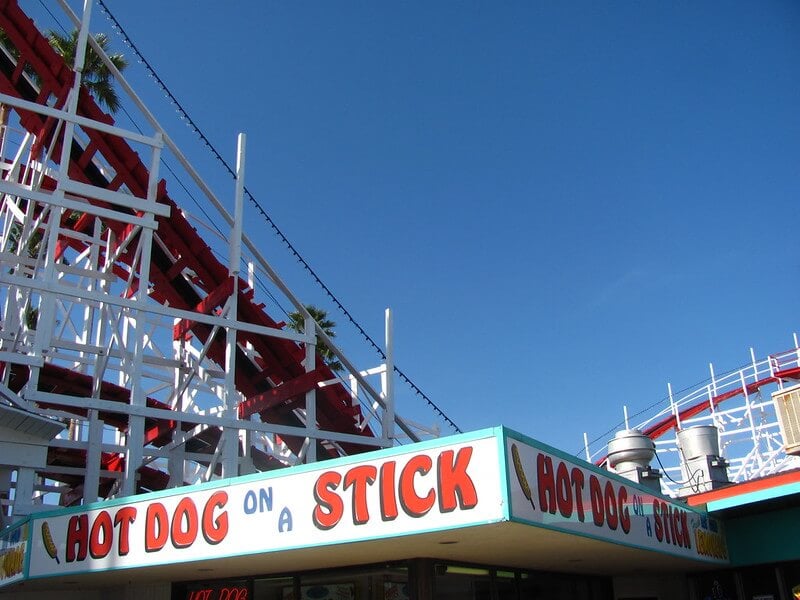
Dave Barham opened the first Hot Dog on a Stick at Muscle Beach in Santa Monica in 1946, serving battered, fried hot dogs on a stick along with fresh lemonade. The chain became a fixture of Western malls, where employees wore bright striped uniforms and hats that looked like they belonged in a circus.
The cornmeal batter and the lemonade shaker carried the entire show, and the company kept the menu narrow for decades.
Cinnabon
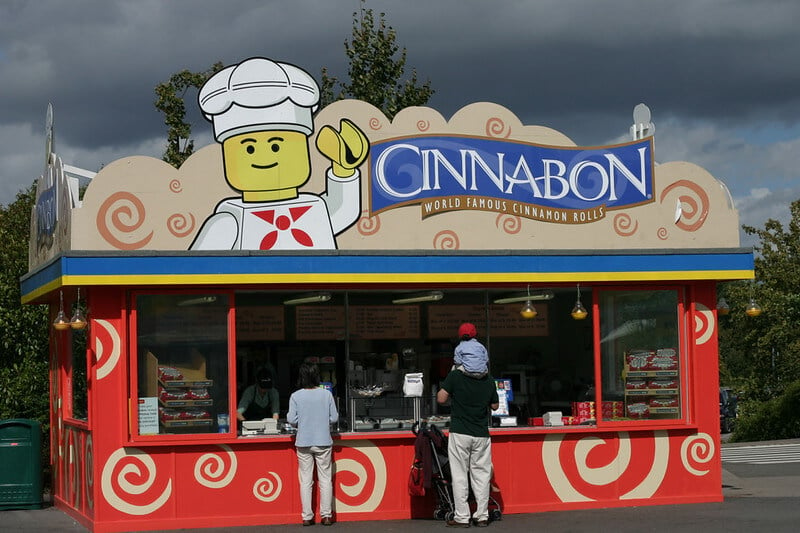
Rich Komen founded Cinnabon in Seattle in 1985, built around a single product: a huge cinnamon roll baked in view of the customer. The stores used Makara cinnamon, imported from Indonesia, and the layout of the bakeries was designed so that the aroma would drift through the mall corridor.
That design turned the smell itself into advertising, and few vendors have done more with a single scent.
Auntie Anne’s
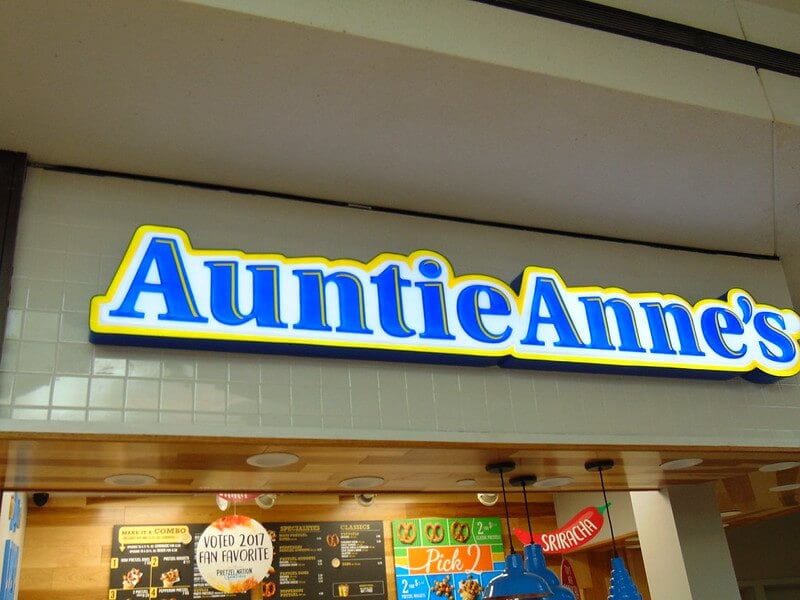
Anne Beiler opened her pretzel stand in a farmers market in Downingtown, Pennsylvania, in 1988. The stand worked because customers could watch the dough being rolled and twisted by hand right at the counter.
The brand spread into malls across the country, and the hand-rolled spectacle at the counter became a food court ritual.
Mrs. Fields
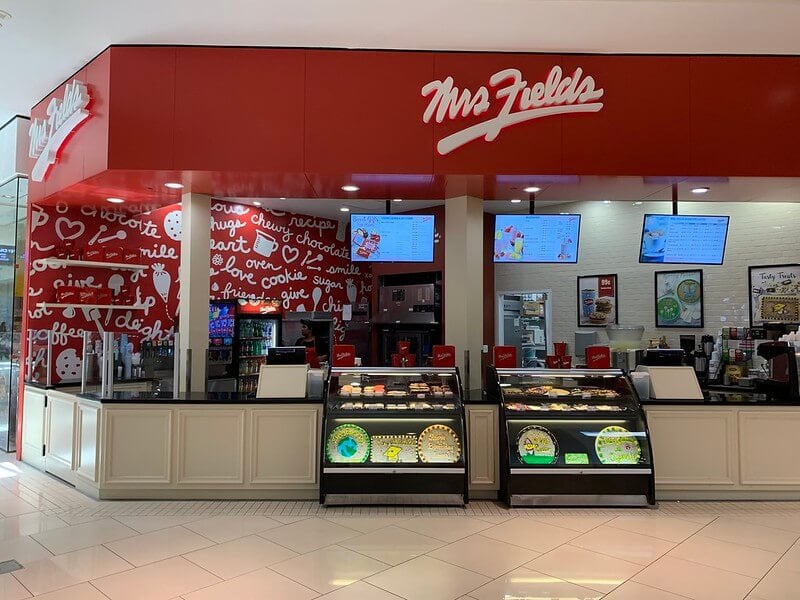
Debbi Fields opened her first cookie store in Palo Alto, California, in 1977 at age 20. As the chain expanded into malls, a computer system gave each store manager hourly sales targets and baking schedules, an unusually sophisticated tool for a cookie shop at the time.
Fresh-baked samples handed out at the counter were the main form of advertising.
Sbarro
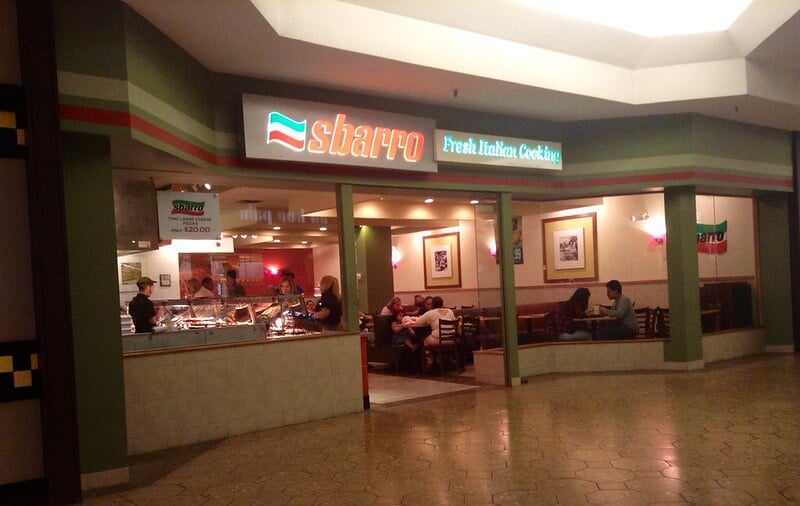
Gennaro and Carmela Sbarro opened an Italian grocery in Brooklyn in 1956, and the family business later became one of the most recognizable names in mall food courts. The chain sold pizza by the slice from heated display cases, so a hungry shopper could be served in seconds.
By the time the company expanded worldwide, Sbarro was practically shorthand for the American mall lunch.
Chick-fil-A at Greenbriar Mall
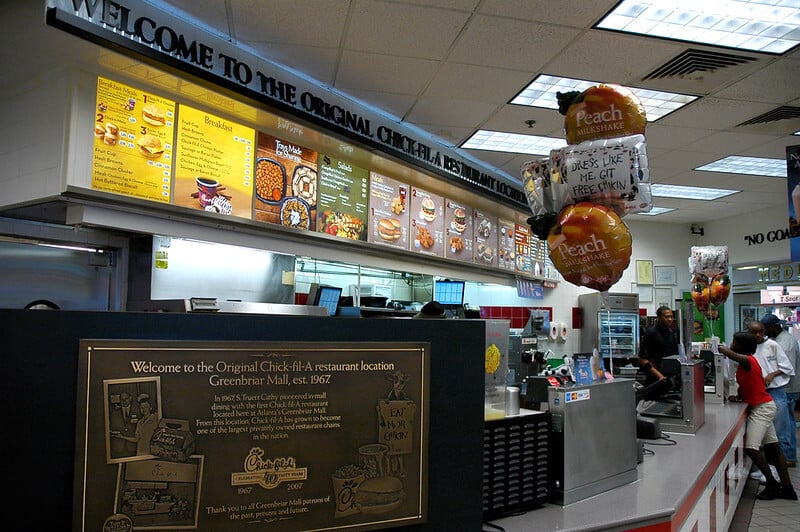
Truett Cathy opened the first Chick-fil-A restaurant at Greenbriar Mall in Atlanta in 1967, years before the chain became a national giant. The company built its early growth almost entirely inside shopping malls, which is why the brand was long absent from standalone locations.
That original Greenbriar restaurant closed in 2023 after 56 years of operation.
Hickory Farms
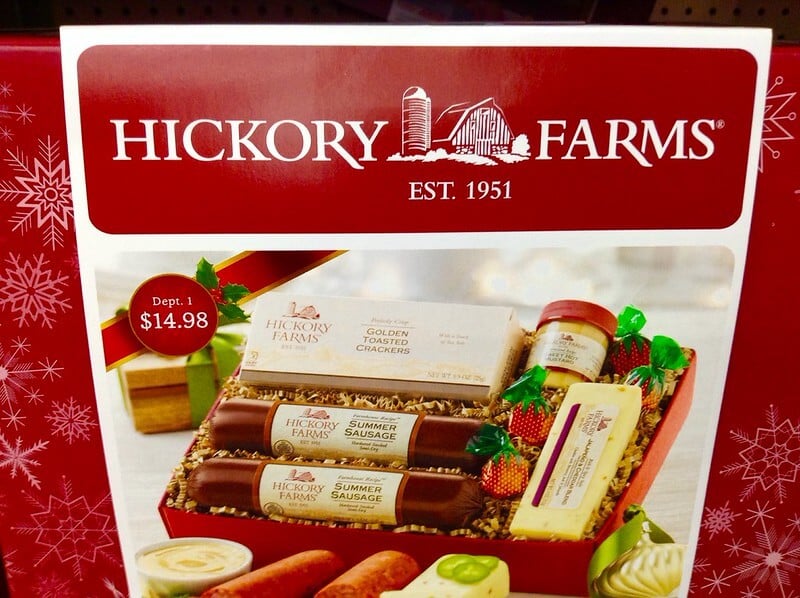
Hickory Farms was founded in Ohio in 1951 and became famous for its holiday gift stores in malls, filled with summer sausage, beef sticks, and cheese. Employees offered samples on toothpicks, and the stores turned the same dozen products into a winter ritual.
For many families, a red gift box from Hickory Farms was as much a part of the season as the tree.
Wetzel’s Pretzels
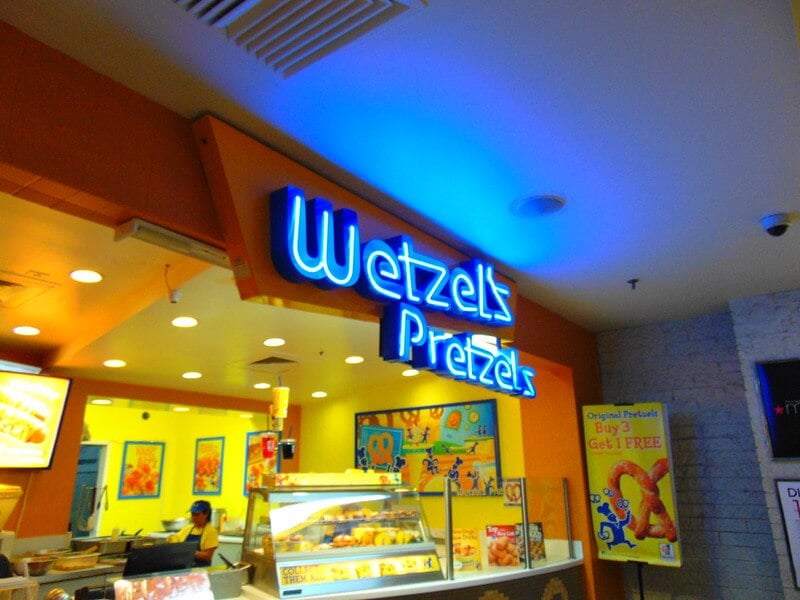
Rick Wetzel and Bill Phelps founded Wetzel’s Pretzels in California in 1994, building a mall chain around pretzels baked continuously throughout the day. The shops were designed so that the oven aroma carried across the food court, and the menu featured pretzel dogs and cinnamon sugar variations.
In an era when the mall pretzel market was already crowded, Wetzel’s competed on freshness and speed.
Panda Express
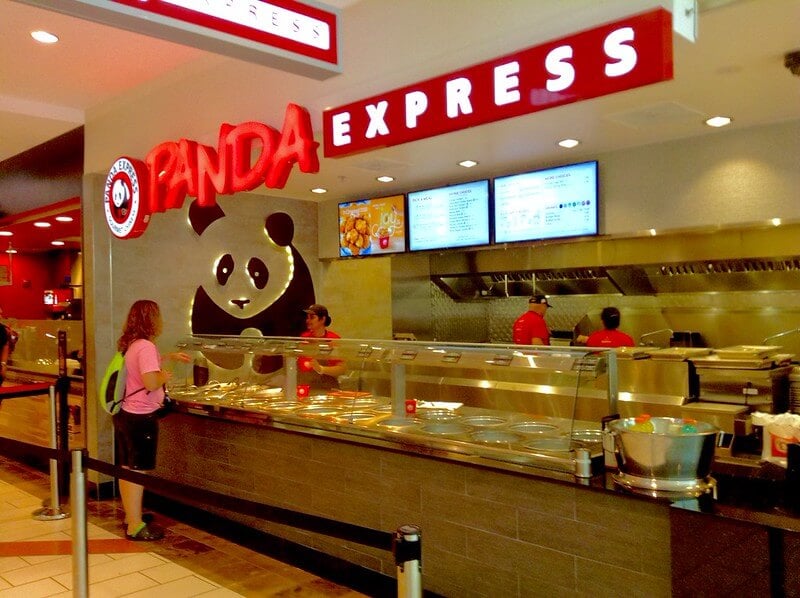
Andrew and Peggy Cherng opened the first Panda Express in the Glendale Galleria in California in 1983. The chain’s orange chicken was created in 1987 by chef Andy Kao and became the best-selling item for many locations.
Servers handed out tiny sample cups of it to passersby, a tactic that turned a single dish into the face of mall Chinese food.
Great American Cookie Company
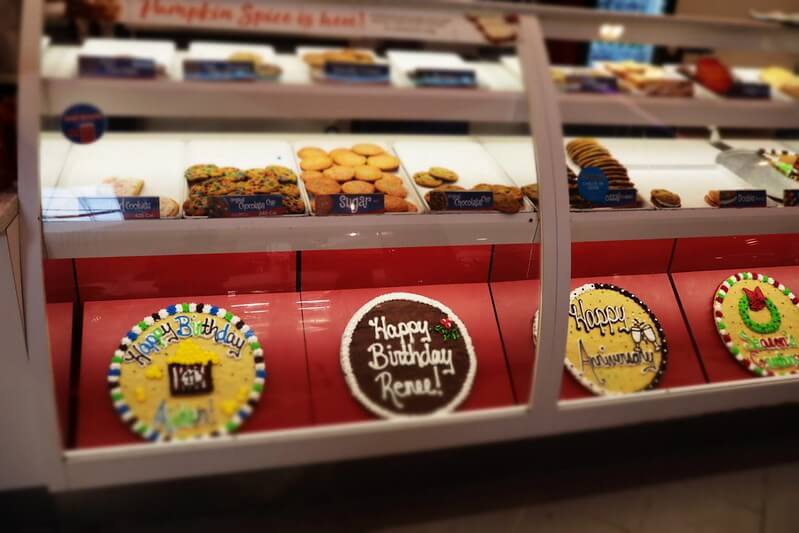
Great American Cookie Company was founded in Atlanta in 1977, and its mall stores sold enormous cookies by the piece and cookie cakes for birthdays. The oversized cookie cake, decorated in icing with a name, was often the centerpiece of a child’s party.
The chain built its identity around that single product, which could be ordered in minutes at the counter.
Gloria Jean’s
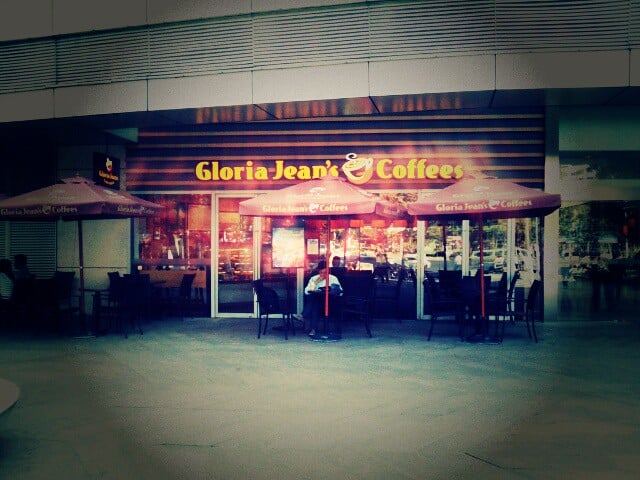
Gloria Jean’s was founded in Chicago in 1979 and expanded into malls with a wall of full beans sold by the pound, long before coffee shops were everywhere. Shoppers could choose from flavored varieties and have them ground on the spot.
For a generation, a bag of hazelnut coffee from the mall was a standard gift for a parent or teacher.
Charley’s Steakery
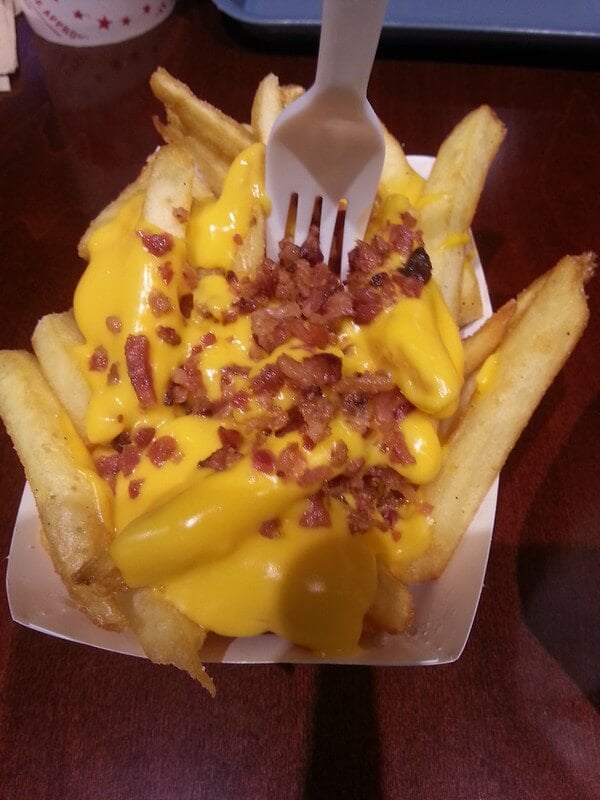
Charley’s Steakery opened in 1986 in Columbus, Ohio, at the Ohio State University student union, and the chain later built its identity on grilled steak subs cooked in front of customers. The sizzle of the flattop and the smell of onions made it one of the more recognizable food court draws.
The company expanded into malls nationwide, where the open grill served as both kitchen and billboard.
Swensen’s
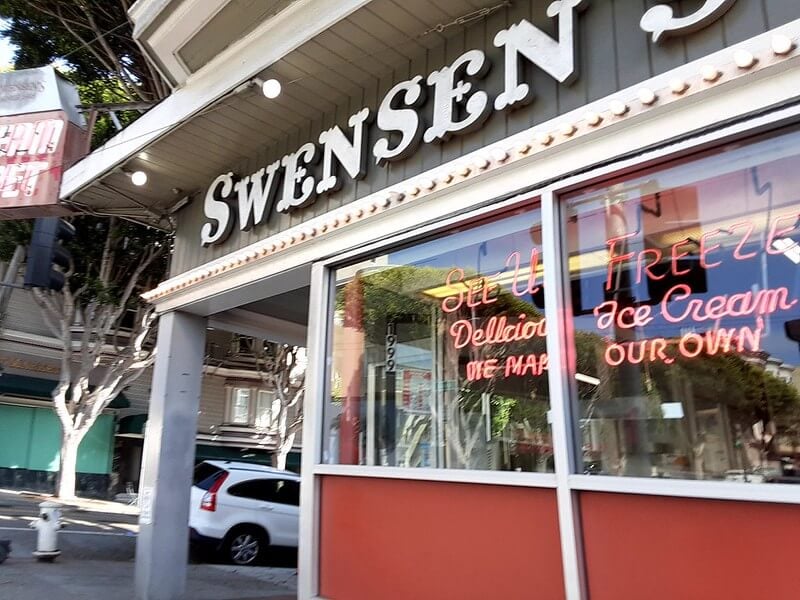
Earle Swensen opened his first ice cream shop on Hyde Street in San Francisco in 1948, and the brand later spread across the country, including shops in malls. The menu centered on elaborate sundaes and rich flavors, and the shops were treated as a destination instead of a quick stop.
The chain was a reminder that mall dessert could be an event, not just a cone to carry while walking.
Haagen-Dazs
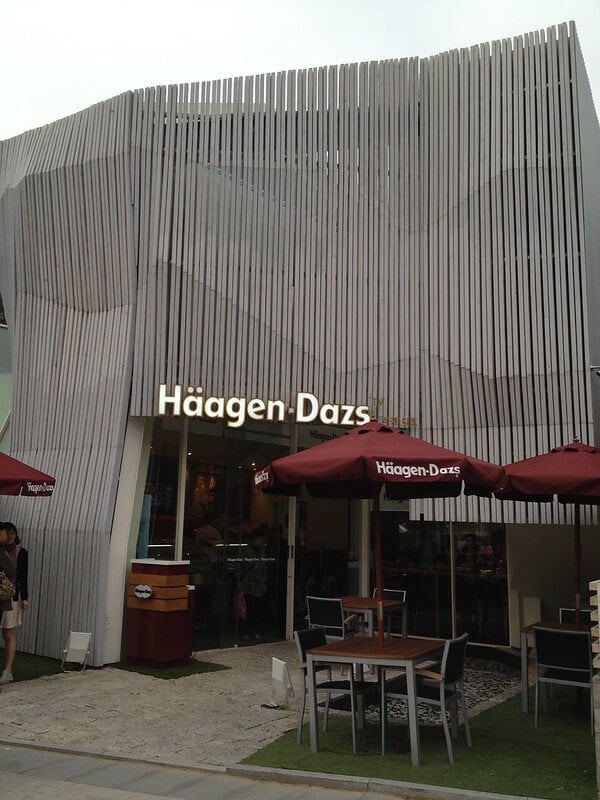
Reuben Mattus invented the Danish-sounding name Haagen-Dazs for his Bronx ice cream company in the early 1960s, even though the words mean nothing in Danish. The brand opened its first scoop shop in Brooklyn in 1976 and later moved into malls, where the dense, premium ice cream stood out from the soft-serve competition.
A scoop of Haagen-Dazs was priced noticeably higher than the rest, which made it a small luxury in a food court full of bargains.
The Smell Drifting Past the Fountain
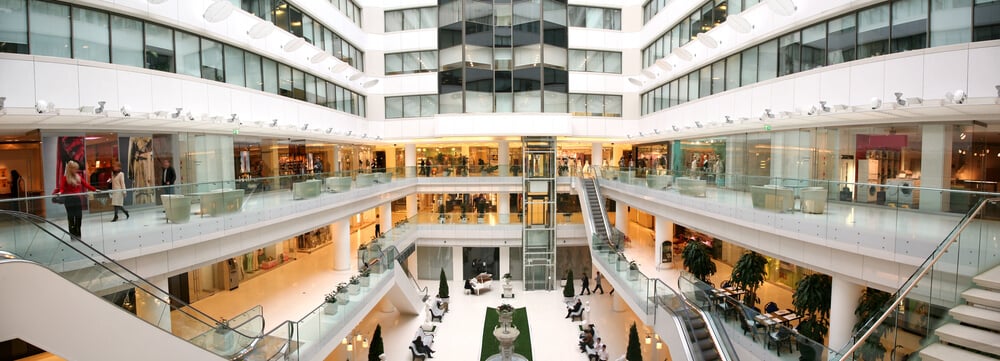
The best mall memories were rarely about the products themselves. They were about the sounds and smells that drifted across the concourse: the electronic chirp of a cabinet, the hiss of a flattop, the sweet cloud rolling out of a cinnamon bakery.
Each vendor and machine fought for attention in the same open space, and the winners were the ones that could be sensed from fifty feet away.
Most of those arcades and counters have vanished or shrunk, but the habits they created have not. Free samples, loud attract modes, and an open kitchen all began in that environment, and they remain staples of modern retail.
The mall may be fading, yet the instincts it taught the food and game industries are still very much in use.
More from Go2Tutors!

- 27 Silver Dollars and Half Dollars Worth Keeping
- 28 Restaurant Menu Items Nobody Orders Anymore
- 17 Places Built in Seemingly Impossible Spots
- 27 Vintage Rings Worth More Than They Look
- 25 Restricted Sites Tourists Can’t Enter
Like Go2Tutors’s content? Follow us on MSN.