13 Tollbooth Photos Before Electronic Payments
For most of the twentieth century, crossing a bridge or entering a highway meant stopping, rolling down a window, and handing money to a stranger in a small booth. Cameras were rarely pointed at those strangers, yet a surprising number of frames survive in museum and library collections.
The photographs below come from named archives and carry real places and dates. Some show gleaming plazas on the day they opened, and others show a lonely gate beside a dirt road.
A Numbered Gate in the Virginia Hills
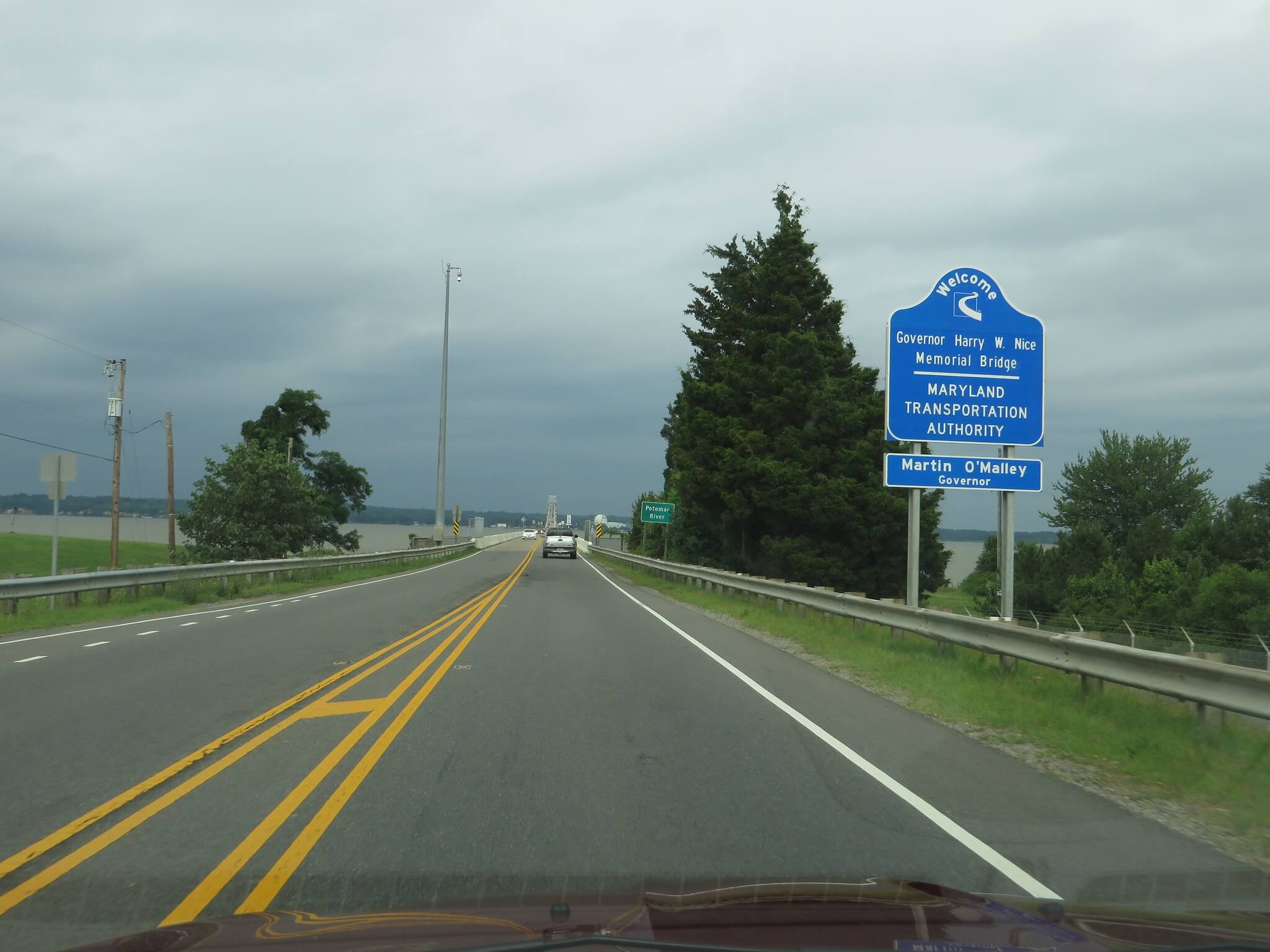
The Henry Ford holds a photograph titled “Automobile Stopping to Pay Toll at Gate 19 Tollbooth, Staunton, Virginia,” dated 1915 to 1920. The picture catches a car in the act of paying, which is the entire drama of a tollbooth in a single moment.
The gate number is the quiet surprise, because it implies a whole string of gates stretched along the same road. Motorists of the late 1910s evidently learned to carry change the way later drivers learned to carry a toll pass.
The Toll House at Rocks Village
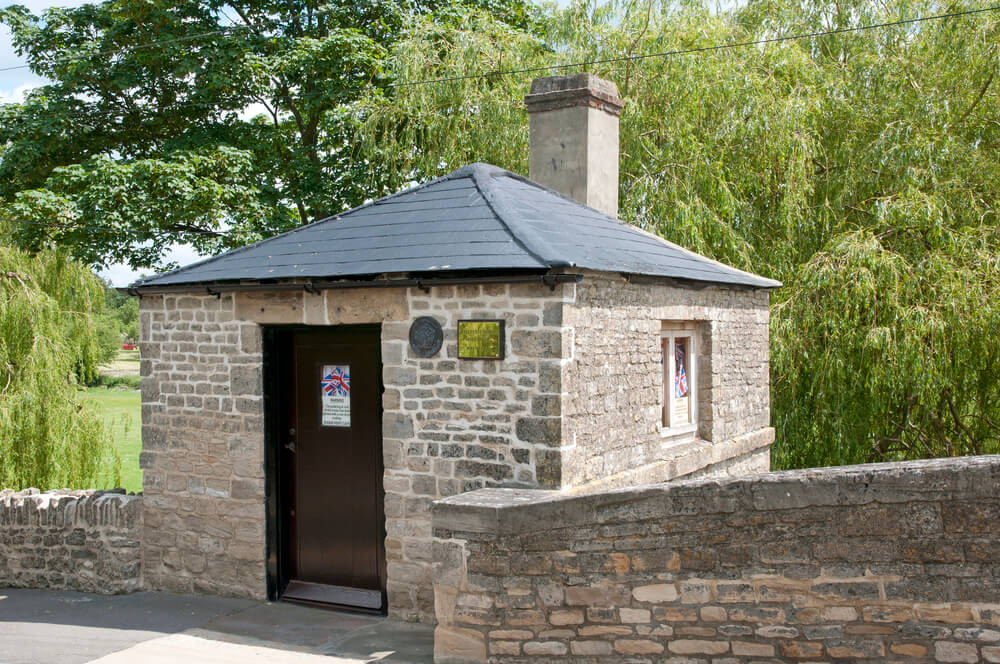
The Henry Ford also preserves several views of the Rocks Village Toll House in East Haverhill, Massachusetts, dated 1928. The small building stood at the end of a bridge over the Merrimack River, and one image in the collection is captioned as showing it on its original site.
A toll house photographed so deliberately suggests that someone already sensed these buildings were disappearing. Few roadside structures get that kind of archival attention while still standing.
Grand River Avenue and a Detroit Toll Gate
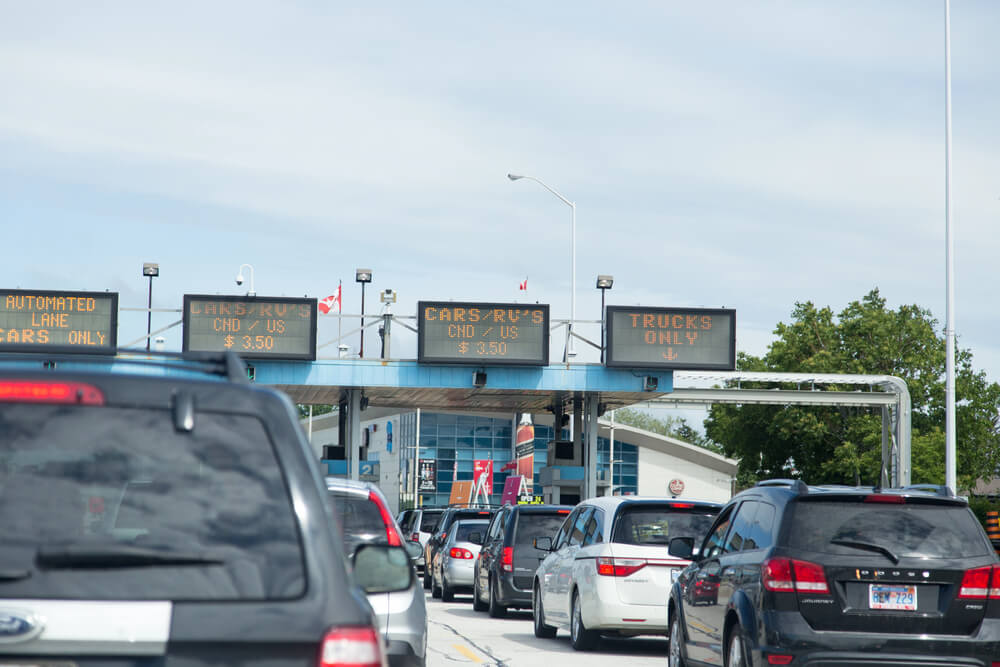
A Henry Ford photograph titled “Toll Gate on Mill Road and Grand River Avenue, Detroit, Michigan” is dated 1900 to 1915. The museum holds other pictures of tollgates along Grand River Avenue, with dates running from around 1890 to around 1915, so the road can be followed through a quarter century of collecting.
The Detroit scene predates the automobile boom that would make the city famous. Horse-drawn traffic and the first motorcars paid at the same gate.
Merritt Parkway in the Early 1950s
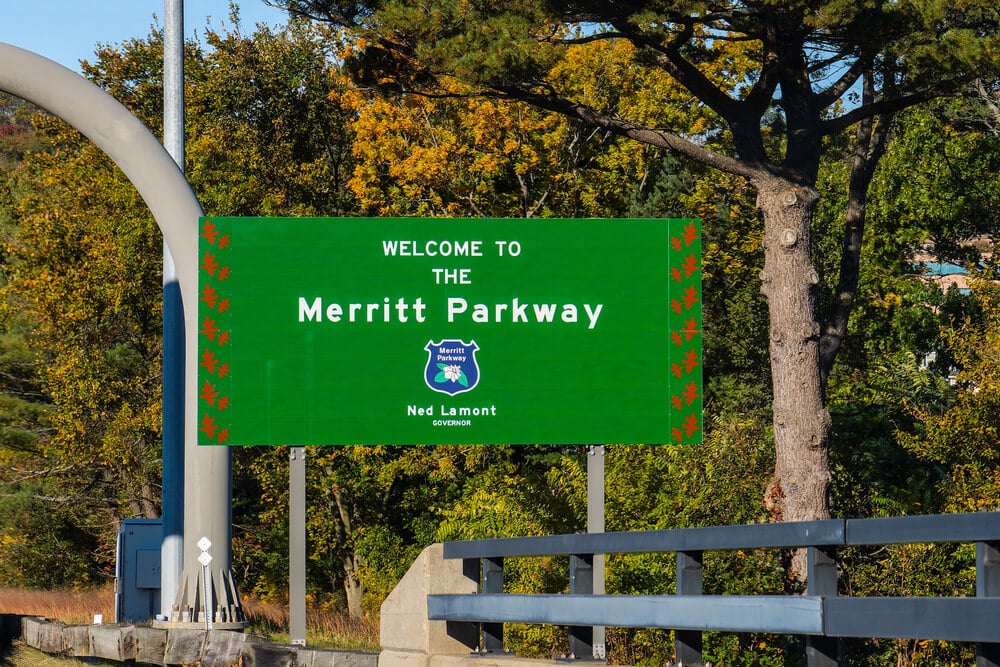
The Henry Ford’s “Merritt Parkway Tollbooth, circa 1950” shows one of the tollbooths that served Connecticut’s celebrated parkway. The Merritt was designed as a leafy, landscaped road, and its toll plazas had to fit that reputation.
A booth in the middle of a scenic drive is an odd sight, which is exactly why the photograph holds attention. Connecticut eventually abandoned its tolls altogether, leaving these booths to exist mostly in pictures.
The Hog Neck Bridge Toll House at Sag Harbor
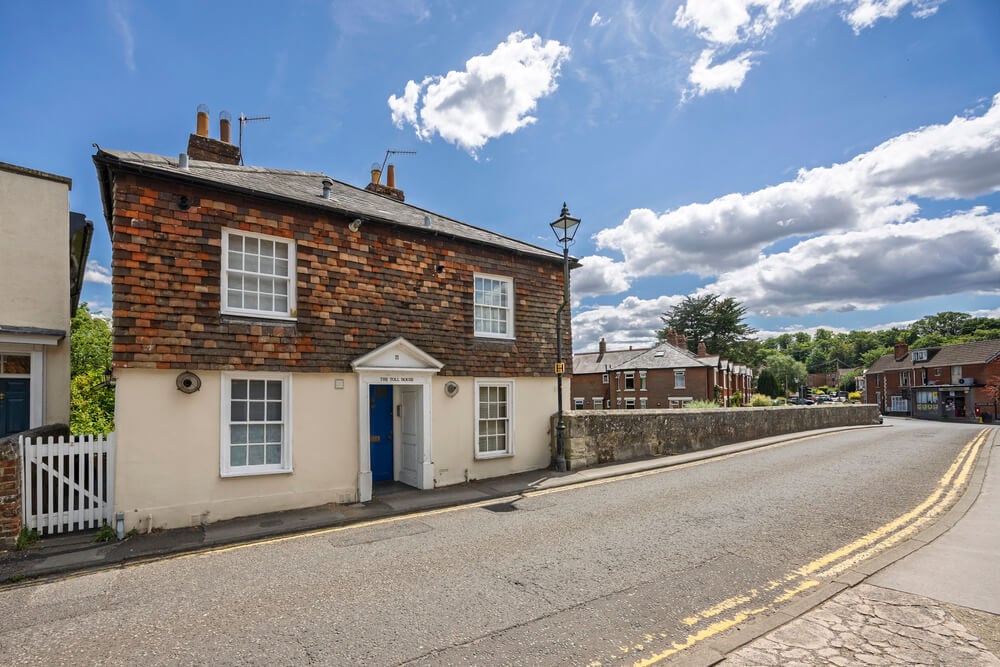
A Henry Ford photograph captioned “View of the Old Toll House at the Entrance to Hog Neck Bridge at Sag Harbor, New York” carries a date of circa 1870. It is one of the oldest toll images in this list, from an era when a toll house was simply a modest dwelling at the foot of a bridge.
The caption already calls the building old, which makes the date more curious still. A keeper lived beside the crossing and collected fees as part of daily life.
Waiting at the Oakland Pier
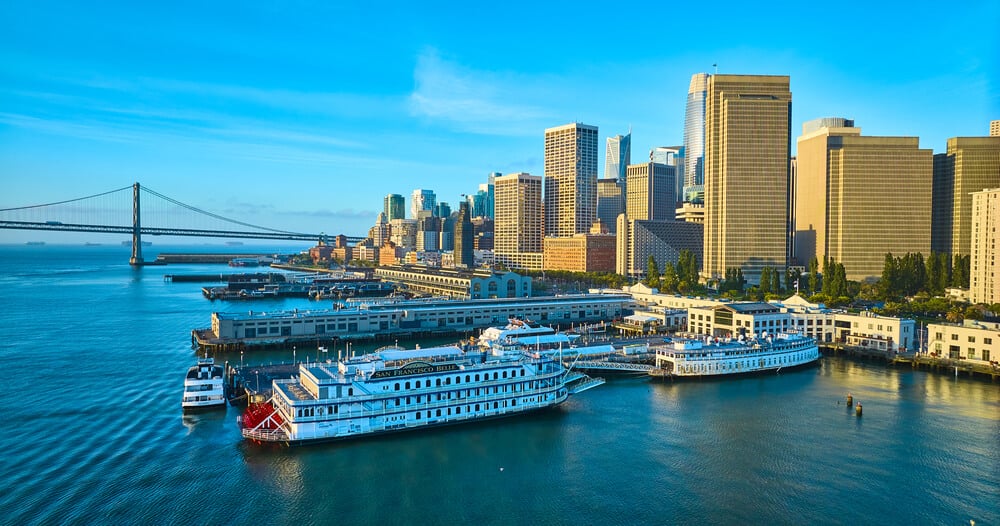
A Sonoma County Library digital collection holds a photograph titled “Line of automobiles waiting at the toll station on the Oakland Pier, Oakland, California, 1927.” The image documents a queue in the days when San Francisco Bay was crossed by ferry rather than by bridge.
Drivers paid at the pier before rolling aboard, so the toll station served as the gateway to the water. The line of cars is a reminder that traffic jams predate most of the freeways people blame for them.
The Lincoln Tunnel Approach in Weehawken
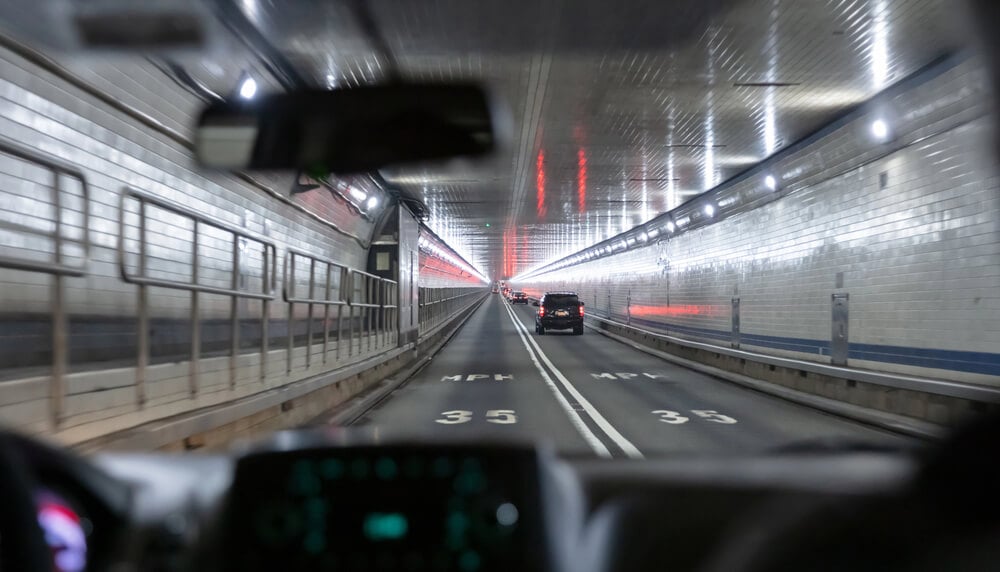
The Weehawken Time Machine archive includes images titled “Lincoln Tunnel – Toll Booths and Plaza Before Third Tube” and “Photo – Lincoln Tunnel Toll Plaza.” The tunnel opened on December 22, 1937, and the third tube was added in 1957, so the plaza pictured before that addition dates to the tunnel’s first two decades.
Rows of booths fed traffic from the New Jersey side toward Manhattan. The local archive treats the plaza as neighborhood history, which is exactly what it was for the residents living beside it.
A Toll Taker on the George Washington Bridge
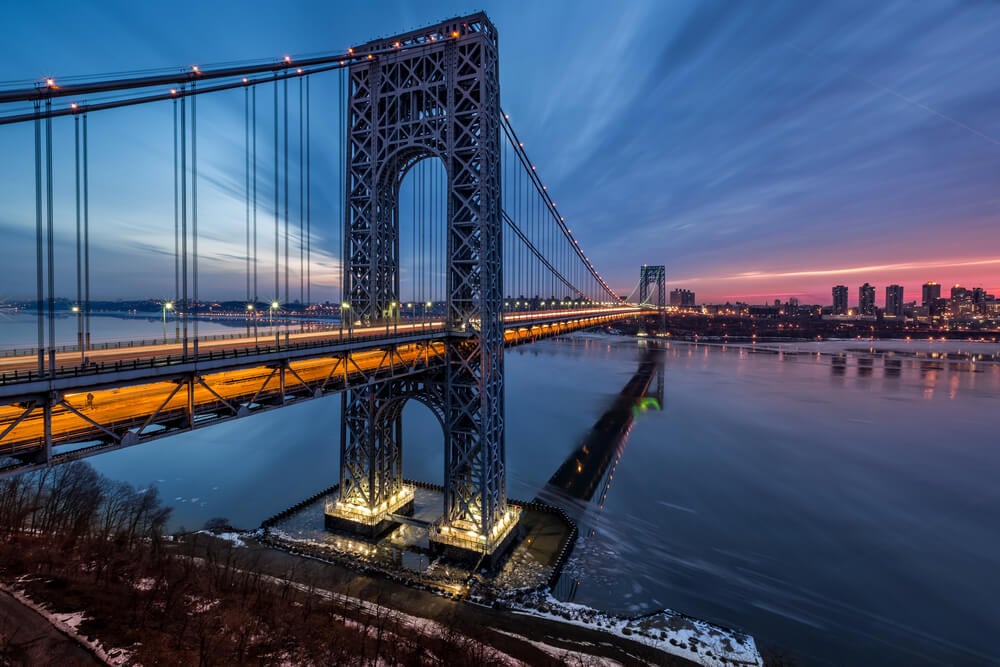
The Metropolitan Museum of Art owns a photograph titled “Untitled (Toll Taker, GW Bridge, Fort Lee, New Jersey).” The title places the subject on the New Jersey end of the span, where one worker handled each passing car.
The Met catalogs it as a portrait of a job rather than a picture of a structure. That choice is rare, since most bridge photography prefers cables and towers to the person making change.
Building the Ambassador Bridge Tollbooths
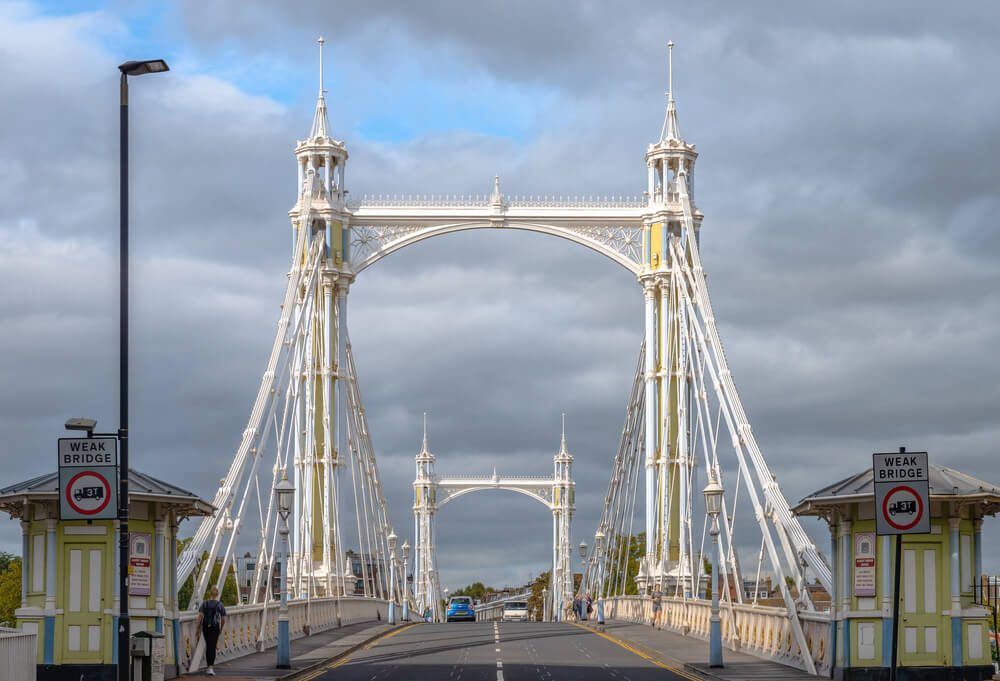
The Detroit Public Library has digitized a series titled “Construction of tollbooths for the Ambassador Bridge” and “Construction of tollbooths and road for the Ambassador Bridge.” The bridge linking Detroit and Windsor opened in 1929, and these images show the booths still under construction.
Most tollbooth photographs show them working, which makes pictures of the carpentry unusual. The series proves that the booth was planned as carefully as the span above it.
Arthur Rothstein on the Pennsylvania Turnpike
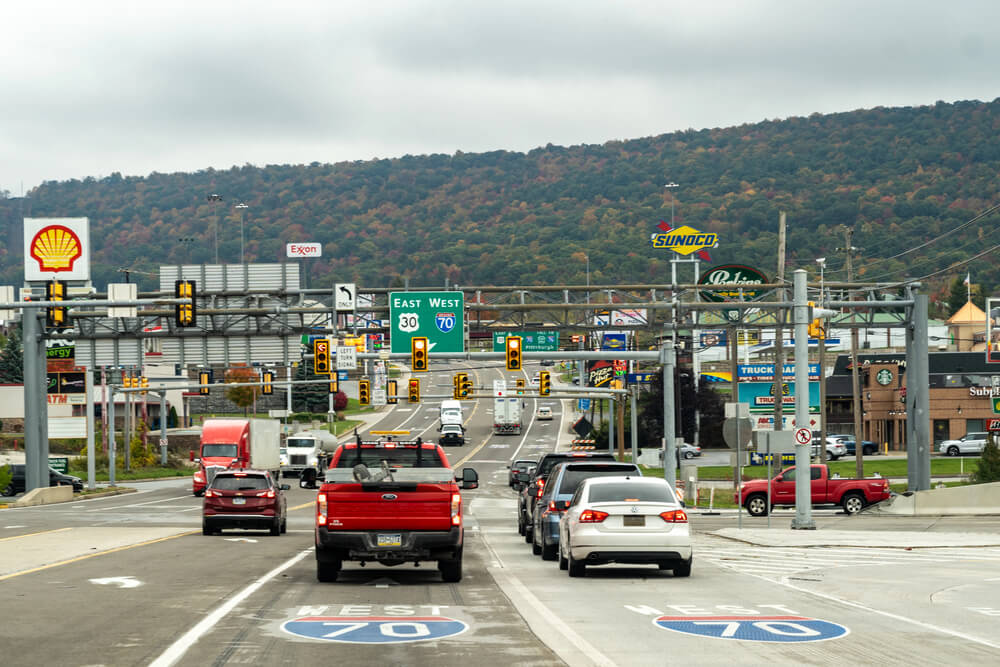
The photographer Arthur Rothstein, known for documentary work for the federal government, made a picture titled “Toll booths, Pennsylvania Turnpike.” The turnpike opened on October 1, 1940, and was celebrated as America’s first superhighway.
His turnpike work also produced views of tunnels along the route, including the Laurel Hill and Rays Hill tunnels. A photographer famous for dust bowl farms pointing his lens at a toll plaza says something about how modern the road felt.
A Tariff of Tolls in Springfield, Vermont
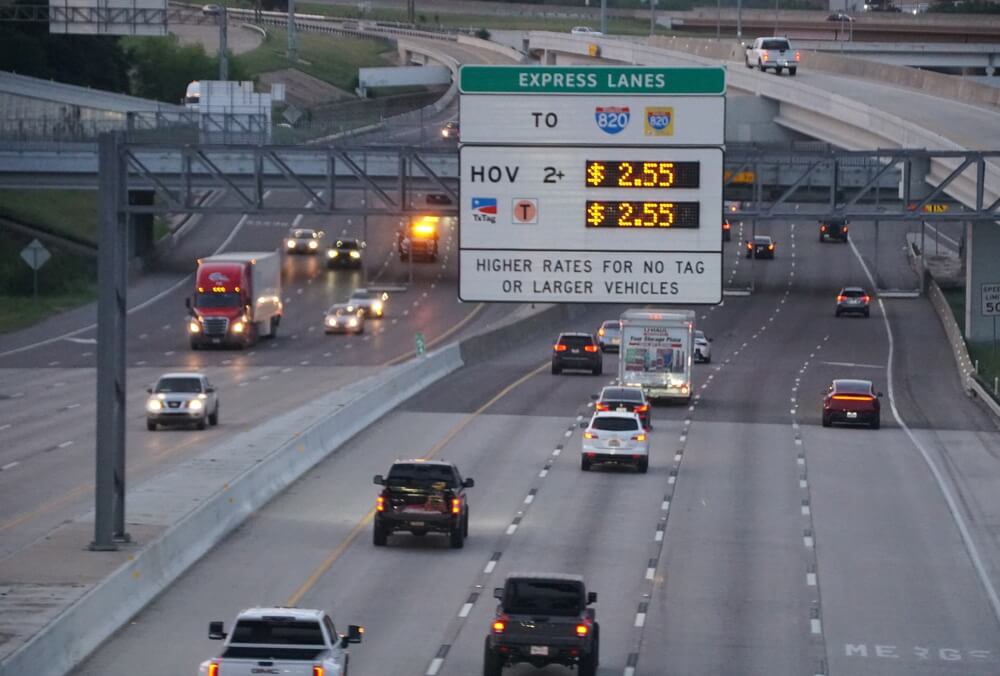
The Farm Security Administration collection includes a photograph titled “Tariff of Tolls” made in Springfield, Windsor County, Vermont. The subject is the posted price list rather than a booth or a collector.
A rate sign can say more than a face, because it records exactly what a crossing cost in a given moment. The government photographers who made this picture were told to document ordinary American life, and prices were part of it.
The Interstate Bridge at Hudson, Wisconsin
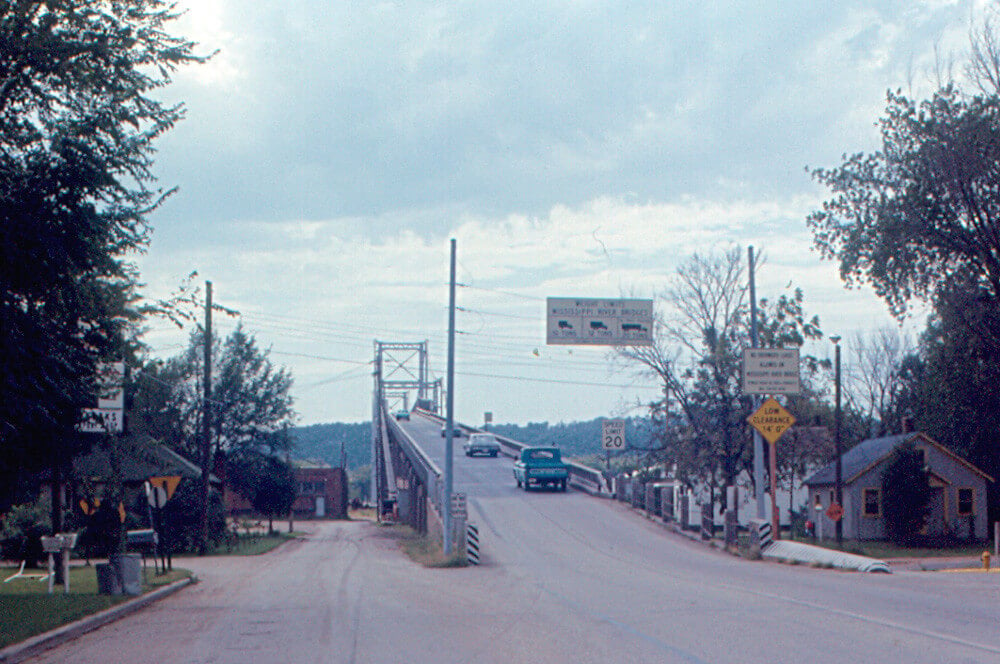
The University of Wisconsin-River Falls archives hold a postcard collection with numerous images of the Interstate toll bridge and toll house over the St. Croix River at Hudson, Wisconsin. The records are sorted by decade, with views cataloged from 1910 to 1920, 1920 to 1930, and 1940 to 1950.
Few single crossings get tracked across so many years. Together they show a small toll house standing its ground while the traffic around it changed.
Illinois Tollway and the Lake Forest Oasis
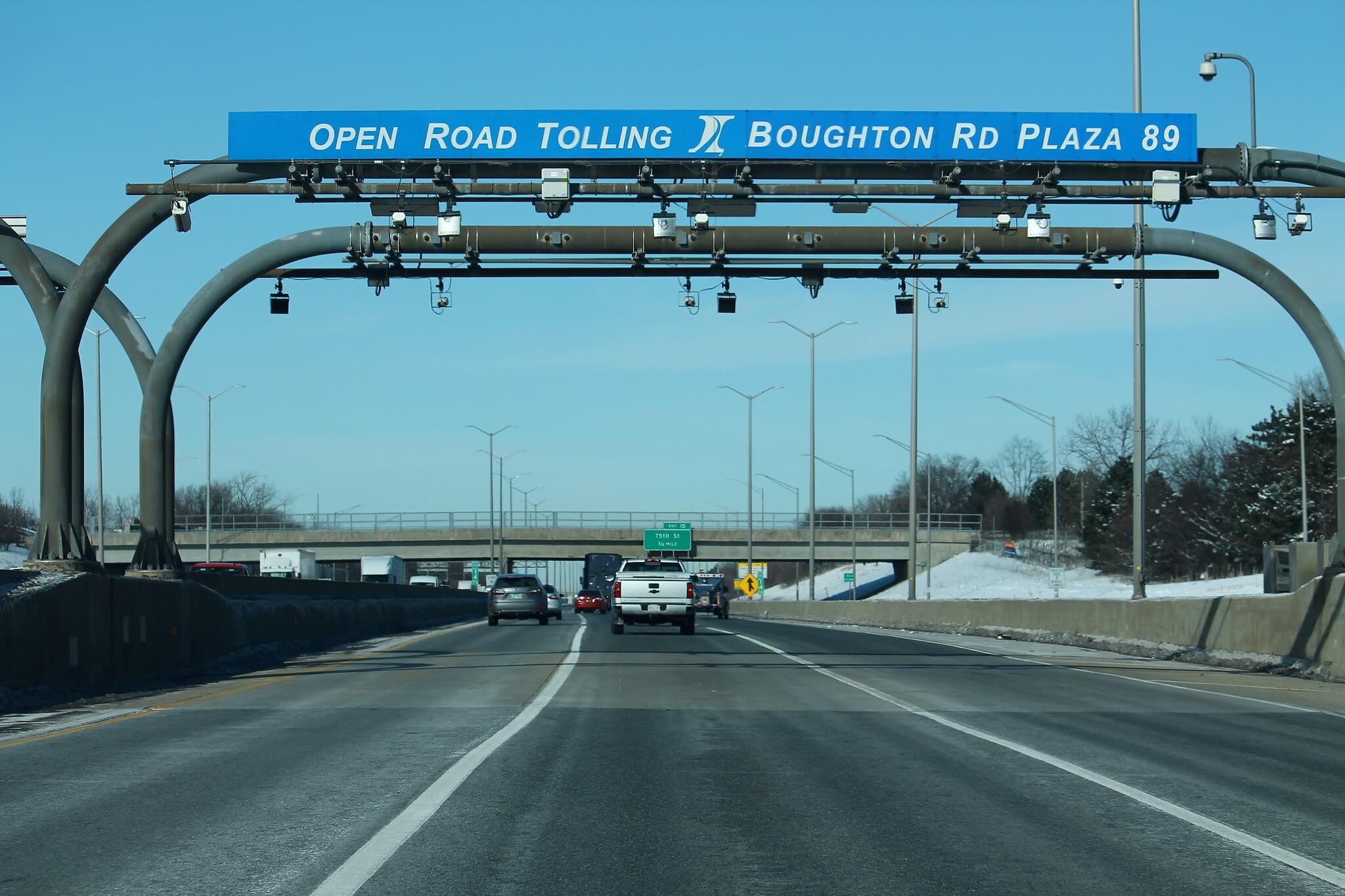
A University of Illinois Chicago collection includes an image titled “Toll plaza and road, Lake Forest Oasis, interior view.” The Illinois Tollway opened in 1958, and its oases were built to span the highway itself, which put a restaurant above the lanes.
The view puts the toll plaza and the road in the same frame as the building people stopped in. Tollbooths were usually afterthoughts, but here the booth shared the picture with a destination.
What the Booth Remembered
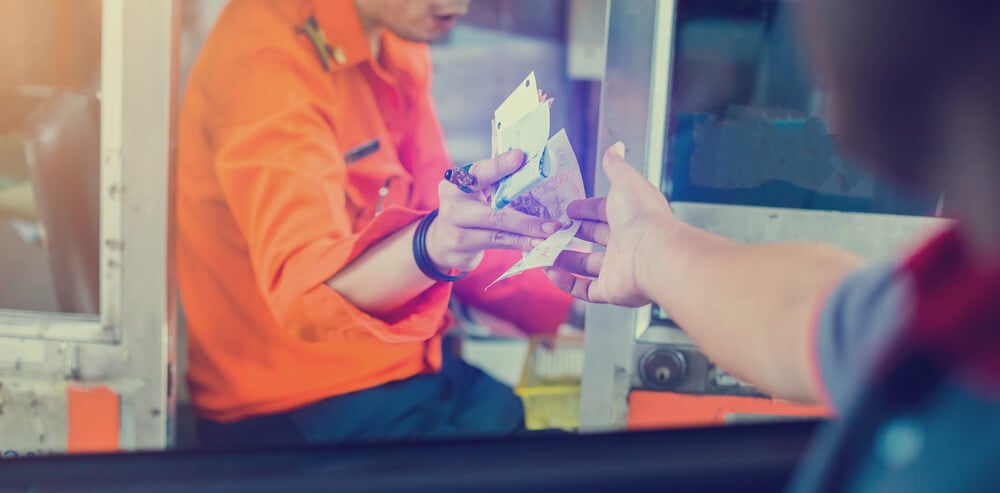
Taken together, these photographs show that the tollbooth was never just a place to pay. It was a pause built into the landscape, a spot where a stranger looked a driver in the eye and a car came to a full stop.
The archives hold quiet evidence of that pause, from a Virginia gate to a Wisconsin toll house. Electronic payment removed the pause, and with it the small human exchange at the window.
What remains in these collections is a record of how long Americans were willing to stop for a road. The photographs are a reminder that every convenience replaced something people once did together.
More from Go2Tutors!

- 27 Silver Dollars and Half Dollars Worth Keeping
- 28 Restaurant Menu Items Nobody Orders Anymore
- 17 Places Built in Seemingly Impossible Spots
- 27 Vintage Rings Worth More Than They Look
- 25 Restricted Sites Tourists Can’t Enter
Like Go2Tutors’s content? Follow us on MSN.