Vintage Travel Guides With Surprising Historical Details
Old guidebooks look like quiet objects on a shelf, but many of them carried real consequences. Some saved travelers from humiliation on the road, some made fortunes for tire and oil companies, and at least one was blamed for a wartime bombing campaign.
The details tucked inside these volumes, from star ratings to landmark-based directions, show how people once crossed unfamiliar ground with nothing but a book and a little nerve. Each guide below earned its place with a fact that still surprises.
A Harlem Mail Carrier Wrote the Green Book for Black Travelers
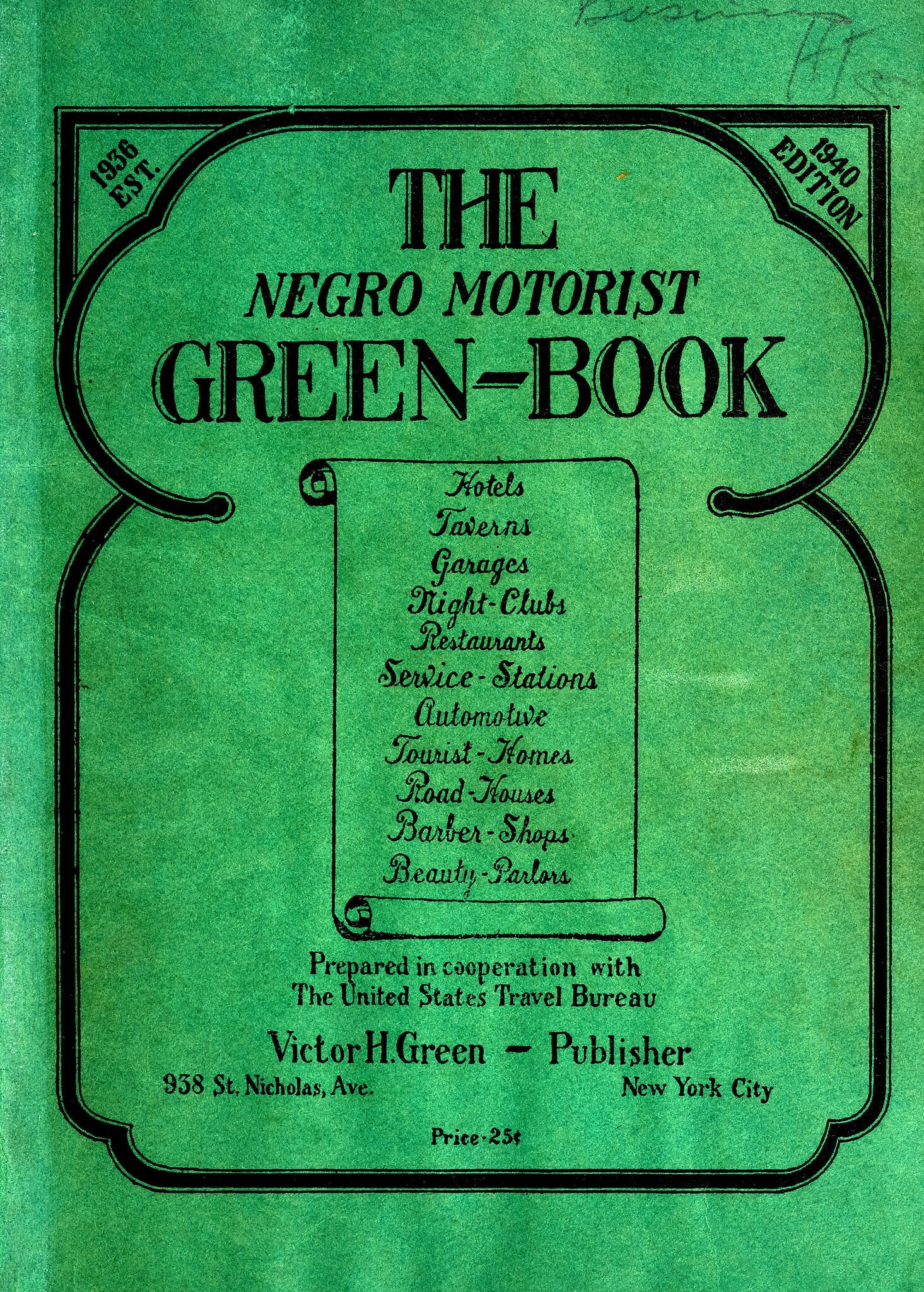
Victor Hugo Green, a mail carrier in Harlem, published the first edition of The Negro Motorist Green-Book in 1936, and that first edition focused on the New York area. It later expanded to cover much of the country, listing hotels, restaurants, garages and other businesses where Black travelers could expect to be served during the Jim Crow era.
Publication continued until the 1966-67 edition, by which point the title had changed to The Travelers’ Green Book. Surviving copies are prized by collectors and libraries, and value depends heavily on the edition and the condition of the book.
Karl Baedeker’s Rhine Guide Created the Star Rating
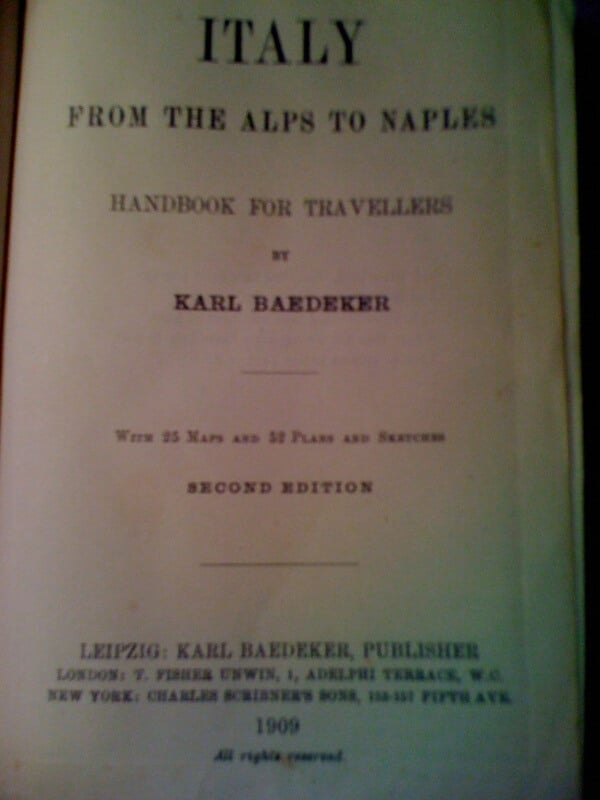
Karl Baedeker, a bookseller and publisher in Koblenz, issued a guide to the Rhine in 1832 and built a publishing house on the idea that travelers deserved accurate, compact reference books. His red-bound volumes marked the best sights with stars, a habit that made the name Baedeker shorthand for a trustworthy guide.
In 1929 the humorist A. P. Herbert wrote that kings and governments may err, but never Mr Baedeker. Older editions are collectible, and prices swing widely with the edition, language and condition.
The Baedeker Blitz Borrowed a Guidebook’s Name
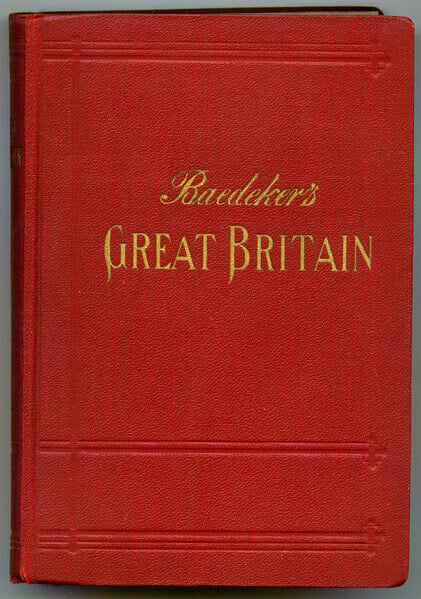
In the spring of 1942, German bombers struck English cities prized for their history and architecture, including Exeter, Bath, Norwich, York and Canterbury. The raids became known as the Baedeker Blitz, a nickname taken from the German publisher whose guides had long awarded stars to cathedrals and old town centers.
A prewar English-language Baedeker for Great Britain, such as the 1937 edition, now reads like a list of places that were about to be in danger. Copies change hands with prices that depend heavily on condition and which edition is on offer.
Michelin Gave Its First Guide Away to Sell Tires

The Michelin company published its first guide in 1900, when cars were still a novelty in France, and gave it away to drivers. The book offered maps, repair shops, fuel stops and hotels, all in service of getting people to drive more and wear out more tires.
Company lore holds that André Michelin later noticed copies being used to prop up a workbench and concluded that people respect only what they pay for, so the guide began carrying a price in 1920. The restaurant stars that made the guide famous came decades after that first free edition.
Duncan Hines Was a Real Person Who Reviewed Roadside Food

Duncan Hines, a traveling salesman from Bowling Green, Kentucky, turned his habit of noting good places to eat into Adventures in Good Eating, which appeared in 1936. A follow-up for overnight stays, Lodging for a Night, arrived in 1938, and together the books made his endorsement a prize for roadside restaurateurs.
Years later his name was licensed to a company and landed on cake mixes, which is how millions of people know the name without knowing the man. The original guides turn up in used bookstores, with value depending on edition and condition.
The WPA Hired Future Literary Stars to Write State Guides

In 1935 the Federal Writers’ Project, part of the Works Progress Administration, began producing the American Guide Series, a set of state and city guides that combined tours, history, folklore and essays. The project employed writers who later became famous, among them Zora Neale Hurston, Richard Wright, Ralph Ellison, Saul Bellow and John Cheever.
The result was a travel library written by unemployed authors during the Depression, and many volumes remain useful as snapshots of American places in the 1930s. Prices for individual state guides depend on the state, the printing and the condition of the book.
John Murray Put the Continent in a Red Cloth Handbook

In 1836 the London publisher John Murray issued A Hand-Book for Travellers on the Continent, covering regions such as Holland, Belgium and the Rhine, and drew on his own travels. The book launched Murray’s Handbooks for Travellers, a series that dominated English-language guidebook shelves through the Victorian era.
Its red cloth bindings made the books easy to spot in a coat pocket, and the later Baedeker volumes were also bound in red. Collectors should note that value depends heavily on the edition and the condition of the binding.
Eugene Fodor Wrote a Travel Annual That Aimed to Entertain

Eugene Fodor, a Hungarian-born writer, published On the Continent: The Entertaining Travel Annual in 1936, setting out to make a guidebook readable rather than merely informative. That approach became the foundation for the Fodor’s series, which grew into one of the best-known names in travel publishing.
During World War II Fodor served with the U.S. Office of Strategic Services, a detail that sits oddly beside a book subtitled The Entertaining Travel Annual. Early Fodor’s volumes carry value that depends on edition and condition.
Cook’s Egypt Handbook Came From the Firm That Moved an Army
Thomas Cook and Son published Cook’s Tourist’s Handbook for Egypt, the Nile and the Desert in the 1870s, and the 1876 edition is among those that survive in library collections. The firm ran Nile steamers for tourists, and in 1884 it also carried British troops and supplies up the river during the effort to relieve General Gordon at Khartoum.
A travel agency moving soldiers is the kind of detail that gets lost when the handbook is read only as a tourist’s aid. Condition and edition drive the value of any surviving copy.
Bradshaw’s Timetables Were Compiled by a Quaker Mapmaker

George Bradshaw, a Quaker engraver and printer in Manchester, published Bradshaw’s Railway Time Tables in 1839 and followed with a monthly guide in 1841. The dense tables became so central to British life that continental editions followed, and Jules Verne’s Phileas Fogg consults a Bradshaw’s guide in Around the World in Eighty Days.
A single page could list dozens of railway companies with their own conflicting arrival times. Old issues are collectible, and value depends heavily on the year and condition.
Arthur Frommer Wrote Europe on Five Dollars a Day After the Army

Arthur Frommer served in the U.S. Army in Europe and wrote a guide for fellow soldiers before publishing Europe on 5 Dollars a Day in 1957. The promise in the title was the entire pitch: a traveler of modest means could cross the Atlantic and eat, sleep and sightsee on a tight budget.
As prices climbed, later editions raised the figure in the title, turning the book into an accidental record of inflation. Frommer died in 2024 at age 95, and first editions are sought by collectors with value tied closely to condition.
Lonely Planet Began as a Slim Booklet About Crossing Asia
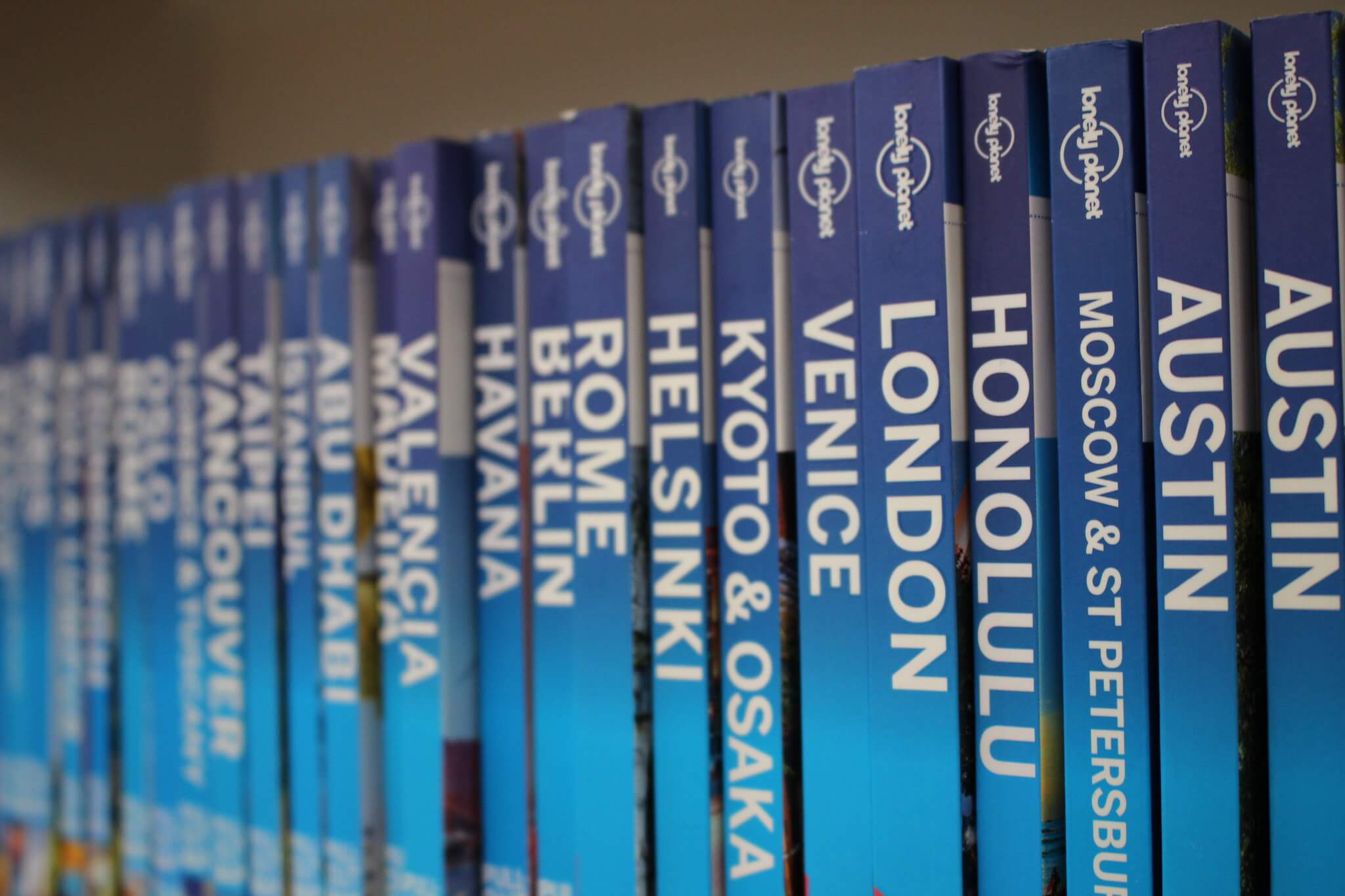
In 1973 Tony and Maureen Wheeler, newly arrived in Australia after an overland journey from London, produced Across Asia on the Cheap, a slim, stapled booklet. The book was aimed at travelers going the way they had gone, by bus, train and thumb, and it launched the Lonely Planet company that year.
The earliest edition is a rarity, and any copy’s value depends heavily on its condition and printing. A publishing empire with shelves in every airport traces back to that thin booklet.
Harvard Students Wrote the First Let’s Go Guide

Let’s Go began in 1960 with Harvard Student Agencies, the student-run business, which produced a modest pamphlet for young people heading to Europe. Student editors did the research themselves, a model that the series kept for decades as new volumes spread across the globe.
The approach gave the books a blunt, budget-minded voice that older guides lacked. Early editions are collectible, and values depend heavily on the edition and condition.
Pausanias Wrote a Greek Travel Guide Nearly Two Thousand Years Ago

Pausanias, a Greek traveler of the second century AD, wrote Description of Greece, a work in ten books that walks through temples, statues, tombs and local legends region by region. It has often been called the earliest true travel guide, and archaeologists have relied on it ever since.
Heinrich Schliemann leaned on Pausanias while excavating at Mycenae in the 1870s. Few guidebooks have waited so long to be proven right, and modern translations are easy to find.
Mobil Put an Oil Company’s Stars on Hotels and Restaurants
The Mobil Travel Guide launched in 1958, published by the oil company whose gas stations dotted American highways, and it assigned star ratings to hotels and restaurants. Anonymous inspectors did the evaluating, a practice that the guide later carried into its life as Forbes Travel Guide.
The book followed the same logic as the Michelin guide, which was that a company selling fuel or tires benefits when people drive farther. Older Mobil guides are collected for regional snapshots, with value depending on edition and condition.
French Hachette Turned Guides Joanne Into Guides Bleus

Adolphe Joanne launched his Guides Joanne in 1841, and the series became one of the leading French travel guides of the nineteenth century. In 1919 the Guides Joanne became the Guides Bleus under the Hachette publishing house, taking the blue covers that gave the series its name.
The Guides Bleus later became a standard French companion for visitors to Europe and beyond. Both series are collectible, and value depends on edition, region and condition.
The Blue Guides Appeared Just as the First World War Ended

The Blue Guides debuted in 1918 with London and Its Environs, edited by Findlay Muirhead, and the book was reviewed in The Spectator that July. Muirhead went on to edit volumes covering other countries, including a Blue Guide to Ireland in 1932.
The series grew into a long-running set of guides known for dense historical and art-historical detail. Early editions are collectible, and value depends heavily on the edition and condition.
Harper’s Hand-Book Gave Americans Their Own Guide to Europe and the East

Harper’s Hand-Book for Travellers in Europe and the East was compiled by William Pembroke Fetridge and issued by Harper and Brothers of New York in the 1860s. It offered American tourists an English-language alternative to the British Murray and German Baedeker volumes then dominating the market.
The guide was revised repeatedly, so copies from different years differ in content. Value for any given copy depends on the edition and the condition of the book.
The Automobile Blue Book Gave Directions in Barns and Bridges

The Official Automobile Blue Book first appeared in 1901 and ran through 1929, serving drivers at a time when road signs were scarce and many highways were unnumbered. Directions relied on landmarks, so a motorist might be told to turn at a particular bridge or farm, which meant that a change in the scenery could break the route.
The arrival of numbered highways in the 1920s gradually made that style of direction obsolete. The books are collected as precursors to the American road map, and value depends heavily on the volume, year and condition.
What Old Guides Reveal About the People Who Carried Them

Taken together, these books show that every guide is also a portrait of its moment. The Green Book recorded what a nation made necessary for some travelers, while the Baedeker stars and Michelin ratings show how readers learned to trust a stranger’s judgment.
Even the oil and tire company guides reveal a quiet logic, because a business that sells fuel or tires prospers when readers drive farther. Collectors are drawn to these volumes for their covers and their rarity, but their lasting value is the voice of a time and place preserved in print.
A well-worn copy, with its pencil marks and folded corners, shows how much weight travelers once placed on a book that could not be updated until the next edition. That trust, placed in a few hundred pages carried in a coat pocket, is the real historical detail running through every entry on this list.
More from Go2Tutors!

- 27 Silver Dollars and Half Dollars Worth Keeping
- 28 Restaurant Menu Items Nobody Orders Anymore
- 17 Places Built in Seemingly Impossible Spots
- 27 Vintage Rings Worth More Than They Look
- 25 Restricted Sites Tourists Can’t Enter
Like Go2Tutors’s content? Follow us on MSN.