Cultural Rites Shaping Modern Celebrations
People have always found reasons to come together. From ancient harvest festivals to royal coronations, humans developed ceremonies that helped communities bond, mark important moments, and pass down traditions through generations.
These old practices didn’t just disappear when the world modernized. They transformed, adapted, and snuck their way into the parties, holidays, and special events celebrated today.
So where exactly do today’s biggest celebrations come from? Let’s look at how ancient customs continue to influence the way people gather and celebrate now.
Throwing rice at weddings
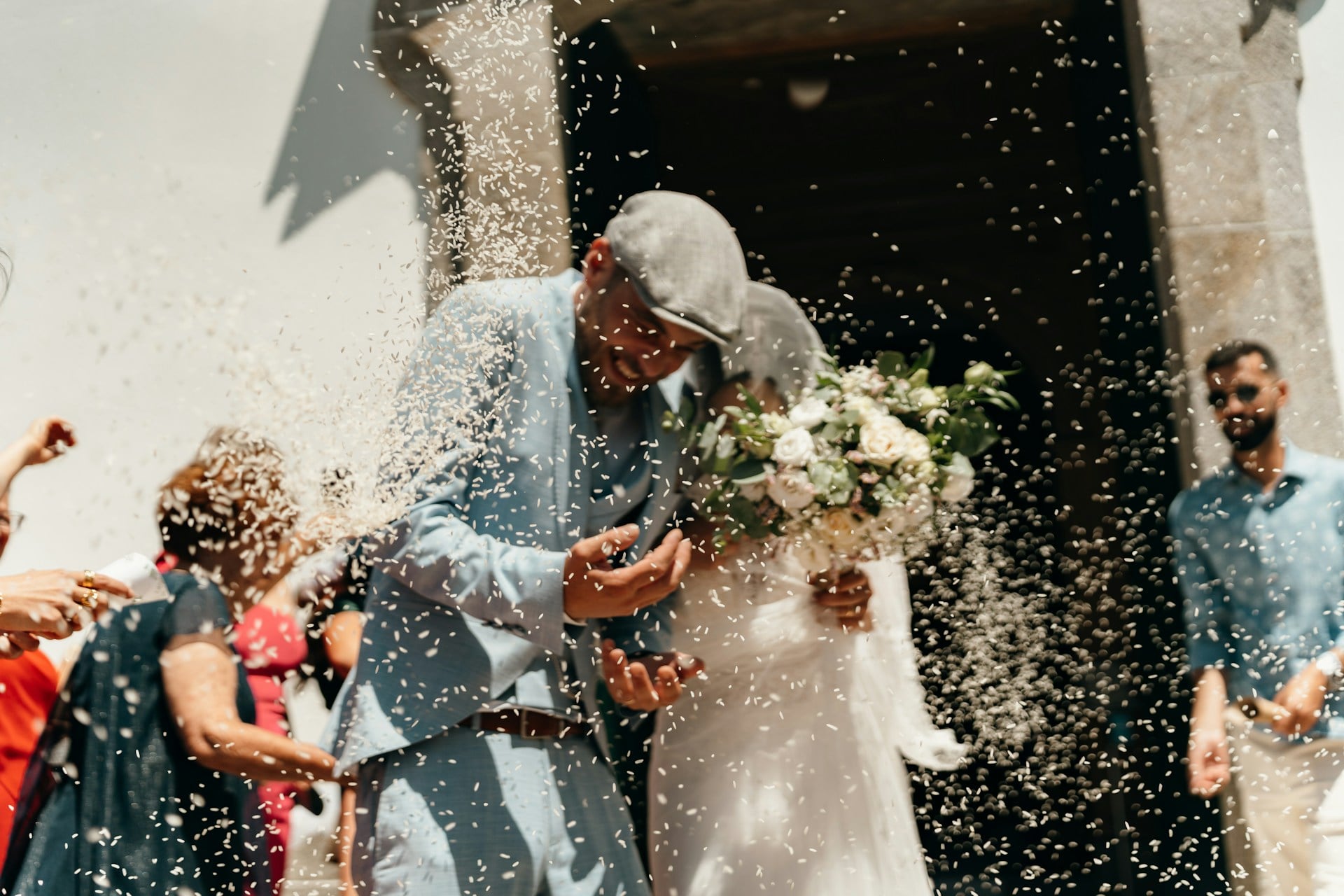
Tossing rice at newlyweds seems like a simple tradition, but it goes back thousands of years. Ancient Romans threw wheat at brides and grooms as a symbol of fertility and prosperity.
The grain represented abundance and the hope that the couple would have many children and never go hungry. Different cultures used different grains based on what grew in their region, but the meaning stayed the same.
Today’s version uses rice because it’s easy to find and doesn’t hurt when it hits someone. Some modern weddings have switched to birdseed or bubbles to keep birds from eating rice off the ground, but the original intention of wishing abundance on the new couple remains unchanged.
Blowing out birthday candles

Ancient Greeks started this one when they baked round cakes to honor Artemis, the moon goddess. They put candles on top to make the cakes glow like the moon.
People believed the smoke from the candles carried their prayers up to the gods living on Mount Olympus. Germans later adapted this practice for children’s birthday celebrations called Kinderfeste in the 1700s.
The birthday person would make a wish and blow out all the candles in one breath, just like today. That single breath was supposed to make the wish more powerful and more likely to come true.
Wearing white wedding dresses

Queen Victoria changed wedding fashion forever when she married Prince Albert in 1840 wearing a white gown. Before that, brides just wore their best dress in any color they wanted.
Wealthy women often chose red, blue, or even black because those colors showed off expensive dyes that poor people couldn’t afford. White fabric was actually harder to keep clean and therefore demonstrated wealth and status.
After newspapers published drawings of Victoria’s white dress, women across Europe and America copied the look. The color white eventually became associated with purity and new beginnings, even though that wasn’t Victoria’s original intention when she picked out her dress.
Carving pumpkins for Halloween

The Irish started carving vegetables, but they used turnips, not pumpkins. Their folklore included a character named Stingy Jack who tricked the devil and was doomed to wander Earth with only a carved turnip to light his way.
Irish families carved scary faces into turnips and potatoes to ward off Jack’s spirit and other wandering souls during Samhain, their autumn festival. When Irish immigrants came to America in the 1800s, they discovered pumpkins were much bigger and easier to carve than turnips.
The practice caught on across the United States and became inseparable from Halloween celebrations, though most people have forgotten about poor Jack and his turnip lantern.
Exchanging Valentine’s Day cards

Ancient Romans celebrated Lupercalia in mid-February with rituals meant to promote fertility and ward off evil spirits. Young men would draw names of women from a jar, and these pairings would last through the festival or sometimes longer.
When Christianity spread, the church wanted to replace pagan festivals with saint celebrations. Pope Gelasius I declared February 14th as St. Valentine’s Day in the late 400s, named after a martyred priest.
The first paper valentines appeared in the 1400s, and by the 1800s, printed cards became popular in England and America. The ancient Roman practice of pairing people up evolved into today’s tradition of expressing affection through cards, chocolates, and gifts.
Decorating evergreen trees at Christmas

Germanic tribes brought evergreen branches into their homes during winter solstice celebrations long before Christianity reached northern Europe. They believed evergreens held special power because the branches stayed green when other plants died in the cold.
These trees represented life continuing even in the darkest, coldest time of year. Martin Luther supposedly added candles to a tree in the 1500s after seeing starlight through forest branches, though historians debate if that story is true.
German immigrants brought decorated trees to America in the 1800s, and the tradition spread after Queen Victoria’s German husband Prince Albert set up a tree at Windsor Castle. Now Christmas trees appear in homes, shopping malls, and town squares every December.
Wearing costumes on Halloween

The Celtic festival of Samhain marked the end of harvest season and the beginning of winter, a time when people believed the boundary between the living and the dead grew thin. Celts wore animal skins and masks to confuse spirits that might cross over from the other world.
They thought that if they looked strange or scary enough, harmful spirits would leave them alone or mistake them for fellow ghosts. Christian missionaries tried to replace Samhain with All Saints’ Day and All Souls’ Day, but the costume tradition stuck around.
By the 1900s in America, Halloween costumes became less about scaring spirits and more about having fun, though the practice of disguising oneself traces directly back to those ancient Celtic fears.
Clinking glasses in toasts

Ancient Greeks and Romans started this practice for a practical reason related to trust. Poisoning enemies at feasts was common enough that people grew suspicious of their drinks.
Clinking glasses together hard enough to slosh liquid from one cup into another proved that all the drinks came from the same safe source. The custom also created a loud noise that was believed to scare away evil spirits lurking around the gathering.
Over time, the toast became more about celebration than safety, but the clinking remained. Different cultures developed different toasting words and customs, yet almost everyone around the world still taps glasses together before drinking at special occasions.
Carrying brides over the threshold

Several ancient cultures practiced this, but Romans had the most specific reason. They believed that if a bride tripped while entering her new home for the first time, it would bring terrible bad luck to the marriage.
Grooms carried their brides to prevent any stumbling at this critical moment. Some historians think the custom originally started with bride kidnapping, where men literally carried women into their homes by force.
Another theory suggests it protected the bride from spirits hiding in the threshold of the doorway, waiting to curse the marriage. The true origin might combine all these beliefs, but modern grooms who continue this practice usually just think it’s romantic rather than protective.
Breaking wishbones for luck

Ancient Etruscans in Italy believed chickens could predict the future because the birds announced each new day with their crowing. They would kill a chicken, clean the breast bone, and let it dry in the sun.
People would make wishes on the dried bone, and eventually Romans adopted the practice. The Romans brought this custom to Britain during their occupation, and it evolved into two people pulling the bone apart.
The person who got the bigger piece would have their wish granted. Turkey wishbones replaced chicken bones at American Thanksgiving celebrations simply because turkeys are bigger and their wishbones are larger and easier to snap.
Lighting fireworks for celebrations

Ancient China invented gunpowder around 800 AD, and they quickly found ways to make it explode loudly and produce bright lights. Chinese people believed the loud noises and bright flashes scared away evil spirits and bad luck.
They set off firecrackers during New Year celebrations, weddings, and other important events to start things off right. The practice spread along trade routes to the Middle East, Europe, and eventually to the Americas.
Different cultures added fireworks to their own celebrations, from Indian Diwali festivals to American Independence Day. The protective spiritual purpose faded, but the excitement and spectacle of fireworks kept the tradition alive worldwide.
Giving gifts during holidays

Ancient Romans celebrated Saturnalia in December, a festival honoring the agricultural god Saturn. During this week-long party, Romans gave each other simple gifts like candles, figurines, and food.
Masters served meals to their slaves, and social norms were temporarily flipped upside down. This festival happened around the winter solstice, a time when many cultures held celebrations.
When Christianity became Rome’s official religion, many Saturnalia customs merged with Christmas celebrations. The gift-giving practice survived and expanded dramatically.
Victorian England popularized giving presents on Christmas Day specifically, and commercial forces in the 1900s turned holiday gift-giving into the massive shopping season it is today.
Wearing green on St. Patrick’s Day

Ireland’s patron saint actually had nothing to do with the color green during his lifetime. St. Patrick’s color was blue, featured on ancient Irish flags and religious artwork.
The shift to green happened slowly over several centuries. Irish Catholics began wearing green ribbons and shamrocks to show pride in their heritage during English rule, when displaying Irish identity was dangerous.
Green represented the lush Irish landscape and became a symbol of Irish nationalism. When Irish immigrants brought St. Patrick’s Day celebrations to America, they emphasized the green even more.
Now people of all backgrounds wear green on March 17th, even though the original St. Patrick’s Day celebrations in Ireland were solemn religious services with nothing green in sight.
Tossing bouquets at weddings

Medieval England gets credit for this tradition, though it started much rougher than today’s version. Wedding guests believed touching the bride brought good luck, so crowds would chase her after the ceremony trying to rip pieces of her dress or flowers.
Brides started throwing their bouquets to distract the grabby crowd and make a quick escape. The single woman who caught the bouquet was believed to be the next to marry, absorbing some of the bride’s good fortune.
Tudor England formalized this into a more organized tradition where brides threw their bouquets on purpose rather than in panic. Modern bouquet tosses are much more civilized, but they still carry that ancient belief about luck and marriage transferring from one woman to another.
Kissing under mistletoe

Scandinavian mythology tells of Baldur, the god of light, who was killed by an arrow made of mistletoe. His mother Frigg, the goddess of love, brought him back to life and declared mistletoe a symbol of love rather than death.
She decreed that anyone passing under mistletoe should receive a kiss. Celtic Druids also considered mistletoe sacred because it stayed green all winter and often grew high in trees, seemingly without roots.
They believed it had healing powers and brought fertility. When these northern European traditions mixed with Christmas celebrations, people hung mistletoe in doorways during December.
The kissing custom stuck around even as the original religious and mythological meanings faded from memory.
Wearing caps and gowns at graduation

Medieval European universities created this dress code in the 1100s and 1200s. Students and professors wore long robes partly because most universities were also religious institutions, and the robes resembled clerical clothing.
The outfits also served a practical purpose in drafty stone buildings without modern heating. Different colored hoods and stripes indicated what subject someone studied or taught.
Oxford and Cambridge made these traditions official in the 1300s. American colleges copied European universities when they were founded, bringing the caps and gowns across the Atlantic.
The mortarboard cap’s flat square top supposedly represents the shape of a book. Graduation ceremonies now happen worldwide, and despite changing fashion everywhere else, those medieval robes remain the standard outfit for students receiving diplomas.
Eating cake at celebrations

Ancient Egyptians are credited with developing the first versions of sweetened bread that resembled cake. They offered these sweet breads to their gods during religious ceremonies and festivals.
Greeks and Romans continued this practice, creating honey-sweetened cakes for temple offerings and special occasions. Round cakes specifically symbolized the moon and the cyclical nature of life.
Medieval European bakers improved cake recipes when Caribbean sugar became available, making cakes sweeter and more elaborate. Wedding cakes evolved from ancient Roman wheat cakes into the towering frosted creations seen today.
Birthday cakes combined the ancient tradition of offering food to gods with candle customs. Now people eat cake at nearly every celebration, from baby showers to retirement parties, continuing a practice that started thousands of years ago in Egyptian temples.
Raising toasts at gatherings

Ancient Greeks didn’t just clink glasses; they had elaborate rituals around communal drinking. The symposiarch, or master of ceremonies, would lead toasts to honor gods, heroes, and important guests at banquets.
Greeks believed failing to honor the gods with a toast could anger them and bring misfortune to everyone present. Romans expanded these practices and made toasting a regular part of their feast culture.
The word ‘toast’ itself comes from the Roman practice of putting a piece of toasted bread in wine to improve the flavor or reduce acidity. English speakers later applied the word to the drinking ritual itself.
Every culture developed its own toasting traditions and words, but the basic act of raising a glass to honor someone or something connects directly back to those ancient Greek and Roman banquets.
Where the past meets the present

These traditions survive because they serve purposes beyond their original meanings. Wedding customs calm nervous couples and create shared experiences that families recognize across generations.
Holiday rituals give structure to time off work and reasons to gather with people who matter. Celebration practices connect individuals to something larger than themselves, whether that’s family history, cultural identity, or just the simple human need to mark important moments with others.
Ancient people understood that communities grow stronger when they share meaningful experiences, and modern society hasn’t found a better way to accomplish that goal. The candles, costumes, and ceremonies continue because they still do what they’ve always done: bring people together and make ordinary days feel special.
More from Go2Tutors!

- The Romanov Crown Jewels and Their Tragic Fate
- 13 Historical Mysteries That Science Still Can’t Solve
- Famous Hoaxes That Fooled the World for Years
- 15 Child Stars with Tragic Adult Lives
- 16 Famous Jewelry Pieces in History
Like Go2Tutors’s content? Follow us on MSN.