18 Forgotten Traditions From School Graduation Days
Every graduation ceremony runs on habits nobody questions anymore. The gowns, the music, the speeches in a certain order all feel like natural law until someone asks where they came from.
Behind the standard script sits a pile of discarded customs, some charming and some frankly mean. They involve spoons, flower chains, wooden hoops, and a surprising number of people being made to sit in order of family prestige.
The Wooden Spoon Handed to Last Place at Cambridge

For generations, the University of Cambridge ranked its top mathematics graduates in strict order of merit, and the person at the very bottom of the honors list received a wooden spoon. The spoon grew comically oversized over time, which made the humiliation public and, apparently, a point of pride for some recipients.
The ranking was abolished in 1909, and the last spoon went to Cuthbert Lempriere Holthouse. Cambridge students still use the phrase for last place in a competition.
The Spoon Presented on Class Day at Penn
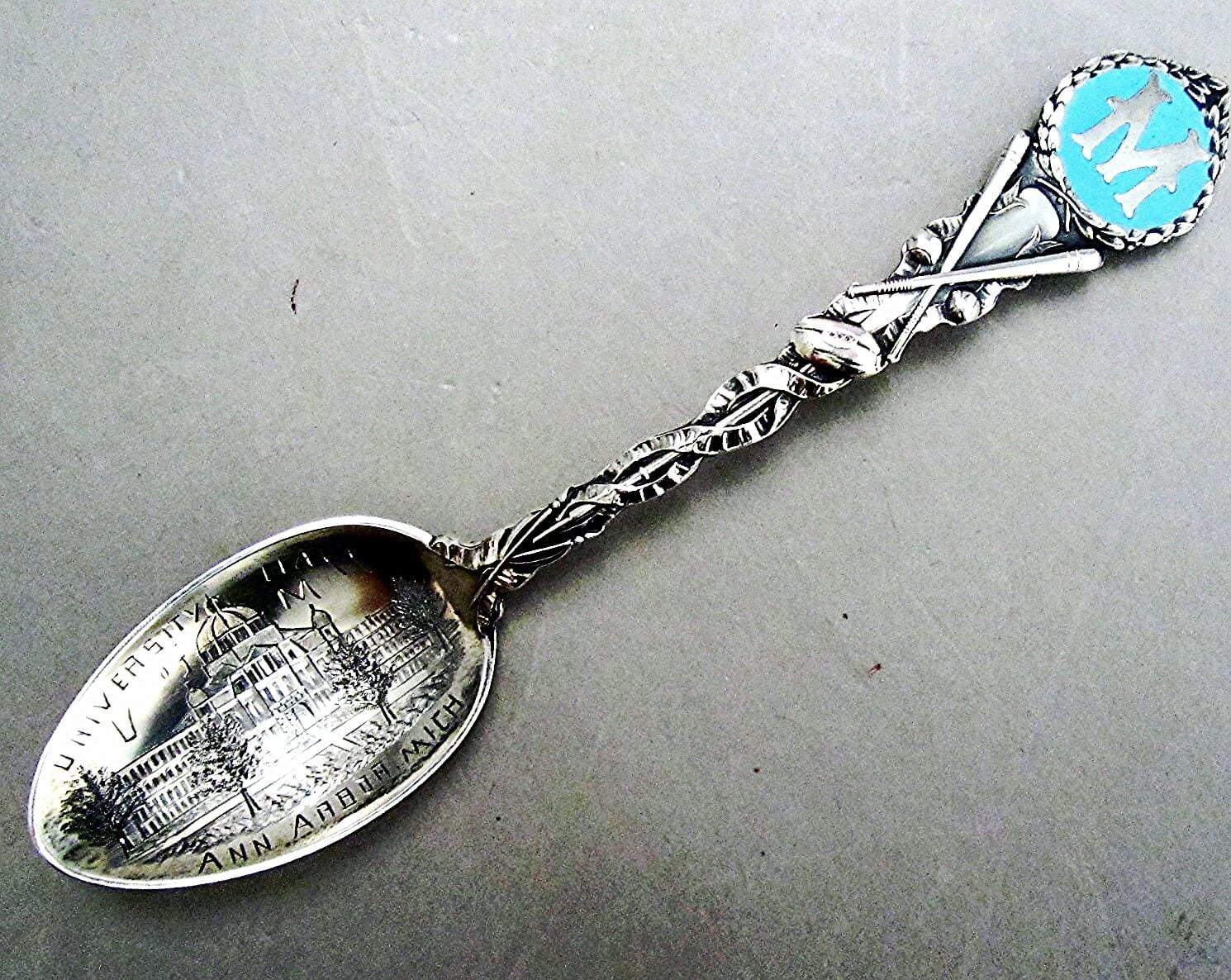
At the University of Pennsylvania, a spoon was once presented during Class Day exercises to a member of the senior class. The tradition reaches back to roughly the middle of the nineteenth century, long before the university had anything resembling a modern commencement schedule.
It began as a prank, and over the decades it hardened into a proud honor. Few graduates today could explain why a piece of cutlery once carried so much weight on campus.
The Daisy Chain Carried at Vassar

At Vassar College, sophomore women were chosen to carry a long chain of daisies through the ranks of the graduating class. The chain became one of the school’s best-known spectacles, and generations of students gathered flowers and wove them together for the occasion.
The ritual was serious enough that campus drama over who got to carry it appears in the college’s own chronology, including a flare-up in 1916. The image of a rope of wildflowers leading seniors out of college now reads like something from another century, because it is.
The Laurel Chain at Mount Holyoke
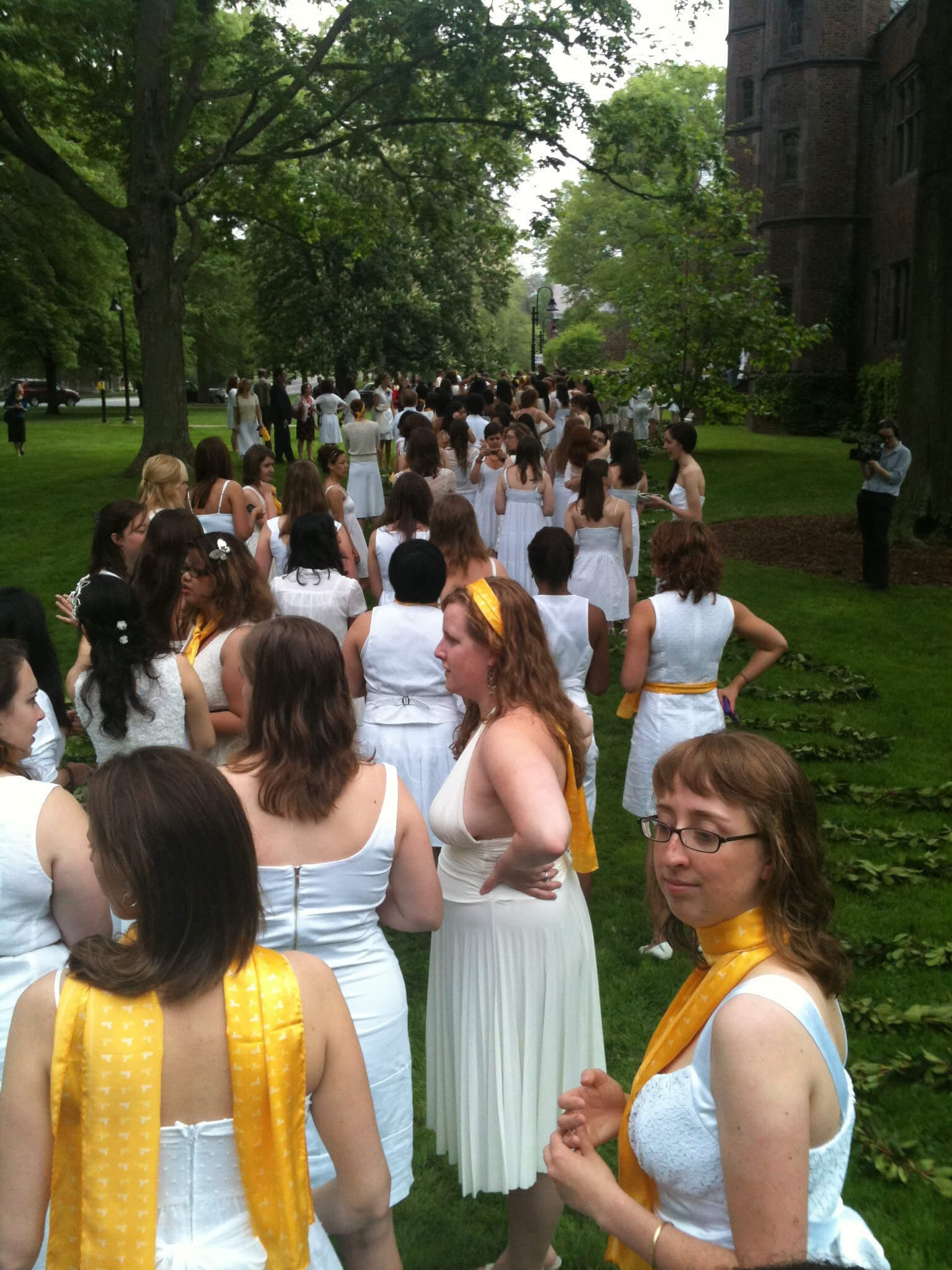
Mount Holyoke College built its own version of the floral procession around laurel. Students carry a chain of the evergreen leaves through the campus in the Laurel Parade, a custom that nods to the Roman practice of crowning poets with laurel wreaths.
The college has also tied the tradition to the honoring of suffragists, which gives the greenery an unexpectedly political edge. The word baccalaureate has a similar laurel connection, so the plant keeps turning up in graduation language.
The Hoop Race at Wellesley

Seniors at Wellesley College race wooden hoops across the lawn in a contest that has run for more than a century. The winner is traditionally tossed into Lake Waban, and campus legend has long held that she will be the first in her class to marry or to find some kind of success.
The college counts the contest by edition, and the numbering has passed 120 in recent years. A custom that sounds like a children’s game turns out to be one of the more durable pieces of women’s college folklore.
The Ivy Stones Set Into Penn’s Walls
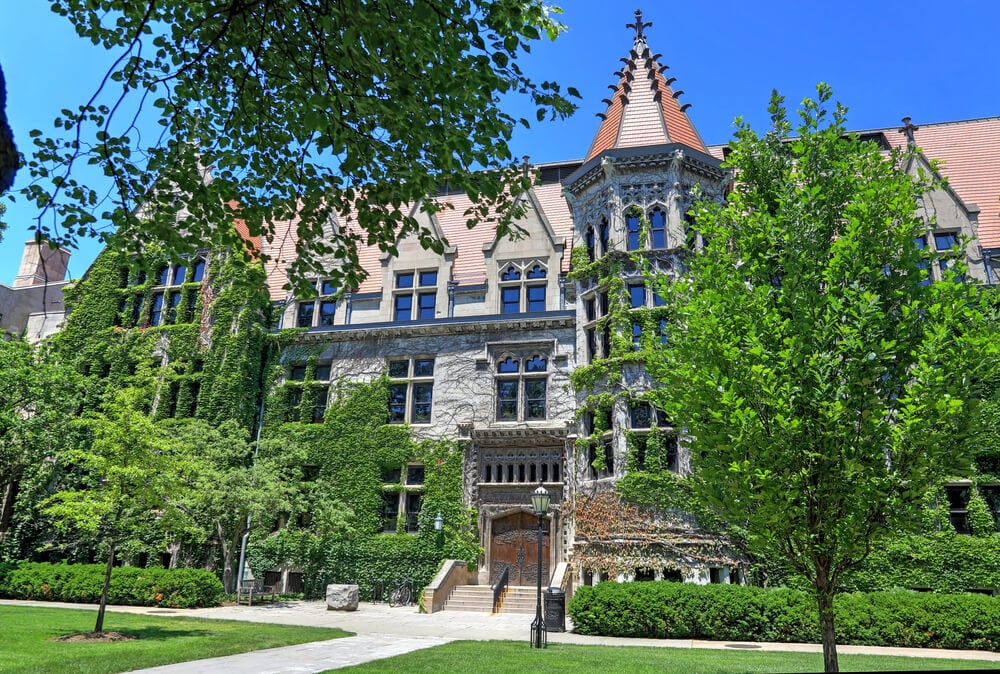
Penn graduating classes once marked Ivy Day by planting ivy and setting a carved stone into the wall of a campus building. The stones bear class years and designs, and the university still keeps track of them as a kind of architectural diary.
A walk across the older parts of campus turns into a scavenger hunt for former graduates’ names and dates. The ritual treated a building as a guest book that happened to be made of masonry.
The Ivy Days of the University of Nebraska
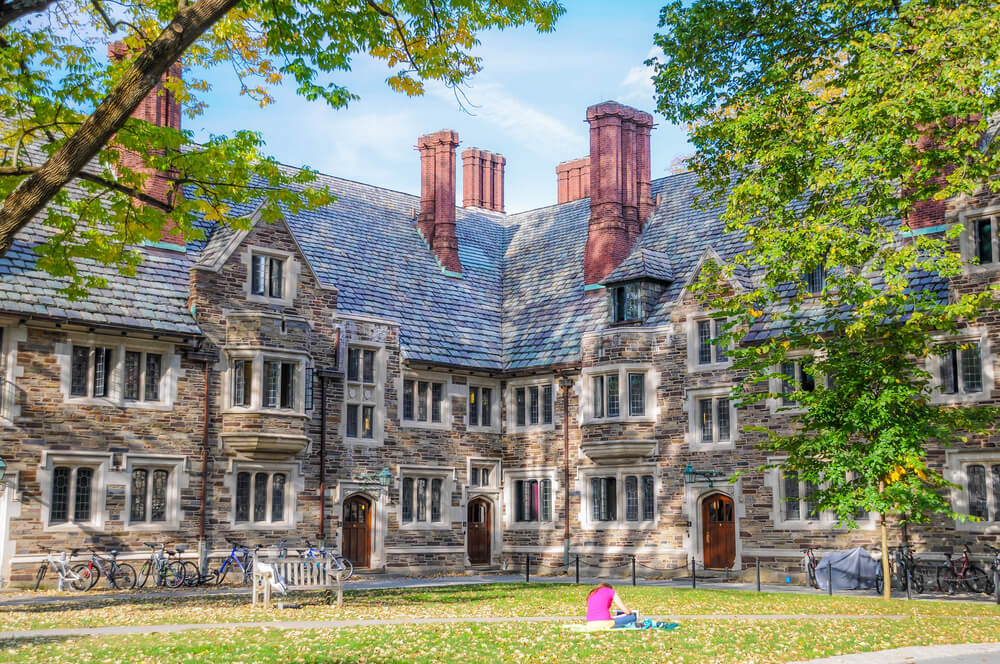
Nebraska held its own Ivy Day each spring, a campus festival that blended ivy planting with honors announcements and the crowning of a May Queen. The Daily Nebraskan gave it front-page space for decades, and the university library has since mounted an exhibit about it.
Today the festival survives mostly in archives and library exhibits, which is a quiet fate for something that once filled the campus. The mix of pageantry and honor-society tapping made it feel part commencement, part coronation.
The Confetti Battles at Harvard Stadium
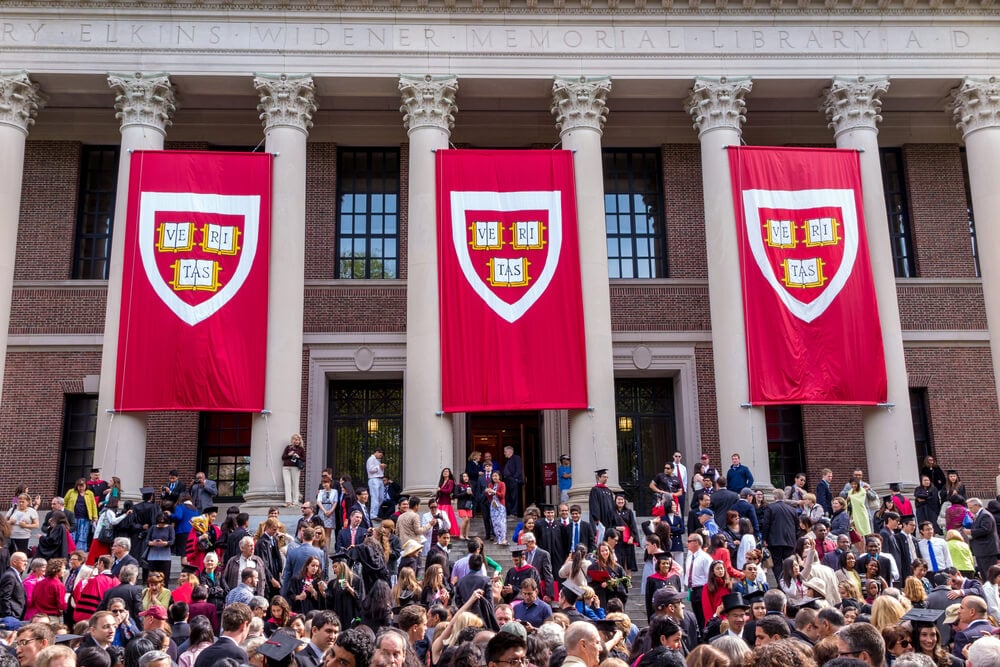
Harvard’s Class Day once ended in confetti fights inside Harvard Stadium. The Crimson reported on the scene in 1958 under a headline that treated the event as an accepted rite of the season.
A stadium built for a different kind of contest briefly became the most colorful graduation venue in Cambridge. Few commencement customs have ever been so openly messy.
The Class Rank Set by Family Prestige

In the colonial era, students at Harvard and Yale were not ranked by grades at all. Their names were ordered by the social standing of their families, and that order shaped where they sat and how they were listed in the printed records.
John Adams, who attended Harvard in the 1750s, appears in the record in a position determined by his family’s status rather than his exam results. Harvard dropped the practice in the early 1770s, which means the idea of merit-based placement is younger than the country itself.
The Latin Disputations of Harvard’s First Commencement
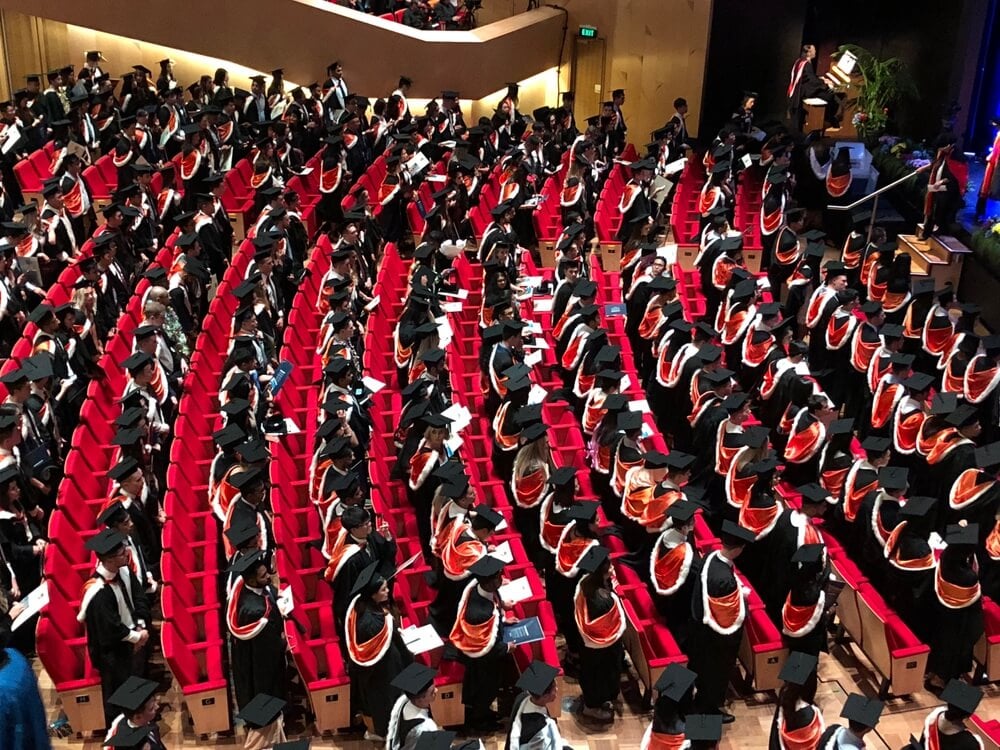
Harvard held its first commencement in 1642 and graduated nine men. The exercises were conducted largely in Latin, with graduates defending propositions in formal disputations before an audience that included the colony’s leading figures.
Commencement was a public occasion, closer to a town festival than a private family ceremony. The Latin survives in fragments, but the ordeal of arguing a thesis aloud in a dead language has disappeared.
The Women Whose Essays Were Read by Men

When women began earning degrees in the 1800s, a strange rule often followed them to the podium. At Oberlin College, female graduates were expected to write commencement essays that a man would read aloud for them.
Lucy Stone, who graduated in 1847, refused to write one on those terms. Her protest has become a footnote in the long history of women claiming a public voice, and the custom she rejected has not survived her.
The Second Button in Japan

In Japan, a graduating boy in a traditional school uniform has long offered his second button, the one nearest the heart, to someone he cares about. The gesture came with a clear subtext, and girls would sometimes line up for the privilege before the ceremony ended.
The custom shows up constantly in Japanese films and manga, though it has faded from many actual schoolyards. A small piece of metal became a love letter that did not need words.
The Baccalaureate Sermon

Graduating classes once sat through a baccalaureate sermon, usually delivered on the Sunday before commencement and often by the college president. The word is commonly traced to a Latin phrase for laurel berry, which links the service to the same wreath imagery found elsewhere in academic ceremony.
For many schools the sermon was the emotional center of the weekend, more than the diploma handoff itself. Most colleges now hold a quieter version, or none at all.
The Sheepskin Diploma

American slang has called a diploma a sheepskin for generations, and the nickname is more literal than it sounds. Early diplomas were written on parchment or vellum, which are prepared animal skins rather than paper.
The material was expensive enough to keep degrees rare and the ceremony solemn. Almost every graduate today receives a paper sheet that carries the same authority, though few remember the hide behind the nickname.
The Academic Hood That Was Actually a Hood
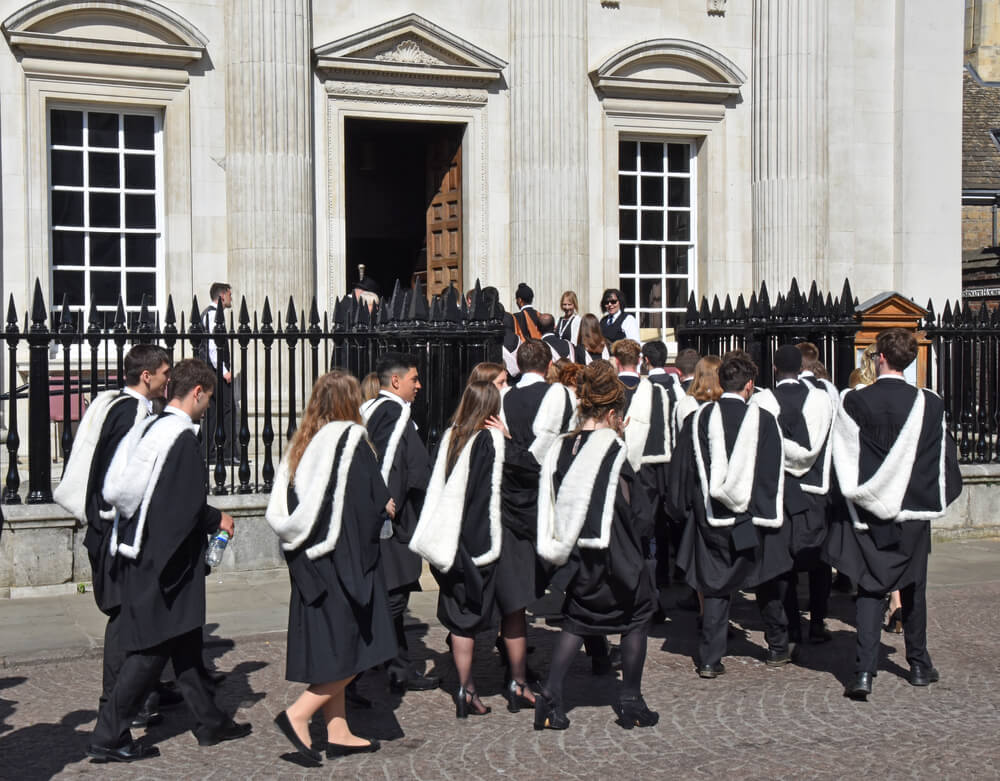
The colorful hood draped over a graduate’s shoulders began as a working piece of clothing. Medieval scholars wore hooded cloaks to stay warm in drafty halls, and the garment slowly shrank into a ceremonial strip of fabric.
Modern hoods still use color to signal the field of study, and the lining shows the colors of the institution that granted the degree. The decoration is the fossil of a practical object that once kept a student’s ears from freezing.
The Mortarboard Borrowed From a Mason’s Tool

The flat square cap grew out of the biretta, a stiff headpiece worn by clergy and scholars in the Middle Ages. Its modern name comes from the board that masons use to hold mortar, which the cap resembles.
The tassel moved from side to side in a ritual that many graduates now treat as the entire point of the hat. The tool-shaped headgear remains one of the few graduation items nobody has dared to redesign.
The Student Song Sung in Latin

Gaudeamus Igitur, a Latin song whose title means roughly “rejoice, then”, was once a fixture of European graduations. Johannes Brahms folded its melody into his Academic Festival Overture in 1880, written to thank the University of Breslau for an honorary degree.
The tune is more at home in a beer hall than a cathedral, which explains its lasting appeal to students. American ceremonies have mostly lost the lyrics, though the melody keeps appearing in the background.
The March That Was Never Meant for Graduation

The processional heard at nearly every American ceremony is Edward Elgar’s Pomp and Circumstance March No. 1. It was played at Yale in 1905 when Elgar received an honorary doctorate of music, and schools across the country soon borrowed it.
The composer wrote it for a very different occasion, and the music has no particular connection to caps and gowns. A piece of English concert music became the soundtrack of American adolescence by accident.
What the Gowns Remember

Most of these customs vanished for ordinary reasons. Some were too expensive, some too cruel, and some belonged to a world where women could not speak, social rank mattered more than grades, and a spoon could serve as public commentary.
A tradition lasts only as long as people want to keep performing it, and the ones that disappeared mostly stopped being fun. The ones that remain tell the same story from the other direction.
Hoods, hats, and processional music survived because they were practical, beautiful, or simply too awkward to replace. Graduation looks fixed, but every part of it was chosen by someone, and every part can be dropped by the next person who decides it no longer matters.
More from Go2Tutors!

- 27 Silver Dollars and Half Dollars Worth Keeping
- 28 Restaurant Menu Items Nobody Orders Anymore
- 17 Places Built in Seemingly Impossible Spots
- 27 Vintage Rings Worth More Than They Look
- 25 Restricted Sites Tourists Can’t Enter
Like Go2Tutors’s content? Follow us on MSN.