28 Textile Inventions Behind Modern Clothing
Every shirt in a closet is the end result of centuries of tinkering. Machines that spin, weave, knit and stitch turned cloth from a luxury into an everyday item. Chemists then added fibers that stretch, repel water and resist heat.
The inventions below changed what people wear and how it is made. Some are mechanical marvels from the Industrial Revolution, while others are laboratory breakthroughs from the twentieth century.
The Stocking Frame
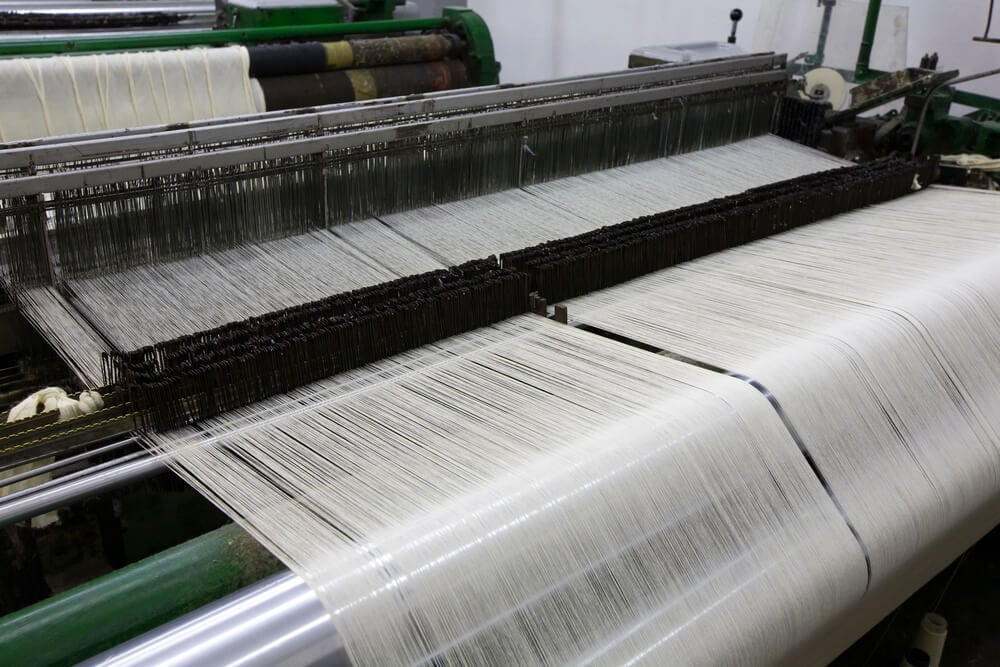
William Lee, an English clergyman, built a mechanical knitting frame in 1589 to speed up the making of stockings. It used rows of hooked needles to form loops far faster than hand knitting. Its basic principle shaped knitwear production for centuries.
The Flying Shuttle
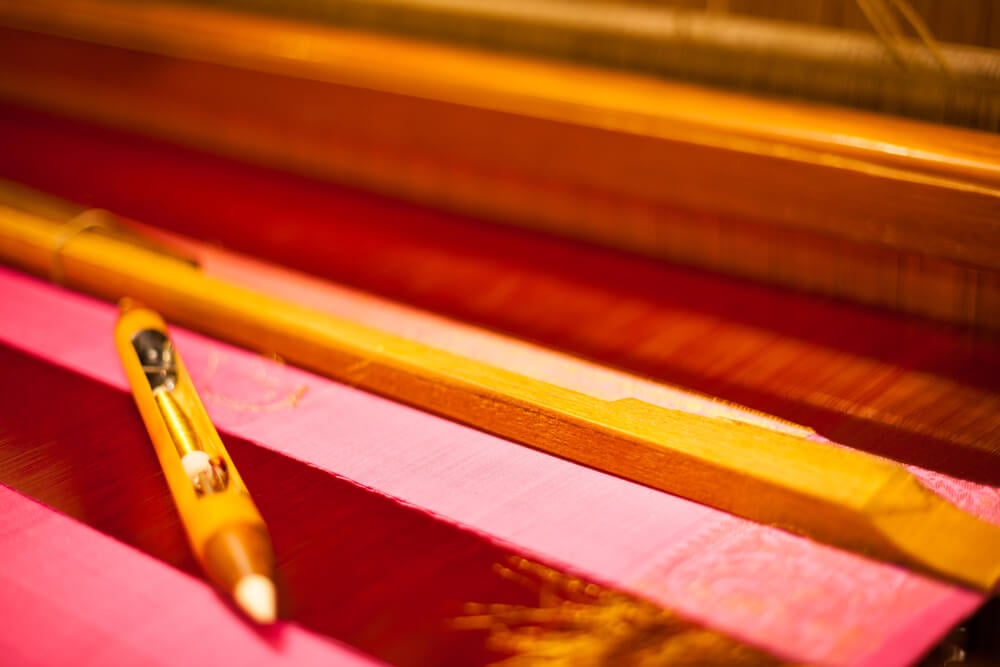
John Kay patented the flying shuttle in 1733, allowing a weaver to throw the shuttle across the loom with a single hand. The change roughly doubled the speed of weaving broad cloth. It also created demand for more thread, which pushed inventors to improve spinning.
The Carding Machine
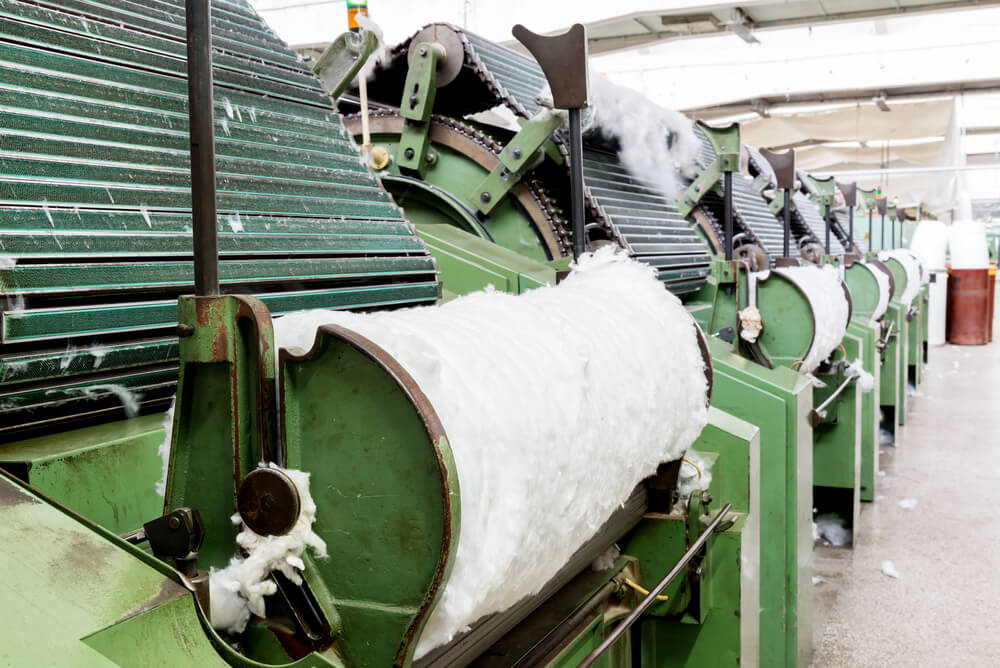
Carding straightens raw fibers before spinning, and for centuries it was done by hand with wire-toothed boards. Lewis Paul patented a mechanical carding method in 1748. Later machines made the process faster and more uniform, improving the yarn that went into every garment.
The Spinning Jenny
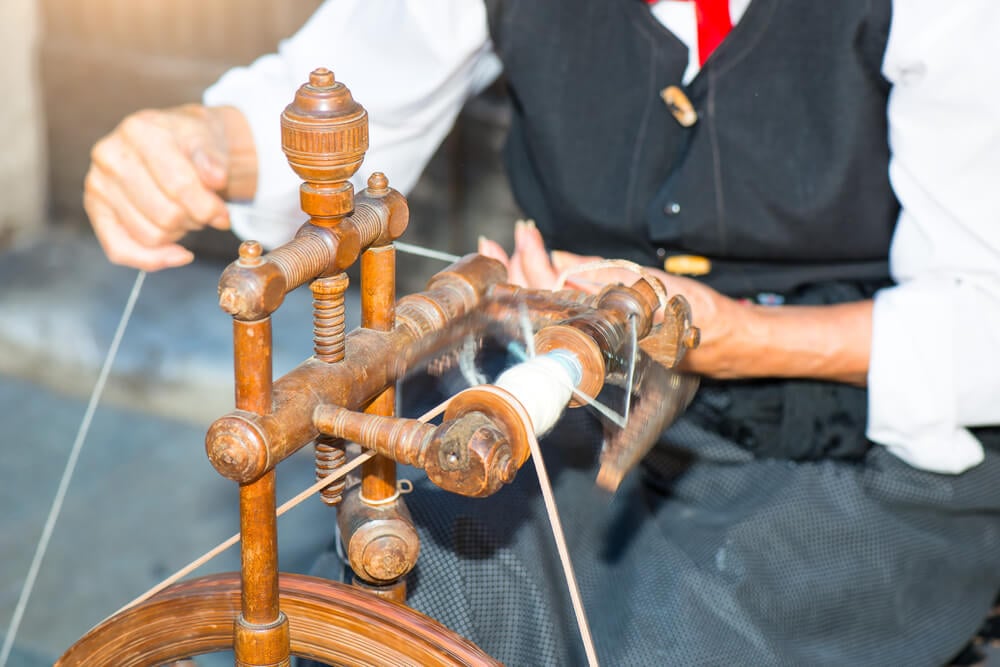
James Hargreaves developed the spinning jenny in the 1760s, and it let one worker spin several threads at once. Cottage spinners could suddenly produce far more yarn from the same effort. The machine also stirred resentment among workers who feared losing income.
The Water Frame
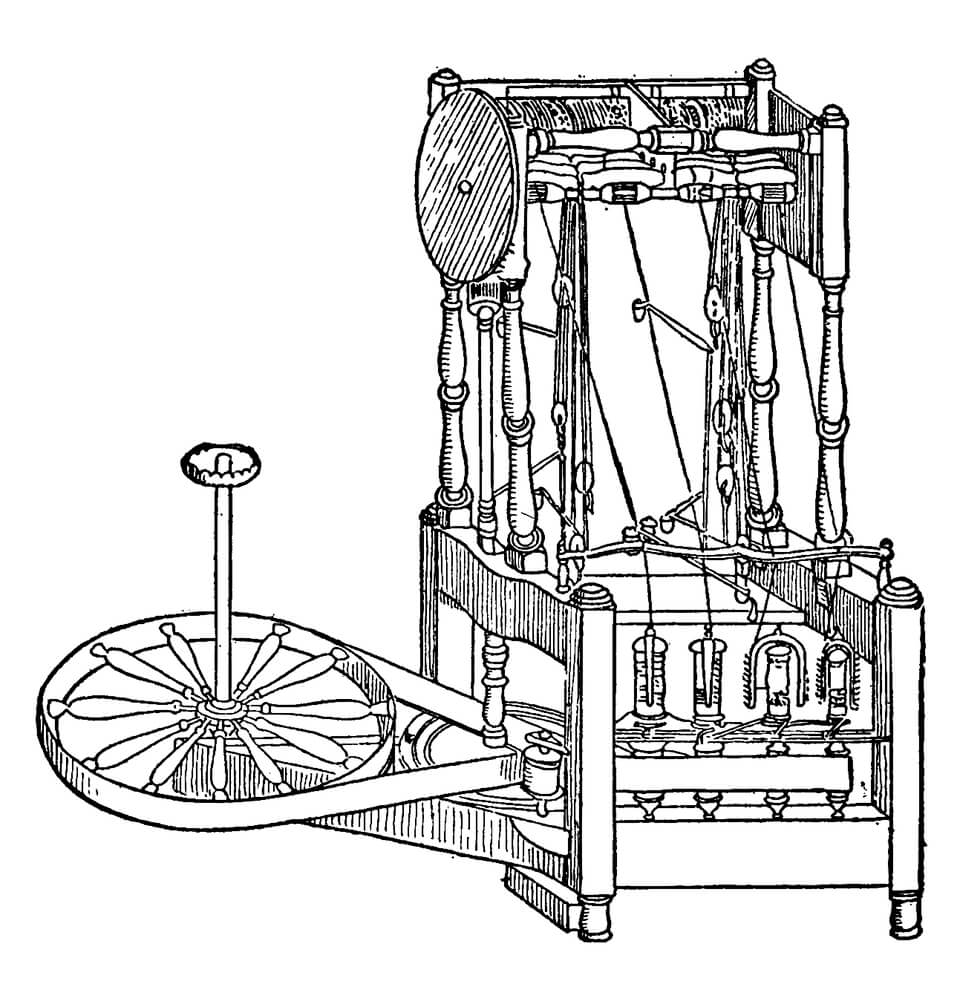
Richard Arkwright patented the water frame in 1769, using water power to spin strong cotton thread. Strong warp thread made it possible to produce all-cotton cloth in Britain. The machine helped drive the move of textile production from homes into mills.
The Spinning Mule
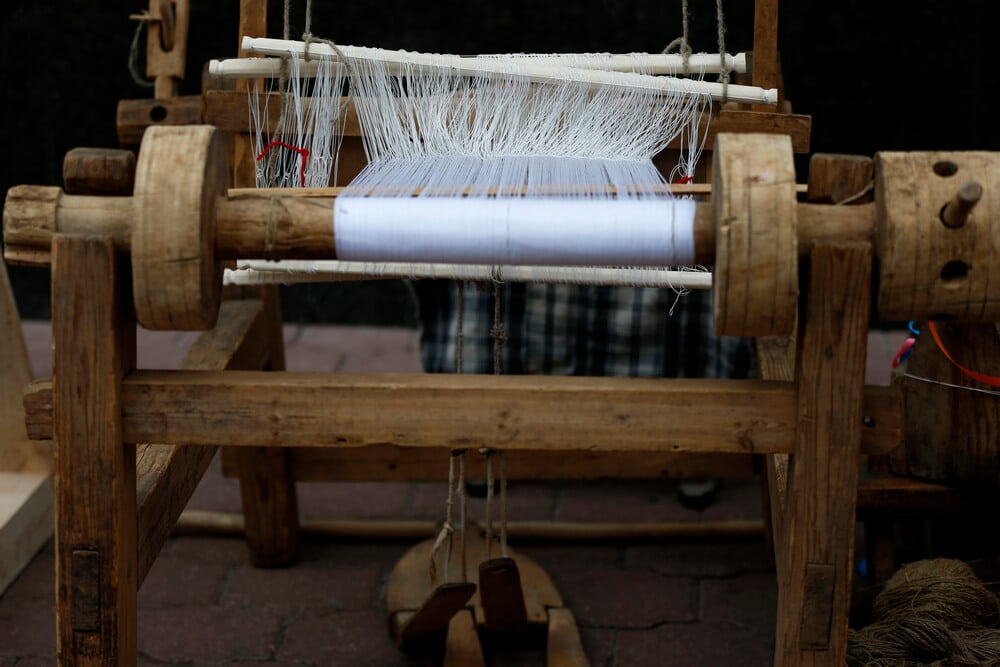
Samuel Crompton combined features of the jenny and the water frame in his spinning mule of 1779. It produced fine, strong yarn suitable for delicate fabrics such as muslin. Mules became the dominant spinning machines for much of the nineteenth century.
The Power Loom
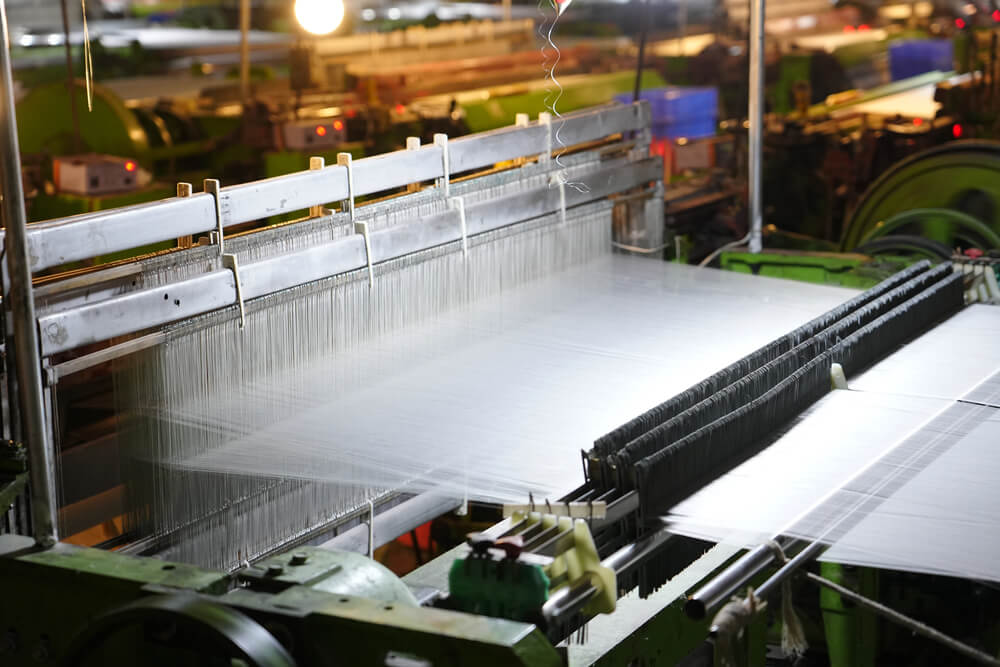
Edmund Cartwright patented a power loom in 1785, mechanizing the work of weaving. Early versions were unreliable, but improvements made it a mainstay of factories. Cloth that once took days to weave could be produced in a fraction of the time.
Roller Printing
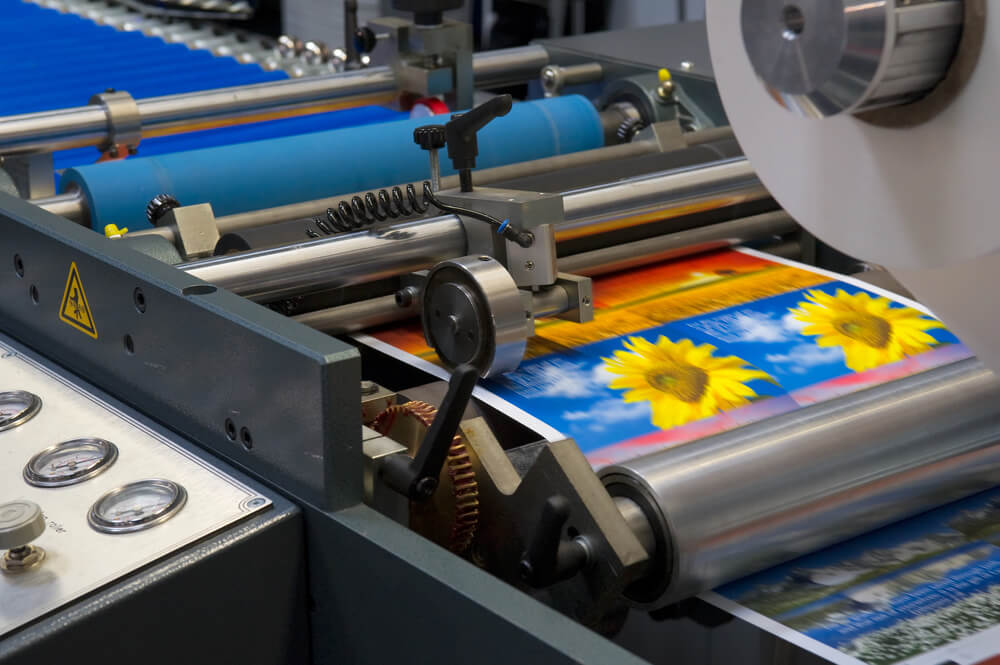
In 1783, Thomas Bell patented a method of printing patterns onto cloth using engraved copper rollers. The technique allowed for continuous, repeatable designs at a much greater pace than hand block printing. It lowered the price of patterned fabric and brought colorful prints within reach of ordinary buyers.
The Cotton Gin
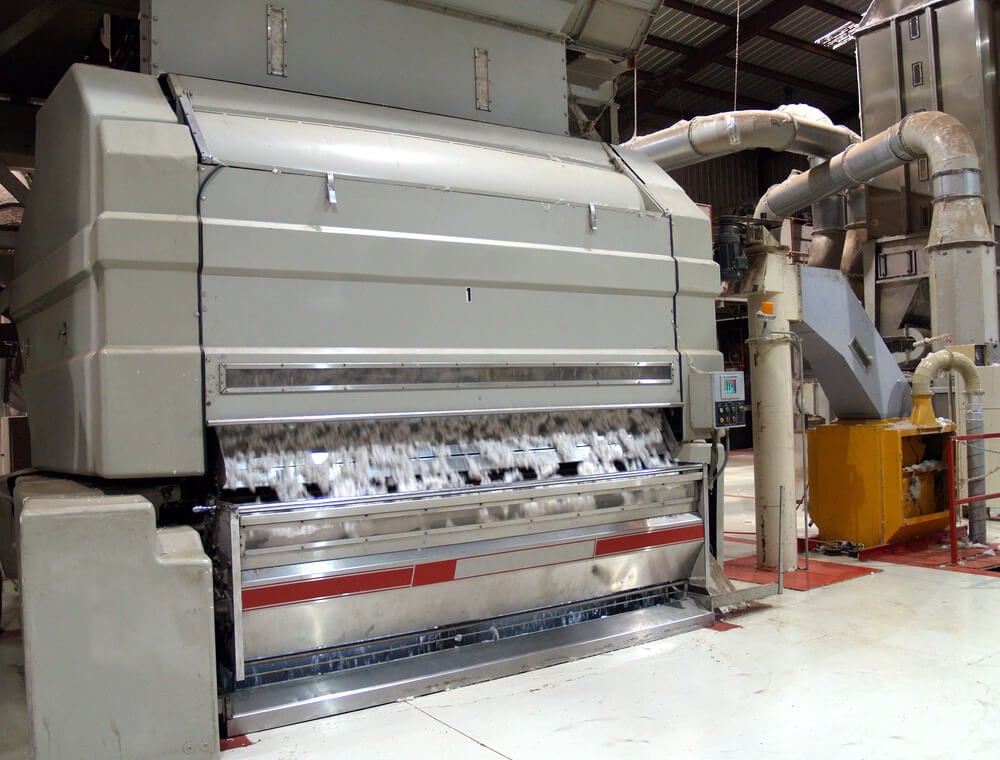
Eli Whitney patented his cotton gin in 1794, a device that separated seeds from short-staple cotton fiber. The machine dramatically sped up the cleaning of cotton. It also deepened the demand for enslaved labor in the American South, a grim consequence of the invention.
The Jacquard Loom
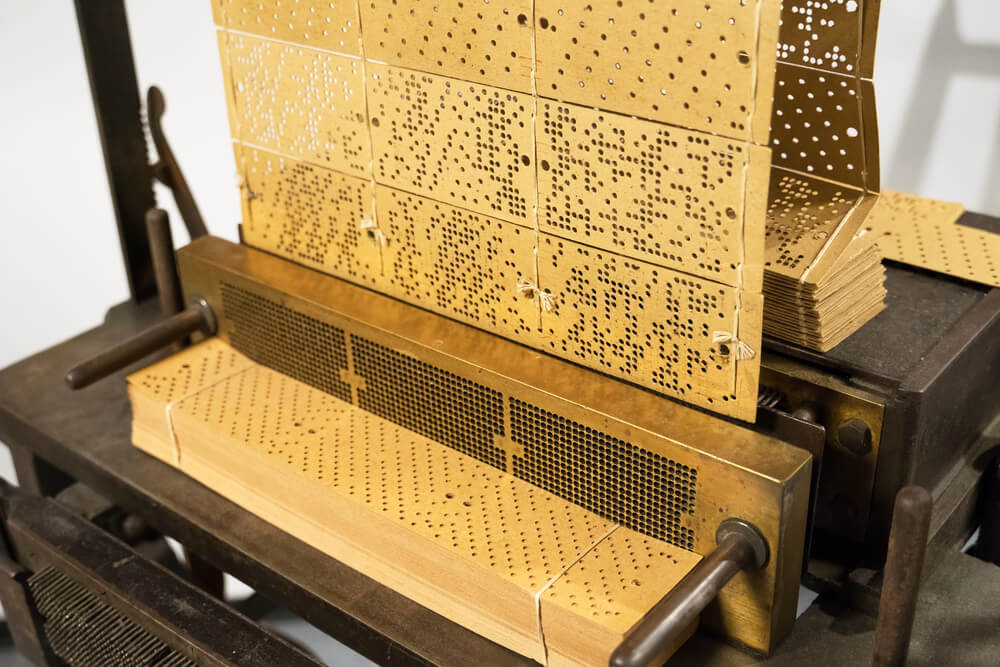
Joseph Marie Jacquard demonstrated his loom in 1804, controlling woven patterns with punched cards. The cards let one machine weave intricate designs automatically. The principle later inspired early computing, a link that historians still highlight.
Vulcanized Rubber

Charles Goodyear’s vulcanization process of 1839 made rubber stable across temperature changes. It allowed manufacturers to build elastic bands and stretchy components into clothing. Early elastic items such as suspenders and garters depended on this process.
Mercerization
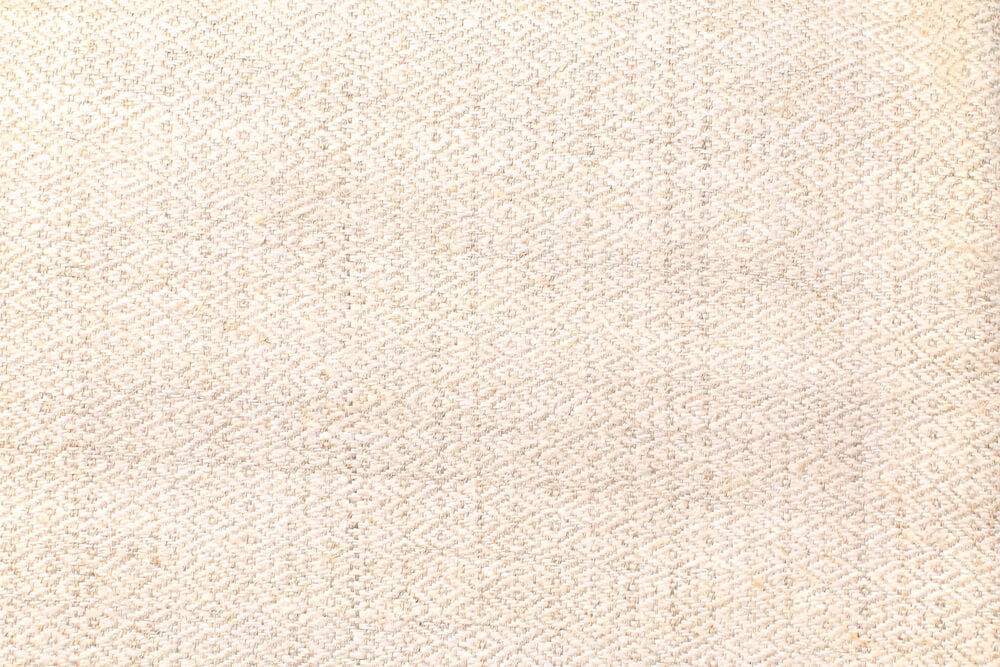
John Mercer patented a process in 1844 that treats cotton with caustic soda, strengthening the fiber and improving its ability to take dye. Later refinements added a silky luster. Mercerized cotton is still used in dress shirts and fine sewing thread.
The Lockstitch Sewing Machine
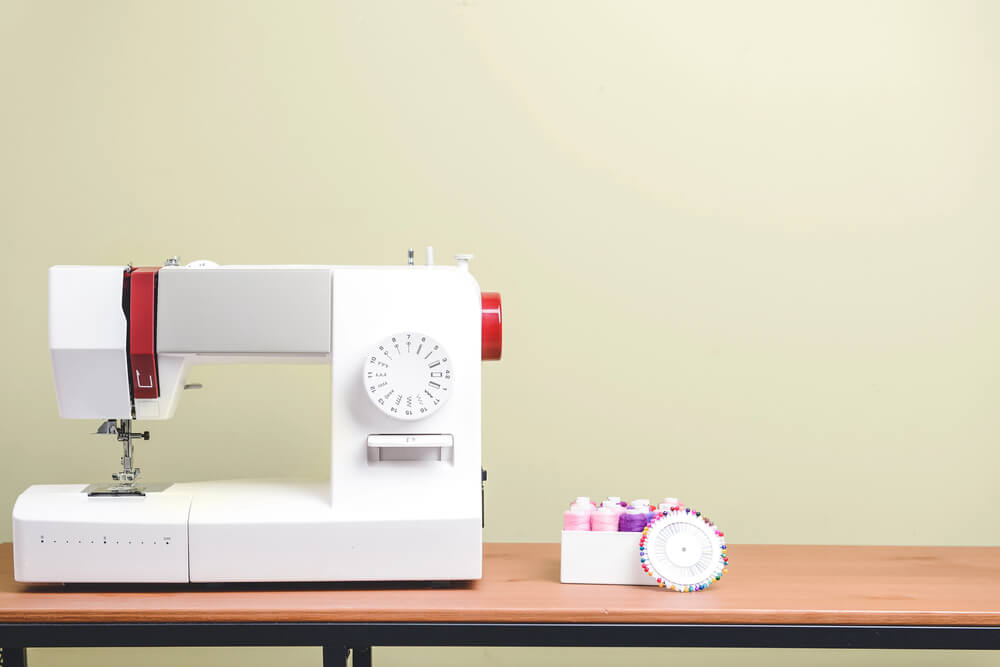
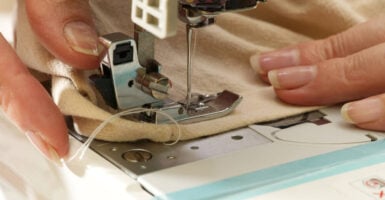
Elias Howe patented a lockstitch sewing machine in 1846, using a needle with the eye near the point and a second thread under the cloth. The stitch was strong enough for garments and fast enough to transform tailoring. It replaced much of the hand sewing that had defined clothing for centuries.
The Singer Home Machine
— Photo by quitesimplystock
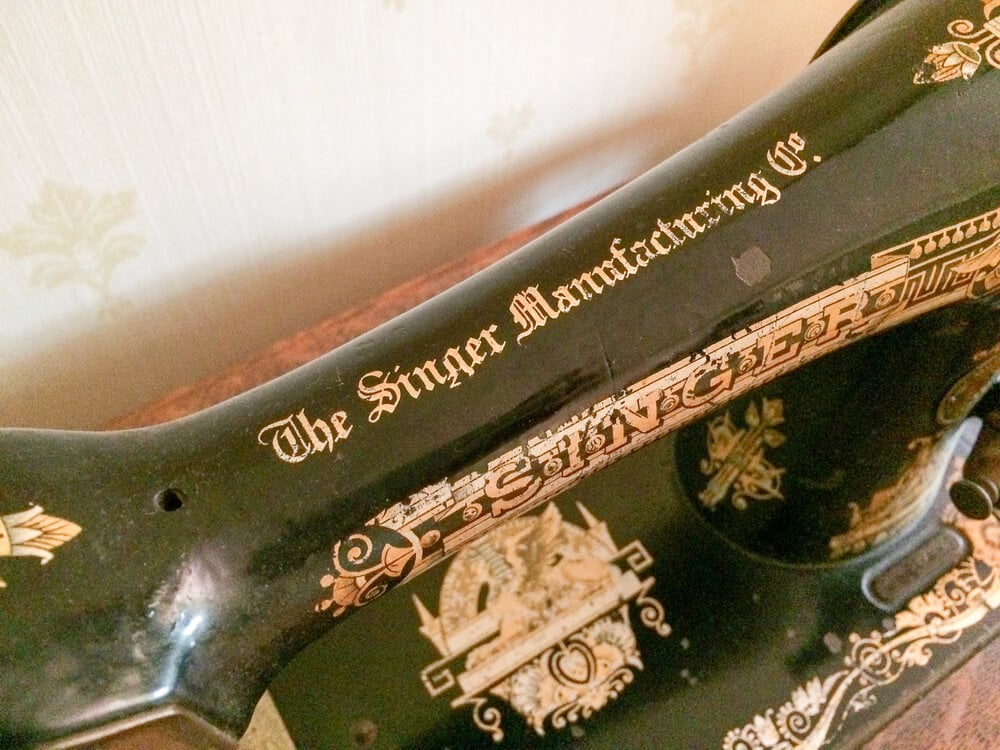
Isaac Singer patented improvements in 1851 and went on to build a business around practical machines sold to households. Installment payment plans helped put them in many homes. The machine turned home sewing into a quicker, more accessible task for families.
Riveted Blue Jeans
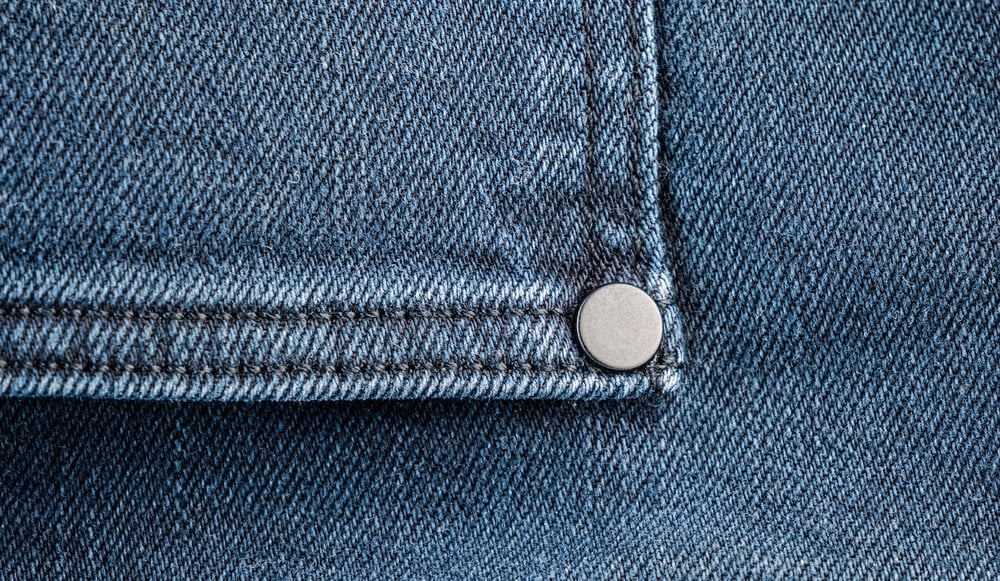
In 1873, tailor Jacob Davis and merchant Levi Strauss received a patent for using metal rivets to reinforce pockets on work pants. The idea made trousers tougher for miners and laborers. The design remains recognizable in jeans worn around the world.
Synthetic Dyes
William Henry Perkin discovered the first synthetic dye in 1856 while trying to make a different compound from coal tar. His accidental purple color launched a chemical industry. Bright, affordable colors spread through textiles as a result.
The Zipper
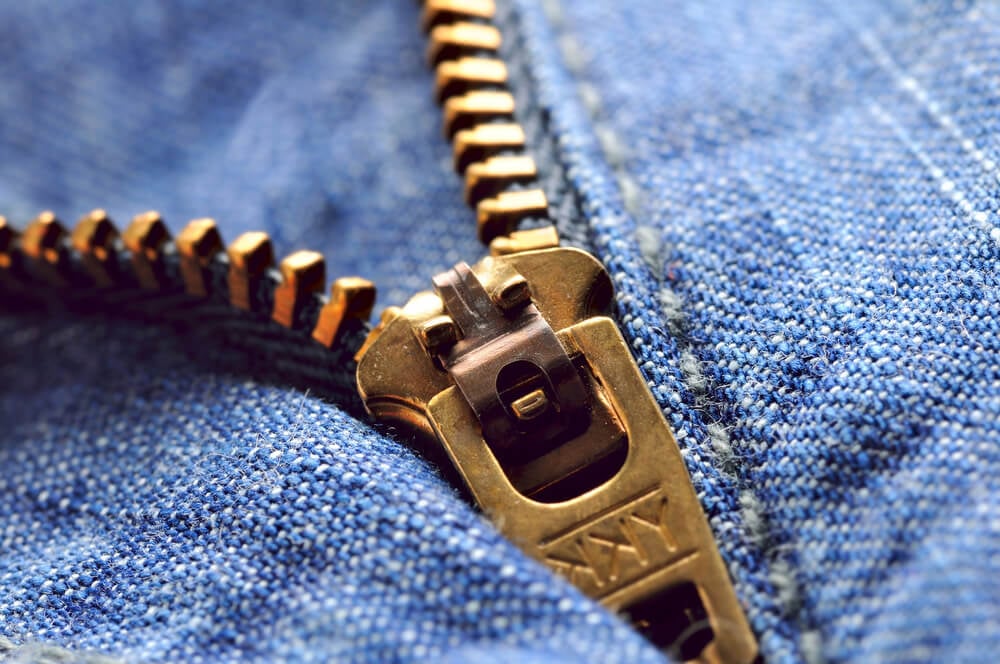
Whitcomb Judson patented a clasp locker in 1893, and Gideon Sundback refined the design into a dependable hookless fastener around 1913. Armed forces and clothing makers adopted it widely in the following years. Today the zipper closes everything from trousers to luggage.
Rayon

Rayon, made from regenerated cellulose, was developed commercially after the viscose process was patented in 1892. It offered a silky look at a lower cost than silk. Often called artificial silk in its early years, it became an important fiber for dresses and linings.
Acetate
Acetate fibers emerged in the early twentieth century as another cellulose-based alternative to silk. The fabric drapes well and has a smooth sheen, which suited linings and formal wear. It remains common in satin-look garments.
Nylon

Chemist Wallace Carothers led the DuPont research that produced nylon in 1935. Nylon stockings went on sale nationally in 1940 and sold out quickly. The fiber soon shifted to wartime uses such as parachutes and ropes.
Polyester
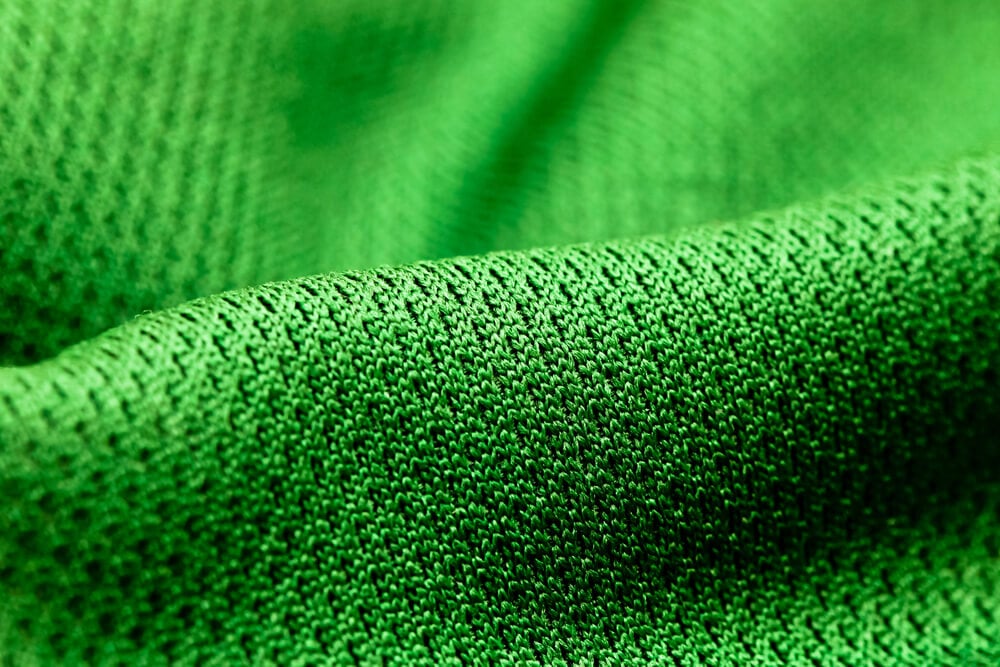
British chemists John Rex Whinfield and a colleague created polyester fiber in 1941. It resists wrinkles and dries quickly, which suited easy-care clothing. Polyester later became the most widely used fiber in the world.
Acrylic Fibers
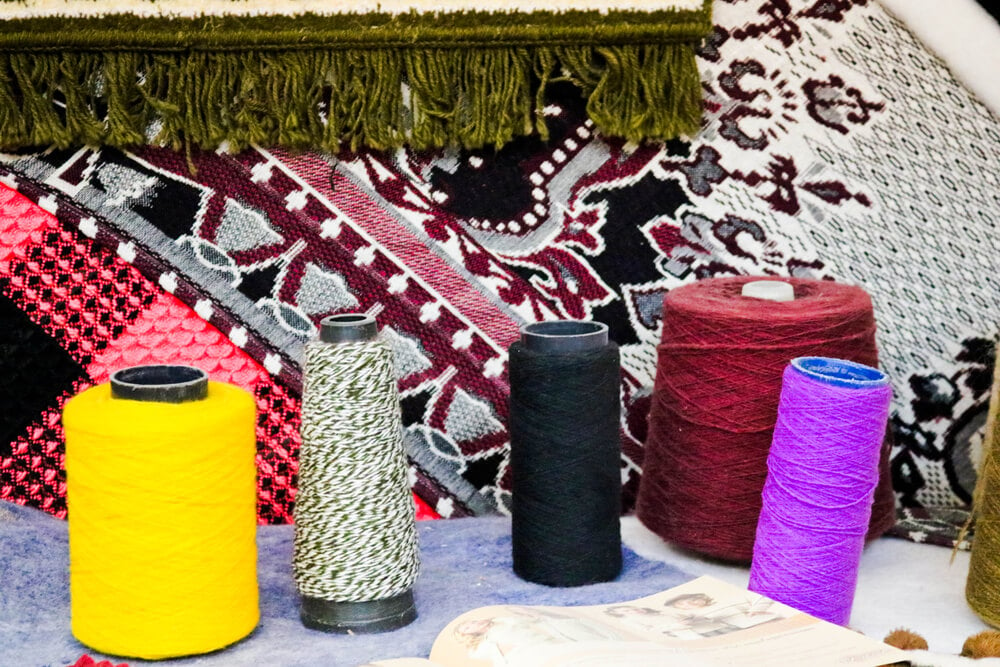
Acrylic fibers, developed at DuPont in the 1940s, were marketed as a warm and lightweight substitute for wool. The material is soft, holds color well and resists moths. Sweaters and blankets still rely on it.
Velcro
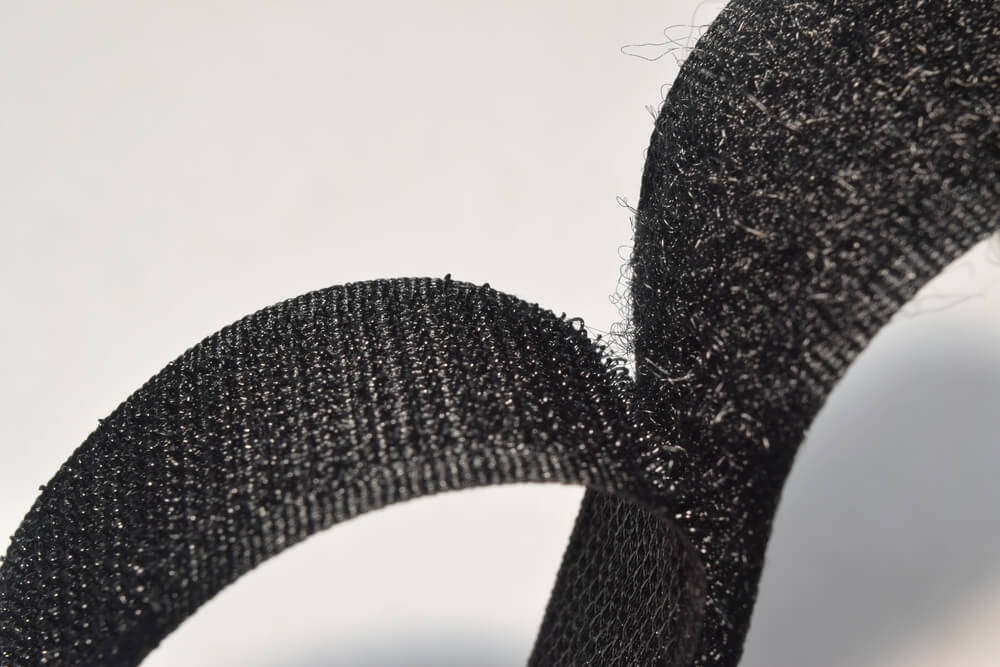
Swiss engineer George de Mestral noticed burrs clinging to his dog’s fur after a walk in 1941 and developed a hook-and-loop fastener from the idea. He patented it in 1955. It now closes shoes, jackets and medical braces.
Spandex
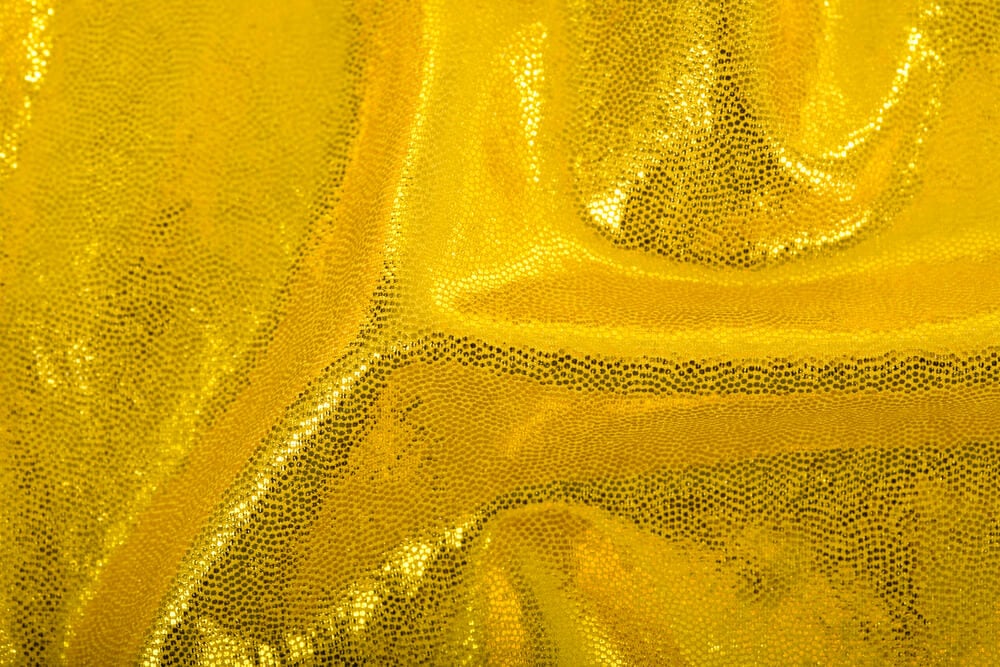
Joseph Shivers of DuPont developed spandex in 1958, creating a fiber that stretches many times its length and snaps back. Sold under the Lycra name in the 1960s, it transformed swimwear, hosiery and sportswear. A small percentage blended into fabric is enough to add comfort and shape retention.
Kevlar

Stephanie Kwolek, a chemist at DuPont, discovered the polymer behind Kevlar in 1965. The fiber is far stronger than steel by weight. It is used in protective clothing, including bulletproof vests and cut-resistant gloves.
Gore-Tex
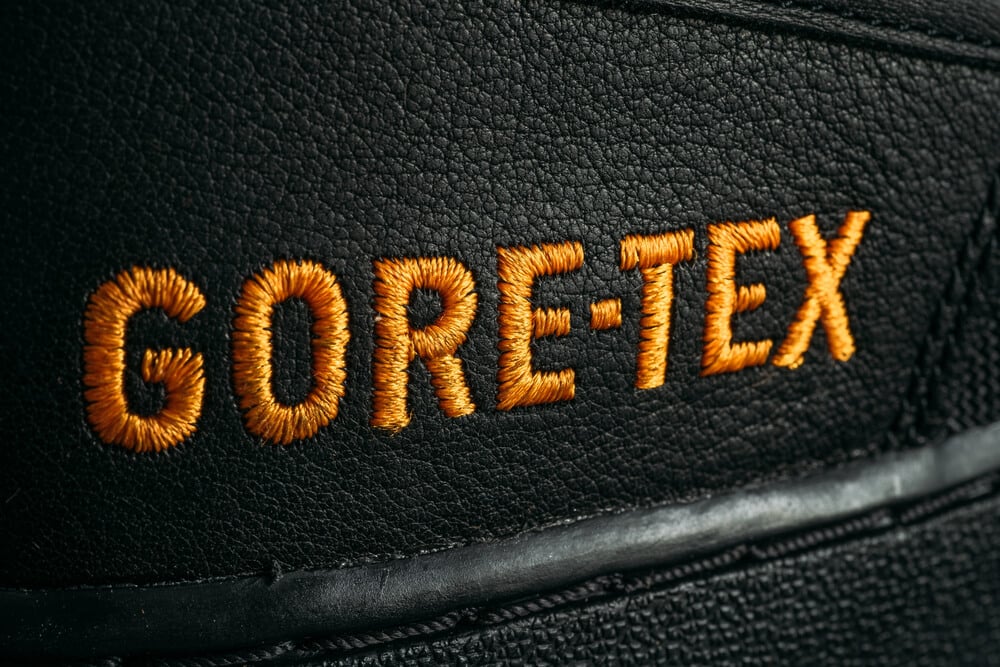
— Photo by DedMityay
Bob Gore stretched a Teflon polymer into a porous material in 1969, producing a membrane with tiny pores. The membrane blocks liquid water while letting vapor escape. It turned rain jackets and hiking boots into breathable gear.
Polar Fleece
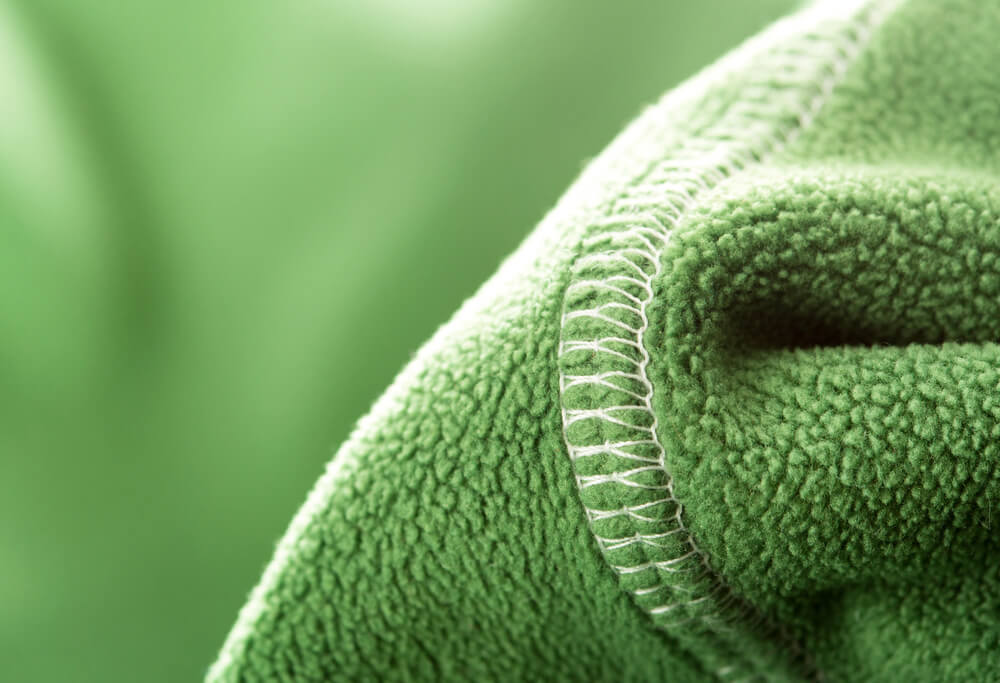
Malden Mills in Massachusetts developed polar fleece in 1979 with input from the outdoor company Patagonia. The warm, lightweight pile fabric is made from polyester. It became a staple of outdoor clothing and then of everyday wear.
Lyocell

Lyocell, sold under the Tencel name from the 1990s, is made from wood pulp dissolved in a solvent that is largely recycled. The fabric is smooth, absorbent and relatively soft. It has become a popular alternative to cotton and rayon.
Threads That Run Through Daily Life

Looking across these inventions, a pattern appears. Each one solved a practical problem, whether speed, cost, strength or comfort. Together they made clothing cheaper, more varied and easier to care for.
The history also contains harsh lessons about labor and consequences. Machines that raised output also reshaped work, and some changed economies in painful ways. Understanding where a garment comes from adds depth to something worn every day.
More from Go2Tutors!

- 27 Silver Dollars and Half Dollars Worth Keeping
- 28 Restaurant Menu Items Nobody Orders Anymore
- 17 Places Built in Seemingly Impossible Spots
- 27 Vintage Rings Worth More Than They Look
- 25 Restricted Sites Tourists Can’t Enter
Like Go2Tutors’s content? Follow us on MSN.