27 American Courthouses With Unusual Design Details
Most people picture a courthouse as a stern box with columns, a flag, and a metal detector. The buildings below ignore that picture, and a surprising number of them do it with a legend, a clock, or a tree growing out of the roof.
Some belong to grand federal towers and others to small county seats that spent big on their one great building. The details range from carved faces and tiled domes to a cupola that decided a state border.
The Carved Faces of Waxahachie
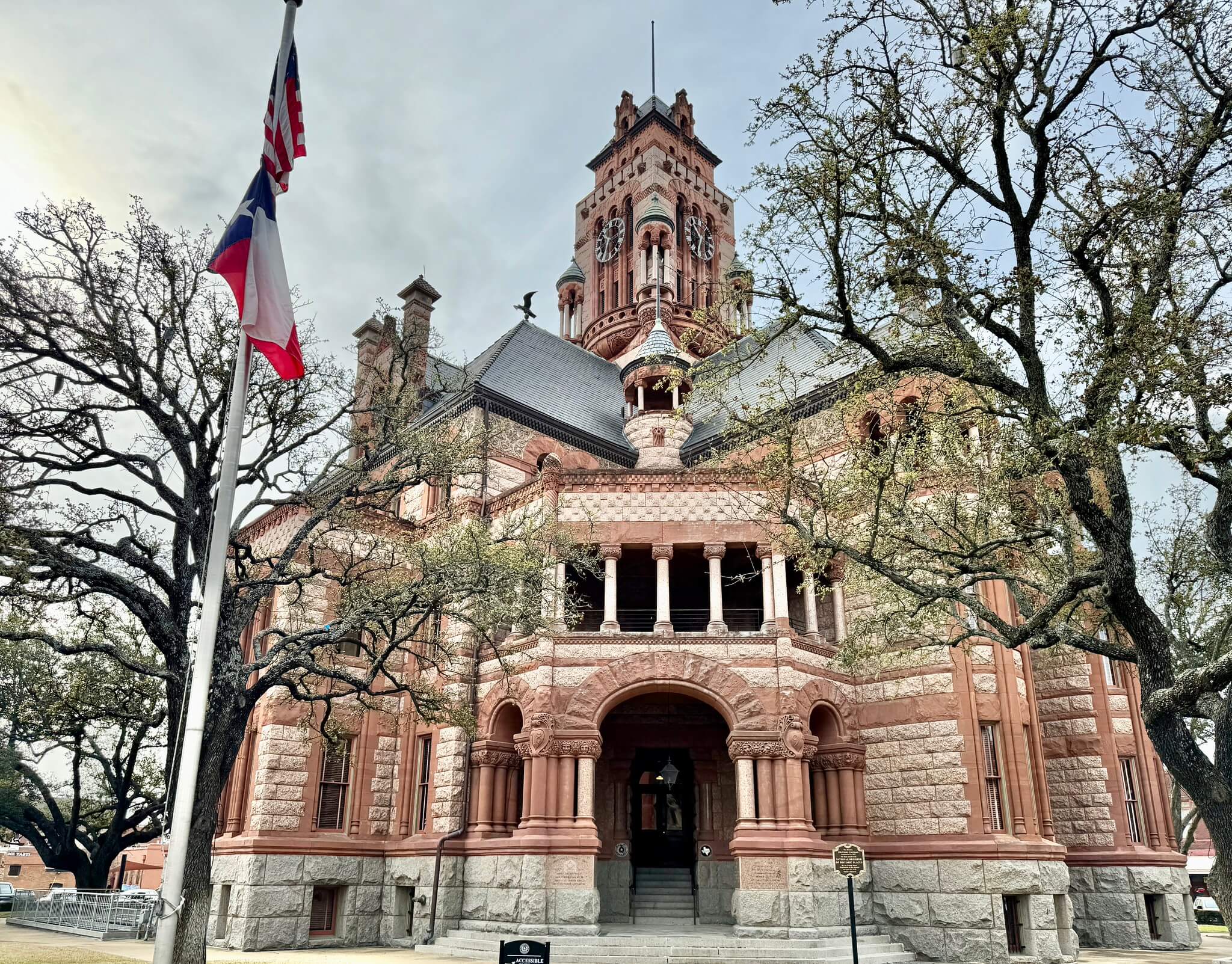
The Ellis County Courthouse in Waxahachie, Texas, was designed by J. Riely Gordon and finished in 1897 in a Romanesque style of red granite and sandstone. Its famous feature is the carved stonework, much of it the work of stonemason Harry Herley.
Faces of people and grotesque creatures peer out from the capitals of the columns. Local legend says Herley carved a woman he loved who did not return his feelings, a story that has outlived any record of whether it is true.
A Tiled Dome Over the Sonoran Desert
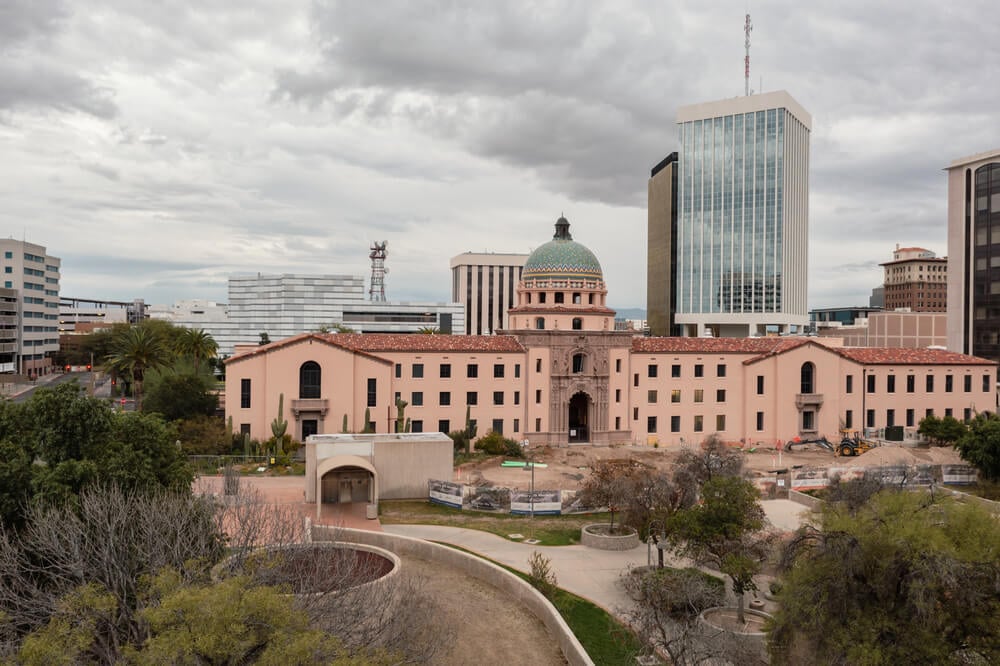
The Pima County Courthouse in Tucson, Arizona, was designed by architect Roy Place and completed in 1929. Spanish Colonial and Moorish ideas meet under a dome covered in colorful tile that rises above the low desert skyline.
The building also has a place in outlaw history, because John Dillinger was brought to Tucson after his arrest there in 1934. Few crooks have been processed beneath such a cheerful roof.
A Granite Fortress With Its Own Bridge of Sighs
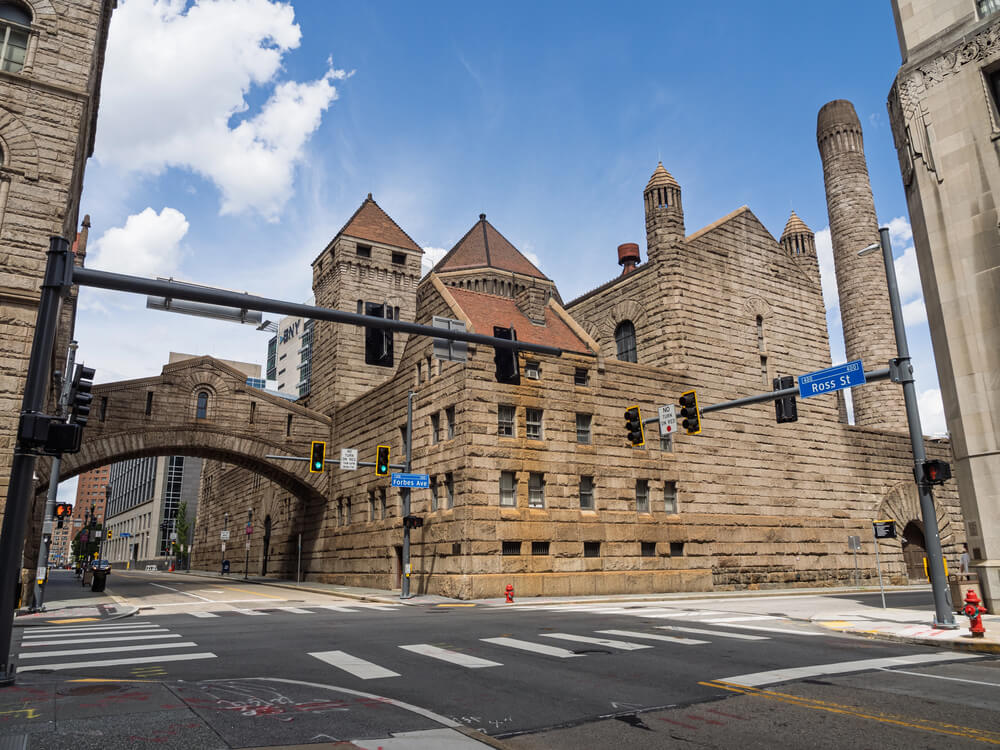
Henry Hobson Richardson designed the Allegheny County Courthouse in Pittsburgh, Pennsylvania, and he died in 1886, two years before it was finished. The massive granite building wraps around a courtyard and connects to the county jail by a covered stone bridge that borrows its name from the Bridge of Sighs in Venice.
Defendants could cross that span from a cell to a courtroom without ever touching the street. Richardson’s heavy Romanesque style proved so influential that architects across the country copied it.
A Federal Courthouse Shaped Like a Sail
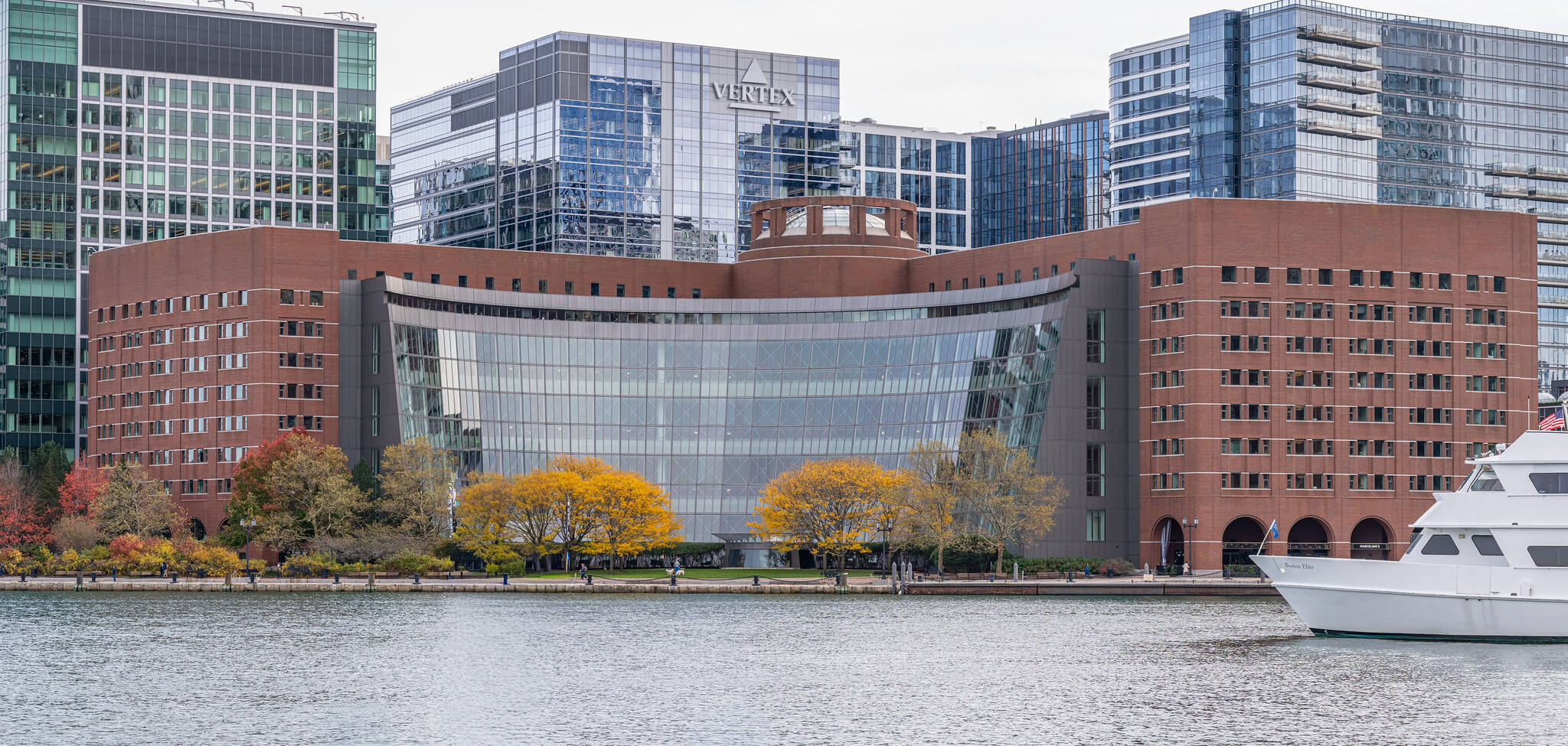
The John Joseph Moakley United States Courthouse in Boston, Massachusetts, opened in 1999 and was designed by Henry Cobb of Pei Cobb Freed and Partners. Its harbor side is a sweeping curved wall of glass, engineered as a conoidal facade that bends along the water’s edge on Fan Pier.
The shape gives a federal building the look of a billowing sail rather than a fortress. It carries the name of Congressman John Joseph Moakley of South Boston.
The Pyramid on Top of Foley Square
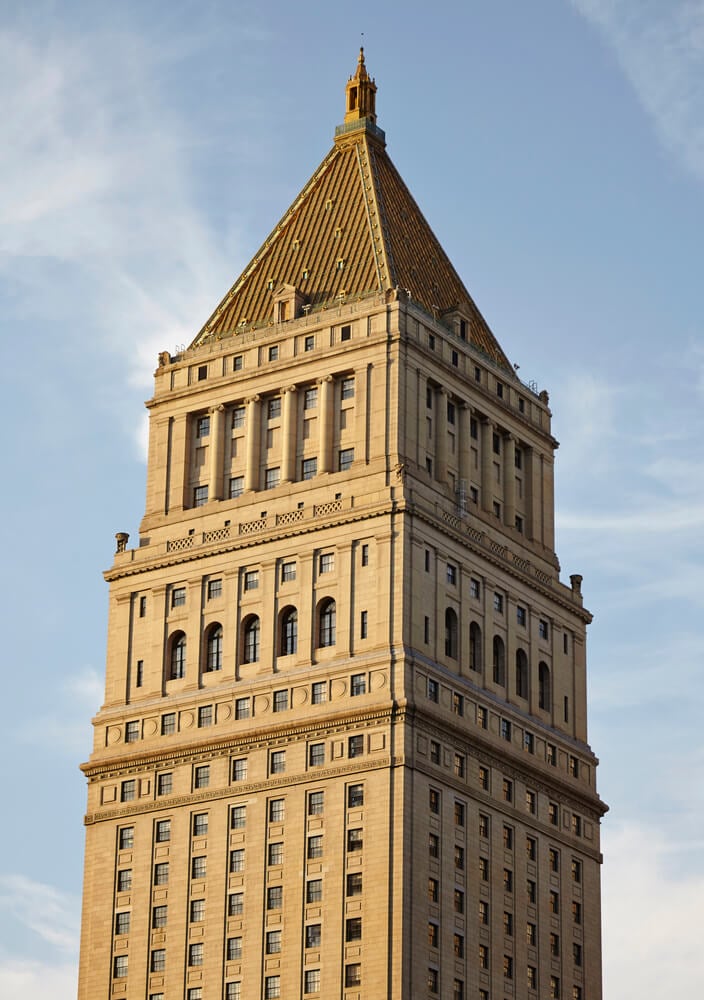
The Thurgood Marshall United States Courthouse on Foley Square in Manhattan was designed by Cass Gilbert and completed in 1936. A classical base of columns supports a tall tower that ends in a pyramid, an unusual crown for a hall of justice.
Gilbert had already designed the Woolworth Building, and he brought a skyscraper’s ambition to the courthouse. The building was later named for Thurgood Marshall, who served on the federal court of appeals that sits here.
Lady Justice With Her Eyes Open
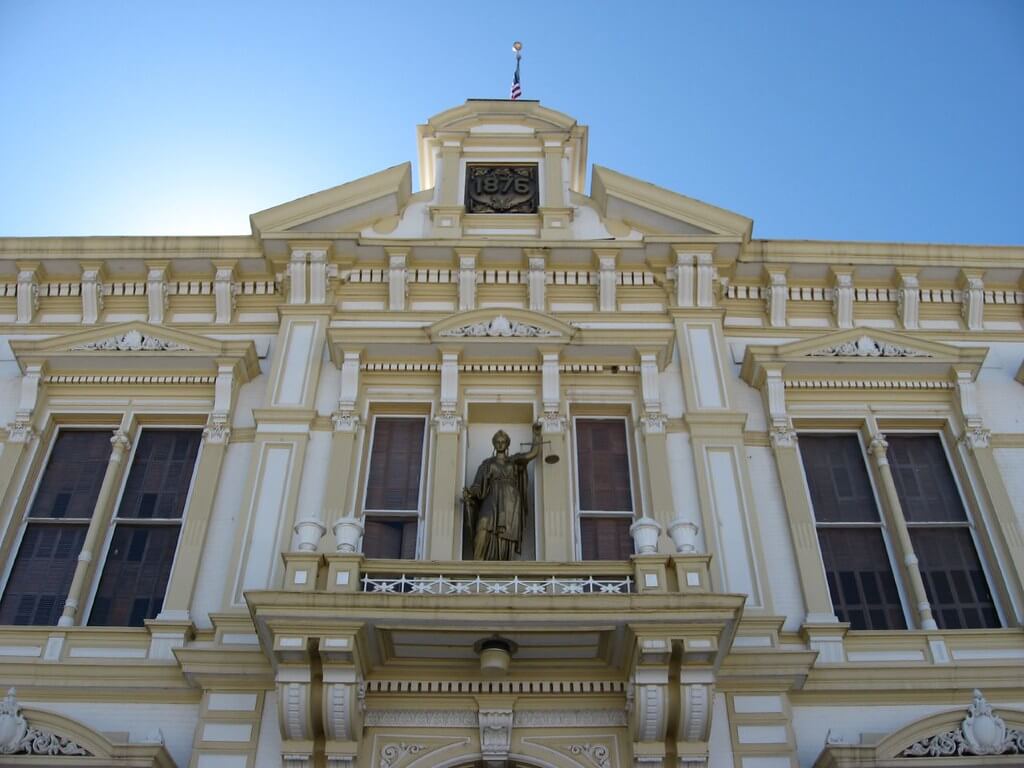
The Storey County Courthouse in Virginia City, Nevada, dates to 1877, when the Comstock Lode silver boom made the town wealthy. The mining town’s courthouse was built to show off its newfound wealth, and its civic ambition is visible from the street.
It has watched over Virginia City for well over a century.
The Courtroom That Hollywood Copied
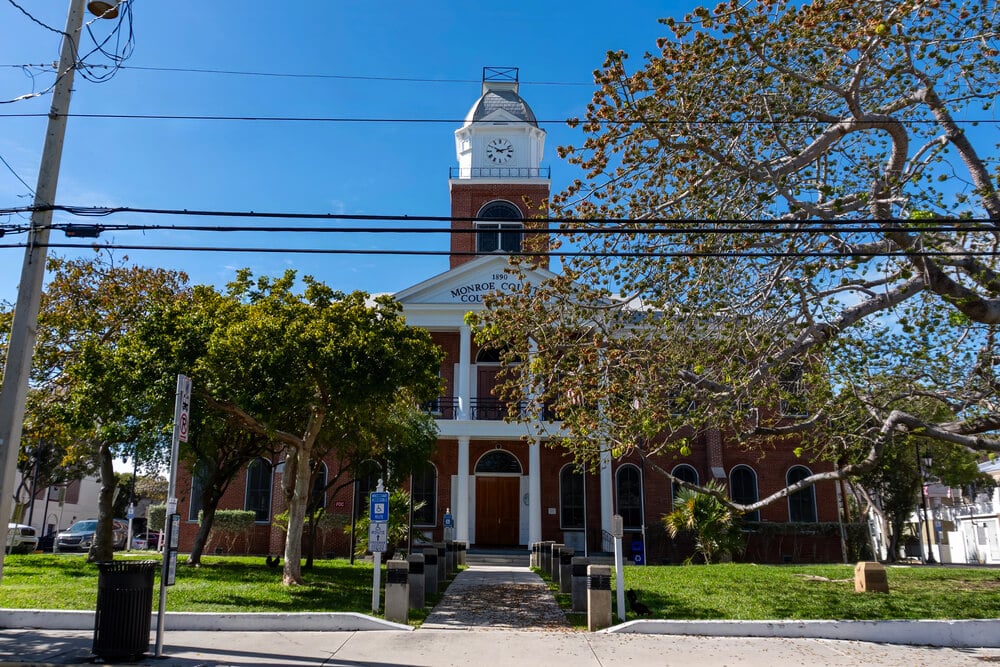
The Old Monroe County Courthouse in Monroeville, Alabama, was built in 1903 and 1904 and topped with a clock tower. Harper Lee grew up in the town, and her father practiced law in this building.
The second-floor courtroom, with its balcony for spectators, is the room the town associates with the story of To Kill a Mockingbird. The original courtroom is now part of a museum, and it hosts a stage version of the story.
The Tower That Grows Trees
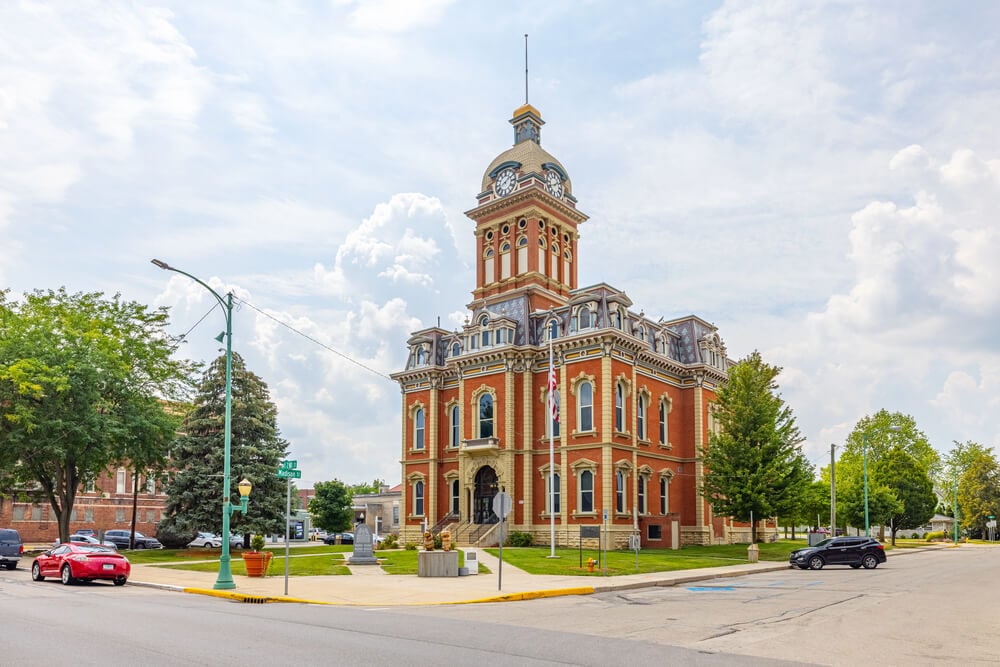
The Decatur County Courthouse in Greensburg, Indiana, was completed in the 1850s and is known for something no architect planned. Trees began growing from its tower in the 1870s, and the greenery has become the town’s best-known landmark.
Nobody has ever settled how the first seeds found a home so high above the street. Generations of residents have treated the rooftop forest as part of the design.
The Courthouse That Left for the Lawn
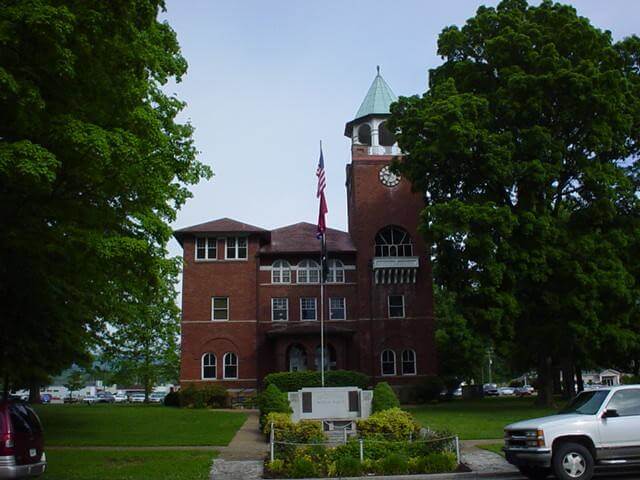
The Rhea County Courthouse in Dayton, Tennessee, was built in 1891 and hosted the Scopes Trial in July 1925. Crowds and heat packed the second-floor courtroom, and on the final day proceedings moved outside to the courthouse lawn.
A museum in the basement now tells the story of the trial.
A Cast-Iron Dome Framed by the Arch
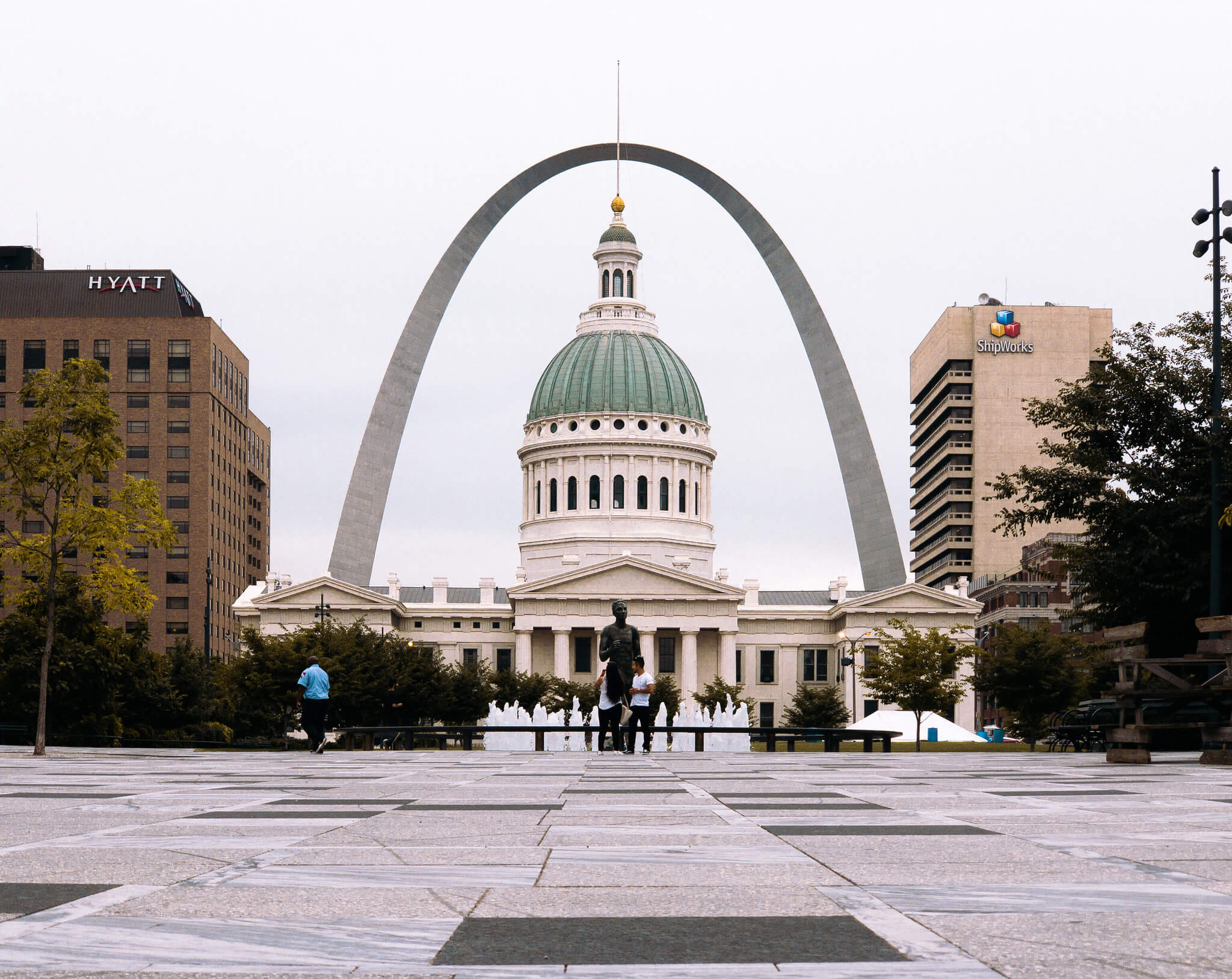
The Old Courthouse in St. Louis, Missouri, is topped by a dome of cast iron completed in the 1860s, modeled on the one then rising over the United States Capitol. The Dred Scott case was argued in this building, which gives its courtrooms a weight few others carry.
The Gateway Arch now rises just to the east, and the two monuments frame each other from the downtown streets. A federal courthouse became a backdrop for a national symbol.
The House of Heavenly Kings
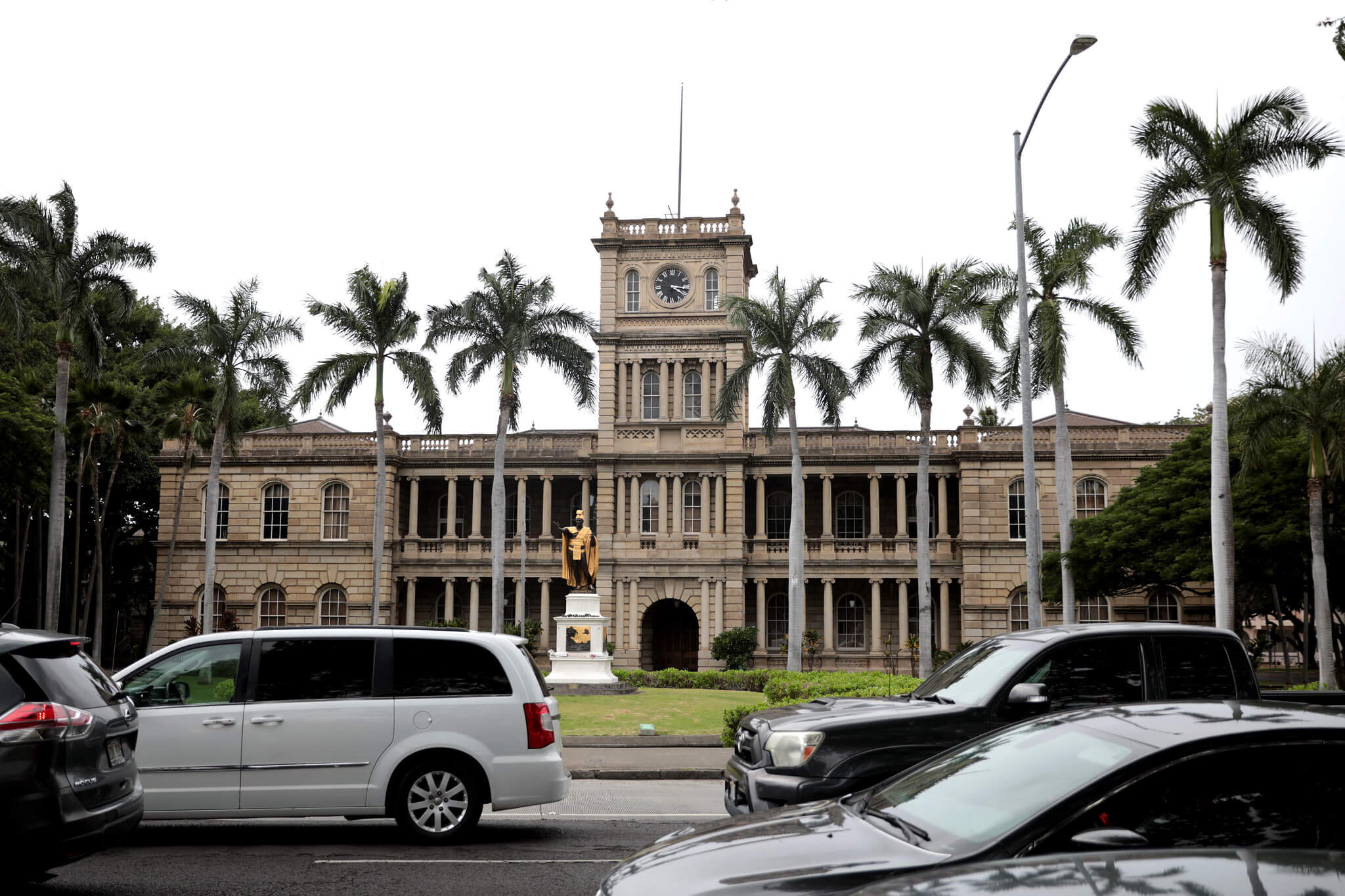
Aliiolani Hale in Honolulu, Hawaii, was completed in 1874 as a government building for the Kingdom of Hawaii, with its cornerstone laid by Kamehameha V in 1872. The name is usually translated as House of Heavenly Kings.
A statue of Kamehameha I stands out front, a gilded figure with outstretched arm facing the street. The building later became the home of the Hawaii Supreme Court.
White Panels in the Phoenix Sun
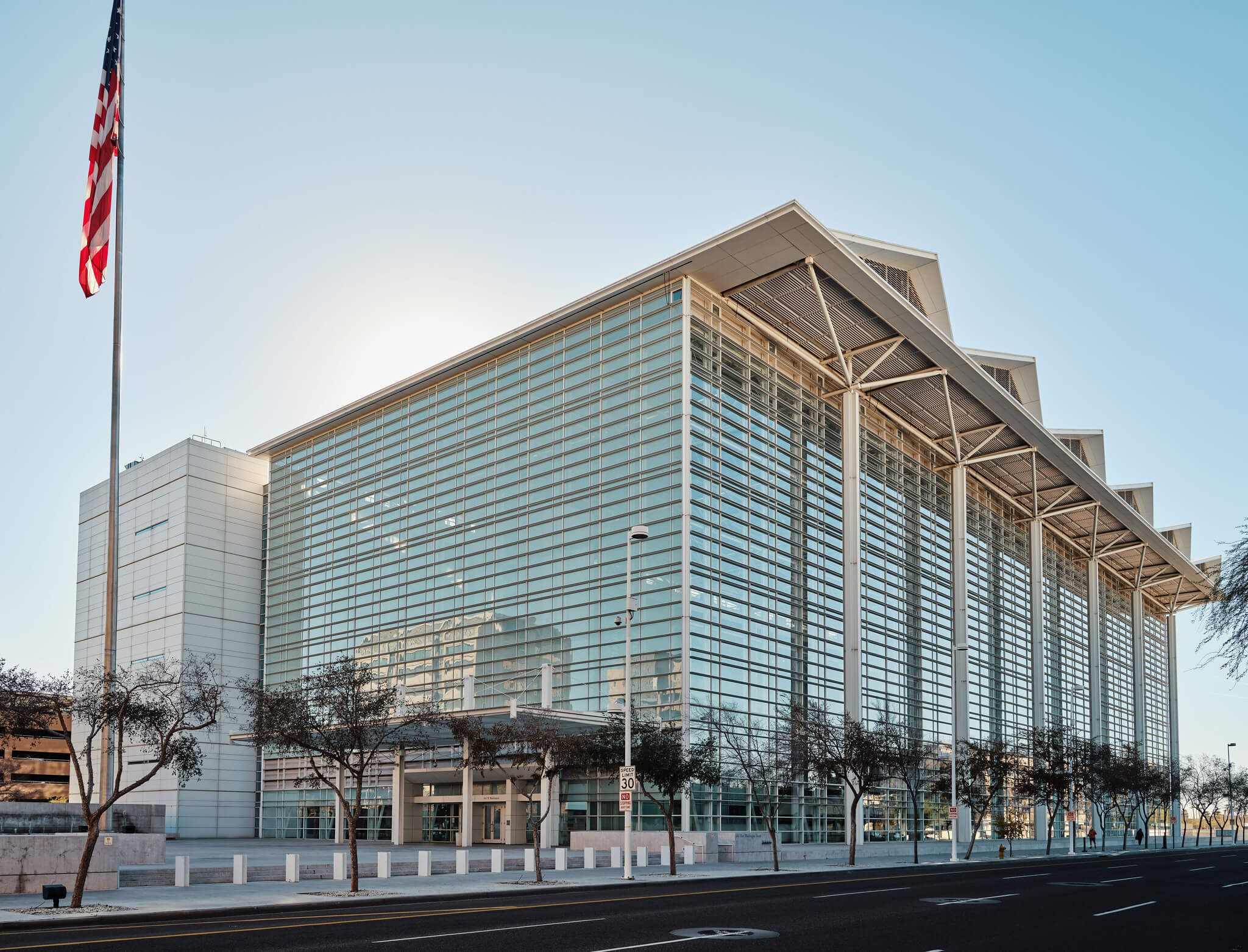
The Sandra Day O’Connor United States Courthouse in Phoenix, Arizona, opened in 2000 and was designed by Richard Meier and Partners with Ellerbe Becket. Meier’s signature white paneling and a large glass atrium turn a federal building into a study in light and shade in a very hot city.
The courthouse is named for a justice who was the first woman to serve on the United States Supreme Court. Her Arizona roots made the choice natural.
The Cupola That Drew a State Border
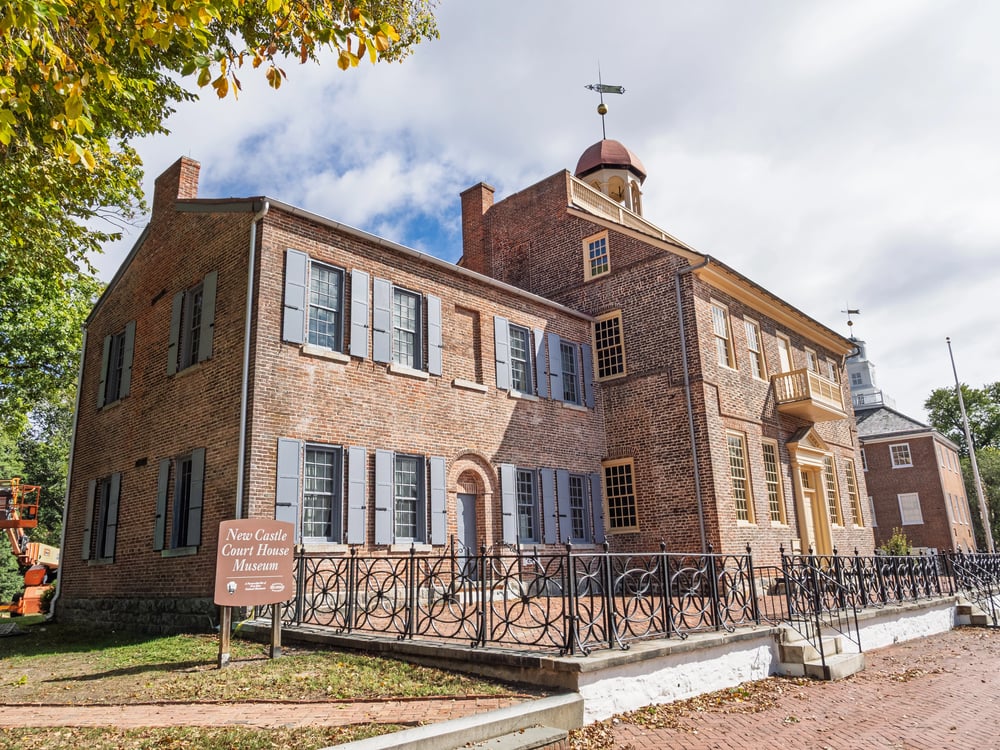
The New Castle Court House in New Castle, Delaware, has a cupola that served as the center of a circle. Delaware’s curved northern border with Pennsylvania follows an arc with a radius of twelve miles measured from that cupola.
Few buildings can claim to have shaped a state line. The National Park Service calls the line Delaware’s twelve-mile arc.
Six Sides of Justice
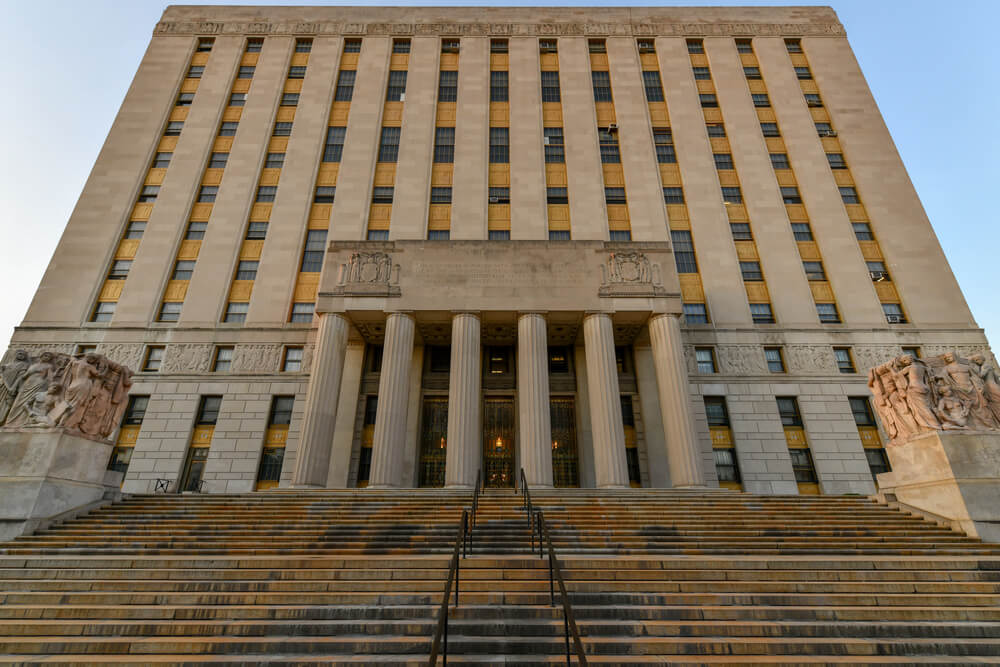
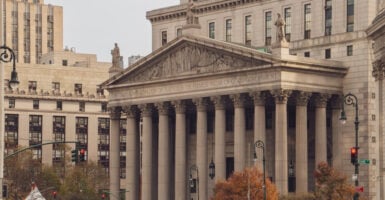
The New York County Courthouse at 60 Centre Street in Manhattan was designed by Guy Lowell and completed in 1927. Its plan is a hexagon built around a central rotunda, a rare shape for a building of its size.
A portico of Corinthian columns faces the street in the manner of a Roman temple. Lowell died the year it was finished.
A Texas Capitol in Miniature
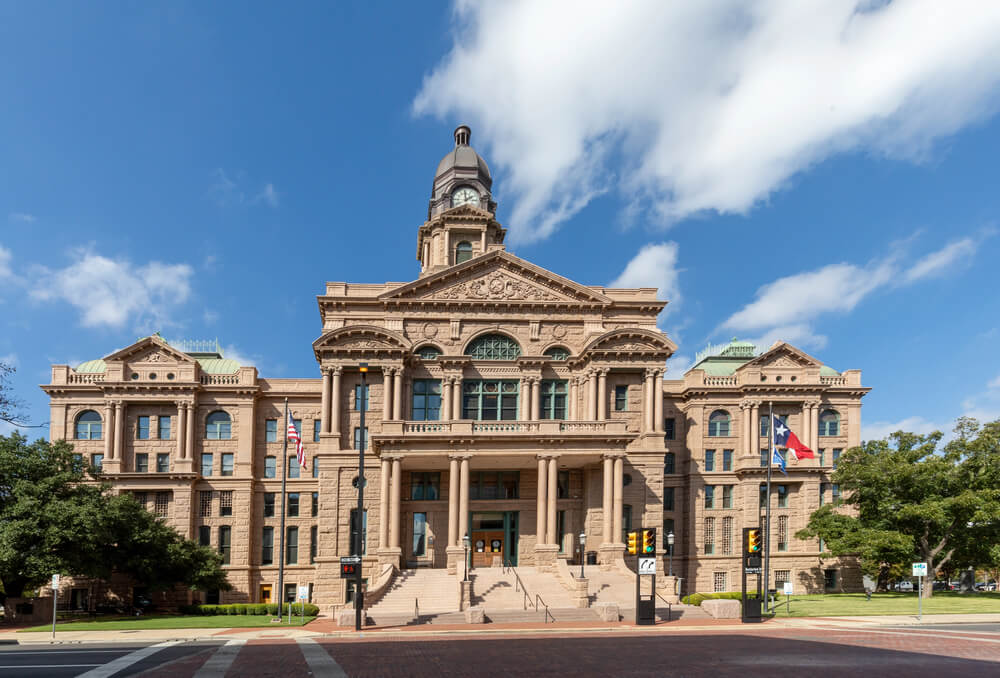
The Tarrant County Courthouse in Fort Worth, Texas, was completed in 1895 in red granite. Its design echoes the Texas State Capitol in Austin, down to the warm pink-red stone.
Fort Worth’s cattle-era boom funded a courthouse meant to compete with the state’s grandest building. The building stands over downtown still, the stone as red as its model.
A Store Turned Jail Turned Legend
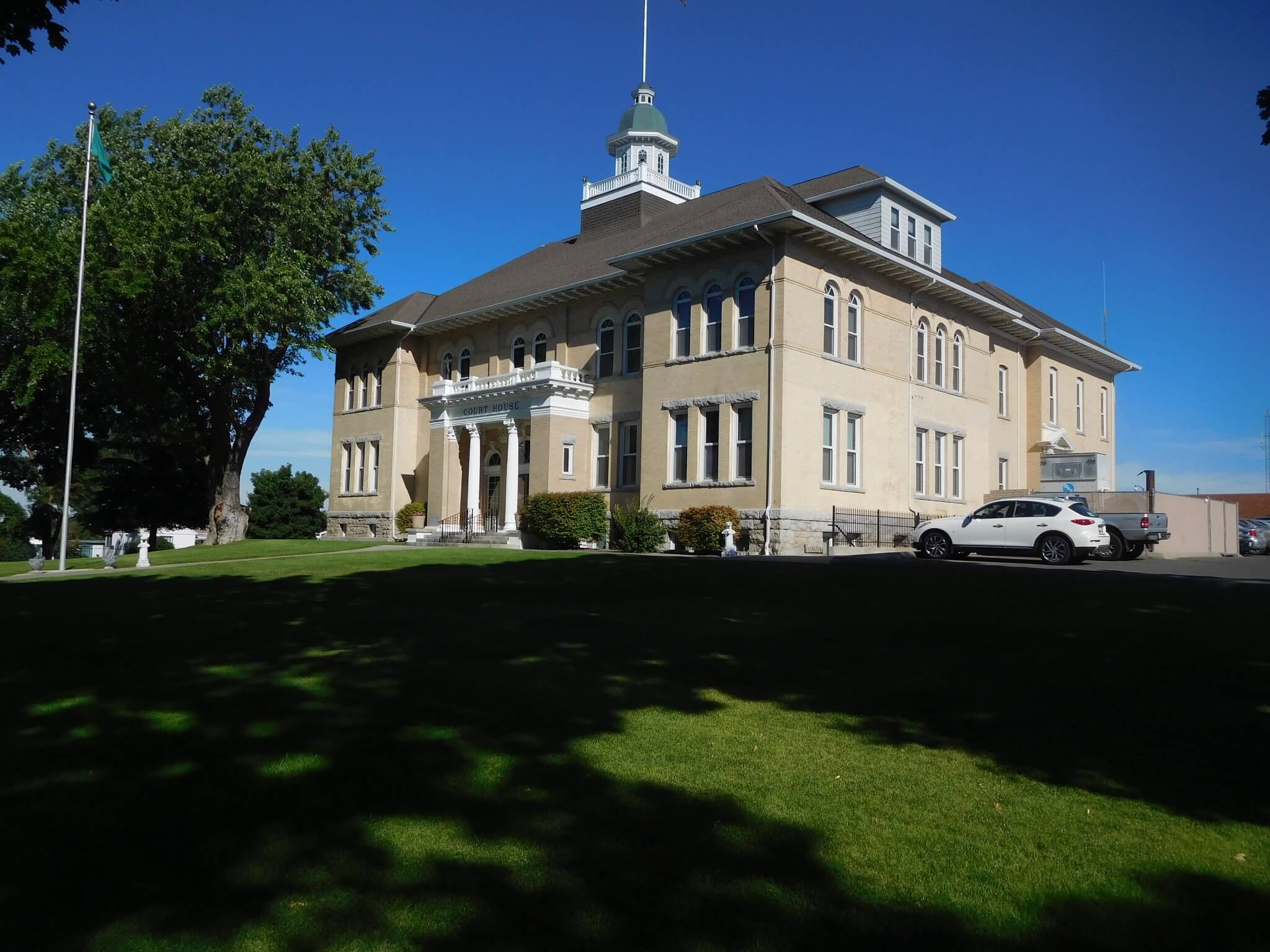
The Lincoln County Courthouse in Lincoln, New Mexico, began life in 1874 as a general store for the firm of L. G. Murphy and Company. The county later bought the building and used it as a courthouse and jail.
Billy the Kid escaped from its second floor in April 1881 after killing two deputies. Few courthouses began as a store, and fewer are remembered for an escape.
Where Four Kinds of Law Meet
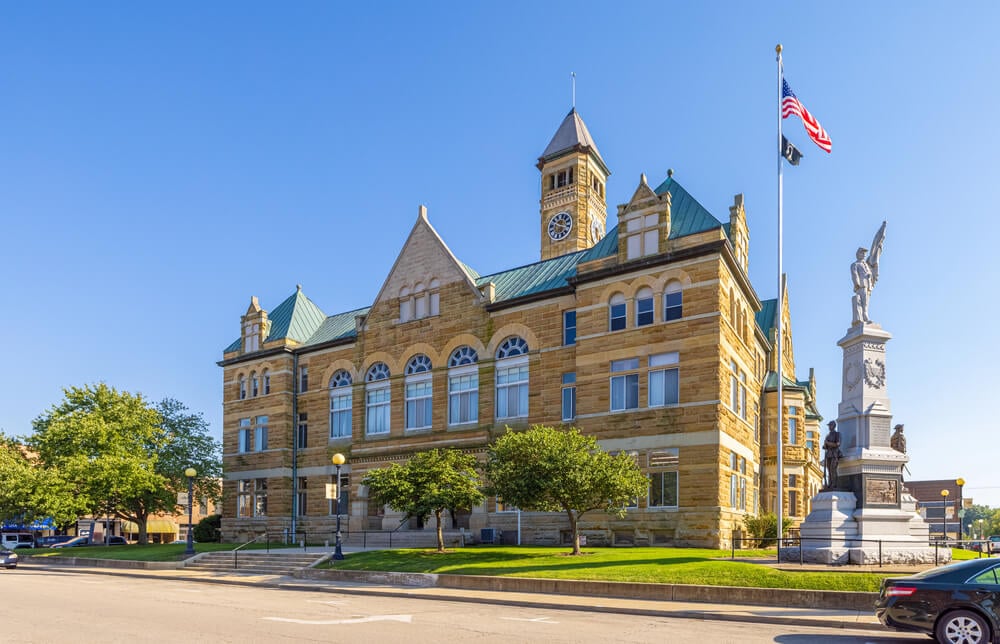
The Charleston County Courthouse in Charleston, South Carolina, stands at the corner of Broad and Meeting streets. It began as the colonial state house, and its original design is credited to James Hoban, who later designed the White House.
The corner is known as the Four Corners of Law because it holds a church, city hall, the county courthouse, and a federal building, each standing for a different kind of authority. The courthouse was rebuilt after the 1886 earthquake.
The Georgian Hall With a Balcony
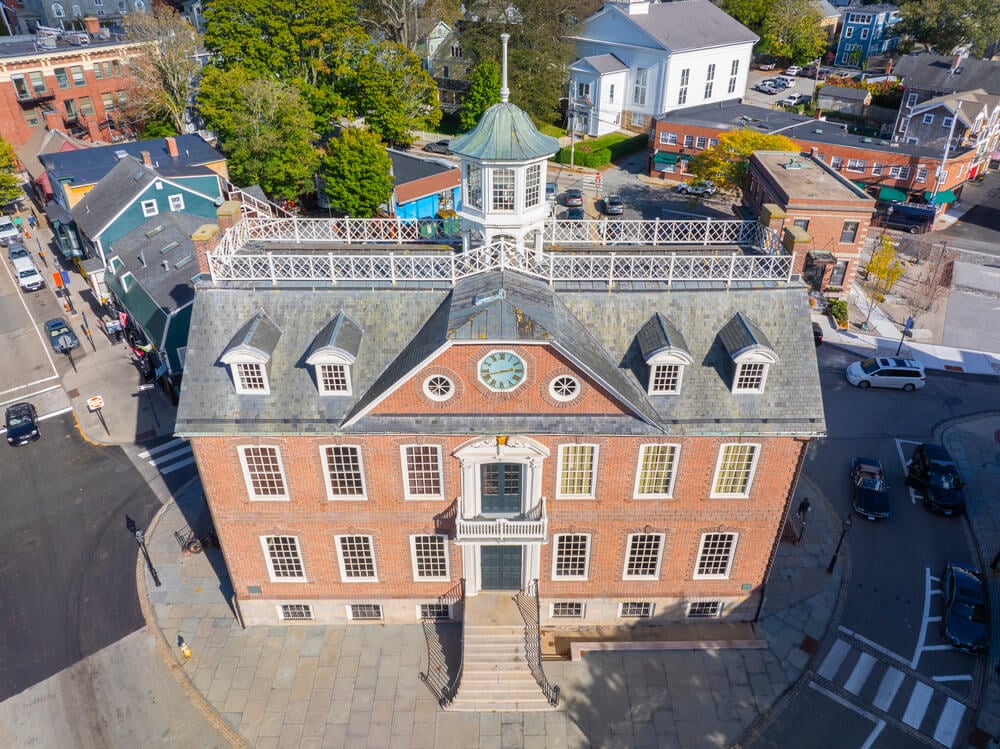
The Old Colony House in Newport, Rhode Island, was designed by Richard Munday and built around 1739, serving as both courthouse and seat of colonial government. Its brick Georgian design makes it among the oldest civic buildings in the country.
The Declaration of Independence was read to Newport crowds from its balcony in July 1776.
An Original Courthouse on Market Square
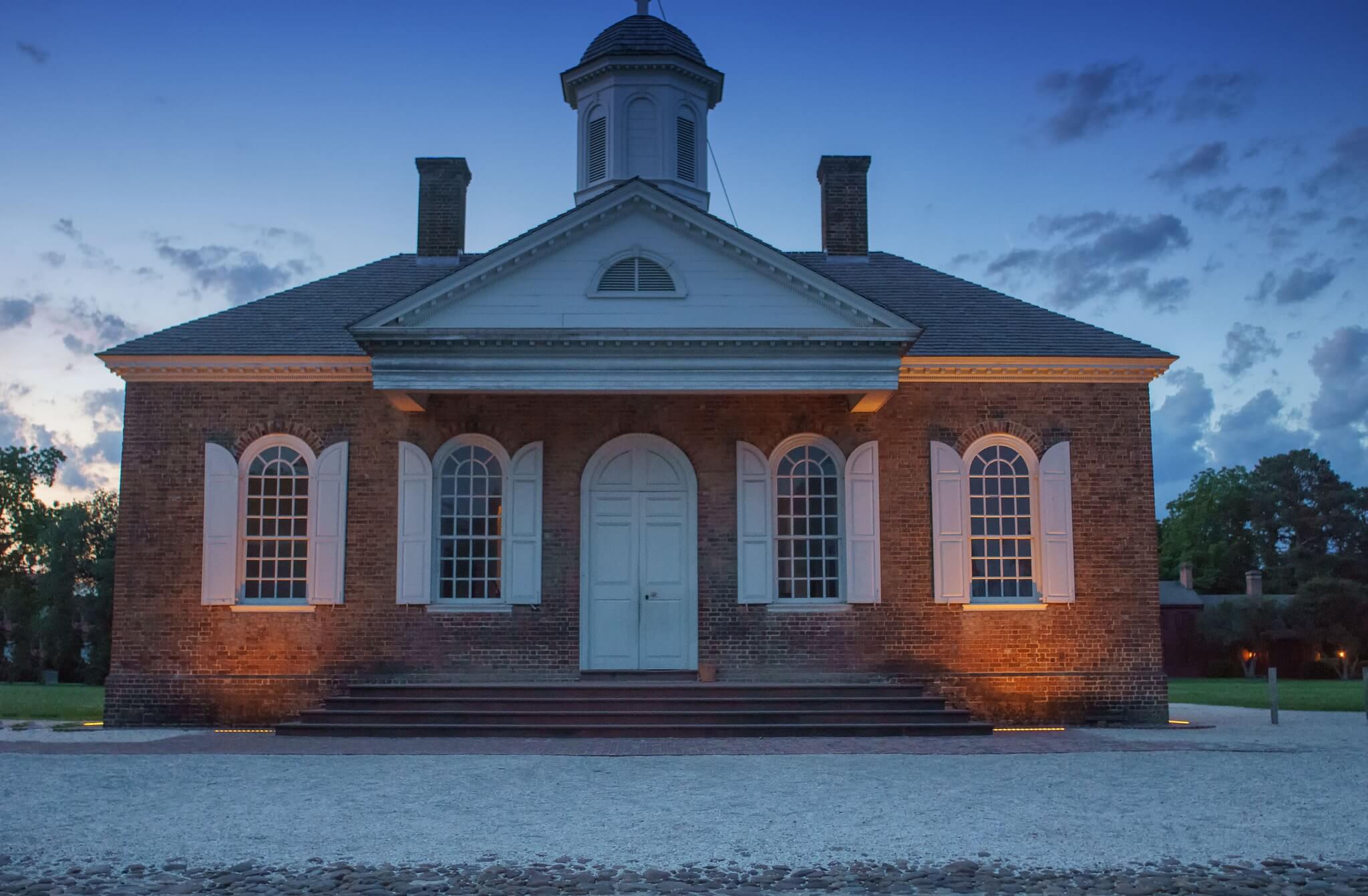
The Courthouse of 1770 in Williamsburg, Virginia, is a Georgian brick building on Market Square with an arcaded front and a cupola on top. It is an original structure in a town full of reconstructions.
The building served the colonial court system on the eve of the Revolution.
A Painter’s Western Gallery in Montana
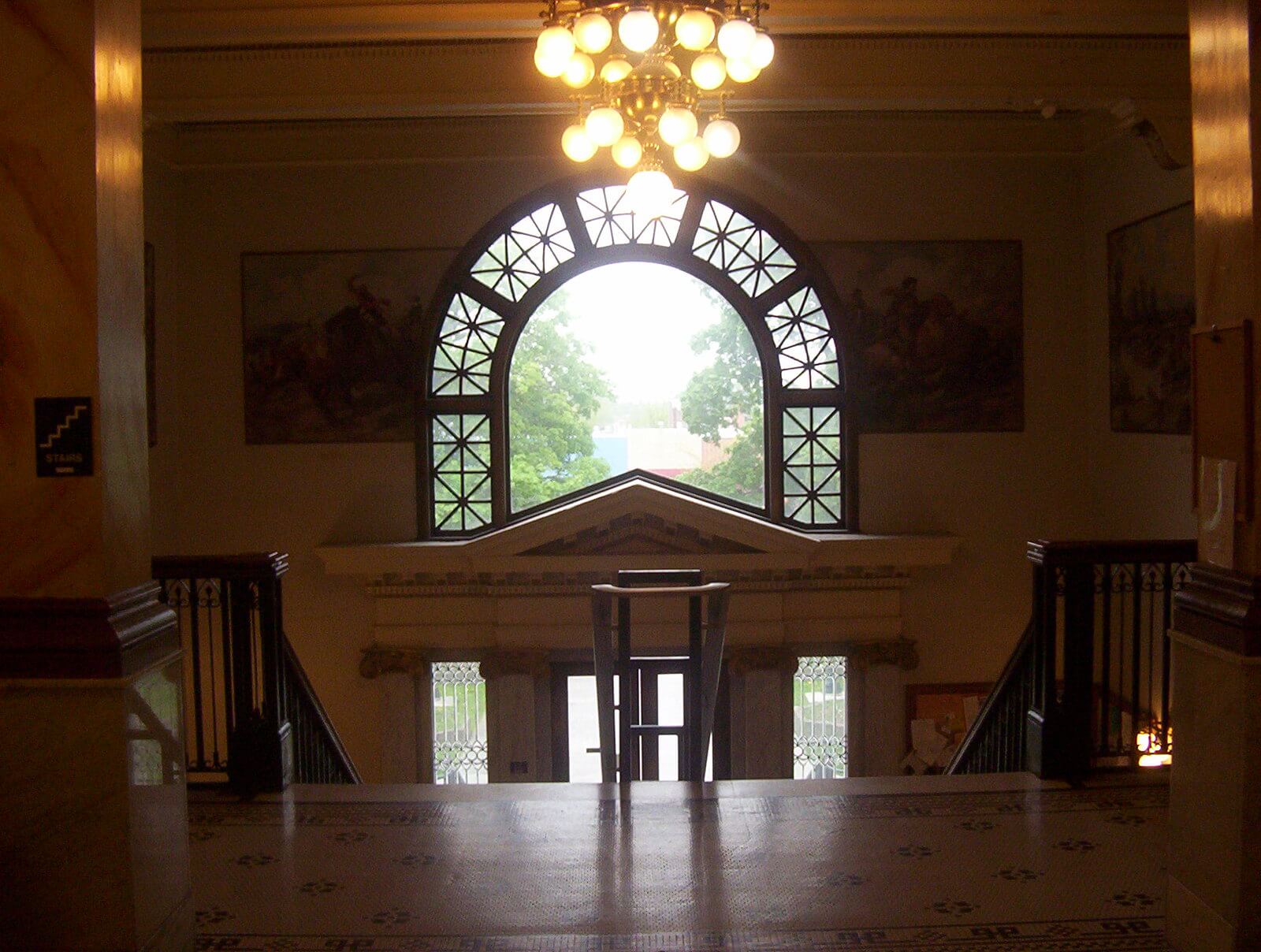
The Missoula County Courthouse in Missoula, Montana, was completed in 1910 and holds murals painted by Edgar Paxson, who spent years as a Western history painter. His work in the courtroom depicts scenes from the Northwest, including the Lewis and Clark expedition.
The paintings turn the room where cases were heard into something closer to a gallery. Few trials have ever been argued beneath such a view of the frontier.
A Romanesque Tower Above Port Townsend
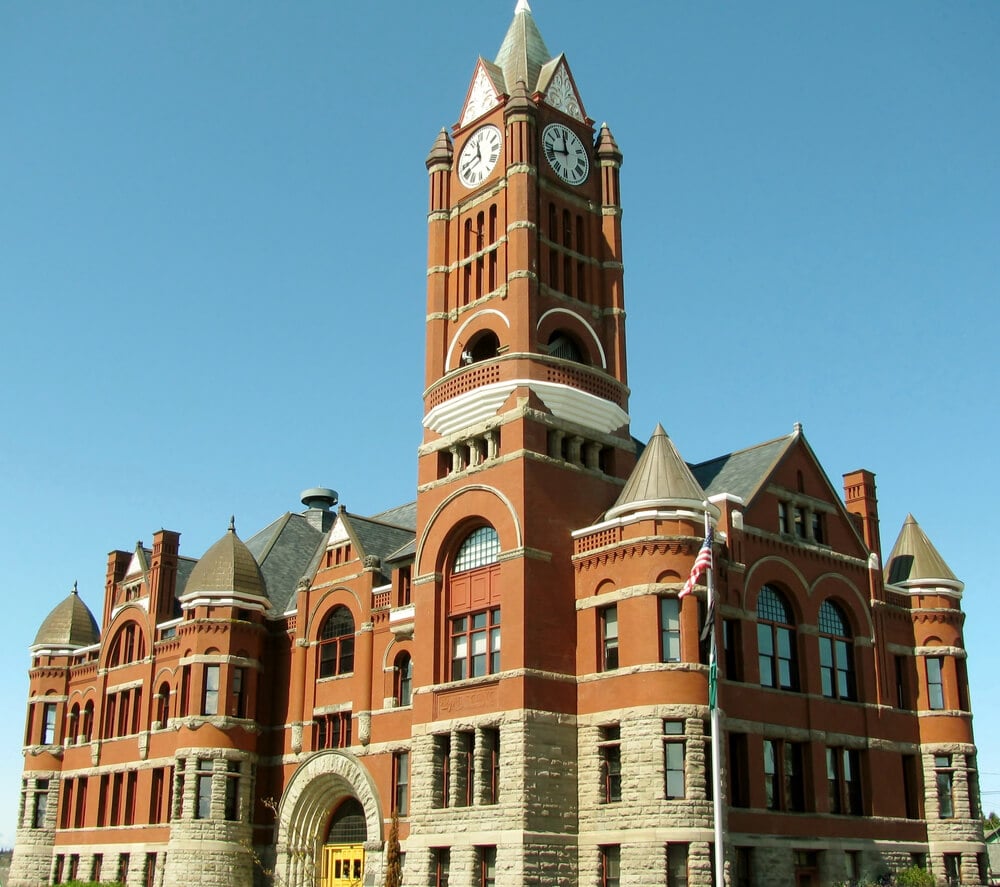
The Jefferson County Courthouse in Port Townsend, Washington, was completed in 1892 and designed by Willis A. Ritchie. Its Romanesque brick walls rise on a hill above a Victorian seaport, topped with a tall clock tower.
The town built it during a boom that promised a bright future for the port. The seaport’s Victorian streets and this courthouse remain as proof of that ambition.
A Red Sandstone Landmark in Dallas
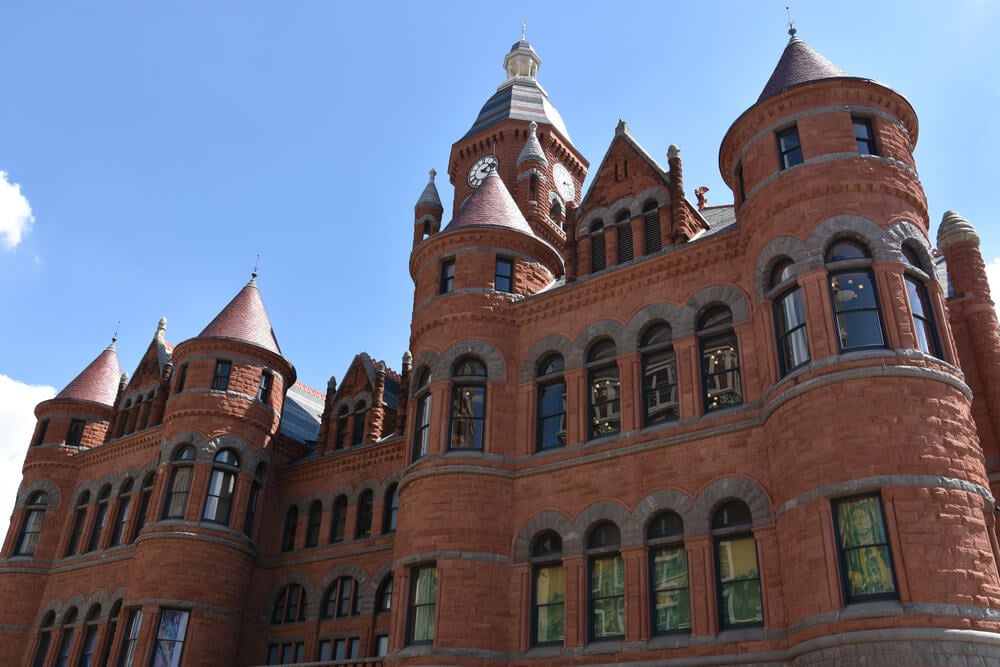
The Old Red Courthouse in Dallas, Texas, was built in 1892 and designed by Max Orlopp in a Romanesque style. Its red sandstone walls gave it the nickname by which Dallas still calls it.
The sturdy stonework reflects the money flowing into the city in the late 1800s. The building now houses a museum about the city’s history.
A Gold Rush Courthouse of Wood
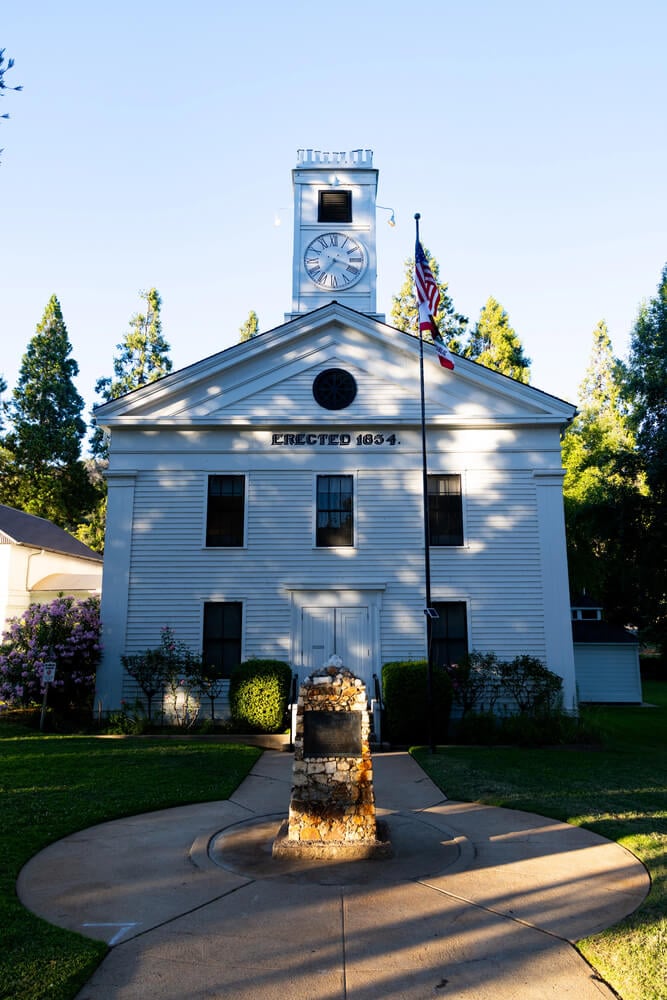
The Mariposa County Courthouse in Mariposa, California, dates to 1854 and was built in the wooden style of the Gold Rush frontier. White paint and a cupola give the building a New England look in the Sierra foothills.
Court has continued to be held here for well over a century and a half. The simple frame structure outlasted the mining fortunes that built it.
The Courthouse the Union Flag Claimed
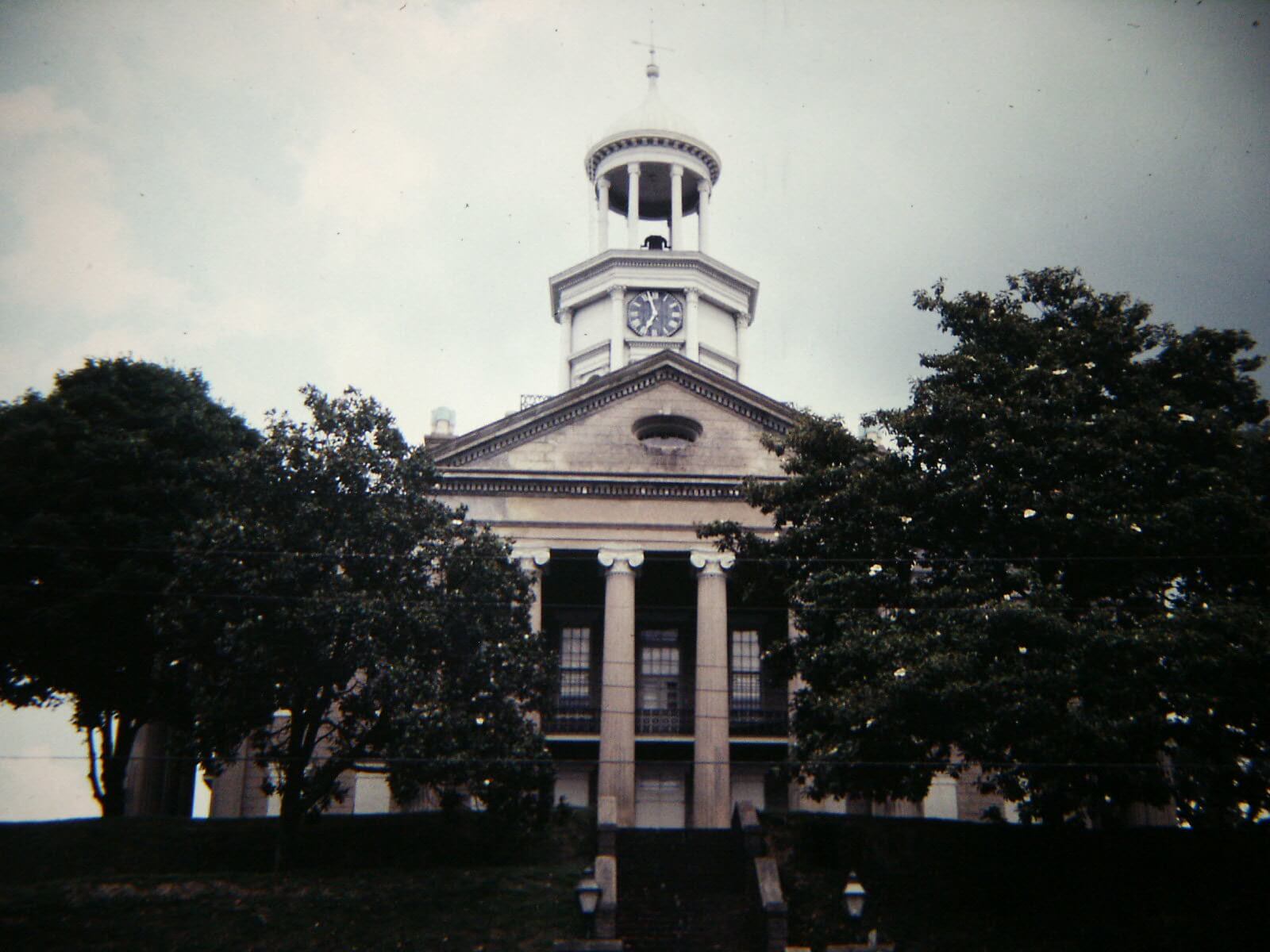
The Old Court House in Vicksburg, Mississippi, was built between 1858 and 1860 with enslaved labor on a hill above the Mississippi River. Its Greek Revival columns and tall dome made it the most visible building in the city.
The building stood through the siege of the city in 1863 and is now a museum with the town’s history inside.
Beaux-Arts Splendor in Fort Wayne
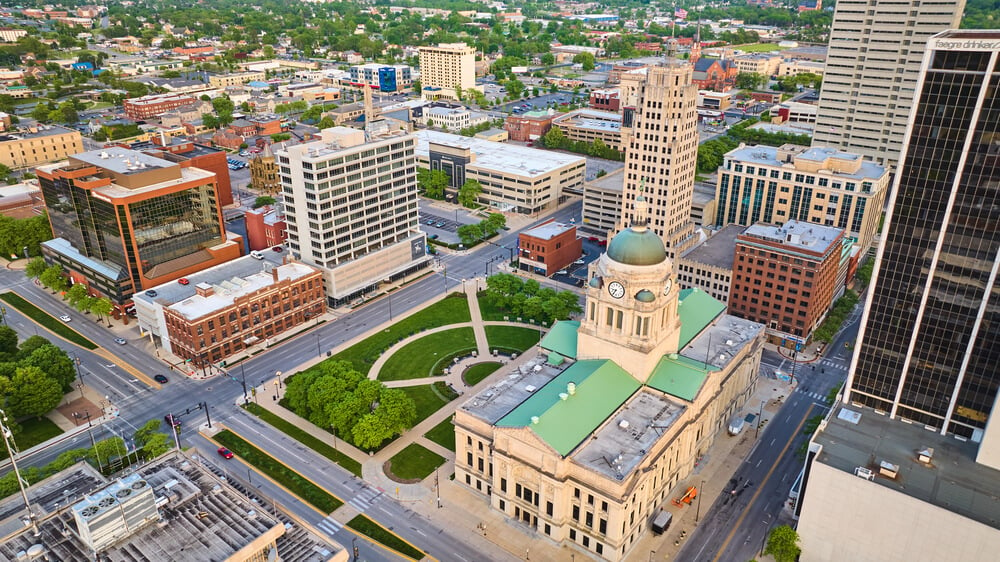
The Allen County Courthouse in Fort Wayne, Indiana, opened in 1902 and was designed by Brentwood Tolan in the Beaux-Arts style. Sculpture, marble, and a grand rotunda give it the scale of a state capitol.
The courthouse occupies an entire city block in the center of downtown. Few Midwestern county seats built so lavishly.
The Gallows Behind the Courthouse
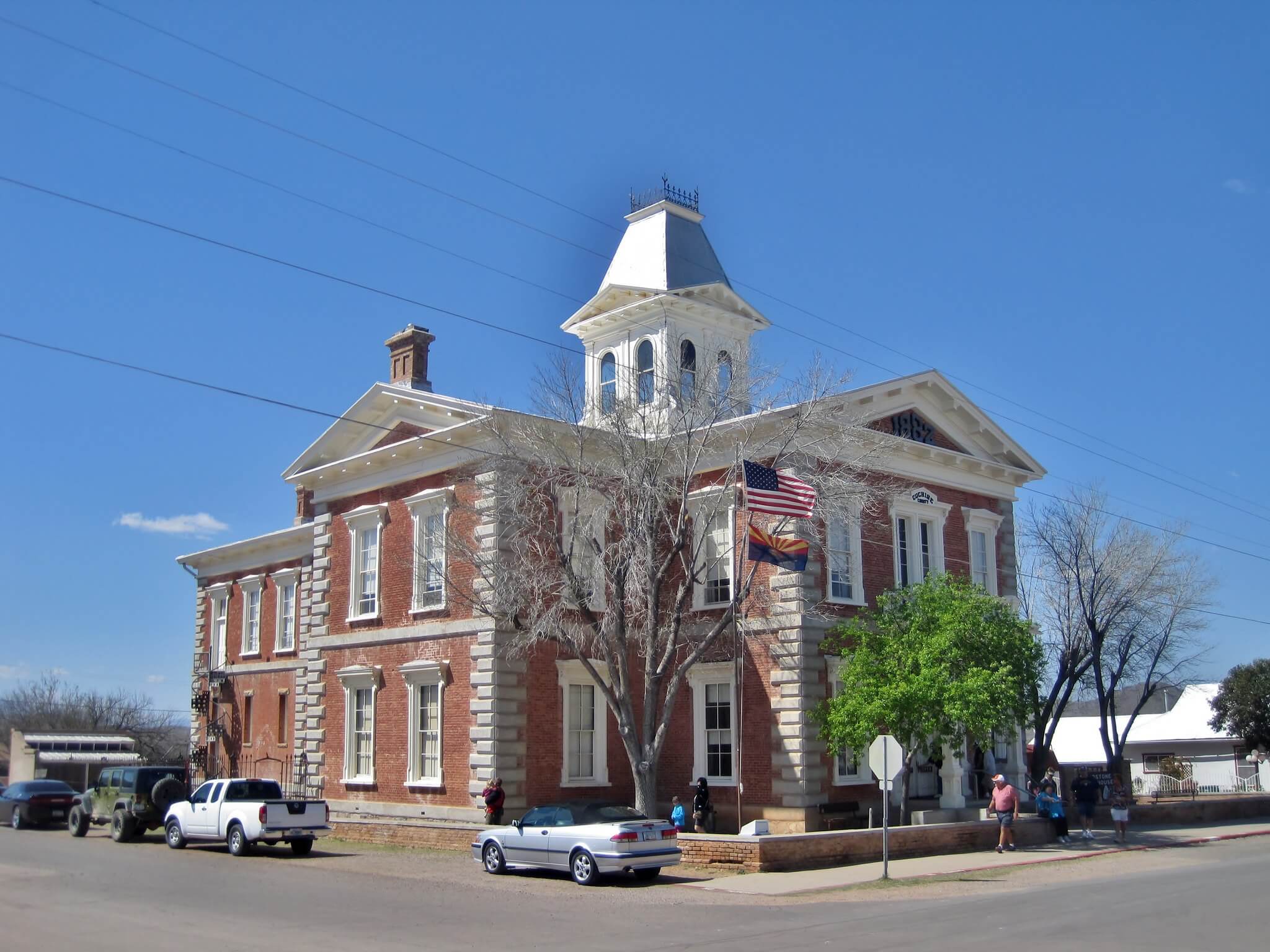
The Tombstone Courthouse in Tombstone, Arizona, was completed in 1882 and served as the seat of Cochise County until the county government moved to Bisbee in 1929. Its Victorian design gave the young mining town a civic building to match its reputation.
The building is now a state historic park.
Faulkner’s Square in Mississippi
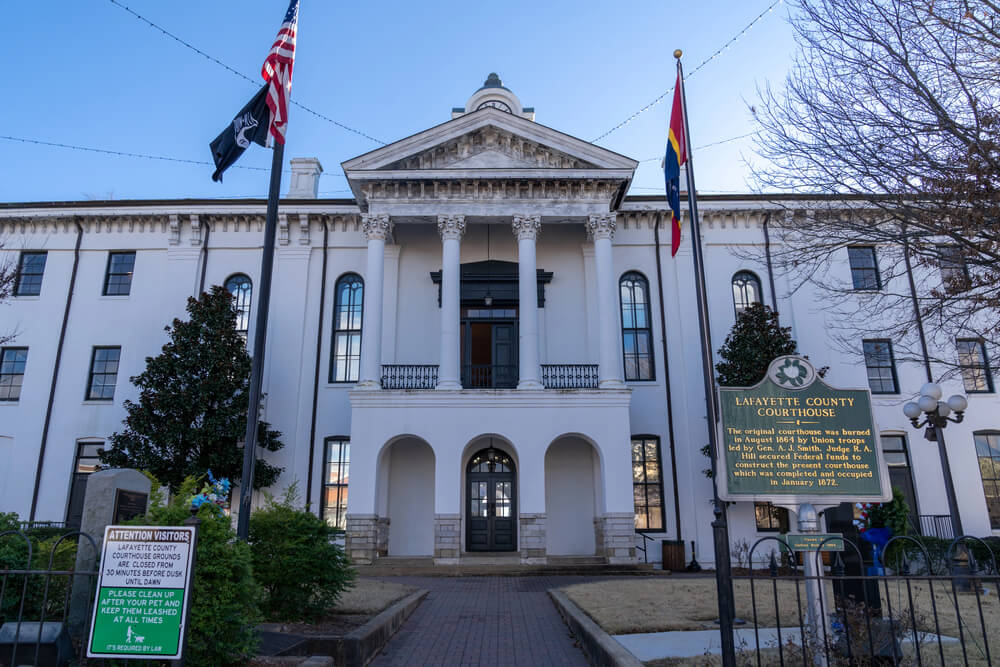
The Lafayette County Courthouse in Oxford, Mississippi, was rebuilt in 1872 after Union troops burned the earlier one in 1864. Its plan is cruciform, with matching faces on four sides and a clock tower in the center.
William Faulkner drew on the courthouse and square when imagining the fictional Jefferson of his novels. The building sits in the middle of the square like a figure in the center of a stage.
The Courthouse as Civic Theater
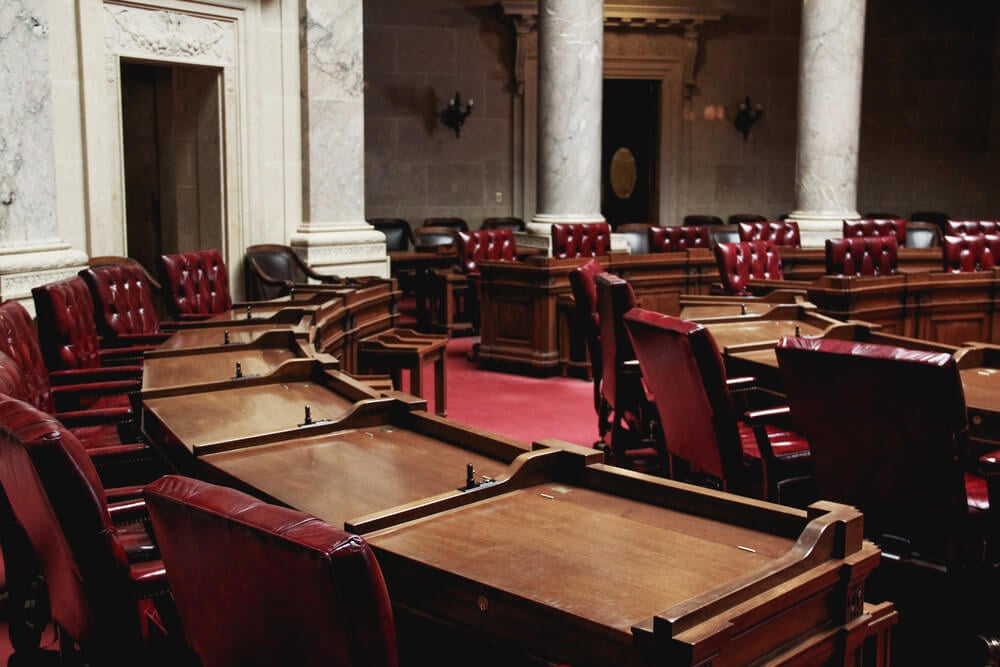
The strange details above share a purpose. A county or a city that could afford only one great building often spent it on the courthouse, and it showed in the carvings, the domes, and the towers.
Each unusual detail was a message that law had arrived and meant to stay. The result is a country dotted with buildings that are part courtroom and part stage set.
A tiled dome in Tucson or a tree on a Greensburg tower says as much about local pride as it does about justice. The odd details are what make the buildings memorable, and sometimes they outlast the cases decided beneath them.
More from Go2Tutors!

- 27 Silver Dollars and Half Dollars Worth Keeping
- 28 Restaurant Menu Items Nobody Orders Anymore
- 17 Places Built in Seemingly Impossible Spots
- 27 Vintage Rings Worth More Than They Look
- 25 Restricted Sites Tourists Can’t Enter
Like Go2Tutors’s content? Follow us on MSN.