17 Classic American Breakfast Cereals
There’s something deeply satisfying about opening a fresh box of cereal and hearing those familiar kernels pour into your bowl. Whether you’re a fan of the classics or curious about cereal history, these breakfast legends have been fueling American mornings for decades. From health-conscious origins to sugar-coated transformations, each one tells a story about changing tastes and clever marketing.
The cereal aisle became a battleground where companies competed not just for shelf space, but for a spot in American households. Here’s a list of 17 classic American breakfast cereals that have stood the test of time, each with its own fascinating backstory.
Corn Flakes
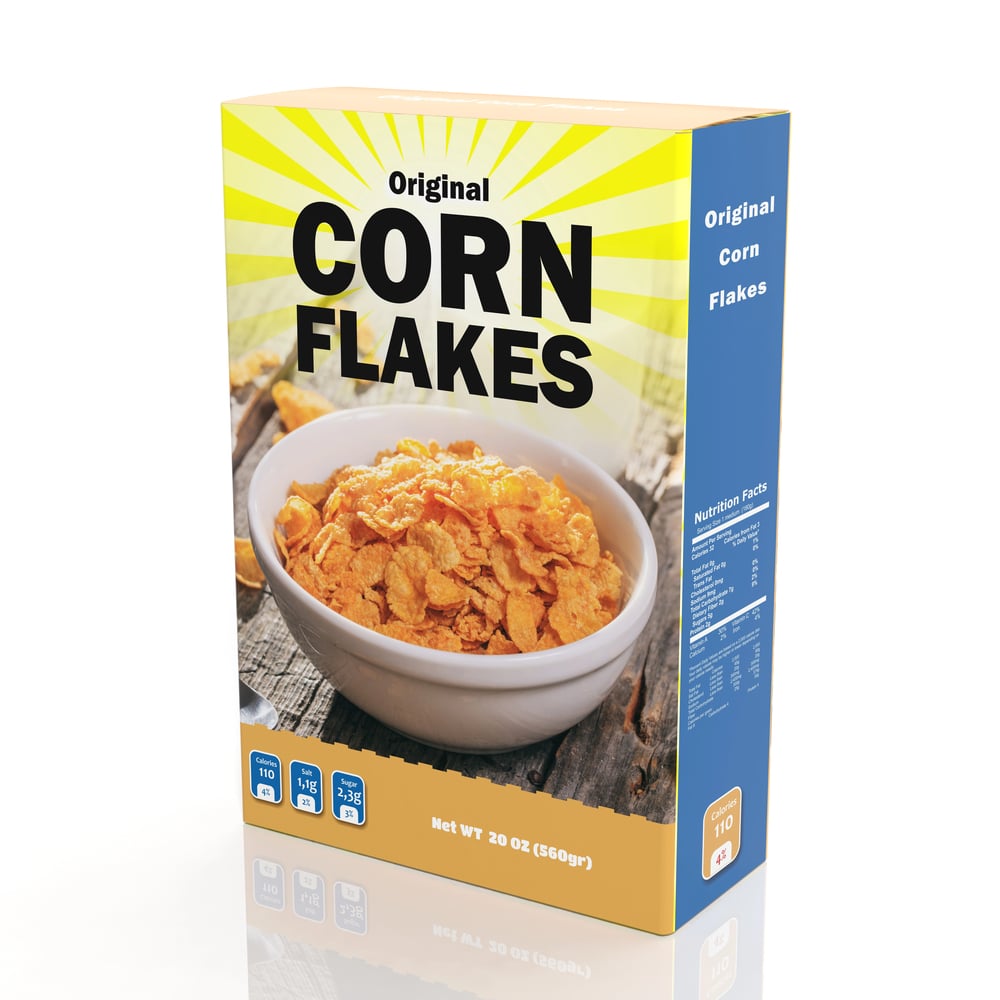
The story of Corn Flakes begins at the Battle Creek Sanitarium in Michigan, where Dr. John Harvey Kellogg and his brother Will accidentally created what would become America’s breakfast revolution. Originally called Sanitas Toasted Corn Flakes when it hit the market in 1898, this cereal was born from a health-focused experiment that went wonderfully wrong. Will Kellogg saw the commercial potential and broke away from his brother, adding malt, sugar, and salt to make the flakes more appealing to everyday consumers. The rooster on the box isn’t random either—Will liked that the Welsh word for rooster sounded like ‘Kellogg.’
Grape-Nuts

Charles W. Post crafted this dense, crunchy cereal in 1897, just two years after creating his cereal beverage Postum in a Battle Creek barn. Despite the name, Grape-Nuts contains neither grapes nor nuts—it’s made from wheat and barley. This hardy cereal has quite the resume, fueling Sir Admiral Byrd’s Antarctic expedition, the first successful Mount Everest climb, and even helping feed troops during World War II. Talk about a cereal with serious credentials. The nutty little nuggets earned their reputation as a cereal that could survive anything, making them perfect for adventurers and anyone who likes their breakfast to double as a workout for their jaw.
Cheerios

Originally launched as ‘Cheerioats’ in 1941, this oat-based cereal became the first ready-to-eat oat cereal on the market. The name changed to Cheerios in 1945. That famous yellow box has been a breakfast table staple ever since. What makes Cheerios special isn’t just their distinctive O-shape—it’s their versatility. Parents love them as a first finger food for babies, health-conscious adults appreciate the whole grain benefits, and everyone enjoys their simple, wholesome taste that doesn’t try to be something it’s not.
Rice Krispies

By 1928, Kellogg’s Rice Krispies had kids everywhere chanting ‘Snap! Crackle! Pop!’ as the cereal met milk in their bowls. The sound effects aren’t just marketing magic—they’re caused by the unique puffing process that creates air pockets in the rice. Beyond breakfast, Rice Krispies became famous for Rice Krispies Treats, which cemented the cereal’s place in American food culture beyond the breakfast table. Those three little elves weren’t just mascots; they represented the playful side of a cereal that made eating breakfast an interactive experience that turned every bowl into a tiny sound laboratory where kids could listen to their breakfast talk back to them.
Wheaties

— Photo by homank76
In 1921, James Ford Bell began experimenting with rolled wheat flakes at his Minneapolis milling firm, and by 1925, Wheaties had earned the title ‘Breakfast of Champions.’ Officially launched in 1924, Wheaties pioneered the concept of celebrating athletic achievement by featuring sports stars on their boxes. The cereal became more than breakfast—it became a symbol of American achievement and athleticism. From Lou Gehrig to Michael Jordan, getting your face on a Wheaties box meant you’d truly made it in sports.
Frosted Flakes
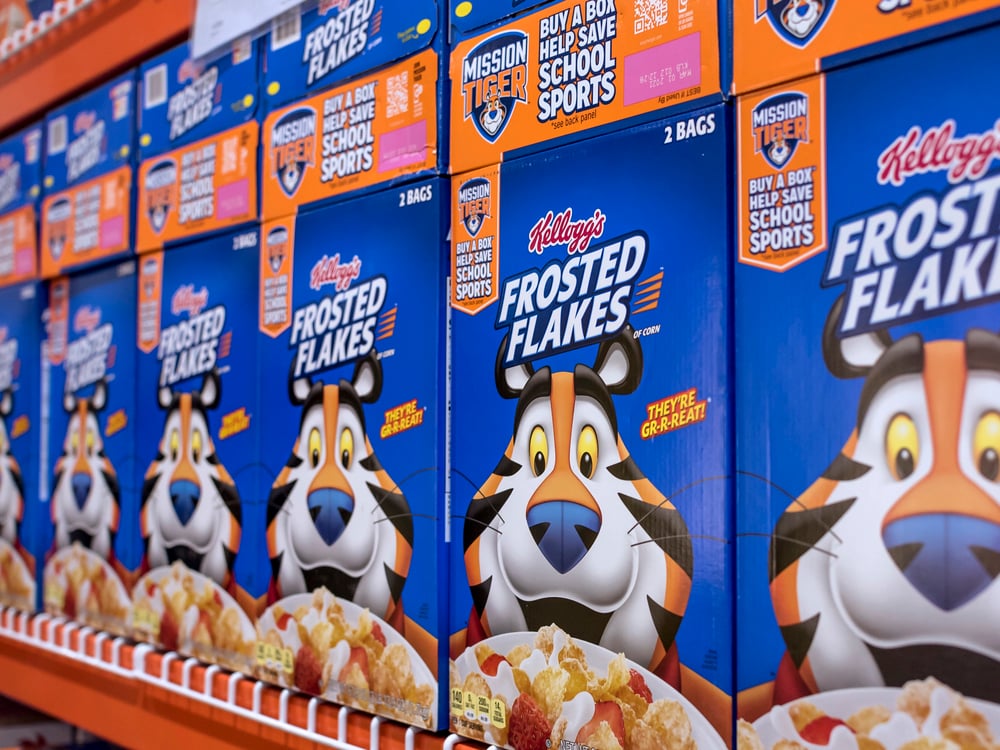
— Illustration by MikeEdwards
Kellogg’s introduced Sugar Frosted Flakes in 1952, though the word ‘sugar’ was quietly dropped from the name around 1984. Tony the Tiger made his debut alongside the cereal, encouraging kids to wake up ready to tackle the day with his energetic ‘They’re grrreat!’ slogan. Frosted Flakes was also one of the first cereals to feature a cartoon mascot, setting the standard for how cereal companies would market to children for decades to come. Simple formula, really. The combination of corn flakes and sugar coating created a perfect balance of crunch and sweetness that still works today.
Lucky Charms
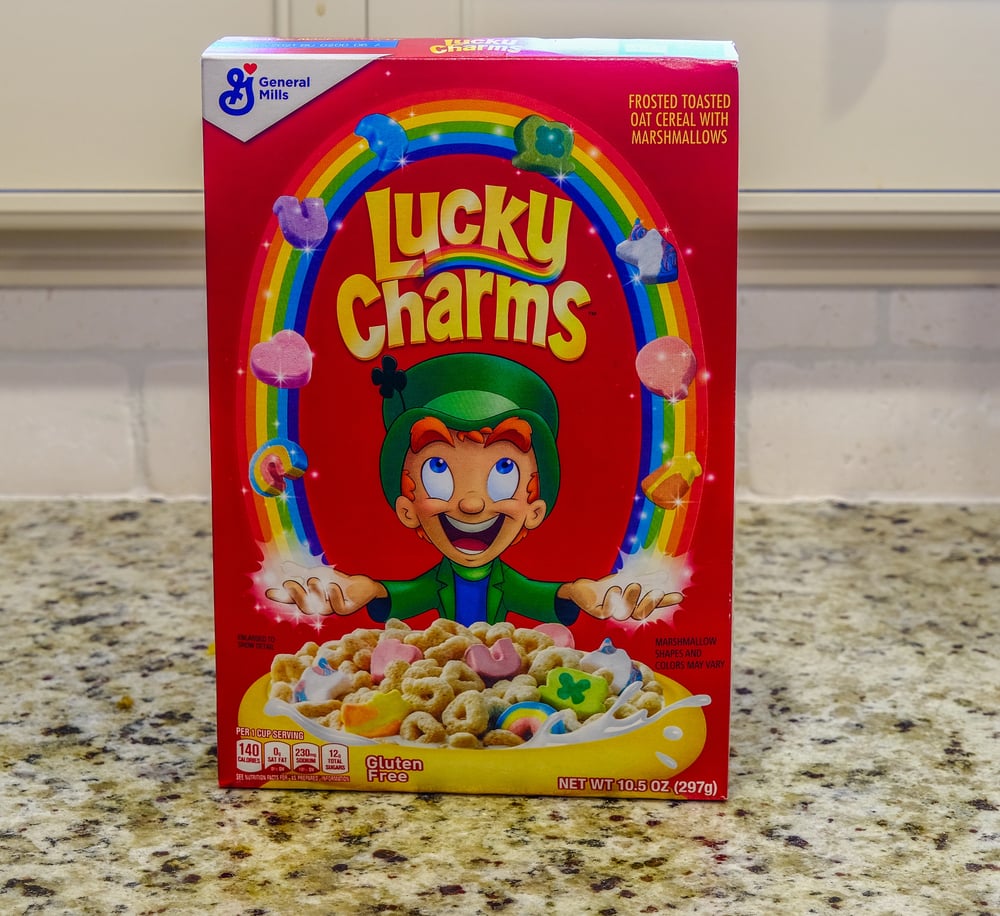
— Illustration by dbvirago
Product developer John Holahan created Lucky Charms in 1964 after mixing Cheerios with bits of Brach’s circus peanuts during a grocery store visit. Lucky Charms was the first cereal to include marshmallows in the recipe, and those colorful pieces became known as ‘marbits’ due to their small size. Lucky the Leprechaun made his magical debut on St. Patrick’s Day 1964, and over the years, more than 60 different marshmallow shapes have appeared in the cereal mix. The genius wasn’t just adding marshmallows—it was creating a treasure hunt in every bowl.
Trix

General Mills introduced Trix in 1954 as a sugar-coated version of its popular Kix cereal, with the original version containing more than 46% sugar. Trix became the first fruit-flavored cereal on the market, featuring three colorful corn puffs: raspberry red, orange orange, and lemony yellow. The Trix Rabbit, created by Joe Harris in 1959, became famous for his futile attempts to get some cereal, always being told ‘Silly rabbit, Trix are for kids!’ The rabbit’s endless quest has been compared to the Greek myth of Sisyphus, making him perhaps the most philosophically complex cereal mascot. Which is saying something in a world full of talking tigers and leprechauns.
Cap’n Crunch
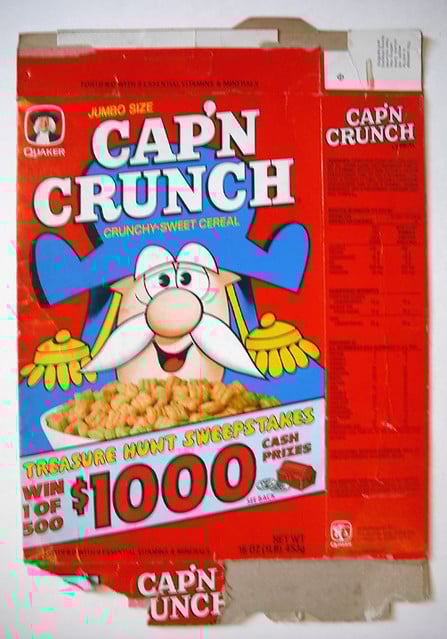
Cap’n Crunch sailed onto shelves in 1963, created in response to market research showing that kids under 10 preferred crunchy foods over soggy ones. The cereal gained popularity throughout the 1960s thanks to its charismatic sailor mascot and eye-catching commercials from Quaker Oats. Cap’n Crunch earned a reputation for being almost too crunchy—famously capable of shredding the roof of your mouth despite being absolutely delicious. The captain’s commitment to staying crunchy in milk was both his greatest strength and his most dangerous quality.
Cocoa Puffs
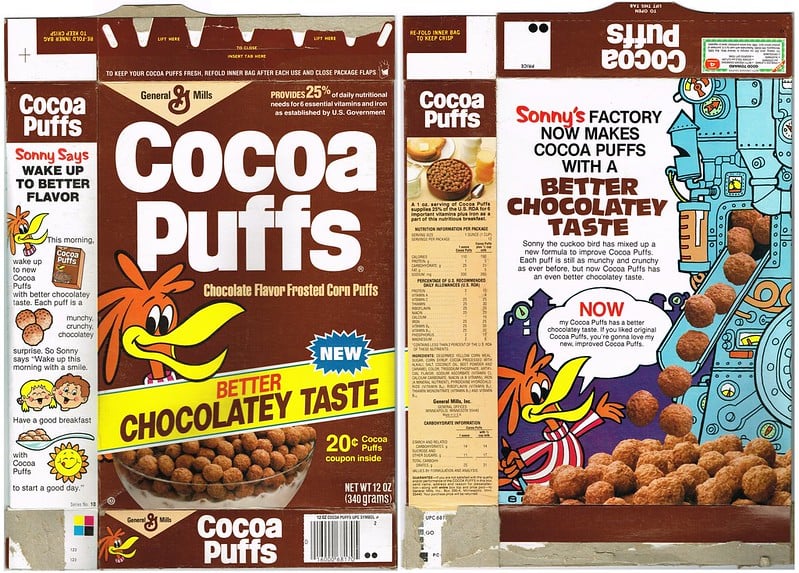
Cocoa Puffs brought chocolate-flavored puffed rice and oat to breakfast tables in 1956, introducing dessert flavors to American breakfast cereal. The cereal’s genius lay in its dual purpose—it satisfied kids’ chocolate cravings while turning regular milk into chocolate milk. Sonny the Cuckoo Bird became the hyperactive mascot who perfectly embodied how kids felt about chocolate for breakfast, going ‘cuckoo’ with excitement. For parents looking for a compromise between healthy breakfast and happy kids, Cocoa Puffs offered a middle ground that made mornings easier.
Froot Loops

Kellogg’s launched Froot Loops in 1963, bringing those iconic fruity rings and the lovable Toucan Sam to breakfast tables. Originally featuring only red, orange, and yellow loops, green, blue, and purple were added in the 1990s to create the full rainbow effect. Toucan Sam, voiced by Mel Blanc (who also voiced Bugs Bunny), guided kids to follow their noses to the froot-flavored fun. The cereal’s appeal went beyond taste—it was about the colorful experience and the way different colored loops theoretically had different fruit flavors, even though they all tasted pretty much the same.
Apple Jacks
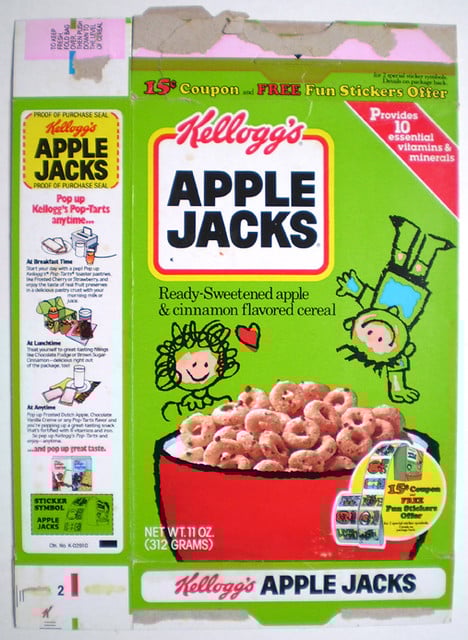
Originally called Apple Os when Kellogg’s introduced them in 1965, the name changed to Apple Jacks in 1971 for marketing reasons. The cereal was invented by William Thilly, who was studying at MIT when Kellogg’s hired him as a research assistant. Apple Jacks brought apple and cinnamon flavors to the cereal world, creating a taste combination that somehow worked perfectly together. The cereal proved that sometimes the best innovations come from unexpected places—like hiring a college student who could think outside the traditional cereal box.
Special K

— Photo by dbvirago
Special K became one of the more popular cereals of the 1950s as a healthier option that counter-balanced all the sugary cereals making a splash at the time. Kellogg’s positioned Special K as the grown-up cereal, focusing on nutrition and weight management rather than cartoon mascots and prizes. The cereal’s marketing emphasized sophistication and health consciousness, appealing to adults who wanted to feel good about their breakfast choices. Special K proved that not every successful cereal needed a mascot or gimmick—sometimes simple, straightforward nutrition was enough.
Honey Nut Cheerios
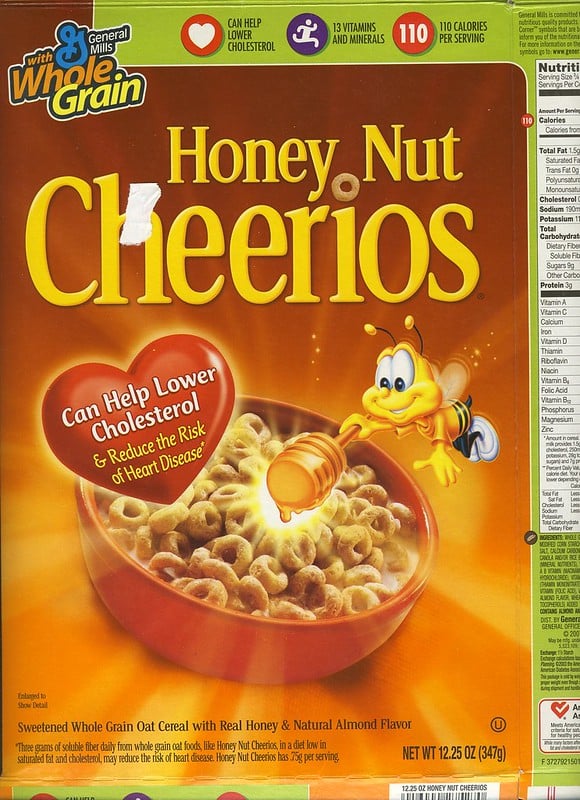
Introduced in 1979, Honey Nut Cheerios quickly became one of the top-selling cereals of the 1980s with its sweetened, honey-coated version of classic Cheerios. General Mills promoted it as combining great taste with nutritional benefits, offering the perfect mix of sweetness and wholesomeness. Buzz the Bee became the enthusiastic mascot who embodied the natural sweetness of honey, making the cereal feel less artificially sweetened than its competitors. The success of Honey Nut Cheerios proved that sometimes the best innovation is taking something that already works and making it just a little bit sweeter.
Raisin Bran
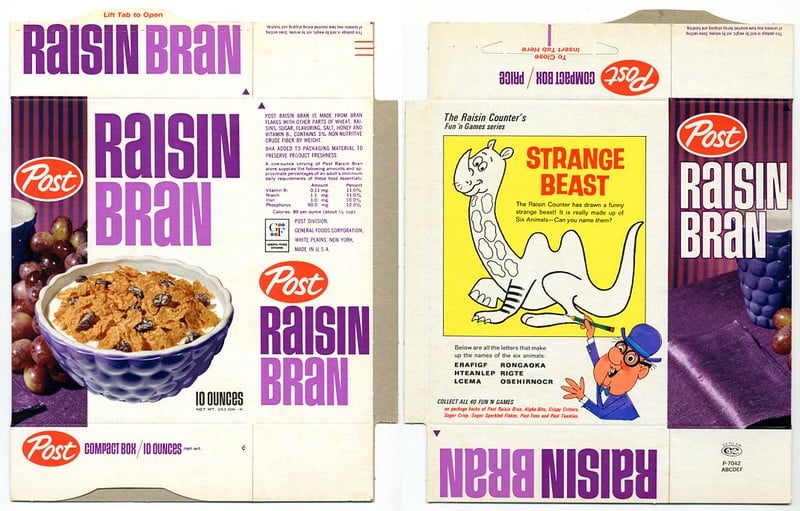
Manufactured by various companies, Raisin Bran hit the market around 1926 as a nutritious morning option that packed heart-healthy bran with natural sweetness from raisins. The cereal’s famous ‘two scoops of raisins’ slogan became iconic, and parents appreciated the nutritional benefits while kids enjoyed the natural sweetness. Raisin Bran represented the perfect compromise between health and taste, proving that nutritious breakfast didn’t have to be boring. The cereal succeeded by highlighting its benefits rather than hiding them, making parents feel good about serving it to their families.
Sugar Smacks

Sugar Smacks hit shelves in 1953 with a box featuring the slightly scary Cliffy the Clown, though the mascot later evolved into the more popular Dig ‘Em Frog. Kellogg’s Sugar Smacks was created with an impressive 56% sugar content by weight, making it one of the sweetest cereals ever produced. The golden, sugary puffs with their sweet honey flavor became irresistible to kids, while the catchy jingle made it unforgettable. Sugar Smacks represented the peak of the 1950s sugar cereal trend, proving that sometimes more really was more when it came to breakfast sweetness.
Honeycomb

Post introduced Honeycomb in 1965 with its distinctive giant, honey-sweetened hexagonal shape. The cereal became famous for its honeycomb shape and honey flavoring, marketed with memorable ads featuring the ‘Honeycomb Hideout’ where kids gathered to enjoy the cereal. Honeycomb’s unique shape wasn’t just for show—those hexagonal pieces held milk better than traditional flakes or puffs, creating a more satisfying eating experience. The cereal proved that innovation in shape could be just as important as innovation in flavor, creating a textural experience that set it apart from the competition.
The Sweet Legacy of Morning Innovation

These seventeen cereals represent more than just breakfast options—they’re a timeline of American innovation, marketing genius, and changing family dynamics. From the health-focused origins of Corn Flakes and Grape-Nuts to the sugar-packed creativity of Lucky Charms and Trix, each cereal reflects the era that created it. The evolution from simple grain-based nutrition to colorful, character-driven experiences shows how breakfast became not just about sustenance, but about joy, convenience, and family bonding. Today’s cereal aisle owes its existence to these pioneers who proved that the most important meal of the day could also be the most fun.
More from Go2Tutors!

- 16 Historical Figures Who Were Nothing Like You Think
- 12 Things Sold in the 80s That Are Now Illegal
- 15 VHS Tapes That Could Be Worth Thousands
- 17 Historical “What Ifs” That Would Have Changed Everything
- 18 TV Shows That Vanished Without a Finale
Like Go2Tutors’s content? Follow us on MSN.