15 Everyday Things That Are Actually Based on Ancient Traditions
Have you ever stopped to consider that many objects and customs we take for granted today have fascinating origins dating back thousands of years? Our modern world is built upon layers of history that continue to influence us in surprising ways.
Here is a list of 15 everyday things that have their roots in ancient traditions, each one a hidden connection to our ancestral past.
Throwing Coins in Fountains

That casual toss of spare change into a fountain isn’t just a modern tourist activity. This practice dates back to ancient Rome, where people would throw coins into sacred pools to gain favor with the gods who supposedly lived in the water.
The Romans believed these water deities could grant wishes and heal ailments. Today’s fountain wishes are a direct descendant of these ancient religious offerings, though most people make their wishes without considering they’re participating in a ritual over 2,000 years old.
Wedding Rings

The circular wedding band symbolizing eternal love has ancient Egyptian origins from around 4800 BCE. These early rings were made from braided hemp or reeds, later replaced by leather, bone, and eventually precious metals.
Ancient Egyptians viewed the circle as a symbol of eternity, and the empty center represented a gateway to the unknown future. The Romans later adopted this tradition but with a twist, they used rings to signify ownership of the wife rather than mutual commitment.
Toasting Drinks

Raising glasses and clinking them together before drinking is a tradition with practical origins. In medieval times, banquet attendees would pour a bit of their drink into each other’s cups as insurance against poisoning.
The forceful clinking was meant to slosh liquid between glasses, ensuring everyone shared the same potentially dangerous drink. What began as a safety measure evolved into today’s gesture of goodwill and celebration, though thankfully without the fear of assassination.
Knocking on Wood
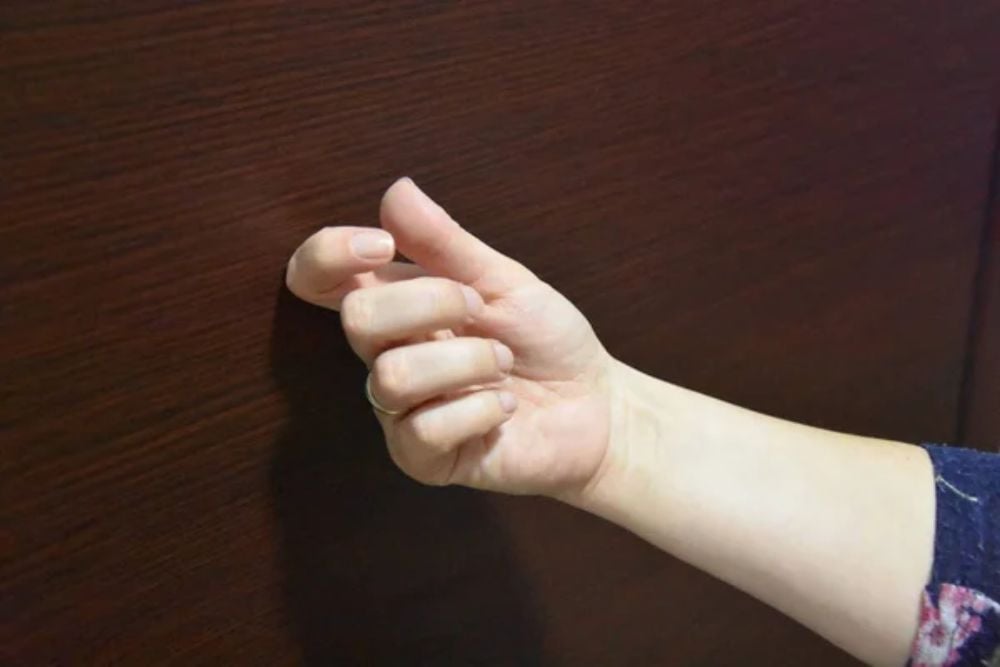
People who knock on wood after saying something pleasant are engaging in a superstition that has its origins in pagan customs. Slavic, Germanic, and Celtic peoples of antiquity thought that trees held guardian spirits.
To call upon these spirits for protection or to express gratitude for good fortune, one would touch or tap on wood. The custom persisted when Christianity spread throughout Europe and the world, evolving into the instantaneous superstitious gesture that it is today.
Umbrellas

Originally, the useful rain shield you grabbed before leaving on a stormy day was a prestige and power symbol. In order to shelter themselves from the sun, aristocrats only used umbrellas, as evidenced by artifacts from 3500 BCE.
Umbrellas made of silk were only used by imperial families in ancient China. One’s rank was represented by the number of layers on an umbrella. Lesser nobility had fewer tiers than the emperor, who had four. The usage of umbrellas for rain protection in Europe did not increase until the 16th century.
Birthday Candles

Blowing out candles on birthday cakes originated with the ancient Greeks, who brought moon-shaped cakes to the temple of Artemis, the goddess of the moon. These cakes were decorated with lit candles to make them glow like the moon.
The smoke from extinguished candles was believed to carry prayers to the gods. Germans later popularized ‘Kinderfeste’ in the 18th century, a children’s birthday celebration featuring cake and candles, establishing the tradition we continue today.
Throwing Rice at Weddings
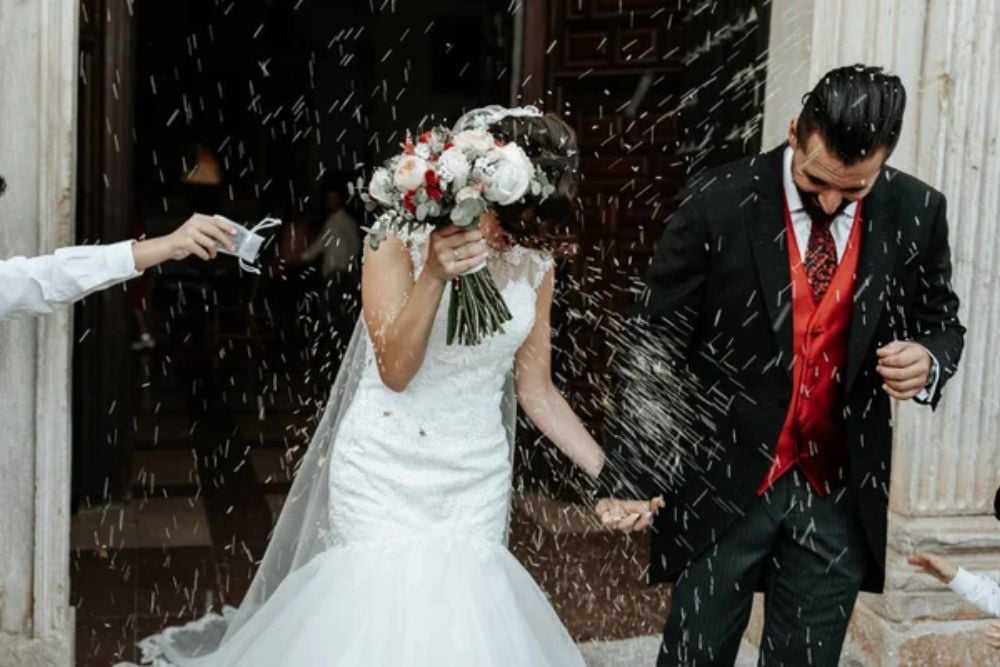
The handful of rice tossed at newlyweds represents one of our oldest fertility symbols. This tradition began in ancient China where rice symbolized fertility, prosperity, and abundance. Other cultures adopted similar practices using different grains native to their regions.
The symbolism was straightforward, showering couples with grain represented wishes for a fruitful union with many children. Modern weddings sometimes substitute rice with biodegradable alternatives, but the ancient meaning remains embedded in the gesture.
Shaking Hands
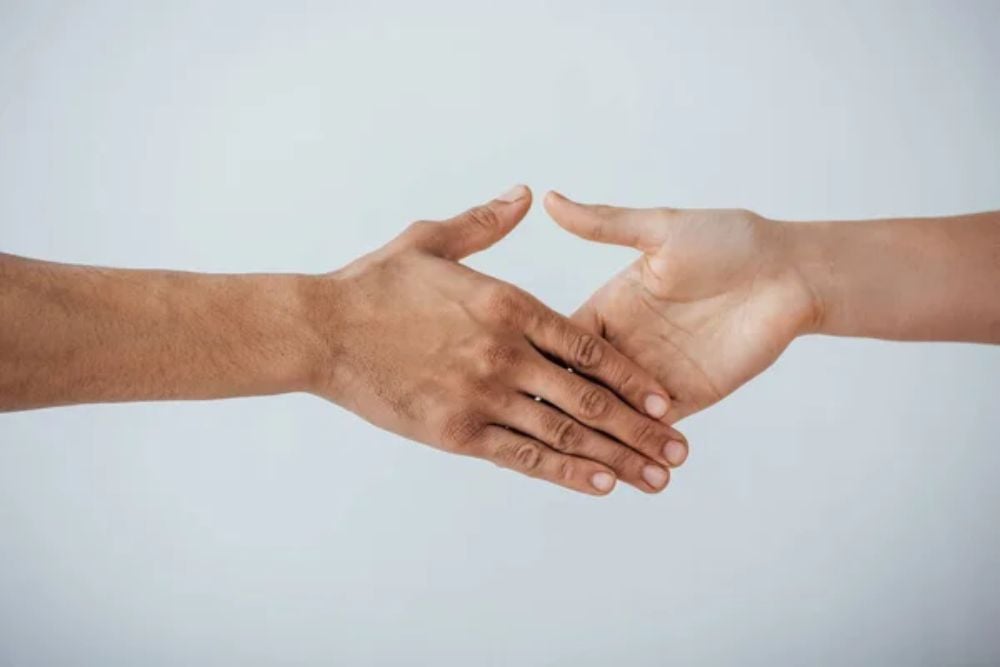
Our standard greeting has surprisingly practical ancient origins. The handshake likely began as a way to demonstrate you weren’t carrying weapons, extending an empty right hand showed peaceful intentions. Evidence of handshaking appears in 9th century BCE Assyrian reliefs showing kings sealing agreements with handclasps. The Greeks and Romans formalized it as a symbol of peace and mutual respect. The up-and-down motion may have originally been intended to dislodge any hidden weapons in sleeves.
Kissing Under Mistletoe

This holiday tradition stems from ancient Norse mythology. When the god Balder was killed by an arrow made of mistletoe, his mother Frigg declared the plant a symbol of love rather than death and promised to kiss anyone who passed beneath it.
The kissing tradition was later incorporated into winter solstice celebrations and eventually Christmas festivities. Mistletoe’s association with fertility, that it stays green through winter, reinforced its romantic symbolism across centuries.
Engagement Rings

The diamond engagement ring has roots stretching back to ancient Rome. Romans gave their brides two rings: an iron one worn at home and a gold one for the public.
The first documented diamond engagement ring was commissioned by Archduke Maximilian of Austria in 1477 for Mary of Burgundy. The tradition of placing the ring on the fourth finger comes from the ancient Egyptian belief that the ‘vena amoris’ or ‘vein of love’ ran directly from this finger to the heart.
Using Salt to Season Food

The salt shaker on your dining table represents one of humanity’s oldest food technologies. Salt was so valuable in ancient times that Roman soldiers received salarium, a salt allowance that’s the etymological root of our word ‘salary.’
Ancient civilizations from China to Egypt used salt for food preservation long before refrigeration. The ceremonial offering of bread and salt to guests remains a tradition in Slavic countries, symbolizing hospitality and friendship based on salt’s ancient value.
Carrying Brides Over Thresholds

The romantic gesture of carrying a bride over the threshold began with considerably less romantic intentions. In ancient Rome, it was believed that a bride who tripped when entering her new home invited bad luck.
More sinisterly, the tradition may have originated with bride capture, where grooms literally carried off unwilling brides. Another explanation comes from medieval Europe, where it was thought that evil spirits lurked at thresholds, and carrying the bride protected her from these entities.
Clapping After Performances

The rhythmic applause following performances dates back to ancient Rome, where audiences would clap in specific patterns to show appreciation rather than the random clapping we do today. Romans even employed professional applauders called ‘laudiceni’ to lead audience responses.
In some ancient cultures, clapping was believed to drive away evil spirits that might be attracted to the performers. The standing ovation also began with the Romans, who would rise from their seats to honor truly exceptional performances.
Using Makeup

Your morning makeup routine connects you to ancient Egyptian nobility from 6,000 years ago. Egyptian men and women used kohl (made from ground minerals) to line their eyes, believing it offered protection from the evil eye and the harsh desert sun.
They created rouge from red ochre and lip stains from crushed insects. Green malachite powder served as eyeshadow. These cosmetics had both spiritual and practical purposes, many contained antimicrobial properties that helped prevent eye infections common in desert environments.
Playing Board Games

That family board game night continues a tradition spanning at least 5,000 years. The Royal Game of Ur, discovered in ancient Mesopotamia, dates to 2600 BCE and featured a racing game with pieces moved according to dice rolls.
Ancient Egyptians played Senet, believing the game represented the soul’s journey to the afterlife. Backgammon evolved from the Roman game Tabula, while Chess originated in 6th century India as Chaturanga.
These games served not just as entertainment but as training in strategy and sometimes religious instruction.
The Legacy Continues

These everyday traditions demonstrate how ancient practices embed themselves into modern life, often evolving in meaning while maintaining their forms. Each time we follow these customs, sometimes without knowing their origins, we form a living connection to our ancestors from millennia past.
The persistence of these traditions shows that despite technological advances, certain human experiences and expressions remain remarkably consistent across time and cultures.
More from Go2Tutors!

- The Romanov Crown Jewels and Their Tragic Fate
- 13 Historical Mysteries That Science Still Can’t Solve
- Famous Hoaxes That Fooled the World for Years
- 15 Child Stars with Tragic Adult Lives
- 16 Famous Jewelry Pieces in History
Like Go2Tutors’s content? Follow us on MSN.