26 American Buildings That Survived Major Earthquakes
Every earthquake sorts a city into two groups: the buildings that came down and the ones that did not. The second group rarely gets credit for luck, because luck is hard to photograph.
Across the country, a surprising number of landmarks have taken the hit, shrugged, and gone back to work. Some were barely scratched. Others were gutted, cracked, or twisted out of true, and still came out the other side. Their stories are less about invincibility than about what people do after the shaking stops.
San Francisco Ferry Building
— Photo by lucidwaters
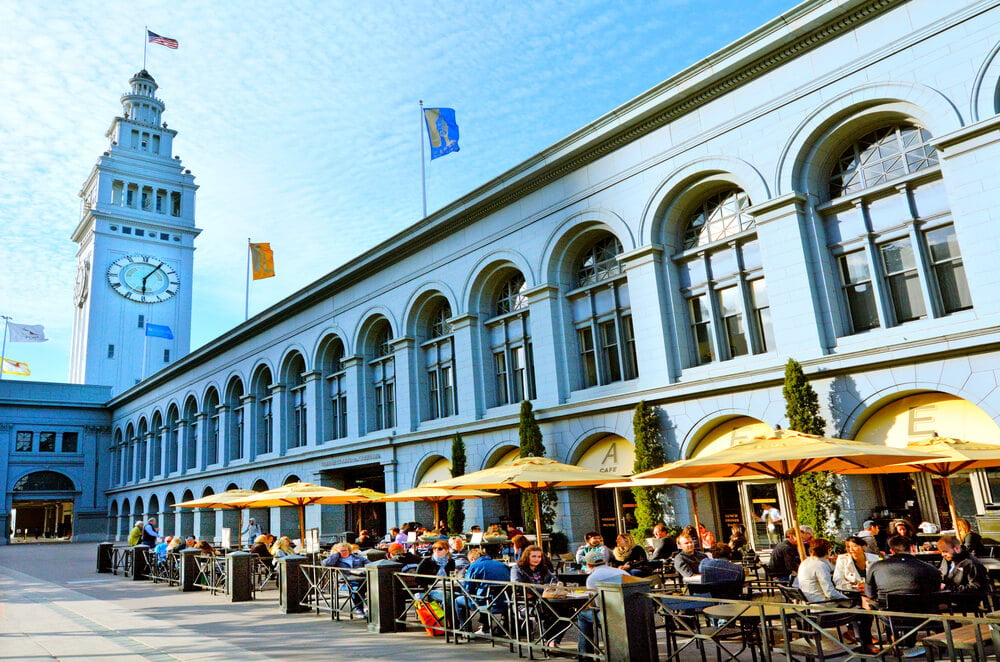
Opened in 1898, the Ferry Building and its 245-foot clock tower, modeled on the Giralda tower in Seville, stood through the 1906 San Francisco earthquake and fire. In the days afterward, ferries carried refugees from its slips across the bay. Its second brush with disaster came in 1989, when Loma Prieta damaged the Embarcadero Freeway that had long walled the building off from the rest of the city. The freeway was torn down, and the Ferry Building reappeared on the waterfront as if it had been waiting.
Mission San Francisco de Asis (Mission Dolores)
— Photo by raagoon@gmail.com
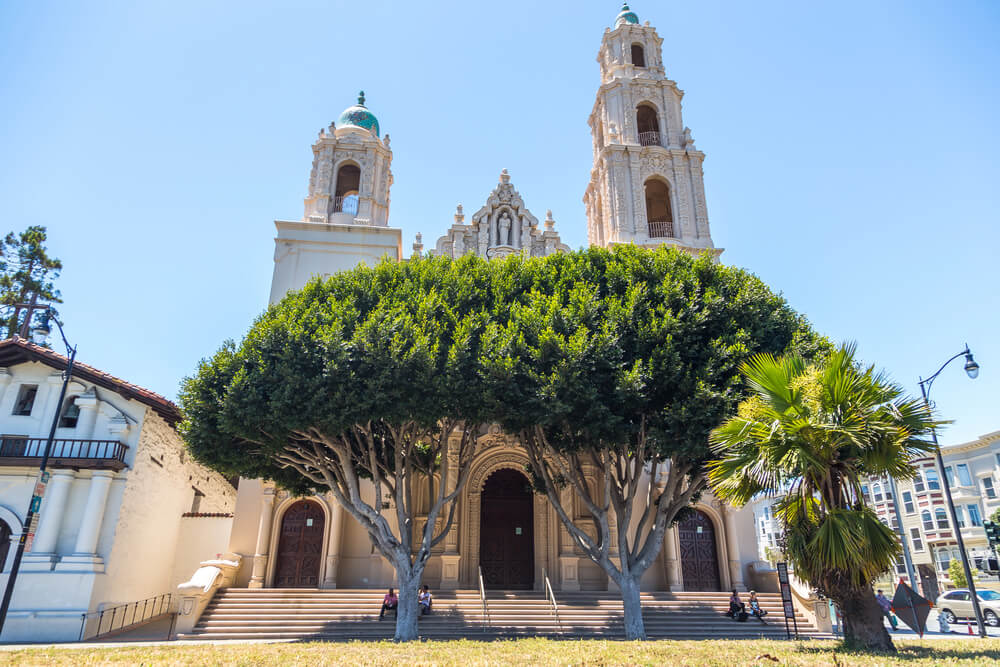
The adobe church at Mission Dolores was completed in 1791, and its thick walls rode out the 1906 earthquake that wrecked much of the city around it. The larger brick church built next door in the 1870s did not fare as well and was replaced by a basilica in 1918. Inside, the original redwood ceiling beams are still bound with rawhide and painted with designs from the Ohlone people. It is generally regarded as the oldest intact building in San Francisco.
Transamerica Pyramid
— Photo by lucidwaters
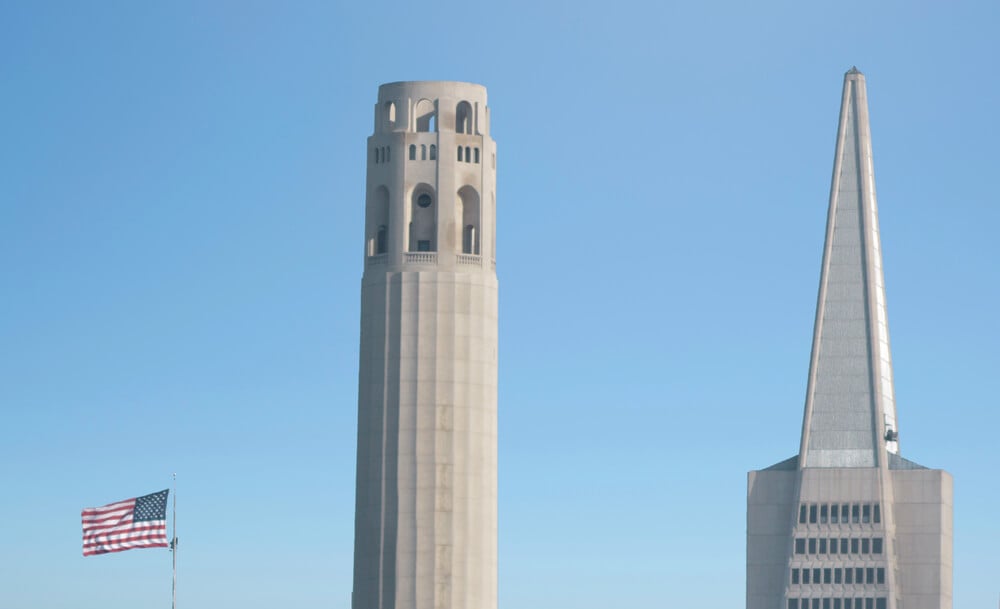
Completed in 1972 and rising 853 feet, the Transamerica Pyramid was the tallest building in San Francisco for decades. When the Loma Prieta earthquake struck on October 17, 1989, its upper floors swayed noticeably, and the instruments installed in the building recorded exactly how it moved. Researchers at the U.S. Geological Survey later published a study of that data. The tapered shape that critics once mocked turned out to be an excellent teacher.
Sentinel Building
— Photo by pandionhiatus3
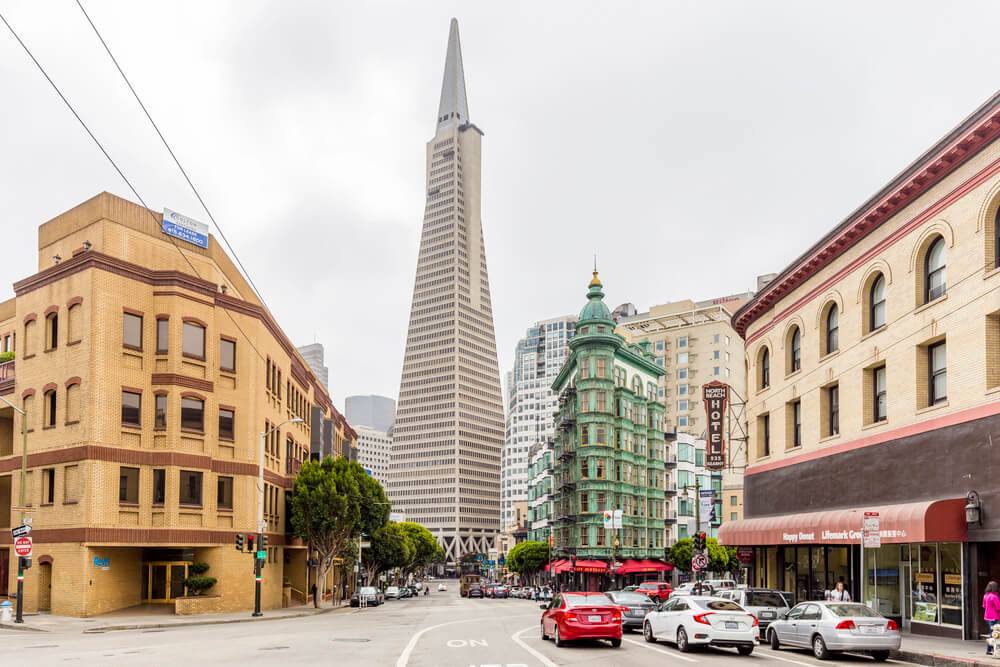
Finished in 1905, the copper-green Sentinel Building sits at the corner of Columbus Avenue and Kearny Street, shaped like a slice of pie to fit the odd intersection. It was barely a year old when the 1906 earthquake hit North Beach, and it came through to become one of the neighborhood’s most recognizable landmarks. Director Francis Ford Coppola later bought it and made it the home of his production company, American Zoetrope. Few office buildings have a better origin story and a better second act.
Old Faithful Inn
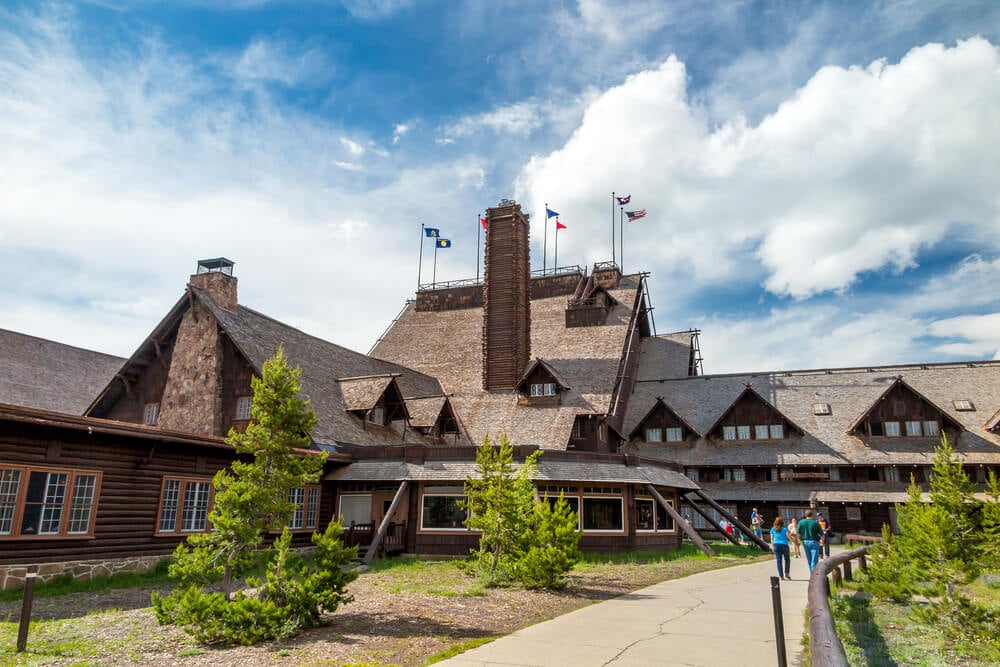
Built from lodgepole pine logs and topped with a rhyolite fireplace in the lobby, the inn opened at Yellowstone in 1904 under architect Robert Reamer. On August 17, 1959, the magnitude 7.3 Hebgen Lake earthquake shook the region, and the log frame stayed standing while it flexed. The same quake rearranged thermal features across the park, yet the inn kept its place beside Old Faithful Geyser.
Space Needle
— Photo by tusharkoley_c
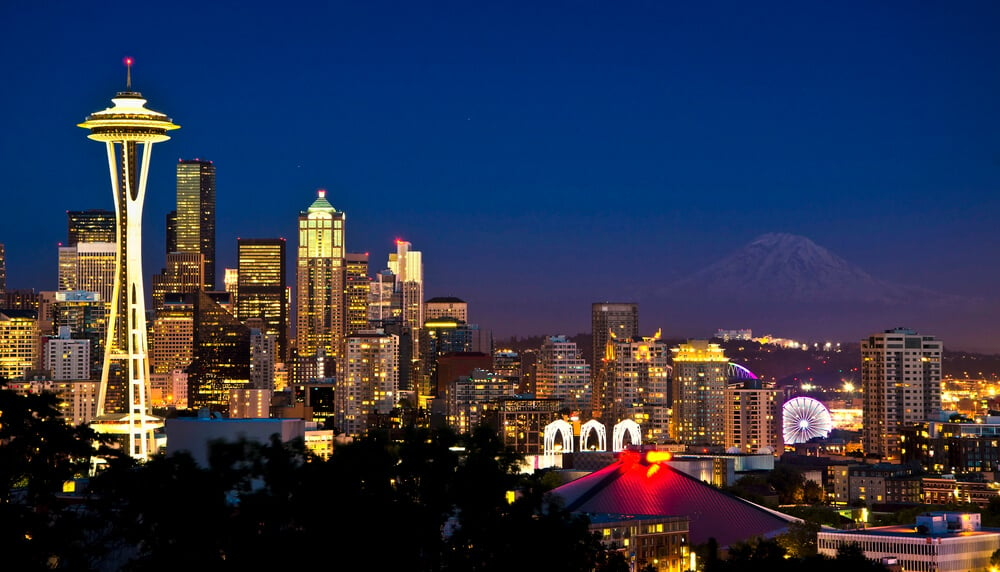
The Space Needle rose to 605 feet in about 400 days to open for the 1962 World’s Fair. On February 28, 2001, the magnitude 6.8 Nisqually earthquake rattled western Washington, and the Needle swayed as the structure was designed to do. Seattle’s most famous silhouette kept its place on the skyline.
Washington State Legislative Building
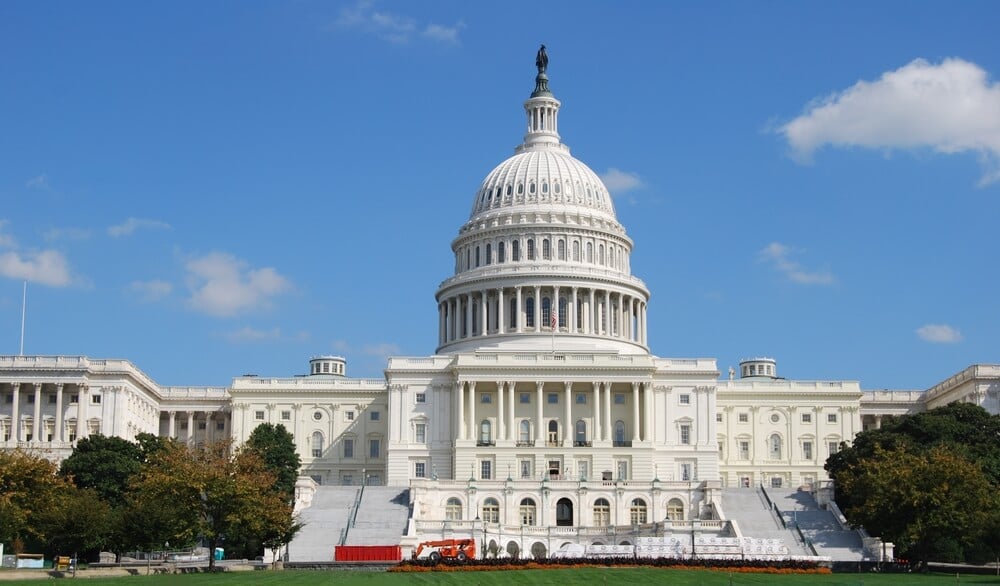
The domed Legislative Building in Olympia was completed in 1928, and its masonry dome is one of the signature outlines in the Pacific Northwest. The 2001 Nisqually earthquake shifted and rotated the dome, and the building suffered enough damage to require a major rehabilitation that finished in 2004. Engineers added seismic reinforcement that its original builders never had the knowledge to include. The result is a historic building that now holds together better than it did the day it opened.
Los Angeles City Hall
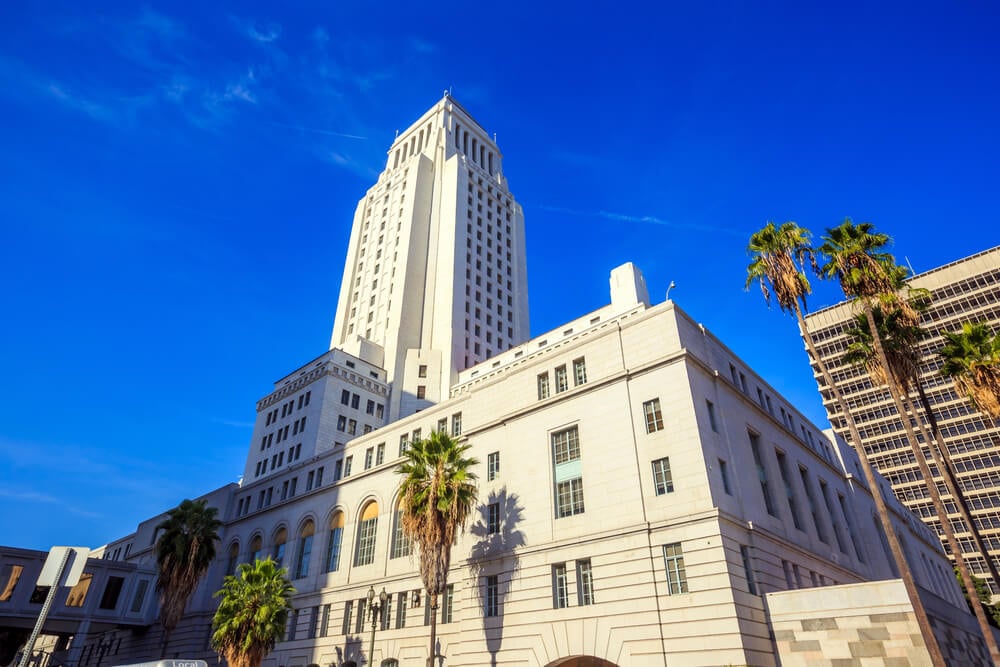
Completed in 1928 at 454 feet, Los Angeles City Hall was the tallest building in the city until 1964. Its builders mixed sand from each of California’s 58 counties into the concrete of its lower tower, a detail often cited in its history. The building stood through the 1933 Long Beach earthquake and was damaged in the 1994 Northridge earthquake. A retrofit completed in the early 2000s set the entire structure on base isolators, so it can now slide with the ground rather than fight it.
Salt Lake Temple
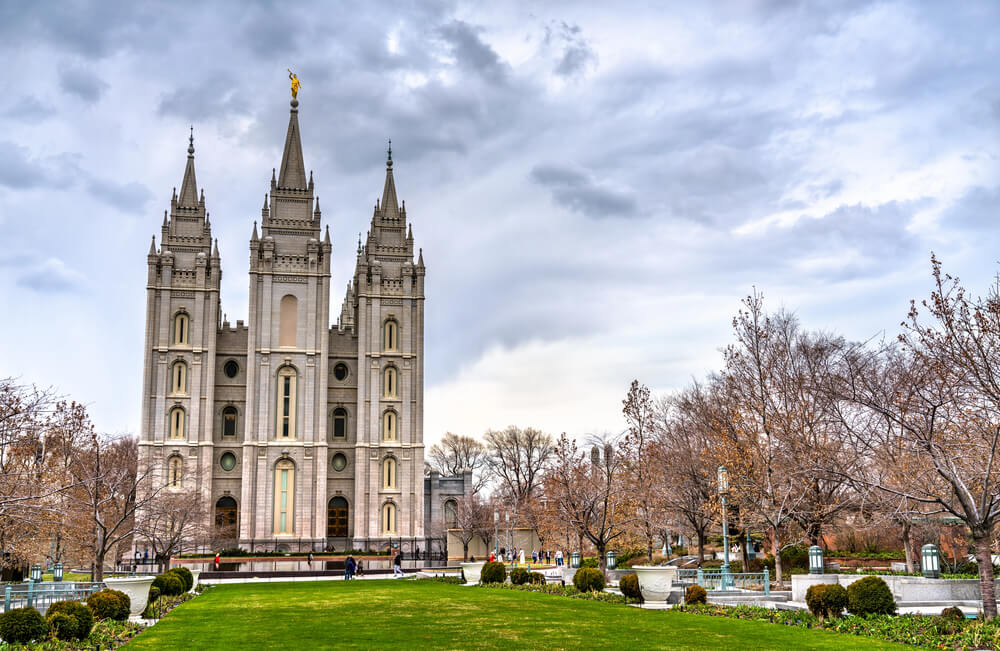
Construction of the Salt Lake Temple took forty years, from 1853 to 1893, and the granite building became the centerpiece of Temple Square. When the magnitude 5.7 Magna earthquake struck on March 18, 2020, the temple sustained minor damage, and the trumpet fell from the Angel Moroni statue on its tallest spire. Photos of the trumpetless figure spread within hours. The temple was already scheduled for a seismic renovation, which was expanded afterward.
Oakland City Hall
— Photo by Leonid_Andronov
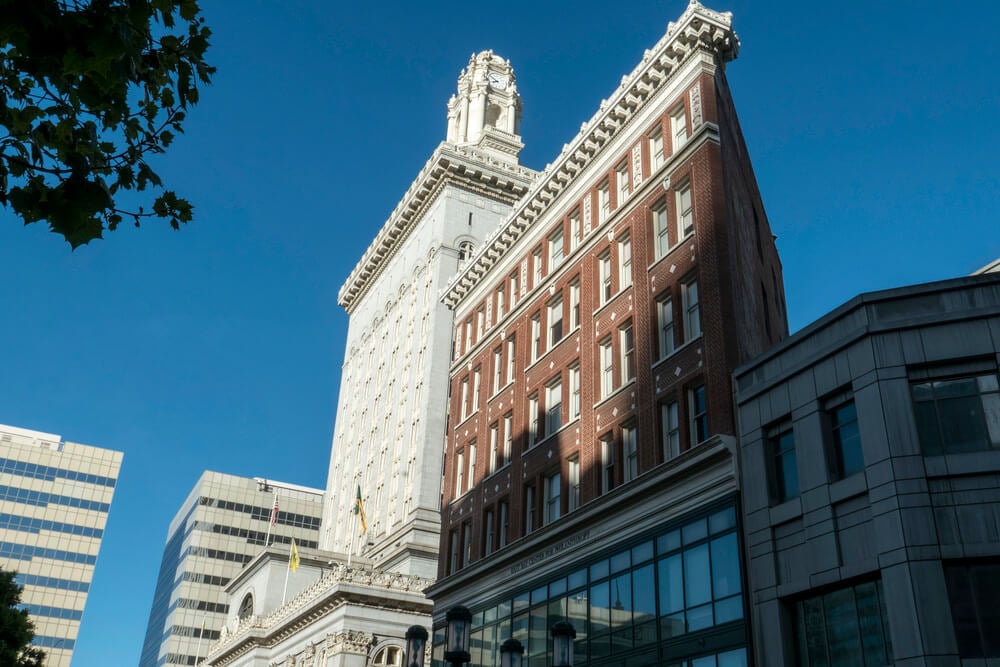
Oakland City Hall opened in 1914 as a tower topped with a lantern and clock, and it dominated the downtown skyline for decades. The Loma Prieta earthquake in 1989 damaged the building badly enough that it was closed for years. Engineers then separated the structure from its foundation with base isolation, a technique that lets the ground move without dragging the building along. It reopened in 1995 as one of the early large historic buildings in the country to receive that treatment.
San Francisco Old Mint
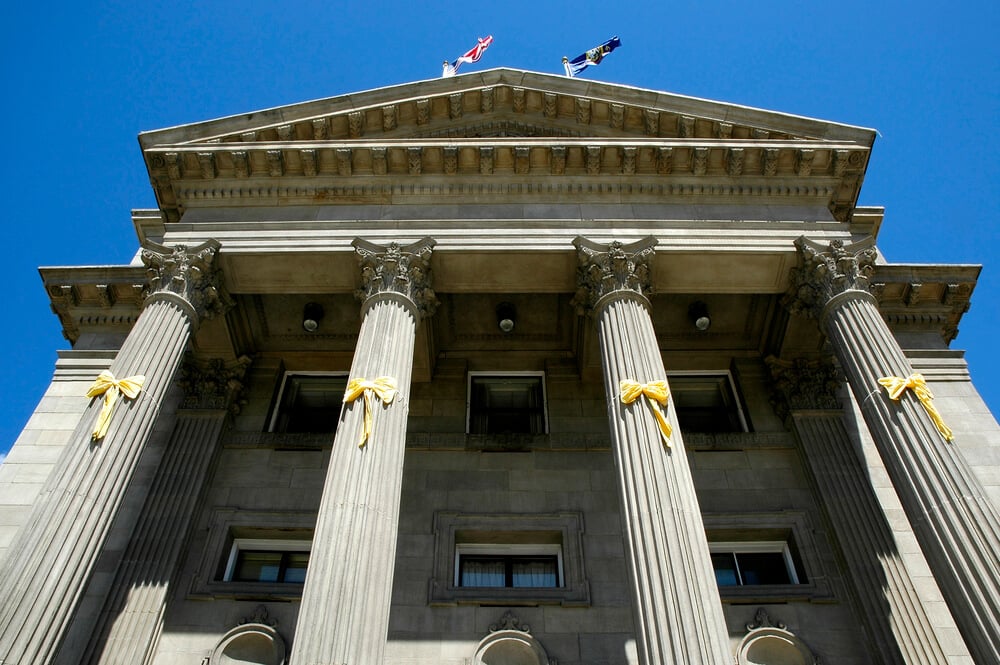
Built between 1869 and 1874, the granite Old Mint earned the nickname the Granite Lady for its sturdy build. It came through the 1906 earthquake, and its employees helped defend it from the fire that followed by using the building’s own water supply. That made it one of the few downtown buildings to remain in good working order afterward. The mint continued to operate while much of the surrounding district lay in ruins.
Fairmont San Francisco
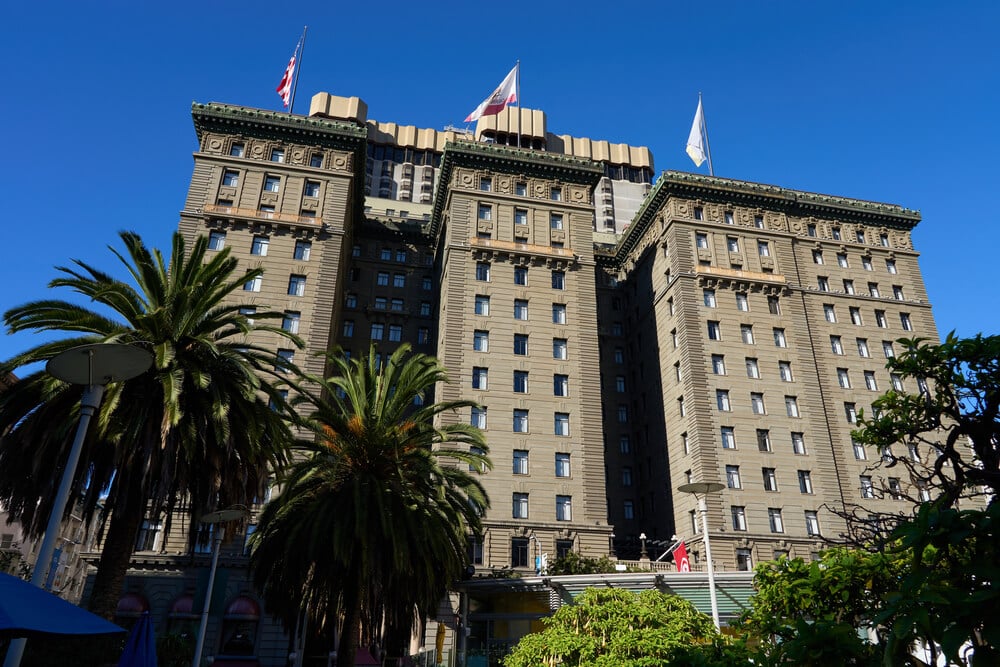
— Photo by IvoZaloudek
The Fairmont was nearly finished atop Nob Hill when the 1906 earthquake struck, and the fire that followed gutted its interior. Architect Julia Morgan oversaw the repair of the structure, and the hotel reopened in 1907, about a year after the disaster. Morgan was just beginning a career that would later include Hearst Castle. The Fairmont is an example of a building that survived the shaking first and the flames second.
Flood Building
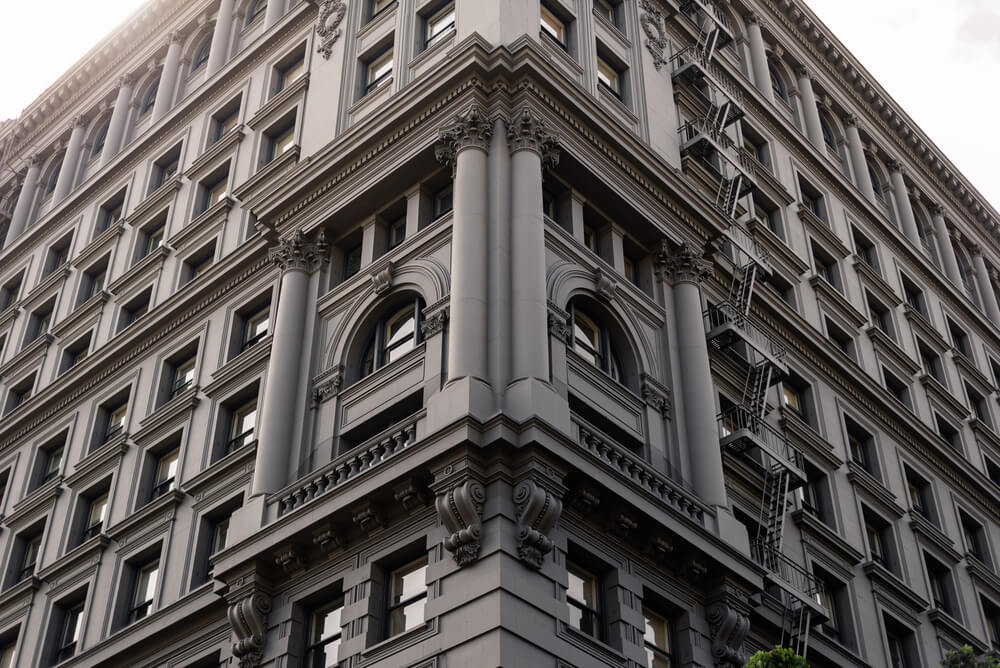
Completed in 1904 at Market and Powell streets, the Flood Building was designed by architect Albert Pissis in a flatiron shape that follows the angle of the intersection. It stood through the 1906 earthquake, though fire burned out its interior and forced a rebuild. The exterior stayed up and became one of the more recognizable pieces of Market Street. It was built by the family of Comstock Lode millionaire James Flood.
Washington Monument
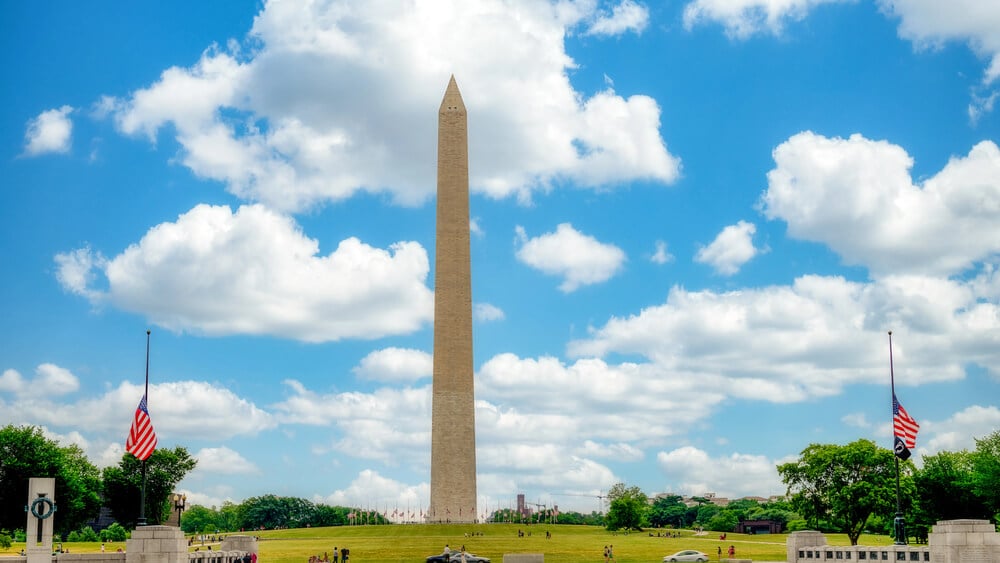
The 555-foot Washington Monument in the nation’s capital faced a rare East Coast earthquake on August 23, 2011, when a magnitude 5.8 quake centered near Mineral, Virginia, sent visitors running from the top. Cracks appeared in the stone near the pyramidion, and the monument closed to visitors. Repairs kept it shut for nearly three years, and it reopened on May 12, 2014. The stone obelisk had never been designed with a quake like that in mind.
Huliheʻe Palace
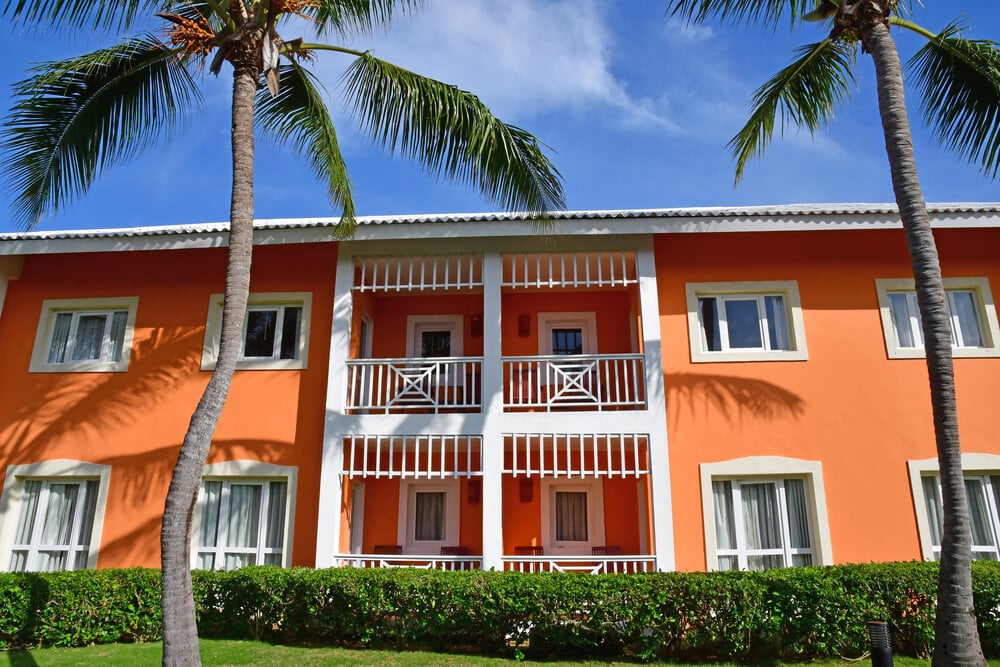
— Photo by packshot
Governor John Adams Kuakini built Huliheʻe Palace in Kailua-Kona in 1838 out of lava rock, and it later served as a retreat for Hawaiian royalty. On October 15, 2006, the magnitude 6.7 Kiholo Bay earthquake struck the island of Hawaii and caused extensive structural damage to the palace. It was repaired and remains a museum. Few residences can claim both a royal guest list and a seismic repair file.
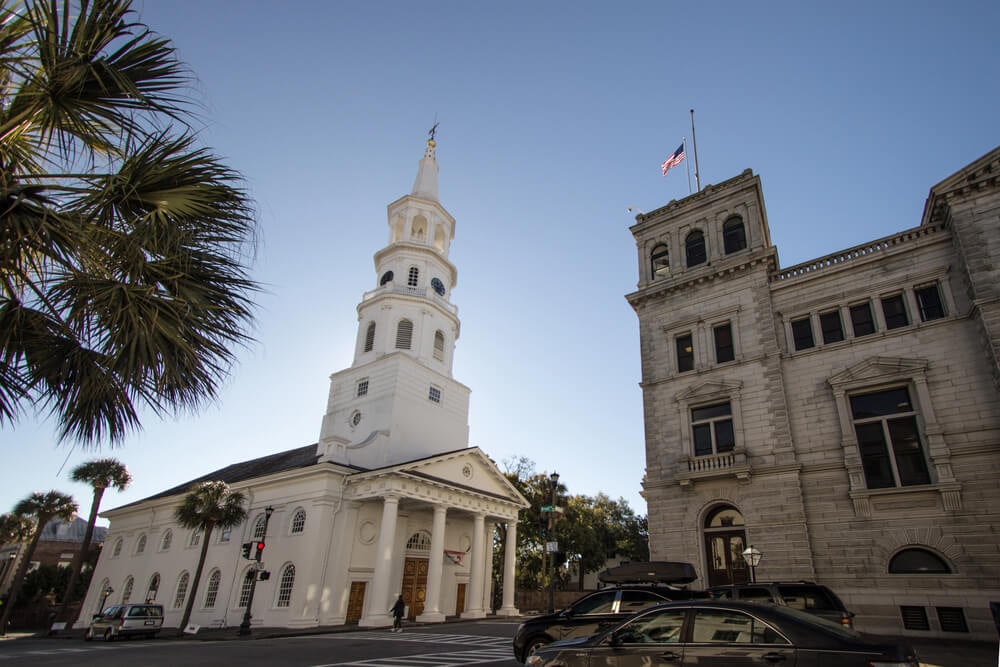
St. Michael’s Church in Charleston
— Photo by ehrlif
St. Michael’s Church at Meeting and Broad streets was built between 1751 and 1761 and still looks much as it did when George Washington worshipped there in 1791. When the magnitude 7 earthquake hit Charleston on August 31, 1886, many of the city’s colonial buildings were shaken and damaged. The city later became known for the iron earthquake bolts that were installed to tie walls together. St. Michael’s remains one of the most visible survivors of the colonial era.
San Francisco City Hall
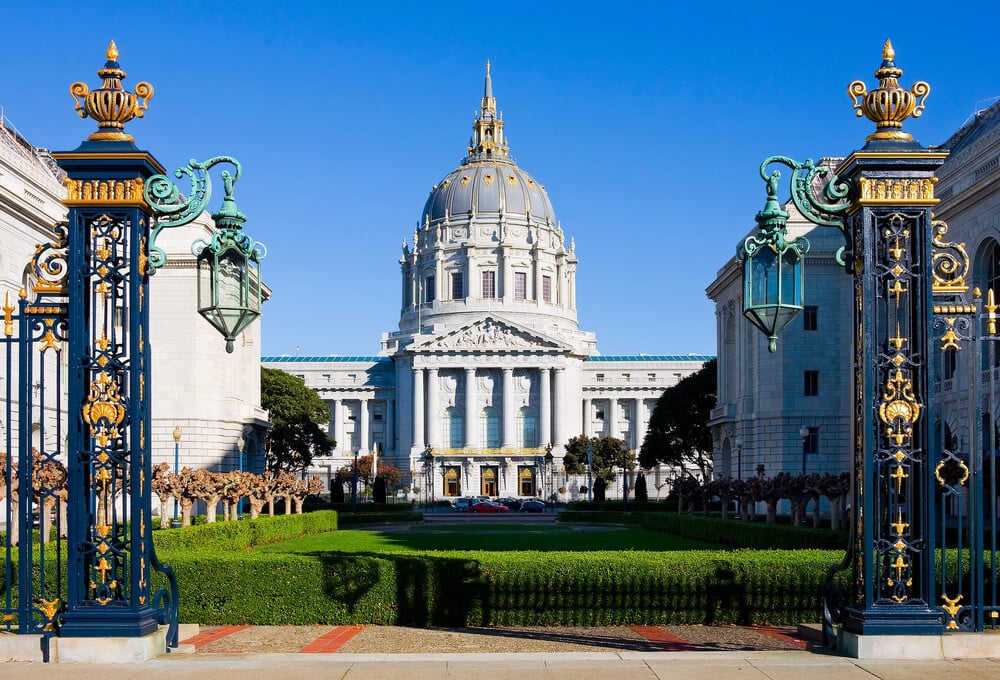
The current City Hall opened in 1915 and was topped with a dome rising 307 feet, higher than the one on the U.S. Capitol. The 1989 Loma Prieta earthquake damaged the building and led to a major retrofit that installed hundreds of rubber-and-steel isolators beneath it. The work finished in the late 1990s, allowing the building to shift with the ground in a future quake. The project took years and cost many millions of dollars.
Smith Tower
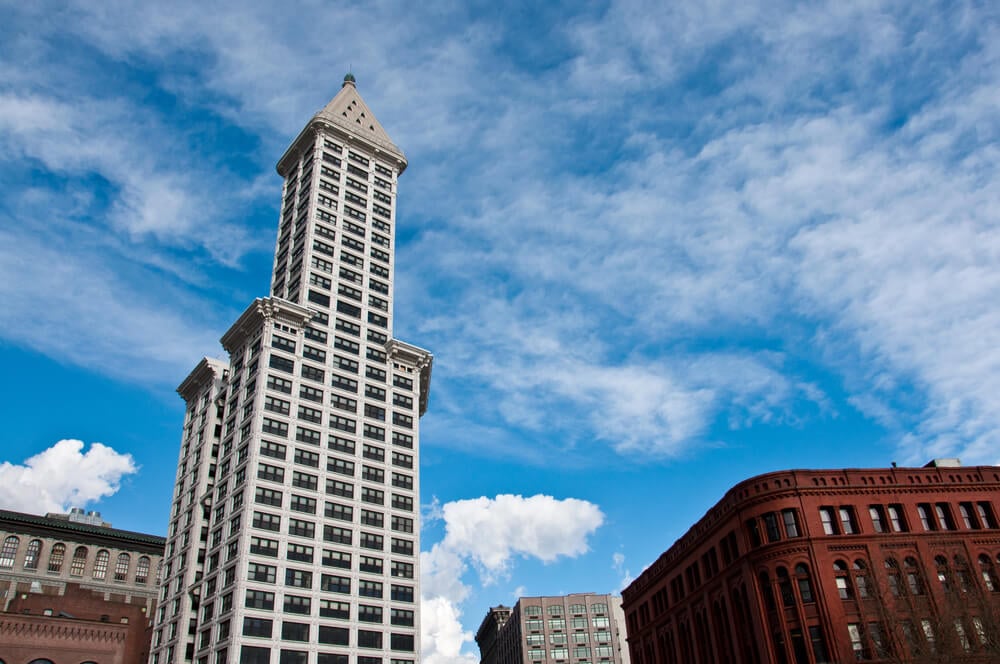
Completed in 1914 for typewriter magnate Lyman Cornelius Smith, Smith Tower rose to 462 feet and was the tallest building west of the Mississippi for years. It has stood through three significant Puget Sound earthquakes in 1949, 1965, and 2001. Its ornate Chinese Room still draws visitors. The old skyscraper keeps showing that age and good bones can beat newer designs.
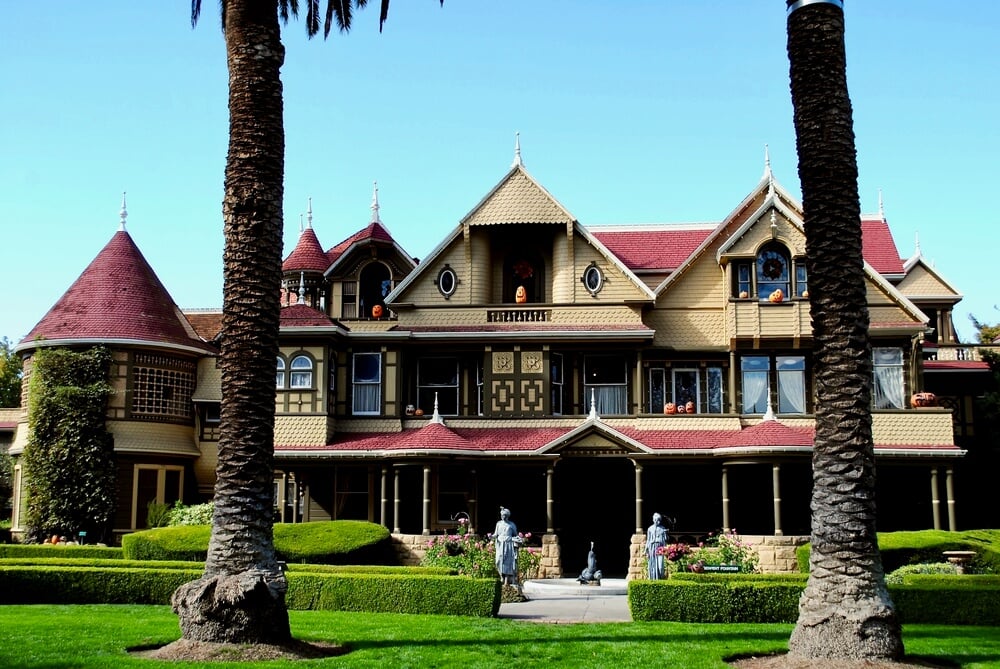
Winchester Mystery House
— Photo by EWYMedia
Sarah Winchester’s sprawling mansion in San Jose was famously damaged in the 1906 earthquake, which brought down upper floors and trapped her in the Daisy Room. The house had been seven stories tall, and today it stands at four. She boarded up the damaged front section of the house rather than repair it. The home’s reputation for oddity may owe as much to the quake as to any legend.
Pacific-Union Club
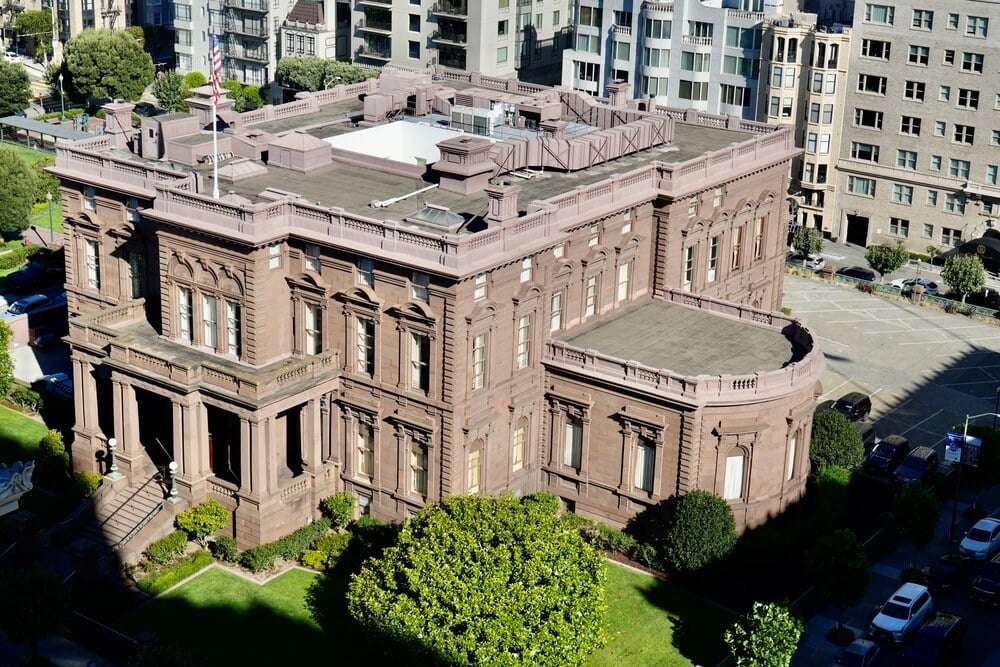
— Photo by a2gxe
The brownstone mansion atop Nob Hill was built in the 1880s for Comstock Lode millionaire James Flood. The shell of the mansion survived the 1906 earthquake and fire, though the interior burned. Architect Willis Polk redesigned it and added wings, and the Pacific-Union Club bought it in 1907. The brownstone walls had more staying power than anything inside them.
Old St. Mary’s Cathedral
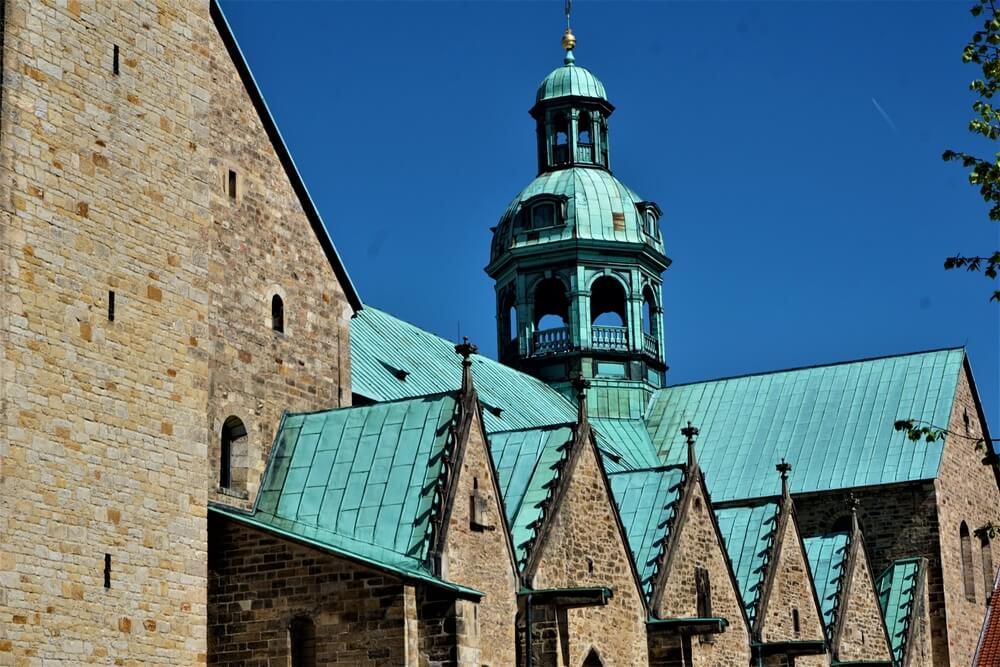
Old St. Mary’s Cathedral opened in 1854 at the edge of Chinatown, and its bricks were reportedly shipped around Cape Horn from New England. The walls withstood the 1906 earthquake, though fire gutted the interior. The inscription beneath its clock reads, “Son, observe the time and fly from evil,” a message that landed differently on April 18, 1906. The church was rebuilt and remains a working parish.
James R. Browning United States Court of Appeals Building
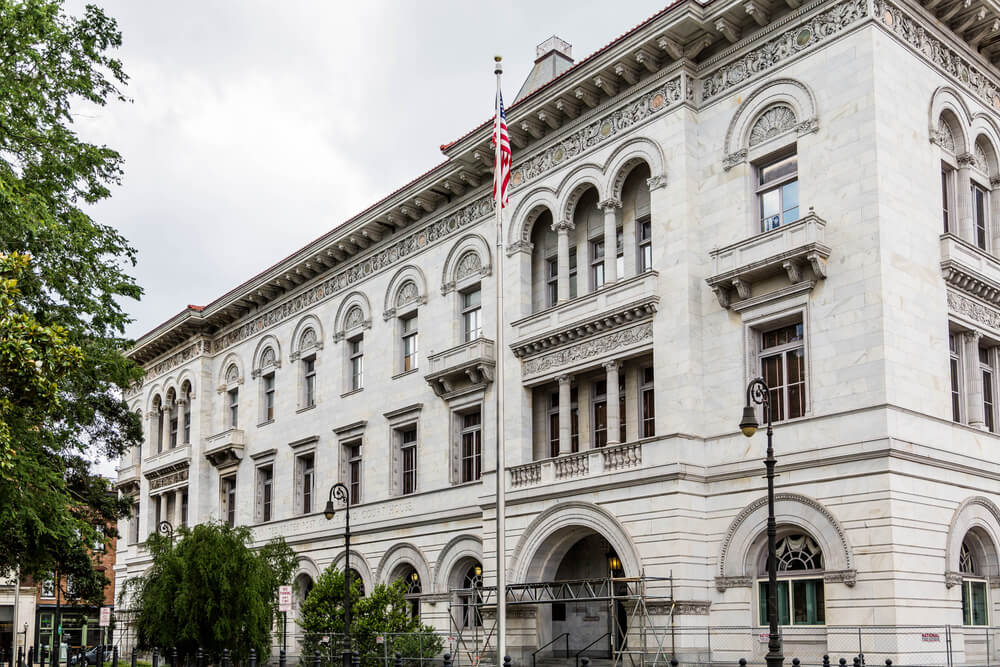
Designed by Supervising Architect James Knox Taylor and completed in 1905, the granite federal building at Seventh and Mission streets was only about a year old when the 1906 earthquake struck. It came through and later became home to the Ninth Circuit Court of Appeals. Few federal buildings are given so early a test of their engineering. It is one of the sturdier survivors from the pre-quake city.
Washington National Cathedral
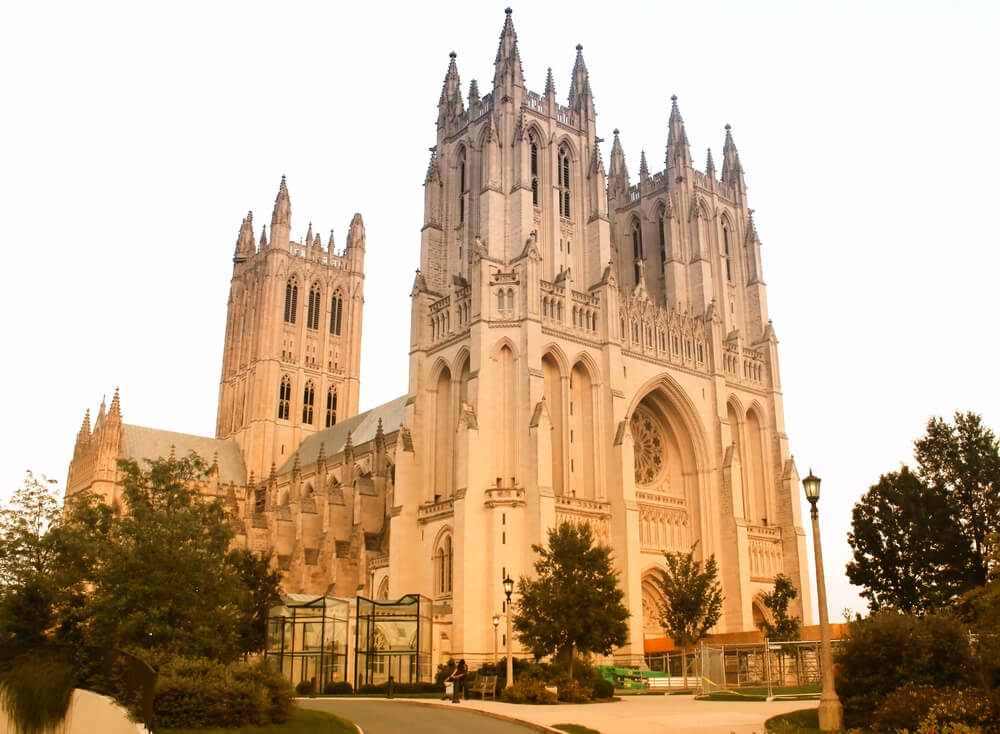
— Photo by doganmesut@hotmail.com
Construction of Washington National Cathedral began in 1907 and finished in 1990, a span of 83 years. On August 23, 2011, the same Virginia earthquake that cracked the Washington Monument broke pinnacles on the cathedral’s central tower and damaged its flying buttresses. The cathedral closed for inspections and later reopened for services. Repairing the stonework took years, and some of it was still ongoing years later.
Hibernia Bank Building
— Photo by dbvirago
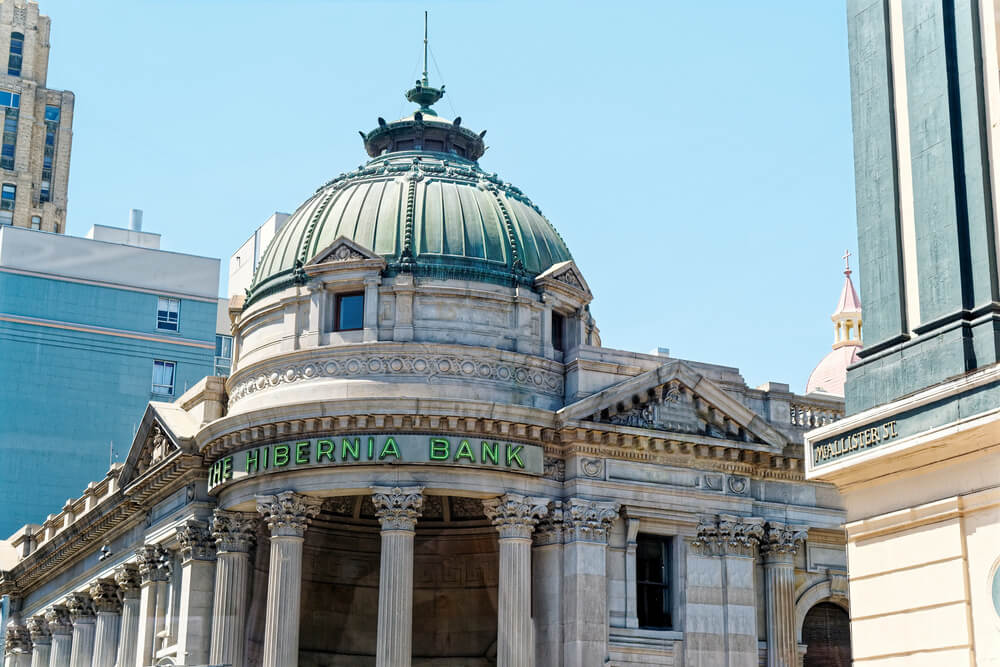
Designed by Albert Pissis and completed in 1892, the Hibernia Bank Building at Jones and McAllister streets is a Beaux-Arts landmark that stood through the 1906 earthquake. It later sat empty for years before an extensive restoration and seismic retrofit brought it back to life in the 2010s. Its classical columns and dome are among the finer pieces of pre-quake architecture left in San Francisco. A building that old can only be saved with new steel hidden inside.
Napa County Historic Courthouse
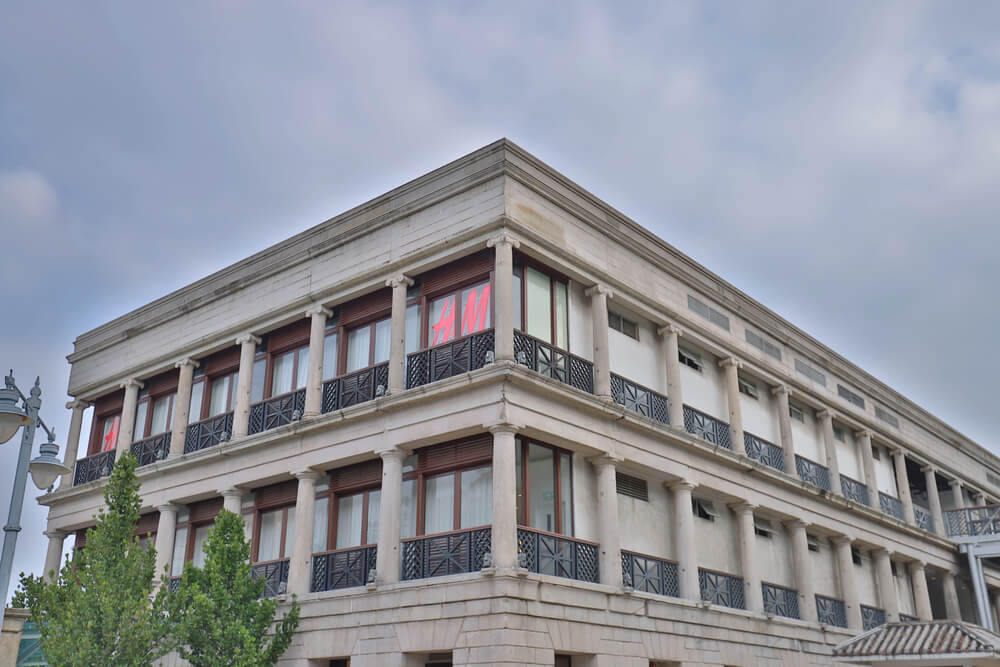
The Napa County Courthouse was built in the 1870s and stands in the center of downtown Napa. The magnitude 6.0 South Napa earthquake struck at about 3:20 a.m. on August 24, 2014, and damaged the historic courthouse. It was repaired and reopened to the public afterward. The work reflected a community effort to keep a recognizable landmark in service.
Salt Lake City and County Building
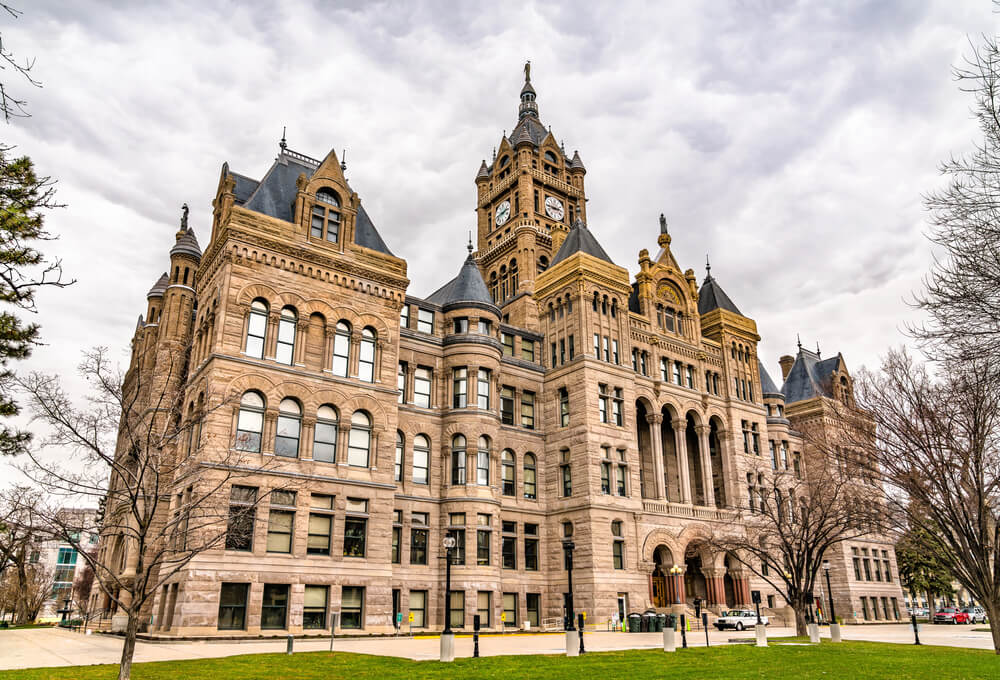
Completed in 1894 and designed by Richard Kletting, the Salt Lake City and County Building has a clock tower and a Romanesque style that make it stand out downtown. Engineers retrofitted it with base isolation in the late 1980s, which helped it during later seismic events. After the 2020 Magna earthquake, the building was closed and needed repairs. It is a reminder that even a retrofitted landmark has to keep proving itself.
What Standing Actually Means

Almost none of these buildings came through untouched. Some lost their interiors to fire, some lost rooftop ornaments, and some spent years behind scaffolding while engineers worked out what the shaking had done. Surviving, in practice, meant staying upright long enough to be repaired.
The pattern that runs through the list is that survival was rarely an accident of age alone. Thick walls, good steel, and later retrofits all played a part, and so did the decision to keep paying for repairs. A landmark is a building that a community keeps choosing to save.
More from Go2Tutors!

- 27 Silver Dollars and Half Dollars Worth Keeping
- 28 Restaurant Menu Items Nobody Orders Anymore
- 17 Places Built in Seemingly Impossible Spots
- 27 Vintage Rings Worth More Than They Look
- 25 Restricted Sites Tourists Can’t Enter
Like Go2Tutors’s content? Follow us on MSN.