Historical Photos of Street Vendors Preparing Food
Long before food trucks had a name, cooks worked from carts, baskets, and open fires on the sidewalk. Early photographers found them irresistible, and the pictures that survive show hot food being made in public, sometimes in weather that few kitchens would tolerate.
The images below span London, San Antonio, New York, New Orleans, Beijing, and Tokyo. Each one captures a vendor at work and a city that depended on them.
Halfpenny Ices in Victorian London
John Thomson’s “Street Life in London,” published in 1877, includes a Woodburytype titled “Halfpenny Ices” showing Italian ice-cream sellers around Saffron Hill. The scene records a trade that supplied the poor with a cheap treat.
It stands among the earliest photographic studies of street food.
Ginger Beer and Shellfish in the Same Book
Thomson’s book also pictures ginger beer makers and a shellfish seller, and “The Cheap Fish of St Giles” appears in its contents. Together the entries document the humble drinks and snacks that fed working Londoners.
The portraits make an unusually detailed record of a vanishing trade.
The Chili Queens of Military Plaza
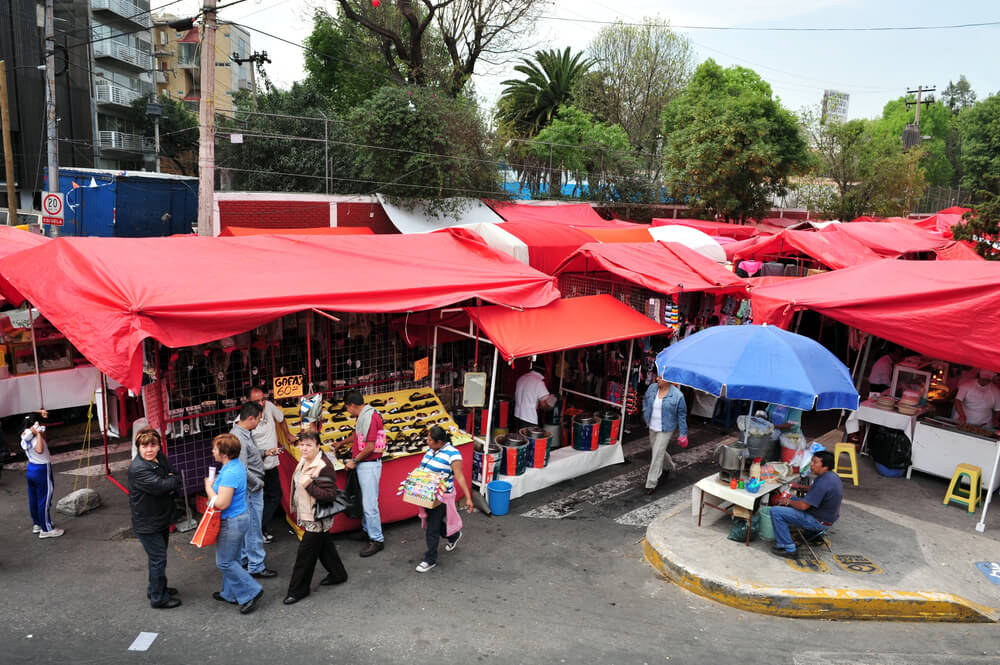
San Antonio’s chili queens cooked and served at open-air stands on Military Plaza, sending smoke and steam into the evening air. When the city built its city hall there around 1889 or 1890, the stands were pushed to Alamo Plaza, Milam Park, and Haymarket Plaza.
The move scattered a tradition that had given the city a reputation among visitors.
Haymarket Plaza in 1933
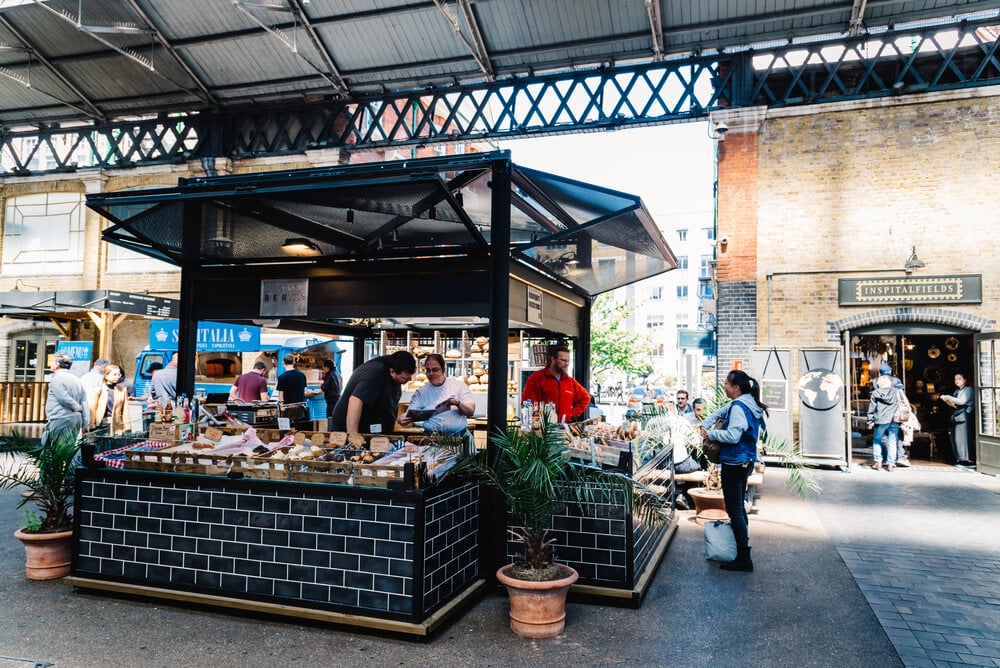
A photograph of Haymarket Plaza from 1933, in the San Antonio Light collection, shows the chili stands still operating decades after the move. Stephen Crane had visited the stands in 1895, and the tradition saw revivals in 1916 and 1925.
The 1933 image captures the survival of a custom the city repeatedly tried to regulate.
Sidney Gamble’s Beijing
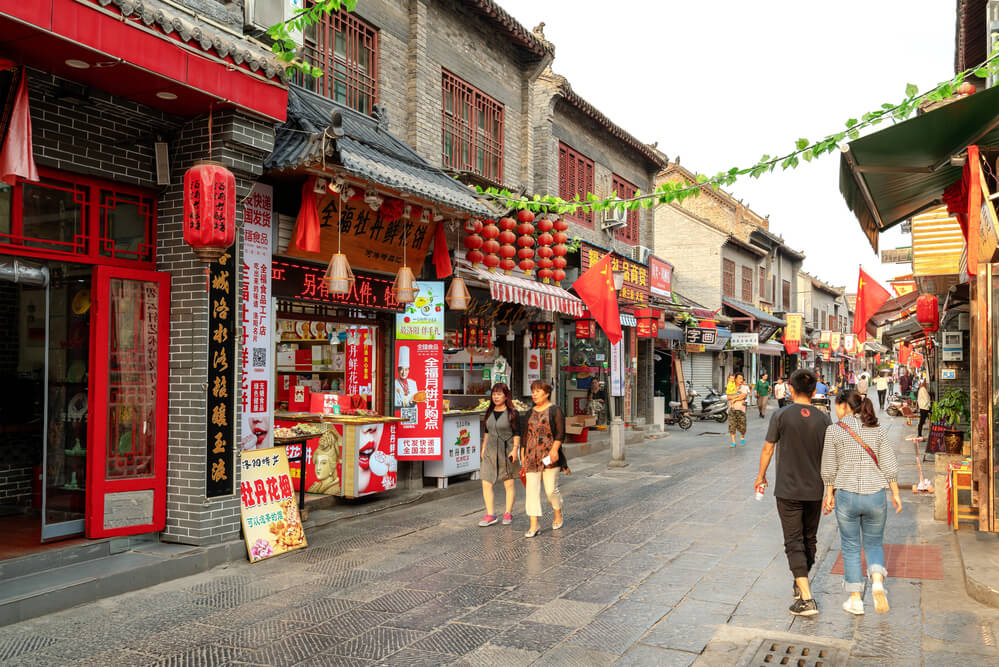
Sidney Gamble photographed life in Beijing between 1917 and 1932, and Duke University holds a collection of about 5,000 of his images. Street scenes were a major theme of his work.
The photographs show food sellers working along the city’s busy lanes.
Hot Potatoes and Baked Apples
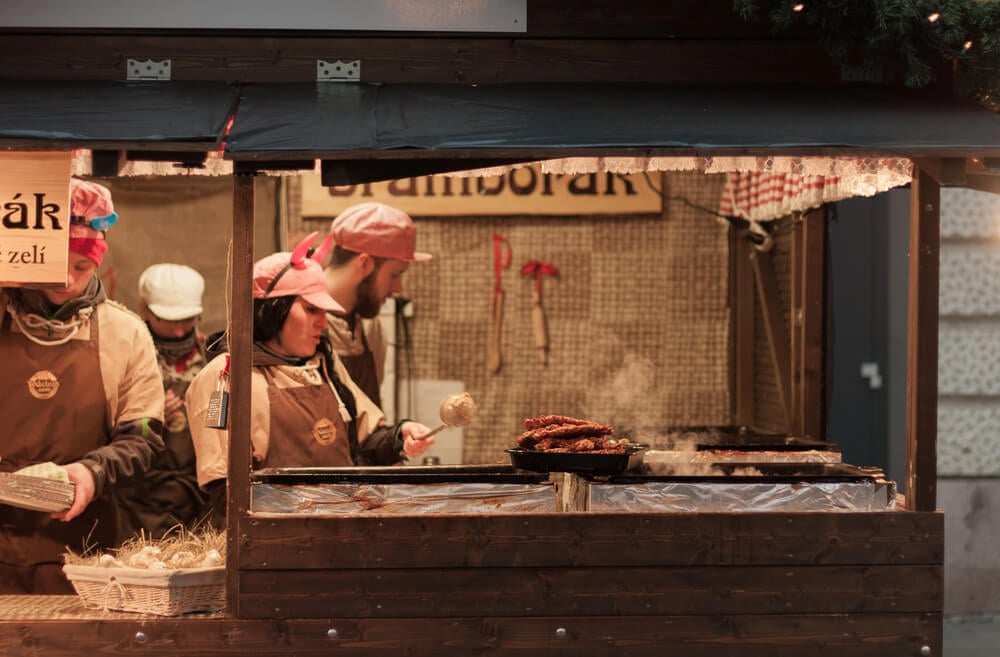
The New York Public Library holds an American Press Association photograph titled “Hot Potatoes and Baked Apples,” part of its occupations series on food peddlers. A related image notes a hot potato seller on the Lower East Side.
The pictures show how simple, warm food sold from a cart could feed a street.
The Broad Street Lunch Carts of 1906
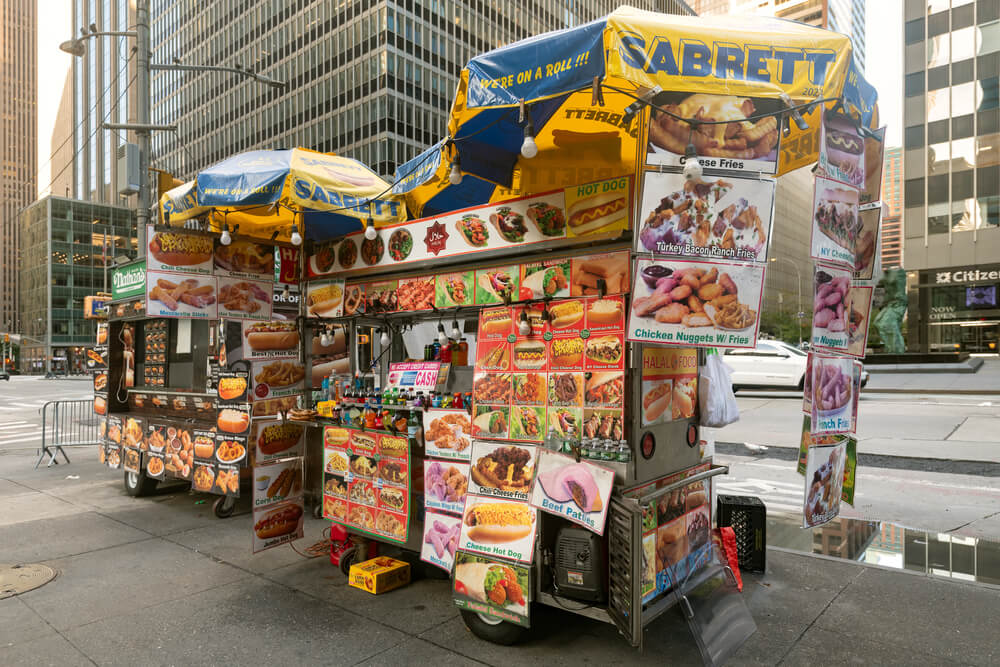
The Detroit Publishing Company photographed lunch carts on Broad Street in New York around 1906, with hot dogs priced at three cents each or two for a nickel and lemonade for a penny or two. A peddler’s license is visible on one cart.
The scene records the cheap lunches that fed the financial district.
Hester Street in 1898
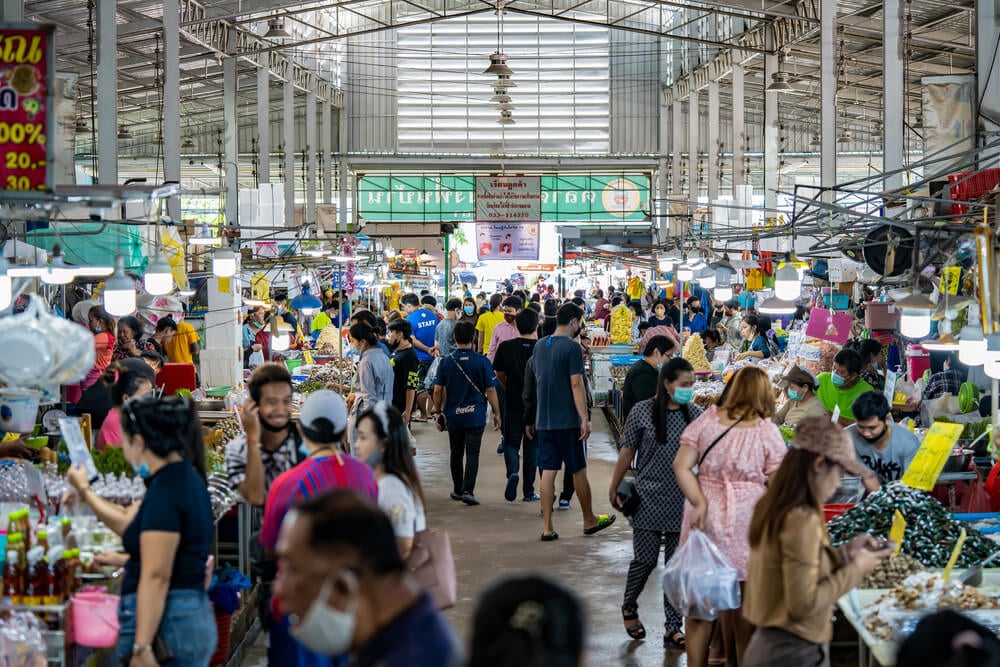
The Byron Company photographed Hester Street in 1898, capturing a crowded market of pushcarts and shoppers. A 1901 newspaper estimated about 1,500 licensed peddlers worked near Hester Street, mostly selling fish.
The Museum of the City of New York holds many of the images.
The Market Under the Williamsburg Bridge
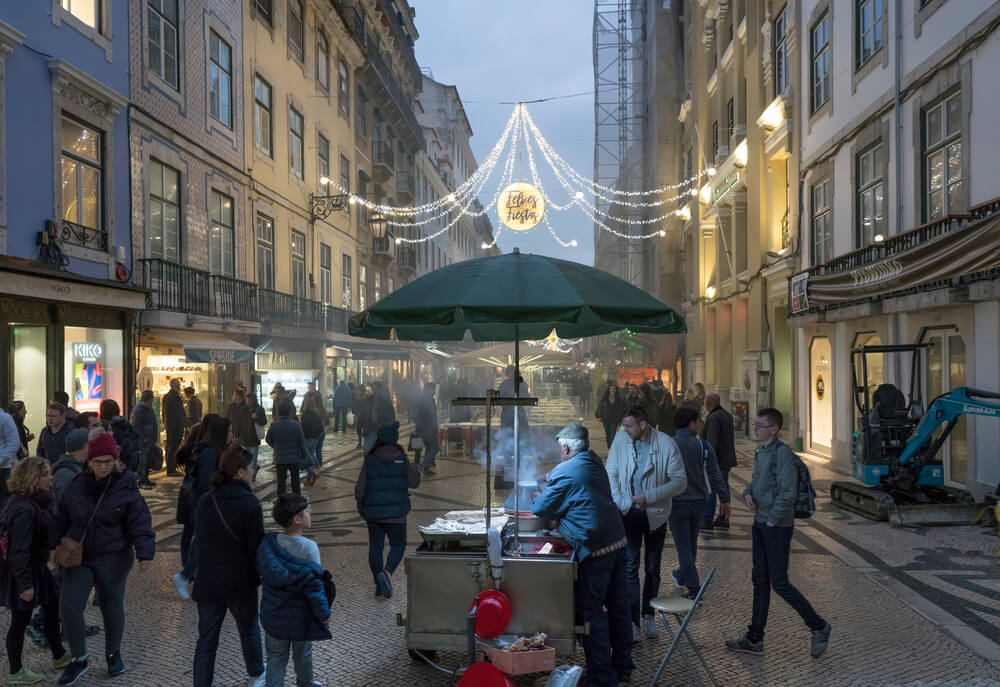
Before the Williamsburg Bridge opened on December 19, 1903, a market was set up beneath it to pull vendors off the crowded streets. Fish dealers were the first to move in, opening on March 30, 1903.
At the time, more than 9,000 pushcart vendors worked the city.
The Ferry Building Peanut and Popcorn Stand
In a photograph from about 1900 at San Francisco’s Ferry Building, a vendor’s cart carried a tank of compressed gas that supplied both light and heat for roasting peanuts and popping buttered popcorn. The cart was a small mobile factory.
Few street photos show the machinery behind the snack so clearly.
A Peanut Stand on West 42nd Street
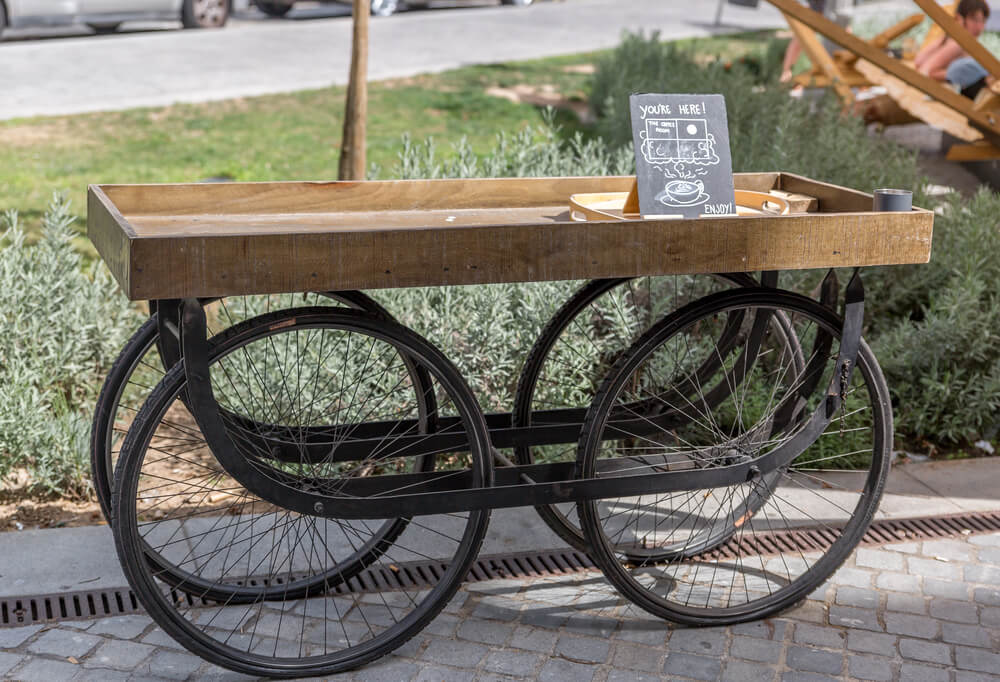
A Library of Congress photograph from around 1900 shows a vendor on West 42nd Street selling roasted peanuts to two children. The stand sits at the curb of a street that would soon become one of the busiest in the city.
The scene captures the casual commerce of the sidewalk.
The Calas Sellers of New Orleans
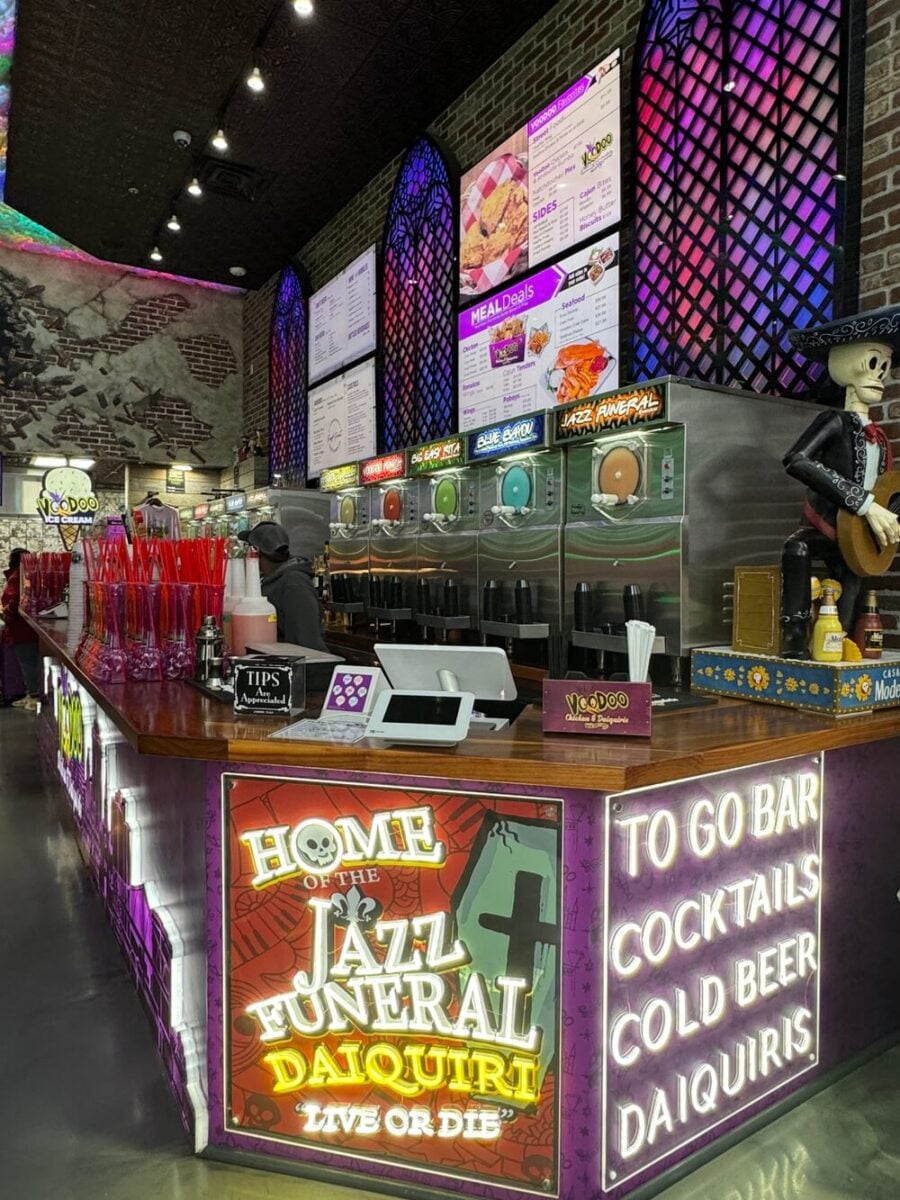
New Orleans calas, fried rice cakes, were once sold on the street by vendors who cried “Belle calas tout chaud,” meaning “beautiful calas, very hot.” The vendors, mostly women, had mostly vanished between the two World Wars, and a 1940 WPA report found just one left.
A 1938 photograph by Richard Koch shows a man who fits the description of Richard Gabriel, the last cala man.
Roasting Corn on a Greek Sidewalk Stand

A photograph from a Greek-American series in Illinois records a vendor roasting green corn over a grate at a sidewalk stand, with a seated gentleman looking on. The image shows an immigrant tradition carried across the Atlantic.
The grill, set on a cart, served a neighborhood that knew the taste.
Yatai Stalls in Old Japan
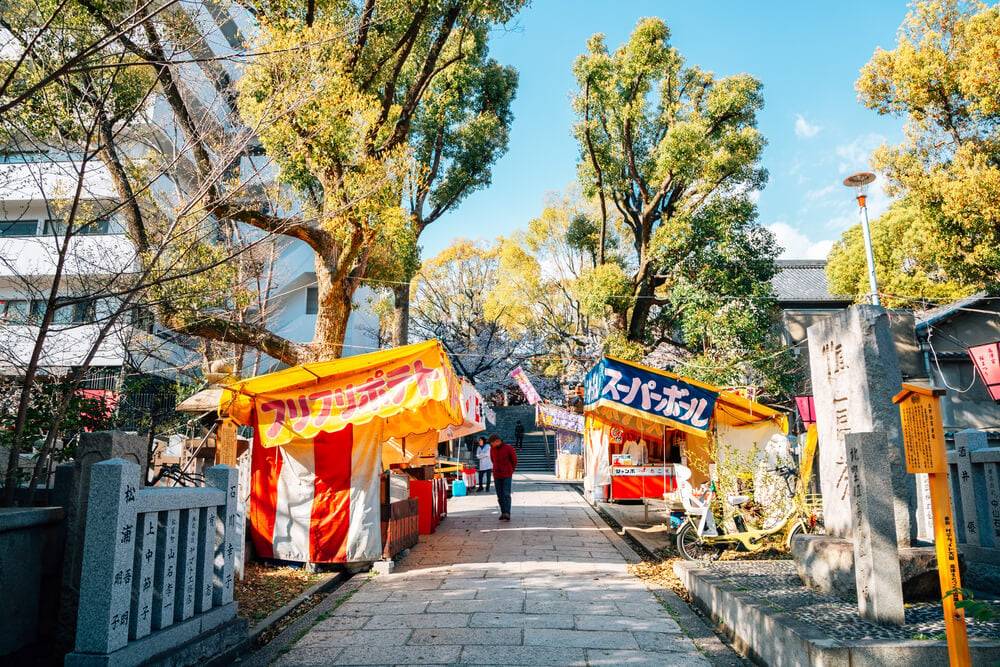
Japan’s street vendors, known as botefuri, each had a distinctive call recognizable from afar. A photograph by Baron Raimund von Stillfried from the 1870s shows a food vendor with a mobile stall.
Edo’s yatai served sushi, tempura, soba, and eel as some of the earliest fast food.
Night Lunch Wagons in New York
Late in the nineteenth century, night lunch wagons appeared in New York to feed the newly nocturnal workers of the city. These horse-drawn kitchens eventually earned nicknames such as “roach coach.”
They are early ancestors of the modern food truck.
The Kitchens That Never Closed
What these photographs share is the speed with which a city adapted to new customers. Immigrants, night workers, and commuters needed hot food that did not require a restaurant table, and vendors met the need with little more than a cart and a fire.
Many of those trades faded as regulations tightened and restaurants spread. The pictures remain evidence that the most flexible kitchens were never indoors at all.
More from Go2Tutors!

- 27 Silver Dollars and Half Dollars Worth Keeping
- 28 Restaurant Menu Items Nobody Orders Anymore
- 17 Places Built in Seemingly Impossible Spots
- 27 Vintage Rings Worth More Than They Look
- 25 Restricted Sites Tourists Can’t Enter
Like Go2Tutors’s content? Follow us on MSN.