Old Ceramic Tiles Worth Saving During Renovations
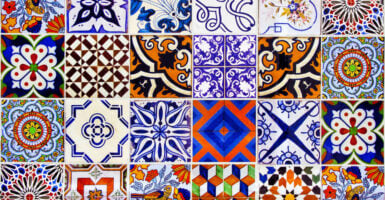
Behind a layer of drywall or under a century of linoleum, old ceramic tile has a habit of surviving renovations that destroyed everything around it. Fired clay does not rot, rust, or warp, and many American and British tile makers of the 1870s through the 1930s produced work that modern studios struggle to match.
A crew with a crowbar can turn a collectible into rubble in a single afternoon. Knowing a maker’s name or a signature glaze before demolition begins can change what gets saved.
The tiles below come from factories and studios whose output regularly turns up in ordinary houses, stations, and storefronts, and each deserves a careful look before anything is pulled off a wall.
Minton Encaustic Floor Tiles
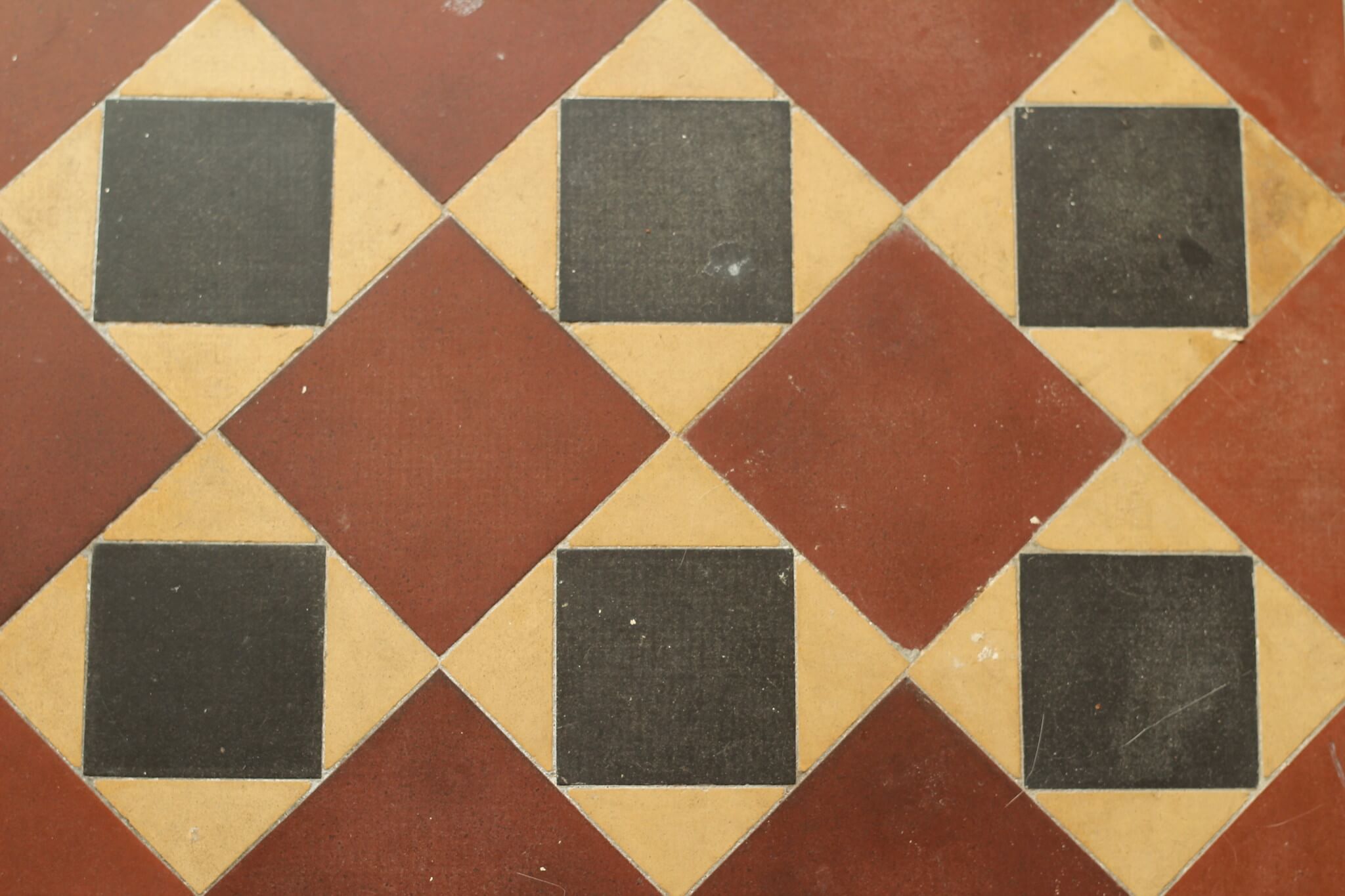
Minton, Hollins and Company of Stoke-on-Trent supplied the encaustic tile floors installed in the extensions of the U.S. Capitol beginning in 1856, and the same kind of tile turns up in Victorian hallways on both sides of the Atlantic. Encaustic tile gets its pattern from contrasting colored clays set into the body of the tile rather than painted on the surface, so the design survives decades of foot traffic.
A crack across a corner or a worn border lowers value noticeably, which means a floor lifted in clean, intact pieces is worth far more than one pried up in fragments.
Moravian Pottery and Tile Works Mosaics
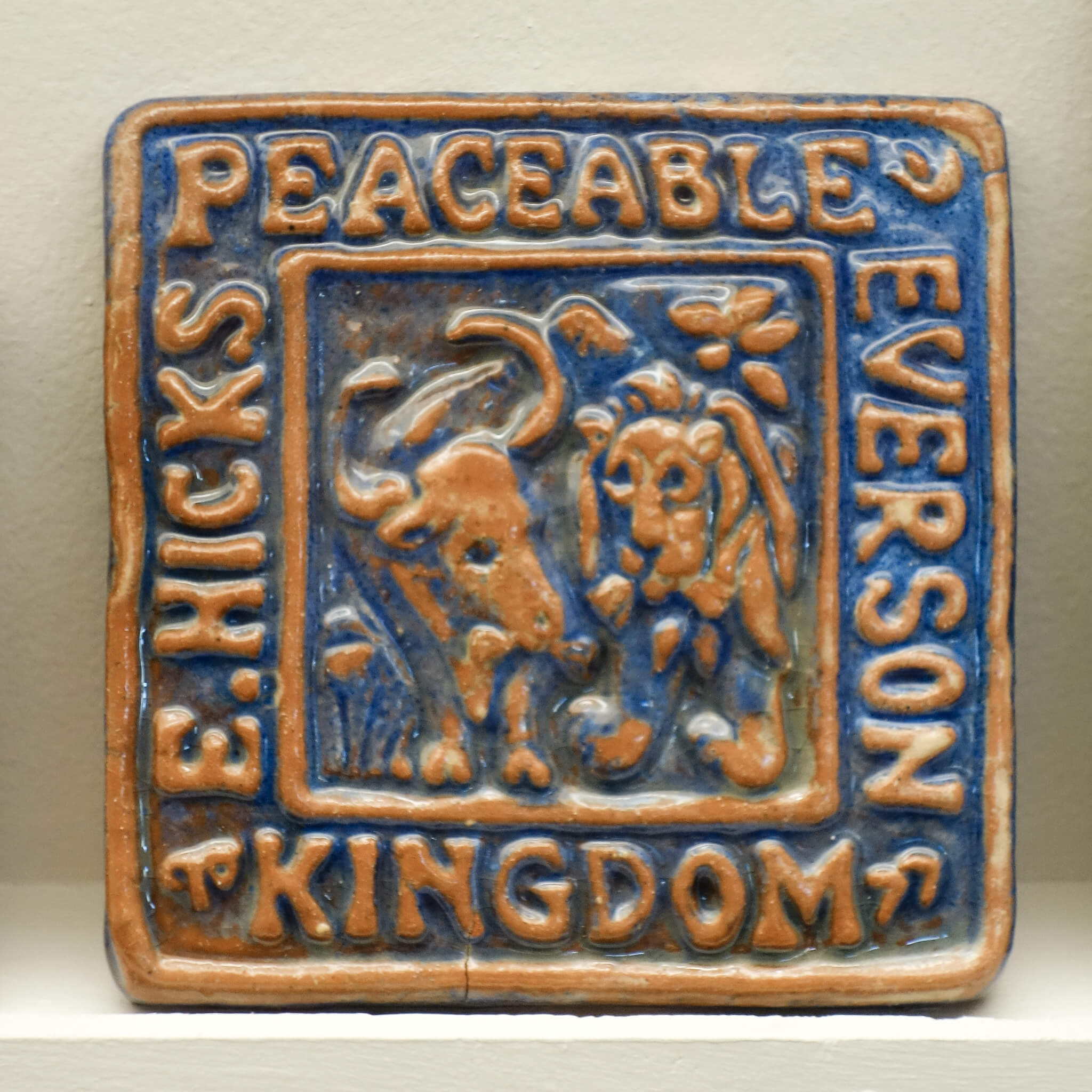
Henry Chapman Mercer founded the Moravian Pottery and Tile Works in Doylestown, Pennsylvania, in the late 1890s, basing his first tiles on German stove plates he had collected himself. His mosaic floor in the Pennsylvania State Capitol in Harrisburg contains nearly 400 scenes drawn from the history of the state.
The works still operates today, so a stamped Moravian tile found in an old fireplace can be compared against designs that remain in production. Uneven edges and slight variations in glaze are part of the handmade look, and condition still drives the price.
Grueby Faience Tiles
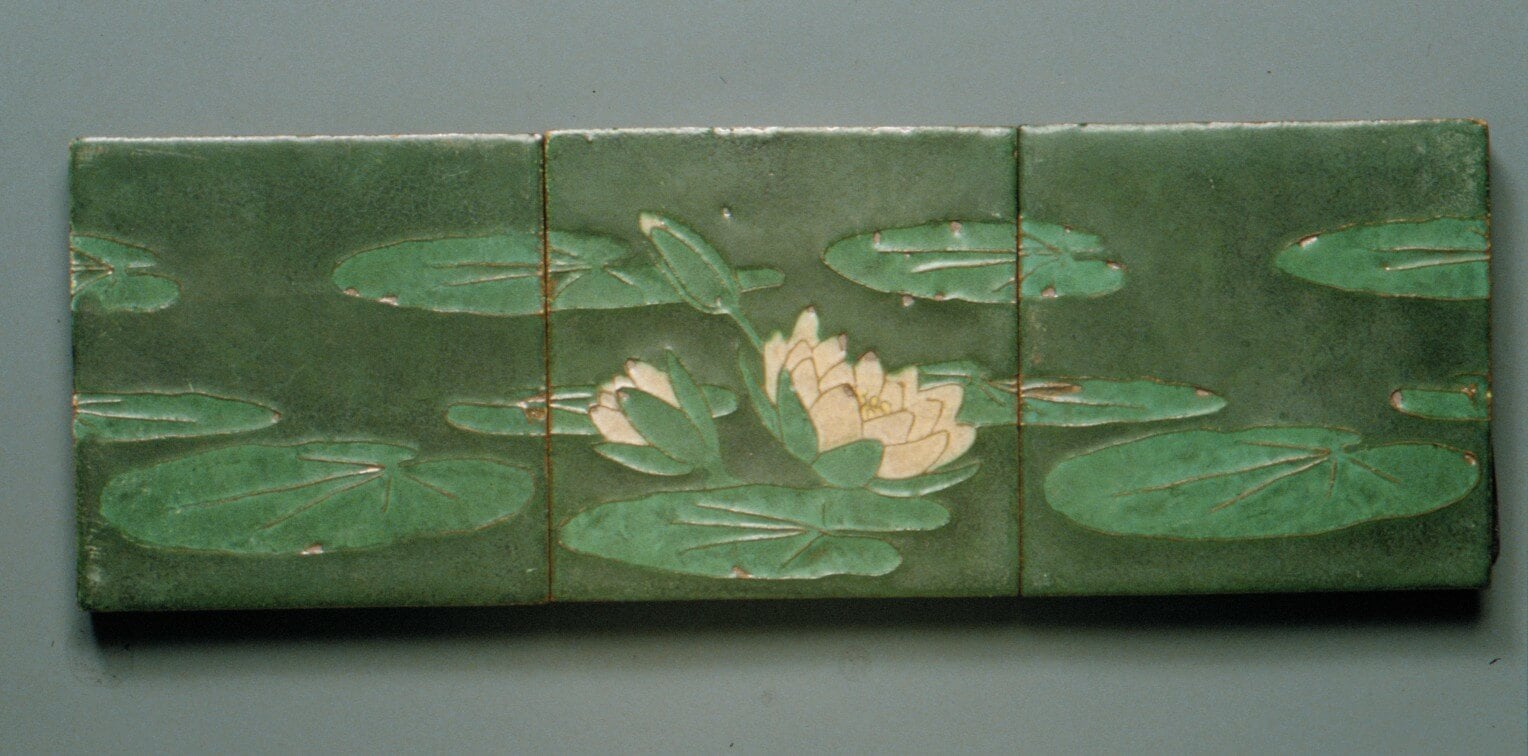
William Henry Grueby founded the Grueby Faience Company in 1894 near Boston, and its thick, velvety matte green glaze became one of the signature looks of the American Arts and Crafts movement. Commuters pass its work daily without noticing, since the company made the beaver plaques at the Astor Place subway station in 1904 to honor John Jacob Astor’s fur fortune.
Tiles with that soft matte surface turn up in fireplace surrounds of early twentieth-century homes. Chips and flaking glaze are the main condition problems, and either one can cut the value of a tile sharply.
Rookwood Pottery Architectural Faience
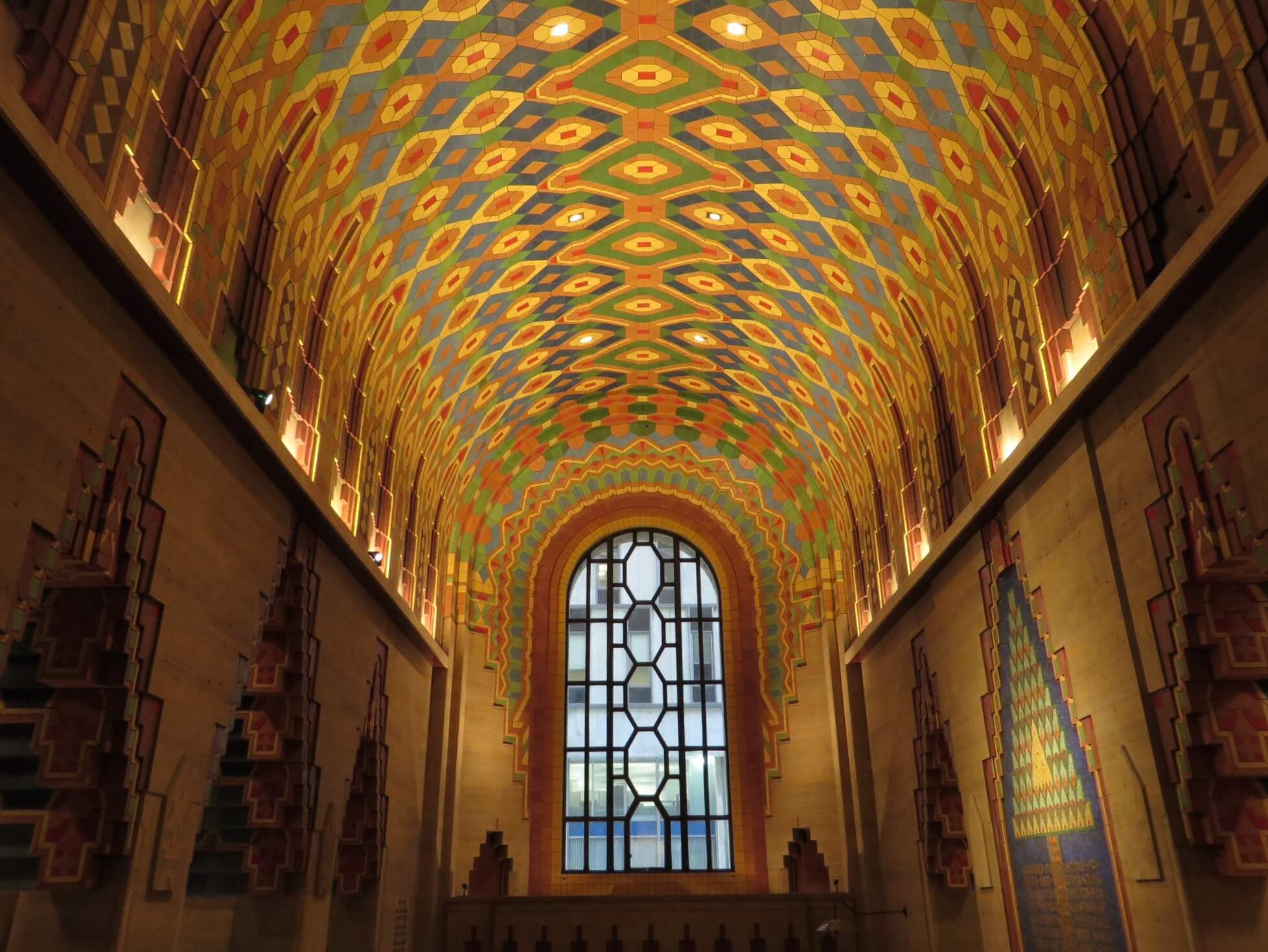
Rookwood Pottery of Cincinnati began making architectural tile and faience in 1902, and in 1903 it was contracted to produce tile for four New York City subway stations. Its work also decorated Grand Central Terminal, the Vanderbilt Hotel, and the Seelbach Hotel in Louisville.
In houses, Rookwood most often appears as fireplace facings and mantel panels finished in soft matte glazes. The company made both plain utility tile and pictorial pieces, so values vary widely, and condition and documentation decide where a particular tile lands.
Pewabic Pottery Iridescent Tiles
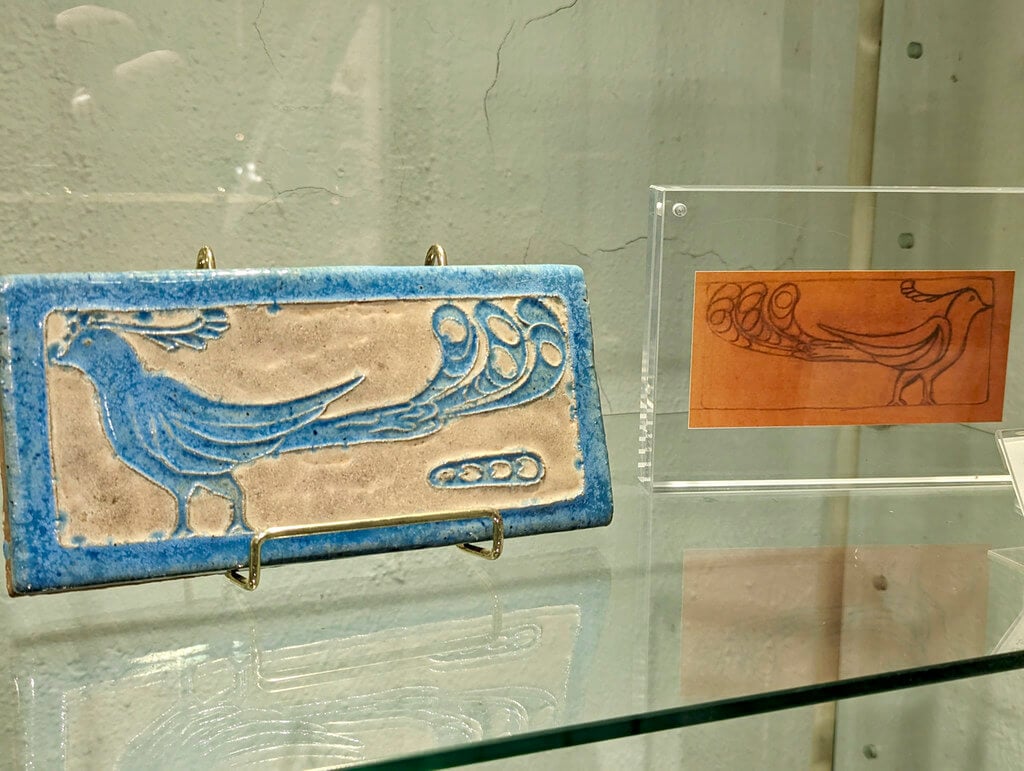
Mary Chase Perry and Horace Caulkins founded Pewabic Pottery in Detroit in 1903 and named it after a copper mine near her hometown of Hancock, in Michigan’s Upper Peninsula. The studio became famous for iridescent glazes with a metallic shimmer that shifts in the light, and its tiles line Detroit’s Guardian Building and the National Shrine of the Immaculate Conception in Washington, D.C.
The pottery still operates from a National Historic Landmark building on the city’s east side. A tile with its iridescent finish intact deserves the most care in removal, since harsh cleaners can dull the very surface that gives it value.
Batchelder Tiles
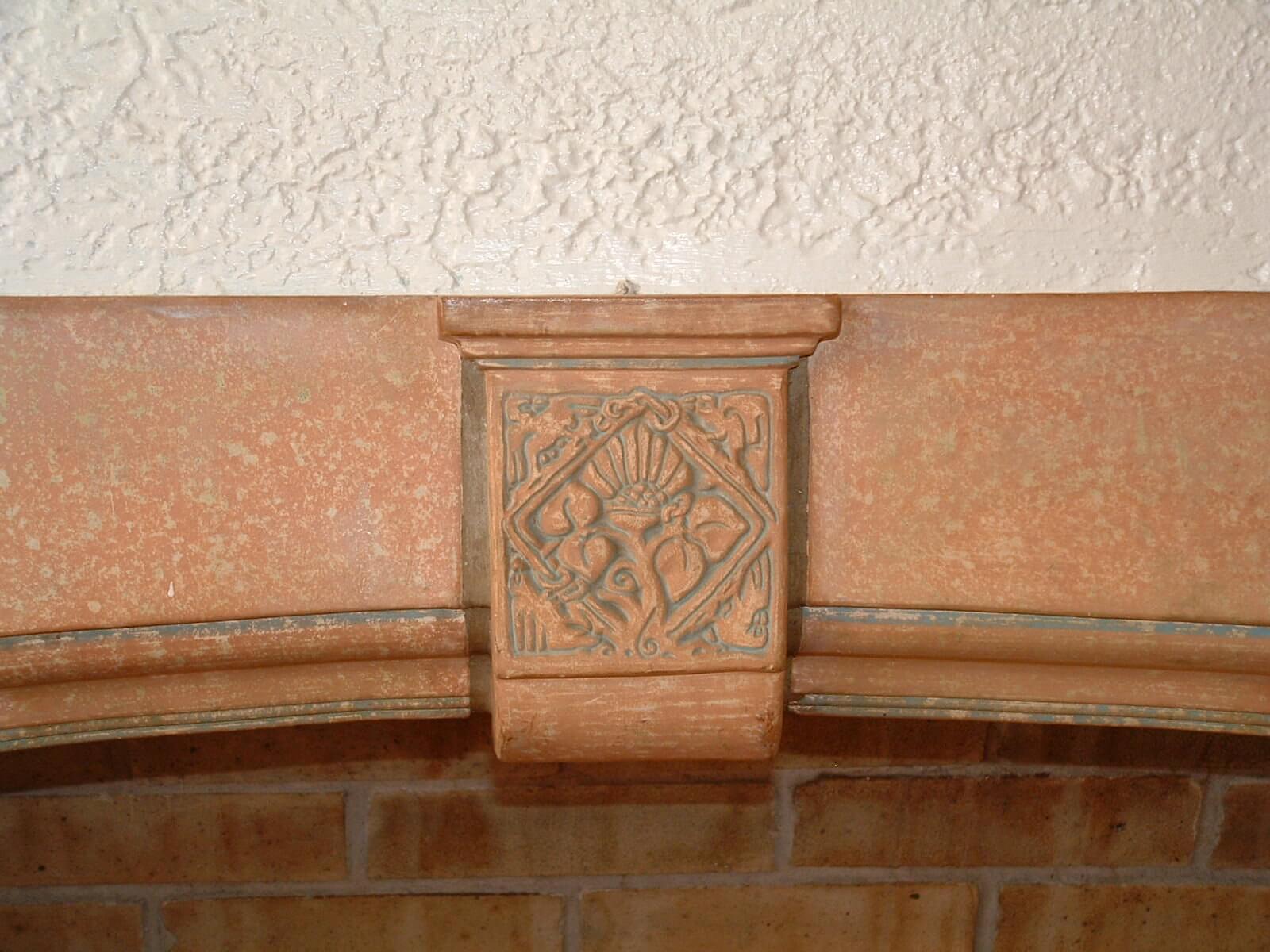
Ernest Batchelder built a kiln behind his Pasadena home on the Arroyo Seco around 1909 and became the best-known tile maker of the California Craftsman era. His tiles, usually in muted browns and earth tones with low-relief figures, filled fireplaces, fountains, and entryways across Southern California, and an early landmark job was the Dutch Chocolate Shoppe in Los Angeles in 1914.
Original pieces are scarce and expensive enough that faithful reproductions are sold today. Confirming an impressed Batchelder mark on the back of a tile is the first step before deciding what a fireplace is worth.
Malibu Potteries Tiles
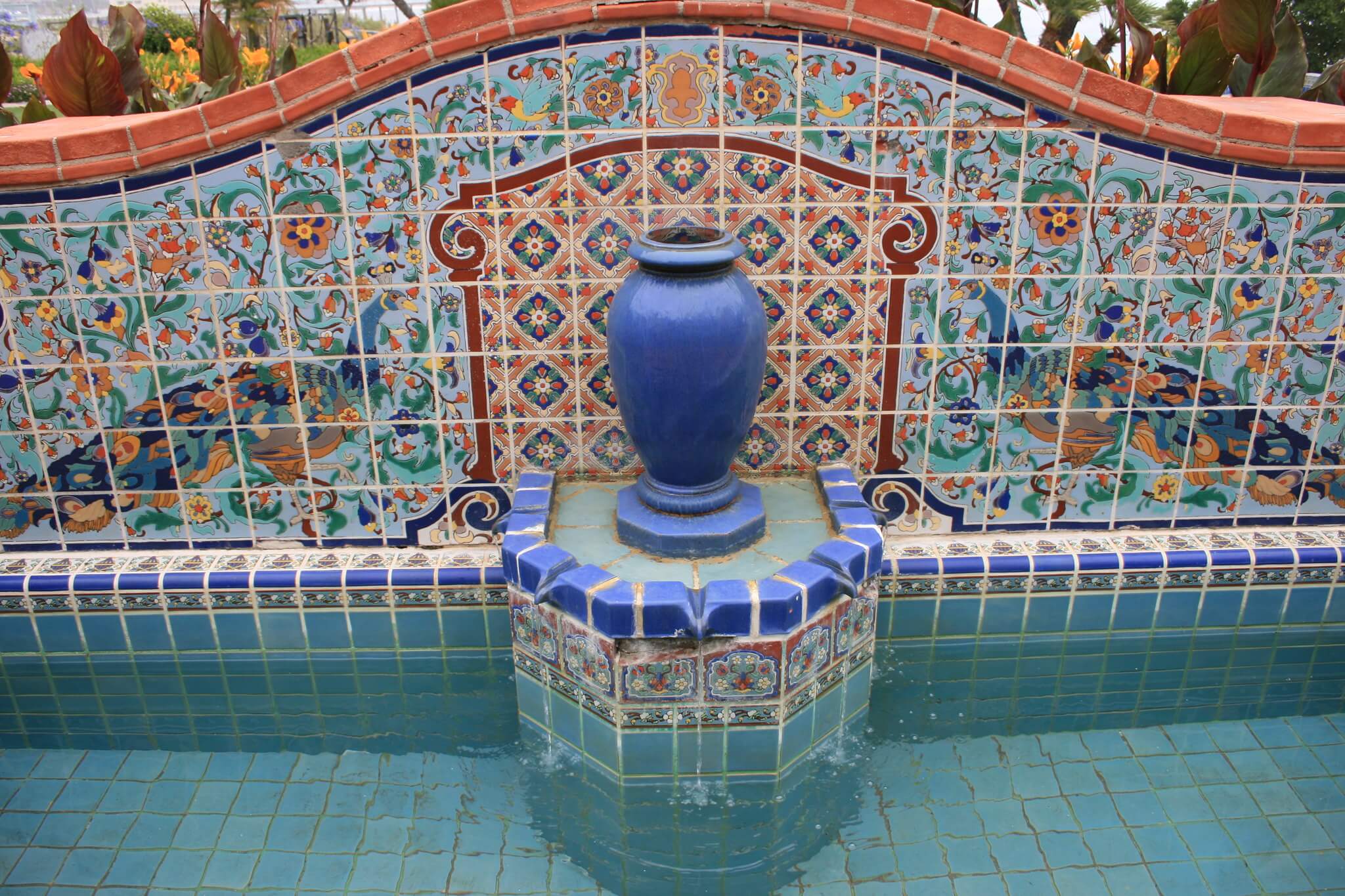
May Rindge opened Malibu Potteries in 1926 after discovering red clay on her family’s ranch, and the factory stretched along 1,500 feet of beach east of the Malibu Pier. At its height, 125 employees produced up to 30,000 square feet of tile a month in Moorish, Spanish, and Mayan-inspired patterns.
A fire in September 1931 damaged the plant, and the Depression forced the company to close in 1932. Because production lasted only six years, Malibu tile in a 1920s California house is a genuine find, and the nearby Adamson House remains the best place to compare patterns.
Catalina Clay Products Tiles

William Wrigley Jr. opened Catalina Clay Products in 1927 on Santa Catalina Island after red clay turned up while workers were drilling for fresh water. The factory made roof tile, floor tile, and decorative pieces, and its Mission-style tiles cover the roof of the Catalina Casino in Avalon.
Mainland white clay replaced much of the island clay after 1931, so the color of a tile’s body can hint at when it was made. Production of tile ended in 1937, which gives each surviving piece a short manufacturing window, and chipped edges often decide its price.
Gladding, McBean and Company Catalina-Era Pieces
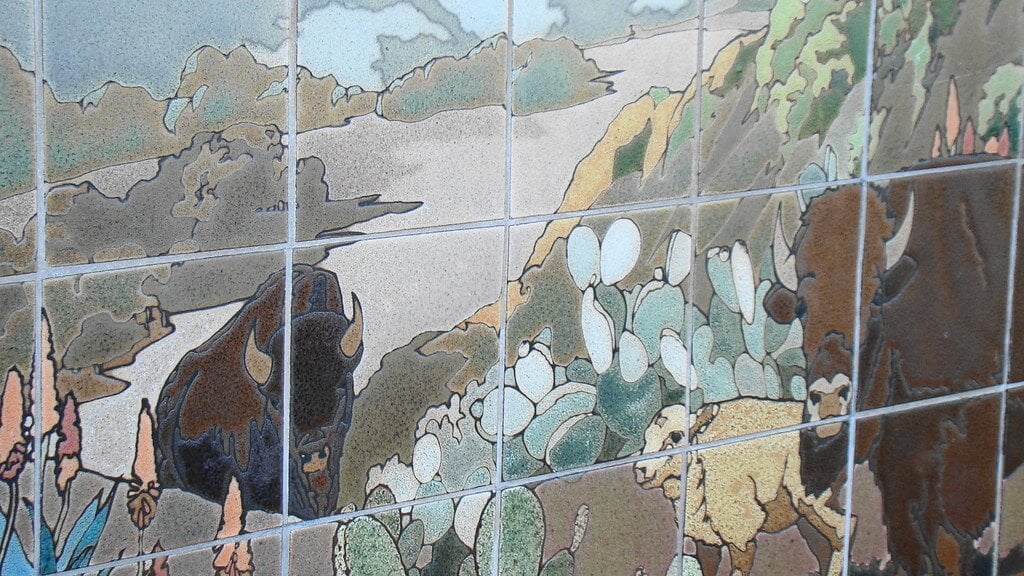
Gladding, McBean and Company, a California clay-products firm, took over the molds and trademarks of Catalina Clay Products in 1937 and moved production to Los Angeles. The company continued to sell Catalina-branded ware under other line names until 1942.
Pieces from that later period carry different backstamps than the island originals, which makes the mark on the back the first thing to check. Collectors separate the two periods carefully, and condition matters as much as the mark.
American Encaustic Tiling Company Floors and Walls
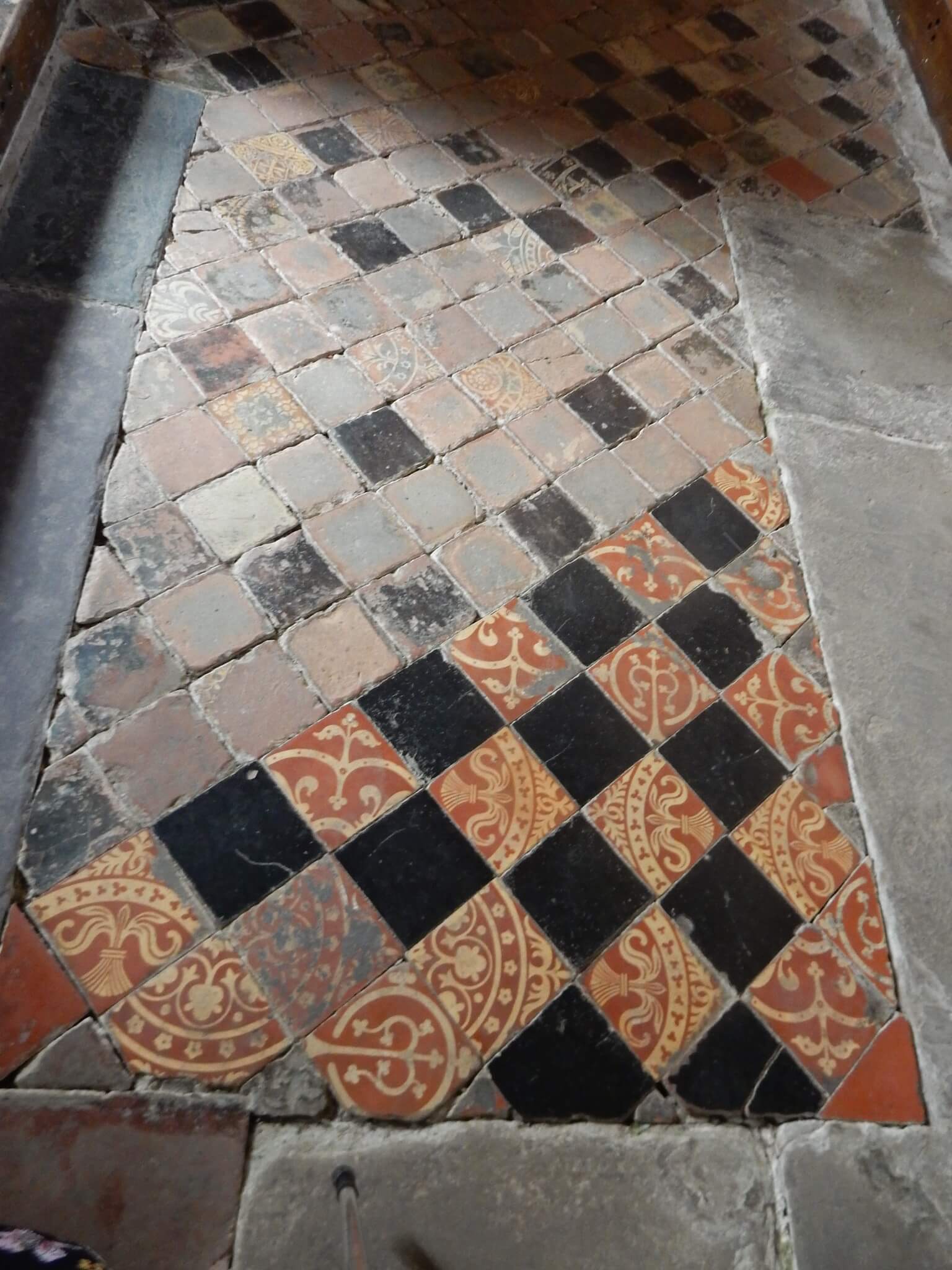
American Encaustic Tiling Company was founded in New York in 1875 and opened a large factory in Zanesville, Ohio, in 1892 with Governor William McKinley on hand for the occasion. By the early twentieth century it was billed as the largest tile plant in the United States, and it employed as many as 1,000 people before closing in 1935.
Its mosaic floor tiles, relief panels, and wall tiles appear in bathrooms, storefront entries, and public buildings nationwide. Brothers who bought the idle plant in 1937 reopened it as Shawnee Pottery, so the name on a tile and the name on a kitchen crock can lead back to the same address.
Mosaic Tile Company Floor Patterns
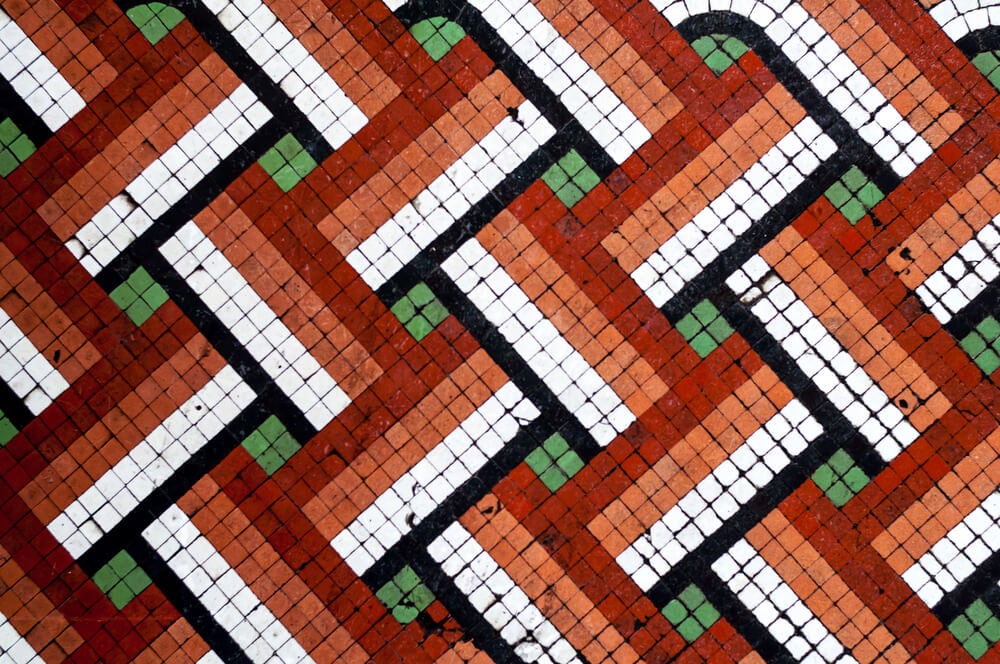
Artist-mechanic Herman Mueller and ceramist Karl Langenbeck, both employees of American Encaustic Tiling Company, broke away in 1893 to organize a rival firm in the same Ohio city. The Mosaic Tile Company of Zanesville grew into a major producer, and a Zanesville newspaper in 1951 described it as the world’s largest tile plant, employing about 1,500 people.
Many of its patterned floor tiles remain in banks, schools, and older homes. Intact sheets or large sections hold more value than loose tiles, since matching a missing piece later is difficult.
William De Morgan Lustre Tiles
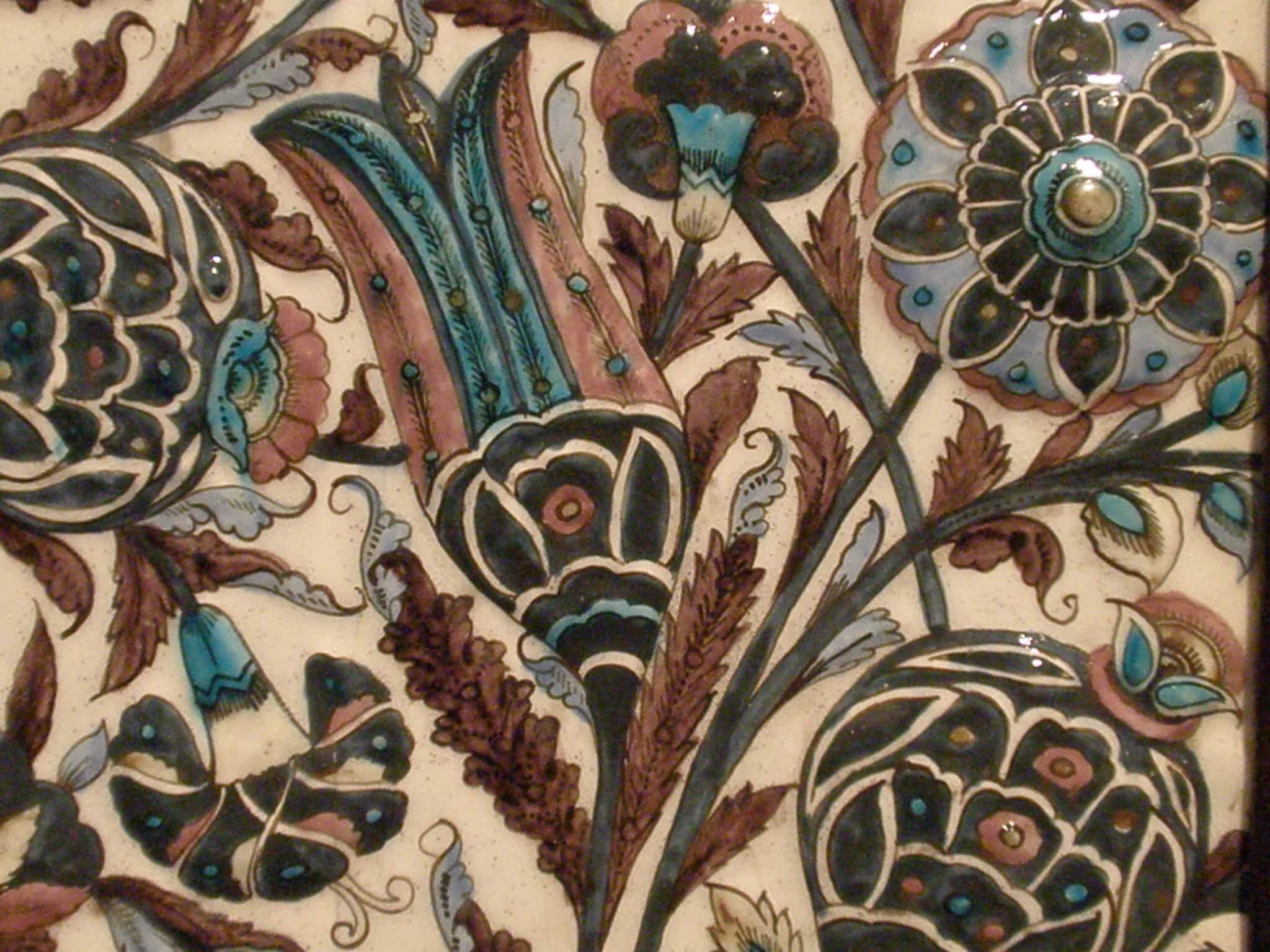
William De Morgan designed tile schemes for twelve P&O ocean liners between 1882 and 1900, and none of those ships survive, though some of his panels do. The English ceramicist worked at Merton Abbey beside William Morris’s factory and became known for ruby lustre and Persian-style color.
His sailing ships, birds, and fantastic beasts are among the most recognizable images of the British Arts and Crafts movement. Fireplace tiles in Victorian houses sometimes carry his work, and a lustre surface with its sheen intact is the prize.
Dutch Delft Tiles

Dutch potters produced hand-painted, tin-glazed tiles from the seventeenth century, and the blue-and-white versions were set around fireplaces, in kitchens, and along baseboards across Europe. Typical scenes include sailing ships, flowers, animals, and children at play, each brushed by hand rather than printed.
Many that remain in old houses were reused from earlier buildings, so an uneven or mismatched set can still be genuine. Tiles showing biblical scenes are among the most sought after, and a chip in the glaze quickly reduces value.
Portuguese Azulejo Panels
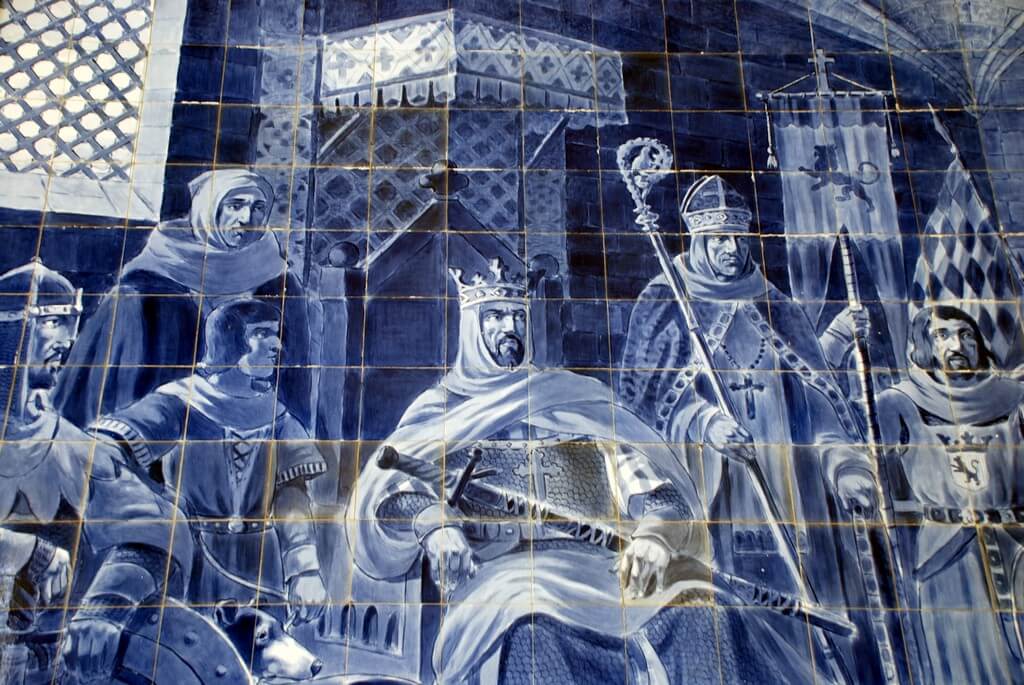
The word azulejo comes from an Arabic term meaning a small polished stone, and Portuguese tile panels have covered church interiors, staircases, and building facades since the 1500s. Lisbon’s National Tile Museum is housed in the former Madre de Deus convent, which shows how seriously the country treats the craft.
In older buildings, panels often run floor to ceiling as single scenes, so removing even one tile can break up the picture. Painted tile found under wallpaper or paint in a Portuguese-style house should be photographed in full before anyone touches it.
Why the Floor Outlasts the House
Most of these makers worked within short windows. Malibu Potteries ran for six years, Catalina Clay Products for ten, and the New York subway commissions went out to two different companies within about a year of one another.
That brevity is why a tile left in place by an earlier owner can be among the last of its kind in a given house. Before any demolition, a quick look at the back of a tile for stamps and impressed marks takes a minute and can change what happens to a room.
Photographs, careful removal, and keeping pieces together as sets all protect value, and condition always decides price. Intact, unrestored tiles are the strongest candidates for saving.
More from Go2Tutors!

- 27 Silver Dollars and Half Dollars Worth Keeping
- 28 Restaurant Menu Items Nobody Orders Anymore
- 17 Places Built in Seemingly Impossible Spots
- 27 Vintage Rings Worth More Than They Look
- 25 Restricted Sites Tourists Can’t Enter
Like Go2Tutors’s content? Follow us on MSN.