America’s Biggest Restaurant Chains
Out on the edge of town, big U.S. eateries quietly steer food choices without much notice. Along roadsides they stand, inside plazas too, setting the pace for fast lunches coast to coast.
Not just numbers or dollar signs give them weight – it’s their routine spot at lunch counters, dinner stops, morning coffee runs. Deep roots grow when names become part of the local rhythm, one bite at a time.
Biggest chains rose because they fixed real issues, not luck. One tackled slow service; another cut costs – each had its own fix.
Slowly, people started counting on these fixes like rules. Convenience slipped into habit without anyone noticing.
Habits grew so deep they shaped how we eat today.
A glance around reveals familiar names on nearly every corner – these giants didn’t grow by accident. Each carved out space through steady moves, not grand announcements.
One after another, they turned locations into landmarks without shouting about it. Their presence crept forward, block by block, meal after meal.
What started small now stretches across highways and backstreets alike. Size came quietly, shaped by repetition more than revolution.
McDonald’s

McDonald’s remains the most recognizable restaurant chain in the United States, both in sheer visibility and cultural reach. Its locations span cities, suburbs, highways, and small towns, creating a sense that it exists everywhere people travel.
The brand’s power lies in standardisation. A McDonald’s meal tastes essentially the same no matter where it is ordered, which builds trust and familiarity.
That consistency allows customers to make quick decisions without thinking, an advantage at massive scale.
Beyond food, McDonald’s mastered real estate strategy early on, securing prominent locations that reinforced its dominance. Its size reflects not just popularity, but decades of disciplined expansion.
Starbucks
Starbucks reshaped how Americans think about coffee outside the home. What began as a specialty concept became a daily habit for millions, turning coffee from a commodity into a ritual.
The chain’s footprint is especially dense in urban areas, where multiple locations can exist within walking distance. That saturation makes Starbucks feel less like a destination and more like part of the city’s infrastructure.
Its scale comes from repeat visits rather than single large orders. Starbucks built size through frequency, embedding itself into morning routines and workdays across the country.
Subway

For years, Subway quietly accumulated one of the largest store counts in the nation. Its model relied on small footprints, low startup costs, and rapid franchising, allowing it to spread quickly into diverse markets.
The brand positioned itself as a flexible option, offering customisable sandwiches that appealed to a wide range of preferences. That adaptability helped it thrive in locations where other chains struggled to fit.
Although its presence has shifted in recent years, Subway’s scale remains significant. Its rise illustrates how ubiquity alone can define what it means to be big.
Taco Bell

Taco Bell carved out a unique space by offering bold flavours at accessible prices, wrapped in a fast-moving, youth-oriented identity. Its menu does not attempt authenticity so much as recognisability.
The chain’s size is tied to its ability to evolve. Taco Bell frequently updates its offerings while keeping core items intact, giving customers novelty without confusion.
Late hours and drive-thru convenience also fueled its growth. In many communities, Taco Bell became one of the few consistent late-night options, expanding its relevance beyond traditional meal times.
Burger King

Burger King’s footprint mirrors McDonald’s in form, if not in dominance. Its locations span the country, often appearing in close proximity to competitors, reinforcing the fast-food landscape itself.
The brand differentiated itself through product emphasis and marketing rather than operational overhaul. That approach allowed it to maintain scale without reinventing its model entirely.
Burger King’s size reflects endurance. Even as competition intensified, its network of locations ensured continued relevance across regions.
Wendy’s

Wendy’s grew by positioning itself as a step above basic fast food while still remaining accessible. Its emphasis on freshness and distinct branding helped it carve out space in a crowded market.
The chain expanded steadily rather than explosively, focusing on consistency and recognisable identity. That measured growth produced a national footprint that feels stable rather than overwhelming.
Wendy’s size comes from balance. It is large enough to be familiar almost everywhere, yet differentiated enough to avoid blending into the background.
Chick-fil-A

Chick-fil-A’s growth stands out because it achieved massive scale while operating fewer days than competitors. Its locations generate high volume despite being closed one day each week.
The brand built loyalty through focused menus, efficient service, and a reputation for reliability. Rather than expanding indiscriminately, Chick-fil-A concentrated on performance per location.
Its size reflects intensity rather than saturation. Fewer stores deliver outsized impact, making the chain feel larger than its footprint alone would suggest.
Dunkin’

Dunkin’ became one of America’s biggest chains by anchoring itself to everyday routines rather than meals. Coffee and baked goods positioned it as a frequent stop rather than an occasional destination.
Its strongest presence developed in the Northeast, where density created near-constant visibility. Over time, national expansion carried that model into new regions.
Dunkin’s scale comes from repetition. It thrives on habitual visits that accumulate into enormous volume across thousands of locations.
Domino’s
Domino’s grew by solving a specific problem at scale: fast, predictable delivery. Its operations prioritised logistics and efficiency, making speed a defining feature.
The brand embraced technology early, streamlining ordering and tracking in ways that reinforced reliability. That focus allowed Domino’s to expand aggressively without sacrificing consistency.
Its size reflects operational discipline. Domino’s became big by doing one thing very well, everywhere at once.
Pizza Hut
Pizza Hut’s footprint tells the story of American dining shifts. Once defined by sit-down locations, it later adapted to delivery and takeout models to maintain scale.
The brand’s size comes from longevity. Decades of expansion established a network that continues to serve communities nationwide, even as formats evolve.
Pizza Hut remains embedded in family dining memories, reinforcing its presence beyond raw numbers.
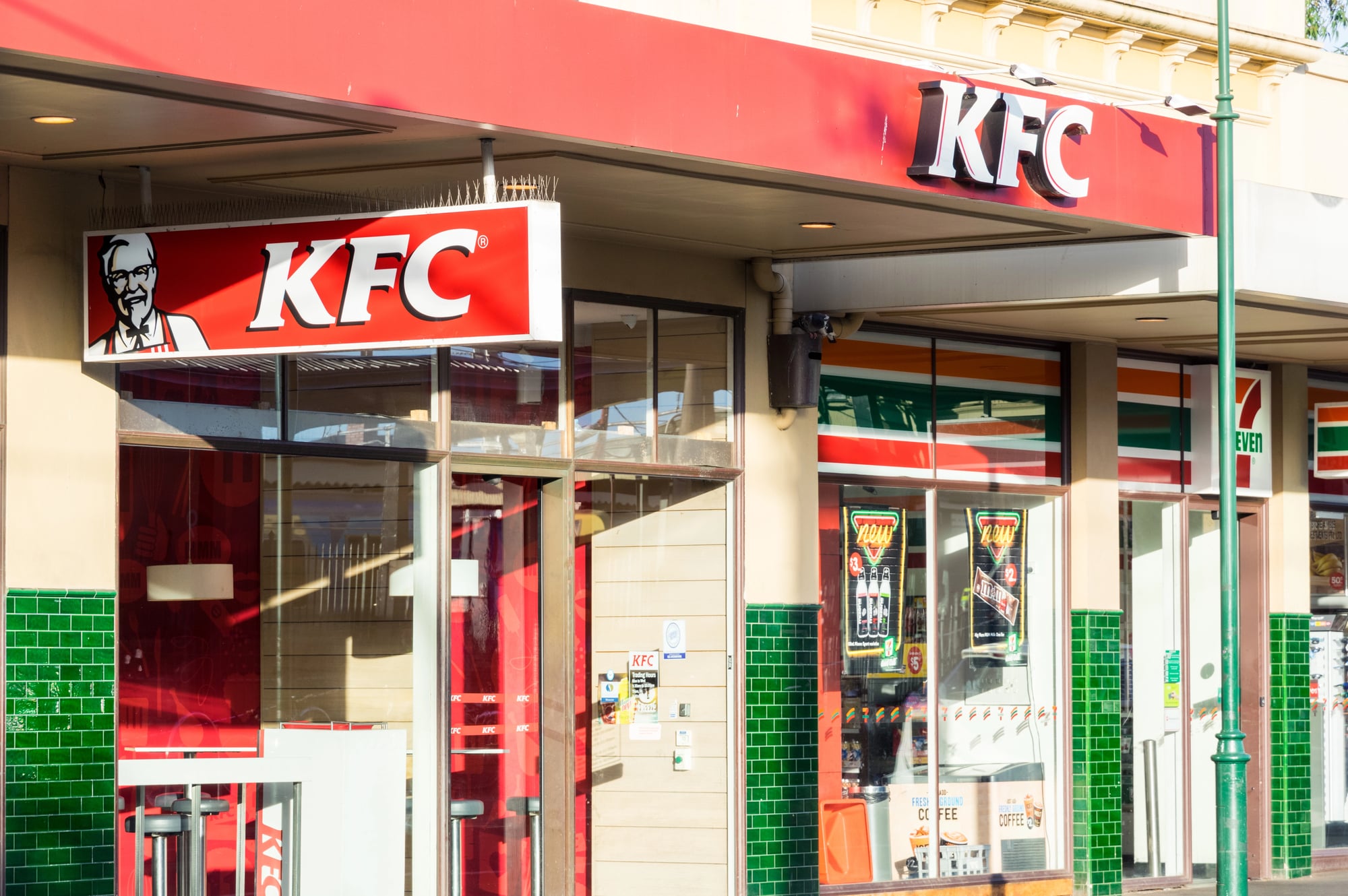
KFC
KFC achieved national scale by focusing on a single core product and building variations around it. That clarity made the brand easy to recognise and replicate.
Its growth relied heavily on franchising, which allowed rapid expansion into diverse markets. The brand’s visual identity reinforced consistency across locations.
KFC’s size reflects specialisation. By owning a specific category, it secured a lasting place in the fast-food ecosystem.
Why Size Matters In American Dining
Bursting onto main streets everywhere, giant eateries don’t just serve meals – they quietly reset how value feels. Because of them, prices shift slowly, servings grow without notice, yet somehow it all seems normal.
Convenience takes on new shapes while the unfamiliar fades behind repeated visits.
When businesses grow big, they tend to bounce back faster. Because they have wider reach, major chains adjust without stumbling when money patterns shift.
Even if suppliers change plans, these giants stay steady. Trends come and go, yet their momentum keeps them moving.
Strength hides in their bulk – protection plus forward motion rolled into one.
Eating at major U.S. eateries means more than grabbing a meal. These spots shape habits through quick service, consistent layouts, one familiar look after another.
What makes them large isn’t square footage alone – it’s their quiet presence in morning commutes, lunch breaks, family nights out. Across towns big and small, they slide into schedules like clockwork.
Not by shouting, yet still seen everywhere.
More from Go2Tutors!

- The Romanov Crown Jewels and Their Tragic Fate
- 13 Historical Mysteries That Science Still Can’t Solve
- Famous Hoaxes That Fooled the World for Years
- 15 Child Stars with Tragic Adult Lives
- 16 Famous Jewelry Pieces in History
Like Go2Tutors’s content? Follow us on MSN.



