Animals to See in the Galapagos
About six hundred miles off Ecuador’s coast, these islands exist apart from how most places operate. Their rhythm comes from being cut off, shaped instead by eruptions, rocky ground, and seawater sweeping in – feeding some species while testing others.
Creatures walk here unhurried, rarely startled by people watching them. This calmness around humans isn’t pretend or strange coincidence.
It grew slowly, century after century without large hunters on land, letting animals develop differently than elsewhere.Life here feels different because creatures fit their world so completely.
Not only are there many kinds of animals, but each one lives in step with where it belongs. Hardly anything looks accidental – wings, beaks, movements – all answer real needs.
The scenery does not shout for notice. It whispers instead, showing what happens when nature works without interference. Paying close watch brings understanding, piece by quiet piece.
Focus shifts naturally to those beings that make these places unlike any other on Earth.
Giant Tortoise
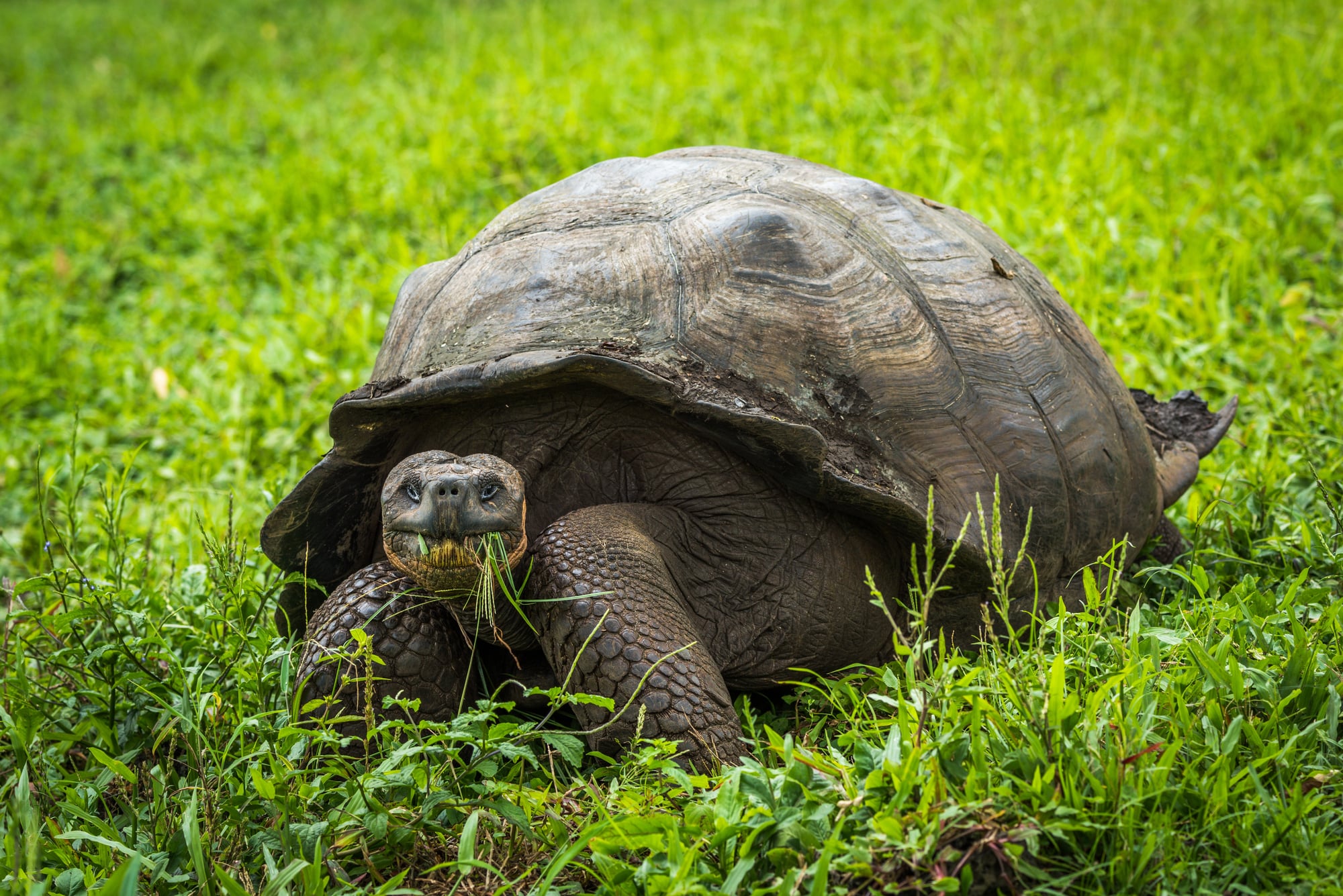
Giant tortoises are often described as ancient, and the word feels appropriate the moment one comes into view. Their massive shells, thick legs, and slow movements give them a presence that feels almost timeless.
Some individuals have lived for more than a century, meaning they have outlasted major political eras, technological shifts, and generations of human visitors.Their shells are not uniform across the islands.
In wetter areas, tortoises developed rounded shells that allow easier grazing on low vegetation. On drier islands, raised shell fronts made it possible to stretch their necks toward higher plants.
These differences are subtle but meaningful, shaped entirely by local conditions. Watching a giant tortoise move through tall grass or across dusty ground feels like observing evolution made visible, steady and unhurried.
Marine Iguana
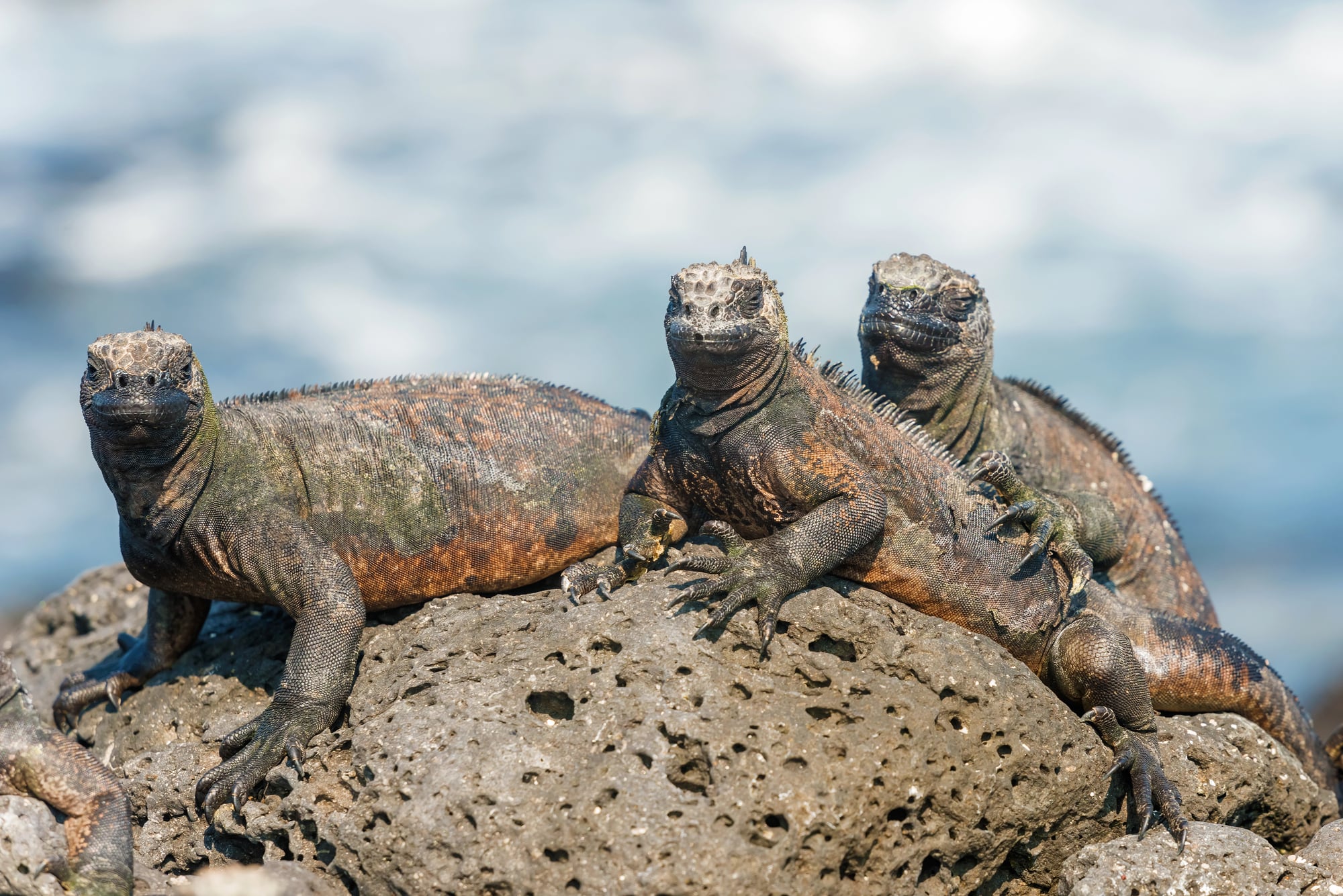
Marine iguanas appear almost otherworldly, with dark, rugged bodies that blend seamlessly into volcanic rock. They are the only lizards on Earth that rely on the sea for food, diving into cold water to graze on algae growing along submerged surfaces.
Their flattened tails and strong limbs make them capable swimmers, even in rough conditions.Life in saltwater demands unusual solutions. Marine iguanas consume large amounts of salt during feeding, which they later expel through specialized glands.
This process often results in visible sprays, leaving crusted residue around their faces. While it may look odd, it is a perfect example of adaptation at work.
Everything about the marine iguana reflects survival in a place where land and sea are inseparable.
Blue-footed Booby
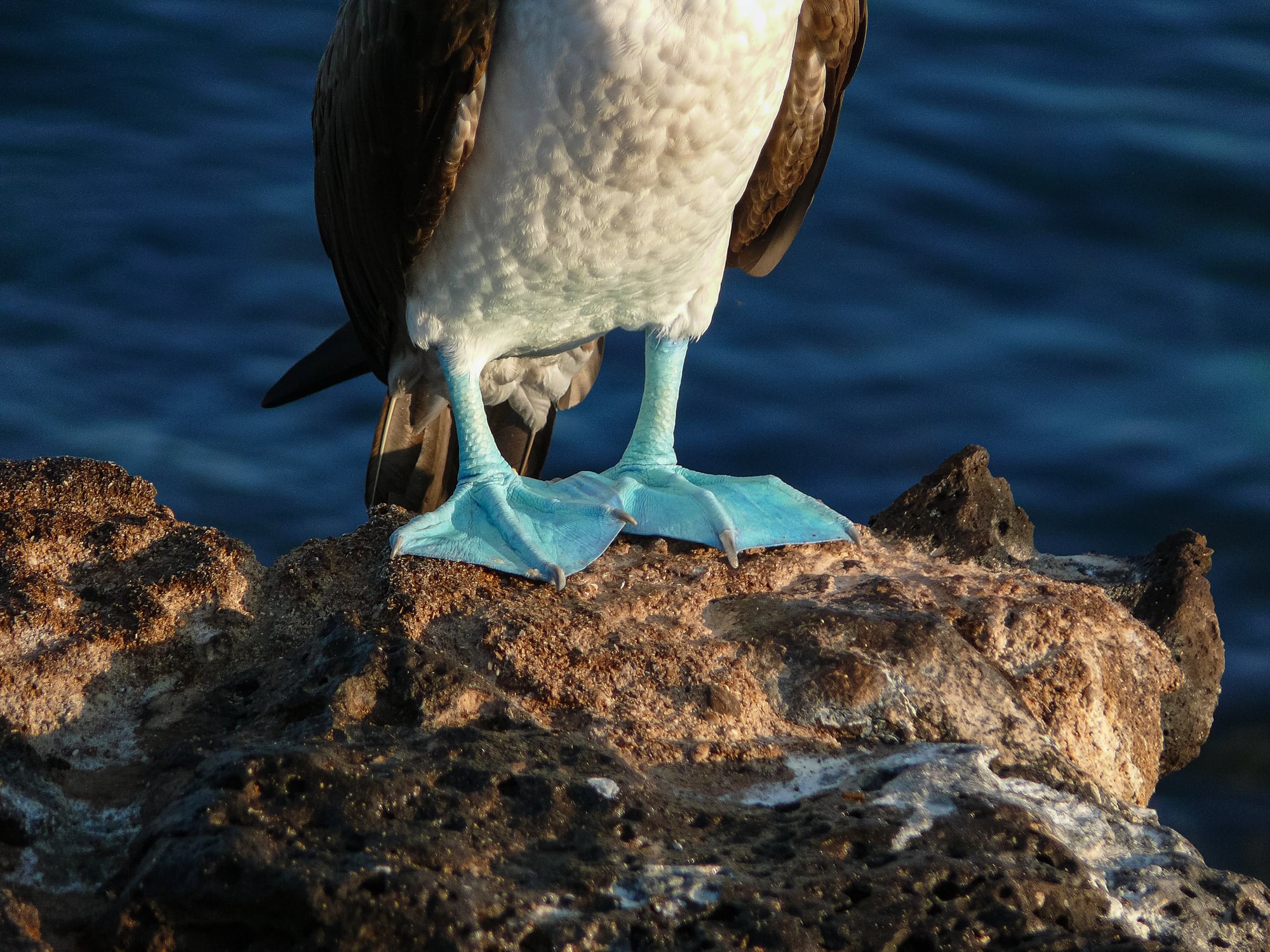
Blue-footed boobies are among the most recognizable birds in the Galapagos, largely because of their vivid feet. The color is not decorative.
It signals health and plays a central role in courtship, with males lifting their feet high in a careful, deliberate display. The movement looks awkward, yet it serves its purpose well.
Beyond their famous feet, blue-footed boobies are exceptional hunters. They plunge into the ocean from heights exceeding 60 feet, folding their wings just before impact.
Their streamlined bodies allow them to enter the water cleanly, targeting fish with remarkable accuracy. The contrast between their clumsy land behavior and their precision in the air and water makes them endlessly engaging to observe.
Galapagos Sea Lion
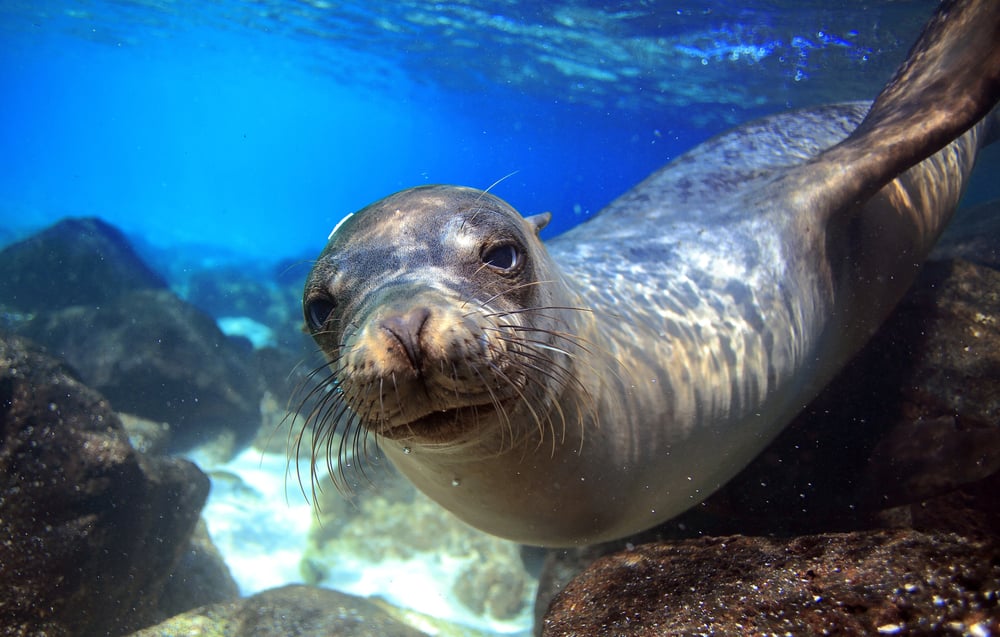
Galapagos sea lions are often the first animals visitors notice, not because they demand attention, but because they are everywhere. They rest on beaches, docks, and shaded paths, stretching out as if they own the place.
Their comfort around humans stems from long-term coexistence rather than training or reliance.In the water, their demeanor shifts completely.
Sea lions become agile and quick, twisting and gliding with ease. Younger individuals are especially curious, sometimes swimming nearby before darting away.
On land they appear relaxed and almost lazy, yet beneath the surface they reveal a level of athleticism that explains their success in coastal waters.
Sally Lightfoot Crab
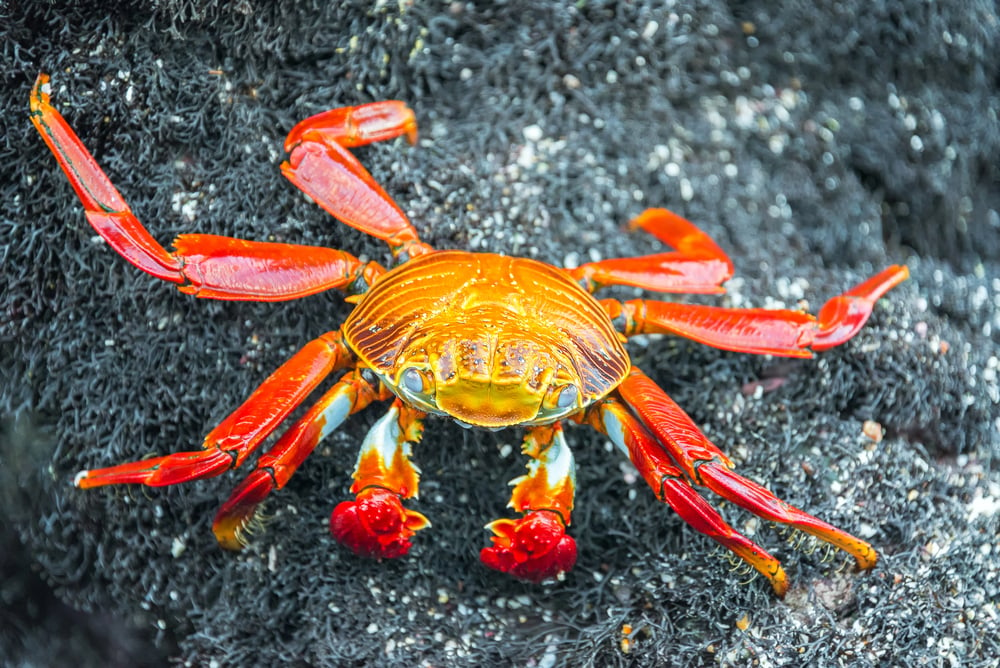
Against the dark backdrop of volcanic stone, Sally Lightfoot crabs look almost painted. Their shells display striking blends of red, orange, and blue, creating sharp contrast with the shoreline.
They move quickly, skittering sideways across rocks before slipping into narrow gaps.These crabs play a practical role along the coast, feeding on algae and organic material left behind by waves.
Their constant motion keeps shorelines active and visually dynamic. While small in size, they contribute to the rhythm of the islands, adding flashes of color and movement to an otherwise stark landscape.
Flightless Cormorant
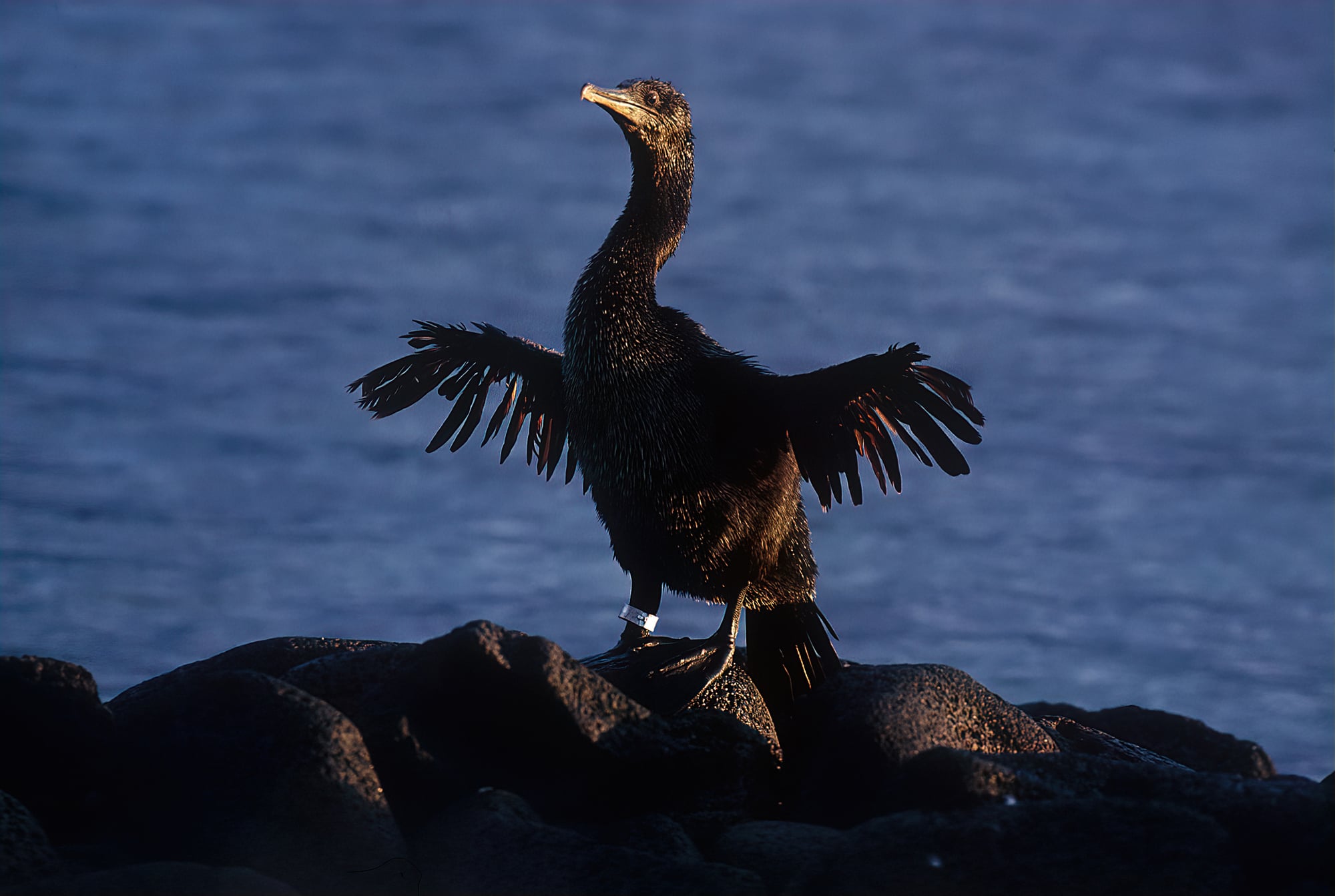
The flightless cormorant challenges assumptions about what birds should be. With short wings and a heavy body, it has abandoned flight entirely in favor of swimming.
This change did not happen overnight. Over generations, the absence of land predators made flight less essential, allowing other traits to take priority.
In the water, flightless cormorants are powerful divers, using their legs to chase fish below the surface. On land, they often perch on rocks, spreading their wings to dry.
Their appearance may seem unusual, but it reflects a logical tradeoff shaped by the environment. In the Galapagos, efficiency matters more than convention.
Land Iguana
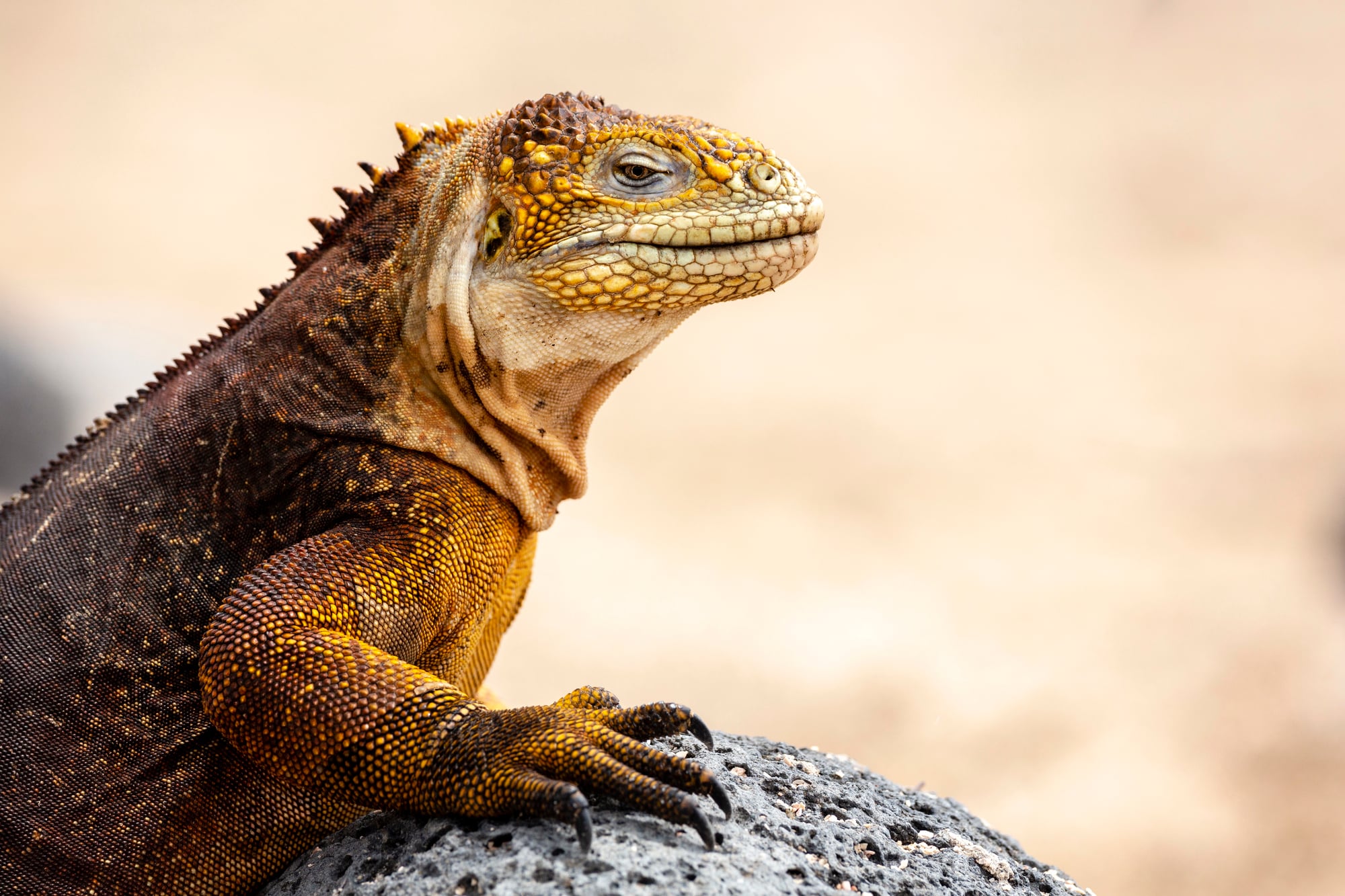
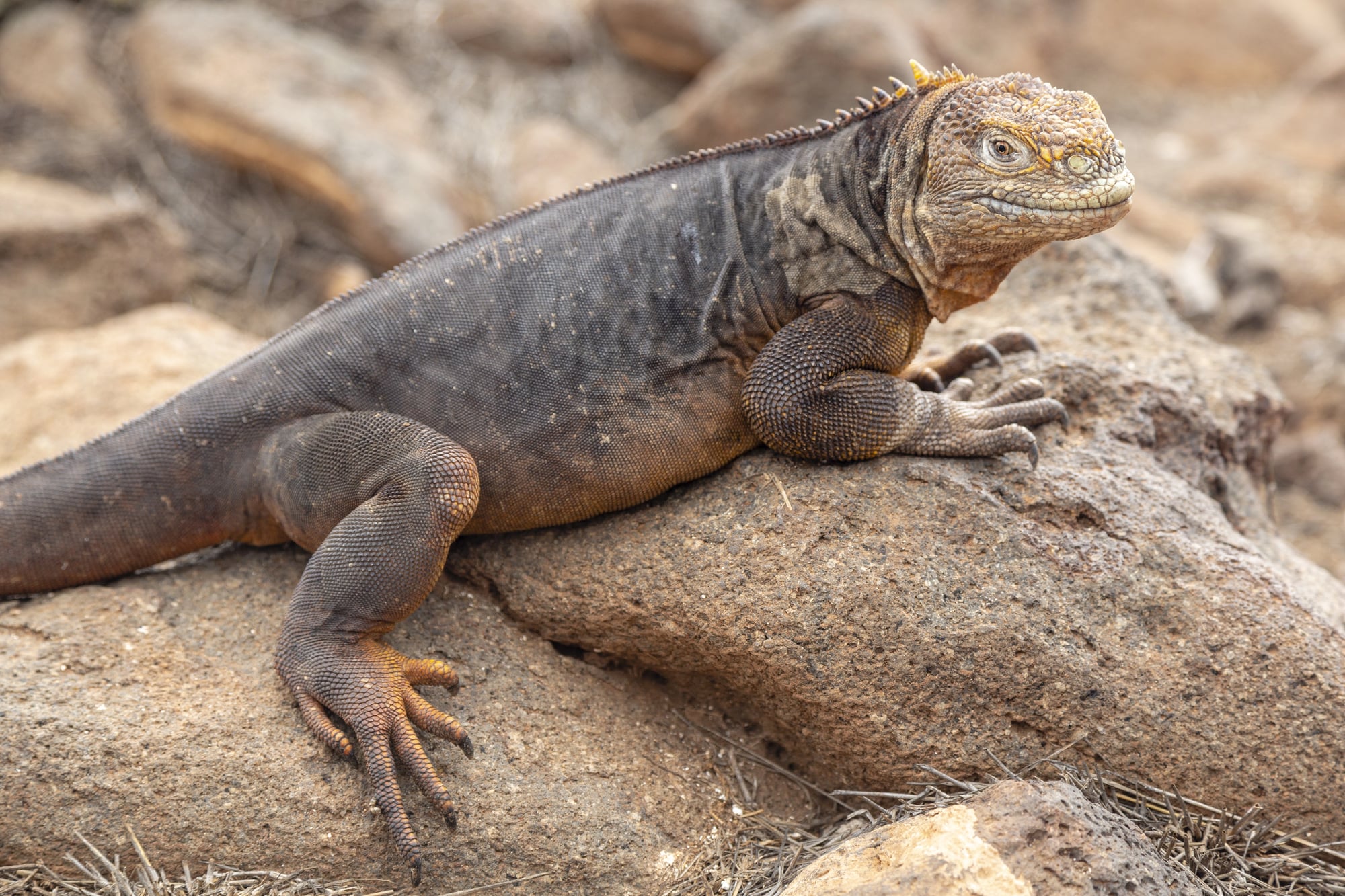
Land iguanas occupy drier areas of the islands, often blending into sandy terrain and sparse vegetation. Their yellow and brown coloring offers natural camouflage, while their sturdy bodies help them navigate uneven ground.
Unlike their marine relatives, land iguanas rely primarily on plants for nourishment.They play an important role in seed dispersal, helping maintain plant populations across the islands.
Their relationship with the environment is subtle but essential. Seeing a land iguana basking in the sun highlights how even seemingly quiet species contribute to ecological balance.
Hammerhead Shark
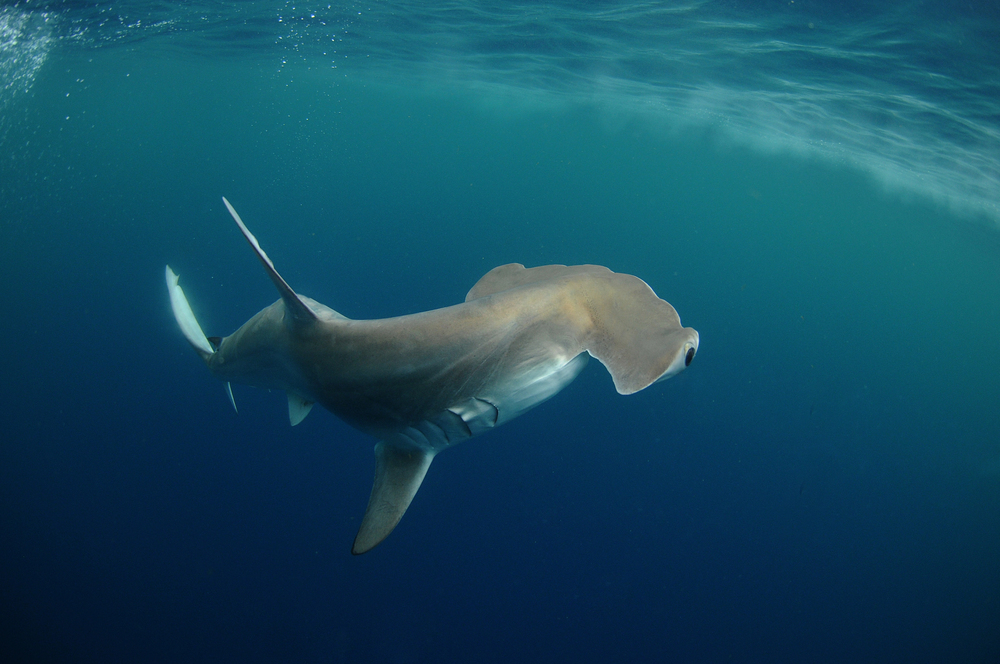
Beyond the shoreline, the Galapagos reveal another dimension of wildlife. Hammerhead sharks are among the most impressive marine inhabitants, often appearing in groups near remote islands.
Their wide-set eyes provide enhanced sensory awareness, allowing them to detect prey with precision.These sharks are typically encountered in deeper water, where strong currents bring nutrients that support complex food chains.
Despite their size, hammerheads move with calm control rather than aggression. Their presence signals a healthy marine environment, something increasingly rare in oceans around the world.
Galapagos Penguin
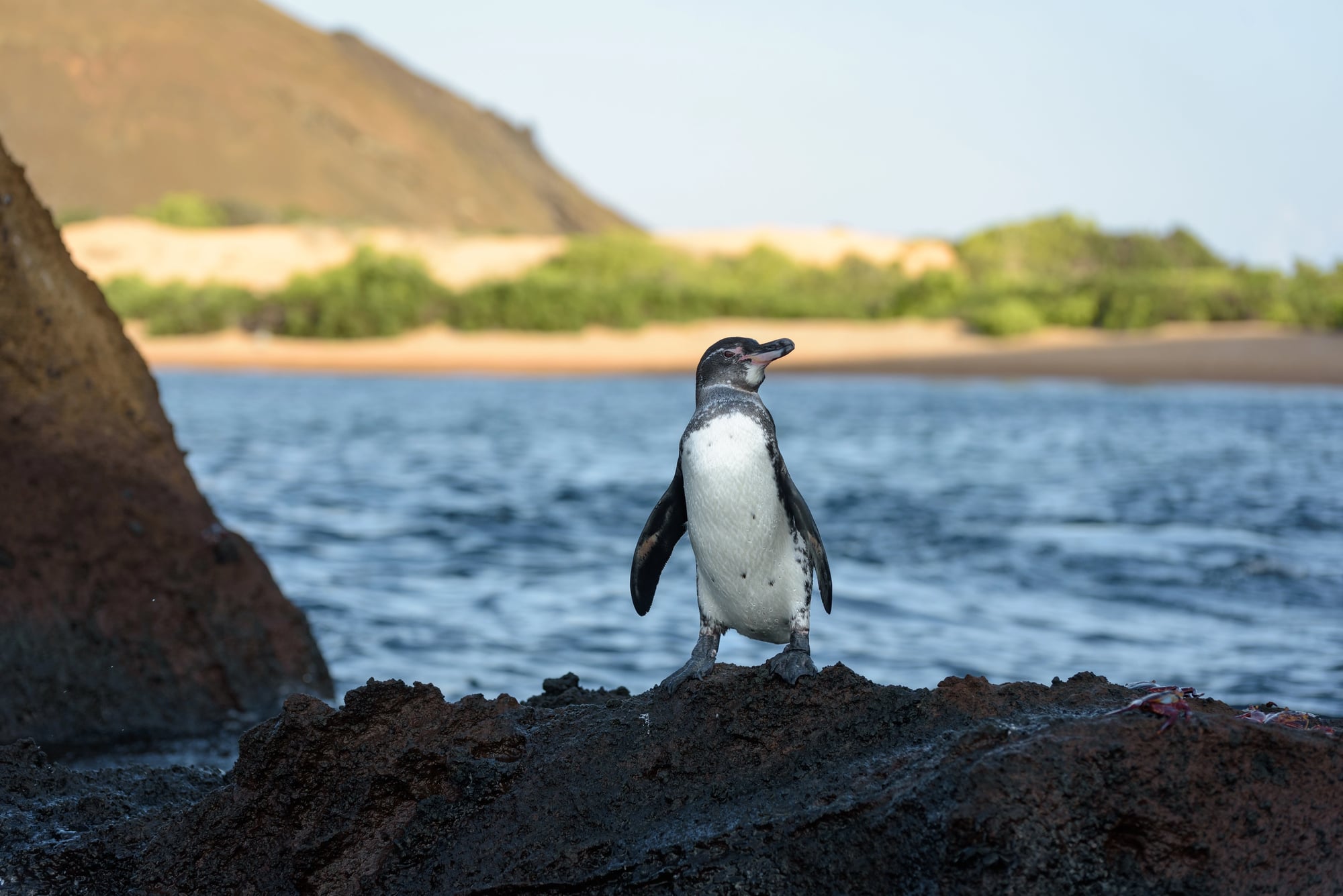
Penguins near the equator feel like a contradiction, yet the Galapagos penguin thrives thanks to cold currents that regulate water temperatures. This species is smaller than most penguins and highly adapted to a warmer climate, relying on shaded nesting sites and frequent access to food.
They hunt close to shore, using speed rather than depth to catch fish. Spotting one often feels unexpected, even in a place known for surprises. The Galapagos penguin stands as proof that geography does not always follow simple rules.
Why These Animals Still Matter
Out there, scattered across distant islands, odd animals once turned scientific thinking upside down. Weather patterns shifting – on top of humans settling in – are sparking new risks for these beings.
Protection seems critical; their journey is visible, happening now, step by step. With room to exist, nature shows it can adapt, transform, even thrive, revealing change as a constant companion.
More from Go2Tutors!

- The Romanov Crown Jewels and Their Tragic Fate
- 13 Historical Mysteries That Science Still Can’t Solve
- Famous Hoaxes That Fooled the World for Years
- 15 Child Stars with Tragic Adult Lives
- 16 Famous Jewelry Pieces in History
Like Go2Tutors’s content? Follow us on MSN.



