Decisions That Changed the Internet Forever
The development of the internet was neither accidental nor organic.
How billions of people now communicate, work, and live has been profoundly impacted by specific decisions made at pivotal times by engineers, businesses, and governments.
While some choices sparked a wave of innovation, others led to issues that we are still attempting to resolve decades later.
Knowing these turning points shows how carefully considered decisions created the digital world we live in today.
Here is a list of 14 rulings that had an unanticipated impact on modern life and the internet.
Making the Web Free and Open

Tim Berners-Lee and CERN faced a critical choice in 1993 about whether to patent the World Wide Web or release it to the public domain.
They chose to give it away completely free.
Rejecting royalties and licensing fees that could have generated billions.
This single decision allowed anyone to create websites and browsers without permission.
Sparking the explosive growth that made the web ubiquitous within a decade.
Rejecting Built-In Encryption

Computer scientists Vinton Cerf and Robert Kahn proposed TCP/IP protocols in 1973.
Discussions arose about building encryption directly into the internet’s core design.
However, encryption was largely omitted due to policy concerns and export-control restrictions on cryptographic technology during the Cold War era.
This decision means billions of internet users now struggle with complex passwords and multi-factor authentication systems.
Those wouldn’t be necessary if security had been baked in from the start.
Adopting TCP/IP Over OSI
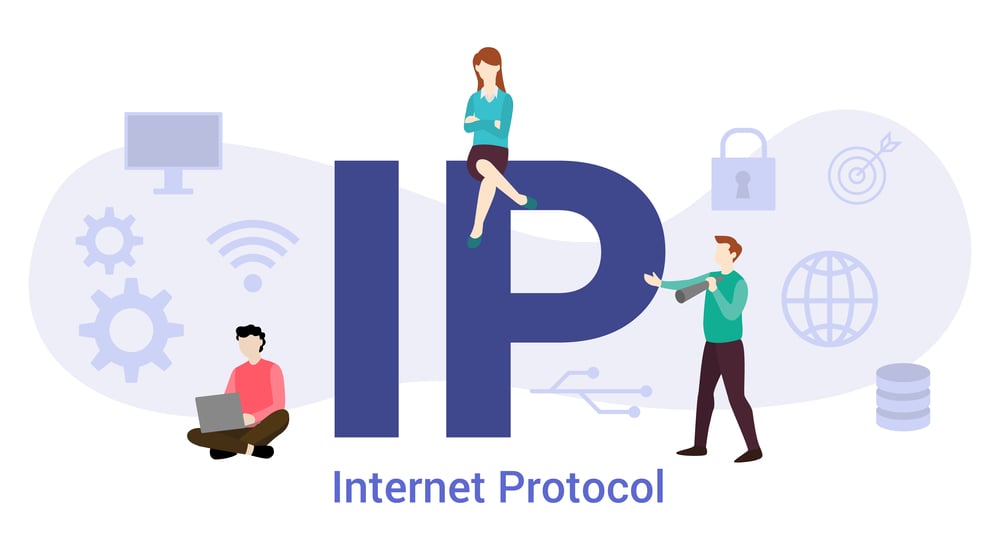
The internet community chose TCP/IP protocols over the more complex Open Systems Interconnection standard proposed by governments and major corporations in the early 1980s.
TCP/IP was simpler, more efficient, and already worked across existing networks.
This technical decision enabled computers from different manufacturers to communicate seamlessly.
Creating the foundation for global internet connectivity we take for granted today.
Commercializing the Internet

Congress authorized the National Science Foundation in 1995 to connect research networks to commercial systems.
Ending the internet’s academic-only era.
Companies immediately rushed to establish websites and online storefronts.
Transforming a tool for scientists into a global marketplace.
This policy shift birthed e-commerce giants like Amazon and eBay while fundamentally changing how people shop, bank, and conduct business.
Facebook Opening Beyond Colleges
Mark Zuckerberg decided in September 2006 to open Facebook to anyone over 13 with an email address.
Abandoning the college-only model that had defined the platform since 2004.
The requirement for university email addresses had created accountability and authenticity that kept behavior relatively civil.
Removing this barrier allowed explosive growth to 50 million users by late 2007 and 100 million by 2008.
It also sacrificed the built-in identity verification that had made the early Facebook trustworthy.
Google’s PageRank Algorithm
Larry Page and Sergey Brin developed PageRank in 1998.
It ranked search results based on how many quality sites linked to a page rather than just counting keyword matches.
This innovation made Google dramatically better than existing search engines at finding relevant information.
The decision to prioritize this algorithm over simpler methods transformed Google from a Stanford research project into the dominant gateway to internet information.
Creating the Domain Name System

The invention of DNS in 1983 let people type memorable names like ‘google.com’ instead of numeric IP addresses like ‘142.250.185.46’ to reach websites.
Paul Mockapetris designed this hierarchical naming system that automatically translates human-friendly addresses into computer-readable numbers.
Without this decision to create an intuitive addressing system, navigating the internet would require memorizing strings of digits like phone numbers.
YouTube Selling to Google

YouTube co-founders chose to sell their 18-month-old company to Google for $1.65 billion in 2006 rather than remaining independent.
Google’s resources and infrastructure allowed YouTube to handle massive video traffic without collapsing.
While YouTube gave Google dominance in online video.
This acquisition decision created the platform that now receives 500 hours of uploaded video every minute.
It fundamentally changed how people consume entertainment and information.
Netflix Pivoting to Streaming
Netflix decided in 2007 to offer streaming video alongside its DVD-by-mail service.
Betting the company’s future on internet delivery.
CEO Reed Hastings risked cannibalizing the profitable DVD business by investing in streaming technology before broadband was widespread.
This strategic decision transformed Netflix into a company that peaked near $300 billion in market valuation.
It also forced traditional studios to completely rethink how they produce and distribute content.
iPhone Launching Mobile Internet
Apple released the iPhone on June 29, 2007, with a full web browser and touch interface that made internet access practical on a phone for the first time.
Previous smartphones existed, but Steve Jobs decided to prioritize user experience over features.
Creating a device people actually wanted to use for web browsing.
By 2015, more people accessed the internet from phones than computers.
This fundamentally changed when and how humans connect online.
Wikipedia Choosing Free Access
Jimmy Wales and Larry Sanger launched Wikipedia in 2001 as a free encyclopedia anyone could edit.
Rejecting the traditional model of expert-written, paid-access reference works.
The decision to trust crowdsourced knowledge over credentialed gatekeepers seemed risky.
It created the largest reference work in human history.
Wikipedia now contains over 60 million articles in 300 languages.
It fundamentally changed how people research topics and settle disputes.
Napster Enabling File Sharing
Shawn Fanning and Sean Parker created Napster in 1999.
Allowing users to share music files directly between computers without centralized servers.
The decision to build peer-to-peer technology rather than a traditional download service enabled millions to exchange copyrighted music freely.
Although lawsuits killed Napster within two years, the technology proved digital distribution worked.
It forced the music industry to eventually embrace legal platforms like Spotify and iTunes.
Amazon Web Services Going Public
Amazon decided in 2006 to sell its internal computing infrastructure as a service.
Letting other companies rent server space instead of building their own data centers.
This choice to commercialize the technology Amazon built for itself created cloud computing as we know it today.
Startups can now launch with minimal capital investment.
This fundamentally changed entrepreneurship and allowed apps to scale from zero to millions of users almost instantly.
Browser Wars and Standards
Microsoft’s decision to bundle Internet Explorer free with Windows 95 in 1995 sparked the browser wars against Netscape.
It ultimately led to antitrust lawsuits and the creation of web standards.
The fight forced competing browsers to agree on common protocols so websites would work everywhere.
This messy period of competition and litigation ultimately strengthened the web.
It established the open standards that prevent any single company from controlling how the internet works.
From Laboratory to Living Room

These crucial choices demonstrate that the development of the internet was the consequence of conscious decisions made in the face of stress and uncertainty rather than being inevitable or coincidental.
Today’s online culture of sharing and cooperation was largely shaped by decision-makers who put transparency above profit.
Others prioritized expansion over security.
They established networks that linked billions of people while exposing issues like false information and privacy abuses that we are still attempting to resolve.
These conflicting values and priorities are reflected in the internet we use today.
They serve as a reminder that the impact of technology is solely dependent on human decision-making regarding its development and implementation.
More from Go2Tutors!

- The Romanov Crown Jewels and Their Tragic Fate
- 17 Halloween Costumes Once Considered Taboo
- Famous Hoaxes That Fooled the World for Years
- 15 Child Stars with Tragic Adult Lives
- 16 Famous Jewelry Pieces in History
Like Go2Tutors’s content? Follow us on MSN.



