Famous Artworks with Mysterious Origins
Art history loves a good mystery. Some of the most celebrated works in museums around the world carry questions that researchers still can’t answer.
The origins, meanings, and creators of certain pieces remain frustratingly out of reach, even with modern technology and centuries of investigation. These mysteries make the art even more compelling to look at, turning each viewing into a puzzle.
The Woman Behind the Smile

Leonardo da Vinci’s most famous painting features a woman whose identity sparked debate for centuries. Art historians proposed everything from Lisa Gherardini, a Florentine merchant’s wife, to Leonardo’s mother, to a self-portrait of the artist in female form.
The painting’s title came from Giorgio Vasari, who wrote about it decades after Leonardo’s death, but he never saw the actual work. Recent discoveries in Leonardo’s notes seem to support the Lisa Gherardini theory, yet gaps in the evidence leave room for doubt.
A Dutch Master’s Missing Years

Johannes Vermeer produced roughly 34 paintings during his lifetime, an unusually small output for a working artist. Most of his work concentrates in the 1660s and early 1670s, but records from his life remain sparse.
He left no letters, no diaries, and no sketches. The techniques he used—particularly his mastery of light—seem to appear fully formed without any record of development.
Some researchers suggest he used a camera obscura, but that doesn’t explain the gaps in his biography or why so few paintings survive.
An Unreadable Book of Strange Drawings

The Voynich Manuscript sits in Yale’s Beinecke Library, filled with illustrations of plants that don’t exist, astronomical diagrams that make no sense, and text in an alphabet nobody can decode. Carbon dating places it in the early 15th century, but the identity of its creator remains unknown.
Cryptographers, linguists, and botanists have all tried to crack its code. Some think it’s a medieval medical text in a constructed language.
Others believe it’s an elaborate hoax. The drawings themselves show remarkable detail and consistency, suggesting a serious purpose, but what that purpose was stays hidden.
The Graffiti Artist Who Vanished

Banksy’s street art appears on walls from London to Bethlehem, yet the artist’s real identity remains one of contemporary art’s best-kept secrets. Multiple theories circulate—Robert Del Naja from Massive Attack, Robin Gunningham from Bristol, or even a collective of artists working under one name.
The deliberate anonymity adds value to the work. Revealing Banksy’s identity would change how people view the art, shifting focus from the message to the messenger.
Documents have leaked, investigations have been launched, and people have claimed to know the truth, but nothing definitive has emerged. The mystery protects both the artist and the art.
A Wedding Portrait Full of Secrets
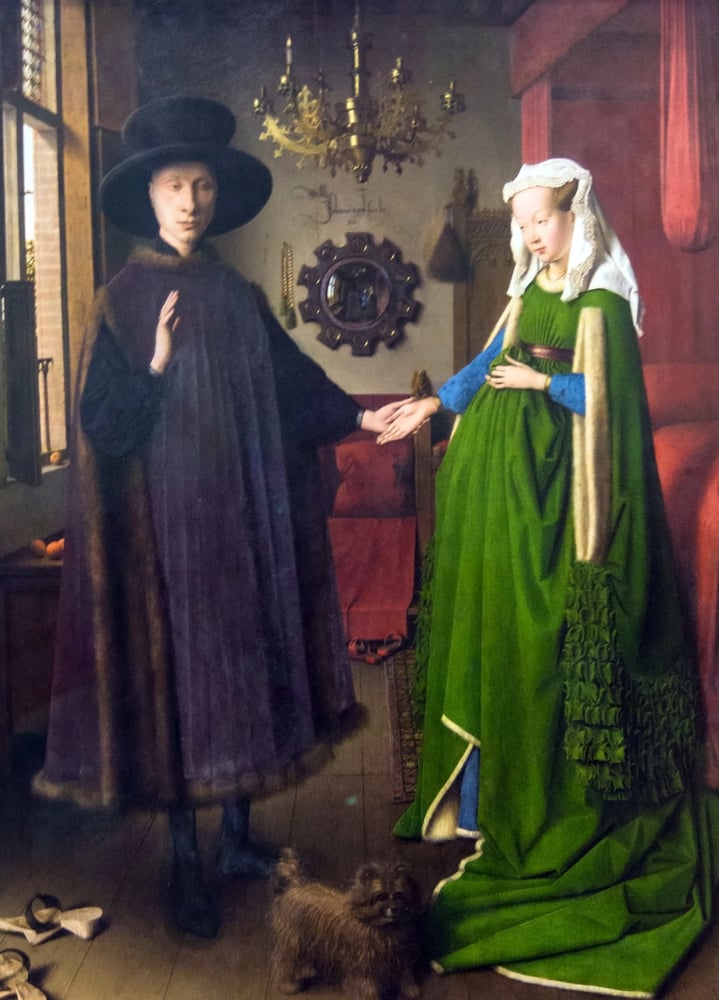
Jan van Eyck’s painting of Giovanni Arnolfini and his wife contains symbols that scholars still argue about. The single candle burning in the chandelier, the small dog at their feet, the convex mirror showing two witnesses, the discarded shoes, the oranges on the windowsill—each element carries multiple possible meanings.
Some interpret it as a marriage ceremony. Others see a memorial portrait after the wife’s death.
The Latin inscription reads “Jan van Eyck was here,” but whether he witnessed a marriage or simply painted a domestic scene remains unclear.
The technical skill is obvious. The meaning behind it all is not.
The Oldest Gallery Underground

The cave paintings at Lascaux in southwestern France date back roughly 17,000 years. The images show horses, deer, bulls, and geometric shapes painted with remarkable skill on rough stone surfaces.
Who created them remains unknown. Were they shamans, hunters, or early artists?
The location deep inside the caves suggests ritual significance, but the specific purpose escapes modern understanding.
The paintings demonstrate sophisticated techniques—perspective, shading, and use of the cave’s natural contours to create three-dimensional effects. Whoever made these images understood both art and their materials deeply.
Their names and stories disappeared with them.
The Disc Nobody Can Read

Found in Crete in 1908, the Phaistos Disc contains 241 symbols arranged in a spiral on both sides. The symbols were stamped into wet clay using individual seals, making this potentially one of the earliest examples of movable type printing.
The disc dates to around 1700 BCE, but its language, purpose, and origin remain unidentified.
Theories abound. It’s a prayer, a game board, an astronomical calendar, a geometric theorem.
The symbols don’t match any known Cretan script. If it’s a language, it appears nowhere else.
If it’s a one-off creation, what drove someone to make it? The disc sits in the Heraklion Archaeological Museum, still keeping its secrets.
The Canvas That Got Cut Down
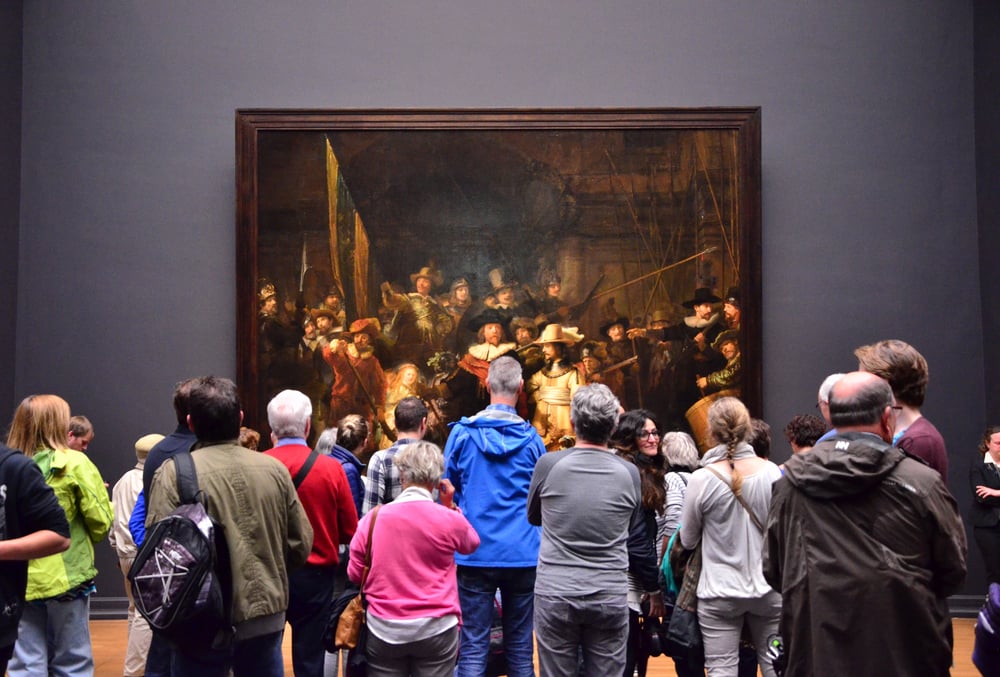
Rembrandt’s Night Watch originally measured larger than what hangs in the Rijksmuseum today. In 1715, someone trimmed the painting on all four sides to fit it into Amsterdam’s town hall.
The removed sections included two figures on the left and parts of an archway at the top. No sketches or copies of the full original survive, leaving art historians to guess at the complete composition.
Recent restoration work and digital reconstruction attempts gave viewers a glimpse of what the painting once was, but the physical pieces are gone forever. The decision to cut a masterpiece to fit a wall speaks to how differently previous centuries valued art.
Stones in a Circle
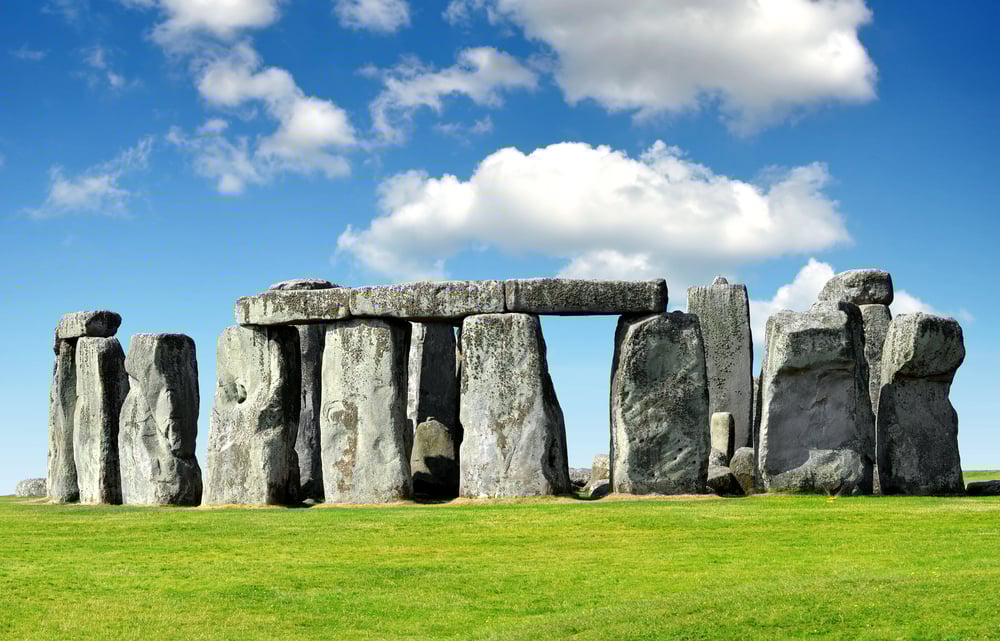
Stonehenge draws millions of visitors who stand and wonder why ancient people hauled massive stones across the English countryside to arrange them in precise circles. Theories include an astronomical observatory, a healing temple, a burial ground, or a gathering place for tribal ceremonies.
The stones align with the summer and winter solstices, but that observation alone doesn’t explain the enormous effort required to build it.
The monument went through multiple construction phases over 1,500 years, suggesting evolving purposes or different groups using the same sacred space. The bluestones came from Wales, over 150 miles away.
The builders left no written records, just the stones themselves standing on Salisbury Plain.
The Cloth with a Face
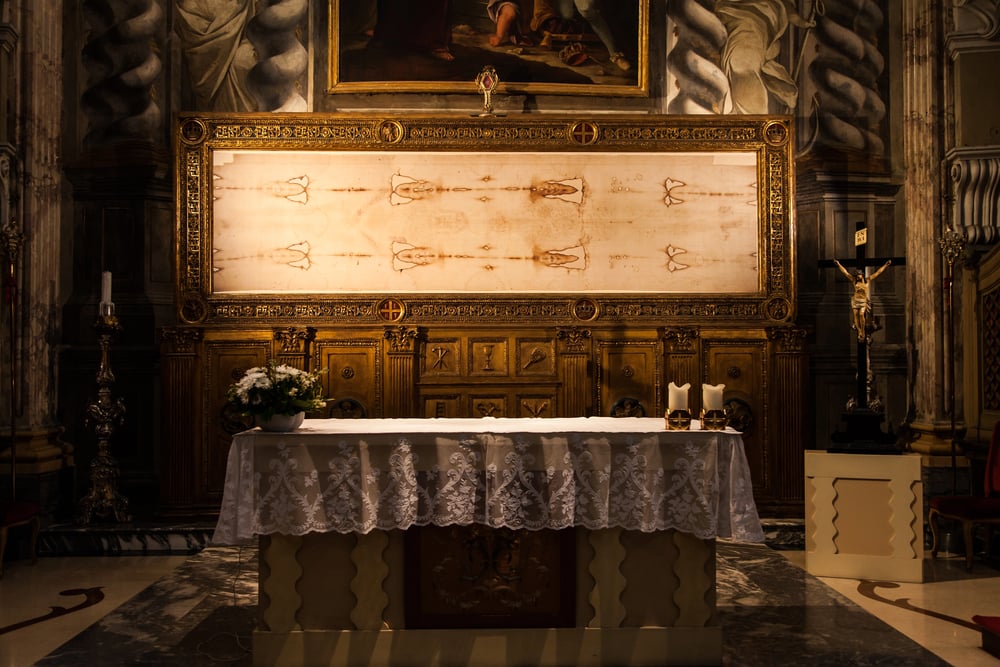
The Turin Shroud shows the image of a man who appears to have been crucified. Some believe it wrapped the body of Christ.
Others call it a medieval forgery. Carbon dating from 1988 placed the cloth in the 13th or 14th century, but those results face challenges from contamination concerns and more recent studies suggesting an older date.
The image formation itself puzzles scientists. It’s not paint.
It’s not dye. Something created a negative image on linen fabric in a way that still doesn’t have a complete explanation.
Whether you see it as a religious relic or historical curiosity, the shroud raises more questions than it answers.
Lines Drawn in the Desert

The Nazca Lines in Peru stretch across nearly 200 square miles of desert floor. Geometric shapes, animals, plants, and abstract designs—some over 1,000 feet long—appear only from the air.
The Nazca people created them between 500 BCE and 500 CE by removing the reddish surface stones to reveal lighter ground beneath.
Why make massive images you can’t see from the ground? Theories include astronomical markers, ritual walking paths, water cult symbols, or messages to gods.
The dry climate preserved the lines for centuries, but the people who made them left no written explanation of their purpose.
The Ancient Computer

Pulled from a shipwreck off the Greek island of Antikythera in 1901, this corroded lump of bronze turned out to be a complex mechanical device with interlocking gears. X-ray analysis revealed it as an astronomical calculator capable of predicting eclipses, tracking the Olympic Games cycle, and modeling planetary motions.
Built around 100 BCE, it represents a level of mechanical sophistication not seen again for over a thousand years.
Who designed it? Who built it?
Why did the technology disappear? The device suggests ancient Greek engineers understood geared mechanisms far better than historical records indicate.
Only one example survives, leaving open the question of how common such devices were.
The Hillside Figure
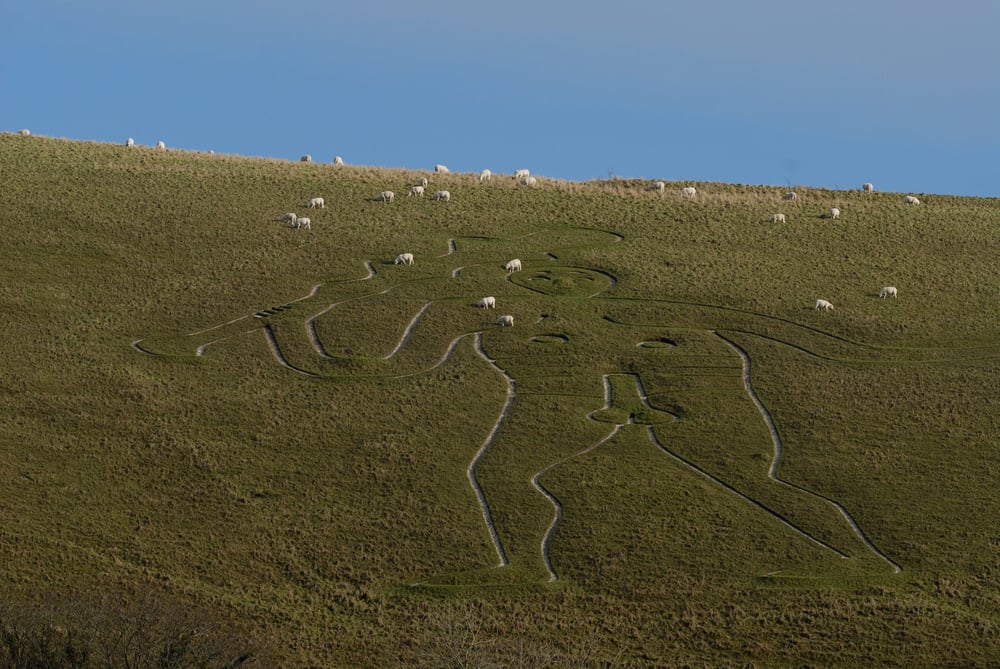
Down in Dorset, cut right into the slope of a hill, there’s a huge figure – 180 feet high – known as the Cerne Abbas Giant. This giant holds a large club in one hand.
Made from exposed chalk, he appears as a bare man with exaggerated traits. Some say old rites inspired him; others claim it poked fun at Oliver Cromwell.
Still, nothing written clearly points to its existence earlier than the 1600s.
People say Celts or Romans might have made it long ago. Yet some reckon it came much later, feeding off old myths of stone circles.
Lacking records from the past makes the real story hard to pin down. Guessing is all there is when proof stays missing.
The Questions That Remain

These mysteries endure because art outlasts its creators. The works survive while their stories fade, leaving each generation to interpret them through new lenses.
Sometimes the unknown makes art more powerful. The questions draw you in deeper than answers ever could.
You stand in front of a canvas or beneath ancient stones and join a long line of people who looked and wondered and never quite figured it out completely.
More from Go2Tutors!

- The Romanov Crown Jewels and Their Tragic Fate
- 13 Historical Mysteries That Science Still Can’t Solve
- Famous Hoaxes That Fooled the World for Years
- 15 Child Stars with Tragic Adult Lives
- 16 Famous Jewelry Pieces in History
Like Go2Tutors’s content? Follow us on MSN.