Famous Paintings Stolen and Never Recovered
A stolen masterpiece is nearly impossible to sell and surprisingly easy to lose. Thieves tend to learn the first part quickly, and museums spend decades living with the second.
Some of the most valuable pictures ever taken have been gone for a generation or more, leaving behind rewards, rumors, and bare patches of wall. Every work below was still missing at last report.
Vermeer’s Concert, the Costliest Missing Canvas
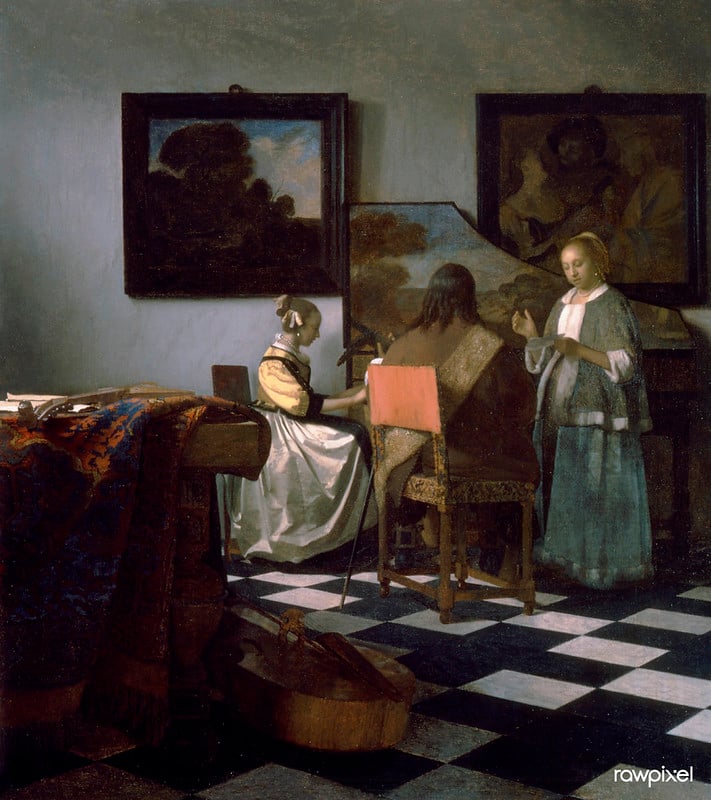
Johannes Vermeer painted The Concert around 1664, and Isabella Stewart Gardner bought it at a Paris auction in 1892. It left her Boston museum in the early hours of March 18, 1990, when two men dressed as police officers talked their way past the night guard.
Fewer than 40 paintings by Vermeer are known to survive, which helps explain why this one is often described as the most valuable stolen object in the world, with estimates running above 200 million dollars. The museum’s reward for information leading to the return of all thirteen missing works now sits at 10 million dollars, and nobody has collected it.
Rembrandt’s Only Seascape
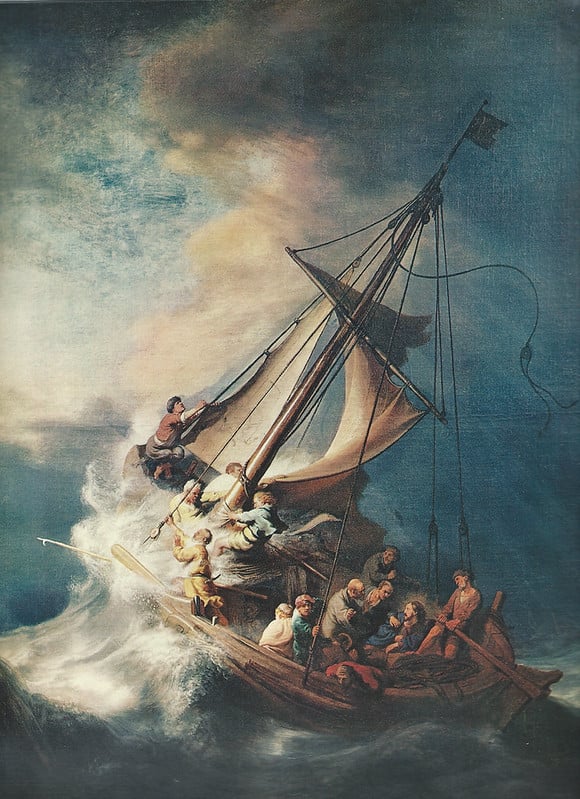
Christ in the Storm on the Sea of Galilee, dated 1633, is the only seascape Rembrandt is known to have painted. The Gardner thieves cut it out of its frame with a blade, leaving ragged strips of canvas behind on the stretcher.
Fourteen figures crowd the pitching boat, one more than the Gospel account requires, and the extra man gripping a rope and looking straight out at the viewer is generally taken to be the artist himself. Because the museum keeps its galleries arranged as its founder left them, the empty frame still hangs in the Dutch Room, facing visitors who mostly know the picture from reproductions.
A Lady and Gentleman in Black
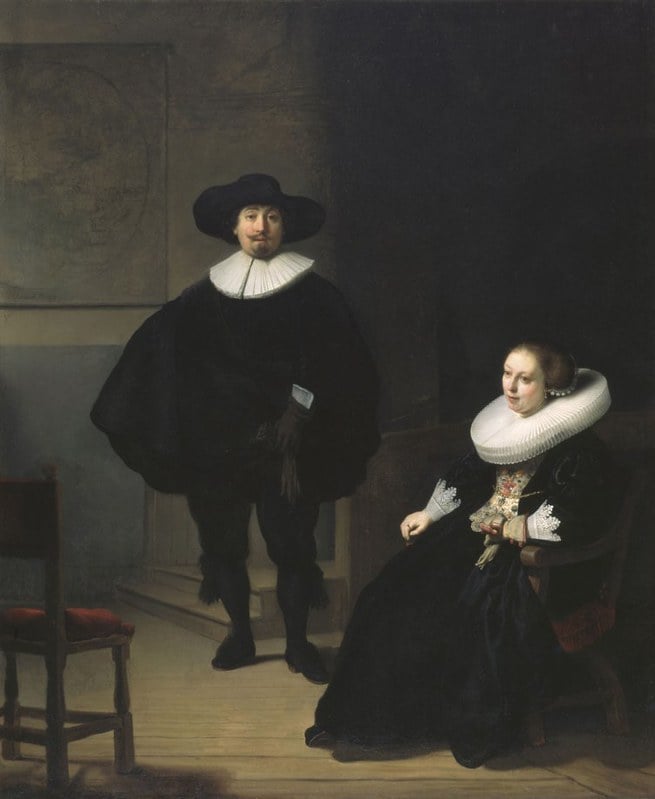
Rembrandt completed this formal double portrait in 1633, the same year as the seascape, and the two hung in the same room at the Gardner until both were sliced from their frames in 1990. X-ray study had earlier shown that a child once stood between the couple before being painted out, leaving an oddly wide gap that an added chair only partly fills.
The robbers spent 81 minutes inside the building while both guards sat handcuffed in the basement, their eyes covered with duct tape. They also pulled a Rembrandt self-portrait on wood off the wall, then left it leaning against a cabinet.
Manet’s Chez Tortoni and the Chair
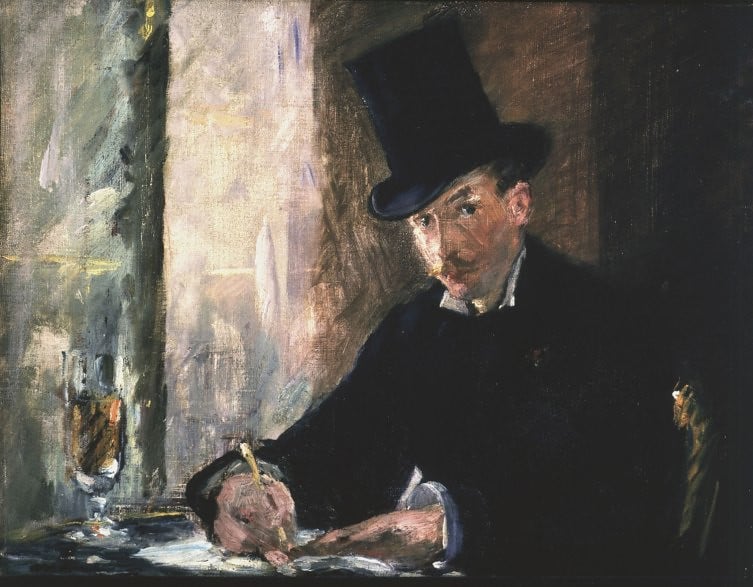
Edouard Manet’s small canvas of a man in a top hat writing at a Paris cafe table hung in the Gardner’s Blue Room on the ground floor, well away from the Dutch pictures upstairs. Investigators have long puzzled over it, because the museum’s motion detectors reportedly recorded no thieves’ footsteps in that gallery during the robbery.
The painting vanished anyway. Its empty frame turned up in the security director’s office, a placement that has been read as either carelessness or a parting insult.
Of the thirteen objects taken that night, it remains the one whose removal is hardest to explain.
Flinck’s Obelisk, Once Thought a Rembrandt
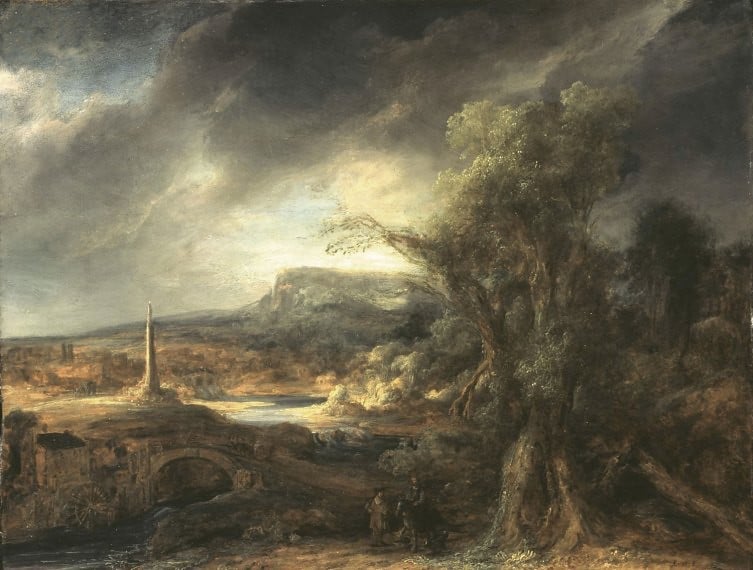
Landscape with an Obelisk, an oil on wood panel from 1638, entered the Gardner collection as a Rembrandt and kept that label for most of the twentieth century. Scholars reassigned it in the 1980s to Govaert Flinck, one of Rembrandt’s most capable pupils, only a few years before it was stolen.
The thieves may well have believed they were carrying off a third Rembrandt. It had been displayed on a small table by a window, mounted back to back with Vermeer’s Concert, so that lifting one more or less meant lifting the other.
Neither has been seen in public since March 1990.
Five Degas Works From the Short Gallery
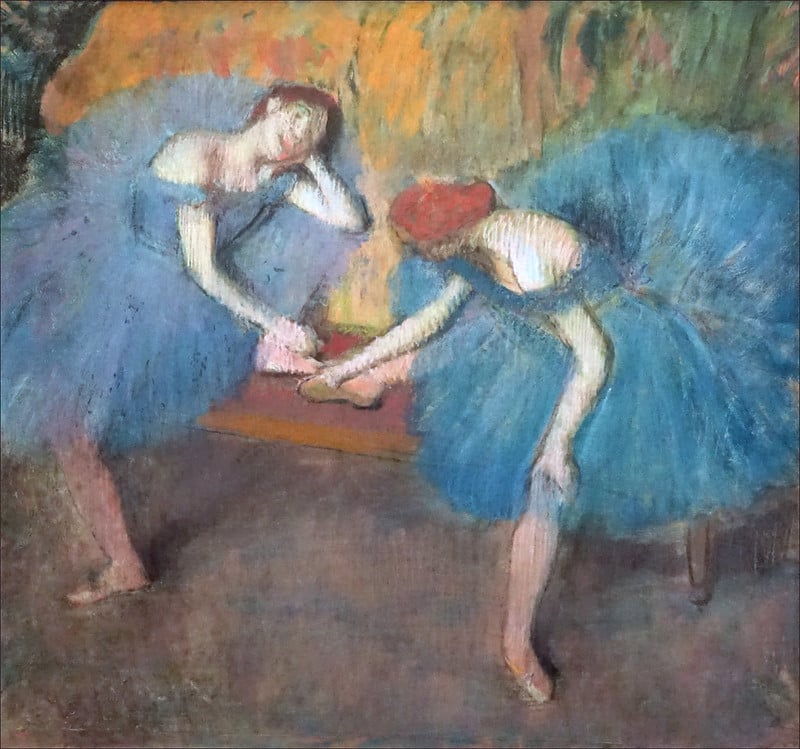
Among the stranger choices of the Gardner robbery were five small works on paper by Edgar Degas, including the watercolor La Sortie de Pesage, a scene of jockeys riding out from the weighing enclosure. The men took them from cabinets in the Short Gallery, along with a bronze eagle finial from a Napoleonic flag, while never climbing to the floor above, where a Titian widely considered the finest painting in the building hung untouched. In 2013 the FBI announced that it believed the thieves belonged to a criminal organization based in New England and the mid-Atlantic states.
No one has ever been charged with the theft, and none of the sketches has surfaced.
Caravaggio’s Palermo Nativity
On a stormy night in October 1969, someone entered the Oratory of San Lorenzo in Palermo and cut Caravaggio’s Nativity with Saint Francis and Saint Lawrence from its frame above the altar. The canvas measured nearly nine feet tall.
Suspicion fell on the Sicilian Mafia almost at once, and informants have since offered conflicting accounts, among them that it was damaged beyond repair, hidden in a farm building and gnawed by animals, or burned. None has been proven.
A high-resolution replica was installed in the oratory in 2015, and the original remains on the FBI’s list of top art crimes.
Van Gogh’s Poppy Flowers, Stolen Twice
Vincent van Gogh painted this small still life of yellow and red flowers in 1887, three years before his death. It was taken from the Mohamed Mahmoud Khalil Museum in Cairo in 1977 and later recovered, then stolen again in August 2010, cut from its frame during opening hours.
Egyptian officials soon admitted that none of the alarms and only a handful of the museum’s dozens of security cameras had been working. An early government announcement that the canvas had been seized at the airport proved false within hours.
Valued at roughly 50 million dollars, it has not been reported since.
Cezanne’s Auvers View and the Millennium Fireworks
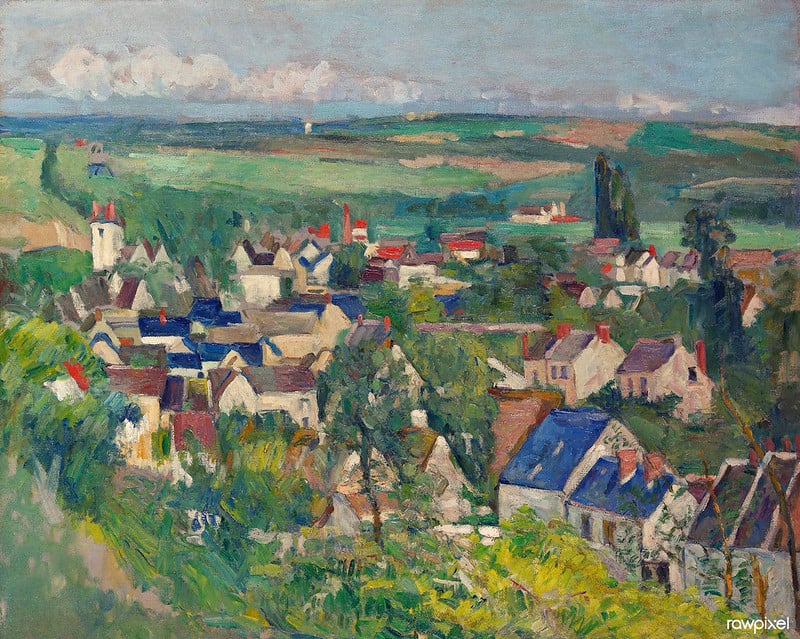
While Oxford celebrated the arrival of the year 2000, a burglar climbed across the rooftops to the Ashmolean Museum, broke through a skylight, and dropped into a gallery by rope. A smoke canister clouded the room and hid the intruder from the cameras, and guards at first assumed a fire.
Paul Cezanne’s View of Auvers-sur-Oise, painted around 1880 and valued at about 3 million pounds, was the only work taken. Police concluded it had been stolen to order, since more portable pictures hung nearby untouched.
The Cezanne was gone in a matter of minutes and has stayed gone.
Raphael’s Portrait of a Young Man
Painted around 1513 and long thought by some to be a self-portrait, this panel belonged to the Czartoryski family collection in Krakow alongside Leonardo’s Lady with an Ermine. German occupiers seized both in 1939, and the Raphael ended up with Hans Frank, the Nazi governor of occupied Poland.
Frank took it west as the Red Army advanced in early 1945, and it was not among the works found when American troops arrested him in Bavaria that May. The Leonardo came home.
The Raphael is widely regarded as the most important painting still missing from World War II, and its empty frame has been displayed in Krakow.
Just Judges Panel From the Ghent Altarpiece
Thieves removed two panels from Jan van Eyck’s Ghent Altarpiece at Saint Bavo’s Cathedral on the night of April 10, 1934. A ransom demand for one million Belgian francs followed, and one panel, a painted figure of John the Baptist, was returned through a railway luggage office as proof of good faith.
The other, known as the Just Judges, never came back. That November a local stockbroker named Arsene Goedertier reportedly told his lawyer on his deathbed that he alone knew where it was, then died without saying. A copy painted in the 1940s by Jef Van der Veken fills the gap.
Picasso’s Pigeon With Green Peas
Before dawn on May 20, 2010, a burglar named Vjeran Tomic removed a window at the Musee d’Art Moderne in Paris and walked out with five paintings worth an estimated 100 million euros. The museum’s alarm system had been partly out of order for weeks.
Pablo Picasso’s Le pigeon aux petits pois, a Cubist canvas from 1911, was the most valuable of the group. Tomic was caught and sentenced to eight years in 2017, and a co-defendant told the court he had panicked and thrown all five pictures into the trash.
Investigators never believed the story, but nothing has surfaced to contradict him.
Modigliani’s Woman With a Fan
Tomic later said he had gone to the Paris museum for a single Fernand Leger still life and took the rest because no alarm sounded and he had time to browse. One of his additions was Amedeo Modigliani’s Woman with a Fan from 1919, a portrait of the artist’s friend Lunia Czechowska painted less than a year before his death.
Henri Matisse’s Pastoral and Georges Braque’s Olive Tree near l’Estaque left through the same window. French prosecutors established who took the works and who received them, and a court ordered the men to repay the city of Paris.
The paintings themselves were never produced.
Monet’s Waterloo Bridge and a Village Stove
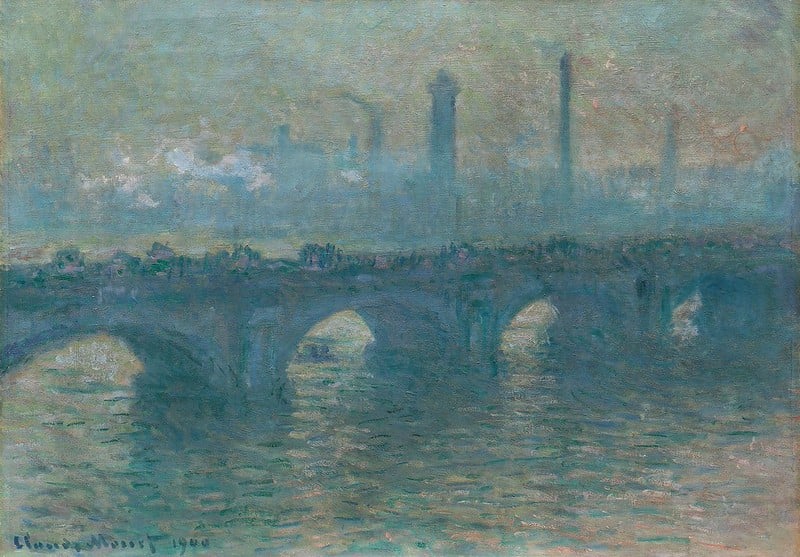
Seven works disappeared from the Kunsthal in Rotterdam in under three minutes on October 16, 2012, among them Claude Monet’s Waterloo Bridge, London and its companion Charing Cross Bridge, London, both dated 1901. Dutch police traced the theft to a group of Romanian men, who were convicted.
The mother of one defendant told investigators she had burned the works in her stove in the village of Carcaliu to destroy the evidence, then withdrew the statement. Specialists from Romania’s national history museum examined the ashes and reported finding nails, canvas fragments, and pigments consistent with old paintings.
Nothing has been proven beyond that, and nothing has reappeared.
Picasso’s Harlequin Head

Picasso drew Tete d’Arlequin in 1971, two years before he died, and it was on loan to the Kunsthal from the private Triton Foundation when the Rotterdam thieves took it along with works by Monet, Matisse, Gauguin, and Lucian Freud. Like the others, it is believed to have been destroyed in Romania, though no fragment has been positively identified.
Hope flickered in November 2018, when a writer was led to a picture buried under a tree in eastern Romania. Within a day a Belgian theater company admitted it had planted a forgery there as part of a performance about a famous forger.
Lucian Freud’s Tiny Portrait of Francis Bacon
Lucian Freud painted his friend Francis Bacon in 1952 on a sheet of copper scarcely bigger than a postcard. The Tate owned it and lent it to a touring retrospective, and on May 27, 1988, a visitor to the Neue Nationalgalerie in West Berlin unscrewed it from the wall and left.
Thirteen years later Freud designed a wanted poster himself, reproducing the portrait in black and white under bold red lettering, and more than 2,000 copies went up around Berlin offering a reward of 300,000 deutschmarks. He asked, with some politeness, whether whoever held it might allow him to show it. Nobody replied.
Montreal’s Missing Rembrandt Landscape
Early on September 4, 1972, three armed men lowered themselves through a skylight at the Montreal Museum of Fine Arts. The skylight was under repair, and the work had left its alarm disabled.
They tied up the guards and left with 18 paintings and dozens of pieces of jewelry in what is still described as the largest art theft in Canadian history. The prize was Landscape with Cottages, a small picture attributed to Rembrandt.
During ransom negotiations the thieves returned a single painting, a small landscape attributed to Jan Brueghel the Elder, as proof they held the goods. Talks then collapsed, and the remaining seventeen pictures vanished.
Dali’s Two Balconies and the Carnival Getaway
Four armed men walked into the Chacara do Ceu museum in the Santa Teresa district of Rio de Janeiro on February 24, 2006, as a Carnival street parade passed outside. They forced staff to shut off the cameras and took Salvador Dali’s Two Balconies, Henri Matisse’s Luxembourg Garden, Pablo Picasso’s Dance, and Claude Monet’s Marine.
Then they stepped out the front door and dissolved into a crowd of costumed revelers, which is about as good a cover as a thief could ask for. The gang also took a Picasso book of bullfight prints and robbed several tourists on the way out.
No recovery of the four paintings has ever been announced.
Guardi’s Venetian Views From Russborough House
Russborough House in County Wicklow, Ireland, has been robbed of paintings four times since 1974, a record few private collections would care to match. In May 1986 the Dublin gang leader Martin Cahill, known as the General, took 18 works from the Beit collection there, including a Vermeer.
Most were tracked down over the following years, with the Vermeer recovered in Antwerp in 1993. Two views of Venice by the eighteenth-century painter Francesco Guardi were not among them.
As far as is publicly known they remain missing, the last unresolved pieces of a theft that Cahill found far easier to commit than to profit from.
Frans Hals and the Thrice-Stolen Laughing Boys
Two Laughing Boys with a Mug of Beer, painted by Frans Hals around 1626, belongs to a small museum in the Dutch town of Leerdam. It was stolen in 1988 and recovered three years later, stolen again in 2011 and recovered within months, and taken a third time in August 2020 by burglars who forced a rear door.
A Dutch court later convicted a man in connection with that break-in and with the theft of a Van Gogh from another museum earlier the same year. The Van Gogh was handed back in 2023.
The Hals, valued at around 15 million euros, has not followed.
A Dutch Cavalier Lifted in Sydney
Frans van Mieris the Elder painted A Cavalier, thought to be a self-portrait, in the late 1650s on an oak panel measuring roughly eight inches by six. That size made it easy to admire and easier to pocket.
It disappeared from the Art Gallery of New South Wales on a Sunday in June 2007 while the building was open to the public, apparently unscrewed from the wall and carried out under a coat or in a bag.
The gallery valued it at about 1.4 million Australian dollars. Police circulated its image to stolen art registers abroad, and no credible sighting has been reported.
Corot’s Road to Sevres
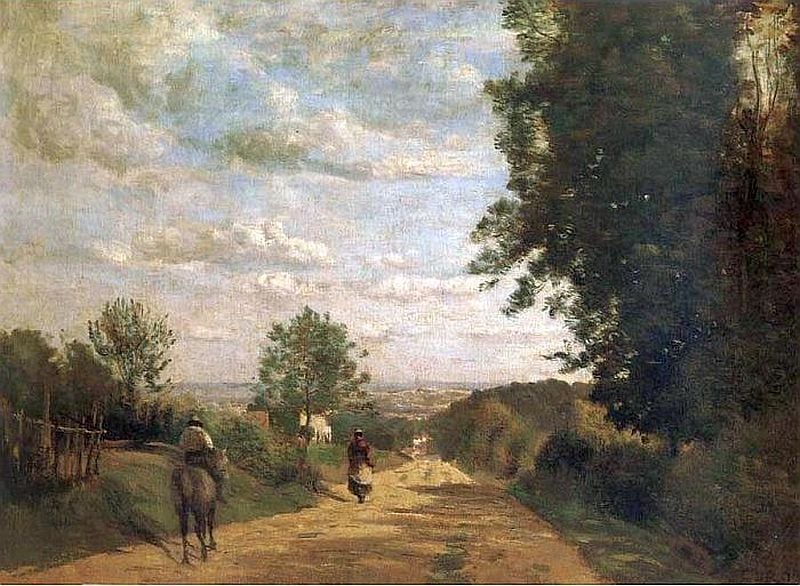
Sunday afternoons at the Louvre are crowded, which did not deter whoever removed Camille Corot’s Le Chemin de Sevres on May 3, 1998. The small landscape, painted in the 1850s, was slipped out of its frame, and the frame and its protective glass were left behind for the police to fingerprint.
The museum closed its doors and hundreds of visitors were searched as they filed out, without result. The embarrassment prompted tighter security across the museum, and the Society of Friends of the Louvre put up a reward of 100,000 francs.
Valued at more than one million dollars, the Corot has not been seen since that afternoon.
Spitzweg’s Poor Poet
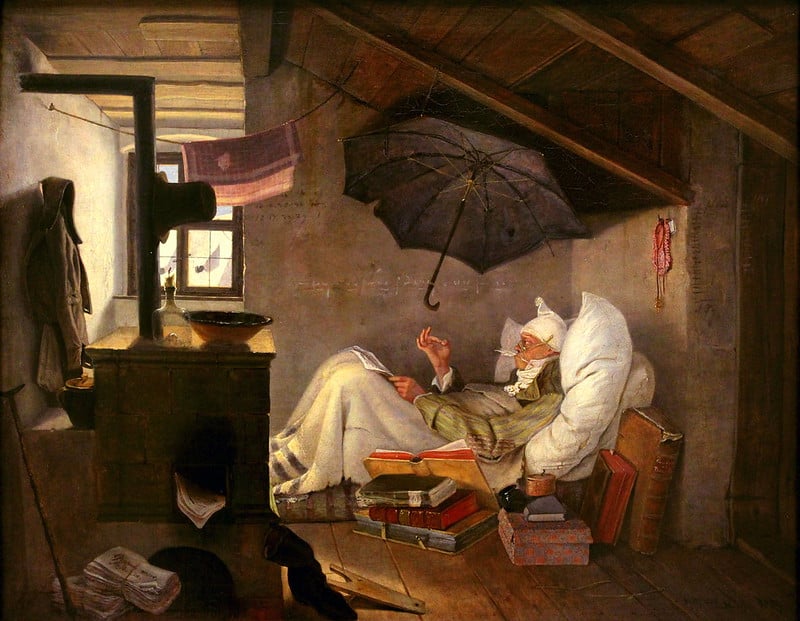
Carl Spitzweg’s The Poor Poet, showing a writer in bed in a leaking attic with an umbrella rigged overhead, is one of the best loved images in German art. He painted more than one version in 1839.
The Berlin version was first taken in 1976 by the performance artist Ulay, who hung it in an immigrant family’s apartment as a protest and then surrendered it. On September 3, 1989, it was stolen again from Charlottenburg Palace in West Berlin, together with Spitzweg’s The Love Letter.
This time no artist came forward, and neither picture has been found. Munich still has its own version on display.
Bellini’s Madonna From a Venetian Church
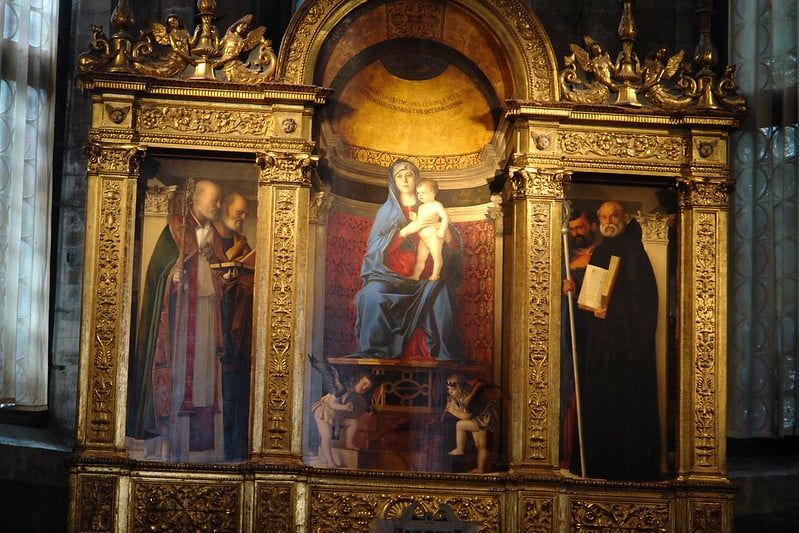
Giovanni Bellini painted a Madonna and Child around 1480 for the church of Madonna dell’Orto in Venice, the parish church where Tintoretto is buried. For five centuries it hung in a side chapel with little more protection than the building’s doors.
Thieves removed the small panel on March 1, 1993, and no trace of it has been reported since. Italy’s Carabinieri art squad, which maintains one of the largest databases of stolen cultural property in the world, still lists the panel.
Visitors to the Valier Chapel now find a copy where the Bellini used to be.
Empty Frames and Long Memories
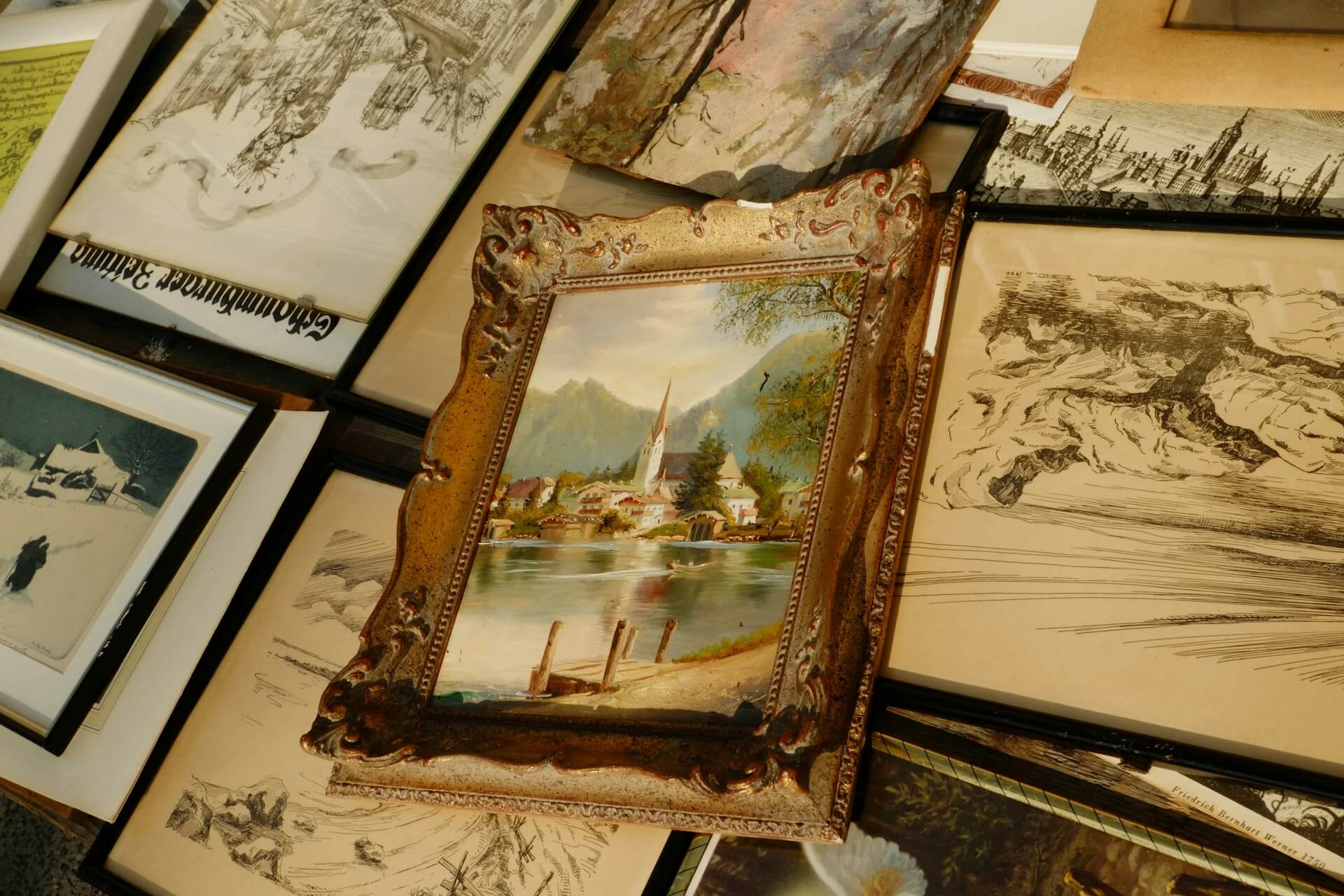
Almost none of these thefts made anyone rich. A famous painting cannot be sold openly, insured, or exhibited, so it tends to become a bargaining chip, a liability, or a secret that dies with the person keeping it.
The skill involved was usually modest as well. A broken alarm, a skylight under repair, or a crowd outside did most of the work.
Museums respond in different ways, with replicas, photographs, or frames left deliberately bare. Each choice says something about whether the institution still expects its picture back.
Recoveries do happen after decades, often when a thief’s heirs open the wrong closet. Until then the lists stay open, and so do the rewards.
More from Go2Tutors!

- The Romanov Crown Jewels and Their Tragic Fate
- 13 Historical Mysteries That Science Still Can’t Solve
- Famous Hoaxes That Fooled the World for Years
- 15 Child Stars with Tragic Adult Lives
- 16 Famous Jewelry Pieces in History
Like Go2Tutors’s content? Follow us on MSN.