Fastest Eaters In Competitions
Watching someone eat 76 hot dogs in 10 minutes sounds impossible until you see it happen. Competitive eating has grown from a Coney Island sideshow into a sport with rankings, sponsorships, and athletes who train as seriously as marathon runners.
These competitors push their bodies to extremes, consuming amounts of food that would make most people sick just thinking about it. The people at the top of this world have names you might recognize even if you’ve never watched a contest.
They’ve turned their unusual talent into careers, broken records that seemed unbreakable, and changed how people think about the limits of human capacity.
Joey Chestnut Dominates the Field
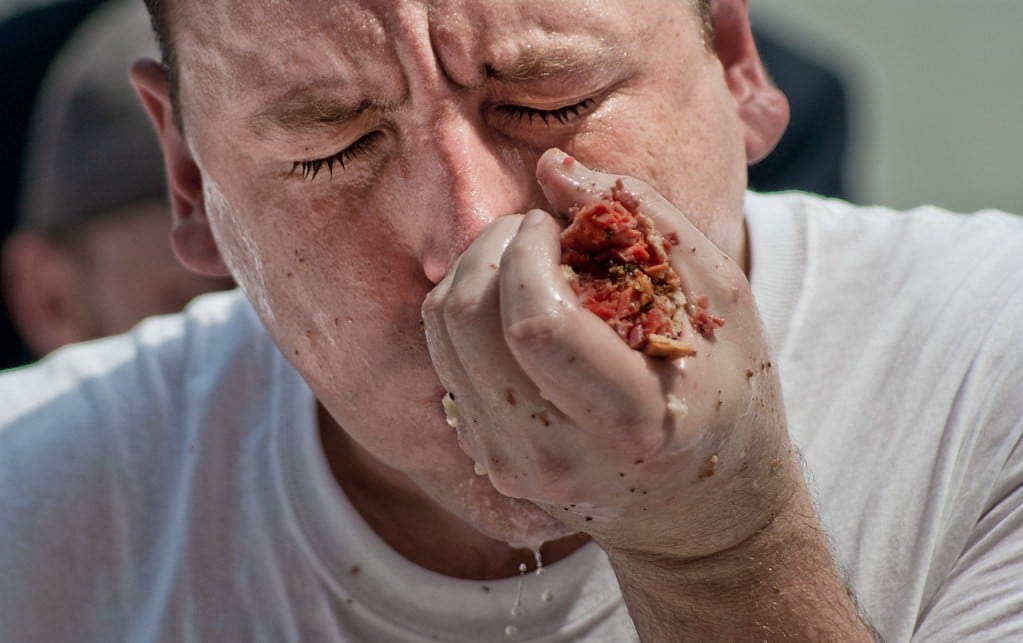
Joey Chestnut stands at the top of competitive eating. The California native has won the Nathan’s Hot Dog Eating Contest 17 times.
His current record of 76 hot dogs and buns in 10 minutes, set in 2021, remains unbeaten. Chestnut entered competitive eating in 2005 and quickly rose through the ranks.
His first major win came at a deep-fried asparagus contest, where he ate 6.3 pounds in under 12 minutes. That same year he placed third at Nathan’s behind the reigning champion Takeru Kobayashi.
By 2007, Chestnut had beaten Kobayashi and claimed his first Mustard Belt. He went on to win the contest every year from 2016 to 2023, then returned in 2025 to win his 17th title after missing 2024 due to a sponsorship dispute.
The numbers Chestnut puts up extend beyond hot dogs. He holds records for eating 231 gyoza dumplings, 28 pounds of poutine, and 14.25 pounds of burritos.
His ability to consume massive quantities of different foods makes him the most versatile competitive eater in the sport.
Takeru Kobayashi Changed Everything
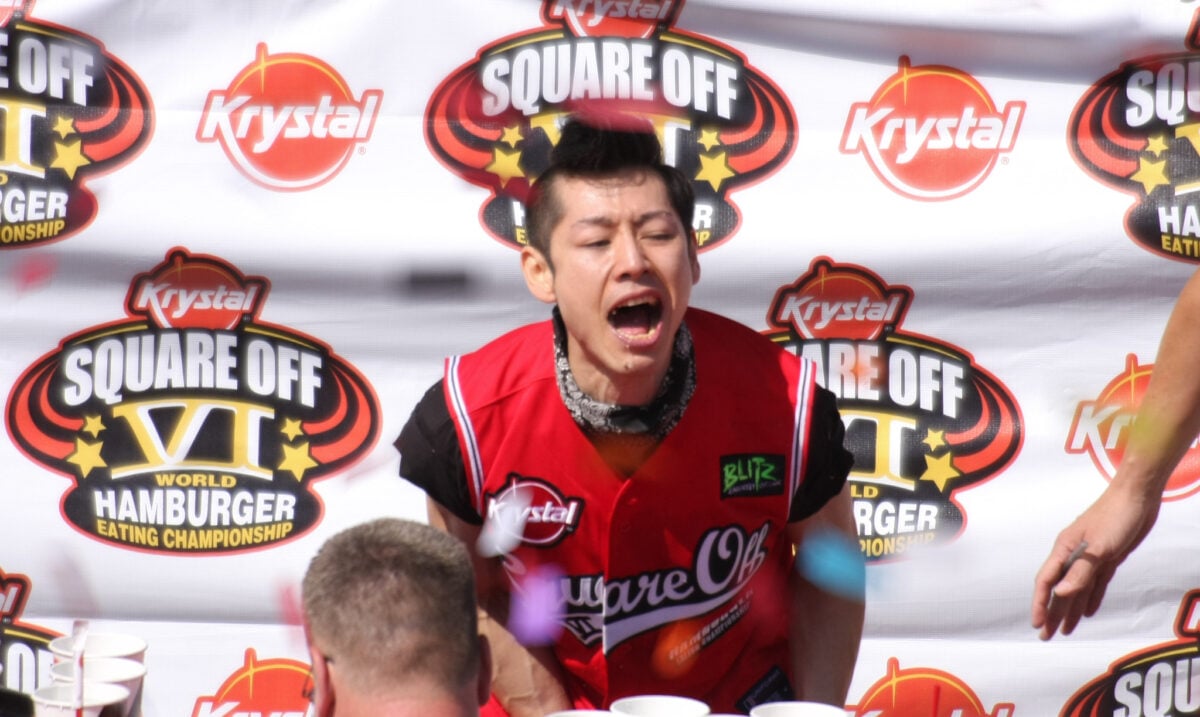
Before Kobayashi, competitive eating existed but nobody took it seriously. The Japanese eater changed that in 2001 when he showed up at Nathan’s Famous Hot Dog Eating Contest and ate 50 hot dogs in 12 minutes.
The previous record was 25. That performance shocked everyone watching.
Kobayashi weighed just 131 pounds but doubled a record that had stood for years. He won the contest six consecutive times from 2001 to 2006, creating a dynasty that put competitive eating on the map.
Kobayashi developed techniques that every modern competitive eater uses. He split hot dogs from buns, broke the dogs in half, and dunked buns in water to make them easier to swallow.
This method became known as the Solomon Method and remains standard practice today. His records include 97 hamburgers in eight minutes, 159 tacos in 10 minutes, and 337 chicken wings in 30 minutes.
But Kobayashi’s impact goes beyond numbers. He treated competitive eating like a sport, training his body and developing strategy instead of just trying to eat as much as possible.
In 2024, Kobayashi announced his retirement from competitive eating. He revealed that years of competition had damaged his relationship with food.
He no longer feels hunger or fullness, sometimes going days without eating and not realizing it. His wife said he thinks he might be broken.
Miki Sudo Owns the Women’s Records
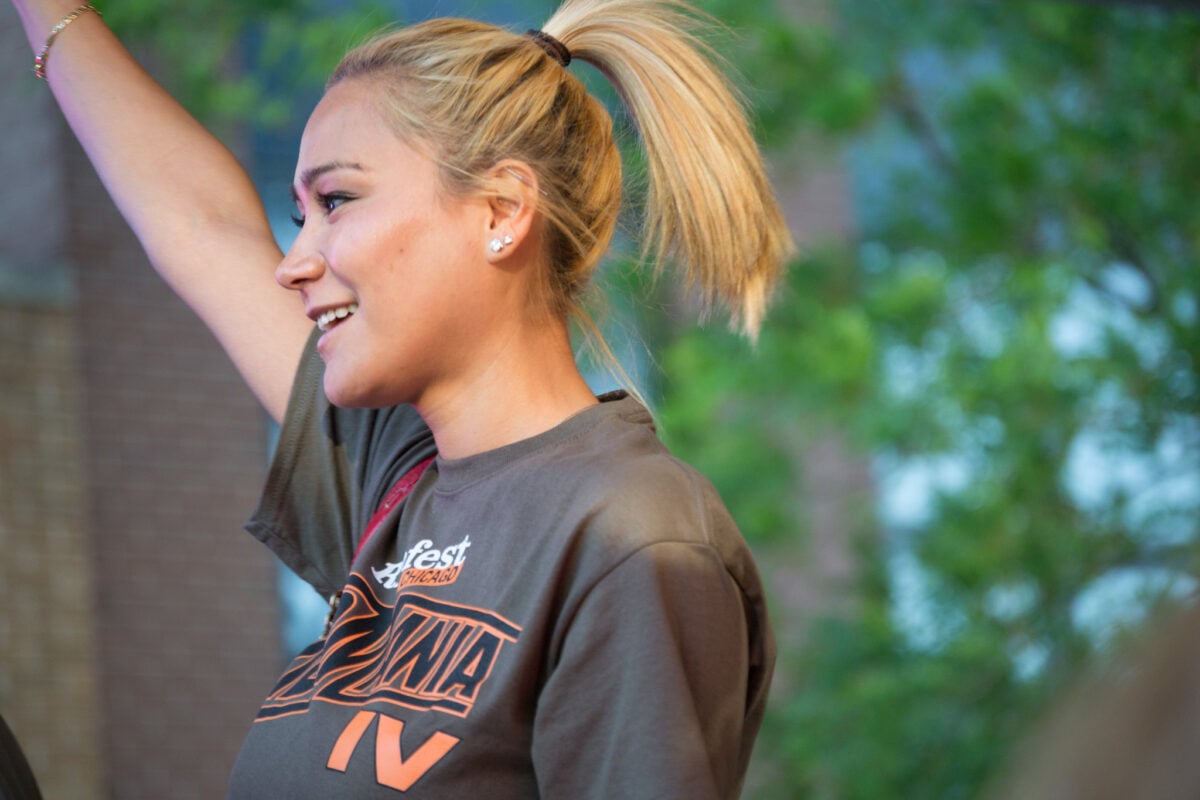
Miki Sudo has won the women’s division at Nathan’s Hot Dog Eating Contest 11 times. She set the women’s world record in 2024 by eating 51 hot dogs and buns in 10 minutes.
No other female competitor has come close to matching her consistency. Sudo entered competitive eating in 2013 and reached the top of the rankings within a year.
She’s remained unbeaten at Nathan’s since 2014, except for 2021 when she skipped the contest because of her pregnancy. Her talent extends to other foods. Sudo holds world records for kimchi, ice cream, and wild rice hotdish.
She ate 16.5 pints of ice cream in six minutes and 14 pounds of hotdish in eight minutes. She also set a Guinness World Record by eating a burrito in 31.47 seconds.
What makes Sudo remarkable is her approach to eating outside of competition. She eats slowly, savoring every bite.
That contrast between competition mode and normal life shows the level of mental control required at the top of the sport.
Matt Stonie Pulled Off the Upset
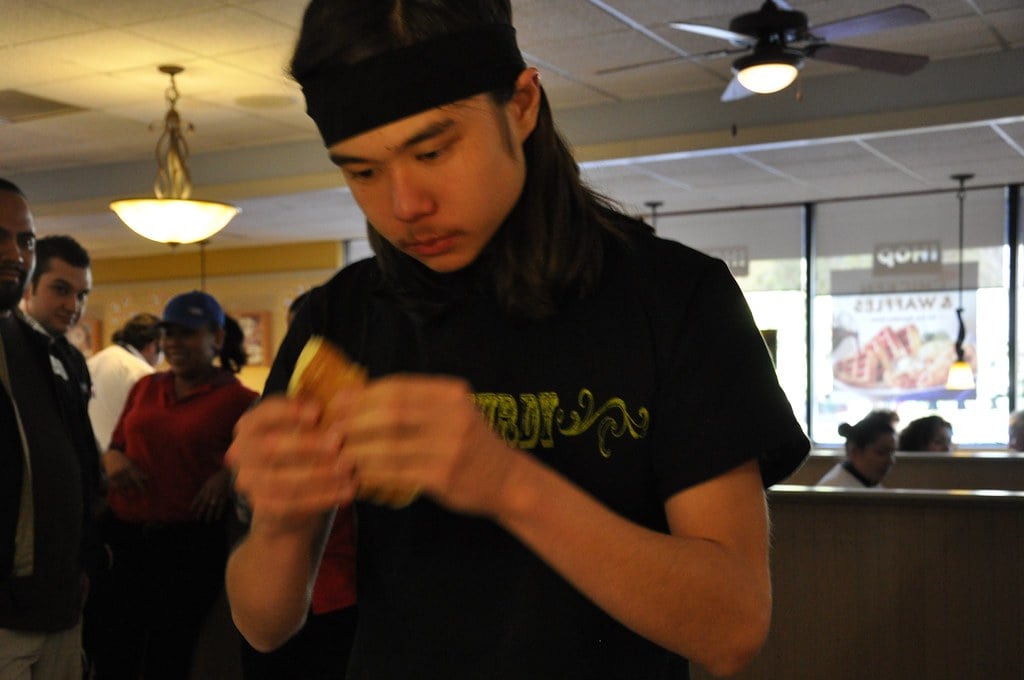
Matt Stonie broke Joey Chestnut’s eight-year winning streak at Nathan’s in 2015. He ate 62 hot dogs and buns compared to Chestnut’s 60.
The crowd went silent as the results were announced. Stonie, who was 23 at the time, proved that Chestnut wasn’t invincible.
The victory launched Stonie into competitive eating fame, though Chestnut reclaimed the title the following year and kept it. Beyond that one Nathan’s win, Stonie has set records in multiple categories and built a massive YouTube following by taking on eating challenges.
His approach combines competitive eating with entertainment, bringing the sport to a younger audience.
Leah Shutkever Collects Records

British competitive eater Leah Shutkever holds over 40 Guinness World Records. She started in 2019 and quickly became one of the most prolific record-setters in the sport.
Shutkever’s records cover an impressive range. She ate 19 chicken nuggets in one minute and consumed 1.7 pounds of nuggets in three minutes.
She also holds records for eating chocolate and various other foods at speeds that seem physically impossible. What sets Shutkever apart is her focus on Guinness records rather than Major League Eating competitions.
This strategy lets her compete in categories where she can establish dominance without going head-to-head with the American competitive eating circuit. She’s spoken openly about using competitive eating to overcome bullying and build confidence.
For Shutkever, the sport represents more than just eating fast. It gave her a way to prove herself and create a career from an unusual talent.
Patrick Bertoletti Stays Consistent

Patrick Bertoletti ranks among the top five competitive eaters in Major League Eating. He’s won multiple championships and holds records for eating shrimp wontons, boneless buffalo wings, and baby back ribs.
Bertoletti ate 390 shrimp wontons in eight minutes and 9 pounds of boneless wings in 10 minutes. His 5.24 pounds of baby back ribs in eight minutes stands as the record in that category.
What makes Bertoletti noteworthy is his consistency over time. While some eaters peak and fade, Bertoletti has maintained his ranking for years.
He regularly places in the top three at major contests and continues competing at a high level.
Geoffrey Esper Climbs the Rankings

Flickr/GiannaVolpe
Geoffrey Esper holds records for chicken wings, pretzels, and banana pudding. He ate 281 wings in 12 minutes, 26 pretzels in eight minutes, and 15.5 pounds of banana pudding in eight minutes.
Esper ranks second in Major League Eating behind Joey Chestnut. He’s become a regular competitor at Nathan’s, placing in the top three multiple times.
His 2024 performance of 53 hot dogs put him in second place behind Patrick Bertoletti. Esper describes his approach as treating each food like a puzzle.
He studies the texture, size, and structure to figure out the fastest way to consume it. That analytical mindset helps him adapt to different foods quickly.
Nick Wehry Combines Strength and Speed

Nick Wehry started as a bodybuilder before entering competitive eating. He won his first contest, a paczki eating competition, in 2017 and never looked back.
Wehry holds the world record for eating hard-boiled eggs. He consumed 50 eggs in three minutes and four seconds in 2021.
After finishing, he dropped to one knee and proposed to fellow competitive eater Miki Sudo. They married later that year.
The couple, known as The Hungry Couple, train together and compete at the highest levels. Wehry ranks fifth in Major League Eating and regularly places in the top 10 at major competitions.
His background in bodybuilding gives him an understanding of how to prepare his body for the extreme stress of competitive eating.
Sonya Thomas Blazed the Trail

Before Miki Sudo dominated the women’s division, Sonya Thomas held that position. Nicknamed the Black Widow, Thomas won multiple championships despite weighing only 105 pounds.
Thomas set records that stood for years. Her ability to outeat competitors twice her size made her a phenomenon in the sport.
She proved that competitive eating depends more on technique and stomach capacity than body size. Though Thomas has stepped back from competition, her legacy shaped the path for female competitive eaters.
She demonstrated that women could compete at the highest levels and win major championships.
The Training Behind the Talent
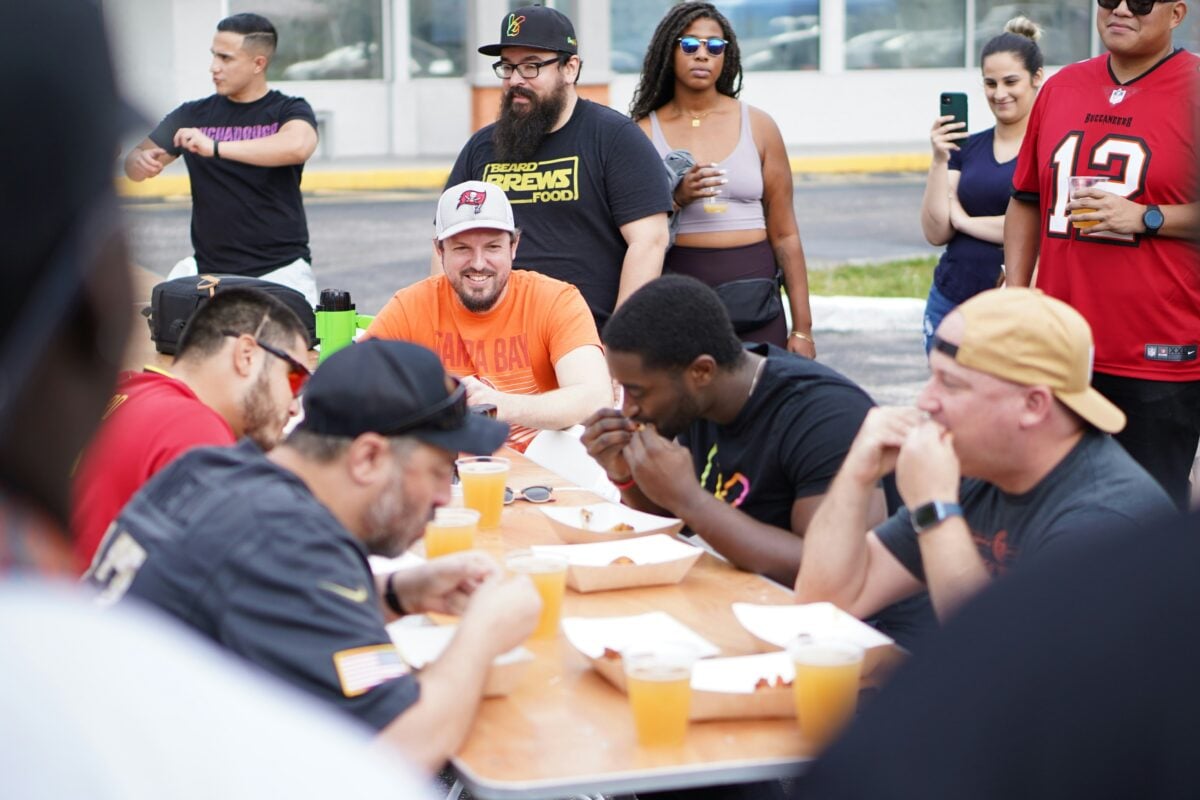
Competitive eaters don’t just show up and eat. They train extensively, stretching their stomachs by consuming large amounts of water and practicing with specific foods.
Some exercise heavily to keep their bodies fit, which prevents fat from restricting stomach expansion. Mental preparation matters as much as physical training.
Eaters learn to override their body’s natural signals that say stop eating. They push through discomfort, nausea, and fullness to reach new limits.
The risks are real. Choking, stomach rupture, and digestive problems can occur.
Kobayashi developed jaw arthritis from years of competition. Other eaters report struggling with normal eating patterns after retiring.
The sport takes a toll that extends beyond the contest table.
How Contests Actually Work

— Photo by BluIz60
Most competitive eating contests follow a standard format. Contestants have a set time limit, usually between five and 12 minutes.
They eat as much as possible while judges monitor for rule violations. Major League Eating oversees most professional contests in the United States.
The organization maintains rankings, verifies records, and sanctions official events. Contestants earn points based on their performance, which determines their ranking.
The Nathan’s Hot Dog Eating Contest remains the most prestigious event. Held every Fourth of July at Coney Island, it draws thousands of spectators and broadcasts on ESPN.
Winners receive a cash prize and the coveted Mustard Belt, competitive eating’s equivalent of a championship trophy.
Records Keep Falling
Competitive eating records don’t stay broken for long. What seems impossible one year becomes the baseline the next.
Joey Chestnut’s 76 hot dogs in 2021 beat his own previous record of 75 from 2020. Before that, he had broken his own record multiple times.
The progression shows no signs of stopping. As techniques improve and more athletes enter the sport, the ceiling keeps rising.
What Kobayashi did in 2001 wouldn’t crack the top 10 today. The sport evolves faster than almost any other competitive field.
Some wonder if there’s a physical limit to how much a human can eat in 10 minutes. So far, nobody has found it.
Each year, someone pushes the boundaries a little further.
Money and Sponsorships

Top competitive eaters can make a living from the sport, though not everyone reaches that level. Prize money varies by contest, with Nathan’s offering $10,000 to the winner.
Smaller contests pay less, sometimes just a few hundred dollars. Sponsorships provide additional income.
Companies pay top eaters to endorse products or appear at events. Joey Chestnut’s deal with Impossible Foods in 2024 led to his ban from Nathan’s, showing how seriously organizers take competing sponsorships.
Some eaters supplement their income through YouTube channels and social media. They film themselves taking on restaurant eating challenges or attempting speed records.
This approach lets them monetize their skills beyond official competitions.
When the Eating Stops

Retirement from competitive eating often comes with health concerns. The body can only take so much abuse before it breaks down.
Kobayashi’s announcement highlighted the physical and mental toll the sport extracts. Some former competitors struggle to enjoy food after years of treating it as fuel to consume as fast as possible.
Others develop digestive issues or find that their bodies no longer send proper hunger signals. The sport remains controversial.
Critics argue that celebrating overconsumption sends the wrong message about food and health. Supporters say it’s entertainment and that athletes understand the risks they take.
Where Hunger Meets Performance

What makes some eaters stand out? A hidden ability to silence the body’s alarms. Their edge comes not just from hunger training but from mental control.
When fullness screams stop, they keep going anyway. Watching them compete feels unreal because their limits bend differently than ours.
These individuals handle pain while staying focused on speed. Something deep inside lets them win when others would quit.
Truth hits hard, one way or another. What these competitors pull off makes no logical sense.
Careers sprouted from gifts they never chose, shaping events drawing crowds without end. Speed-eating champions stretch limits, shatter past marks, proving that “can’t” often hides behind “hasn’t.”
Impossible shifts meaning when someone finally does.
More from Go2Tutors!

- The Romanov Crown Jewels and Their Tragic Fate
- 13 Historical Mysteries That Science Still Can’t Solve
- Famous Hoaxes That Fooled the World for Years
- 15 Child Stars with Tragic Adult Lives
- 16 Famous Jewelry Pieces in History
Like Go2Tutors’s content? Follow us on MSN.



