15 Lesser-Known Facts About the 1893 Chicago World’s Fair
The 1893 Chicago World’s Fair, officially known as the World’s Columbian Exposition, transformed America’s cultural landscape during the Gilded Age. This massive undertaking celebrated the 400th anniversary of Columbus arriving in the New World, though it opened a year late due to construction delays.
Beyond its famous White City architecture and introduction of iconic products like Cracker Jack, the fair harbored numerous fascinating details that many history books overlook.
Here is a list of 15 lesser-known facts about this magnificent exposition that changed America and influenced global culture in ways we still experience today.
The Death-Defying Construction Process
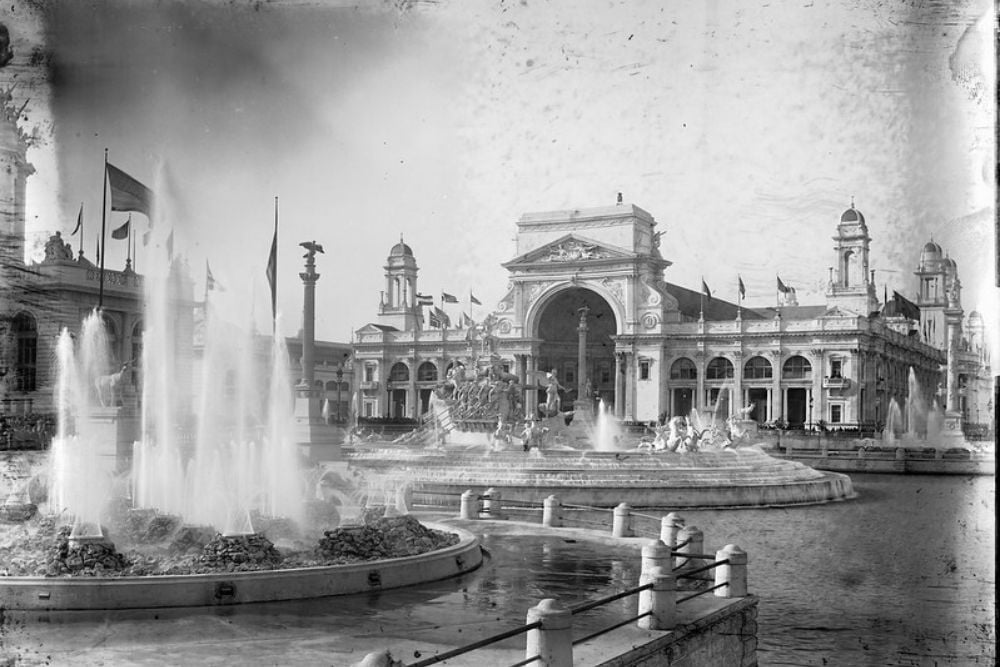
The construction of the fair’s gleaming neoclassical buildings was remarkably dangerous, with workers balancing on scaffolding hundreds of feet in the air without modern safety equipment. Over 14 workers died during the frantic building process, which involved constructing massive temporary structures in record time.
The pressure to complete these architectural marvels was immense, with crews sometimes working around the clock in Chicago’s notoriously harsh weather conditions.
The Fair Had Its Own Police Force
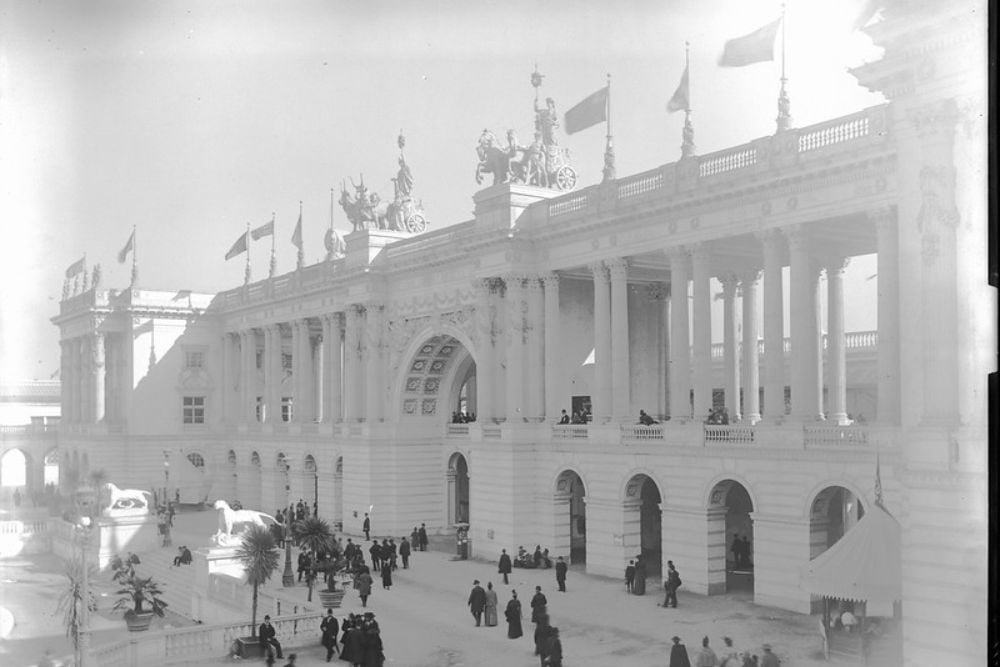
The exposition organizers established their own dedicated police force of over 2,000 officers, larger than many city police departments of that era. These Columbian Guards wore distinctive blue uniforms with gold buttons and maintained order across the 600+ acre fairgrounds.
They weren’t just for show either; they made thousands of arrests throughout the fair’s six-month run, mostly for pickpocketing and minor infractions among the massive crowds.
It Featured America’s First Midway
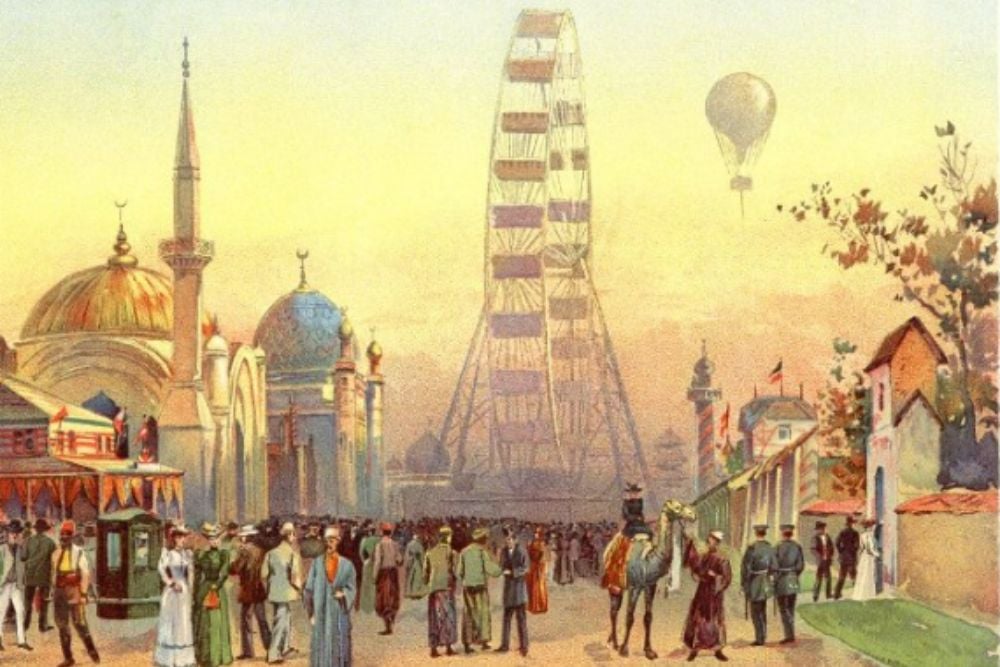
The famous Midway Plaisance became the template for amusement parks and carnivals across America for generations to come. This mile-long entertainment strip stood in stark contrast to the elegant White City, offering exotic dancers, wild animal shows, and replicas of villages from around the world.
The term ‘midway’ is still used today for carnival and fair entertainment areas, a term directly inherited from this groundbreaking entertainment zone.
Tesla and Edison’s Electrical Rivalry Played Out
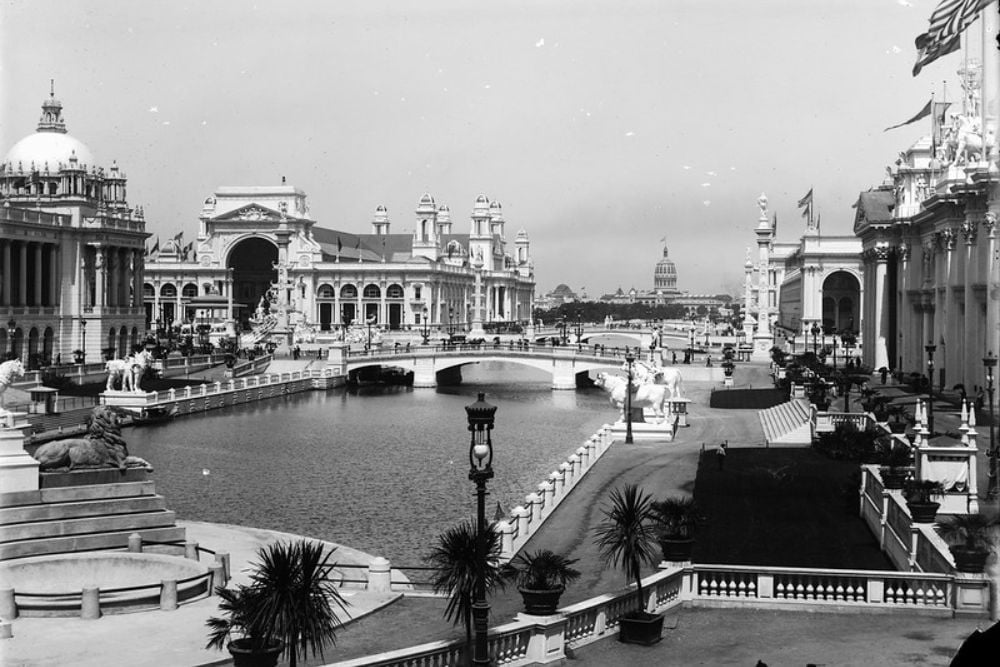
The fair became the battleground in the famous ‘War of Currents’ between Thomas Edison and Nikola Tesla. Despite Edison’s aggressive lobbying, Tesla and George Westinghouse won the contract to light the exposition with their alternating current (AC) system.
Their spectacular display illuminated the grounds with over 250,000 lightbulbs, effectively ending Edison’s direct current (DC) dreams and setting the standard for electrical systems we still use today.
America’s First Serial Killer Exploited the Fair

The fair inadvertently provided hunting grounds for H.H. Holmes, America’s notorious serial killer who built a ‘Murder Castle’ just blocks from the fairgrounds. Holmes constructed a hotel with hidden chambers, gas lines, and a basement crematorium where he lured and killed visitors who came for the exposition.
The massive influx of young women arriving alone in Chicago for fair-related work created perfect opportunities for Holmes, whose victims may have numbered over 200.
The World’s First Ferris Wheel Debuted

George Washington Gale Ferris Jr. created his namesake wheel as America’s answer to the Eiffel Tower from the previous Paris Exposition. The original Ferris Wheel stood 264 feet tall, holding 36 cars each capable of carrying 60 people, meaning 2,160 passengers could ride simultaneously.
Each rotation took 20 minutes and cost 50 cents (equivalent to about $15 today), making it both a technological marvel and a significant financial success.
Automatic Dishwashers Were First Demonstrated

The fair introduced visitors to the world’s first commercially successful automatic dishwasher, invented by Josephine Cochran. Frustrated with servants breaking her fine china, this wealthy socialite designed and patented the machine that used water pressure to clean dishes secured in wire compartments.
Her invention won first prize at the fair and led to the founding of what eventually became KitchenAid, revolutionizing kitchen work forever.
It Launched American Wedding Traditions

The fair unexpectedly influenced American wedding traditions by popularizing white wedding cakes and diamond engagement rings. The White City’s gleaming architecture inspired bakers to create multi-tiered white cakes that became the standard for weddings, while Tiffany’s diamond display at the fair helped establish diamonds as the engagement stone of choice for Americans.
These traditions spread rapidly across the country after the fair closed.
The Fair Had Its Own Transportation System

The exposition pioneered integrated transportation with electric boats, elevated railways, and moving sidewalks that carried visitors throughout the massive grounds. Approximately 36 million people visited during its six-month run, with daily attendance sometimes exceeding 700,000 people, numbers that would challenge modern transportation systems.
The moving sidewalk particularly fascinated visitors as it transported people at three different speeds without them having to walk.
It Was America’s First Food Innovation Hub

Beyond introducing Cracker Jack and Shredded Wheat, the fair debuted dozens of foods that became American staples. Pabst Blue Ribbon won its famous blue ribbon here, Juicy Fruit gum was first marketed, and carbonated soda became widely popular.
The fair also introduced millions of Americans to exotic foods like hamburgers, hot dogs, and ice cream cones, forever changing American eating habits with foods we now consider quintessentially American.
The Fair Buildings Were Temporary Optical Illusions
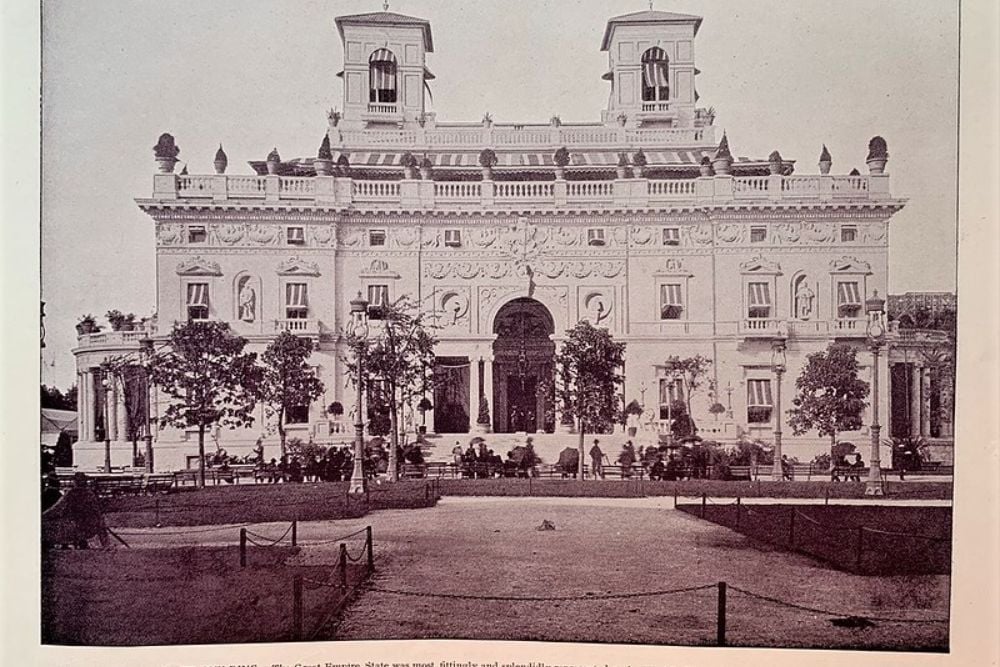
The gleaming white buildings of the White City weren’t actually made of marble but instead constructed of staff, a temporary material made of plaster, cement and jute fibers. These structures were never intended to be permanent, which explains why they don’t exist today apart from the Museum of Science and Industry (formerly the Palace of Fine Arts).
The buildings were essentially elaborate movie sets designed to create a magnificent but temporary illusion of a perfect city.
Buffalo Bill Was Rejected But Succeeded Anyway
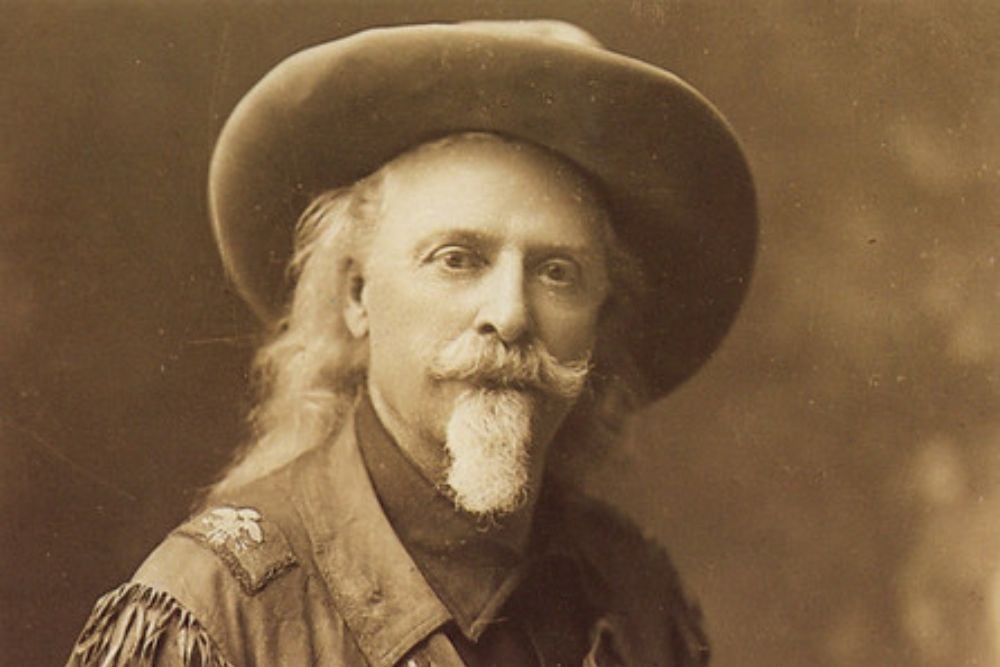
When Buffalo Bill Cody applied to bring his Wild West Show to the fair, organizers rejected him for being too lowbrow for their high-minded cultural exposition. Undeterred, Buffalo Bill simply purchased land adjacent to the fairgrounds and set up his show there, drawing massive crowds and arguably making more money than he would have as an official exhibitor.
His independent success demonstrates the entrepreneurial spirit that characterized American business during this era.
It Marked the Birth of Anthropology in America

The fair established anthropology as a recognized field of study in the United States through its displays of people from around the world. Franz Boas, now considered the father of American anthropology, organized exhibits that challenged prevailing racist theories by showing the complexity and value of diverse cultures.
Though some of these “living exhibits” of indigenous peoples were problematic by modern standards, they represented a shift toward more scientific approaches to understanding human cultures.
The Zipper Was First Introduced

Though originally known as the “clasp locker,” the modern zipper first appeared publicly at the fair. Inventor Whitcomb Judson showed his invention at the fair, but it garnered little notice despite its later world-changing influence.
Though basic by today’s zippers, his invention set the groundwork for the fastener that would one day change garment production all over the world.
It Inspired L. Frank Baum’s Emerald City
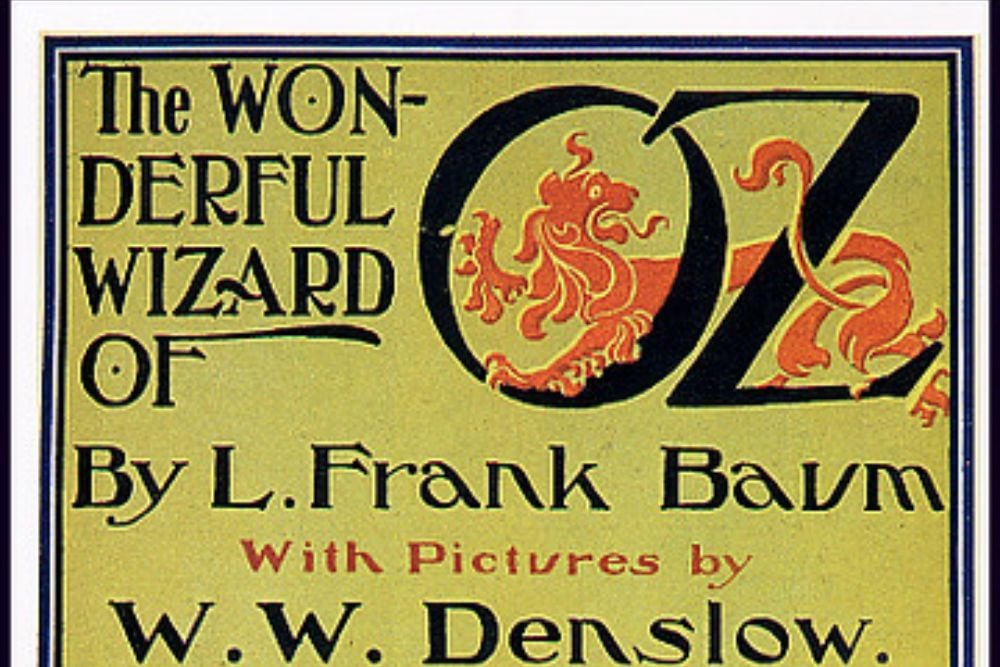
When L. Frank Baum built the Emerald City in “The Wonderful Wizard of Oz” published seven years later, the fair’s enchanted White City directly inspired him. Baum went to the show and was quite moved by its electric lighting displays and otherworldly architecture.
While the strong Wizard figure reflects the fair’s use of great technology to produce magical effects, the yellow brick road in his narrative reflects the fair’s yellow-painted wooden sidewalks.
More from Go2Tutors!

- The Romanov Crown Jewels and Their Tragic Fate
- 13 Historical Mysteries That Science Still Can’t Solve
- Famous Hoaxes That Fooled the World for Years
- 15 Child Stars with Tragic Adult Lives
- 16 Famous Jewelry Pieces in History
Like Go2Tutors’s content? Follow us on MSN.



