Insights into the Hubble Telescope
The Hubble Space Telescope has changed how people see the universe since it started working in 1990. This amazing tool floats above Earth and takes pictures that help scientists understand space better.
It has shown us things we never knew existed and helped answer questions that humans have wondered about for thousands of years. Now let’s explore some fascinating insights about this incredible telescope that continues to surprise us every day.
It had a rocky start but made an incredible comeback

Hubble didn’t begin its journey smoothly. When scientists first turned it on, they discovered the main mirror had a serious flaw that made everything look blurry.
The pictures were so unclear that many people thought the whole project was a waste of money. But NASA didn’t give up, and in 1993 astronauts flew to Hubble and fixed the problem by installing special equipment that worked like contact lenses for the telescope.
It travels around Earth at breathtaking speed
Hubble zooms around our planet at about 17,500 miles per hour, which means it could fly from New York to Los Angeles in ten minutes. This incredible speed lets it complete one full trip around Earth every 97 minutes.
During each orbit, Hubble can point its cameras at different parts of space and take new pictures. The telescope travels so fast that it covers about 150 million miles every year, which is like going to the Sun and back again.
Scientists have used it for over one million observations

As of February 2024, it exceeds one million observations, from which astronomers have written more than 21,000 peer-reviewed scientific papers. Each observation might show a distant galaxy, a dying star, or a planet around another sun.
Think about taking one million photographs of space and each one teaching us something new. These observations have helped scientists understand everything from how stars are born to how the universe itself is growing.
It helped discover that the universe is expanding faster
Before Hubble, scientists knew the universe was getting bigger, but they didn’t know it was speeding up. Hubble’s observations showed that galaxies far away from us are moving away faster than galaxies that are closer.
This discovery means something unknown is pushing the universe apart with more and more force. Scientists call this mystery force “dark energy” even though they don’t really know what it is.
The telescope works like a time machine
When Hubble looks at distant objects in space, it’s actually seeing them as they were long ago because light takes time to travel. Light from the closest star besides our Sun takes four years to reach us.
When Hubble photographs galaxies that are billions of light-years away, it shows us what those galaxies looked like billions of years ago. This means Hubble can help scientists study how the universe looked when it was much younger.
Astronauts have visited it five times for repairs

Unlike most telescopes that sit on the ground, Hubble needed special care from astronauts who could fly up to fix it. Five different space shuttle missions visited Hubble to replace broken parts, add new equipment, and make improvements.
These repair trips were incredibly dangerous because astronauts had to work in space while traveling around Earth at tremendous speed. Each mission made Hubble better and helped it keep working longer than anyone expected.
It has shown us planets around other stars

Hubble has helped find and study planets that orbit other stars far from our solar system. These distant worlds come in all sizes, from small rocky planets to giant gas worlds bigger than Jupiter.
Astronomers using the NASA/ESA Hubble Space Telescope observed the smallest exoplanet where water vapour has been detected in its atmosphere in 2024. Some of these planets might have conditions that could support life, though they’re too far away for us to visit.
The telescope captured the most detailed picture of a nearby galaxy

The Panchromatic Hubble Andromeda Treasury and Panchromatic Hubble Andromeda Southern Treasury (PHAT and PHAST) were observations done by Hubble from July 2010 to October 2013 to map the northern half of the Andromeda Galaxy and from December 2021 to January 2024 to map the southern half. This project created the most detailed picture ever taken of another galaxy.
The final image shows two hundred million individual stars in the Andromeda Galaxy, even though that galaxy contains about one trillion stars total. Looking at this picture is like seeing every house in a city from far away, except the “city” is an entire galaxy.
Recent discoveries include white dwarf star mergers
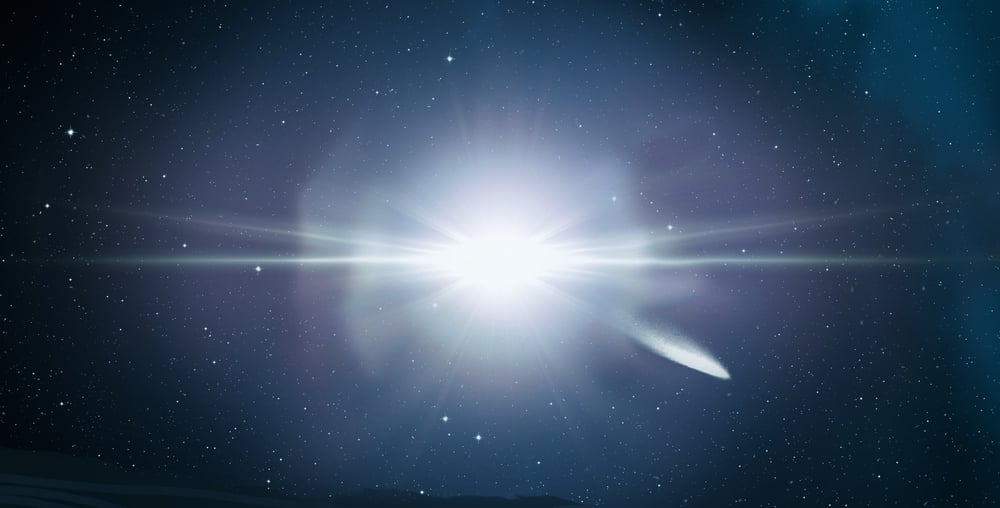
An international team of astronomers has discovered a cosmic rarity: an ultra-massive white dwarf star resulting from a white dwarf merger using Hubble’s observations. White dwarf stars are what’s left when stars like our Sun die and shrink down to about the size of Earth.
When two of these dead stars crash into each other, they can create something even more unusual. These discoveries help scientists understand what happens when stars die and how their remains can create new and strange objects in space.
It photographs star birth in colorful nebulae

Hubble takes breathtaking pictures of nebulae, which are giant clouds of gas and dust where new stars are born. These cosmic nurseries glow with bright colors because young, hot stars light up the surrounding gas like a neon sign.
Each color tells scientists what types of gases are present and how hot they are. Red areas usually contain hydrogen gas, while blue and green regions have different elements.
The telescope studies interstellar visitors from outside our solar system
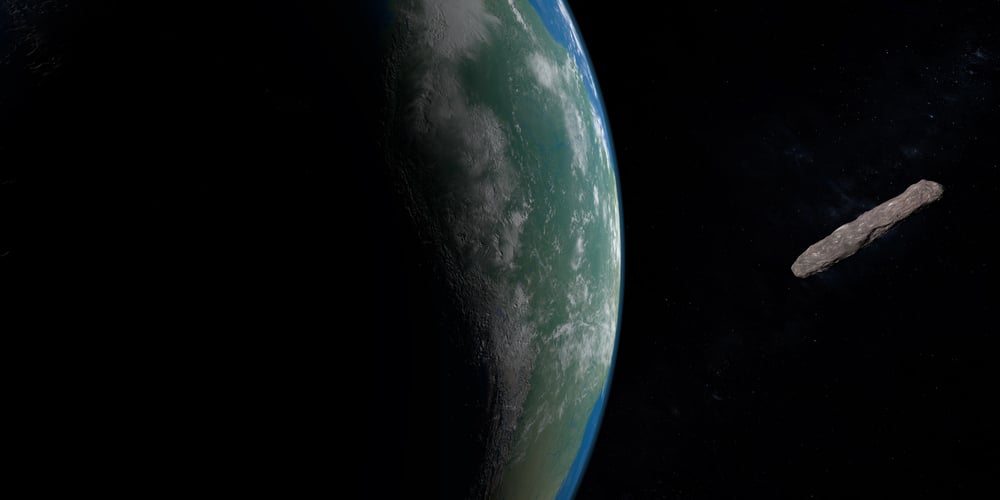
A team of astronomers has taken the sharpest-ever picture of the unexpected interstellar comet 3I/ATLAS using the crisp vision of Hubble in 2025. Sometimes objects from other star systems visit our solar system, and Hubble can study them in detail.
These interstellar visitors give scientists a chance to learn about conditions around other stars without having to travel there. By studying how these objects look and what they’re made of, researchers can figure out what space is like in the areas between stars.
It continues working well beyond its planned lifetime

Hubble was originally designed to work for fifteen years, but it’s now been operating for over three decades and still going strong. Engineers built it so well and astronauts took such good care of it that Hubble keeps taking amazing pictures year after year.
Even though newer telescopes like the James Webb Space Telescope are now working alongside it, Hubble still has unique abilities that make it valuable for space research. Its long life means it can study how objects in space change over many years.
Scientists use it to study the weather on other planets

Hubble can watch the weather on planets in our solar system and see how storms develop and change over time. It has photographed huge storms on Jupiter that are bigger than Earth and tracked how they move and evolve.
The telescope can also see seasonal changes on Mars and study the thick clouds that cover Venus. These observations help scientists understand how weather works on different types of planets and what makes Earth’s weather special.
It helped determine the age of the universe

Before Hubble, scientists weren’t sure how old the universe was, with estimates ranging from ten billion to twenty billion years. Hubble’s precise measurements of how fast distant galaxies are moving away from us helped nail down the universe’s age at about 13.8 billion years.
This discovery was only possible because Hubble could measure distances to far-away galaxies with great accuracy. Knowing the universe’s age helps scientists understand how much time was available for galaxies, stars, and planets to form.
Modern partnerships keep expanding its capabilities

While Hubble continues its solo observations, it also works together with newer telescopes to study the same objects from different perspectives. The James Webb Space Telescope can see infrared light that Hubble cannot detect, so together they can reveal more details about distant galaxies and stars.
Scientists combine images from both telescopes to create more complete pictures of cosmic objects. This teamwork approach helps researchers learn more than either telescope could discover working alone.
Its observations changed our view of cosmic evolution

Hubble showed us that the universe looked very different when it was young compared to how it appears today. Early galaxies were smaller, more chaotic, and filled with young stars that burned much brighter than most stars today.
The telescope revealed that galaxy collisions were more common in the past and helped shape the larger, more organized galaxies we see nearby. These observations proved that the universe has been constantly changing and evolving since it began.
A legacy written in light and discovery

Hubble’s journey from a troubled start to becoming humanity’s most beloved telescope shows what can happen when people refuse to give up on their dreams. The telescope has not only advanced our scientific knowledge but also inspired millions of people to look up at the night sky with wonder and curiosity.
Its colorful images have decorated classrooms, inspired artists, and sparked the imagination of countless children who might grow up to become the next generation of space explorers. As Hubble continues its work high above our planet, it reminds us that the universe is far more beautiful, complex, and amazing than we ever imagined.
More from Go2Tutors!

- The Romanov Crown Jewels and Their Tragic Fate
- 13 Historical Mysteries That Science Still Can’t Solve
- Famous Hoaxes That Fooled the World for Years
- 15 Child Stars with Tragic Adult Lives
- 16 Famous Jewelry Pieces in History
Like Go2Tutors’s content? Follow us on MSN.