Most Expensive Furniture Sold at Auction
There’s a strange quiet to the most expensive furniture in the world. It doesn’t shout or demand attention the way a painting or a sculpture might.
A cabinet stays in its corner. A chair holds a single person.
And yet, some pieces have crossed the auction block for tens of millions of dollars — prices that put most fine art to shame. These aren’t pieces you’d stumble across at a weekend estate sale.
They’re the result of centuries of craftsmanship, royal ownership, and bidding wars that leave entire rooms holding their breath. If you’ve ever wondered what it takes to push a piece of furniture into the stratosphere of value, the following list tells that story — one extraordinary object at a time.
The Badminton Cabinet — $36.7 Million
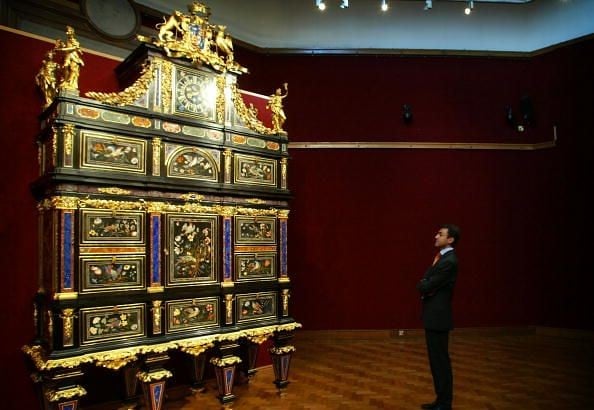
This is the big one. The Badminton Cabinet holds the record as the most expensive piece of furniture ever sold at auction, and it’s not particularly close.
Commissioned in 1726 by Henry Somerset, the 3rd Duke of Beaufort — who was only 19 at the time — the cabinet was built in the Grand Ducal Workshops in Florence. It took thirty craftsmen six years to complete.
The piece stands over 12 feet tall and is covered in pietra dura, an Italian technique that uses finely cut, polished semi-precious stones like amethyst, lapis lazuli, and agate to create intricate inlaid scenes. At the top sits a clock face flanked by gilded statues, topped with the Beaufort coat of arms.
The cabinet stayed at Badminton House in Gloucestershire for over two centuries before it was first auctioned in 1990 for $16.5 million — a world record at the time. Then, in December 2004, it shattered its own record at Christie’s in London, selling for $36.7 million to Dr. Johan Kraeftner, acting on behalf of Prince Hans Adam II of Liechtenstein.
The prince later donated it to the Liechtenstein Museum in Vienna, where it remains today.
The Dragons Armchair — $28.3 Million
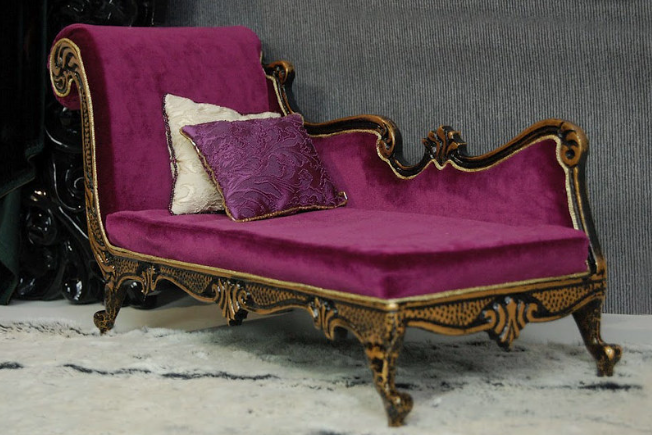
A single chair. $28.3 million. And the auction house had estimated it would fetch around $3 million.
The Dragons Armchair was designed by Irish architect and designer Eileen Gray between 1917 and 1919. It was her first major commission — created for the Paris apartment of Suzanne Talbot, a successful hat designer.
The chair’s frame is sculpted wood, lacquered in brownish orange and silver, shaped into two intertwined dragons. The seat is upholstered in brown leather, surrounded by curves that resemble unfurling petals.
Gray was largely unknown outside of design circles for most of her life. That changed dramatically when the chair — which had passed through several collections before landing with fashion icon Yves Saint Laurent and his partner Pierre Bergé — went up for sale at Christie’s in Paris in February 2009.
The bidding went nearly ten times over the estimate, and the chair became the most expensive piece of 20th-century furniture ever sold at auction. It remains that to this day.
The Florentine Pietra Dura Cabinet — $23.2 Million

December 2004 at Christie’s in London was an extraordinary night for furniture. Not only did the Badminton Cabinet set its record, but another Italian cabinet sold in the same event for $23.2 million.
This piece dates to the 1720s or early 1730s, also made in the Grand Ducal Workshops of Florence. It features ten cedar-lined drawers, each mounted with ormolu — gilded bronze — and accented with amethyst quartz.
The surface is covered in sculpted female masks, fruit, foliage, and a studded clock face. Bronze figures of the four seasons, cast by sculptor Girolamo Ticciati, add another layer of artistry.
It’s hard to know whether to call it furniture or sculpture. Probably both.
The Goddard and Townsend Desk — $11.4 Million
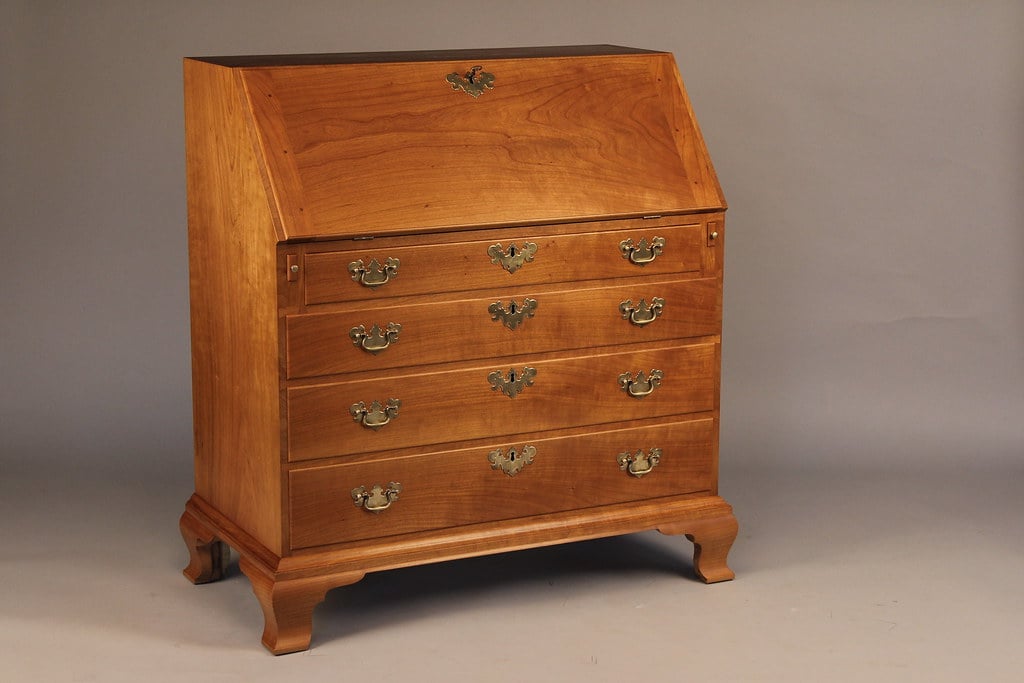
When this desk crossed the auction block in New York in June 1989, it set the record for the most expensive piece of American furniture ever sold — a record it held for years.
The desk was crafted in the 1760s by the Goddard and Townsend cabinetmaking families of Newport, Rhode Island. These two families were part of a Quaker community of skilled artisans, and their furniture is now considered among the finest examples of early American craftsmanship.
Only nine of these secretary desks were ever made, which gives you some sense of how rare it is to see one come up for sale. The $11.4 million price tag was staggering at the time — nearly five times the previous record for American furniture.
It showed the world that exceptional American antiques could command prices alongside the great European pieces.
The Garvan Tea Table — $6.7 Million
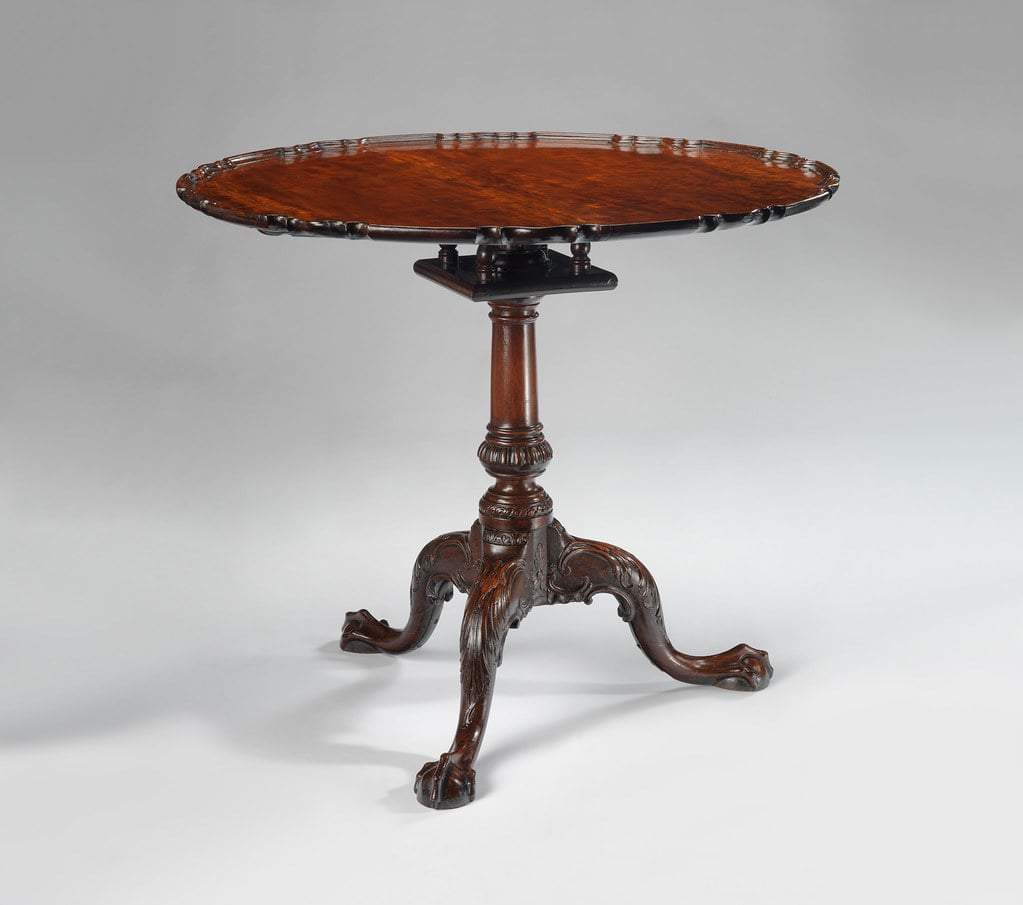
This mahogany tea table is a masterpiece of Chippendale-style design, made in Philadelphia in the mid-18th century. It’s attributed to the legendary “Garvan carver,” an unidentified craftsman whose work is among the most prized in American antiques.
The table features shell motifs and original brass casters, and it spent generations in the Wharton Fisher family — a provenance that matters enormously in the auction world. When it sold for $6.7 million, it confirmed that certain pieces of American furniture can sit comfortably alongside the finest European antiques in terms of value.
The Lalanne Elephant Table — $6.6 Million
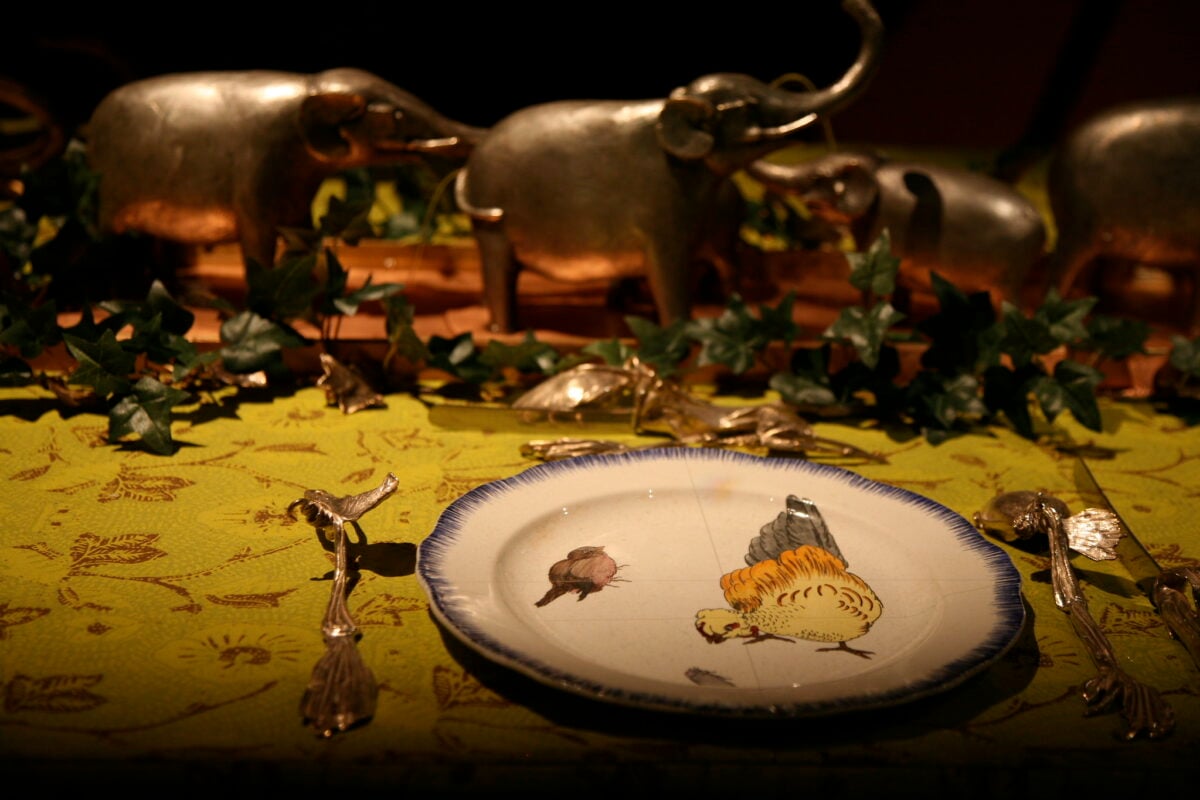
Not all record-breaking furniture is centuries old. This table was designed by François-Xavier Lalanne in 2001, and it sold at Christie’s in June 2021 for $6.6 million — more than four times its top estimate of $1.5 million.
The design is immediately striking. Freestanding bronze elephants support an eight-sided glass tabletop. It’s equal parts sculpture and functional furniture, and it belongs to a tradition of surrealist design that blurs the line between the two.
The sale proved that modern collectible furniture has a serious place in the high-end auction market — and that the right piece by the right designer can compete with antiques worth many times more.
The Baldacchino Supreme Bed — $6.3 Million
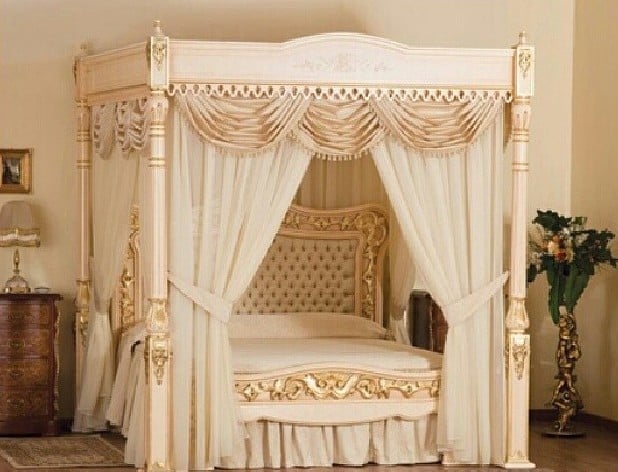
If you’re spending millions on furniture, you might as well spend it on the place where you sleep. The Baldacchino Supreme Bed was a collaboration between British designer Stuart Hughes and artisans in Nocera Superiore, Italy.
The frame is made from ash, cherry, and chestnut woods. What sets it apart is the 107 kilograms of solid 24-karat gold sculpted into decorative gold-leaf filigree across the entire structure, topped with luxurious velvet drapes.
Only two of these beds were ever made. One sold for $6.3 million, making it the most expensive bed ever sold.
The Boulle Center Table — $5.7 Million
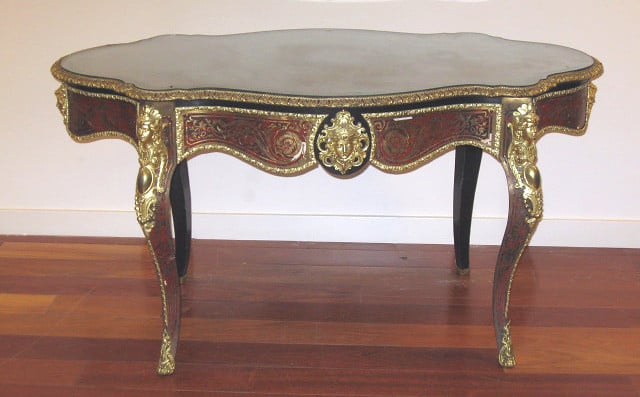
André-Charles Boulle is one of the most celebrated names in the history of furniture making. He served as the royal cabinetmaker for Louis XIV of France, and his techniques became so influential that an entire style of inlaid furniture — called boulle work — was named after him.
This center table was made around 1685 and combines ebony, brass, tortoiseshell, and pewter, all mounted with ormolu. Oak leaves, acanthus scrolls, foliage, and masks cover its surface in dense, layered detail.
It sold at Christie’s in 2000 for $5.7 million, placing it among the most valuable pieces of pre-Revolution French furniture ever traded. The table has passed through many hands over the centuries, including a sale in Paris back in 1770.
Its long, documented history is part of what gives it weight — both literally and figuratively.
The Harrington Commode — $5.9 Million
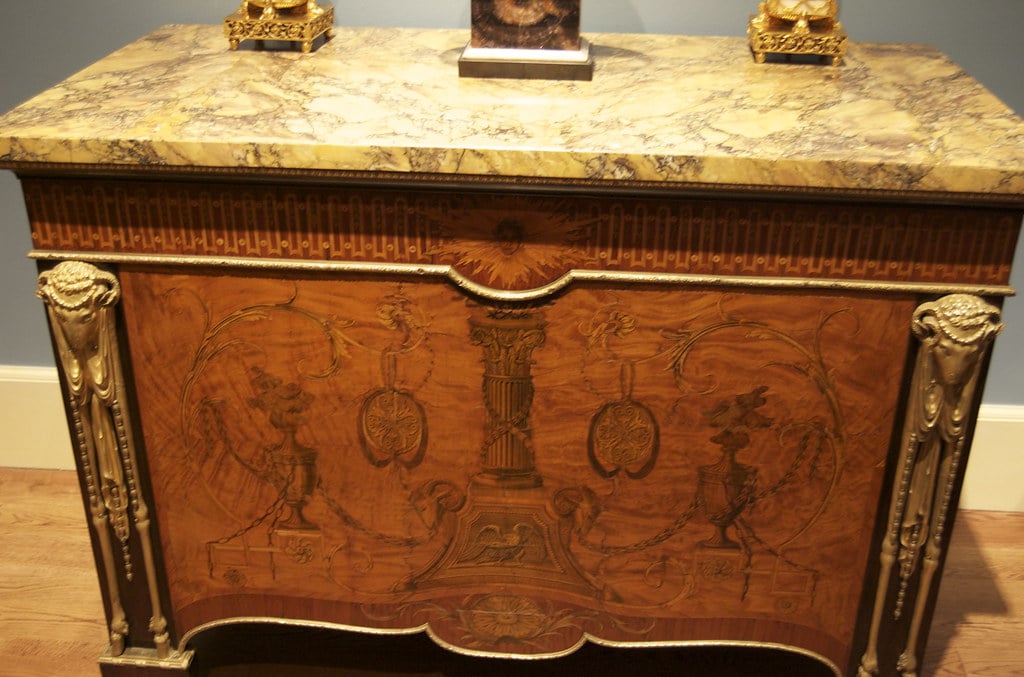
A commode might not sound glamorous. But when it’s attributed to Thomas Chippendale — widely considered the most famous furniture maker Britain has ever produced — and when it sells for nearly $6 million, it starts to command a very different kind of respect.
The Harrington Commode is a George III piece dating to around 1770. It’s made from fustic, rosewood, and tulipwood, with elaborate marquetry work and gilded brass mounts.
When it went under the hammer at Sotheby’s in London in December 2010, the estimate was between £600,000 and £1 million. It sold for £3.79 million — roughly $5.9 million — making it the most expensive piece of English furniture ever sold at auction.
The commode’s exact provenance remains a bit of a mystery. No one knows for certain who originally commissioned it, though the trail of ownership includes connections to some of Chippendale’s most important patrons.
The Tufft Pier Table — $4.6 Million
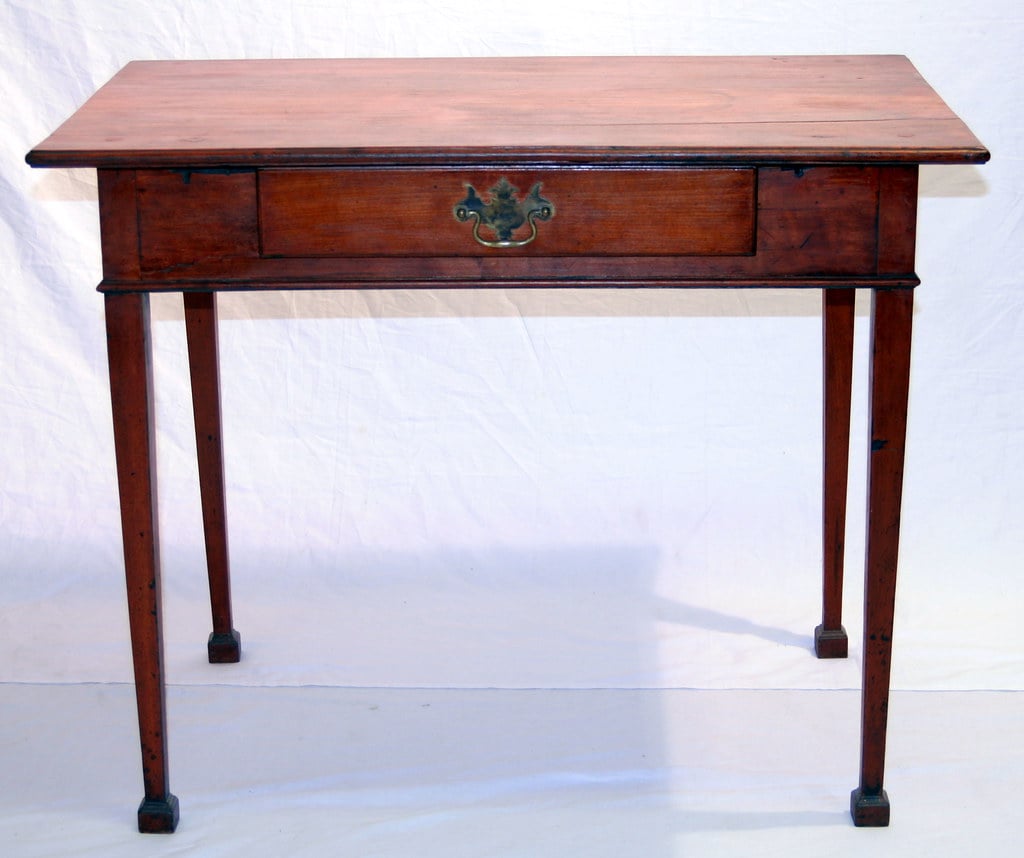
Thomas Tufft was one of Philadelphia’s most prosperous cabinetmakers in the late 18th century. His work is now considered among the finest examples of American Chippendale craftsmanship, and pieces bearing his name are fiercely sought after by collectors.
This pier table was made in 1775 for Richard Edwards of Lumberton, New Jersey, and it stayed within the family for generations — never leaving until it was sold at Christie’s in 1990 for $4.6 million. At the time, it set the record for the most expensive American tea table ever sold.
The piece features intricate carved details and the kind of exceptional condition that only comes from centuries of careful care within a single family.
The George II Padauk Cabinet — $3.9 Million
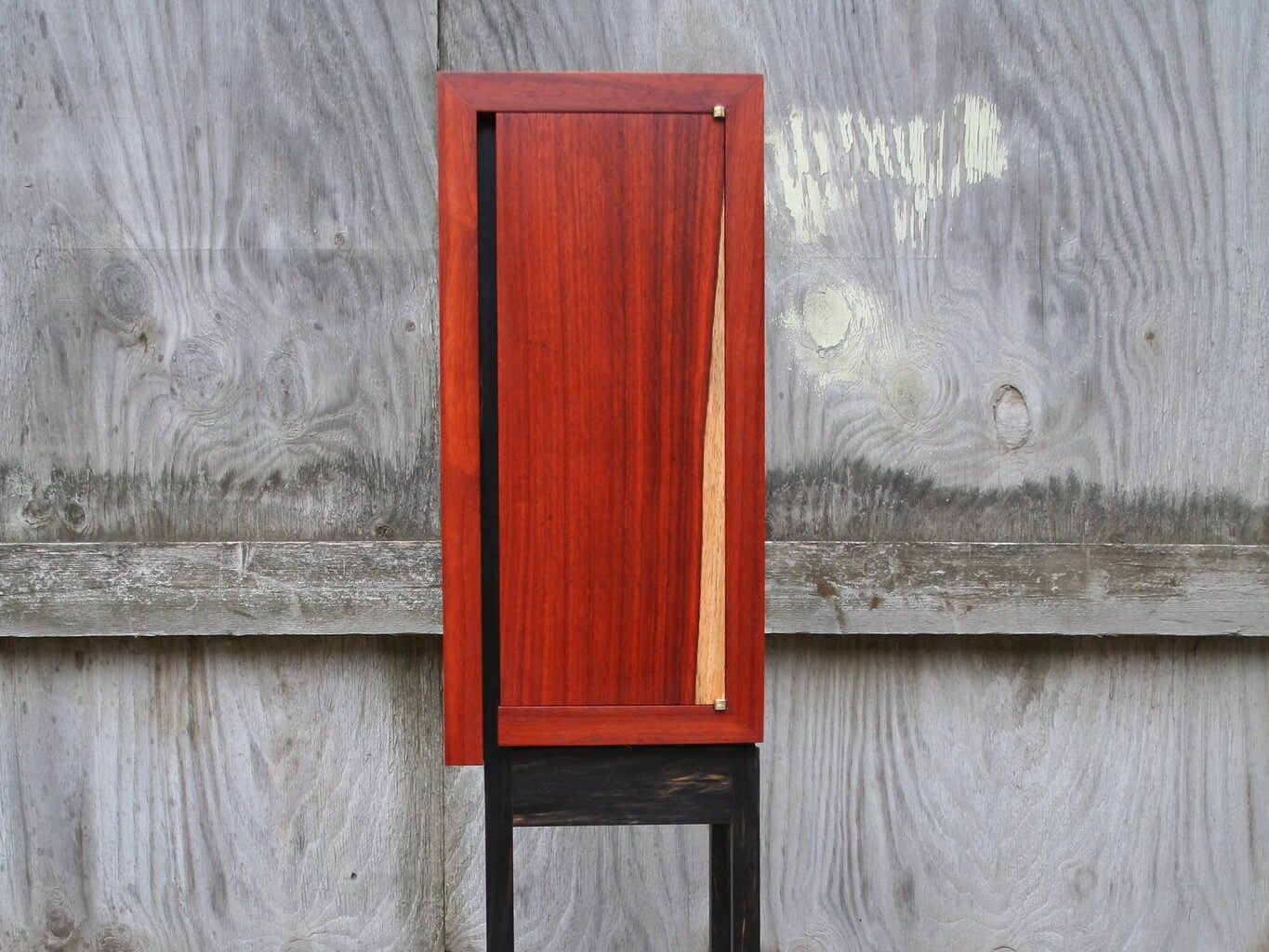
Thomas Chippendale’s name keeps appearing on this list, and for good reason. His craftsmanship set a standard that has never been surpassed in British furniture making.
This parcel-gilt padauk cabinet was sold at Christie’s in London in 2008 for £2.7 million — roughly $3.9 million. It features an elaborate canopy top adorned with carved rocks and leaves, glass-fronted doors, and columns decorated with delicate leaf work.
The sale was part of a remarkable Christie’s event that broke the auction record for Chippendale four times in a single evening.
Marie Antoinette’s Bergère — $2.7 Million

Few names carry as much cultural weight at auction as Marie Antoinette’s. After the French Revolution, the revolutionary government sold off 17,000 pieces of the queen’s furniture.
Most vanished into obscurity over the centuries. The ones that surface are rare, and they sell for serious money. This bergère — a type of padded armchair — was commissioned by Marie Antoinette in 1780 for the Belvédère Pavilion at Versailles.
It’s the only surviving armchair from a suite of 16 chairs that originally cost 20,000 livres. When Christie’s offered it in 2015, it sold for $2.7 million, well above its estimate.
The chair had spent years on loan to the Louvre before the sale. Its connection to one of history’s most famous queens — and the sheer rarity of the piece — did the rest.
The Wooton Desk — A Legend Without Equal

Not every entry on this list comes with a single jaw-dropping auction price. The Wooton desk earns its place through something different: it’s one of the most recognised and celebrated pieces of American furniture ever made, and fine examples regularly fetch six-figure sums at auction.
Patented in 1874 by William S. Wooton of Indianapolis, the desk was designed at a time when paperwork was multiplying fast. It packed dozens of small drawers, nooks, and compartments into a single structure — a miniature office that could be locked shut at the end of the working day.
The company offered four grades — Ordinary, Standard, Extra, and Superior — and the desks sold from $100 to $750 at the time. The list of famous owners reads like a who’s who of 19th-century power: John D. Rockefeller, J.P. Morgan, Joseph Pulitzer, President Ulysses S. Grant, and even Queen Victoria.
Today, pristine examples in good condition can fetch anywhere from $25,000 to $250,000 at auction, with superior-grade models pushing higher still. They remain objects of genuine fascination — proof that practical design and extraordinary craftsmanship can become deeply collectible in their own right.
The Stories Behind the Prices

What connects a $36.7 million Italian cabinet to a $2.7 million French armchair? On the surface, they’re wildly different objects from different centuries and different countries. But the thing that drives their value turns out to be remarkably consistent.
It starts with craftsmanship — the kind that takes years to master and sometimes years to finish a single piece. It continues with rarity.
Many of these objects were made in small numbers, or are the only surviving examples of their kind. And then there’s history. Ownership by a duke, a queen, or a fashion icon doesn’t just add sentimental value — it adds real, tangible worth at the auction block.
When you look at the most expensive furniture ever sold, you’re not really looking at chairs and tables. You’re looking at the accumulated weight of time, skill, and story.
That’s what makes them worth millions. And that’s what keeps collectors coming back, paddle in hand, year after year.
More from Go2Tutors!

- The Romanov Crown Jewels and Their Tragic Fate
- 13 Historical Mysteries That Science Still Can’t Solve
- Famous Hoaxes That Fooled the World for Years
- 15 Child Stars with Tragic Adult Lives
- 16 Famous Jewelry Pieces in History
Like Go2Tutors’s content? Follow us on MSN.