Rare Pink Diamonds and Their Rising Value Today
Pink diamonds represent one of nature’s most extraordinary phenomena, combining breathtaking beauty with investment-grade scarcity that has captivated collectors and investors worldwide. These gems have transformed from luxury curiosities into serious financial assets, with their values skyrocketing as supply dwindles and demand intensifies.
The closure of Australia’s legendary Argyle mine in 2020 marked a pivotal moment in the colored diamond market, fundamentally altering the dynamics of pink diamond availability and pricing. Here is a list of 16 insights into rare pink diamonds and their rising value today.
The Argyle Mine Legacy

The Argyle Diamond Mine in Western Australia was responsible for producing over 90% of the world’s pink diamonds during its 37-year operation from 1983 to 2020. This single location became synonymous with pink diamond excellence, establishing quality standards that remain unmatched today. The mine produced more than 865 million carats of rough diamonds throughout its lifetime, though pink diamonds represented only a tiny fraction of this massive output.
Supply Scarcity Drives Premium Pricing

According to the Fancy Color Research Foundation, pink diamond values rose 116 percent between 2010 and 2020, outperforming any other colored diamond segment. The mathematical reality is stark: for the past 30 years, out of Argyle’s 20 million carat annual output, only 0.1% were classified as pink diamonds. This extreme rarity creates a supply bottleneck that continues to tighten with each passing year since the mine’s closure.
Record-Breaking Auction Results

The CTF Pink Star holds the record as the most expensive pink diamond and the most expensive gemstone ever sold at auction, fetching $71.2 million in 2017. More recently, The Williamson Pink Star sold for $57.5 million at Sotheby’s Hong Kong in October 2022, demonstrating that demand for exceptional pink diamonds remains robust even in challenging economic climates.
Investment Performance Excellence

Over the past two decades, pink diamonds have demonstrated remarkable appreciation, with overall values increasing by an average of 398% from 2005 to January 2024. This performance significantly outpaces traditional investment vehicles like stocks and real estate. The value of an Argyle pink diamond has appreciated by 500 percent over the past 20 years, outperforming all major equity markets.
Color Intensity Determines Value

— Photo by lucidwaters
The color grading system for pink diamonds operates on a precise scale that dramatically affects pricing. Fancy light pink diamonds that cost $10,000 per carat in 1979 are now estimated at $220,000 per carat, representing a 22-fold increase. Vivid pink diamonds, which sold for $50,000 per carat in 1979, reached $600,000 per carat by 2014, showcasing how the most saturated colors command exponential premiums.
Market Stability Despite Economic Turbulence

In Q1 2025, the pink diamond segment remained the most stable among primary color categories, registering only a minimal quarterly decline of 0.1%. This resilience during economic uncertainty highlights pink diamonds’ role as a hedge against market volatility. Prices for rare natural pink, blue, and yellow diamonds are holding steady while values for gray and brown stones have decreased.
Size Amplifies Rarity Premium

Larger pink diamonds command disproportionately higher prices due to their extreme scarcity. Pink diamonds around 1 carat at the high end of color grades can start close to $30,000, while diamonds 2 carats and above generally start at over $100,000 and can exceed $400,000 for higher quality grades. The exponential pricing curve reflects the mathematical improbability of finding large, high-quality pink specimens.
Geological Mystery Creates Uniqueness

The pink hue is caused by a distortion in the diamond’s crystal lattice, created by intense heat and pressure after the stone’s formation, displacing carbon atoms from their normal positions. This extraordinary natural phenomenon cannot be replicated artificially with the same visual impact. Some 1.3 billion years ago, the breaking up of the supercontinent Nuna created the geological conditions that formed Argyle, literally a once-in-a-billion-year occurrence.
Secondary Market Strength

The pink diamond secondary market demonstrates remarkable liquidity for such rare assets. The Eternal Pink sold for $34.8 million at Sotheby’s New York in June 2023, while The Graff Pink achieved $46 million at Sotheby’s Geneva in November 2010. These transactions prove that established pink diamonds retain and increase their value over time, creating confidence among collectors and investors.
Certificate Authenticity Premium

Each Argyle Certified Pink Diamond comes with an official Certificate of Authenticity issued by Argyle, including a unique Lot Number and exclusive color grading system. This provenance verification has become increasingly valuable as the market matures and buyers seek guaranteed authenticity. The Argyle certification acts as both quality assurance and historical documentation, adding significant premium to certified stones.
Industrial Diamond Alternative Shortage

A large portion of Argyle’s actual diamond production was classified as industrial grade, used as grinding mediums, in drill bits, or as low-grade gems. The mine’s closure affects not just the luxury market but also industrial applications, creating ripple effects throughout multiple diamond-dependent industries. This broader impact contributes to overall diamond market dynamics and pricing pressures.
Geographic Concentration Risk
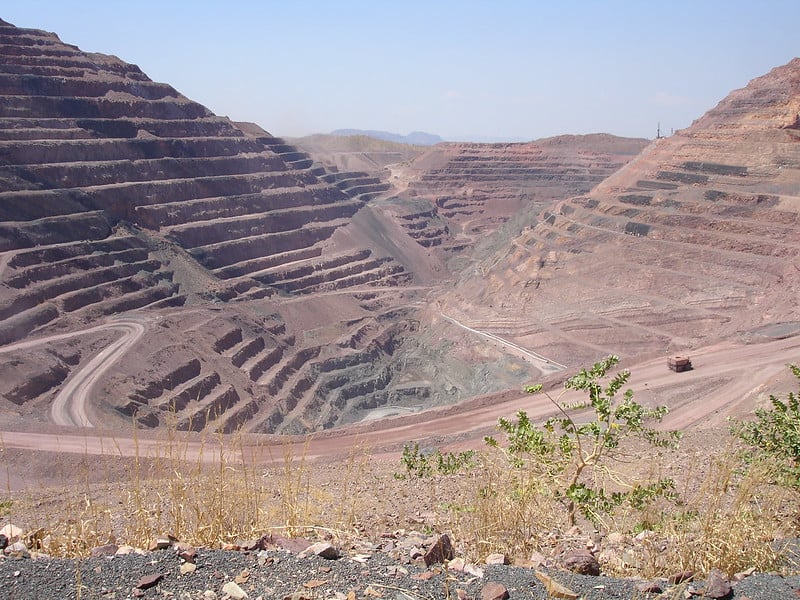
No other mine on earth came close to matching Argyle in terms of quantity or quality of pink diamonds, and no new mine deposits of anything like Argyle’s magnitude have been discovered, let alone built, in the three years since closure. Pink diamonds only occur at a few mines and are typically found in small quantities under one carat. This extreme geographic concentration means replacement sources are highly unlikely.
Investment Portfolio Diversification

Pink diamonds have offered inflation protection, portfolio stability, and diversification benefits to investors, traits that have grown more important in recent times. As traditional markets experience volatility, alternative assets like pink diamonds provide uncorrelated returns. Pink diamonds will continue to benefit as investors gravitate toward hard assets with a history of protecting and growing purchasing power during periods of higher inflation.
Cultural and Celebrity Influence

The pink diamond market benefits from high-profile ownership and cultural significance. Pink Diamonds from the Argyle Mine showcase a vibrant spectrum ranging from delicate pastel pinks to rich purplish-pinks and rare deep reds, with vibrancy caused by unique geological pressures never replicated elsewhere. Celebrity endorsements and royal connections, such as the Williamson Pink presented to Queen Elizabeth II, enhance the mystique surrounding these gems.
Future Supply Constraints

There simply is no pink rough left to be had at any price point despite continued demand, as such diamonds are not consistently found anywhere else in the world. The finite nature of existing inventory means every transaction reduces available supply permanently. The supply of these already finite assets will remain extremely limited, if not finite, with no new mine deposits discovered.
Treatment and Synthetic Alternatives

Anyone who wants a pink diamond that isn’t lab grown must go to companies that have treated gems, highlighting the natural stone premium. While synthetic alternatives exist, they lack the geological history and rarity that drives investment value. The distinction between natural Argyle pinks and laboratory alternatives continues to widen, with natural stones commanding increasingly significant premiums.
A Timeless Investment Horizon

The pink diamond market stands at a unique inflection point where historical rarity meets modern investment sophistication. Since the closure of the Argyle Mine in 2020, no new pink diamonds from Argyle have entered the market, transforming these diamonds from rare treasures into once-in-a-lifetime acquisitions. The combination of geological impossibility, documented performance, and cultural significance positions pink diamonds as both beautiful objects and serious financial assets. As global wealth continues expanding while supply remains forever fixed, the fundamental economics suggest pink diamond values will continue their upward trajectory, rewarding those who recognize their unique position in the luxury asset landscape.
More from Go2Tutors!

- The Romanov Crown Jewels and Their Tragic Fate
- 13 Historical Mysteries That Science Still Can’t Solve
- Famous Hoaxes That Fooled the World for Years
- 15 Child Stars with Tragic Adult Lives
- 16 Famous Jewelry Pieces in History
Like Go2Tutors’s content? Follow us on MSN.