Real Things People Used to Think Were Fake
Throughout history, humanity has been faced with discoveries, inventions, and phenomena that seemed too bizarre, too advanced, or too impossible to be real. The human mind, it turns out, has a remarkable talent for dismissing the extraordinary as fiction—only to be proven spectacularly wrong later.
From creatures that defied biological logic to scientific breakthroughs that challenged everything people thought they knew about the world, these genuine phenomena were met with skepticism, ridicule, and outright denial before eventually being accepted as fact.
Platypus
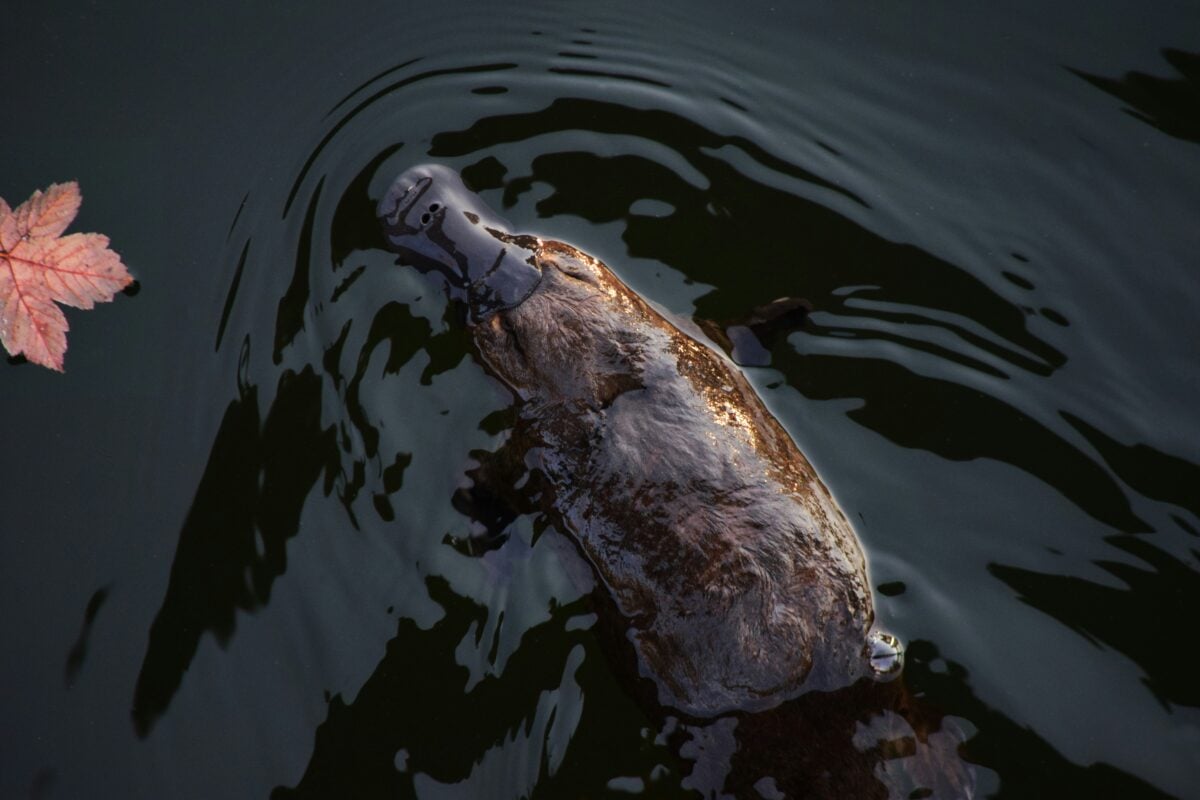
The platypus broke every rule. When European scientists first received a specimen in 1798, they assumed it was an elaborate hoax—someone had clearly sewn a duck’s bill onto a beaver’s body.
The creature defied classification so completely that respected zoologists spent years convinced it was a prank. Even after multiple specimens arrived, doubt lingered.
An egg-laying mammal with a bill that could detect electrical fields? Preposterous.
Meteorites
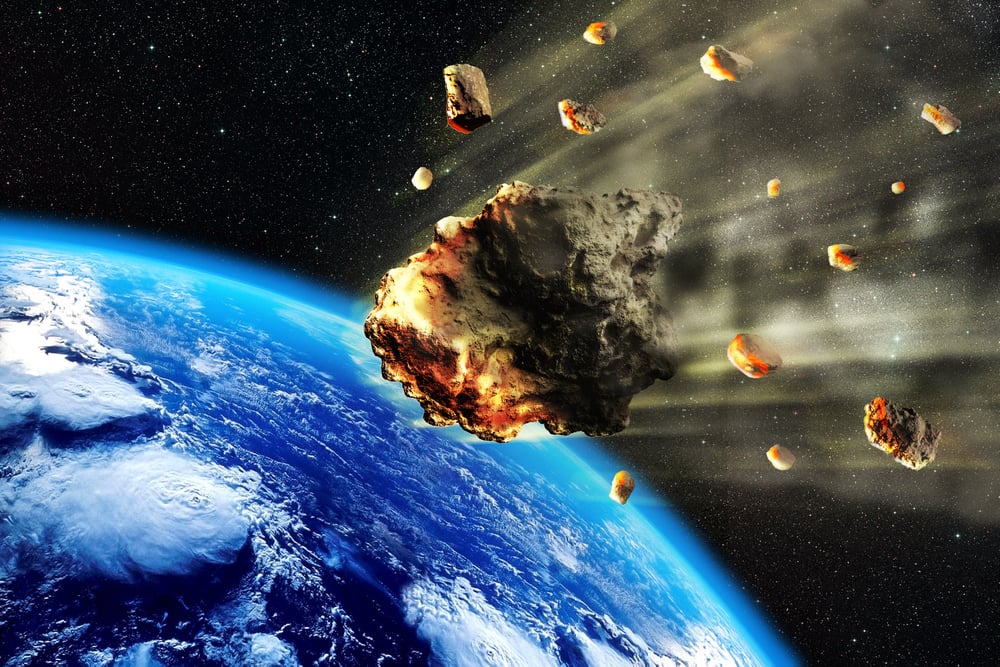
Rocks don’t fall from the sky. That was the scientific consensus for centuries, and any farmer claiming otherwise was clearly mistaken.
The French Academy of Sciences officially declared meteorites impossible in the 1700s—there were no rocks in the sky, therefore no rocks could fall from it. Thomas Jefferson allegedly said he’d sooner believe that two Yankee professors would lie than believe that stones fell from heaven (though historians debate whether he actually said this, the sentiment was widespread).
The scientific establishment remained stubbornly skeptical until Napoleon commissioned a formal investigation that proved, beyond doubt, that yes—rocks do indeed fall from space.
Giant Squid
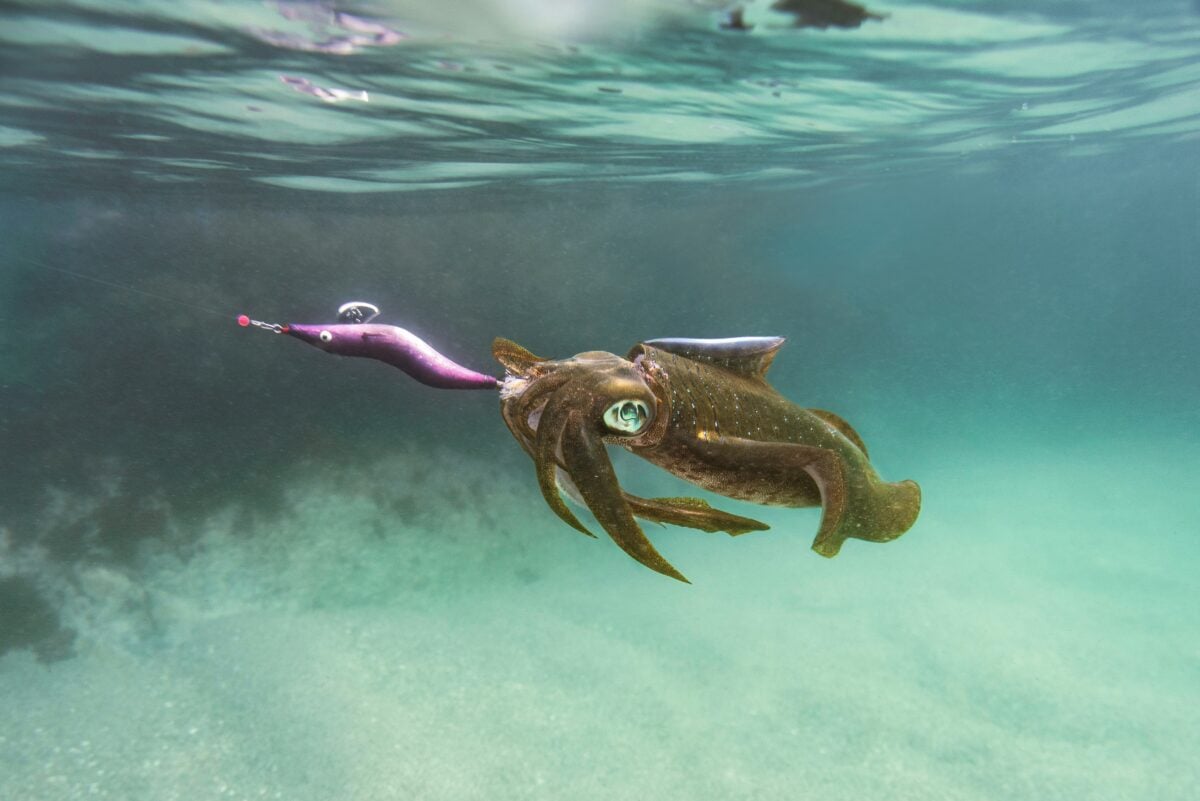
The ocean holds its secrets close, and for centuries, the giant squid was one of them—existing only in the wild tales of sailors who swore they’d seen tentacles thick as ship masts rising from the deep. But sailors, as everyone knew, were prone to exaggeration, especially after long months at sea with nothing but rum and their own imagination for company.
The scientific community dismissed these stories as maritime folklore, the kind of nonsense that grew taller with each telling in dockside taverns. And yet the evidence kept washing ashore: massive tentacles, beaks the size of dinner plates, circular scars on sperm whales that suggested battles with something enormous.
But even this wasn’t enough. Complete specimens weren’t scientifically documented until the late 1800s, with notable specimens captured in 1861, 1873, and the 1880s, and the first photographs of a living giant squid weren’t taken until 2004—more than a century after scientists finally admitted the creature might actually exist.
The ocean, it turns out, had been keeping a 40-foot secret all along, one that made the sailors’ stories seem almost modest by comparison.
Continental Drift

Alfred Wegener had the audacity to suggest that continents move. In 1912, he presented evidence that the continents had once been connected and had slowly drifted apart over millions of years.
The scientific establishment found this ridiculous—what force could possibly push entire continents around like puzzle pieces? The evidence was compelling: matching fossils on opposite sides of oceans, identical rock formations on different continents, the way South America and Africa fit together like a jigsaw puzzle. Wegener was clearly onto something, but without a mechanism to explain how continents could move, the theory was dismissed as fantasy.
It took another fifty years and the discovery of plate tectonics to vindicate him completely.
Troy

Heinrich Schliemann believed in Homer’s Iliad when everyone else treated it as pure mythology. The idea that a real city called Troy had been destroyed in an actual war seemed romantic but historically worthless—ancient poets weren’t reliable sources for archaeological research, after all, and mixing literature with science was considered rather naive.
So when Schliemann announced his intention to find Troy using Homer’s poem as a guide, the academic world watched with polite skepticism. Epic poetry was entertainment, not a treasure map.
But there it was, buried beneath centuries of earth in modern-day Turkey: walls, artifacts, and evidence of destruction that matched Homer’s account remarkably well. The scholars had to admit that sometimes the poets get there first.
Hypnosis

Franz Mesmer’s “animal magnetism” looked like parlor tricks and stage magic to 18th-century observers—people falling into trances, following commands, claiming to feel no pain while fully conscious. The whole thing reeked of charlatanism, the kind of spectacle that drew crowds but hardly qualified as legitimate medical practice.
Benjamin Franklin himself led a commission that debunked mesmerism as fraud and delusion (though they focused on Mesmer’s magnetic theories rather than the trance states themselves, which turned out to be the important part). The medical establishment dismissed hypnosis for decades, even as practitioners continued to demonstrate its effects.
Modern neuroscience has since confirmed that hypnotic states are measurable, reproducible, and genuinely useful for pain management and psychological treatment. Mesmer’s magnets were nonsense, but his trances were real.
Gorillas

European explorers returned from Africa with stories of giant apes that walked upright and possessed incredible strength—creatures that seemed to bridge the gap between human and beast in ways that made people uncomfortable. Most dismissed these accounts as exaggerated tales about ordinary chimps, or worse, attempts to lend credibility to local folklore.
The gorilla challenged assumptions about what was possible in the natural world. An ape that large, that powerful, that almost-human seemed to belong in mythology rather than zoology.
Even when skull fragments and bone samples reached European museums, many experts remained convinced the specimens represented deformed examples of known species rather than evidence of something genuinely new.
X-rays

Wilhelm Röntgen’s announcement in 1895 that he’d discovered rays capable of seeing through flesh struck many as elaborate fakery. The images he produced—bones visible through skin, metal objects inside wooden boxes—looked like the work of a skilled photographer with too much time and a vivid imagination.
Newspapers called it a hoax. Even some scientists suspected trickery, partly because Röntgen himself seemed stunned by what he’d found and couldn’t fully explain how it worked.
The idea that invisible rays could pass through solid matter contradicted basic assumptions about light and matter. Within months, however, other researchers had replicated his results, and the medical applications became too valuable to ignore.
Handwashing

Ignaz Semmelweis noticed something troubling at Vienna General Hospital in the 1840s: women giving birth in the physician-attended ward died of childbed fever at rates three times higher than those in the midwife-attended ward. His investigation led to an uncomfortable conclusion—the doctors and medical students, who regularly performed autopsies before delivering babies, were somehow carrying death from the morgue to the maternity ward.
His solution was radical: mandatory handwashing with chlorinated lime solution. The mortality rate dropped dramatically, but instead of celebrating, the medical establishment turned hostile.
The suggestion that gentlemen’s hands could be unclean was insulting, and the idea that invisible particles could cause disease was ridiculous. Germ theory wouldn’t be accepted for another twenty years, and Semmelweis was eventually committed to an asylum where he died, ironically, of an infection.
Powered Flight
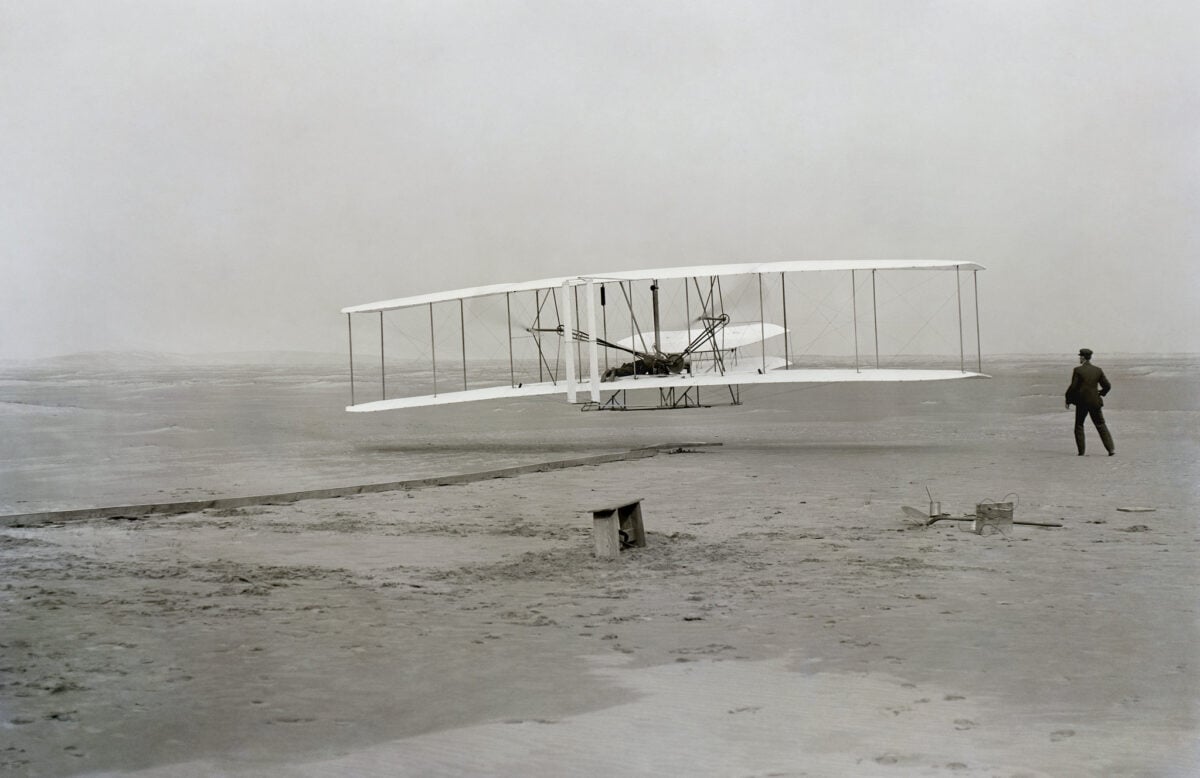
The Wright brothers faced a peculiar problem after their successful flight at Kitty Hawk in 1903: nobody believed them. For years, newspapers largely ignored their achievements, and even scientists dismissed their claims as exaggerated publicity stunts.
The idea that two bicycle mechanics had solved the problem of powered flight while trained engineers had failed seemed implausible. Part of the skepticism came from the brothers themselves—they were secretive about their methods and refused to fly publicly for several years, preferring to perfect their design away from crowds and cameras.
When they finally demonstrated their airplane in Europe in 1908, five years after first flight, the aviation community was stunned to discover that the Wright brothers had been genuinely airborne all along.
Stomach Ulcers From Bacteria

Barry Marshall and Robin Warren faced medical orthodoxy at its most stubborn when they proposed in the 1980s that stomach ulcers were caused by bacterial infection rather than stress and spicy food. The medical establishment had spent decades treating ulcers with bland diets and stress management, and the idea that bacteria could survive in the acidic environment of the stomach seemed impossible.
Marshall finally infected himself with H. pylori bacteria, developed gastritis, then cured himself with antibiotics—providing the most dramatic proof-of-concept in medical history. Even this wasn’t enough to convince everyone immediately.
It took years of additional research and clinical trials before the medical community accepted that a simple course of antibiotics could cure a condition they’d been treating as chronic and incurable.
Rogue Waves

Sailors have long told stories of monster waves that rise from calm seas without warning—walls of water 80 or 100 feet high that appear suddenly, destroy everything in their path, then vanish as mysteriously as they came. For most of maritime history, these accounts were filed under “tall tales,” alongside sea monsters and ghost ships.
Ocean scientists had mathematical models proving that such waves were essentially impossible—the probability of conditions aligning to create a 100-foot wave was so remote as to be negligible. Ships that disappeared in good weather were attributed to other causes, and survivors who described enormous rogue waves were assumed to be confused or traumatized.
Then satellite monitoring and improved wave measurement technology started detecting them regularly, revealing that the ocean had been generating impossible waves all along.
When Certainty Cracks

The pattern repeats itself with remarkable consistency: the impossible becomes inevitable, the ridiculous becomes routine, and the experts who dismissed revolutionary ideas are remembered mainly for being wrong. What seemed obviously fake turned out to be obviously real, once people learned how to look properly.
The platypus is still bizarre, meteorites still fall from space, and continents still drift—but now these impossibilities have been domesticated by explanation, fitted into textbooks and filed under “normal phenomena of the natural world.” The next time something seems too strange to be true, it might be worth remembering that the universe has a demonstrated talent for being stranger than anyone expects.
More from Go2Tutors!

- The Romanov Crown Jewels and Their Tragic Fate
- 13 Historical Mysteries That Science Still Can’t Solve
- Famous Hoaxes That Fooled the World for Years
- 15 Child Stars with Tragic Adult Lives
- 16 Famous Jewelry Pieces in History
Like Go2Tutors’s content? Follow us on MSN.