Rulers Who Took Their Riches to the Grave
Throughout history, powerful rulers have refused to leave their wealth behind when they died. From gold-filled tombs to entire armies crafted in clay, these leaders believed their riches would serve them in the afterlife—or at least ensure they’d be remembered forever.
Some of these treasures were looted centuries ago, while others lay hidden until modern archaeologists stumbled upon them. Either way, the sheer scale of what these rulers took with them still amazes us today.
Here is a list of 13 rulers whose burials prove that some people really did try to take it all with them.
Tutankhamun

The young Egyptian pharaoh died around 1323 BCE at just 19 years old, but his tomb contained enough gold to fill a small museum. When Howard Carter discovered it in 1922, he found over 5,000 artifacts crammed into just four chambers, including the famous solid gold death mask weighing about 22 pounds.
The tomb also held chariots, weapons, furniture, and even food provisions for the afterlife. What makes Tutankhamun’s burial remarkable is that he was considered a minor pharaoh—imagine what the great ones were buried with.
Qin Shi Huang
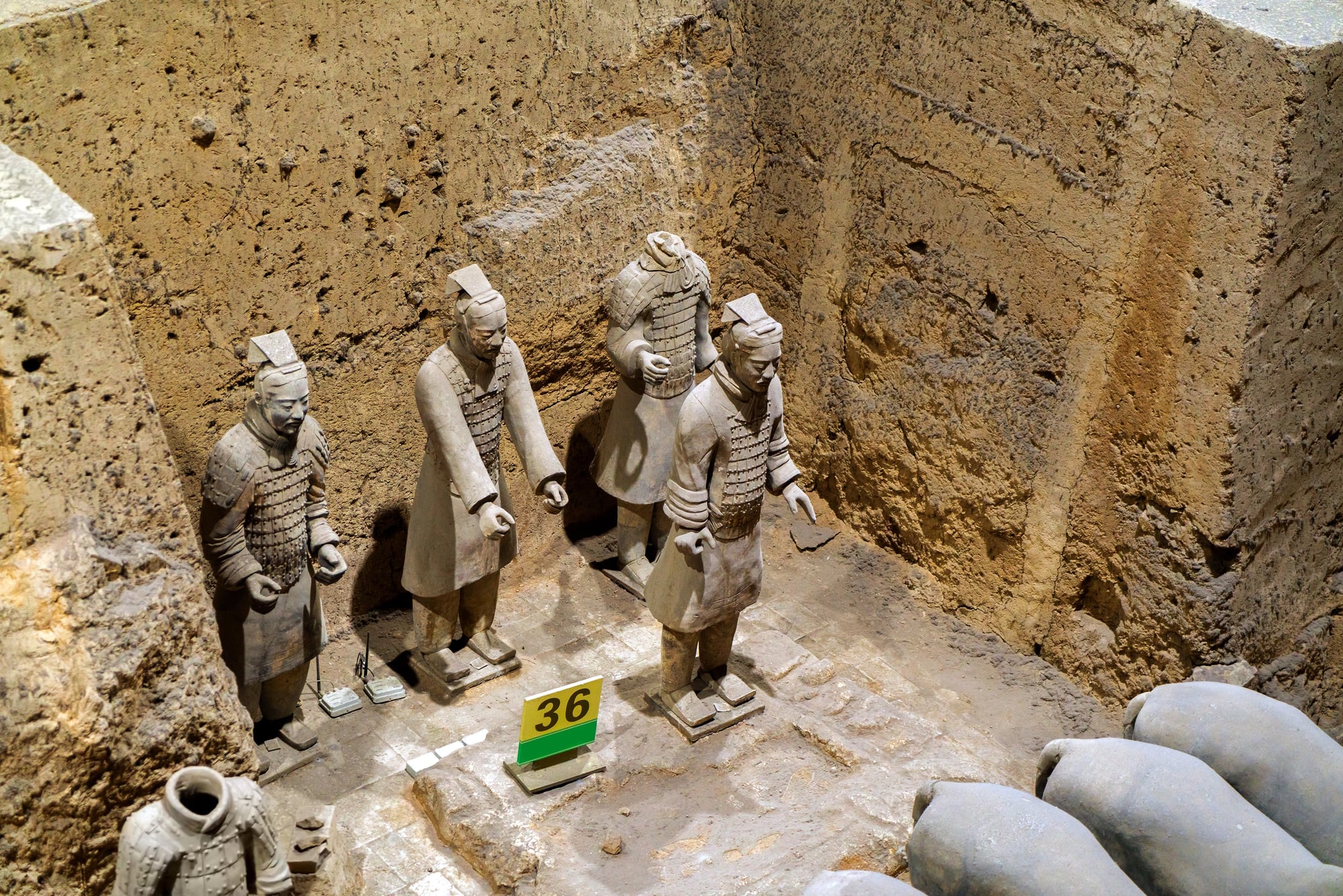
China’s first emperor wasn’t about to enter the afterlife unprotected. He commissioned an entire army of terracotta warriors—an estimated 8,000 soldiers, 670 horses, and 130 chariots discovered so far—to guard his tomb near Xi’an.
Ancient texts claim the burial chamber itself contains rivers of mercury and a ceiling decorated with pearls to represent the stars, though archaeologists haven’t yet opened the central tomb. Construction reportedly began when he was just 13 and involved hundreds of thousands of workers over several decades.
Pharaoh Khufu

The ruler behind the Great Pyramid of Giza spared no expense on his final resting place. The pyramid took roughly 20 years to build and originally stood at 481 feet, making it the tallest structure on Earth for over 3,800 years.
While tomb robbers cleaned out the burial chamber long ago, the sheer investment in the structure itself—an estimated 2.3 million stone blocks—represents wealth on an almost incomprehensible scale. Khufu essentially turned an entire mountain’s worth of limestone into his personal monument.
Queen Puabi of Ur
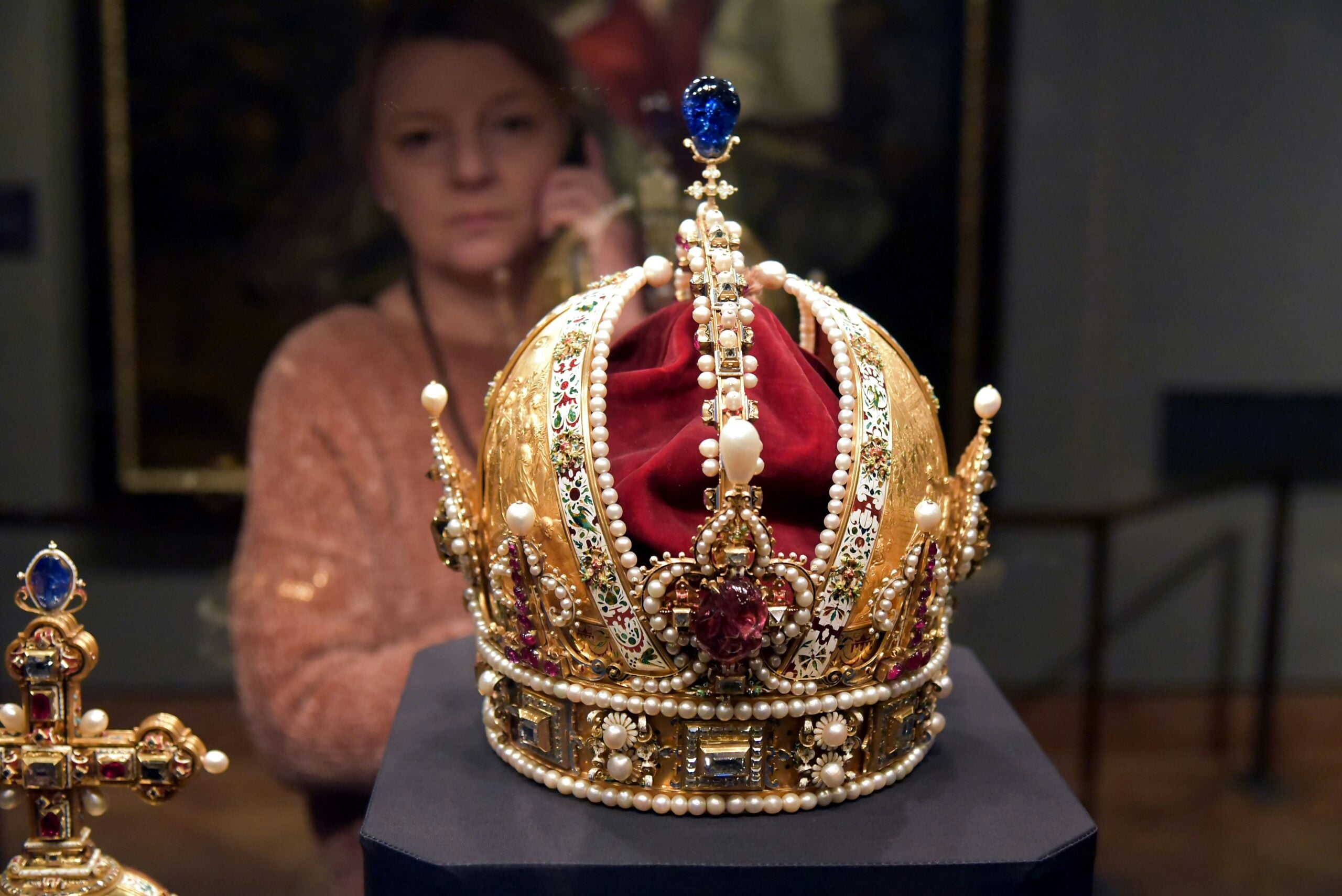
This Sumerian queen, who lived around 2600 BCE, was buried in what archaeologists call the Royal Cemetery of Ur in modern-day Iraq. Her tomb contained a stunning golden headdress, intricate jewelry, and a golden cup still resting near her hand.
Perhaps more disturbing, her burial also included the bodies of dozens of attendants who were apparently killed to serve her in death. The craftsmanship of her jewelry rivals anything produced today, showing just how sophisticated ancient Mesopotamian goldsmiths were.
Emperor Jingdi

This Han Dynasty emperor, who ruled China from 157 to 141 BCE, was buried with a miniature version of his entire kingdom. His tomb complex contained thousands of small terracotta figures—soldiers, servants, animals, and even eunuchs—each originally clothed in silk garments that have since disintegrated over time.
Unlike Qin Shi Huang’s life-sized warriors, Jingdi’s figures were about one-third human size, but the attention to detail was extraordinary. The site also included clay granaries filled with real grain and pits containing bones of various animals.
Pacal the Great

The Mayan king of Palenque ruled for an astonishing 68 years and was buried deep inside the Temple of Inscriptions in southern Mexico around 683 CE. His sarcophagus lid features one of the most famous carvings in Mesoamerican art, depicting complex cosmological imagery that scholars continue to debate and interpret.
He was buried wearing a jade mosaic death mask, jade and obsidian jewelry, and his tomb walls were covered in elaborate stucco sculptures. The entire pyramid was essentially built as a giant protective shell for his burial chamber.
Philip II of Macedon

Alexander the Great’s father was buried at Vergina in northern Greece around 336 BCE, and his tomb wasn’t discovered until 1977. Inside, archaeologists found a gold larnax containing his cremated remains and a delicate gold wreath of oak leaves among the grave goods.
The tomb also contained ivory portrait heads believed to depict Philip himself. His burial goods demonstrated the wealth of Macedon just before his son would go on to conquer most of the known world.
Lady Dai

This Han Dynasty noblewoman, also known as Xin Zhui, died around 163 BCE and was buried in one of the most lavish tombs ever discovered in China. Her body was exceptionally preserved when found in 1971, with flexible skin and identifiable blood markers that astonished researchers.
She was buried with over 1,000 artifacts including lacquerware, silk garments, food, and musical instruments. Her tomb featured four nested coffins, each more ornate than the last, with the innermost covered in delicate feathers and silk.
Childeric I

This Frankish king died in 481 CE and was buried in what is now Tournai, Belgium. When his tomb was accidentally discovered in 1653, it contained a gold sword, a gold bracelet, gold coins, and roughly 300 golden bees or cicadas that likely adorned his cloak.
Napoleon was so impressed by the bee symbols that he adopted them as his own imperial emblem centuries later. Unfortunately, most of the treasure was stolen in 1831, and only a few pieces remain in museums today.
Shah Jahan
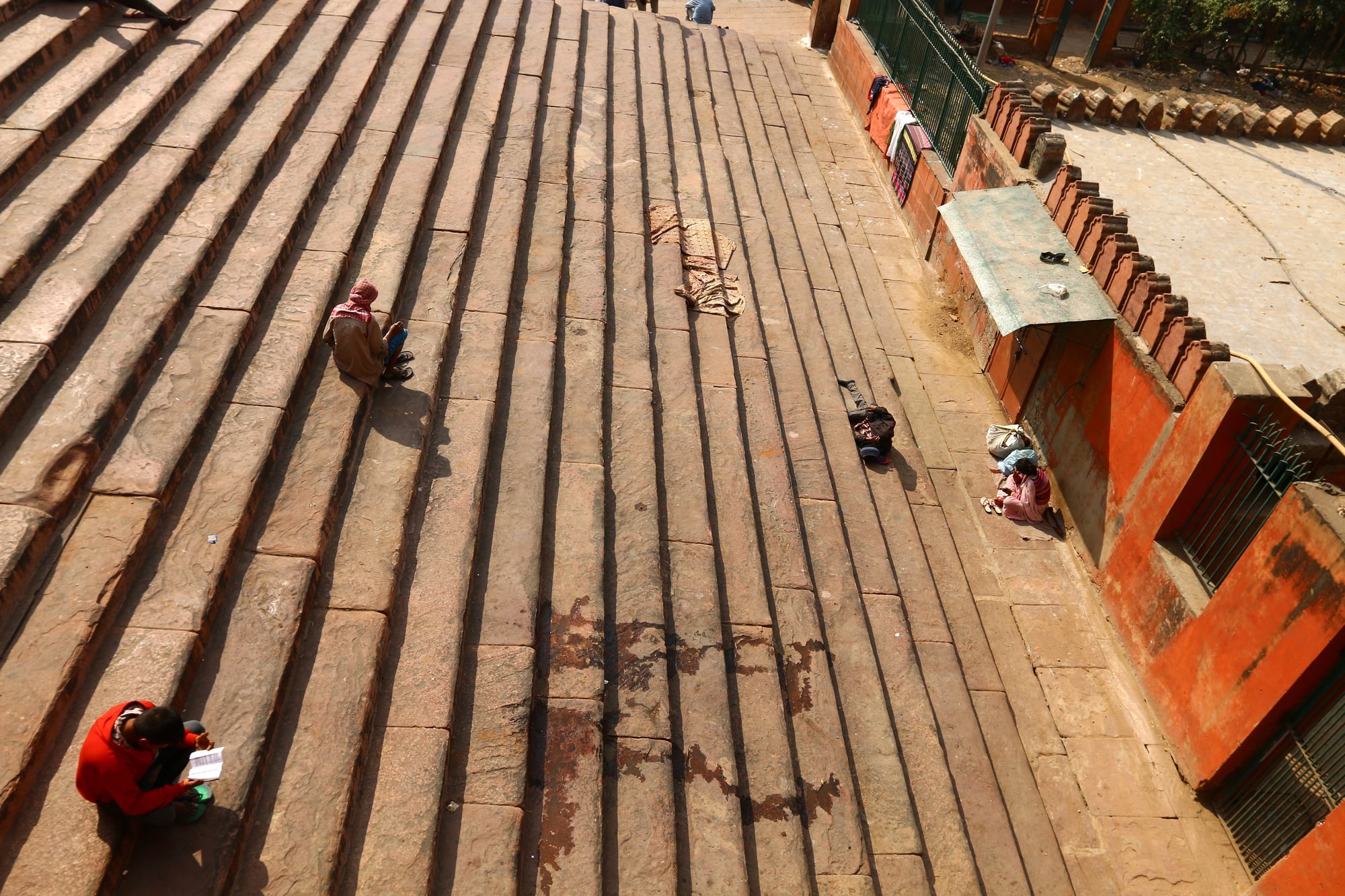
While technically the Taj Mahal was built as a tomb for his wife Mumtaz Mahal, Shah Jahan himself was eventually buried there too after his death in 1666. The structure took 22 years to build and employed around 20,000 workers from across Asia.
The building is covered in white marble inlaid with precious and semi-precious stones including jade, crystal, lapis lazuli, turquoise, and carnelian. The total cost would be immense by modern standards, making it arguably one of the most expensive tombs ever constructed.
Casimir III of Poland

Known as Casimir the Great, this 14th-century Polish king was buried in Wawel Cathedral in Kraków with items befitting his reputation. When his tomb was opened in 1869, researchers found crown fragments, a scepter, and an orb representing his earthly power.
He was the only Polish king to earn the title ‘the Great,’ largely for doubling the size of Poland and establishing the country’s first university. His burial goods were modest compared to ancient rulers but represented medieval European royal funerary traditions.
Harishena
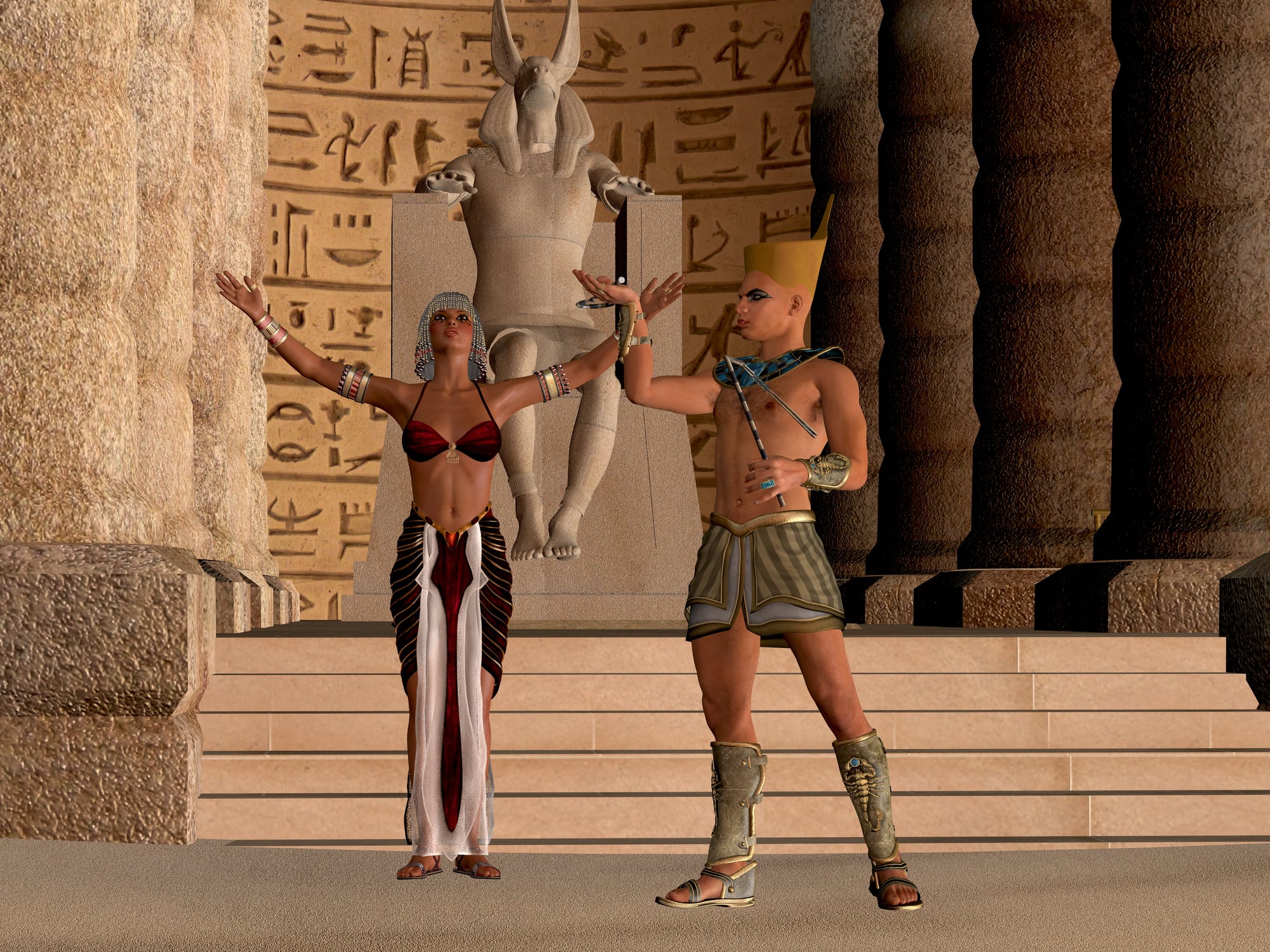
This Vakataka emperor in India ruled during the 5th century CE and is believed to have commissioned several of the famous Ajanta Caves as Buddhist religious monuments. While his actual burial site remains unknown, the caves themselves—carved directly into cliff faces and filled with elaborate paintings and sculptures—represent an enormous investment of royal wealth.
These caves served as monasteries and temples rather than tombs, but they stand as his most enduring legacy. The artwork inside has survived over 1,500 years and influenced Buddhist art across Asia.
Ismail Ibn Sharif

This Moroccan sultan, who ruled from 1672 to 1727, built an enormous palace complex at Meknes that rivaled Versailles in ambition. He was buried in a mausoleum within this complex that remains one of the few religious sites in Morocco open to non-Muslims.
The tomb chamber features intricate tile work, carved stucco, and cedarwood ceilings that took decades to complete. He reportedly fathered hundreds of children and maintained one of the largest standing armies in North Africa, so his grand burial site matched his outsized life.
Wealth Beyond Death

These 13 rulers came from vastly different cultures separated by thousands of years and thousands of miles, yet they shared one belief: death wasn’t the end of their need for wealth and power. Their tombs reveal not just personal vanity but entire civilizations’ beliefs about the afterlife and the role of rulers within it.
Some of these treasures have enriched museums around the world, while others remain buried or were lost to thieves long ago. What survives reminds us that the human desire to preserve status and wealth—even beyond the grave—is as old as civilization itself.
More from Go2Tutors!

- The Romanov Crown Jewels and Their Tragic Fate
- 13 Historical Mysteries That Science Still Can’t Solve
- Famous Hoaxes That Fooled the World for Years
- 15 Child Stars with Tragic Adult Lives
- 16 Famous Jewelry Pieces in History
Like Go2Tutors’s content? Follow us on MSN.



