Sea Creatures That Look Like Aliens
The ocean hides things that seem impossible. When you see certain deep-sea creatures for the first time, your brain struggles to accept that they’re real.
These animals look like they belong in science fiction movies, not on Earth. But they’re here, living in waters we’ve barely explored, shaped by pressures and darkness we can’t imagine.
The Goblin Shark

This shark looks like it was assembled from spare parts. Its snout extends into a long, flat blade that makes no sense until you see it hunt.
The jaw shoots forward from its face like something from a horror film. Scientists find these creatures so rarely that most of what we know comes from accidental catches.
The pink, translucent skin adds to the nightmare. You can almost see through to the blood vessels underneath.
Vampire Squid

Despite its name, this creature doesn’t drink anything. The webbing between its arms looks like a cape when it flips itself inside out as a defense mechanism.
Its eyes are the largest in proportion to body size of any animal on Earth. In the deep darkness where it lives, those massive eyes catch every bit of light.
The bioluminescent displays it creates can confuse predators, flashing in patterns that seem more like alien communication than defense.
Giant Isopod
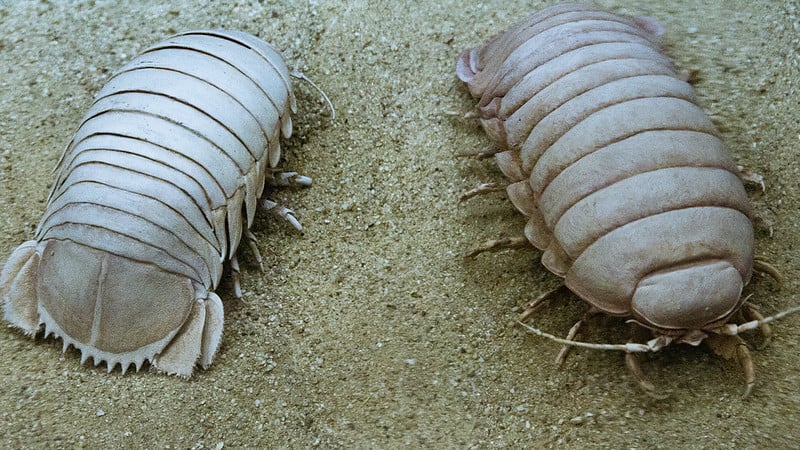
Take a pill bug and blow it up to the size of a football. That’s a giant isopod.
These things can grow over a foot long and live on the ocean floor eating whatever falls from above. They’re related to the bugs you find under rocks in your garden, which makes their size even stranger.
When food is scarce, they can survive for years without eating. Just sitting there in the dark, waiting.
Barreleye Fish

The transparent dome on its head lets you see straight through to its brain. The eyes sit inside the dome, pointing upward to spot prey silhouettes against the faint light from above.
For years, scientists thought the eyes were fixed in place. Then they discovered the fish can rotate them forward when it needs to see what’s in front.
The green glow inside its head comes from a pigment that filters light.
Sea Pig
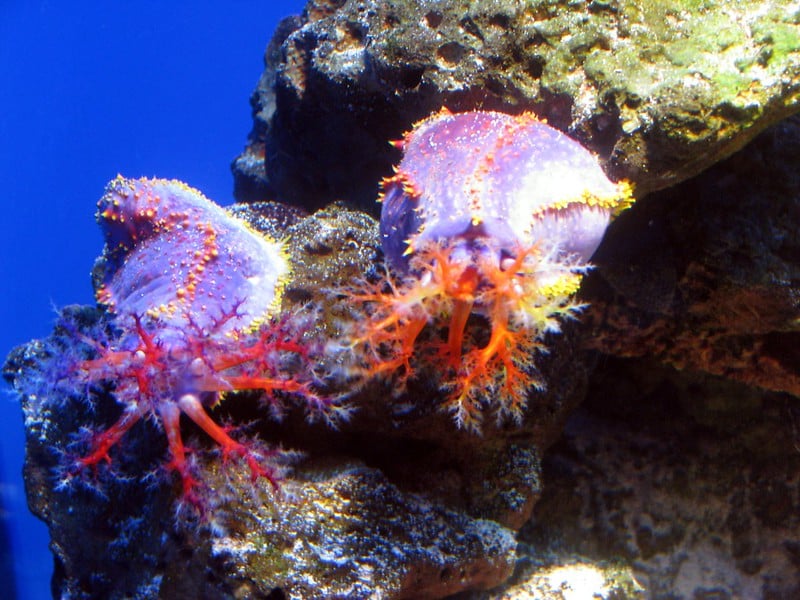
These pink blobs waddle across the ocean floor on tube-like legs that look inflated. They’re actually a type of sea cucumber, but calling them that doesn’t capture how weird they are.
Tentacles sprout from their heads to shovel sediment into their mouths. Sometimes they gather in herds of hundreds.
The mental image of dozens of these things marching together in the pitch black is hard to shake.
Frilled Shark
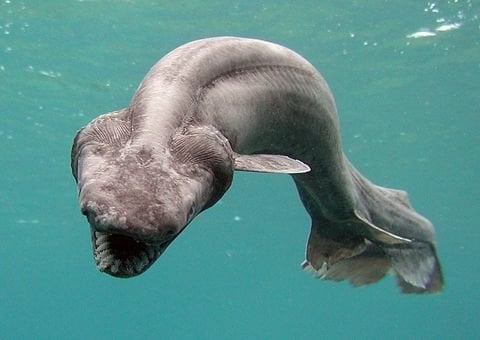
This shark has 300 teeth arranged in 25 rows. Each tooth has three sharp points.
The body is snake-like and primitive. Scientists call it a living fossil because it hasn’t changed much in millions of years.
When it catches prey, those rows of teeth work like a trap. Nothing escapes once it gets close enough.
The gills have frilled edges that give it its name and an even stranger appearance.
Gulper Eel

The mouth on this thing can open wide enough to swallow prey larger than itself. The body is mostly tail, thin and whip-like, with a glowing tip used to lure food.
When its stomach is empty, you can see through parts of its body. When full, it stretches like a balloon.
The jaw structure is so loosely hinged that it looks broken.
Glass Squid

Transparency is this animal’s survival strategy. Most of its body is completely see-through except for the digestive gland and eyes.
Some species inflate their bodies with ammonia solution to achieve neutral buoyancy, which lets them hover motionless in the water column. The eyes are positioned on stalks in some species, adding another layer of strangeness to an already bizarre creature.
Fangtooth Fish

Proportionally, this fish has the largest teeth of any ocean animal. The fangs are so long that it can’t fully close its mouth.
Special sockets in the skull give the teeth somewhere to go when the jaw shuts. Living at depths where food is scarce, it’ll attack anything it encounters.
The body is compact and the head is disproportionately large, covered in spines and plates that look like armor.
Dumbo Octopus

The ear-like fins on its head flap as it swims, giving it the appearance of flying through water. These octopuses live deeper than any others, sometimes below 13,000 feet.
The soft body lets them withstand the crushing pressure. They eat by pouncing on prey and swallowing it whole.
Some species glow in the dark. The combination of cute and alien is unsettling.
Blobfish
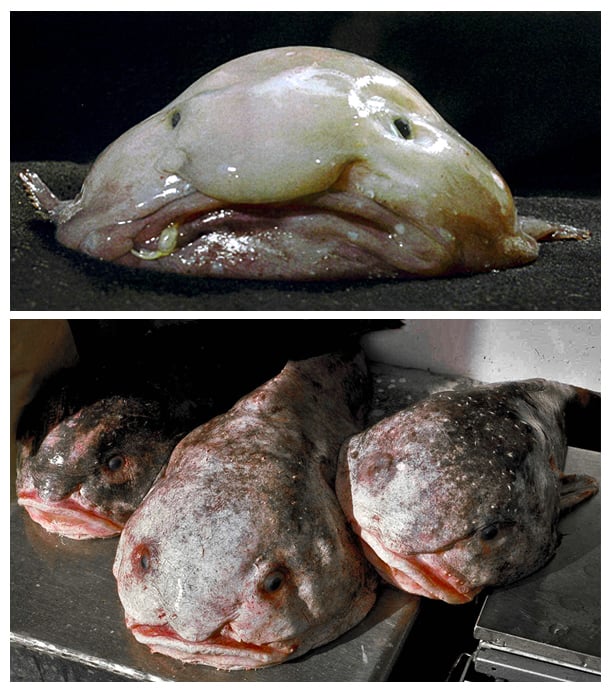
Outside of its high-pressure environment, this fish looks like melted gelatin. But that famous droopy appearance is actually what happens when you bring a deep-sea creature to the surface.
In its natural habitat, the fish looks relatively normal. The gelatinous flesh is less dense than water, which lets it float above the seafloor without expending energy swimming.
Anglerfish

The female carries a bioluminescent lure that dangles in front of her mouth. Small fish and crustaceans swim toward the light and get eaten.
The males are tiny parasites that bite onto females and fuse their bodies together, sharing blood. Eventually, the male’s eyes and organs disappear.
He becomes nothing more than a sperm producer attached to her side. Multiple males can fuse to a single female.
Bigfin Squid

The tentacles on these squids can extend over 20 feet long. They hang them down in the water like fishing lines, waiting for something to touch them.
Only a handful of sightings exist because they live so deep. Every video shows the same bent, elbow-like posture that seems mechanically wrong.
The arms and tentacles look too thin to support themselves, but they work perfectly in the deep water’s density.
Pelican Eel
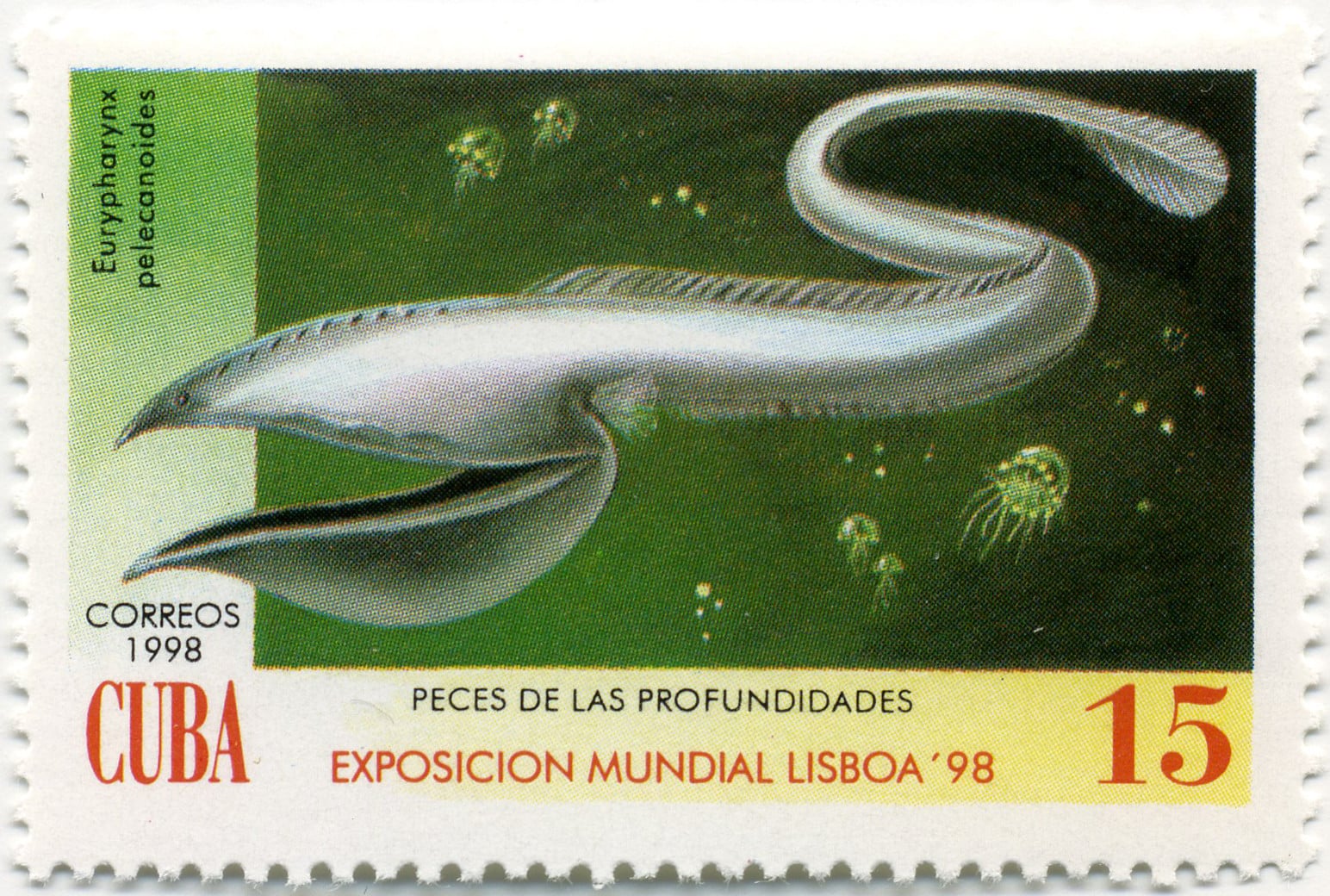
The mouth extends into a huge pouch that can balloon out to catch prey. The tiny body attached to this enormous mouth ends in a whip-like tail with a light organ.
Scientists aren’t even sure how it uses that massive jaw. The pouch might work like a net, or it might help the eel look bigger to scare off predators.
Either way, the proportions are wrong in a way that bothers you when you look at it.
Where the Strange Things Are
These creatures evolved in conditions that would kill most life instantly. The pressure, the cold, the complete absence of sunlight—these factors shaped bodies that don’t follow the rules we expect.
When humans finally developed technology to explore the deep ocean, we discovered that alien life was here all along. We just needed to look in the right places.
The strange truth is that we’ve explored more of space than our own ocean floor. What else is down there, waiting in the dark?
More from Go2Tutors!

- The Romanov Crown Jewels and Their Tragic Fate
- 13 Historical Mysteries That Science Still Can’t Solve
- Famous Hoaxes That Fooled the World for Years
- 15 Child Stars with Tragic Adult Lives
- 16 Famous Jewelry Pieces in History
Like Go2Tutors’s content? Follow us on MSN.