Semi-Final Matches That Went Down to the Final Minute and Changed History
There’s a specific kind of agony — and ecstasy — that only a semi-final can produce. It’s not the final, so the trophy isn’t there yet, but the stakes feel just as crushing: one wrong moment and the dream is over, replaced by the long, hollow walk back to the locker room while someone else celebrates on your turf.
Some semi-finals end comfortably, tidily, with the result settled long before the final whistle. And then there are the others — the ones that dragged every last spectator to the absolute edge, that refused to resolve themselves until the very last breath of regulation, and in doing so, rewrote what everyone thought they knew about the sport, the teams, and sometimes the entire era.
These are those matches.
The 1999 Champions League Semi-Final, Manchester United vs. Juventus
Manchester United trailed by two goals on aggregate before the match had properly found its legs. They clawed back through Roy Keane and Dwight Yorke, and the final minutes were a sustained act of collective willpower — United pressing, Juventus defending for their lives, the scoreline balanced on a razor.
Keane, who had already booked himself out of the final with a yellow card, played those closing minutes knowing he wouldn’t be there for the prize. That particular detail never gets old.
The 1970 FIFA World Cup Semi-Final, Italy vs. West Germany
This match earned its own nickname — the Game of the Century — and it spent most of its life being outrageous rather than merely dramatic. Four goals arrived in extra time alone, the lead changing hands twice in a span of minutes that felt borrowed from a different, more theatrical sport.
West Germany equalized in the final minute of normal time, and what followed was less a football match than a sustained act of collective derangement — five goals, two hours, and a result that still feels slightly unreal.
The 1966 World Cup Semi-Final, England vs. Portugal
England’s Eusébio, who was arguably the most dangerous attacker at that entire tournament, missed a penalty in the 82nd minute and spent the walk back to the center circle visibly processing what had just happened. England held on, but only barely — the final ten minutes were played at a temperature that the Wembley crowd never quite recovered from.
That penalty miss still gets mentioned in Portuguese football circles as the moment that could have tipped everything.
The 2005 Champions League Semi-Final, Chelsea vs. Liverpool
What makes this one stubborn in the memory is not just the result but the geometry of it — how Luis García’s goal, disputed by half of England and celebrated by the other half, arrived so early and with such irreversible weight that the next 85 minutes became a long, tense argument that was technically still in progress but emotionally already settled. Chelsea pressed hard in the final minutes, José Mourinho’s frustration visible from about three rows back.
The goal — “ghost goal” or otherwise — changed the trajectory of both clubs’ European ambitions for years.
The 2010 World Cup Semi-Final, Uruguay vs. Netherlands
Uruguay pushed the Netherlands to the absolute wire in a match that swung between controlled and genuinely unhinged, and the final minutes contained enough tension to power a small city. Forlán’s long-range work throughout that tournament had already made him a figure of quiet legend, and the semi-final gave him a stage large enough to be worthy of it.
The Netherlands won 3-2, but the scoreline is one of those honest numbers that does a poor job of describing the actual experience.
The 1966 World Cup Semi-Final, West Germany vs. Soviet Union
West Germany dismantled the Soviet Union 2-1 in a match that looked more comfortable on paper than it felt in the stadium, with the Soviet side pushing hard in the closing stages to level. Franz Beckenbauer, at 20 years old, was already playing like someone who had been doing this for decades — composed where others were fraying, stubborn in possession when the match tried to slip away.
That composure in the final minutes was its own kind of statement.
The 1994 World Cup Semi-Final, Brazil vs. Sweden
Brazil’s 1-0 win over Sweden in the Pasadena heat is one of those results that looks inevitable in retrospect and felt nothing of the sort while it was happening. Romário’s goal gave Brazil the lead, but Sweden spent the final twenty minutes pressing with genuine menace, and the match only resolved itself when the referee’s whistle finally ended something that had been threatening to unravel.
Brazil went on to win the tournament — but this was the moment the path could most easily have forked.
The 2018 World Cup Semi-Final, Croatia vs. England

England led at halftime and had every reason to believe the script was running in their favor — and then Croatia, who had played extra time in every knockout round, somehow found another gear in the second half. Mario Mandžukić’s winner came in the 109th minute, deep in extra time, after a match that England had controlled and then gradually, painfully lost.
The heartbreak was clean and complete.
The 2019 Champions League Semi-Final, Ajax vs. Tottenham
Tottenham were dead. Not metaphorically — they trailed on aggregate going into added time, and Ajax had been the better side across both legs.
Lucas Moura scored his third goal of the night in the 96th minute on away goals, and the image of his teammates’ reactions — genuine disbelief, something close to shock — told you everything about how likely that outcome had seemed seconds earlier. It remains one of the more statistically improbable reversals in the competition’s modern history.
The 2022 World Cup Semi-Final, Argentina vs. Croatia
Argentina vs. Croatia was the match that confirmed Lionel Messi’s tournament was operating on a different frequency from everyone else’s. His assist for Julián Álvarez’s second goal was the kind of pass that makes the physics of football look briefly negotiable — threaded through traffic at pace, arriving exactly where it needed to.
Croatia pushed in the closing stages, and the final minutes had that held-breath quality that semi-finals at this level almost always carry. Argentina won 3-0, but the scoreline flatters no one’s nerves.
The 1989 European Cup Semi-Final, AC Milan vs. Real Madrid

Milan’s 5-0 aggregate demolition of Real Madrid is remembered for its dominance, and the final minutes of the second leg — with Milan already comfortable — still carried the electric charge of an occasion that felt like the passing of a torch from one era to another. Arrigo Sacchi’s side was announcing something: this was not just a team winning a match, it was a philosophy proving itself on the largest stage available.
Real Madrid, for all their history, had no answer for it.
The 2004 Euro Semi-Final, Greece vs. Czech Republic
Greece had already been the tournament’s great inconvenience, but the semi-final against the Czech Republic, decided by Traianos Dellas’s silver goal in extra time, was the moment the story became genuinely historic rather than merely surprising. Czech Republic had pushed hard through the final minutes of normal time, and the extra period had that strangled, pressurized atmosphere of two teams terrified of losing.
Greece went on to win the entire tournament — this was the moment that made it feel, against all reason, possible.
The 2012 Euro Semi-Final, Portugal vs. Spain
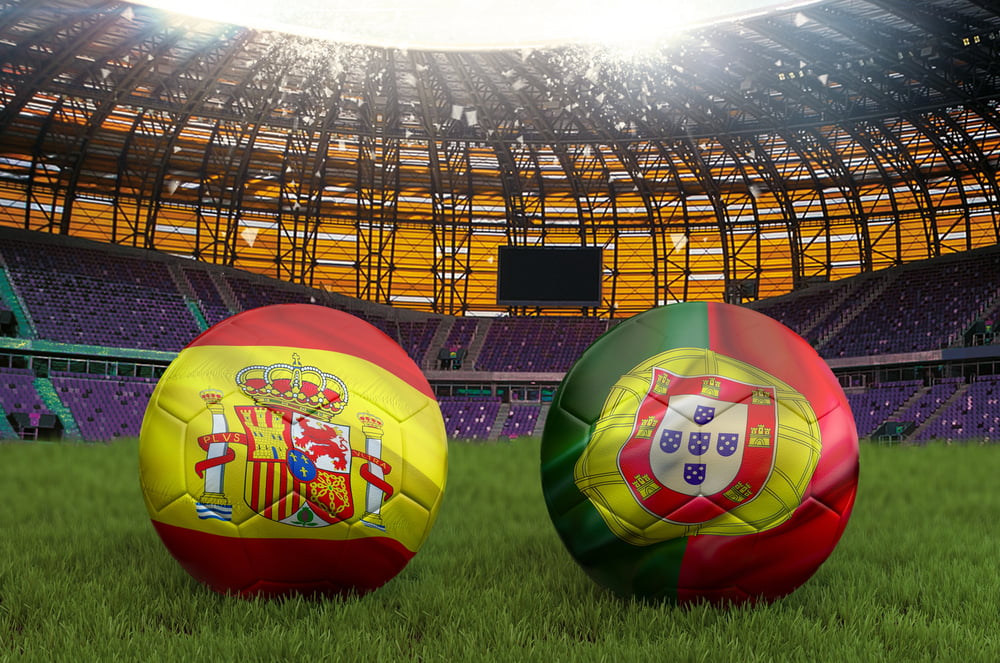
Two of the most technically accomplished sides in world football produced exactly the kind of match you’d expect: elegant, disciplined, and resolved only by a penalty shootout after 120 goalless minutes that were considerably more absorbing than a 0-0 has any right to be. Cristiano Ronaldo never got to take his penalty — Spain won the shootout before he reached the spot, which left that particular thread permanently unresolved.
The final minute of extra time, with both sides playing on raw nerves and empty tanks, was football as endurance test.
The 2021 Euro Semi-Final, England vs. Denmark
England had not been to a major tournament final since 1966, which meant the atmosphere inside Wembley for those final minutes was less “sporting occasion” and more “collective national catharsis.” Denmark equalized in the first half and played with a belief that made the closing stages genuinely uncomfortable for a crowd that had already started celebrating.
Raheem Sterling’s late penalty, awarded after a foul that remains lively dinner-party debate in both countries, settled it — but the final minutes had done their work on everyone’s nerves first.
The 1986 World Cup Semi-Final, France vs. West Germany

France and West Germany had already met in one of the greatest semi-finals in tournament history — their 1982 encounter in Seville — and the 1986 rematch carried all that history into its final minutes like luggage nobody asked to carry. West Germany won 2-0, but France pressed hard in the closing stages and Platini, operating through what looked like sheer will, refused to let the match settle quietly.
The scoreline understates how much the final twenty minutes demanded of the German defense.
The 2014 World Cup Semi-Final, Brazil vs. Germany
This one does not belong in a conversation about close matches — Germany won 7-1, which is an outcome that still reads like a typo. But it belongs here because of what it changed: Brazilian football’s self-understanding, the mythology around playing at home, the idea that a host nation carries some protective advantage when the stakes reach their highest.
The last few minutes, with the Estádio Mineirão falling into stunned silence, were not dramatic in the conventional sense — they were simply the aftermath of a historical rupture, still in smoke.
When the Clock Refuses to Lie

The final minute of a semi-final is its own small universe — compressed, merciless, indifferent to everything that came before it. All the tactical preparation, the prematch analysis, the months of qualifying: none of it matters once the board goes up and the number on it isn’t zero.
What the matches above share isn’t just drama — it’s the particular quality of change, the sense that something real and permanent was decided in a window of time so small it barely registers on a clock. You can watch these moments again decades later and the tension doesn’t diminish.
It just clarifies, the way a photograph does when you finally understand what you were looking at.
More from Go2Tutors!

- The Romanov Crown Jewels and Their Tragic Fate
- 13 Historical Mysteries That Science Still Can’t Solve
- Famous Hoaxes That Fooled the World for Years
- 15 Child Stars with Tragic Adult Lives
- 16 Famous Jewelry Pieces in History
Like Go2Tutors’s content? Follow us on MSN.