Snapshots Of 15 Most Ornate Theater Ceilings In The World And Their Stories
Theater ceilings tell stories before the curtain ever rises. They speak of ambition, artistry, and the peculiar human need to transform a simple gathering space into something that stops your breath.
These aren’t just decorative afterthoughts — they’re statements of intent, promises that whatever happens below will be worthy of what hangs above.
Palais Garnier

The Palais Garnier doesn’t mess around. Marc Chagall’s ceiling painting covers 2,400 square feet of dome space with colors that seem to move in the theater’s warm light.
Bold blues and deep reds swirl around scenes from famous operas and ballets.
The painting replaced the original 1874 ceiling design. Controversy followed.
Purists argued that Chagall’s modern interpretation clashed with the building’s Second Empire architecture. The ceiling stayed anyway, proving that sometimes the audacious choice becomes the right choice.
La Scala

La Scala’s ceiling operates on a different principle entirely — one that understands (perhaps better than any other theater in the world) that restraint can be its own form of grandeur, that sometimes the most powerful statement you can make is the one that whispers rather than shouts.
And yet, the cream and gold coffers that stretch across the dome above Milan’s most famous opera house manage to create an atmosphere that feels both intimate and infinite, the way certain pieces of music can make you feel as though you’re sitting in someone’s living room and standing at the edge of the universe at exactly the same time.
So the ceiling works not because it overwhelmed anyone who designed it with options, but because it committed fully to a single idea: elegance doesn’t need to announce itself.
The theater opened in 1778, and the ceiling has remained largely unchanged since then. Each coffer contains hand-painted details that catch the light from the central chandelier.
The entire dome creates an acoustic shell that contributes to La Scala’s legendary sound quality — beauty serving function without either element compromising the other.
Sydney Opera House
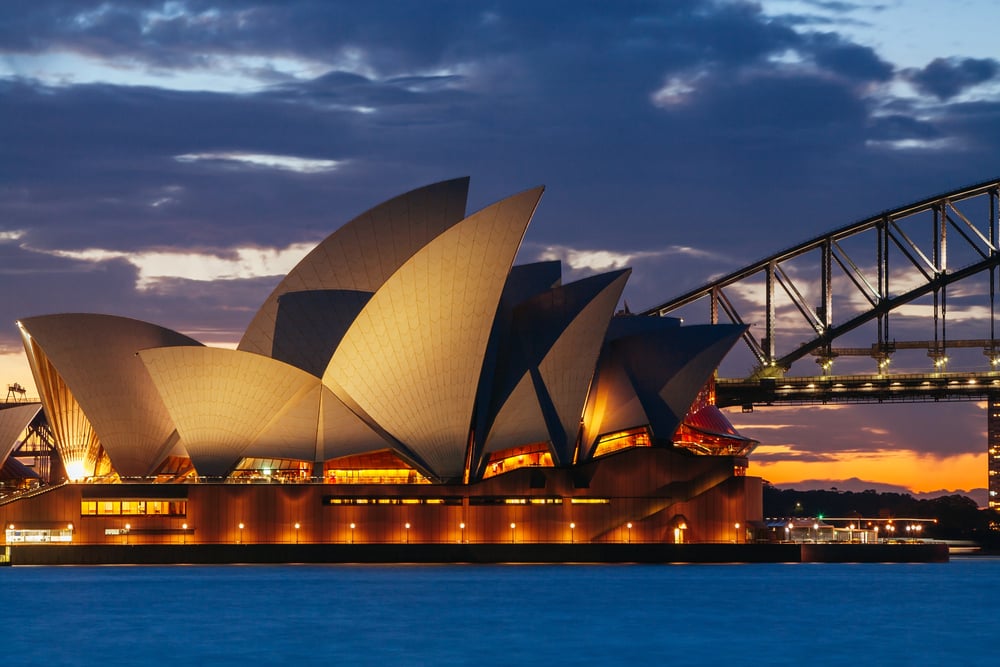
Architecture becomes sculpture when it stops caring about conventional rules. The Sydney Opera House ceiling consists of interlocking concrete shells that seem to unfold like sails catching wind, though they’re actually inspired by orange segments — a detail that proves inspiration arrives from the most unexpected places.
The interior surfaces are lined with acoustic tiles made from Australian hardwood. Each tile was cut and placed individually to create both visual rhythm and sound control.
The result is a ceiling that performs as precisely as any instrument on the stage below.
Vienna State Opera

The Vienna State Opera rebuilt its ceiling after World War II bombing, but kept the original’s ornate spirit intact. Gold leaf covers intricate plasterwork that frames a central dome painted with allegorical scenes.
The restoration took seven years to complete.
Austrian artists handled every detail by hand. The ceiling includes hidden ventilation systems that maintain air circulation without disrupting the visual design.
Modern engineering serves 19th-century aesthetics, and somehow both elements emerge stronger for the partnership.
Teatro Colón
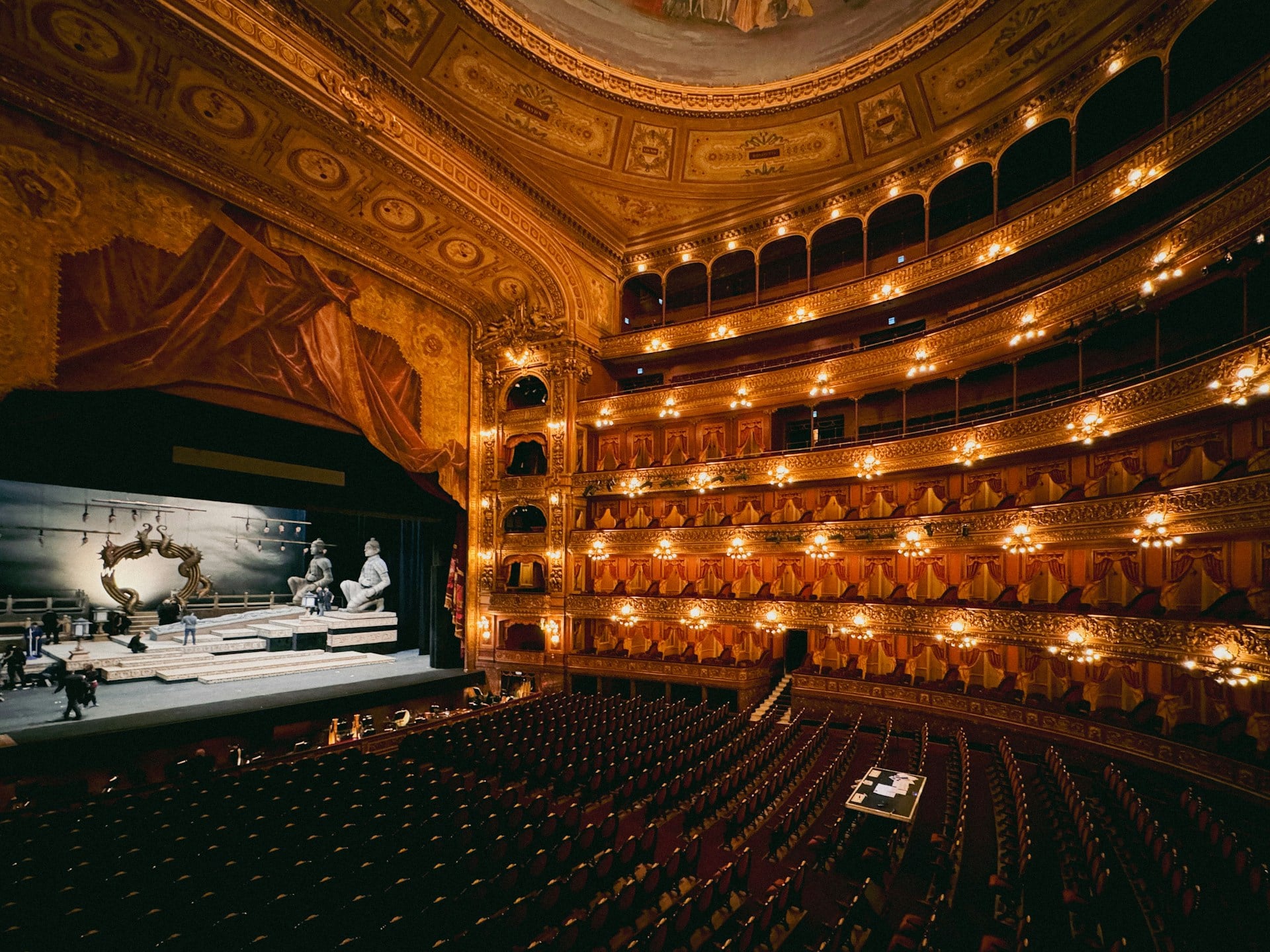
Buenos Aires built Teatro Colón to rival any opera house in Europe, and the ceiling delivers on that promise. A massive dome spans the auditorium, decorated with paintings by Argentine artist Raul Soldi that depict the history of music and theater.
The dome’s interior structure includes a complex system of acoustic chambers that help distribute sound evenly throughout the theater. The painting work took three years to complete, with Soldi working entirely from scaffolding suspended 75 feet above the theater floor.
The ceiling weighs 2,500 tons but appears to float effortlessly above the audience.
Bolshoi Theatre

Russian artisans don’t do anything halfway, which explains why the Bolshoi’s ceiling looks like someone captured a piece of the Winter Palace and suspended it above an auditorium (and considering the level of craftsmanship involved, that comparison isn’t far from accurate).
The central dome features intricate gold leaf work surrounding a massive chandelier that weighs nearly five tons, while the surrounding areas are covered in hand-painted panels that depict scenes from Russian literature and folklore — each panel requiring months of work by master painters who learned their craft through apprenticeships that lasted longer than most people spend in college.
But the real achievement isn’t the individual elements, it’s how they work together: the ceiling creates a sense of weightless grandeur that makes you feel simultaneously dwarfed by the scale and elevated by the beauty.
The theater underwent major renovation in 2011, during which every inch of the ceiling was cleaned and restored. Workers discovered original sketches hidden behind panels, providing insight into the artists’ creative process.
The renovation took six years and cost over $700 million, with much of that budget dedicated to preserving the ceiling’s original materials and techniques.
Royal Opera House

Covent Garden’s Royal Opera House ceiling feels like a conversation between eras — the original Victorian structure speaking to modern restoration techniques in a language both understand perfectly.
The floral motifs that wind across the dome aren’t just decoration; they’re a reminder that beauty can be both delicate and enduring, like certain friendships that deepen rather than fade with time.
The ceiling survived the 1990s renovation that transformed much of the building. Conservation specialists spent two years cleaning and restoring the original paintwork, using techniques developed specifically for this project.
The work revealed colors that had been hidden under decades of soot and age, bringing the ceiling back to its original vibrancy.
Margravial Opera House
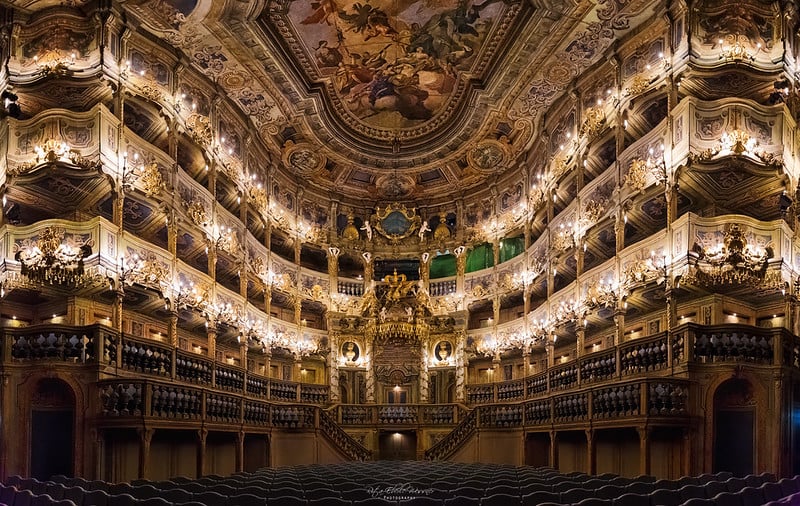
The Margravial Opera House in Bayreuth represents Baroque excess at its most unapologetic. Every surface is carved, painted, gilded, or otherwise transformed into something that catches light and holds attention.
The ceiling consists of multiple domes and arches, each decorated with different themes.
The theater was built in 1748 and remains largely unchanged. UNESCO designated it a World Heritage Site specifically because of its intact Baroque interior.
The ceiling’s design creates an acoustic environment perfectly suited to 18th-century musical performances, proving that the original architects understood both beauty and function.
Teatro Di San Carlo

Naples built Teatro di San Carlo before La Scala, making it the oldest continuously operating opera house in the world, and the ceiling reflects that historical confidence — it doesn’t need to prove anything to anyone (which, paradoxically, is what makes it so quietly impressive).
The dome features allegorical paintings surrounded by gold leaf work that seems to generate its own light, while the acoustic design creates sound distribution that many modern theaters still can’t match despite access to computer modeling and advanced materials.
So the ceiling works not because it shouts for attention, but because it earned its reputation through centuries of performances that proved its worth.
The theater has survived fires, wars, and renovations while maintaining its original ceiling structure. The most recent restoration, completed in 2008, revealed original colors that had been painted over during previous renovations.
The work required specialists in 18th-century painting techniques, some of whom were trained specifically for this project.
Fire destroyed much of the theater in 1816, but rebuilding began immediately. The new ceiling incorporated lessons learned from the fire, including improved ventilation and fire-resistant materials, while maintaining the visual design of the original.
Metropolitan Opera House

Lincoln Center’s Metropolitan Opera House features two massive lobby murals by Marc Chagall — ‘Le Triomphe de la Musique’ and ‘Les Sources de la Musique’ — mounted on the back walls of the Grand Promenade and visible through the building’s arched front windows.
Together they cover nearly 3,000 square feet.
Chagall painted the murals in France and shipped them to New York in sections. Installation required custom-designed supports that could hold the paintings while allowing for building movement.
The ceiling also includes a complex lighting system that can change the appearance of the murals throughout a performance, creating subtle shifts in mood and atmosphere.
Estates Theatre
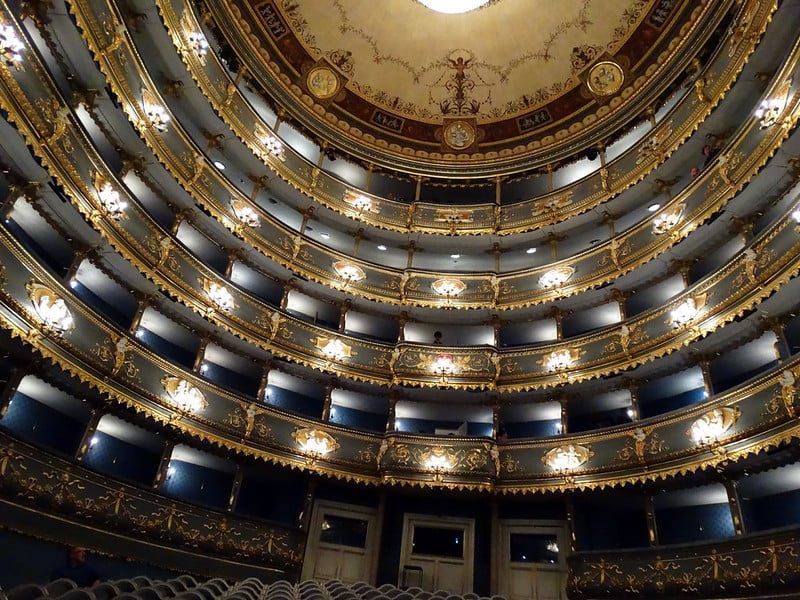
Prague’s Estates Theatre ceiling reflects the understated elegance that defines Czech architectural sensibility — no element demands attention individually, but together they create an atmosphere that feels both refined and welcoming.
The painted dome features classical motifs in muted colors that complement rather than compete with the action on stage below.
Mozart premiered Don Giovanni in this theater in 1787, and the ceiling he saw remains virtually unchanged. Recent restoration work revealed original paint layers and decorative techniques that provide insight into 18th-century theater design.
The ceiling’s acoustic properties were designed specifically for Mozart’s era of composition, creating an intimate sound environment that modern theaters struggle to replicate.
Teatro La Fenice
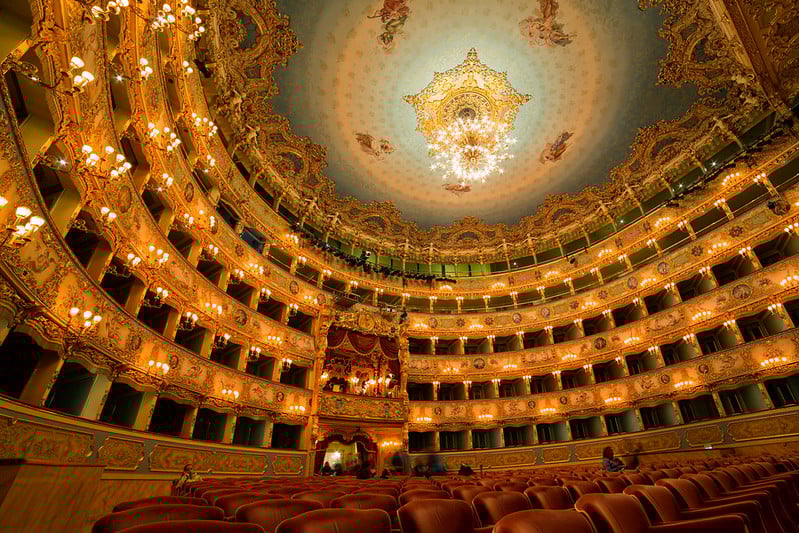
Venice rebuilt La Fenice after the 1996 fire with obsessive attention to historical accuracy (down to using the same types of wood and pigments as the original construction), but the ceiling represents the most successful part of that reconstruction effort — it manages to feel both ancient and immediate, like stepping into a perfectly preserved piece of the 18th century that somehow remained untouched by time.
The dome features intricate stucco work surrounding painted panels that depict mythological scenes, while the gold leaf application catches and reflects the theater’s lighting in ways that make the entire ceiling seem to pulse with life.
And the acoustic design, recreated using historical techniques, produces sound distribution that proves some problems were solved centuries before modern technology offered alternatives.
The reconstruction team included specialists in historical building techniques, many of whom studied surviving examples of 18th-century theater construction throughout Europe. The ceiling work alone took three years to complete, with each decorative element researched and recreated using period-appropriate materials and methods.
The original theater was built in 1792 and survived two previous fires before the 1996 blaze. Each reconstruction maintained the ceiling’s basic design while incorporating lessons learned from previous disasters, resulting in a structure that combines historical authenticity with modern safety features.
Semperoper

Dresden’s Semperoper ceiling demonstrates what happens when technical precision meets artistic ambition. The Neo-Renaissance design features multiple painted domes connected by elaborate architectural details that create visual rhythm across the entire space.
World War II bombing destroyed the original building, but reconstruction used surviving architectural drawings and photographs to recreate every detail of the ceiling. The work took 40 years to complete, with craftsmen trained in traditional techniques specifically for this project.
The result is indistinguishable from the original, proving that some forms of excellence can be recreated when dedication matches skill.
Teatro Real

Madrid’s Teatro Real ceiling spans one of the largest theater domes in Europe, featuring painted panels that tell the story of Spanish musical history. The restoration completed in 1997 revealed original details that had been hidden for decades.
The ceiling includes modern lighting and climate control systems integrated so seamlessly that they’re virtually invisible from the auditorium floor. Spanish and Italian artists collaborated on the restoration, combining expertise in historical techniques with modern conservation methods.
The project required five years and established new standards for theater restoration throughout Europe.
Hungarian State Opera House
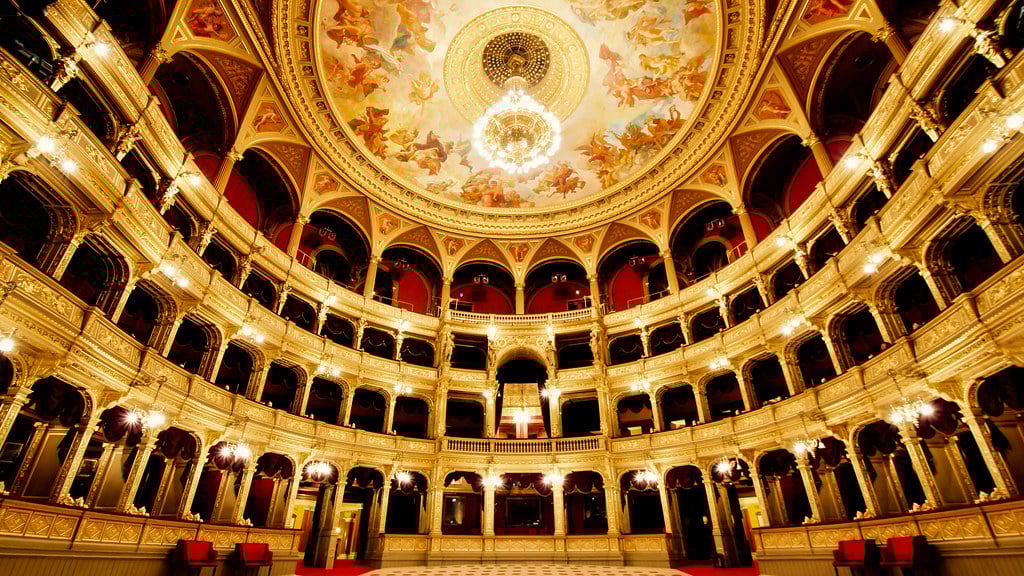
Budapest’s Hungarian State Opera House ceiling represents the pinnacle of 19th-century Hungarian artistic achievement. Károly Lotz painted the central dome with allegorical scenes celebrating music and the arts, while surrounding areas feature intricate gold leaf work and decorative plasterwork.
The theater opened in 1884 and has undergone several restorations, each revealing new details about the original construction techniques. The most recent restoration, completed in 2022, used X-ray analysis to understand the ceiling’s structural composition and ensure proper conservation methods.
The work revealed Lotz’s original sketches and color studies, providing unprecedented insight into his artistic process.
Looking Up

These ceilings remind us that humans have always understood something important about gathering spaces: the environment shapes the experience as much as the performance itself.
When architects and artists pour this much attention into what hangs above our heads, they’re making a bet that beauty matters, that the act of looking up can change how we receive what happens next.
These theaters prove that bet pays off, night after night, in cities around the world where people still dress up to sit in the dark and watch other people tell stories. The ceilings wait patiently through every intermission, ready to catch our eyes again when the lights come up.
More from Go2Tutors!

- The Romanov Crown Jewels and Their Tragic Fate
- 13 Historical Mysteries That Science Still Can’t Solve
- Famous Hoaxes That Fooled the World for Years
- 15 Child Stars with Tragic Adult Lives
- 16 Famous Jewelry Pieces in History
Like Go2Tutors’s content? Follow us on MSN.