Strange Reality TV Concepts Which Actually Aired On TV
Reality television has always pushed boundaries, but some shows have ventured into territory so bizarre that you wonder how they ever made it past the pitch meeting. These aren’t your typical dating shows or singing competitions.
These are the programs that left viewers questioning what they just witnessed and producers scrambling to explain their creative choices.
The Swan

Plastic surgery as entertainment reached its peak with this disturbing concept. Women who considered themselves unattractive underwent months of extreme makeovers, complete with multiple surgical procedures, dental work, and intensive therapy.
The twist? They couldn’t see themselves until the final reveal.
The show treated human insecurity as raw material for television drama. Contestants were isolated from mirrors and their families while surgeons reshaped their faces and bodies according to conventional beauty standards.
Joe Millionaire
A construction worker pretended to be worth fifty million dollars while twenty women competed for his affections. The deception was the entire premise — producers wanted to see if love could survive the revelation of financial fraud.
What made this concept particularly twisted was the assumption that women would only pursue wealth (which proved partially correct when most contestants fled after learning the truth, though the winner stayed and they split a genuine million-dollar prize as compensation for the elaborate lie).
The Chamber

Contestants answered trivia questions while enduring physical torture. Not metaphorical torture — actual medieval-inspired torment including extreme temperatures, electrical shocks, and psychological warfare designed to break their concentration.
The show basically asked: how much pain can someone endure for money? (And the answer, disturbingly, turned out to be quite a lot, though viewer discomfort eventually led to its cancellation after contestants suffered genuine injuries and trauma that made audiences question their own complicity in watching.)
My Monkey Baby

This documentary-style reality show followed people who treated pet monkeys like human children. Participants dressed their primates in diapers and clothing, fed them at dinner tables, and insisted the animals were their “babies.”
The show documented genuine delusion with unflinching detail. These weren’t actors or comedic performers — these were real people who had formed deeply problematic relationships with wild animals that belonged in their natural habitats, not suburban living rooms.
Temptation Island

Committed couples traveled to a tropical resort where attractive singles tried to seduce them away from their partners. The premise was simple: test your relationship by surrounding it with attractive people whose job was to destroy it.
So couples who thought they had strong relationships voluntarily entered an environment designed to exploit their weaknesses and insecurities. And producers filmed the predictable emotional carnage that followed, because nothing says entertainment quite like watching real relationships implode in real time — the kind of implosion that leaves lasting damage long after the cameras stop rolling and the tropical vacation ends.
Living With Ed

Environmental activist Ed Begley Jr. allowed cameras to document his obsessive eco-friendly lifestyle. This meant filming him as he generated his own electricity, recycled everything including greywater, and lectured his family about their carbon footprints with religious fervor.
The show revealed environmentalism as a form of domestic tyranny. Begley’s wife became a prisoner in her own home, unable to use appliances or live normally because every action was measured against its environmental impact. Viewers watched a marriage slowly suffocate under the weight of one person’s ecological anxiety.
The Real Gilligan’s Island
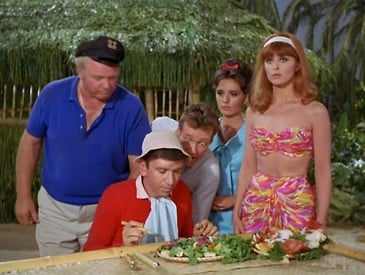
Two groups of contestants were stranded on a tropical island and forced to recreate the roles from the classic sitcom. Participants had to dress like the characters, live in replica huts, and solve problems using only items that would have existed in the original show.
The concept was television eating its own tail. Instead of creating new entertainment, producers forced real people to perform as fictional characters who were already performing as caricatures of human behavior, creating layers of artificial performance that made genuine human interaction nearly impossible.
Kid Nation

Forty children aged eight to fifteen were abandoned in a ghost town and told to create their own society without adult supervision. They had to establish government, assign jobs, and solve conflicts while cameras documented their Lord of the Flies experiment.
This wasn’t summer camp with counselors nearby. These children were genuinely isolated and forced to make adult decisions about resource allocation, justice, and social hierarchy. The show treated childhood as a laboratory experiment in social development.
There’s Something About Miriam

Six men competed for the affections of a beautiful woman named Miriam without knowing she was transgender. The deception continued for weeks while producers filmed the men falling for someone whose identity was being deliberately concealed from them.
The reveal was treated as a punchline rather than a moment requiring sensitivity or understanding. The show exploited both transgender identity and male insecurity for cheap shock value, turning serious issues of gender and attraction into reality television fodder.
The Will

A deceased billionaire’s family competed in challenges to determine who would inherit his fortune. Relatives performed tasks designed to prove their worth while lawyers observed and judged their character based on their willingness to humiliate themselves for money.
But the billionaire wasn’t actually dead — he was watching from a secret location, evaluating his family’s behavior when they thought he was gone. So this was a show about faking death to manipulate your relatives, which crosses several lines simultaneously and makes you wonder about the psychological health of everyone involved, including the viewers who found this entertaining enough to keep watching week after week.
The Pickup Artist

Socially awkward men received coaching from a self-proclaimed seduction expert who taught them manipulation techniques disguised as confidence-building. Students learned to use psychological tricks and emotional manipulation to attract women who wouldn’t normally be interested in them.
The show treated human connection as a series of techniques to be mastered rather than genuine compatibility to be discovered. Women became targets rather than people, and romance became a game where deception was not only acceptable but encouraged as a valid strategy for finding love.
Shattered

Contestants stayed awake for seven days straight while competing in physical and mental challenges. Sleep deprivation was the entire concept — producers wanted to document what happened to human behavior when one of our most basic needs was deliberately denied.
Participants hallucinated, became emotionally unstable, and made decisions that compromised their health and safety. The show basically documented controlled torture and called it entertainment, raising questions about what audiences would accept in the name of competition-based television.
Dating In The Dark

Singles met and formed connections in complete darkness, unable to see each other’s physical appearance. After developing emotional bonds, they had to decide whether to continue the relationship once the lights came on and physical attraction entered the equation.
The concept sounds romantic until you realize it was designed to expose human shallowness rather than celebrate emotional connection. Producers were betting that most couples would reject each other based on appearance alone, and they were usually right, which made for depressing television about the superficial nature of modern romance.
The Reality Of It All

These shows existed because audiences watched them. Each bizarre concept was someone’s attempt to find the next level of human drama that hadn’t been exploited yet.
They represent television’s willingness to mine any aspect of human experience for entertainment value, regardless of the psychological cost to participants or the broader cultural implications of turning personal struggles into public spectacle.
More from Go2Tutors!

- The Romanov Crown Jewels and Their Tragic Fate
- 13 Historical Mysteries That Science Still Can’t Solve
- Famous Hoaxes That Fooled the World for Years
- 15 Child Stars with Tragic Adult Lives
- 16 Famous Jewelry Pieces in History
Like Go2Tutors’s content? Follow us on MSN.