Strange Things Found Inside Famous Pyramids
When most people picture Egyptian pyramids, they imagine gold treasures and mummy-filled chambers straight out of an adventure movie.
The reality turns out to be far more bizarre.
Archaeologists have uncovered everything from mysterious texts about cannibalism to the bones of animals that definitely shouldn’t have been there.
These ancient structures have yielded discoveries that continue to baffle researchers and challenge what we thought we knew about the pharaohs.
Here is a list of strange things found inside famous pyramids.
The Cannibal Hymn

Deep within the pyramid of Unas, the last ruler of Egypt’s Fifth Dynasty, archaeologists discovered one of the most disturbing texts ever carved into ancient stone.
The inscriptions describe the deceased pharaoh hunting down gods, slaughtering them like cattle, and literally eating their organs to absorb their divine powers.
The text gets shockingly graphic, mentioning severed body parts and the god Khons slitting throats on command.
This wasn’t some horror story meant to scare people—it was part of the sacred Pyramid Texts designed to help the king reach the afterlife.
Modern scholars believe the hymn is purely metaphorical, but it remains the most unsettling piece of ancient Egyptian literature ever found.
Bull Bones in a Royal Tomb

When Italian explorer Giovanni Belzoni finally broke into Khafre’s pyramid in 1818, he expected to find the pharaoh’s mummy surrounded by treasure.
Instead, he discovered something completely unexpected inside the granite sarcophagus—the bones of a bull.
Not human remains, not gold, just animal bones sitting where a king should have been buried.
Nobody knows how they got there or why someone would place them in such a sacred spot.
The mystery deepens because the pyramid had clearly been robbed long before Belzoni arrived, yet someone took the time to leave behind these strange skeletal remains as if they had some unknown significance.
A 142-Foot Wooden Ship

In 1954, archaeologist Kamal el-Mallakh was clearing rubble near the Great Pyramid when he stumbled upon something extraordinary—a sealed pit containing a disassembled ship made of Lebanese cedar.
The vessel measured an impressive 142 feet long and had been carefully taken apart into 1,224 pieces, then laid out in a pattern that showed how it should be reassembled.
What makes this discovery truly strange is that the boat shows signs of having been used in water, despite being buried in the desert.
Some researchers think it carried Khufu’s body to his final resting place, while others believe the pharaoh himself sailed it during religious pilgrimages.
The craftsmanship is so precise that experts say it could still float today.
Three Mysterious Objects That Keep Disappearing

The Dixon Relics might be the most frustrating discovery in pyramid history.
Explorer Waynman Dixon found just three items in the Queen’s Chamber of the Great Pyramid in 1872—a copper hook, a granite sphere, and a short wooden rod.
These are the only objects ever recovered from inside one of the Seven Wonders of the Ancient World, which makes them incredibly significant.
The problem is they kept vanishing.
The artifacts disappeared for nearly a century before turning up again in 1972, only to disappear once more.
The wooden rod is still missing today.
Theories about their purpose range from construction tools dropped by accident to ritual objects with magical significance, but nobody really knows what they were for.
A Hidden Chamber the Size of an Airplane
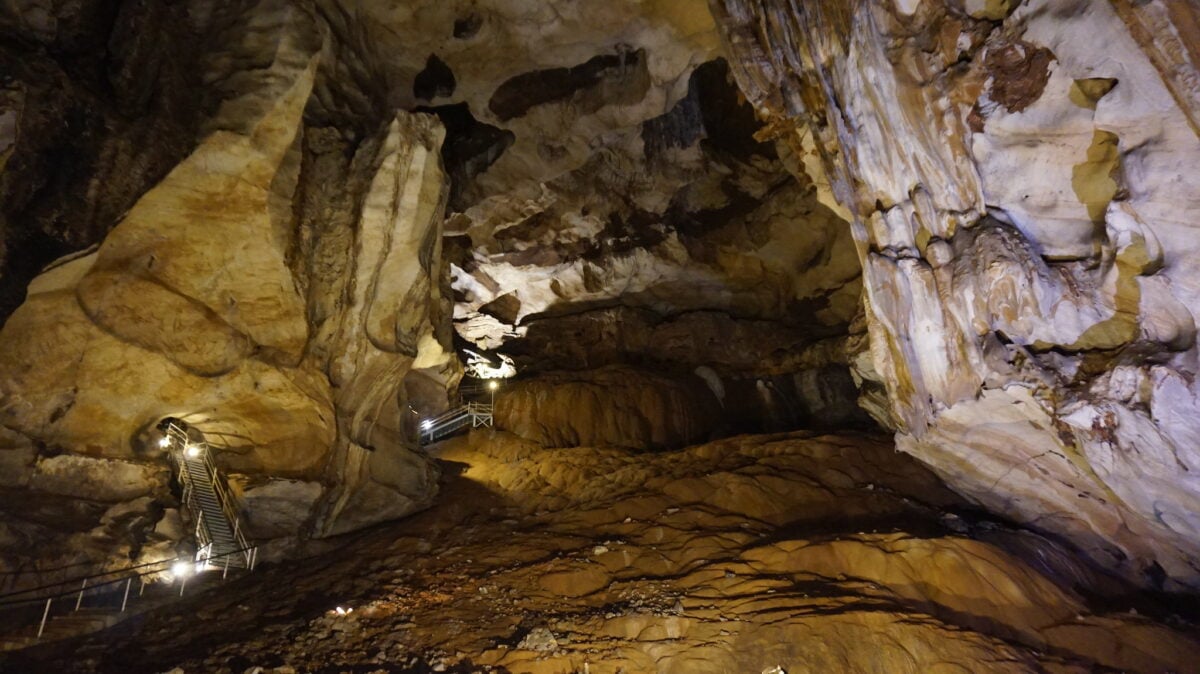
Using technology that sounds like science fiction, researchers discovered a massive void inside the Great Pyramid in 2017 without digging a single pit.
They used muon tomography—basically tracking cosmic rays that pass through the pyramid—to detect empty spaces.
The results revealed a chamber at least 100 feet long sitting above the Grand Gallery, roughly the size of a passenger jet.
The discovery sent shockwaves through the archaeological community because nobody had detected it in thousands of years of exploration.
The real mystery is what’s inside, since there’s currently no way to access it without potentially damaging the pyramid’s structure.
A Dog’s Elaborate Funeral

Ancient Egyptians loved their pets, but one dog named Abuwtiyuw received treatment that would make most modern pet owners jealous.
A limestone tablet discovered near the Great Pyramid in 1935 describes how a pharaoh ordered that this royal guard dog be given a coffin from the treasury, fine linen, incense, perfumed ointment, and even a proper tomb built by professional masons.
This wasn’t normal—such elaborate burials were usually reserved for nobles and high-ranking officials.
The inscription makes it clear the pharaoh wanted Abuwtiyuw honored before Anubis, the jackal-headed god of the afterlife.
The actual grave has never been found, but the tablet proves that at least one dog in ancient Egypt lived better than most humans.
Ancient Office Documents

When illegal excavators stumbled upon fragmentary papyri in 1893, they had no idea they’d found the most important administrative documents from Egypt’s Old Kingdom.
The Abusir Papyri turned out to be ancient office records detailing the boring but essential work of running a mortuary temple—duty rosters for priests, equipment inventories, and daily offering lists.
What makes them strange is that they survived at all.
These weren’t grand religious texts or royal decrees; they were basically ancient spreadsheets.
Yet they provide an incredibly detailed glimpse into how the temple economy functioned, proving that even 4,500 years ago, somebody had to keep track of who showed up for work and what supplies were running low.
Underground Structures Nobody Can Explain
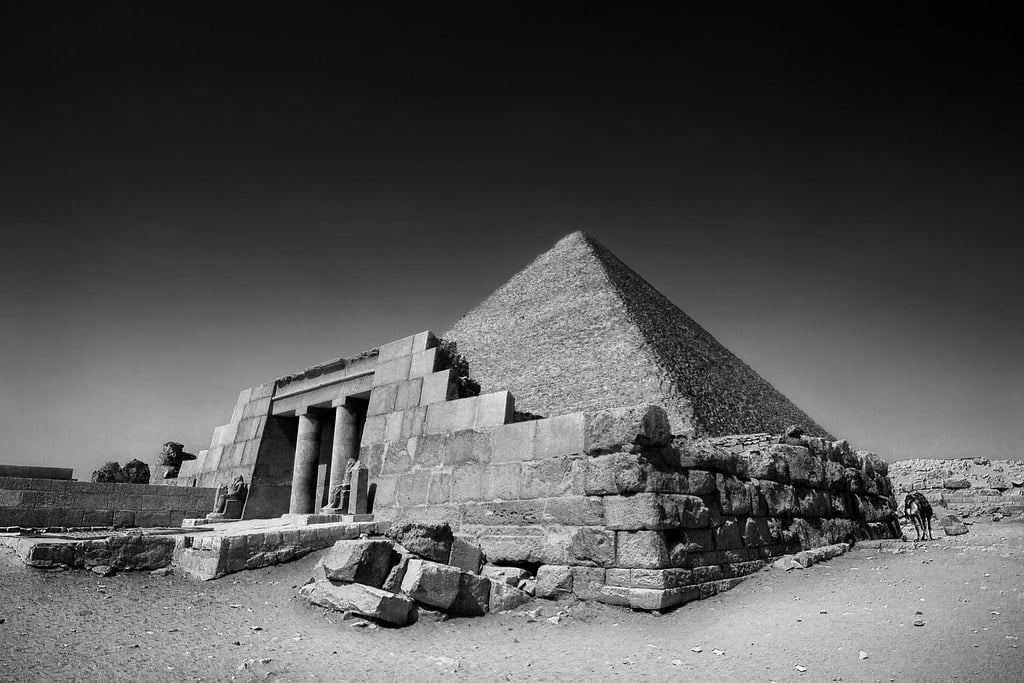
In 2024, archaeologists using ground-penetrating radar discovered an L-shaped structure buried beneath the sand near the Great Pyramid.
The strange formation appears to connect to something deeper underground, possibly serving as an entrance to a hidden chamber.
The shallow part was deliberately filled with sand after construction, suggesting the ancient Egyptians wanted to conceal it.
This discovery joins a growing list of mysterious underground anomalies detected around Giza, including what some researchers controversially claim could be extensive tunnel systems.
The problem is that nobody can investigate these findings without major excavation, so they remain tantalizingly out of reach.
Construction Logbooks from 4,500 Years Ago

Finding any papyrus from ancient Egypt is rare.
Finding papyrus that describes building the Great Pyramid is extraordinary.
The Wadi el-Jarf papyri, discovered in 2013 in caves near the Red Sea, contain the journal of an inspector named Merer who led a crew of 200 workers.
He documented in half-day increments how his team transported limestone from the Tura quarries up the Nile to Giza during the final year of Khufu’s reign.
The texts even mention reporting to Ankhhaf, Khufu’s half-brother, who oversaw construction.
These logbooks provide the closest thing we have to a first-hand account of pyramid building, yet they raise as many questions as they answer about the actual construction methods used.
Workers’ Graffiti Hidden in Plain Sight

While exploring areas above the King’s Chamber in the Great Pyramid, archaeologist Howard Vyse discovered something unexpected—graffiti left by the construction crews.
The ancient workers had scrawled their team names, measurements, and marks on blocks that would be sealed inside the pyramid forever.
These weren’t formal inscriptions meant for posterity; they were the equivalent of modern construction workers signing their work.
Some marks identify specific work gangs, while others seem to be simple tallies or jokes between colleagues.
The informal nature of these writings provides a rare glimpse into the lives of ordinary people who built these monuments, humanizing what seems like an impossible feat of engineering.
The Khafre Enthroned Statue
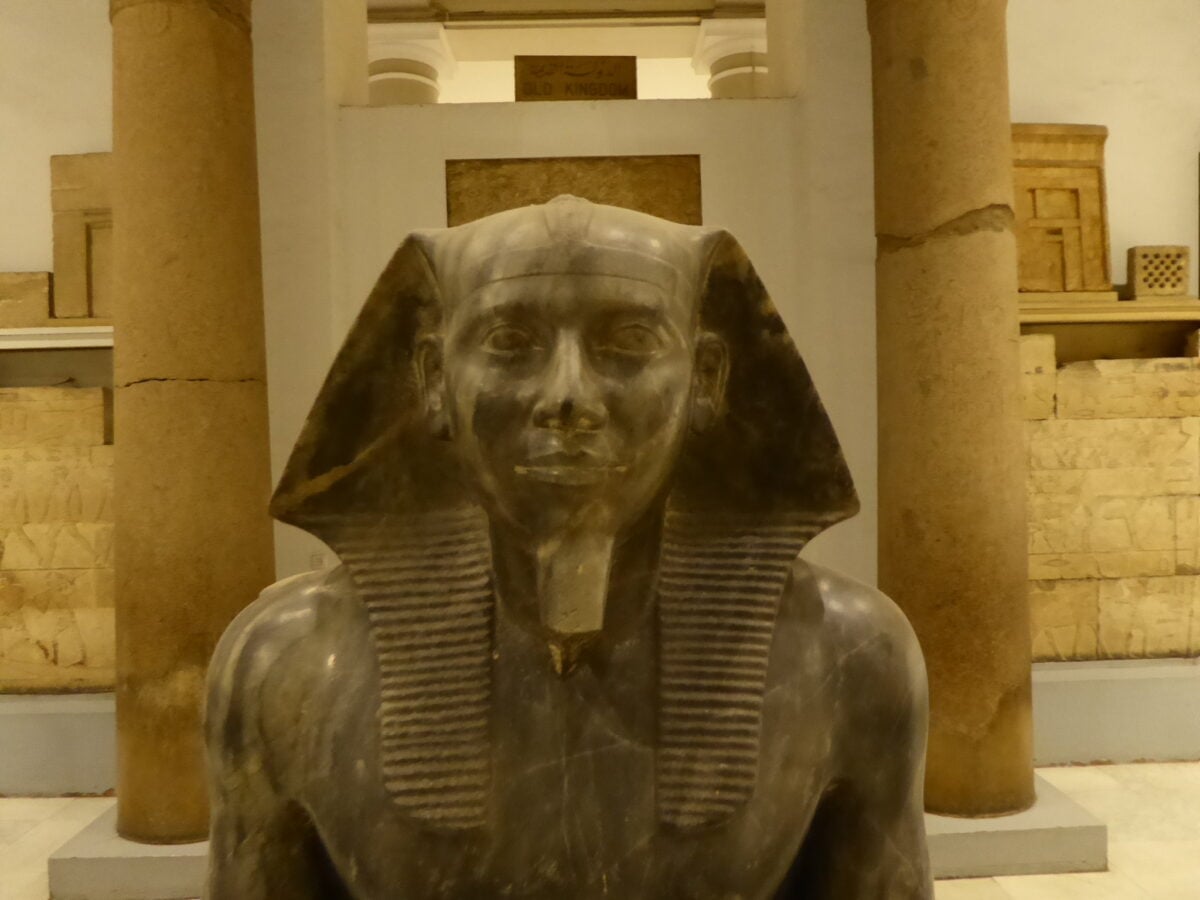
When Auguste Mariette cleared out Khafre’s valley temple in 1858, he discovered a life-sized statue carved from a single block of diorite—one of the hardest stones available to ancient sculptors.
The statue shows Khafre sitting on a throne with the falcon god Horus protecting his head, and the level of detail is astonishing considering the tools available at the time.
What makes this find strange is that diorite is incredibly difficult to carve, requiring enormous skill and patience.
The ancient craftsmen managed to create smooth curves, intricate patterns, and realistic facial features using primarily copper tools and sand.
The statue’s near-perfect condition after more than 4,500 years makes it one of the finest examples of Old Kingdom sculpture.
Empty Stone Boxes

Perhaps the strangest thing about pyramid discoveries is what wasn’t found—the pharaohs themselves.
In pyramid after pyramid, archaeologists have discovered magnificent granite and limestone sarcophagi that should contain royal mummies.
Instead, they found them empty, their lids broken or missing entirely.
These massive stone coffins were carved with incredible precision, fitted so perfectly that you can barely slip paper between the lid and base.
Yet somebody went to enormous trouble to break into sealed chambers and remove the contents thousands of years ago.
The question of whether the pharaohs were ever actually placed in these tombs or moved elsewhere before looters arrived remains one of Egyptology’s enduring mysteries.
Strange Sounds in the Grand Gallery

Visitors and researchers have long noticed something unusual about the acoustics inside the Great Pyramid’s Grand Gallery.
The corbeled ceiling creates a distinctive resonance that causes sounds to echo and reverberate in ways that feel almost otherworldly.
When people speak or make noise in this space, the acoustic properties amplify and transform the sounds in peculiar ways.
Some researchers believe the ancient Egyptians intentionally designed these acoustic effects, suggesting they understood sound’s impact on human psychology.
Others think it’s an accidental byproduct of the architectural design.
Either way, the eerie auditory experience adds another layer of mystery to a structure that continues to confound modern engineers.
A Pharaoh’s Severed Hand

When Czech archaeologists excavated the unfinished pyramid of Neferefre in the 1970s, they made a gruesome discovery—the mummified left hand of the young pharaoh.
That’s all that remained of his body, along with a few other skeletal fragments.
The rest of his mummy had been destroyed or stolen over the millennia.
What makes this find particularly poignant is that forensic analysis showed Neferefre died at only 22 or 23 years old, never seeing his pyramid completed.
His mortuary temple was hastily finished in mudbrick after his death, and workers apparently scrambled to preserve what they could of his remains.
The single preserved hand serves as a haunting reminder of a life and reign cut tragically short.
Wooden Boats in Storage Rooms

While excavating Neferefre’s mortuary temple, archaeologists found two wooden funerary boats that had been carefully placed in storage magazines.
These weren’t full-sized vessels like Khufu’s solar boat, but they were still substantial models meant to help the deceased pharaoh navigate the waters of the afterlife.
What’s strange is their location—tucked away in supply rooms rather than placed in prominent ceremonial positions.
The boats came with thousands of carnelian beads that likely once adorned them, suggesting they were valuable ritual objects rather than simple models.
Their discovery in such mundane storage spaces hints at the hasty nature of Neferefre’s burial preparations and the practical challenges of completing a pharaoh’s funeral complex when he dies unexpectedly young.
Echoes of Ancient Labor

The strange discoveries inside pyramids tell a story far different from the treasure-filled tombs we imagine.
These findings reveal a civilization that valued written records, honored their pets, invested enormous effort in symbolic boats and texts, and left behind puzzles that still challenge our understanding today.
From mysterious voids detected by cosmic rays to ancient office paperwork that survived 4,500 years, each discovery adds another piece to an incomplete picture.
The real treasure isn’t gold or jewels—it’s the glimpse these artifacts provide into the minds of people who built monuments designed to last forever.
More from Go2Tutors!

- The Romanov Crown Jewels and Their Tragic Fate
- 17 Halloween Costumes Once Considered Taboo
- Famous Hoaxes That Fooled the World for Years
- 15 Child Stars with Tragic Adult Lives
- 16 Famous Jewelry Pieces in History
Like Go2Tutors’s content? Follow us on MSN.