The 15 Most-Spoken Languages in the World
Figures reveal who’s strong, where folks moved, and what shaped the past. Counting speakers shows old empires, paths traders took, and whose culture stuck around over time.
A few tongues grew by force. While some rode along with shopkeepers or preachers.
A handful just held on even as kingdoms nearby fell apart – today’s widely spoken tongues show now-day forces at play along with old traces that stick around.
English

Over 1.5 billion people speak English, though only about 400 million claim it as their first language. The rest learned it because they had to—for business, travel, education, or survival in a globalized economy.
English dominates international aviation, scientific publishing, and the internet. It’s the default language when people from different countries need to communicate.
British colonialism planted English on every continent. American cultural and economic dominance in the 20th century cemented its status.
Now English exists in countless varieties—Indian English, Nigerian English, Singaporean English—each with distinct vocabulary and grammar. The language continues spreading not through military force but through economics and digital culture.
Mandarin Chinese

Mandarin Chinese claims around 1.14 billion speakers, mostly concentrated in China. The language serves as the official tongue of the world’s most populous nation and ties together a country with hundreds of local dialects.
When people say they’re learning Chinese, they usually mean Mandarin. The Chinese government promoted Mandarin as the standard language to unify the country.
In schools, on television, and in government, Mandarin replaced regional languages. This policy worked.
Now most Chinese people under 50 can speak Mandarin regardless of their home dialect. As China’s economy grew, so did global interest in the language.
Students worldwide now study Mandarin, betting on China’s continued importance.
Hindi

Hindi reaches about 609 million speakers in India and the Indian diaspora. India designated Hindi as an official language alongside English, though the country recognizes 22 scheduled languages.
In northern and central India, Hindi dominates daily life, Bollywood films, and popular music. The language shares deep connections with Urdu, spoken primarily in Pakistan.
Hindi and Urdu speakers can often understand each other in conversation, though the written forms use different scripts. Hindi uses Devanagari, while Urdu uses a modified Arabic script.
Politics keeps them separate, but linguistically they overlap significantly.
Spanish

Spanish connects roughly 560 million speakers across Spain, Latin America, and growing populations in the United States. Colonial expansion carried Spanish to the Americas in the 15th and 16th centuries.
Now it thrives far from its European origins. Mexican Spanish, Argentine Spanish, and Castilian Spanish differ in pronunciation, slang, and even grammar.
But speakers from different regions understand each other without much difficulty. Spanish remains one of the easiest languages for English speakers to learn, and its growing demographic weight in North America makes it increasingly practical.
French

About 280 million people speak French, with significant populations in France, Canada, West Africa, and parts of the Caribbean. French spread through colonial empires in Africa and Southeast Asia.
After independence, many former colonies kept French as an official language because it provided a neutral option among multiple local languages. French holds special status in international diplomacy and remains an official language of the United Nations, the European Union, and countless international organizations.
The language’s prestige often exceeds its raw number of speakers, a remnant of France’s cultural and political influence.
Arabic
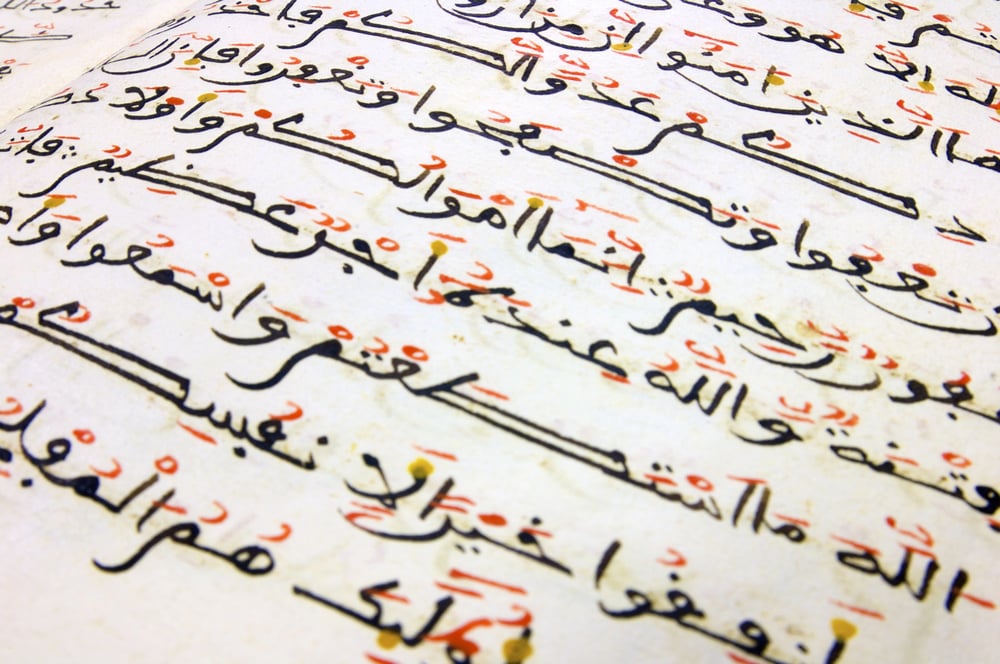
Arabic reaches approximately 420 million speakers across the Middle East and North Africa. The language comes in two main forms: Modern Standard Arabic, used in formal settings and media, and numerous regional dialects used in daily conversation.
A speaker of Egyptian Arabic and a speaker of Moroccan Arabic might struggle to understand each other but can communicate in the standard form. Islam’s spread carried Arabic across continents.
The Quran’s importance in Islamic practice means millions of Muslims worldwide study Arabic regardless of their native tongue. The language’s religious significance ensures its continued influence far beyond Arab countries.
Bengali

Bengali speakers number around 273 million, concentrated in Bangladesh and the Indian state of West Bengal. Despite this massive speaker population, Bengali receives less global attention than languages with smaller populations but greater economic power.
The language has a rich literary tradition. Rabindranath Tagore, who wrote in Bengali, won the Nobel Prize in Literature in 1913.
Bengali identity runs deep, and in 1952, protests over language rights in what was then East Pakistan eventually contributed to Bangladesh’s independence movement. Language and nationalism remain intertwined in Bengali-speaking regions.
Russian

Russian claims about 260 million speakers, spread across Russia, former Soviet republics, and diaspora communities. Soviet expansion made Russian the lingua franca of Central Asia and Eastern Europe.
Even after the USSR collapsed, Russian persists as a common language in the region. The language uses the Cyrillic alphabet, which creates an immediate barrier for speakers of Latin-script languages.
Russian grammar features six cases, three genders, and aspects of verbs that native English speakers find challenging. Still, Russia’s geographic size and political influence keep Russian relevant on the world stage.
Portuguese

Portuguese reaches roughly 264 million speakers, primarily in Brazil, Portugal, and former Portuguese colonies in Africa. Brazil’s massive population dominates the numbers.
Brazilian Portuguese differs noticeably from European Portuguese in pronunciation and vocabulary, but speakers from both sides of the Atlantic understand each other. Portugal’s relatively small size belies its historical impact.
Portuguese explorers established colonies across the globe. In countries like Angola, Mozambique, and East Timor, Portuguese remains an official language, though local languages often dominate daily life.
Urdu
Urdu speakers number approximately 232 million, mostly in Pakistan and India. Pakistan designated Urdu as its national language to provide a unifying tongue for a country with many linguistic groups.
In India, Urdu remains important in certain regions and communities. The language’s close relationship with Hindi creates ongoing debate about where one ends and the other begins.
In practice, Urdu incorporates more Persian and Arabic vocabulary, while Hindi draws more from Sanskrit. Politics and identity drive much of the distinction between them.
Indonesian

Indonesian connects about 199 million speakers across Indonesia’s thousands of islands. The government promoted Indonesian as a unifying language for a diverse archipelago nation.
Most Indonesians speak regional languages at home but use Indonesian for education, government, and formal communication. The language evolved from Malay and uses a Latin script that makes it relatively accessible to Western learners.
Indonesian grammar is simpler than many Asian languages—no verb conjugations, no noun genders, and a straightforward structure. This simplicity helped it spread as a national language.
German

German reaches around 134 million speakers in Germany, Austria, Switzerland, and parts of Eastern Europe. The language once held greater international significance, particularly in science and philosophy.
German universities attracted scholars worldwide, and German was essential for anyone studying certain academic fields. World War II damaged German’s international prestige, and English increasingly replaced it in scientific publishing.
Still, Germany’s economic strength within Europe ensures German remains important for business and trade. The language’s reputation for precision and compound words continues to fascinate learners.
Japanese

Japanese speakers number about 125 million, almost entirely within Japan. Unlike languages that spread through colonization or migration, Japanese remains concentrated in its country of origin.
Japan’s economic rise in the 20th century sparked international interest in the language. Japanese presents unique challenges.
The language uses three writing systems—hiragana, katakana, and kanji—and features levels of politeness built into grammar. This complexity limits its spread as a second language.
Most Japanese speakers learn it because they live in Japan or have Japanese heritage.
Swahili

Swahili connects roughly 87 million speakers across East Africa, serving as a lingua franca in Tanzania, Kenya, Uganda, and parts of the Democratic Republic of Congo. The language evolved from centuries of trade along the East African coast, blending Bantu languages with Arabic and other influences.
Tanzania promoted Swahili as a unifying national language, and it succeeded. The language bridges numerous ethnic groups and facilitates communication across the region.
The African Union recognized Swahili as an official working language, raising its continental profile.
Voices Across Borders

These fifteen tongues cover countless chats going on today. Some expanded thanks to power moves and cash flow.
Meanwhile, a handful hung on even when people tried to erase them. A couple stay rooted in one spot, yet some leap borders fast.
Their order changes as folks multiply or move, markets boom or crash, nations shrink or stretch. Picking up one of these tongues leads to people, books, or ideas hard to capture in another tongue.
Stats count – but they miss some truth. One speech used by a hundred million folks might not beat a ten-million-user one.
What counts is your goal, your destination, or whose words you aim to grasp. The world isn’t driven by lists or scores – instead, it moves through countless small moments when folks wrestle with words, push toward goals, yet still show up the next day hoping to do better.
More from Go2Tutors!

- The Romanov Crown Jewels and Their Tragic Fate
- 13 Historical Mysteries That Science Still Can’t Solve
- Famous Hoaxes That Fooled the World for Years
- 15 Child Stars with Tragic Adult Lives
- 16 Famous Jewelry Pieces in History
Like Go2Tutors’s content? Follow us on MSN.



