Things People Memorize Without Understanding Why
It might be something you’ve said again and again without thinking. Strings of words, patterns, codes memorized long ago, trusted every time.
When it mattered, they did what was needed cleared the exam, unlocked the door, moved you forward at the register. Yet if you stop now and wonder why they look exactly like that, things start to blur.
One reason we remember certain details becomes clear right away. Knowing your phone number lets others reach you.
A home address guides packages to the correct spot. Yet some facts live in a fog familiar, but their purpose unclear.
Origins mysterious. When answers do show up, they catch longtime users off guard.
PEMDAS

Math teachers drill this acronym into students from elementary school onward. Please Excuse My Dear Aunt Sally.
Parentheses, Exponents, Multiplication, Division, Addition, Subtraction. The order of operations.
You solve equations following this sequence, and you get the right answer. But why this order.
Why not addition before multiplication. The actual reason is mathematical convention, not mathematical law.
Mathematicians centuries ago needed consistency when writing equations, so they agreed on rules. The order makes certain expressions simpler to write, but it’s ultimately arbitrary a shared language decision rather than a fundamental truth about numbers.
Students memorize PEMDAS as if it’s a natural property of mathematics, like gravity is a natural property of physics. They don’t learn it’s a convention that could have been different.
Other cultures have used different notation systems throughout history. The rules matter because everyone agrees to follow them, not because they’re the only possible way to organize mathematical operations.
Teachers rarely explain this. Students memorize the acronym, apply the rules, and move forward thinking they’ve learned something absolute about how math works.
The distinction between convention and necessity gets lost.
“I” Before “E” Except After “C”
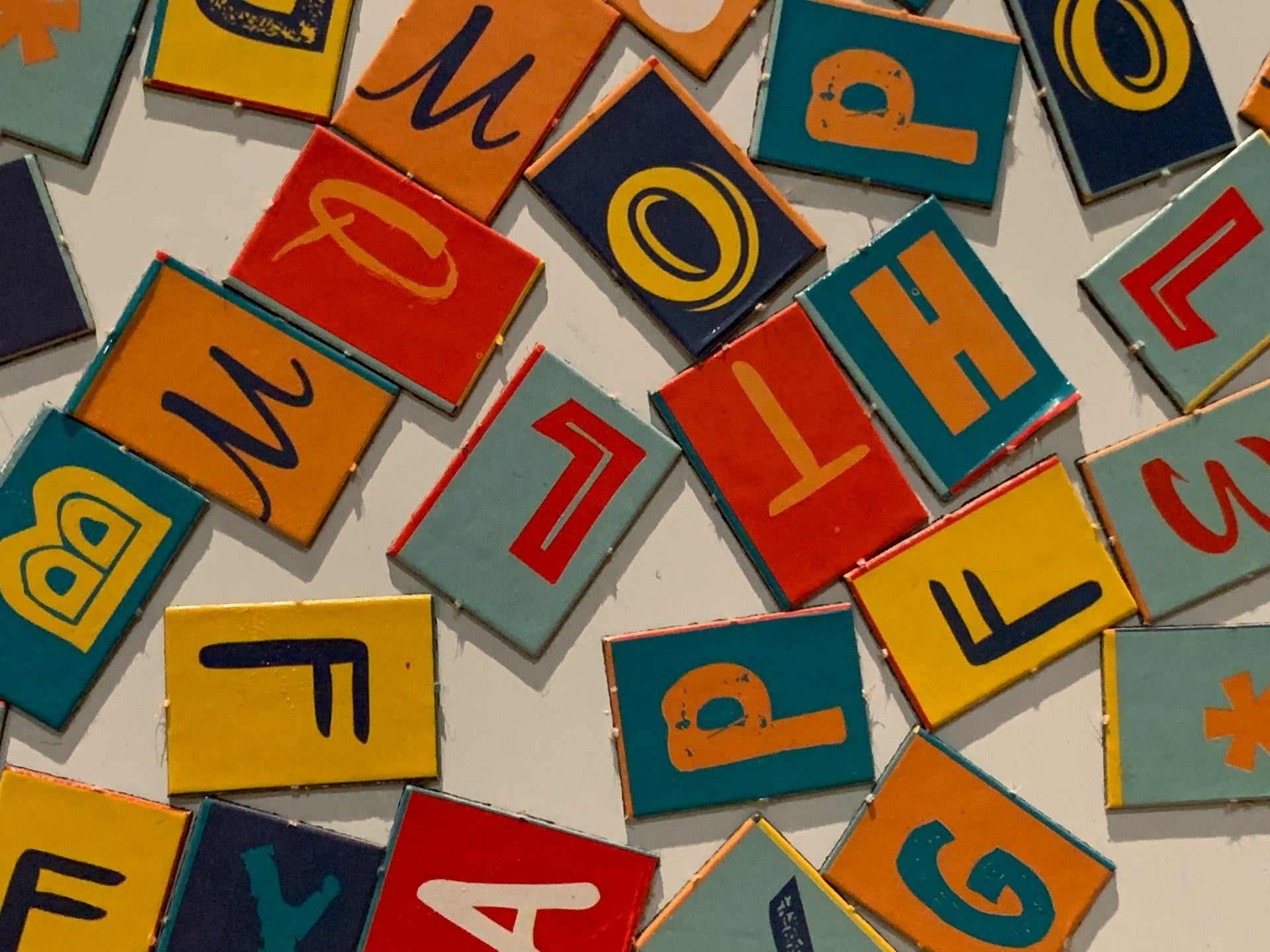
Spelling teachers love this rule. It’s simple, memorable, and helps with dozens of common words.
Believe, achieve, receive, deceive. The pattern seems solid until you start noticing exceptions.
Weird. Science. Sufficient. Neighbor.
Either. Protein. Seize.
The rule has so many exceptions that some linguists argue it causes more confusion than it prevents, though this depends on which version of the rule is taught and how strictly it’s applied. English spelling reflects the language’s messy history words borrowed from French, German, Latin, Greek, and other languages, each bringing its own patterns.
The “i before e” rule was created to help beginning readers and writers, but it oversimplifies a complex system. English spelling isn’t governed by tidy rules.
It’s an accumulation of historical accidents, borrowing, and gradual changes in pronunciation that the spelling didn’t always follow. Students memorize the rule and get confused when it doesn’t work.
Teachers add caveats except after c, or when sounding like ‘a’ as in neighbor and weight but even the expanded version fails constantly. The rule persists because it’s catchy and helps with some words, not because it accurately describes English spelling patterns.
The Alphabet Song

You learned your ABCs to the tune of “Twinkle, Twinkle, Little Star.” So did nearly everyone else in English-speaking countries.
The melody is so connected to the alphabet that most people can’t recite the letters at normal speed without mentally singing the tune. Why do we put the alphabet in this order.
Ancient Phoenician scribes established the sequence thousands of years ago, and subsequent alphabets Greek, Latin, and eventually English kept the same basic order. There’s no logical reason A comes before B, or M before N.
The sequence is pure historical accident. The alphabetical order matters for filing systems, dictionaries, and databases.
We need a shared sequence so everyone can find things in the same place. But the specific order is arbitrary.
We could reorganize the entire alphabet tomorrow and, after an adjustment period, everything would work just as well. Children memorize the alphabet as their first major educational achievement.
They learn to recite it before they understand what letters do or why alphabetical order helps organize information. The tune makes memorization easier, but it also locks the arbitrary sequence into a form that’s hard to separate from the melody.
ROY G. BIV

Red, orange, yellow, green, blue, indigo, violet. The colors of the rainbow, wrapped up in a friendly acronym.
Science classes teach this as a fundamental fact about light and color. But rainbows don’t actually have seven distinct bands.
Isaac Newton divided the spectrum into seven colors because he believed seven was a perfect number with mystical significance. He wanted to match the seven notes in a musical scale.
The human eye sees a continuous spectrum light smoothly transitions from red wavelengths to violet wavelengths without clear boundaries. Indigo especially is questionable.
Most people can’t reliably distinguish indigo from blue or violet when looking at a rainbow or spectrum. Newton included it to get to seven colors.
Different cultures divide the color spectrum differently. Some languages don’t distinguish between blue and green.
Others have separate words for light blue and dark blue that English speakers consider the same color. Students memorize ROY G. BIV thinking they’re learning about how light works.
They’re actually learning Newton’s historically influenced interpretation of the spectrum. The memorization is useful for communicating with others who learned the same system, but it doesn’t reflect an objective truth about color.
Thirty Days Hath September

April, June, and November. All the rest have thirty-one, except February, which has twenty-eight, or twenty-nine in leap years.
The rhyme helps people remember which months have how many days. The irregularity of month lengths comes from Roman calendar politics.
Julius Caesar reformed the calendar, and later Augustus Caesar made adjustments. Both wanted months named after them to have 31 days, so days got moved around.
February got shortchanged because it was considered unlucky. There’s no astronomical reason for months to have different lengths.
A calendar could divide the year into twelve equal months of 30 days, with five or six extra days added at year’s end. Some proposed calendar reforms have tried this.
But changing calendars is enormously difficult because so much infrastructure depends on the current system. People memorize the rhyme without knowing it preserves the ego of dead emperors.
The month lengths are historical artifacts, not natural divisions of time. Everyone learns which months are short or long, but few people learn why the system works this way or that alternatives could function just as well.
Every Good Boy Does Fine
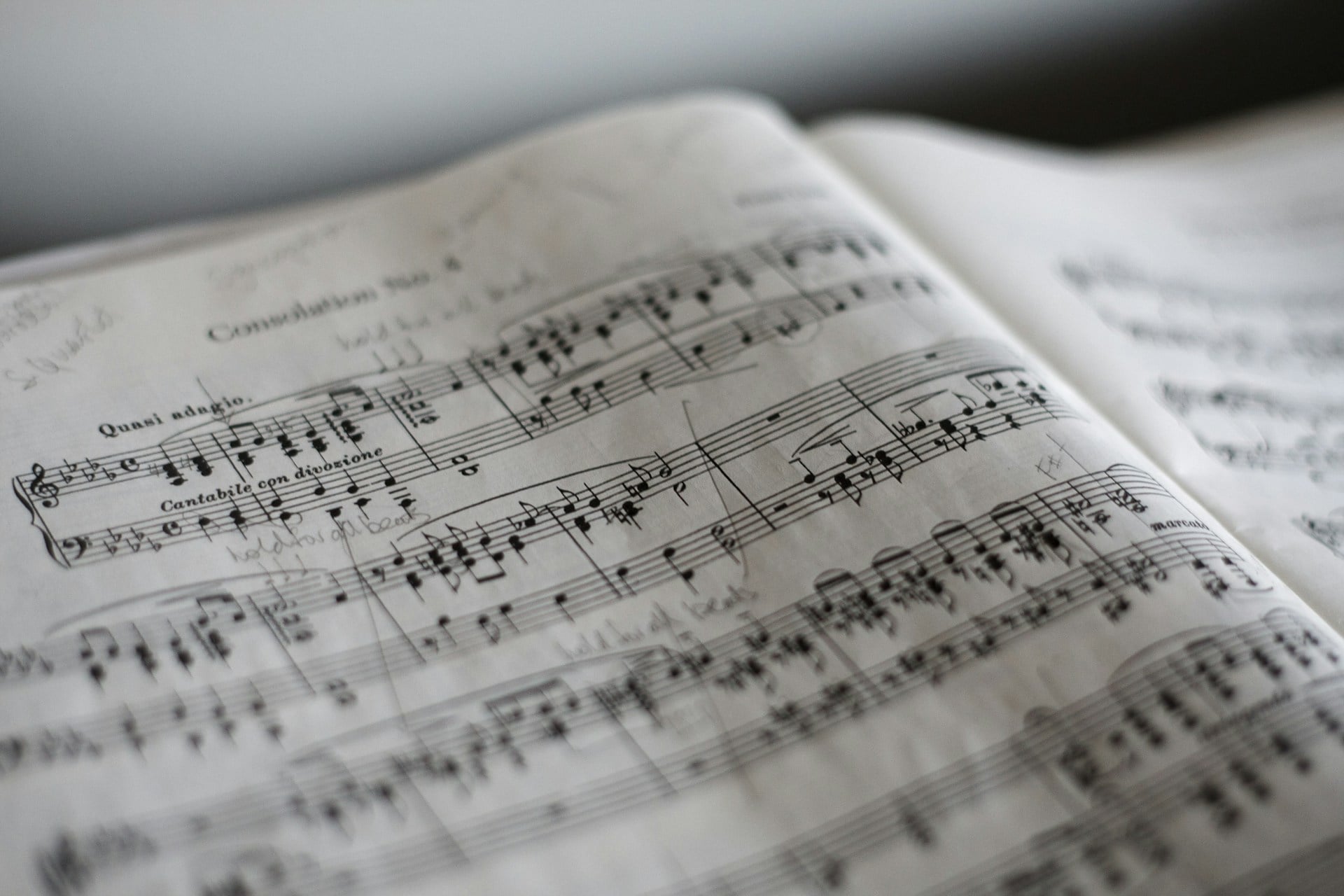
Music students memorize this phrase to remember the lines on the treble clef E, G, B, D, F. The spaces spell FACE.
These mnemonics help beginning musicians read sheet music. Musical notation developed over centuries.
The five-line staff, the placement of notes, the symbols for rhythm all of these are conventions. Different notation systems existed historically, and some alternative systems exist today.
Guitar tablature, for example, shows finger positions rather than note names. The treble clef evolved because it provided an efficient way to notate music for higher-pitched instruments and voices.
The specific notes that land on lines versus spaces is arbitrary. A different clef puts different notes on the lines.
Bass clef musicians learn “Good Boys Do Fine Always” or similar phrases for a completely different set of notes. Students memorize these mnemonics to read music quickly.
They don’t usually learn that musical notation is one possible system among many, or that the treble clef is just a tool that happened to become standard. The system works because everyone agrees to use it, not because it’s the only way to write down music.
My Very Educated Mother Just Served Us Nachos

Or maybe your version ends with “nine pizzas,” back when Pluto was still considered a planet. Mercury, Venus, Earth, Mars, Jupiter, Saturn, Uranus, Neptune.
The mnemonic helps students remember planetary order. The order is based on distance from the sun, which is a useful organizing principle.
But the planets don’t line up in a row they orbit at different speeds and angles. The neat sequence we memorize is a simplification of a much more complex, constantly changing arrangement.
Planetary classifications change based on new discoveries and evolving definitions. Pluto got demoted because astronomers refined their definition of what counts as a planet.
Other objects in the solar system could potentially qualify under different definition schemes. The memorized sequence reflects current scientific consensus, not permanent truth.
Students learn the mnemonic and think they’ve mastered the solar system. They’ve memorized a snapshot of one organizational system based on current definitions.
The actual solar system is messier, with dwarf planets, asteroid groups, and objects that don’t fit neatly into categories. The mnemonic provides a starting point, not a complete picture.
SohCahToa

Sine equals opposite over hypotenuse. Cosine equals adjacent over hypotenuse.
Tangent equals opposite over adjacent. Trigonometry students chant this nonsense word to remember the ratios.
Trigonometric functions describe relationships between angles and sides in right triangles, but they’re also much more than that. They’re fundamental to wave motion, circular motion, and periodic phenomena.
The triangle ratios are just one way to introduce these functions. Different cultures developed trigonometry independently.
Indian mathematicians used different terminology and notation. The specific abbreviations sin, cos, tan and the way we write the ratios are conventions.
The underlying mathematical relationships are real, but how we express and remember them is arbitrary. Students memorize SohCahToa to pass trigonometry tests.
They often don’t understand that these ratios connect to deeper concepts about circles, waves, and oscillation. The mnemonic gets them through homework problems but doesn’t convey why trigonometric functions matter beyond triangles.
The Quadratic Formula

You probably sang it to the tune of “Pop Goes the Weasel.” X equals negative b, plus or minus the square root of b squared minus 4ac, all over 2a.
The formula solves any quadratic equation, and math teachers insist students memorize it. The formula works because of algebraic manipulation.
You can derive it by completing the square on a general quadratic equation. The derivation takes about ten minutes and helps students understand where the formula comes from.
Most students never see the derivation they just memorize the result. Mathematicians didn’t discover the quadratic formula, they derived it.
It’s a tool that follows from other mathematical principles. Different cultures developed similar formulas independently because the underlying logic is consistent.
But the specific form we memorize is just one way to express the solution. Students memorize the formula and plug in numbers.
They miss the understanding that the formula is a shortcut for a process they could work through themselves. The memorization is efficient for solving problems, but it turns mathematics into a collection of rules rather than a system of logic.
Blood Is Blue in Your Veins

Wait, this one’s just wrong. But millions of people memorized it anyway because textbooks showed veins in blue and arteries in red.
The color coding makes diagrams clearer, but it created a widespread misconception. Blood is always red darker red when deoxygenated, brighter red when oxygenated.
Veins look blue through your skin because of how light penetrates tissue and reflects back to your eyes. The blue is an optical effect, not the actual color of the blood.
Why did this misconception spread so widely. Partly because the color coding in textbooks wasn’t always explained as a diagrammatic choice rather than reality.
Partly because people don’t often see their venous blood directly most visible cuts involve oxygenated arterial blood. The blue-vein illusion is strong enough that people believed what they were told rather than thinking through the biology.
Students memorized this “fact” without questioning it. The correction has spread through education in recent years, but plenty of adults still believe the myth.
It’s a reminder that memorization without understanding makes people vulnerable to misinformation, even from authoritative sources.
Ninety-Nine Bottles on the Wall

Children sing this on long car rides. Ninety-nine bottles of something on a wall, take one down, pass it around, ninety-eight bottles remain.
Count backward to zero, presumably teaching number sequences. The song is agonizing for adults because it’s repetitive and takes forever.
But what’s it actually teaching. Counting backward, sure. Patience, maybe.
Why ninety-nine. Why bottles.
Why are they on a wall rather than in a more sensible location for beverage containers. The number ninety-nine is high enough to make the song last a long time but low enough for children to count without getting lost.
The bottles are generic enough not to imply actual consumption by children. The wall is rhythmically convenient.
None of these choices reflect deeper meaning they’re practical decisions for a children’s song. Kids memorize this song and sing it endlessly.
Parents endure it. Nobody learns much except that counting backward takes time.
The song persists because it’s traditional and occupies children, not because it’s particularly educational or meaningful.
The Pledge of Allegiance

Students in American schools recite this every morning. Hand over heart, facing the flag, repeating words about liberty and justice.
Most children memorize it before they understand what the words mean. The pledge was written in 1892 by Francis Bellamy for Youth’s Companion magazine as part of a patriotic campaign celebrating the 400th anniversary of Columbus’s arrival.
The magazine had been selling flags to schools, and Bellamy created the pledge for a national school celebration. The words changed several times.
“Under God” wasn’t added until 1954, during Cold War tensions. The current version reflects mid-twentieth-century political concerns, not timeless principles.
Young children recite phrases like “indivisible” and “republic” without understanding them. The ritual becomes automatic, the words turning into sounds rather than meaning.
By the time students are old enough to understand the concepts, they’ve repeated the pledge so many times that critical thinking about it feels strange. The memorization serves a social function shared ritual builds group identity.
But the lack of explanation means students perform the pledge without understanding what they’re pledging or why. The words become muscle memory, not thoughtful commitment.
Learning Without Understanding

Memorization isn’t inherently bad. Some information needs to be instantly accessible without stopping to think.
Touch-typing requires memorizing finger positions. Emergency procedures need to be automatic.
Basic math facts should be quick. But memorization without context creates false confidence.
You know something well enough to recite it but not well enough to use it flexibly. You can repeat the information but can’t explain where it came from, why it matters, or when the rules don’t apply.
Education balances efficiency against understanding. Teachers have limited time and many concepts to cover.
Memorization moves things along. Getting students to understand the reasoning behind every fact would slow everything down.
But when memorization becomes the default approach, students miss the opportunity to develop real comprehension. The things we memorize without understanding reveal what education prioritizes.
Quick answers over deep thinking. Compliance over curiosity.
Shared conventions over questioning why those conventions exist. These memorized facts and rules work well enough for daily life, but they don’t teach people how to think about the systems that produce them.
What We Carry Forward

Words, patterns, and steps you learned long ago stick around. Often they help without effort.
Yet sometimes reality shifts just enough that old answers miss the mark. Then it hits understanding was never built, only copied.
That gap shows where memory ends and knowing begins. Here’s where memory hits a wall.
Reciting letters comes easily, yet their arrangement stays unclear. The rainbow’s hues are familiar, though the count of seven feels random once questioned.
Names of planets line up in your mind, still the reason behind their order remains unknown. Later on maybe you start to get it, if you ever do.
Behind every habit there’s a story; behind each equation, some reasoning takes shape slowly. What once felt like magic becomes something clear, even useful.
Still, most folks move on without looking back. Those old lessons stick around untouched, just rules that somehow function, no reason given.
Perhaps that works well enough when getting things done. Using a dictionary does not require knowing why letters line up in their current sequence.
Yet seeing why something exists as it does telling apart what must be from what just happened to become alters your relationship with learning. This shift separates simply obeying steps from truly grasping structures.
More from Go2Tutors!

- The Romanov Crown Jewels and Their Tragic Fate
- 13 Historical Mysteries That Science Still Can’t Solve
- Famous Hoaxes That Fooled the World for Years
- 15 Child Stars with Tragic Adult Lives
- 16 Famous Jewelry Pieces in History
Like Go2Tutors’s content? Follow us on MSN.



