Train Stations Built Like Palaces
Before airports, the train station was the front door of a city, and architects treated it like a throne room. Engineers spanned enormous halls in iron and glass, while sculptors, muralists and tile painters filled them with allegories of speed and progress.
A few of these buildings still work as terminals, and a few have been reborn as museums or hotels. The stations below span North America, Europe and Asia, and each one was designed to make an ordinary arrival feel like an audience at court.
Grand Central Terminal Paints the Heavens
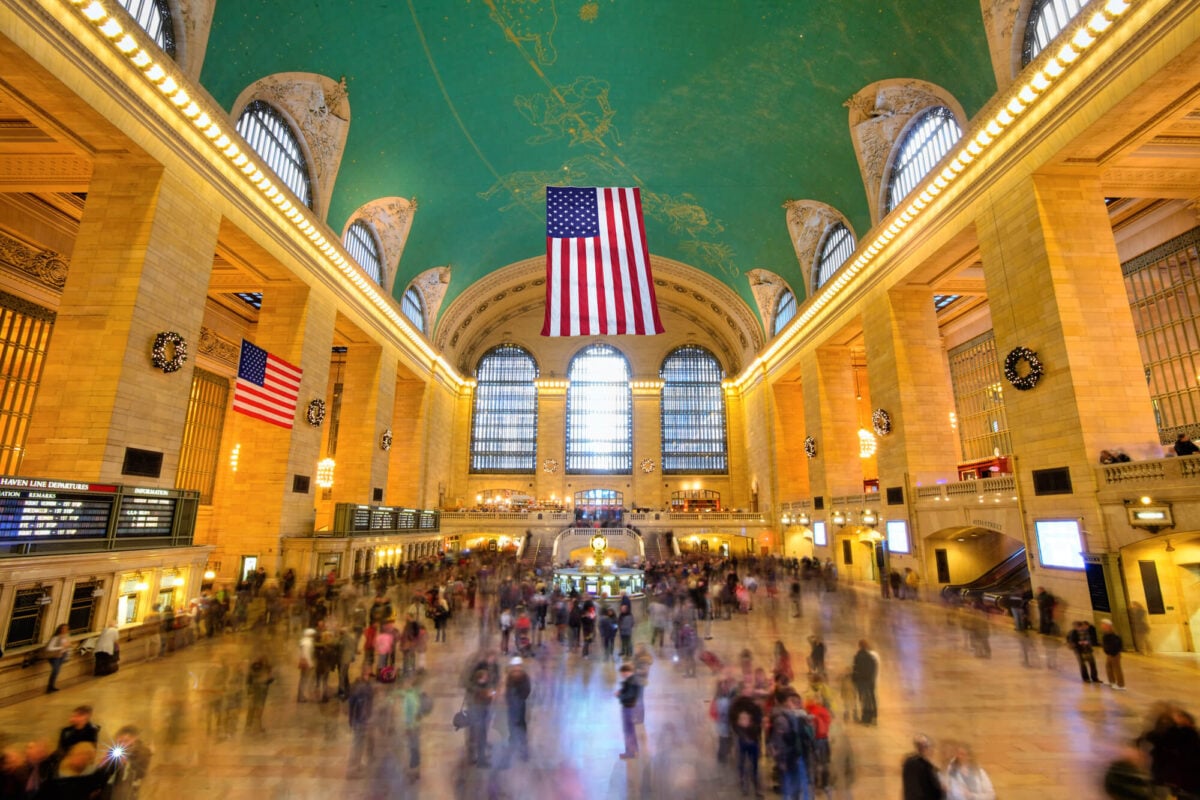
Grand Central Terminal in New York opened in 1913, and its main concourse rises about 125 feet beneath a vaulted ceiling painted with constellations in green and gold. The mural famously shows the stars in reverse, as if seen from outside the celestial sphere rather than from the ground.
A four-faced clock sits atop the information booth in the middle of the hall. Plans to demolish the building in the 1960s set off a preservation fight that saved it, and the terminal now welcomes hundreds of thousands of visitors a day.
Pennsylvania Station Once Looked Like a Roman Bath
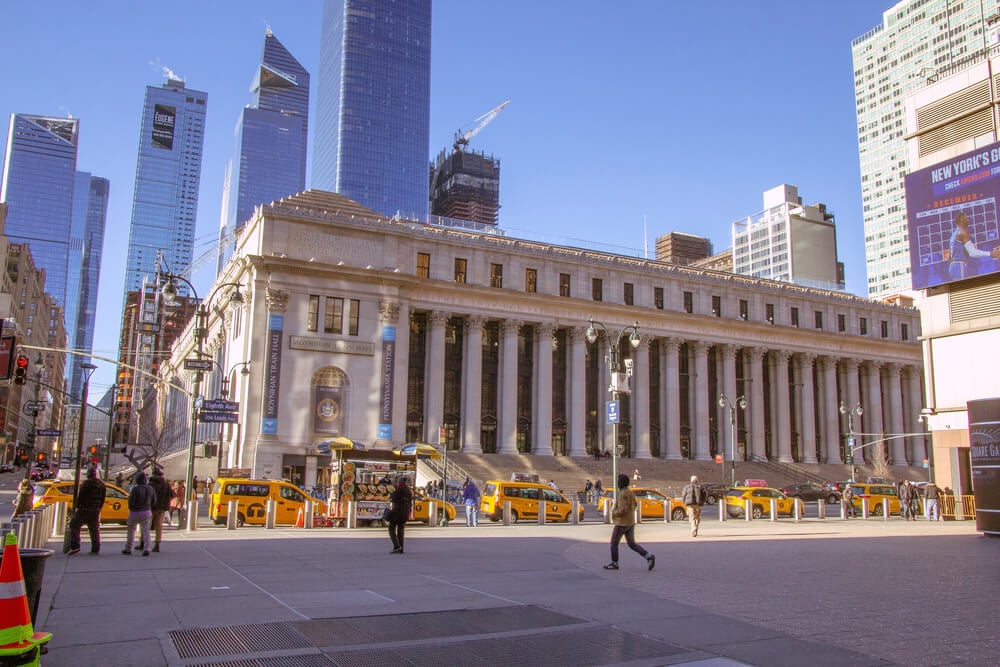
The original Pennsylvania Station in New York opened in 1910, and the architects at McKim, Mead and White modeled its grand waiting room on the Baths of Caracalla in Rome. Rows of columns held up a ceiling of steel and glass that rose well over 100 feet, filling the room with soft daylight.
Demolition began in 1963, replaced by an arena and an underground maze of corridors. The loss stunned the city, and it is widely credited with inspiring New York’s landmarks law, which later protected Grand Central and countless other buildings.
Washington’s Union Station Borrows From Ancient Rome
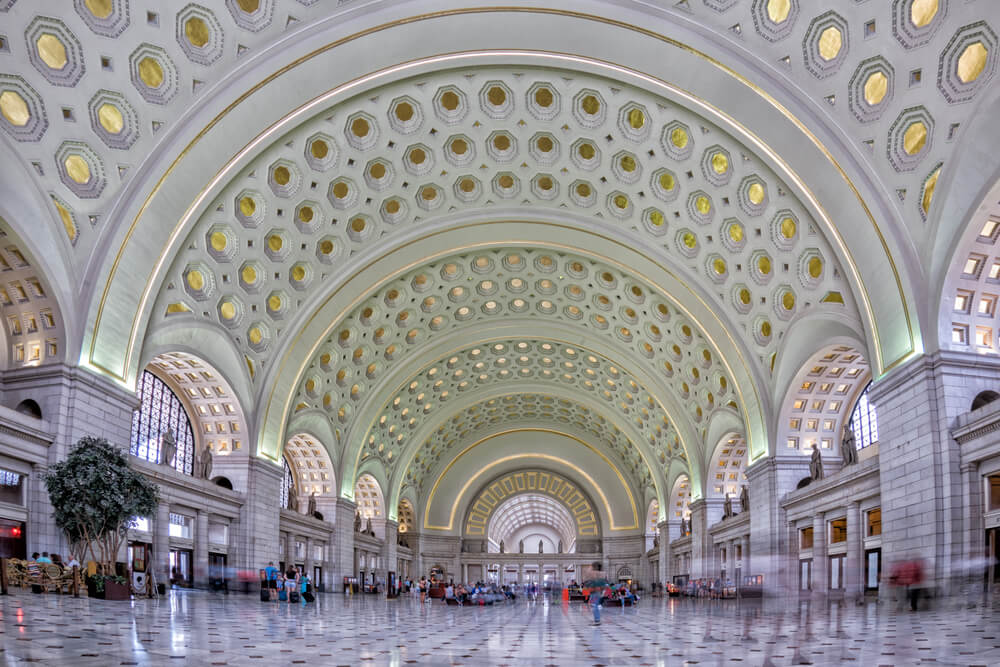
Daniel Burnham designed Union Station in Washington, which opened in 1907 and draws on Roman models such as the Baths of Diocletian and the Arch of Constantine. The main hall is vaulted and coffered, with gold leaf on the ceiling and a row of 36 statues of Roman legionaries standing along the balcony, each looking down on the crowds below.
After decades of decline, the building reopened following a major restoration in 1988, and it now holds shops, restaurants and Amtrak platforms, with commuter lines running through the same busy concourse.
Chicago’s Union Station Sweeps Down a Great Staircase
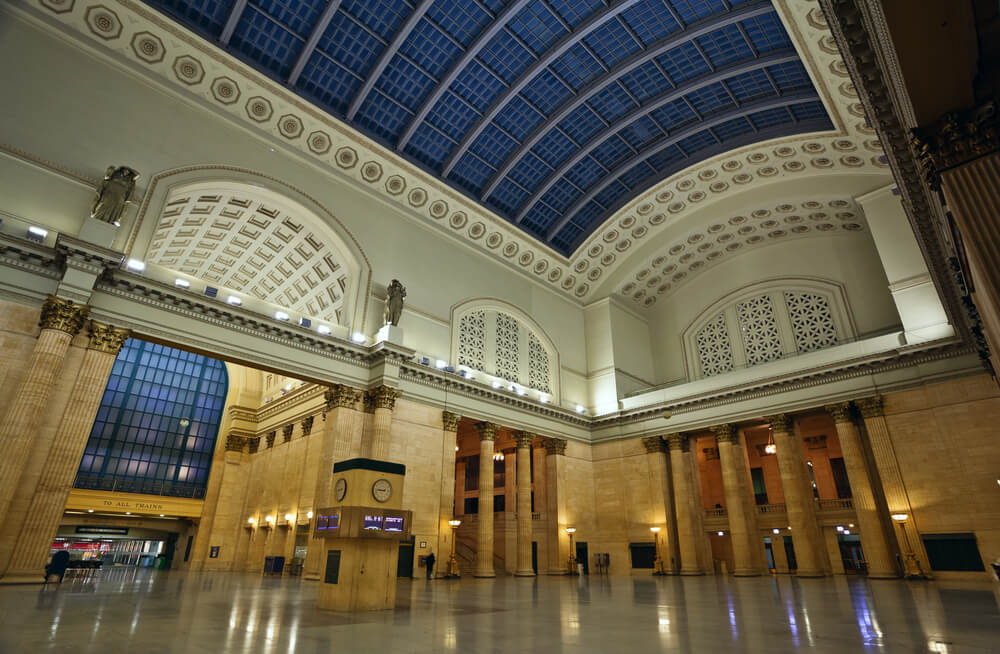
The Great Hall at Chicago’s Union Station opened in 1925 beneath a skylight about 219 feet long, which pours daylight across marble floors and wooden benches. A grand staircase sweeps down from the street entrance toward the main concourse.
In 1987, filmmakers used it for a famous shootout in The Untouchables, staged as an homage to a Russian silent film. Photos of the hall show tall columns, a coffered ceiling and travelers on benches who seem tiny beside the surrounding stone, all lit by the glow of the skylight.
St. Louis Union Station Whispers Across an Arch
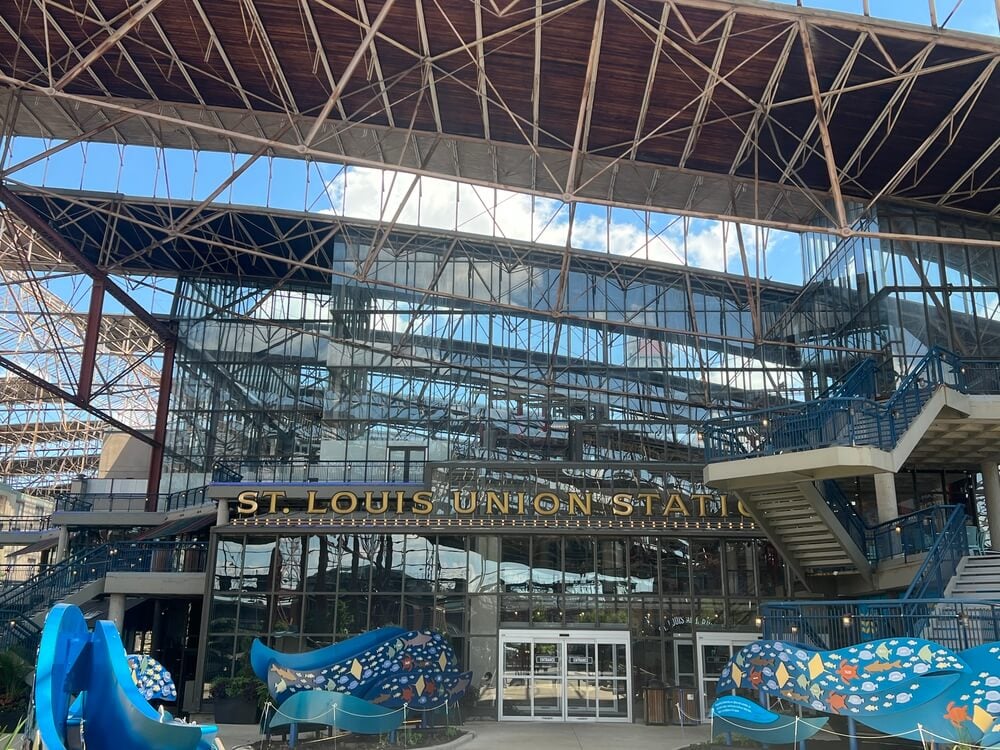
St. Louis Union Station opened in 1894 and was billed as the largest train station in the world, with a Romanesque tower rising over the headhouse. Inside the Grand Hall, a gilded barrel-vaulted ceiling arches over a stained glass window of three women representing St. Louis, New York and San Francisco.
A smaller feature called the Whispering Arch carries a soft voice from one side to the other. After the trains stopped, the building became a hotel and shopping center in the 1980s, and its tower still dominates the surrounding blocks.
Cincinnati Union Terminal Opens a Half-Dome
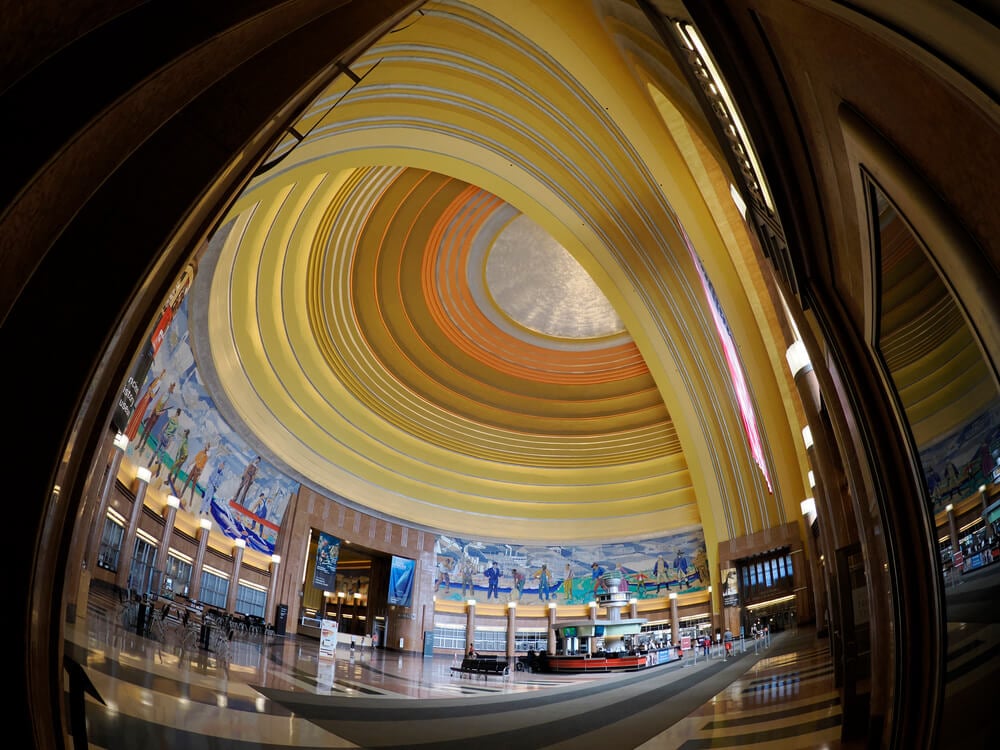
Finished in 1933, Cincinnati Union Terminal is an Art Deco landmark whose rotunda is capped by a half-dome roughly 180 feet wide, billed as one of the largest of its kind. Artist Winold Reiss designed enormous mosaic murals for the rotunda walls that show scenes from the city’s industry and history.
As passenger rail declined, the building fell into hard times, but it survived and reopened as a museum center that also hosts Amtrak. Photos of the facade show a huge semicircle of steps and windows.
Kansas City’s Grand Hall Hangs Giant Chandeliers
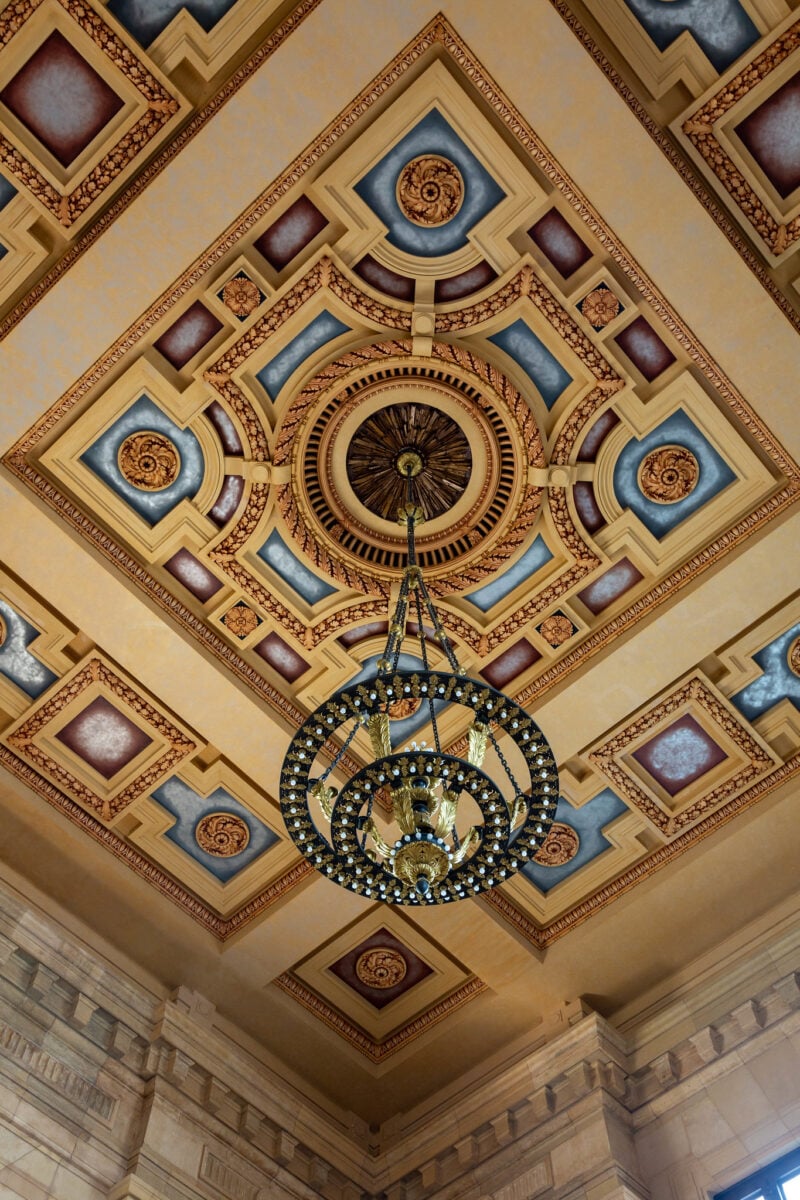
Kansas City Union Station opened in 1914, and its Grand Hall rises about 95 feet overhead beneath ornate plasterwork. Three huge chandeliers hang from the ceiling, each weighing roughly 3,500 pounds and glowing over a floor of polished stone.
The station was busy during the war years, with soldiers passing through by the thousands. After years of decline, a restoration reopened the building in 1999 as a science center and museum, giving the hall a second life as a place for families, school groups and visiting exhibitions rather than for trains alone.
Thirtieth Street Station Keeps a Winged Memorial
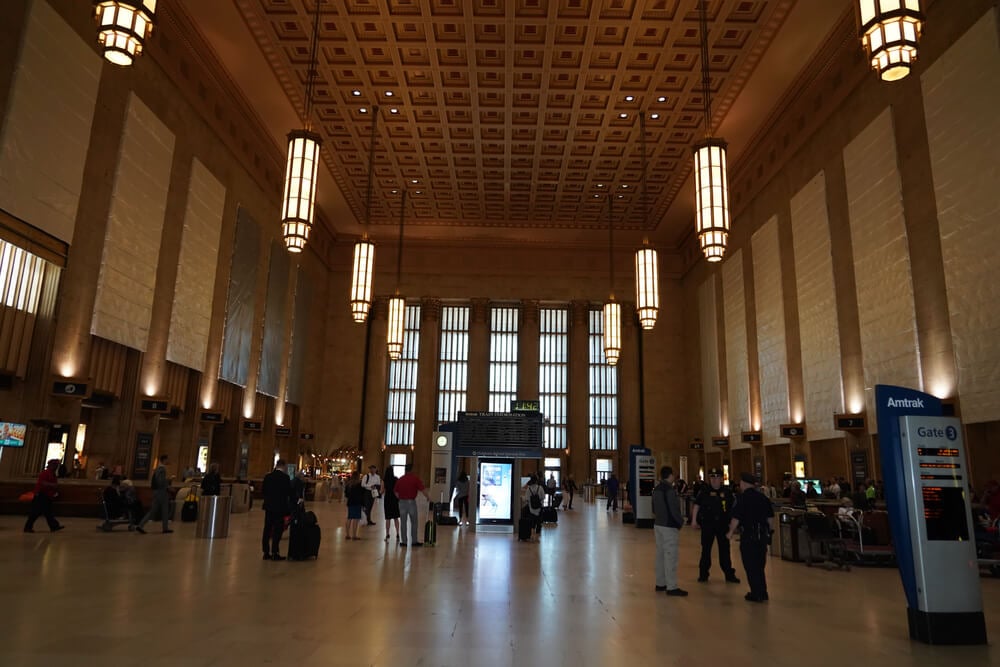
Thirtieth Street Station in Philadelphia opened in 1933 with a main concourse whose coffered ceiling rises 95 feet. Hanging in the hall is Walker Hancock’s Angel of the Resurrection, a bronze statue of an angel lifting a fallen soldier, installed as a memorial to Pennsylvania Railroad employees who died in World War II.
Tall windows and Art Deco chandeliers make the room feel more like a cathedral than a depot. Photos of the concourse often show commuters hurrying beneath the statue without a glance upward.
Michigan Central Station Rises Again in Detroit
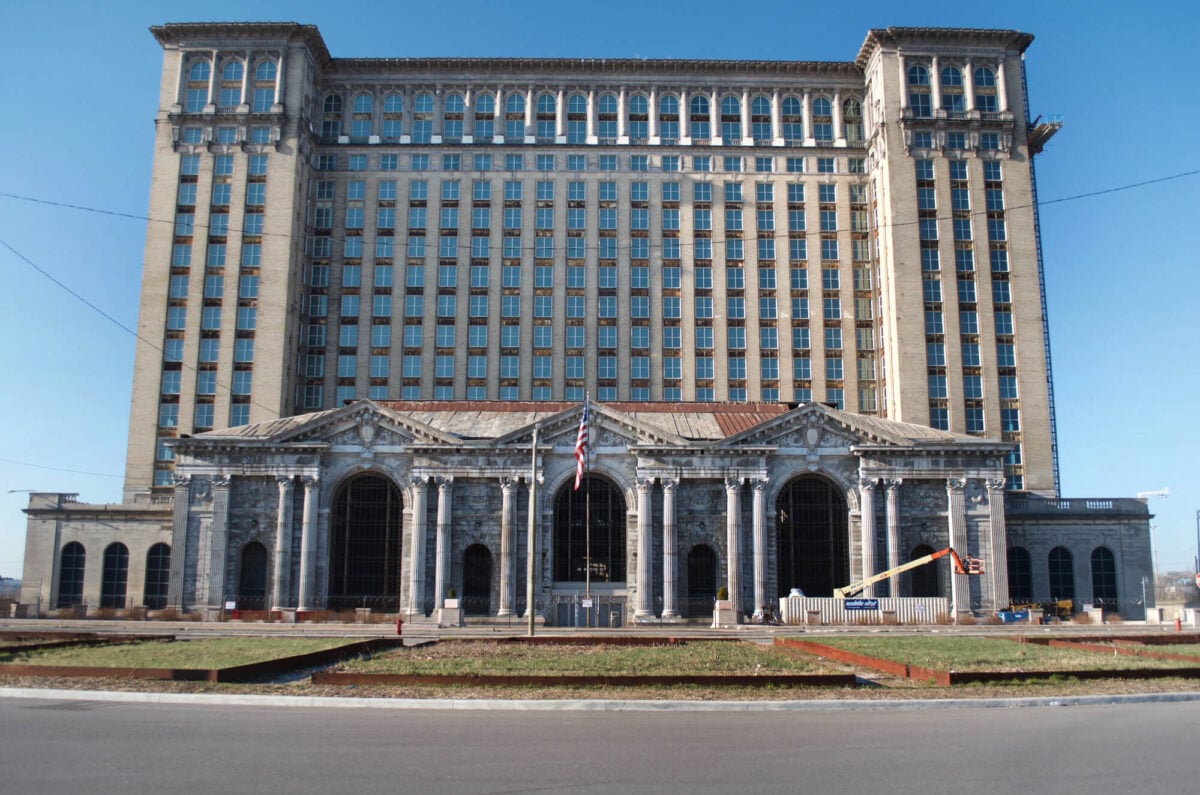
Michigan Central Station opened in 1913 as a Beaux-Arts palace, with a soaring waiting room and an office tower rising 18 stories. Passenger service ended in 1988, and the building sat abandoned for decades, becoming a symbol of urban decline.
Ford Motor Company bought it in 2018, spent years on restoration and reopened it in 2024 as a hub for mobility research and public events. Photos from the abandoned years show broken windows and peeling plaster, while recent photos show the polished waiting room restored to its former glory.
Los Angeles Union Station Blends Missions and Moderne
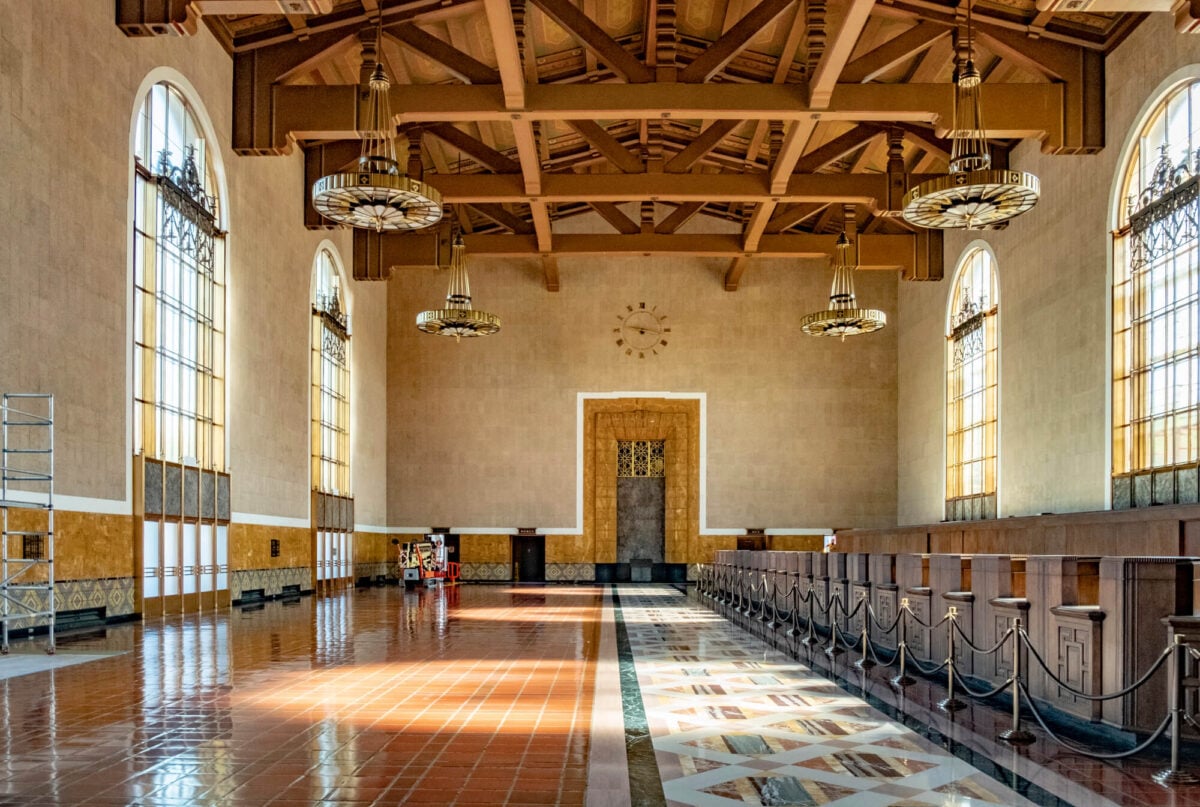
Los Angeles Union Station opened in May 1939 and is often described as the last of America’s great railway stations. Architects combined Spanish Mission Revival with Streamline Moderne design, producing a clock tower, tiled floors, leather armchairs and quiet garden courtyards.
The big waiting room has tall arched windows and a wooden ceiling, and many films have used its interior as a backdrop. Photos show sunlight pouring over patterned tile and long rows of seats that look more like a hotel lobby than a depot.
Le Train Bleu Serves Dinner Under Gilded Ceilings
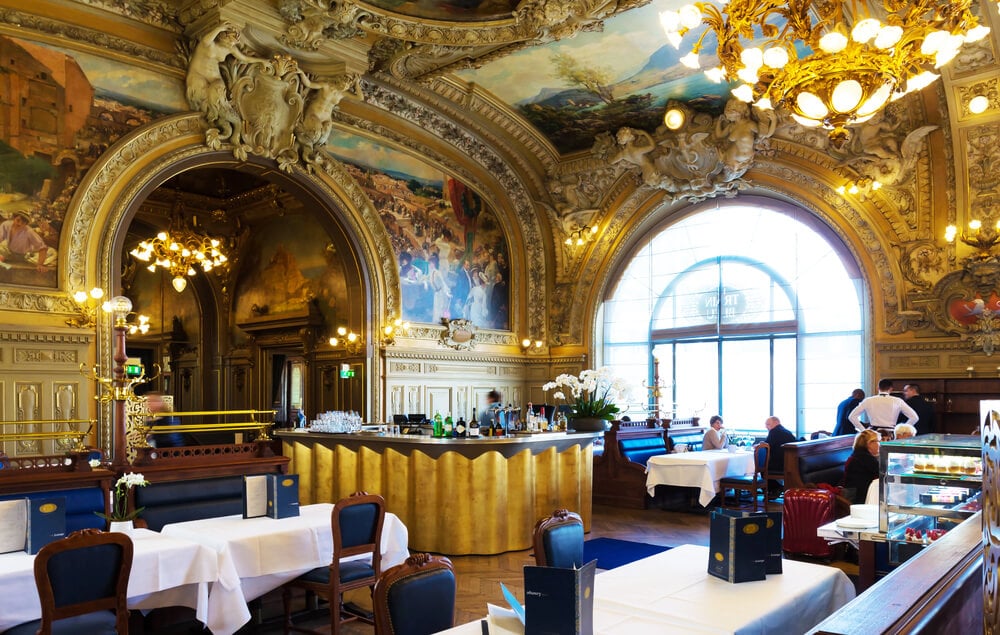
— Photo by KovalenkovPetr
Inside Paris’s Gare de Lyon, the restaurant Le Train Bleu opened in 1901 and still looks like a dining hall in a royal palace. The walls and ceiling are covered with dozens of paintings of destinations along the railway line, framed by gilded moldings, chandeliers and carved ornaments.
Diners sit beneath scenes of the Mediterranean while trains rumble in the station below. The station itself was built for the 1900 World’s Fair, and its clock tower rises about 220 feet above the neighborhood, a landmark for travelers arriving from the south.
Gare d’Orsay Turns Into a Museum
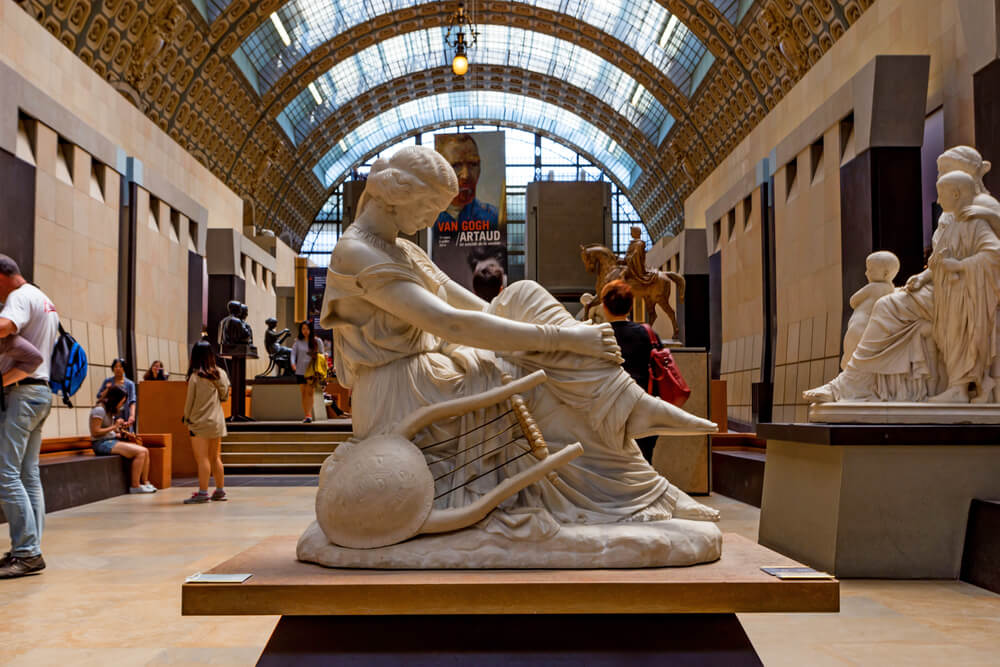
Gare d’Orsay was built beside the Seine in 1900 for the Paris World’s Fair, and its vast iron-and-glass hall was designed to look elegant instead of industrial. Long-distance trains stopped using it in 1939 because the platforms were too short for modern trains, and the building later served as a mailing center and a film location.
It reopened in 1986 as the Musee d’Orsay, filled with paintings by Monet, Renoir and Van Gogh. The huge station clocks remain, and visitors now peer through their glass faces to see the city.
St. Pancras Hides a Gothic Fantasy Behind Iron
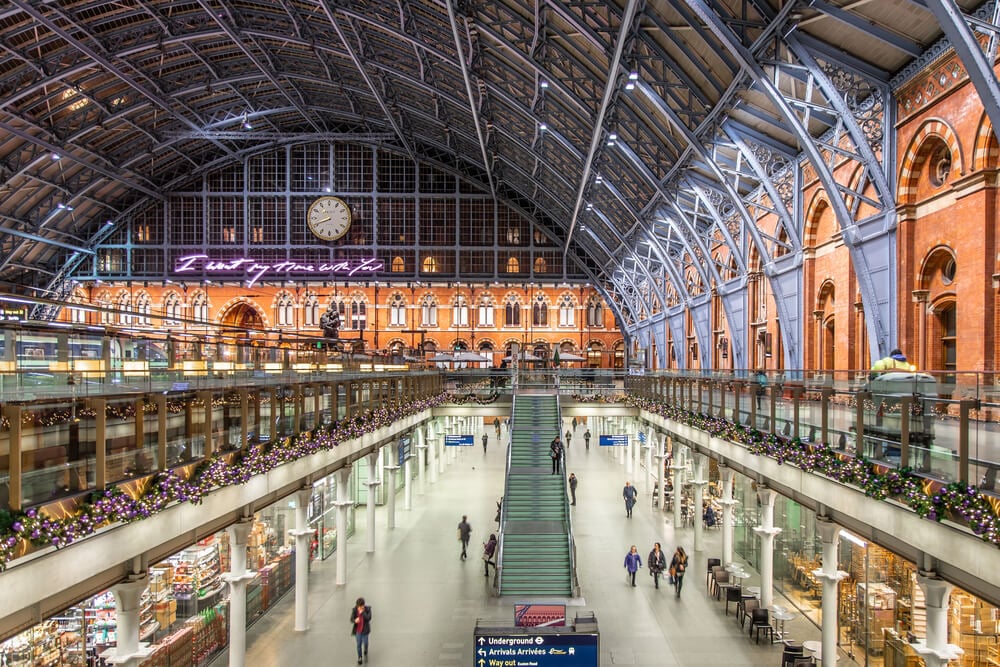
St. Pancras station opened in London in 1868 with a train shed designed by William Barlow, whose single span of about 240 feet was the largest in the world at the time. In front stands the Midland Grand Hotel, a red-brick Gothic extravaganza by George Gilbert Scott.
The hotel closed in 1935, and poet John Betjeman helped lead a campaign to save the station in the 1960s. Today Eurostar trains arrive from Paris and Brussels beneath the same arch, and the restored hotel has reopened.
Antwerp Central Station Earns a Cathedral Nickname
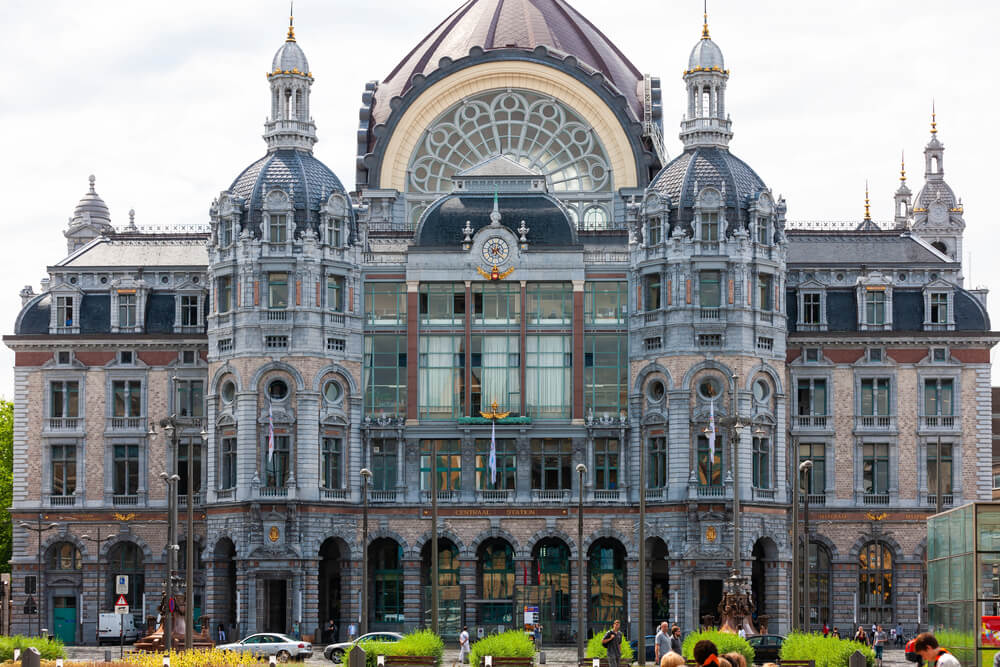
Antwerpen-Centraal was completed in 1905 under architect Louis Delacenserie, who dressed it in marble, stone and gilded ornament and topped it with a central dome. Locals call it the railway cathedral, and visitors often rank it among the most beautiful stations in the world.
A late twentieth century renovation added new tracks on several levels, with a modern glass-and-steel roof that lets daylight reach the lower platforms. Photos show passengers dwarfed by the great hall and the staircase that sweeps up to the gilded entrance.
Budapest’s Keleti Station Honors Two Inventors
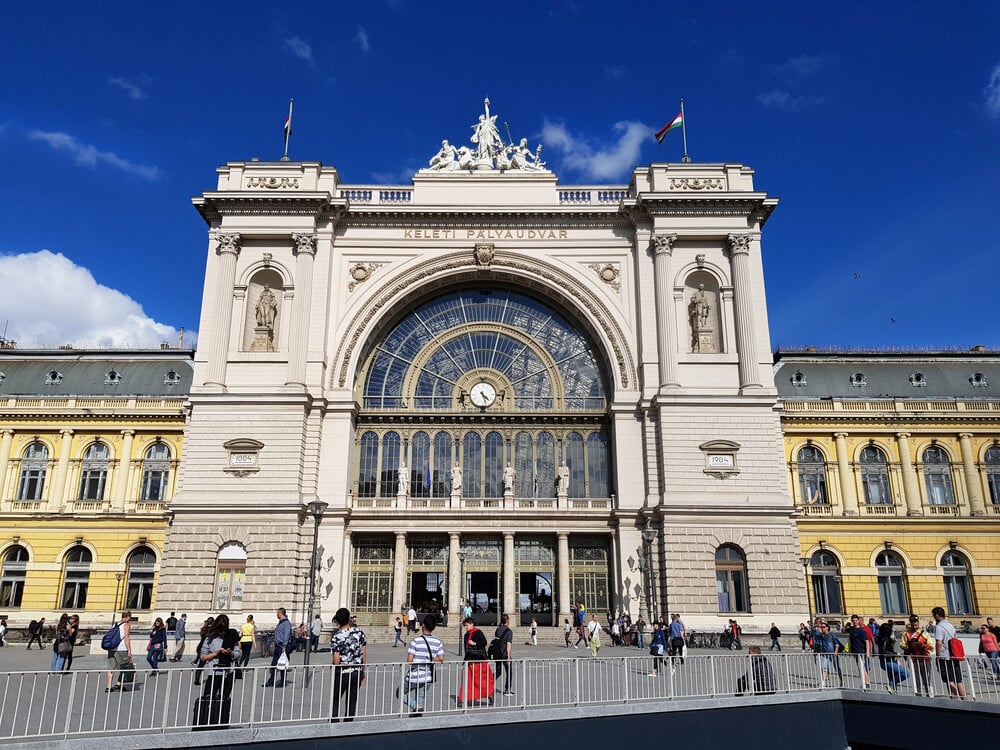
Budapest’s Keleti station opened in 1884, designed by Gyula Rochlitz, with a tall arched facade that hides a vast iron train shed. Statues of James Watt and George Stephenson, two pioneers of steam power, stand on the front of the building.
The hall once served trains headed east and west across Europe, and it still carries travelers from Hungary to Austria, Germany and beyond. Photos of the interior show soaring iron trusses and a ceiling decorated with murals that visitors rarely notice while rushing to a platform.
Helsinki Central Station Guarded by Stone Giants
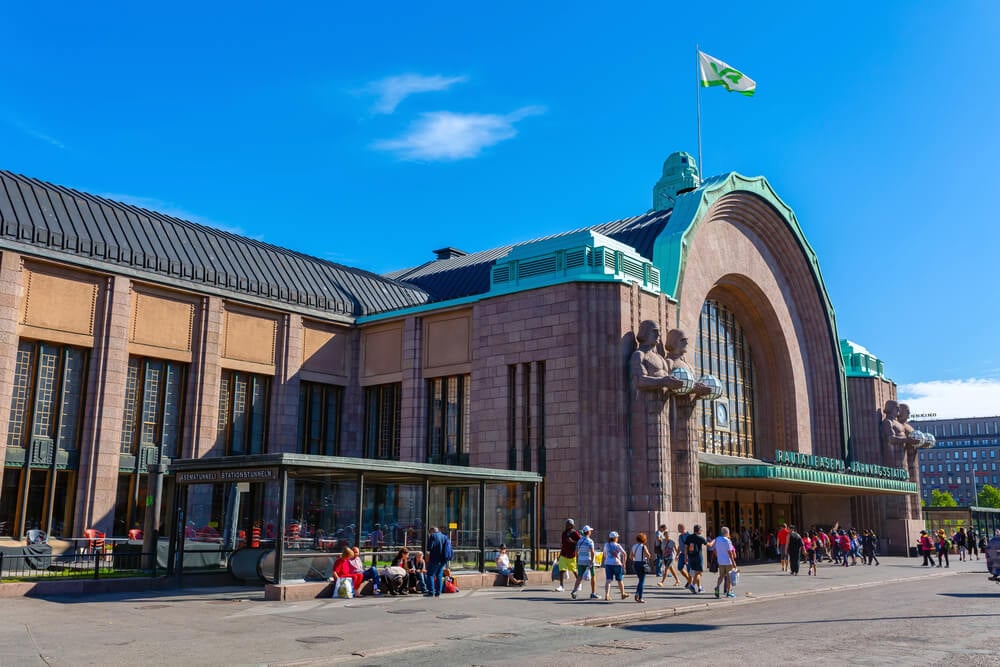
Helsinki Central Station, designed by Eliel Saarinen and completed in 1919, is known for four granite figures flanking the main entrance, each holding a spherical lamp. The statues by sculptor Emil Wikstrom have become one of the best-known sights in the Finnish capital.
Saarinen blended National Romantic style with early modernist ideas, and the result was a clock tower and a green copper roof that look sturdy and elegant at once. Photos of the facade show the giants lit at night with glowing lamps held high.
Sao Bento Station Tells a Nation in Tile
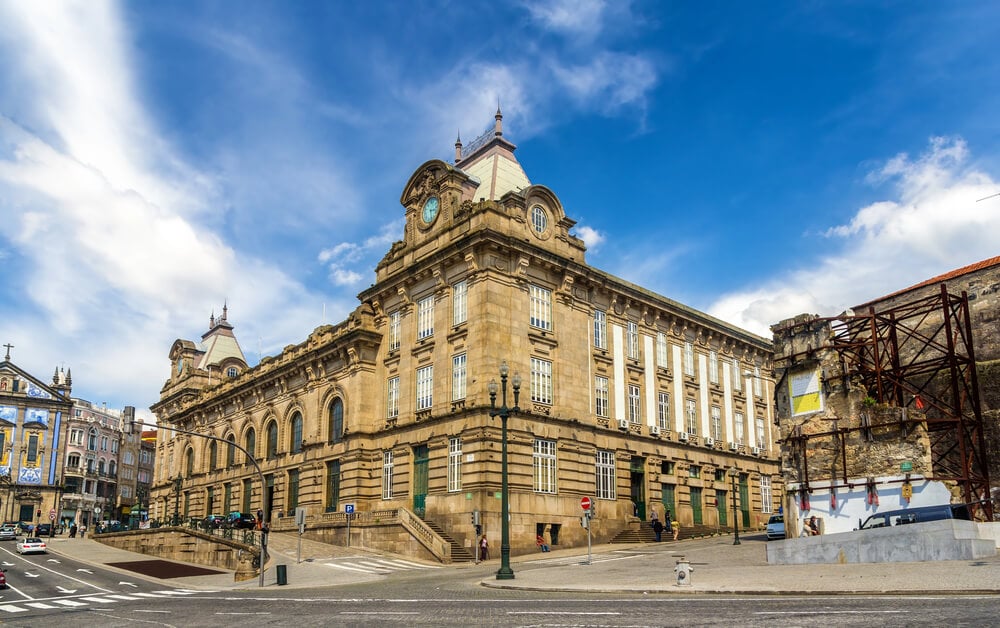
The entrance hall at Sao Bento Station in Porto, Portugal, is covered with around 20,000 blue-and-white tiles painted by Jorge Colaco in the early twentieth century. The panels depict scenes from Portuguese history, including battles and royal ceremonies, along with images of rural life.
The station opened in 1916 on the site of a former monastery and was designed by architect Jose Marques da Silva. Photos of the tiles often show commuters pausing to look up at the walls, and visiting tourists doing the same with cameras raised and necks craned back.
Madrid’s Atocha Station Grows a Jungle
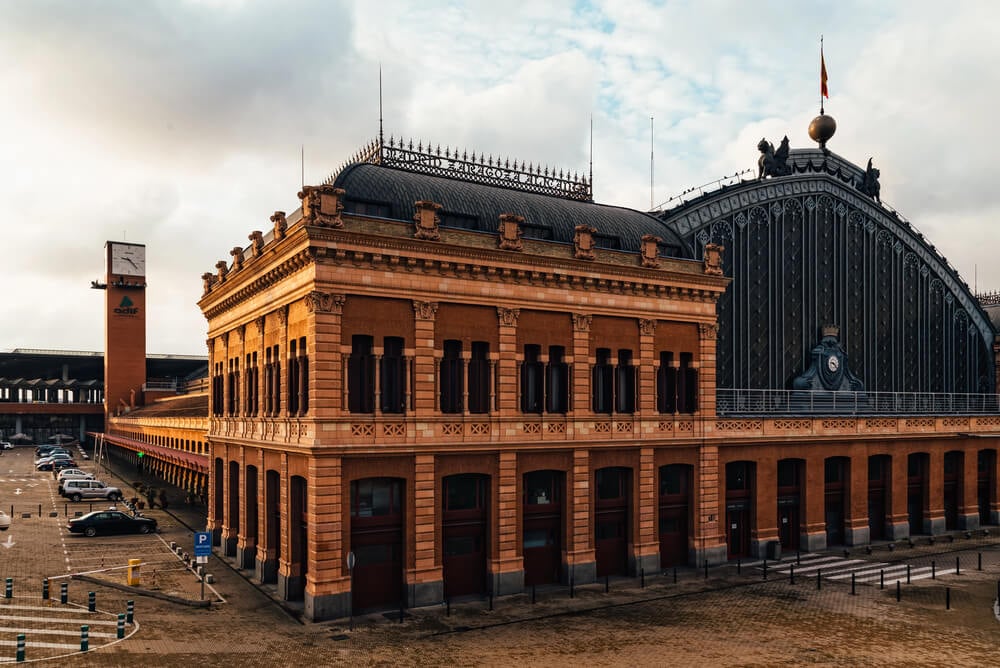
Madrid’s Atocha station dates to 1851 and was rebuilt in the 1880s with a high wrought-iron and glass hall. In 1992, architect Rafael Moneo converted the old train hall into a tropical garden filled with thousands of plants, while new tracks were built behind it.
Palms and ferns now surround benches and cafes, and a pond holds a population of turtles. Photos show commuters walking past a green canopy beneath the old iron arches, a rare case of a station that doubles as a botanical garden.
Mumbai’s Victoria Terminus Becomes a Gothic Showpiece
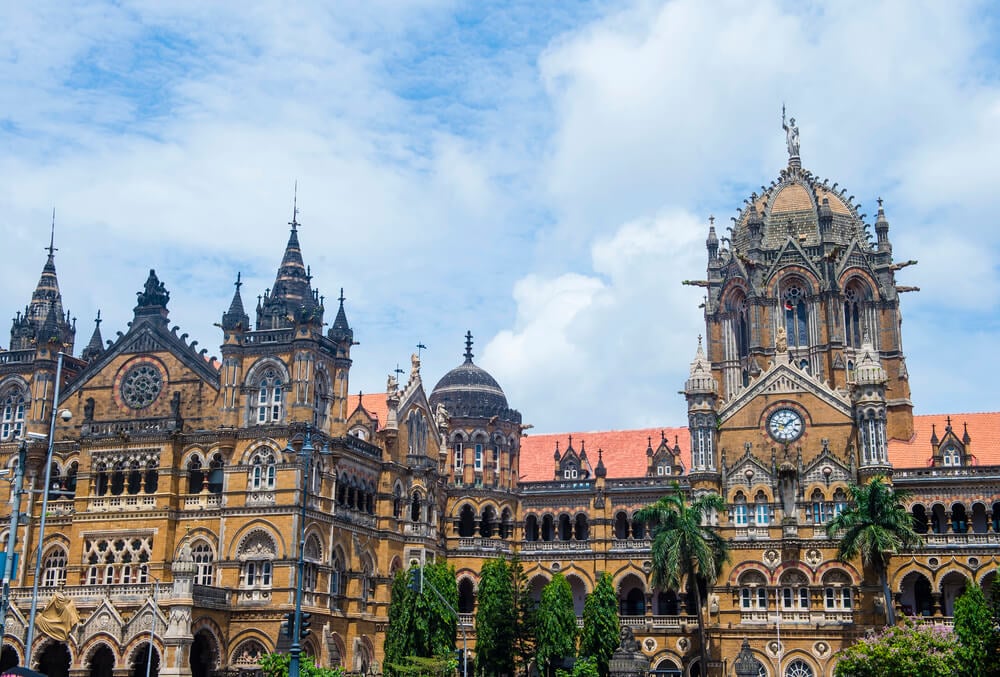
Chhatrapati Shivaji Maharaj Terminus, originally called Victoria Terminus, was completed in 1888 after a decade of construction, designed by British architect Frederick William Stevens. The building blends Victorian Gothic Revival with Indian motifs, including domes, turrets, pointed arches and carvings of animals and local figures.
UNESCO added it to the World Heritage list in 2004, and it remains a working hub for the city’s suburban trains. Photos show a facade crowded with ornament and a stream of commuters flowing under its arches every day, beneath a central dome.
Tokyo Station Keeps Its Red-Brick Dignity
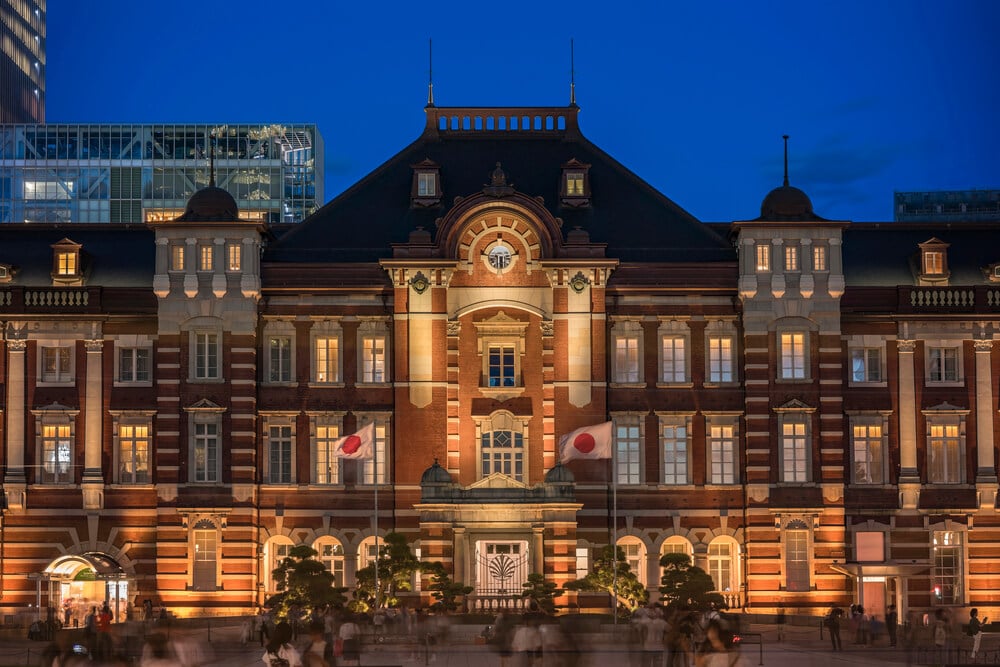
Tokyo Station’s Marunouchi building opened in 1914, designed by Tatsuno Kingo in a style of red brick trimmed with white stone. The structure survived the 1923 Great Kanto earthquake, but air raids damaged it in 1945, and it was repaired with a simpler roof.
In 2012, a restoration returned the building to its original look, complete with domes at either end of the long facade. Photos taken at dusk show the brick glowing against modern skyscrapers, as though a piece of the old capital had been preserved in amber.
Cathedrals for People in a Hurry
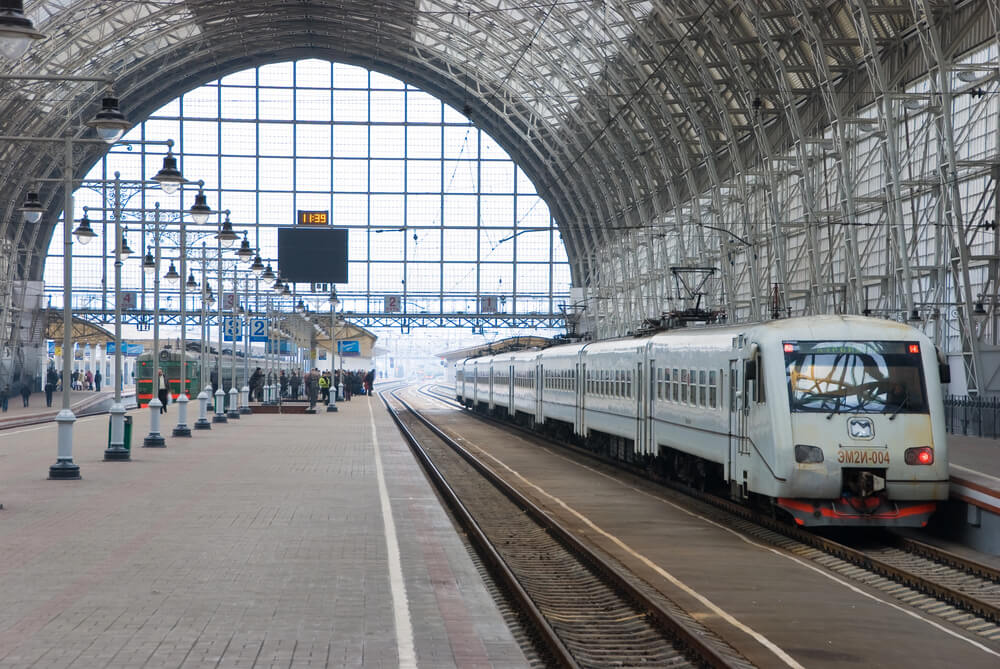
The grand stations were built to impress at a moment when rail travel was the gateway to every city. Architects borrowed from Roman baths, medieval cathedrals and Gothic fantasies to convince arriving passengers that the place ahead deserved respect.
The result was a generation of buildings that treated waiting as an occasion for beauty. Many of these buildings later faced demolition, decay or neglect, and the survivors owe their lives to citizens who valued architecture over efficiency.
Today they serve as museums, shopping halls, hotels and transit hubs while still doing the first job they were built for. A glance at the ceilings is enough to remind a passing commuter that civic pride once ran on rails.
More from Go2Tutors!

- The Romanov Crown Jewels and Their Tragic Fate
- 13 Historical Mysteries That Science Still Can’t Solve
- Famous Hoaxes That Fooled the World for Years
- 15 Child Stars with Tragic Adult Lives
- 16 Famous Jewelry Pieces in History
Like Go2Tutors’s content? Follow us on MSN.