Unusual Yearly City Festivals
Every city has its parades and music festivals. You know the type—food trucks line the streets, someone plays acoustic guitar, maybe there’s a beer garden.
But some cities take their celebrations in directions that make you stop scrolling and wonder what exactly possessed an entire town to agree on this. These festivals exist in that sweet spot between tradition and absurdity.
They draw tourists who want something different and locals who’ve been doing this since they were kids. And they remind you that human creativity, when channeled into annual events, can get wonderfully strange.
Battle of the Oranges in Ivrea, Italy
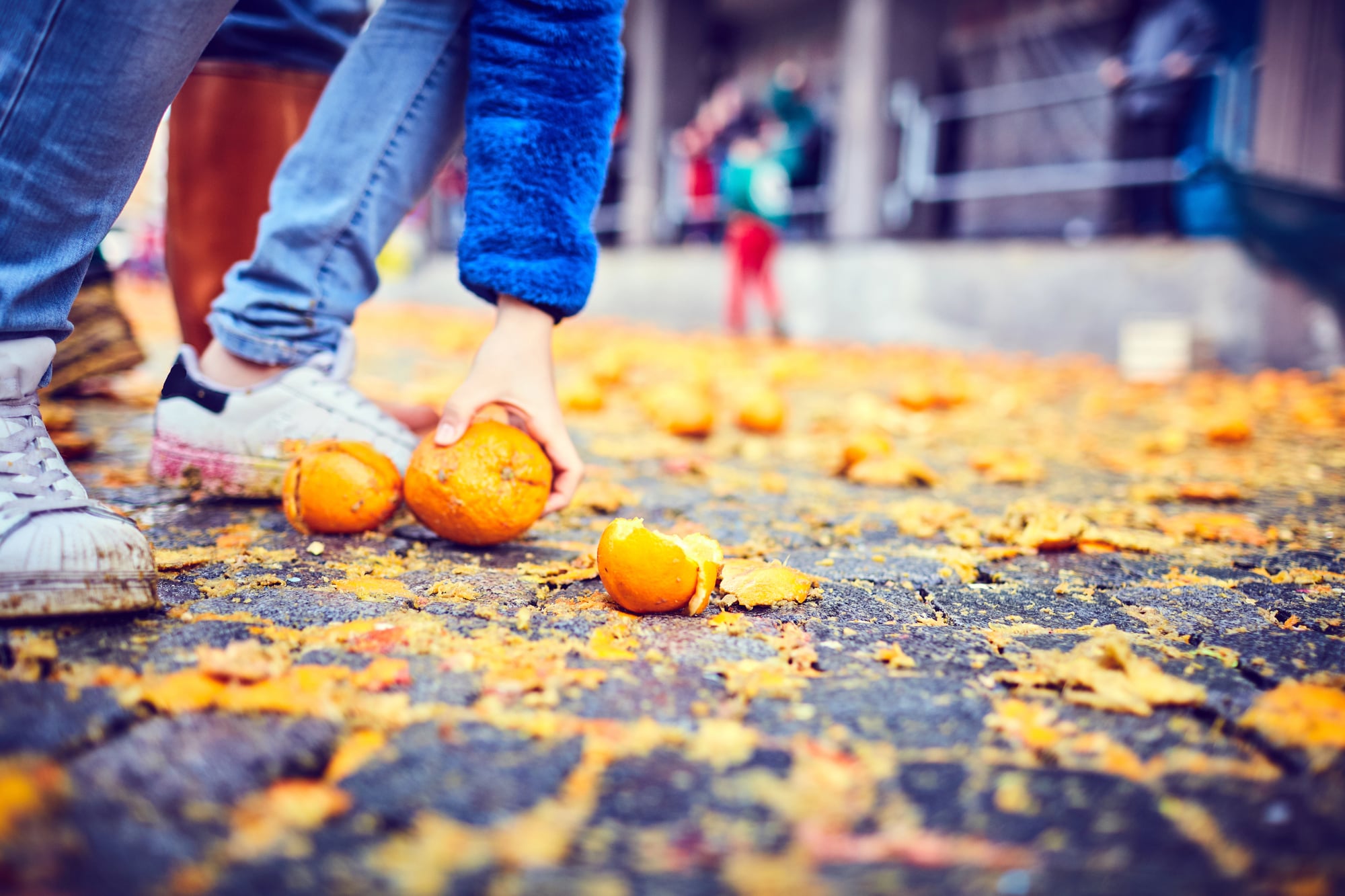
Forget throwing rice at weddings. In Ivrea, they throw oranges at each other.
Hard. For three days straight.
The festival reenacts a medieval rebellion where townsfolk overthrew a tyrant. Teams represent different factions, and they pelt each other with citrus ammunition while thousands watch from protected zones.
You need a red cap if you don’t want to become a target. The streets run orange with pulp by the time it ends, and the cleanup crew probably deserves a medal.
Cheese Rolling at Cooper’s Hill, England
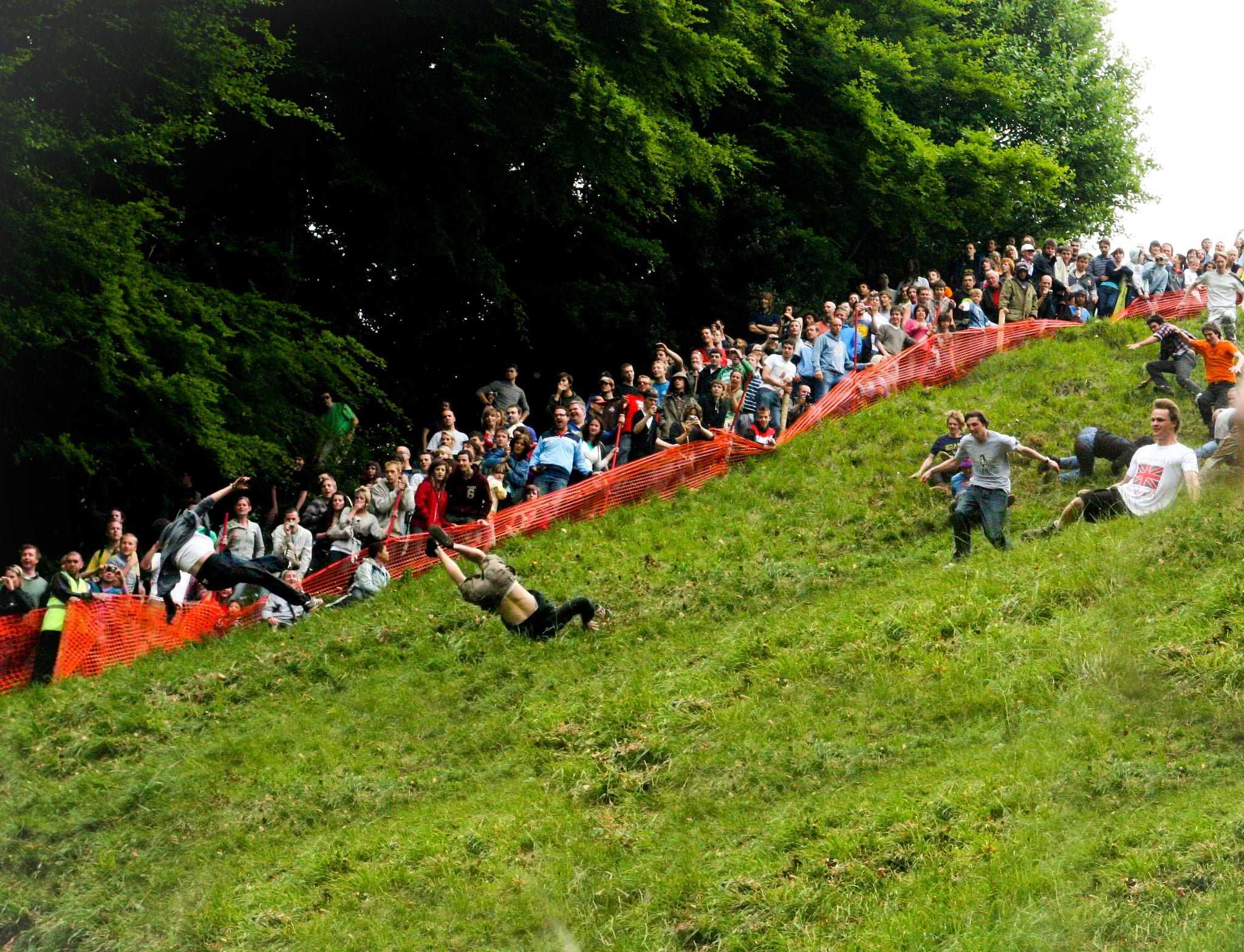
A nine-pound wheel of Double Gloucester cheese gets rolled down an extremely steep hill. People chase it.
That’s the whole festival. The hill drops at a near-vertical angle, and contestants tumble, flip, and crash their way down trying to catch a cheese wheel that can hit 70 miles per hour.
Winners get to keep the cheese. Injuries are common enough that paramedics wait at the bottom.
But people keep showing up every year, because apparently the combination of dairy products and danger creates an irresistible challenge.
La Tomatina in Buñol, Spain
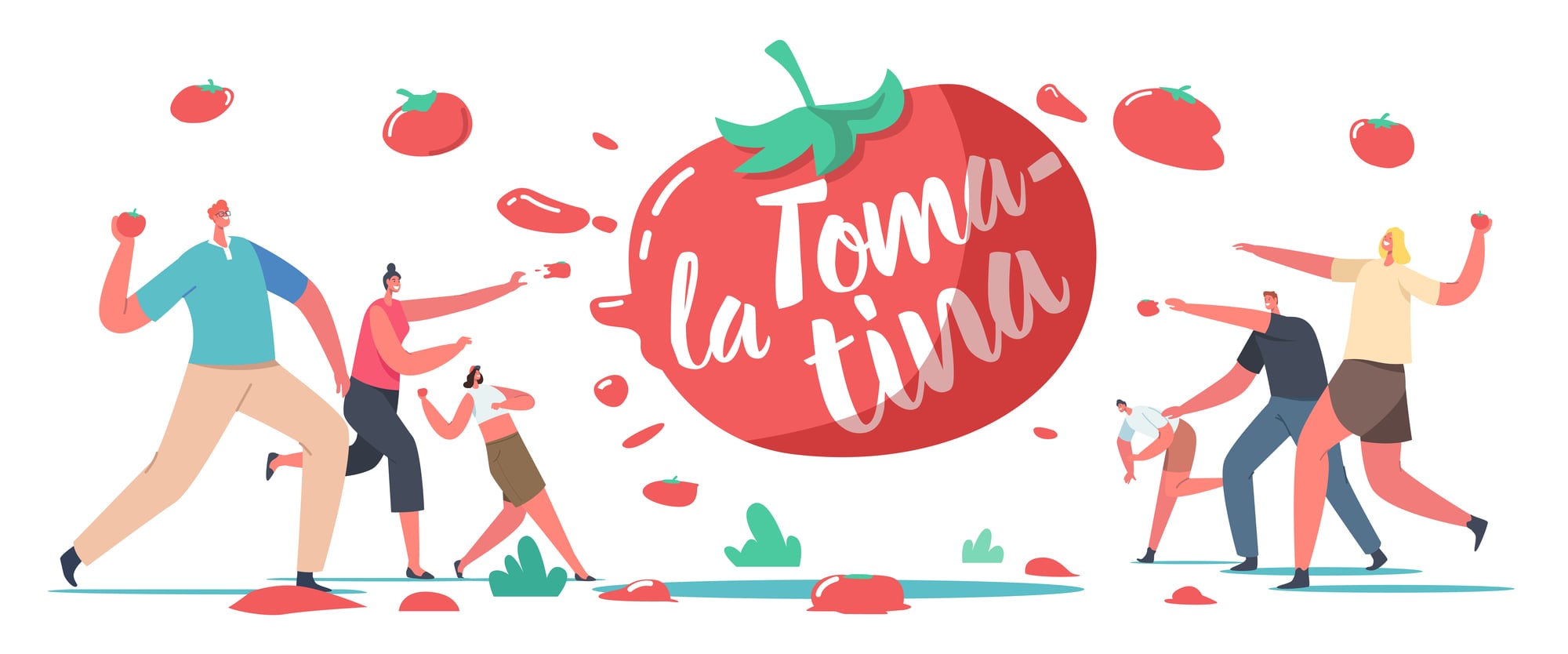
Picture 20,000 people crammed into narrow streets, armed with overripe tomatoes. When the signal fires, chaos erupts for exactly one hour.
The town provides 150,000 tomatoes specifically grown for throwing. Rules exist—you must squish the tomato before throwing it, and you stop when the second signal sounds.
After sixty minutes of vegetable warfare, fire trucks hose down the streets and participants. The acidity actually leaves the pavement cleaner than before.
The whole thing started from a food fight in 1945, and nobody thought to stop it.
Boryeong Mud Festival in South Korea
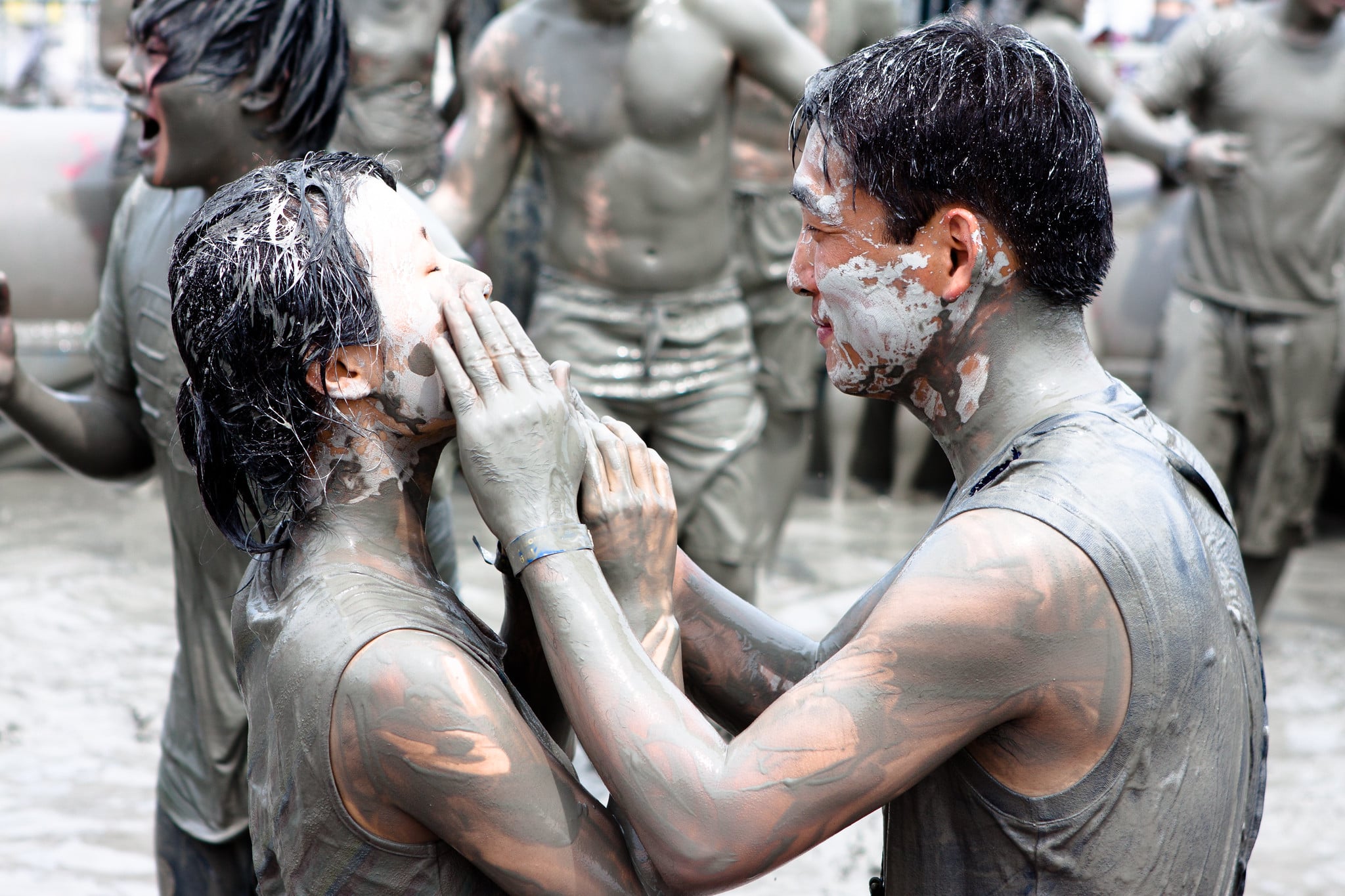
This beach town imports mud from nearby flats known for its mineral content. Then they build slides, pools, and obstacle courses out of it.
What began as a marketing campaign for mud cosmetics turned into a massive summer festival. You wade through mud prisons, ride mud slides into the ocean, and participate in mud wrestling competitions.
Everyone ends up coated head to toe. The beach becomes unrecognizable under layers of gray sludge, and yet families bring their kids year after year.
Clean clothes become a distant memory.
Monkey Buffet Festival in Lopburi, Thailand
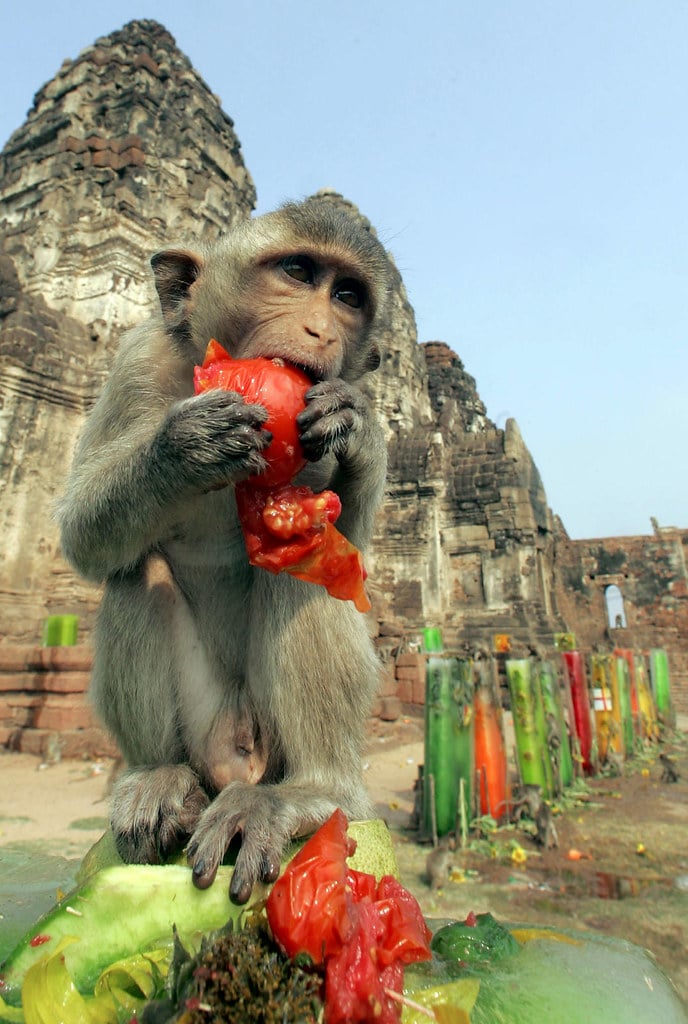
The city lays out a feast for macaques. Not metaphorically.
Actual monkeys get tables piled with fruits, vegetables, and desserts arranged in elaborate displays. Lopburi hosts thousands of wild macaques who wander freely through town.
Once a year, residents thank them with a buffet that includes everything from pineapples to ice cream. The monkeys swarm the tables, stuffing their faces and pockets.
Photographers crowd around capturing the mayhem. The whole thing honors a Hindu legend while acknowledging that these monkeys basically run the town anyway.
Wife Carrying Championship in Sonkajärvi, Finland
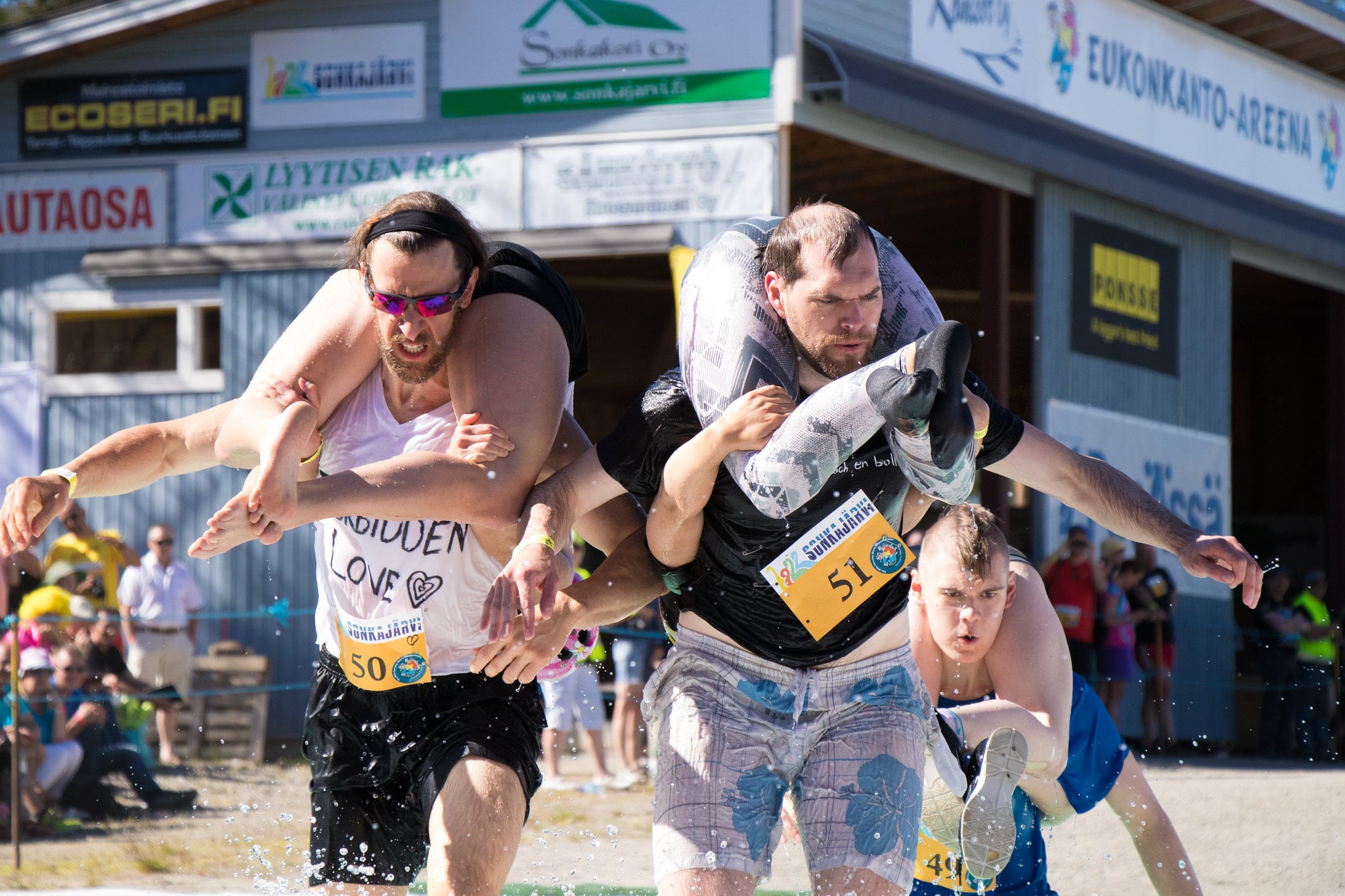
Men race through an obstacle course while carrying women. The prize is the woman’s weight in beer.
The course includes water obstacles, sand pits, and hurdles. You can carry your partner however you want—piggyback, fireman’s carry, or the Estonian-style where she hangs upside down with her legs around your shoulders.
The event requires actual athletic ability, not just novelty. And yes, you don’t technically need to carry your wife.
Any woman over 49 kilograms works. The festival has spread to other countries, but Finland holds the original championship.
Kanamara Matsuri in Kawasaki, Japan
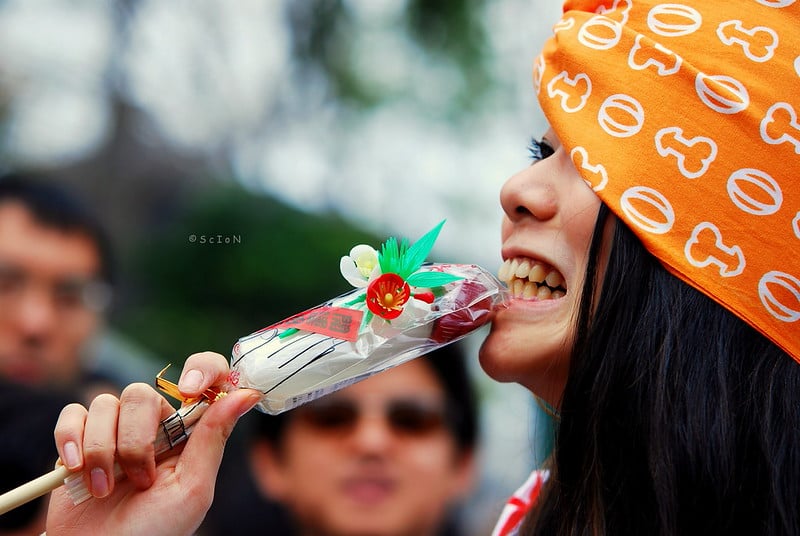
This shrine festival celebrates fertility through extremely phallic imagery. Everything from decorations to food takes that shape.
The event raises money for HIV research and attracts both religious participants and curious tourists. Giant carved wooden structures parade through the streets.
Vendors sell themed snacks. The atmosphere manages to be both reverent and playful, which takes a specific cultural context to pull off.
Western visitors often show up expecting pure comedy and leave having witnessed something that’s genuinely part of local tradition.
Burning Man in Black Rock City, Nevada
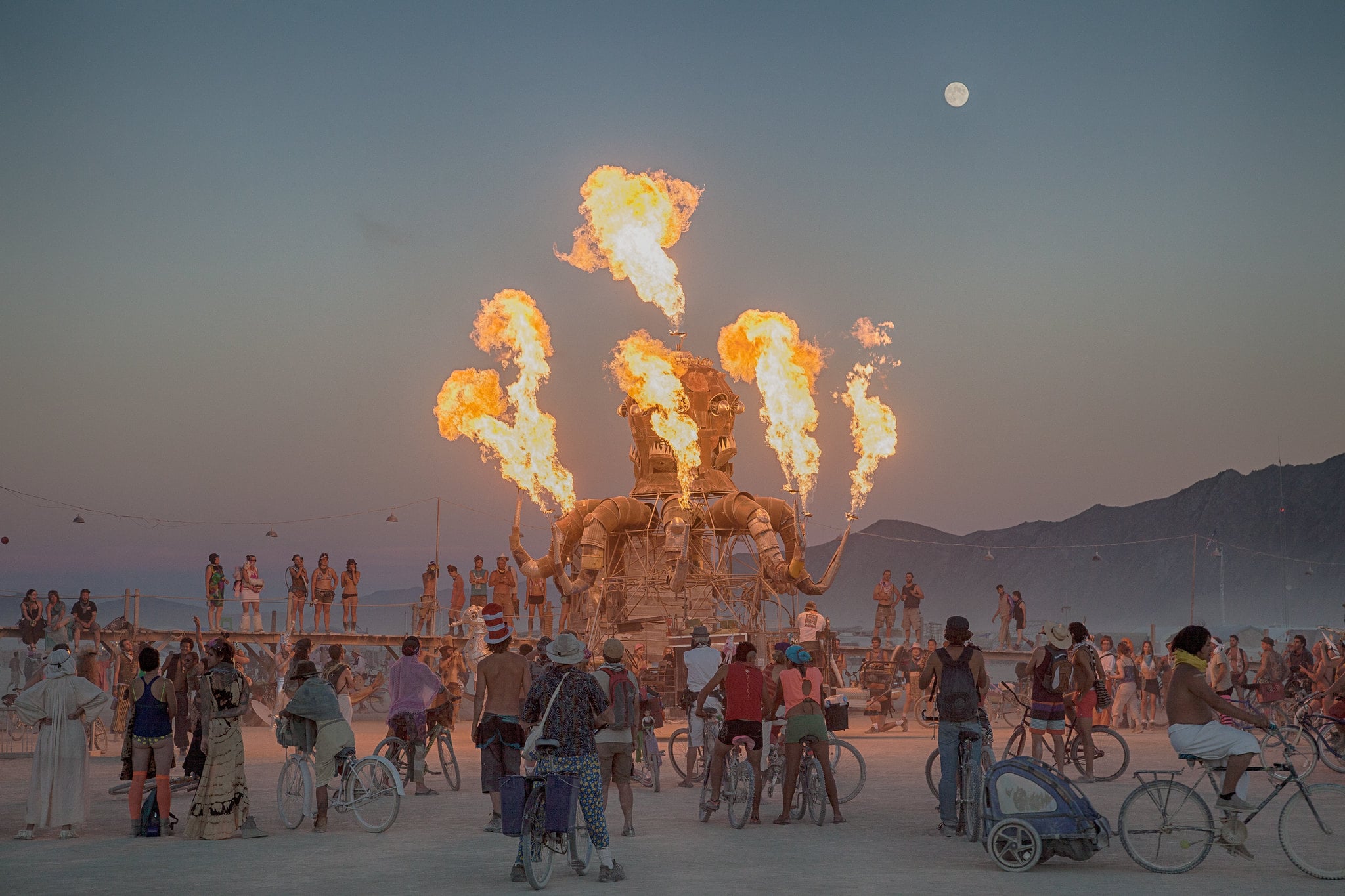
A temporary city appears in the desert for one week. Tens of thousands build elaborate art installations, throw parties, and then destroy it all.
Money doesn’t work here—you barter or gift. Everyone contributes, whether through art, performance, or infrastructure.
The centerpiece burns on Saturday night, followed by a massive temple burn on Sunday. Then the whole city disappears, and they return the desert to its original state.
The effort required to build and dismantle this metropolis annually defies normal festival logic. But the participants consider it essential to the experience.
Day of the Dead Parade in Mexico City
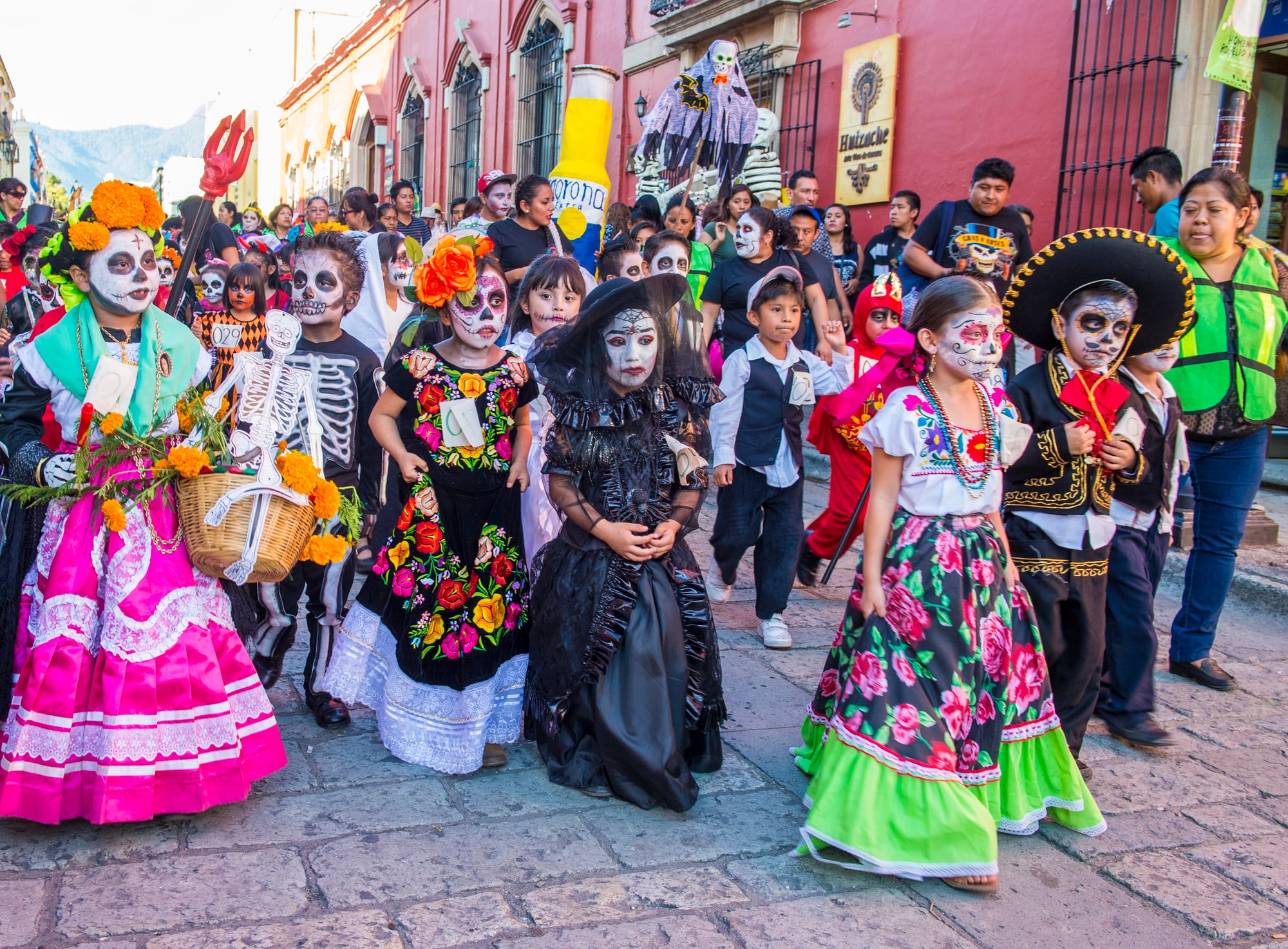
Death gets a party. Elaborate skeletal costumes fill the streets as mariachi bands play and families honor deceased relatives.
The modern parade started recently but draws on centuries of tradition. Performers in skull makeup dance on floats decorated with marigolds.
The smell of copal incense mixes with street food. Unlike somber memorial services, this celebration treats death as a natural part of life worth acknowledging with color and joy.
Families build altars in their homes and the parade connects private mourning with public celebration.
Hadaka Matsuri in Okayama, Japan

Thousands of men in minimal clothing crowd into a temple in winter, competing to catch lucky charms thrown by priests. The temperature hovers near freezing.
Participants wear only loincloths. When the lights go out, the priest tosses wooden talismans into the crowd, and mass chaos follows.
The crush of bodies generates heat through friction and exertion. Winners get a year of good fortune.
The cold is part of the purification ritual, which makes the whole thing even more intense.
Holi Festival in Jaipur, India
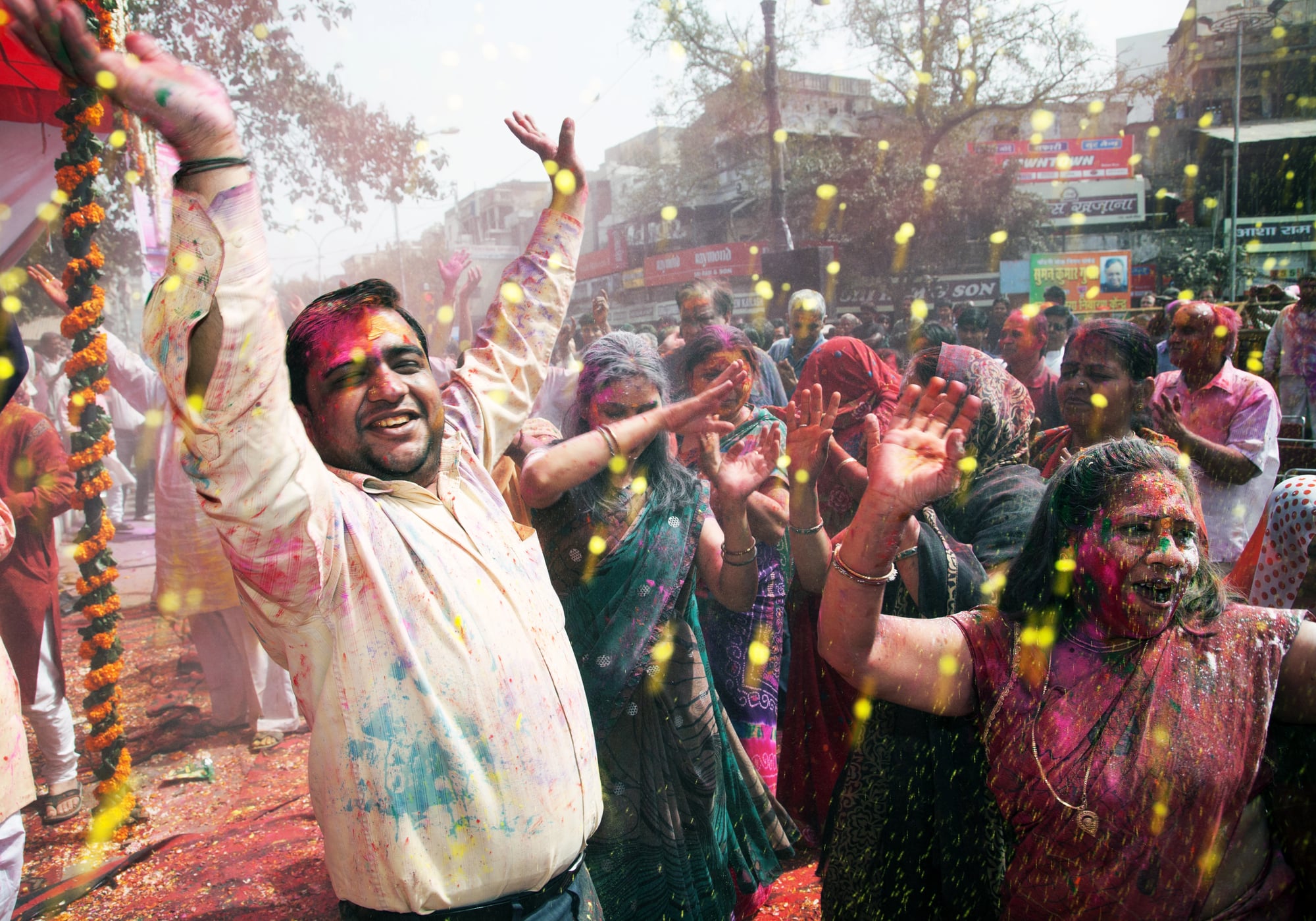
Streets turn into rainbows. People throw colored powder at anyone within range.
The spring festival celebrates the victory of good over evil, but mostly it’s an excuse to drench everyone in vibrant pigments. Water balloons fly.
Music blasts. Social barriers dissolve when everyone’s covered in the same mess of colors.
By evening, the city looks tie-dyed. Your clothes stay stained for weeks.
The explosion of color against historic buildings creates scenes that cameras can barely capture.
Noche de Rábanos in Oaxaca, Mexico
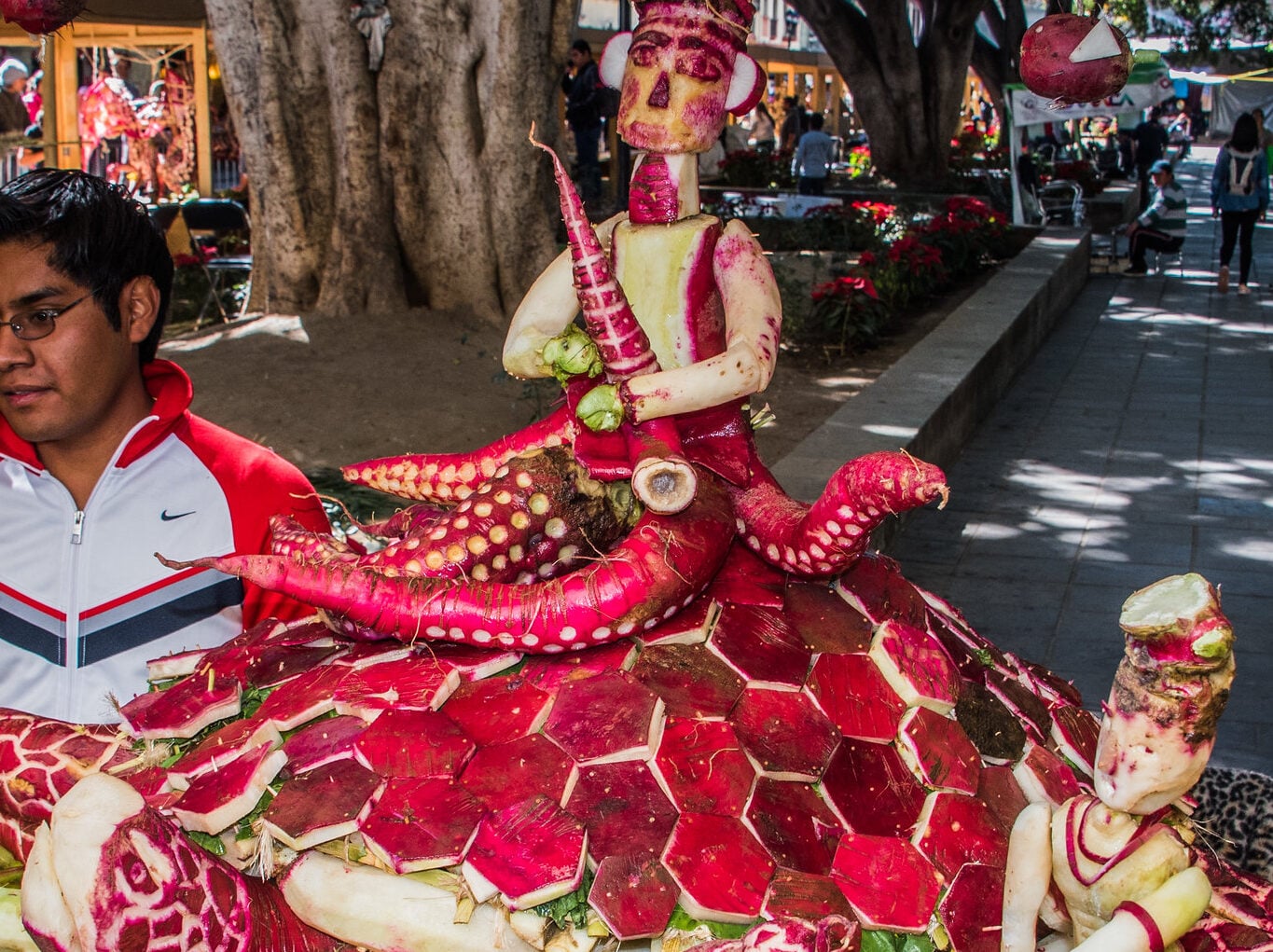
Artists carve radishes into elaborate scenes. That’s not a typo.
Radishes. These aren’t normal radishes.
They grow oversized in Oaxaca’s soil, and artisans transform them into nativity scenes, historical figures, and architectural models. The vegetables only last a few days before wilting, which adds urgency to the competition.
Judges award prizes for the most intricate work. Crowds pack the main square to see what people created from root vegetables.
The tradition dates back over a century, proving that any medium becomes art in the right hands.
Up Helly Aa in Lerwick, Scotland
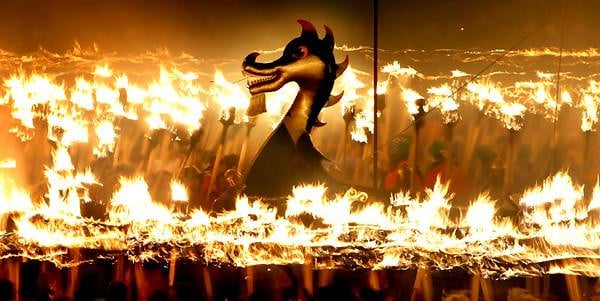
Vikings take over the Shetland Islands. Or rather, Scots dressed as Vikings march through town and burn a replica longship.
This midwinter festival features torch-lit processions, elaborate costumes, and fire. Lots of fire.
The burning of the galley ship serves as the main event, sending sparks into the cold night sky. Afterward, groups visit houses throughout town performing skits and drinking until dawn.
The whole celebration honors the island’s Norse heritage through organized controlled chaos that requires months of planning.
Krampusnacht in Alpine Towns
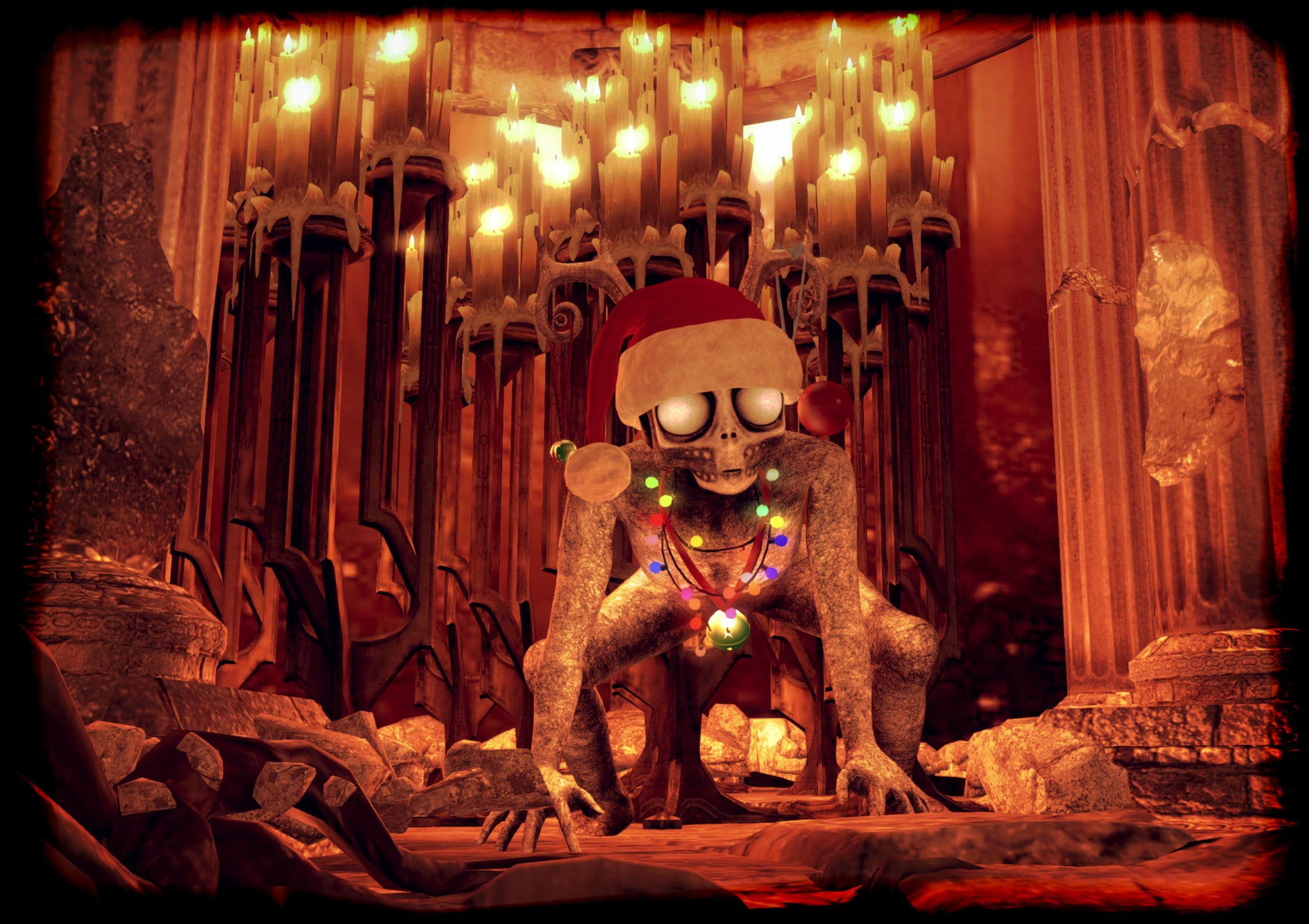
The shadowy part of holiday customs starts to show. While some run scared, horned beasts covered in fur storm towns – ringing loud bells, swinging sticks.
People flee as these wild figures charge through, their presence turning quiet nights into chaos. Krampus scares bad kids in mountain tales – like a dark twin to Santa.
On Krampus Night, people wearing creepy outfits wander streets, startling whoever’s around. A few run after shrieking teens.
Meanwhile, some stop for snapshots. These suits need months to build and drain big cash.
The night mixes real chills with party vibes, adding a gritty twist to December no shopping-center Santa could match.
Where Celebration Meets Strangeness
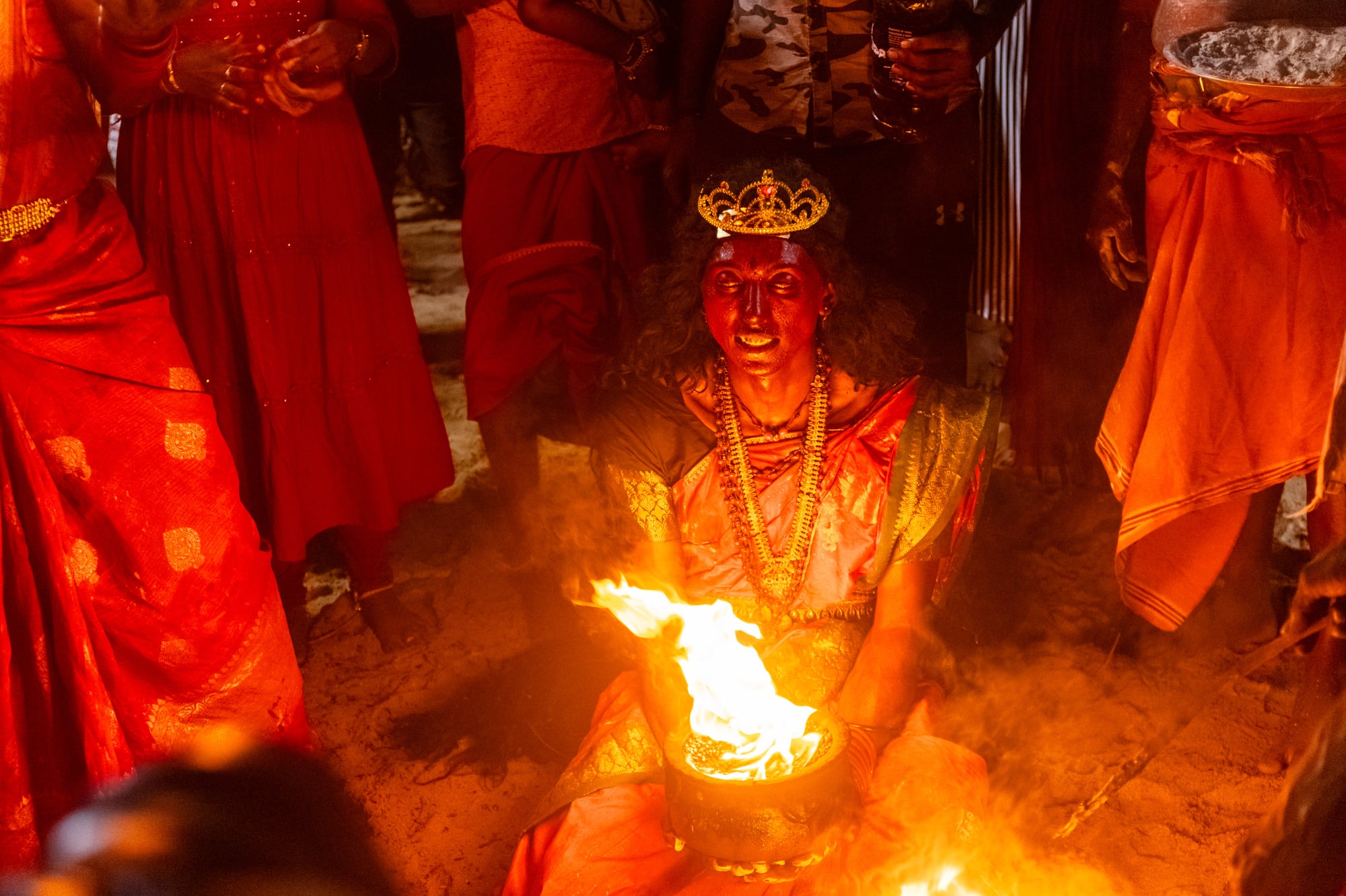
These celebrations last simply ’cause folks care about ’em. Tourists dig ’em, sure – but that’s not the main draw.
Drop by as a visitor, yet soon notice you’re seeing real traditions unfold – built slow through generations. The oddness isn’t the goal – it’s just how things turn out when a town picks something they care about and goes all-in on honoring it.
Orange battles, dips in muddy water, or carvings from radishes start feeling natural once you’re right there, caught up among folks raised with these customs. And that’s where the true wonder lies in quirky celebrations.
They show you that ordinary is simply whatever feels familiar.
More from Go2Tutors!

- The Romanov Crown Jewels and Their Tragic Fate
- 13 Historical Mysteries That Science Still Can’t Solve
- Famous Hoaxes That Fooled the World for Years
- 15 Child Stars with Tragic Adult Lives
- 16 Famous Jewelry Pieces in History
Like Go2Tutors’s content? Follow us on MSN.