Why Certain Colors Were Considered Illegal to Wear in Specific Countries for Centuries
Before synthetic dyes made color cheap and available to everyone, what you wore and in what color communicated your rank, your religion, your profession, and your relationship to the state. Governments across the ancient, medieval, and early modern world spent considerable energy regulating this — not because they cared about fashion, but because they cared about power.
Color was a form of identity, and identity was a form of control.
The laws that governed clothing color are called sumptuary laws, and virtually every major civilization that produced written legal codes had some version of them. They varied widely in their targets and their consequences — some carried fines, some carried confiscation, some carried death.
What they had in common was a shared belief that dressing above your station was a form of social disorder, and that the wrong color in the wrong hands was a problem requiring a legal solution.
Purple in Imperial Rome Could Get You Executed

Tyrian purple was extracted from the hypobranchial gland of Murex sea snails. Producing a single pound of the dye required crushing tens of thousands of snails, each yielding only a drop.
By the 4th century AD, Emperor Theodosius II had declared all-purple garments the exclusive property of the imperial family. His edict of 424 AD ordered anyone possessing a fully purple garment to surrender it to the treasury immediately and threatened those who concealed one with punishment equivalent to treason.
Yellow Was Mandatory for Jewish People in Medieval Europe

Beginning with the Fourth Lateran Council of 1215, the Catholic Church decreed that Jews and Muslims must wear clothing that distinguished them from Christians. England’s Statute of the Jewry in 1275 required a yellow badge in the shape of two joined tablets.
In Barcelona in 1397, Queen Maria specified that Jews must wear only pale green clothing with a circular yellow patch containing a red center. By the 14th century, yellow’s use as a mandatory marking badge predated Nazi Germany’s yellow Star of David by several centuries.
Yellow Was Imperial in China and Off-Limits to Everyone Else

During the Qing Dynasty (1644–1912), imperial yellow was reserved for the emperor alone. Crown princes were permitted a slightly different shade.
Other members of the imperial family were restricted to orange-yellow. Ordinary subjects wearing imperial yellow risked serious punishment. The restrictions were detailed enough that the shade of yellow you wore communicated your exact position within the hierarchy.
Scarlet in Elizabethan England Was Reserved for the Highest Nobility

Elizabeth I’s sumptuary laws, codified in a proclamation of 1574, reserved scarlet for the immediate royal family and the highest nobles. The fine for wearing prohibited clothing was two hundred marks, and tailors who made prohibited garments could be fined forty pounds and stripped of their right to practice.
Red Shoes Were Restricted to Muslims in the Ottoman Empire
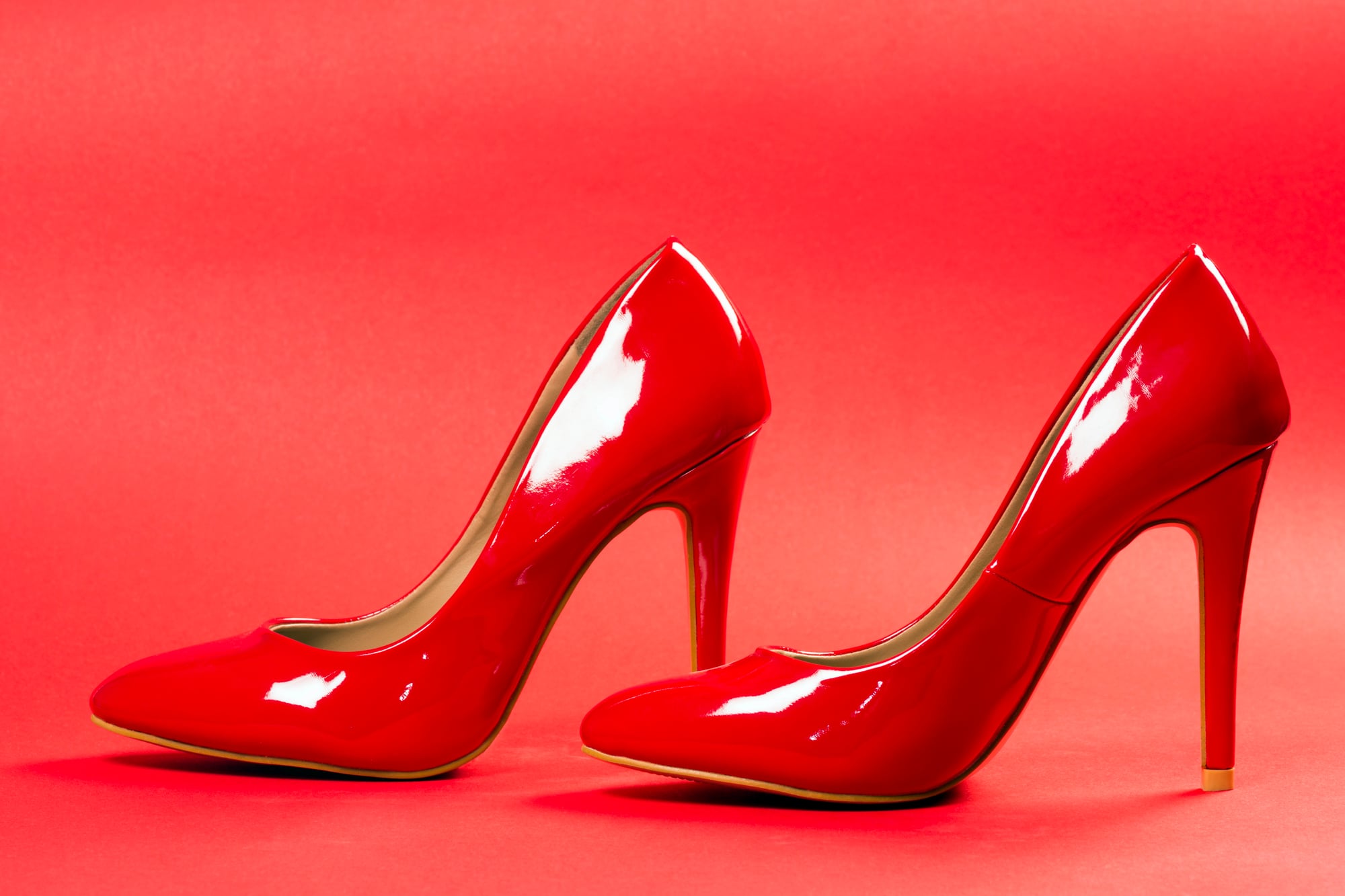
Ottoman sumptuary laws used clothing color as a tool of religious and ethnic differentiation. Sultan Murad IV, who ruled from 1623 to 1640, reserved yellow shoes exclusively for Muslim subjects.
Christians were permitted red or yellow shoes in some periods and restricted in others. In 1702, a regulation restricted Jewish subjects to only black foot and head coverings.
Gold and Silver Thread Were Banned for Non-Nobles in Tudor England

The 1533 sumptuary acts under Henry VIII restricted gold and silver thread by rank. The intent was to prevent the upwardly mobile merchant class from using expensive textiles to pass as nobility — a growing concern as trade wealth created a prosperous middle tier that could afford to dress like aristocrats even if it had no inherited status.
Crimson in Korea’s Joseon Dynasty Signaled Marital Status and Royal Rank

Korea’s Joseon dynasty (1392–1897) built an elaborate color hierarchy into court and formal clothing. The empress wore yellow; the queen wore red; the crown princess wore a specific shade of purple-red; concubines and princesses of lower birth wore green.
Color communicated relationship to the king at a glance, and misrepresentation through dress was a form of social fraud.
Purple in Japan Was Restricted to the Samurai Class

During Japan’s Heian period (794–1185), a formal system of court ranks assigned specific colors to specific grades of official. The highest ranks were permitted to wear deep purple.
During the Edo period, the Tokugawa shogunate’s sumptuary laws banned wealthy merchants from wearing rich colors including deep purple and gold. They were restricted to muted tones of brown, gray, and indigo regardless of what they could afford.
Blue Was Compulsory for Some and Forbidden to Others in Ancient Rome

Saffron yellow was so expensive in ancient Rome that its use in clothing was restricted to official seers and priests. The combination of purple and saffron was permitted only to a narrow class of religious officials.
The color restrictions in Rome operated as a layered system in which the interaction between two colors — who could wear them together, separately, or not at all — was as regulated as the colors themselves.
Green in Medieval Venice Was Associated with Courtesans

Venetian sumptuary law in the 14th and 15th centuries included requirements that certain classes of women wear green. The association between green and courtesan status was broadly shared across several Italian city-states.
The law formalized what was already a cultural signal: your color announced what you were, not what you chose to be.
Black Was Mandated for Jewish People in Parts of the Ottoman Empire

Under various regulations between the 16th and 18th centuries, Jewish subjects in the Ottoman Empire were required to wear distinguishing clothing in dark colors, primarily black and dark violet. The 1702 regulation codifying black foot and head coverings was part of a broader system in which dress color functioned as an ID document.
Gold Could Not Be Worn by Commoners in Qing Dynasty China

Gold embroidery, gold thread, and gold-colored fabrics were reserved for those with documented rank. The laws were administered through a system of rank badges worn on the front and back of formal robes, each design corresponding to a civil or military grade.
The color of the background fabric and the complexity of the embroidery worked together as a visual bureaucratic record of exactly who you were and what you were entitled to wear.
Violet Was Controlled Differently From Purple in Renaissance Florence

Florentine sumptuary laws attempted to distinguish between different shades and grades of expensive dye — between true purple and violet, between crimson and scarlet, between different grades of kermes-dyed cloth. The rarest dyes were reserved for the highest ranks, and the gradations below them were carefully mapped.
Women’s dress in particular attracted intensive regulatory attention.
What Color Laws Were Actually About

No sumptuary law in history succeeded long-term at keeping color in the hands of those in power. Merchants found ways around the regulations. Dyers discovered cheaper imitations of expensive colors. Almost every culture that tried color legislation eventually abandoned it, not through principled repeal but through gradual non-enforcement, as the middle classes grew wealthy enough to simply ignore fines.
Synthetic aniline dyes, developed in the mid-19th century, effectively ended the entire project. Purple — the color for which Romans had been executed — could be produced cheaply from coal tar by 1856.
The color that had taken thousands of snails to produce now required a few hours of industrial chemistry. Within a generation, the entire visual hierarchy that color had maintained for centuries had collapsed. Whatever color meant after that, it no longer meant what it had meant before.
More from Go2Tutors!

- The Romanov Crown Jewels and Their Tragic Fate
- 13 Historical Mysteries That Science Still Can’t Solve
- Famous Hoaxes That Fooled the World for Years
- 15 Child Stars with Tragic Adult Lives
- 16 Famous Jewelry Pieces in History
Like Go2Tutors’s content? Follow us on MSN.



