13 Objects Found in Ancient Ruins Without Explanation
What we believe to be true about ancient civilizations has always been called into question by archeological discoveries. There are occasional strange exceptions, but the majority of artifacts fit nicely into our concept of history.
Some artifacts discovered in ruins around the world have characteristics or attributes that are just out of place for their era. Researchers spend decades trying to make sense of human history through the remnants our ancestors left behind.
Yet sometimes they dig up things that completely upend the puzzle. Here’s a list of 13 objects discovered in ancient ruins that continue to leave experts scratching their heads.
The Antikythera Mechanism
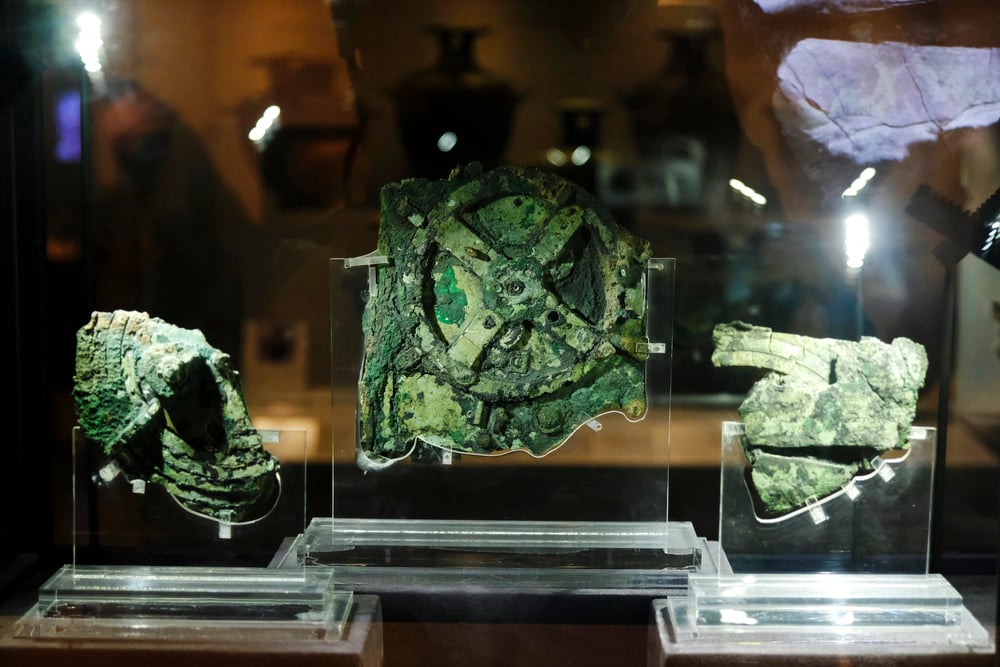
No one anticipated discovering what appears to be an antique computer when divers removed this bronze device from a 2,000-year-old shipwreck close to Greece. Numerous well-constructed interlocking gears in this device, which dates back to around 100 BCE, could calculate celestial locations with astonishing accuracy.
In addition to tracking planets and forecasting eclipses, it even adjusted for the moon’s erratic orbit. The worst part?
In Europe, this degree of mechanical expertise would not reappear for another thousand years. How were such small, flawless gear teeth made by ancient craftsmen using precision engineering?
Archaeologists are up at night because of that.
The Baghdad Battery

A simple-looking clay jar discovered in ruins near Baghdad might’ve been generating electricity some 2,250 years before Thomas Edison was born. Dating to around 250 BCE, this Parthian-era vessel contains a copper cylinder surrounding an iron rod—with evidence suggesting it once held an acidic liquid.
Put it all together and you’ve got the basic components of a battery capable of producing about one volt. The real mystery isn’t whether it could generate current—modern replicas prove it works—but rather what on earth the ancient Mesopotamians were using electricity for.
Some researchers think they might’ve used it for electroplating jewelry or religious objects, though we haven’t found any electroplated artifacts from this time period.
Like Go2Tutors’s content? Follow us on MSN.
The Roman Dodecahedra

Scattered throughout the ruins of ancient Roman settlements across Europe, archaeologists have discovered more than 100 hollow bronze or stone objects with a peculiar geometric shape. Each features 12 pentagonal faces—hence the name dodecahedra—with circular openings of different sizes punched into each face.
These puzzling items typically measure between 2 and 4 inches across and date from the 2nd and 3rd centuries CE. Despite their distinctive appearance and careful craftsmanship, not a single Roman text mentions what they were for.
Theories about their purpose range from military measuring devices to religious artifacts or even fancy candleholders, but their consistent shape with varying sizes points to some specific function that remains maddeningly elusive.
The Saqqara Bird
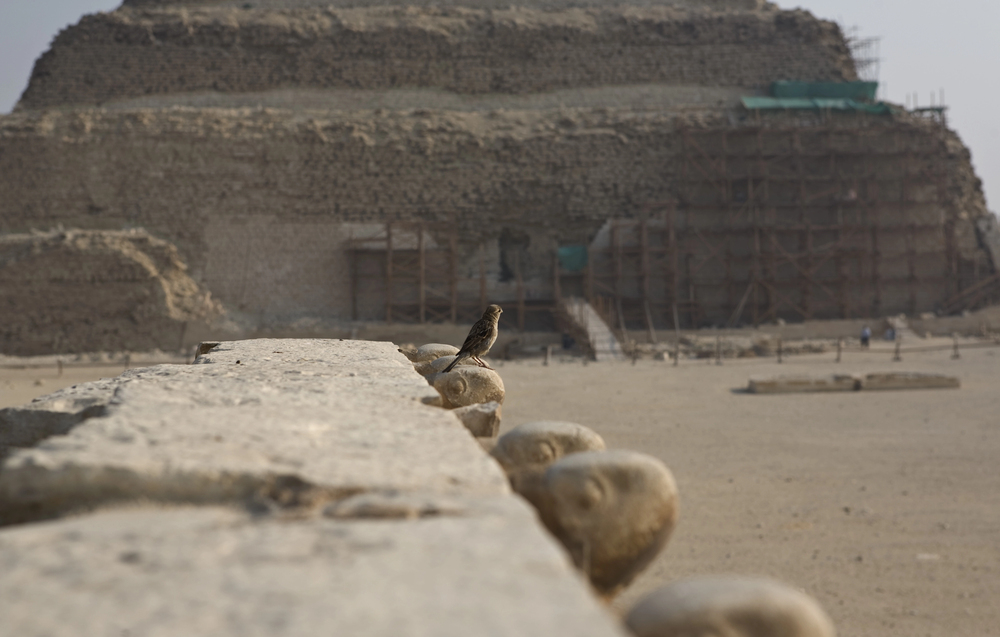
In 1898, excavators working in an ancient Egyptian tomb made a curious discovery—a small wooden object shaped like a bird with outstretched wings. What makes this 200 BCE artifact so baffling isn’t just its bird-like shape, but rather its strangely modern aerodynamic features.
Unlike typical Egyptian bird carvings, the Saqqara Bird has a vertical tail fin instead of horizontal feathers, plus wings with a distinctive airfoil shape. Its center of gravity would provide stability during flight—if it were to fly, that is.
While conservative Egyptologists insist it’s just a ceremonial religious object, wind tunnel tests on replicas suggest otherwise. With minor tweaks, this “bird” can actually achieve stable gliding flight, raising uncomfortable questions about what ancient Egyptians might’ve understood about aerodynamics thousands of years before the Wright brothers.
The Phaistos Disc
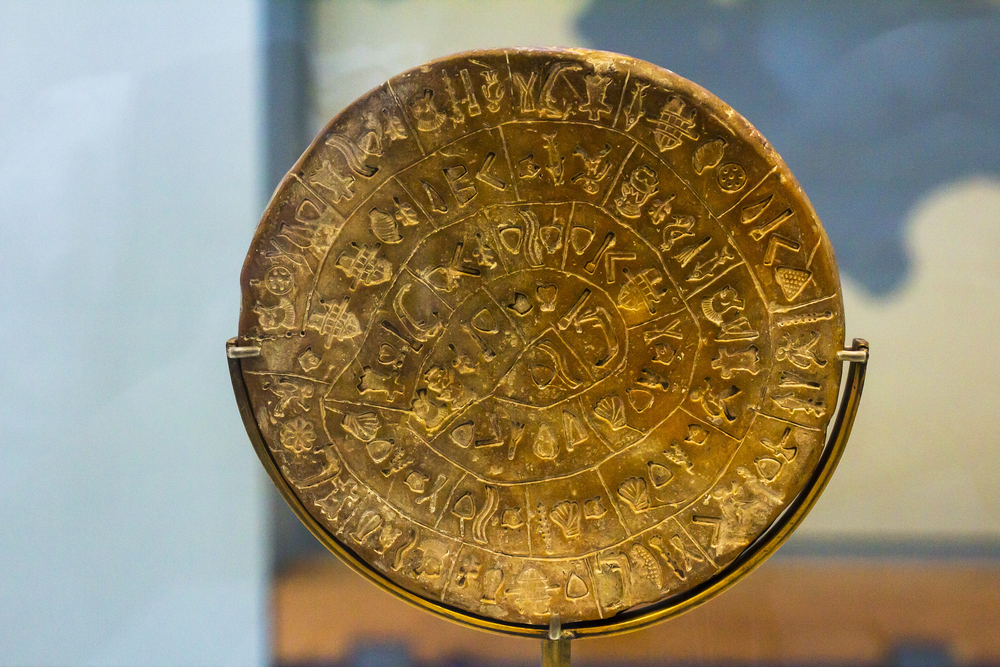
Workers excavating the Minoan palace of Phaistos on Crete in 1908 unearthed a clay disc unlike anything seen before or since. Dating to around 1700 BCE, this remarkable object contains 241 stamped symbols arranged in a spiral pattern—essentially making it the world’s first printed document.
Each of the 45 unique pictographic symbols was pressed into soft clay using carved stamps—a form of movable type printing that predates Gutenberg by over 3,000 years. The symbols depict human figures, tools, plants, and animals, organized in groups separated by vertical lines.
Despite a century of scholarly effort, nobody’s cracked the code. Without any other examples of this writing system, linguists lack the comparative material needed for translation—making this ancient message as mysterious today as when it was discovered.
Like Go2Tutors’s content? Follow us on MSN.
The Dropa Stones
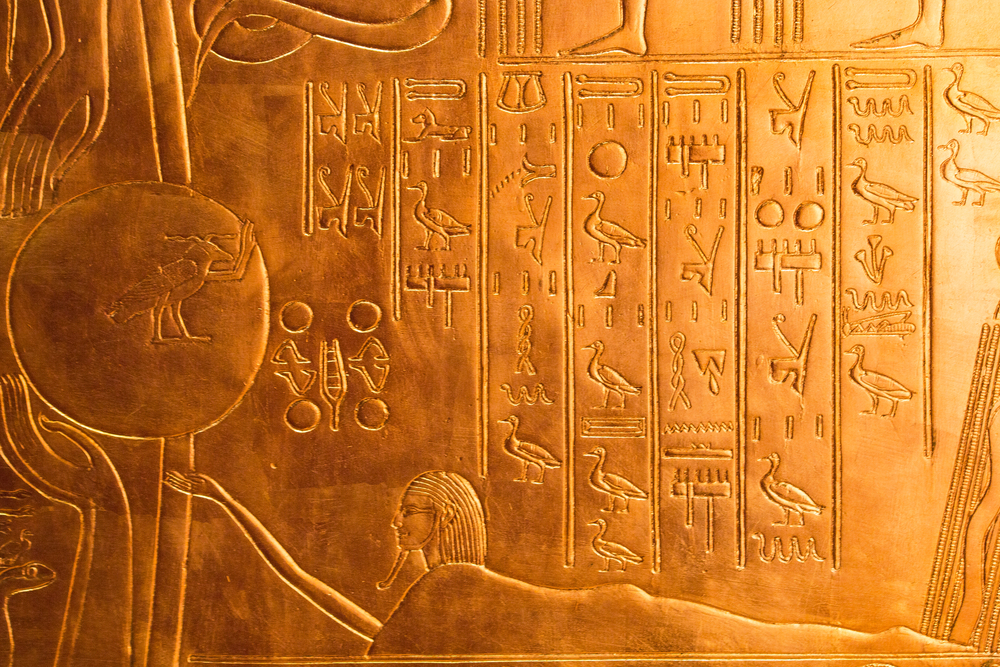
The story goes that in 1938, an archaeological expedition led by Chi Pu Tei stumbled upon something extraordinary while exploring caves in the mountains between China and Tibet. They allegedly found hundreds of stone discs roughly 12 inches across with an opening in the center, each bearing microscopic spiral grooves filled with hieroglyph-like patterns.
Local legends connect these objects to small-statured people who supposedly “came from the clouds” long ago. Many scientists dismiss the Dropa stones as an elaborate hoax—particularly since the original discs have conveniently vanished from museum collections.
Still, some researchers maintain they represent genuine artifacts awaiting proper scientific study.
The Maine Penny

It was just another day of digging at an Indigenous archaeological site in Maine in 1957 when researchers unearthed something that didn’t belong—a silver Norse coin minted between 1065 and 1080 CE. Found among Native American artifacts in an undisturbed context, this penny predates Columbus by roughly four centuries.
The coin’s authenticity isn’t questioned; it’s definitely a genuine Norse penny. What baffles historians is how it ended up so far south of the known Viking settlements in Newfoundland and Greenland.
Its presence suggests either much more extensive Norse exploration of North America than previously documented or the existence of far-reaching indigenous trade networks that connected with Norse settlements to the north. Either way, this tiny coin represents a big mystery about pre-Columbian contact.
The Quimbaya Airplanes
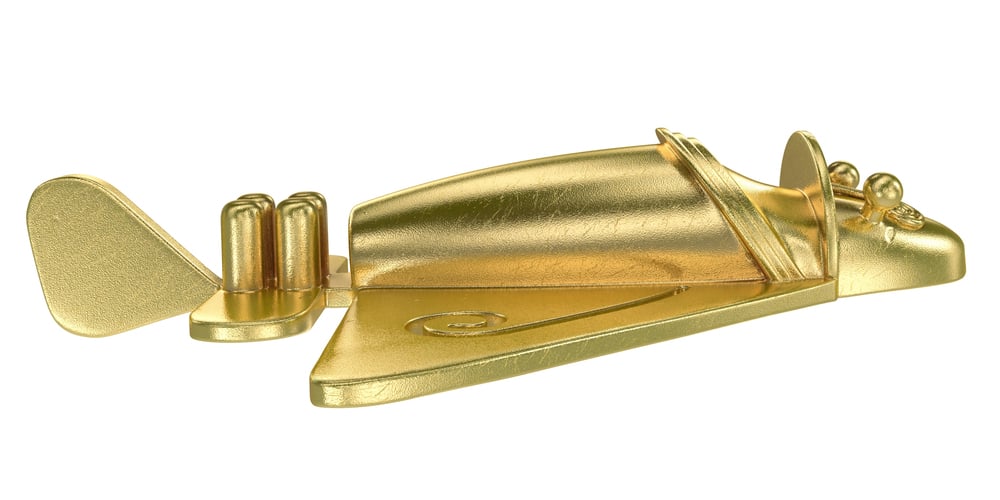
Colombia’s Quimbaya civilization created thousands of gold artifacts around 1000 CE—mostly representations of animals, people, and mythological figures. But among these treasures, archaeologists discovered a collection of small golden objects that don’t look like anything in nature.
These two-inch trinkets, found in ancient burial sites, bear an uncanny resemblance to modern aircraft—complete with delta wings, stabilizing tails, and even cockpit-like structures. When aeronautical engineers built scaled models mimicking their exact proportions and tested them in wind tunnels, they discovered something startling—these objects actually have aerodynamic properties and can achieve flight.
Mainstream archaeologists insist they’re stylized insects or birds with religious significance, yet their distinctly non-biological features suggest a knowledge of flight principles that shouldn’t have existed in pre-Columbian America.
Like Go2Tutors’s content? Follow us on MSN.
The Nimrud Lens

When archaeologists were excavating the ancient Assyrian palace of Nimrud in modern-day Iraq, they didn’t expect to find what appears to be a precisely crafted optical instrument. This 3,000-year-old piece of rock crystal, shaped into a plano-convex lens with an accurately crafted focal point, has optical properties matching modern magnifying glasses.
Dating to approximately 750 BCE, the lens displays grinding and polishing techniques that would’ve required considerable expertise. Some researchers believe it might’ve been used as a burning glass to start fires, while others suggest it served as a magnification tool for intricate craftwork or even rudimentary astronomical observations.
The level of optical knowledge required to create such a precisely shaped lens raises questions about ancient understanding of light properties centuries before formal optical theory emerged.
The Mitchell-Hedges Crystal Skull

According to the story, young Anna Mitchell-Hedges discovered this life-sized human skull carved from a single piece of clear quartz while exploring Maya ruins at Lubaantun, Belize, in 1924. What makes this artifact so controversial isn’t just its eerie appearance but its seemingly impossible construction.
The skull features remarkable anatomical accuracy and a detachable jawbone, along with light-conducting properties created through precise internal carving. Modern microscopic analysis has revealed polishing techniques that would’ve been extraordinarily difficult to achieve without industrial equipment.
While many skeptics question both its provenance and age—suggesting it’s likely a modern creation—even they acknowledge that creating such a perfect object from a single quartz crystal represents a remarkable technical achievement that remains difficult to fully explain.
The Lycurgus Cup
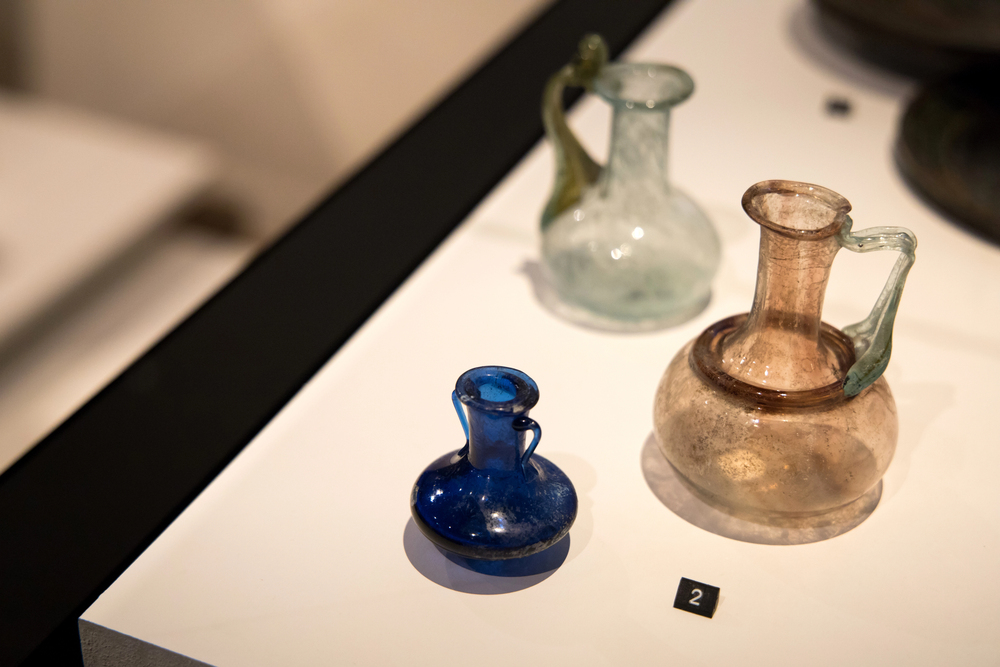
Museums contain countless beautiful artifacts, but none quite like the Lycurgus Cup. This 4th-century Roman glass vessel, excavated from an ancient burial site, displays a property that shouldn’t exist in ancient glasswork.
In normal reflected light, it appears green, but when light passes through it, the cup glows a brilliant ruby red. This optical phenomenon, called dichroism, remained a mystery until electron microscope analysis in the 1990s revealed its secret: the glass contains gold and silver nanoparticles precisely 50-100 nanometers in size, perfectly dispersed throughout the material.
Here’s the problem—creating such nanoparticles requires sophisticated knowledge of metallurgy that wasn’t rediscovered until the 19th century. How Roman glassmakers achieved this effect without modern scientific understanding continues to baffle materials scientists today.
Like Go2Tutors’s content? Follow us on MSN.
The Coso Artifact

In 1961, three friends collecting geodes for their rock shop made a bizarre discovery near ancient ruins in California’s Coso Mountains. When they cut open one particular geode, they found what appeared to be a modern mechanical component encased inside.
The object consisted of a porcelain-like cylinder surrounding a 2-millimeter metal shaft. X-ray analysis showed structural similarities to a spark plug, complete with hexagonal casing and a central electrode.
What created intense controversy was the object’s apparent age—the encasing material supposedly dated between 250,000 and 500,000 years old, according to initial claims. While skeptics argue it’s simply a 1920s-era Champion spark plug later encased in naturally hardening material, proponents maintain the mineral encrustation patterns indicate much greater antiquity.
With the original artifact having disappeared from public access, the mystery remains unresolved.
The South American Aluminum Wedge
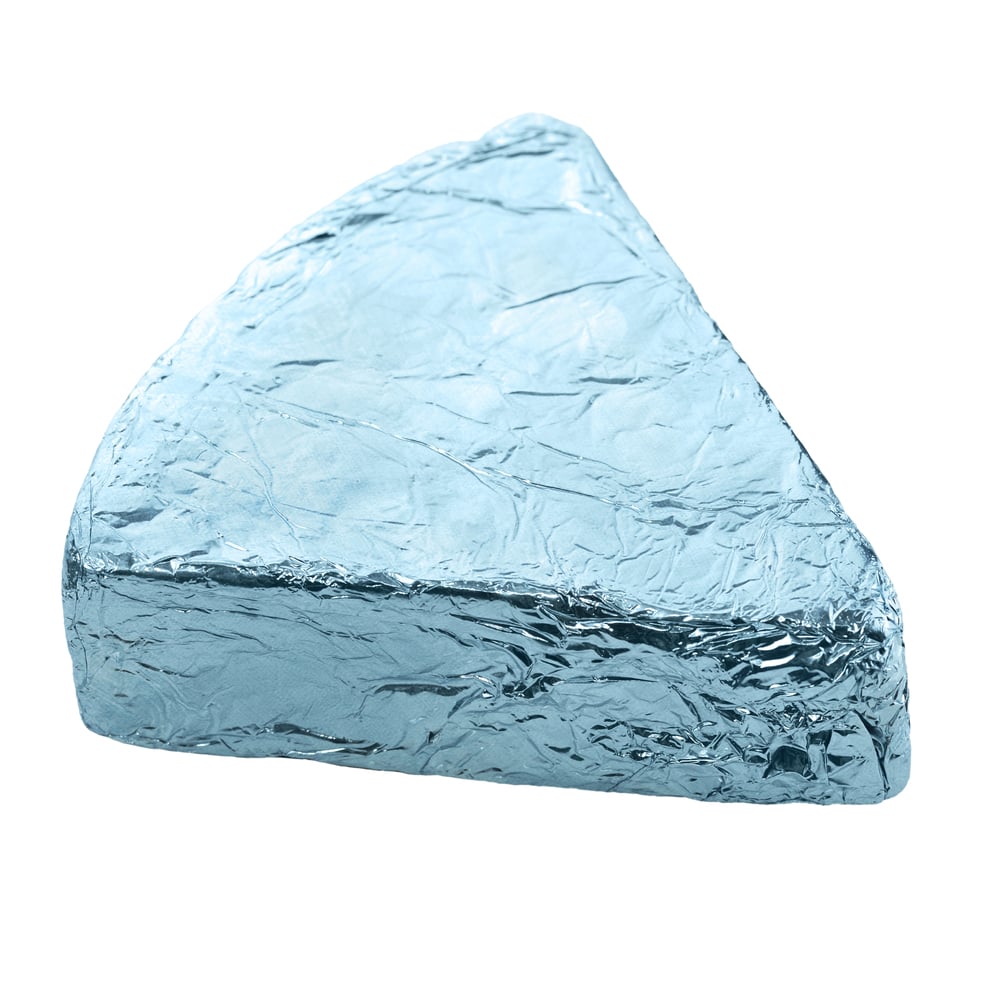
In 1974, workers excavating an ancient site near Aiud, Romania, made a discovery that defies conventional archaeological timelines. Alongside two mastodon bones, they unearthed a strange aluminum wedge weighing about 5 pounds with dimensions of roughly 8 × 5 × 3 inches.
The object showed signs of mechanical manufacturing and contained alloys typically used in durable applications. Laboratory tests confirmed it was 89% aluminum combined with copper, silicon, zinc, lead, and other trace elements—a composition requiring sophisticated metallurgy.
The archaeological layer where it was found dates to approximately 11,000 years ago, creating an impossible chronological puzzle. Aluminum wasn’t isolated as an element until 1825 and wasn’t produced in significant quantities until the late 19th century.
The object’s composition, apparent machine marks, and archaeological context present a historical anomaly that continues to resist explanation.
Enigmas of the Ancient World

These puzzling artifacts challenge our neat timelines of technological development and force us to question assumptions about what our ancestors could and couldn’t do. While skeptics often write off unexplained objects as misinterpretations or outright fakes, many have undergone serious scientific testing, confirming both their age and unusual properties.
By studying these archaeological oddities, we develop a deeper appreciation for human ingenuity across time while humbly acknowledging how much of our past remains unexplained. Perhaps the greatest lesson these artifacts teach is that history rarely progresses in the straight line we might prefer to imagine.
Like Go2Tutors’s content? Follow us on MSN.
More from Go2Tutors!

- 18 Unexpectedly Valuable Collectibles You Might Have Lying Around
- 15 Things Every Teenager in the ’70s Did That Teens Today Wouldn’t Understand
- 15 Strange Things People Have Tried to Ban (And Failed)
- 15 Inventions That Were Immediately Banned After Being Created
- 20 Actors Who Were Almost Cast in Iconic Roles
Like Go2Tutors’s content? Follow us on MSN.